Captain James A. Lovell Federal Health Care Center (FHCC) will receive the same single, common federal electronic health record (EHR) as other Department of Defense (DOD) and Department of Veterans Affairs (VA) sites. The federal EHR provides flexibility to configure the EHR to meet specific facilities’ needs while still maintaining interoperability between the Departments. Through established governance and change control processes, DOD, VA and Department of Homeland Security’s U.S. Coast Guard (USCG) sites can each request configuration changes as long as these changes do not interfere or prohibit interoperability between the Departments. As a result, any Departments using the federal EHR can access these changes and benefit from additional capabilities their facility may need.
As a fully integrated joint sharing site, Lovell FHCC does require unique approaches to some configurations and deployment activities. These include the following:
Patient Care Location (PCL) Hierarchies. PCL hierarchies correspond to physical locations of patients receiving health care services, with facilities at the top level of the hierarchy followed by buildings, nursing units, rooms and beds. Unlike other sites that use either a DOD or VA PCL hierarchy, Lovell FHCC will use two PCL hierarchies—one for each Department, in their respective facilities. Using both DOD and VA PCL hierarchies enables each Department to satisfy their respective statutory requirements. • Provider User Role Assignments: User roles enable Department-specific workflows, and assignments determine the training staff receive on the federal EHR. Lovell FHCC staff will be assigned a DOD or VA user role based on PCL alignment of the clinic or location where they provide care, not their Department alignment. Some areas, such as pharmacy, behavioral health and occupational health, will require staff assignment of both DOD and VA roles. • Deployment Responsibilities: The FEHRM, DoD Healthcare Management System Modernization Program Management Office and VA’s Electronic Health Record Modernization Integration Office have roles and responsibilities in deploying the federal EHR at Lovell FHCC. These responsibilities vary for each of the high-level deployment events. For the adoption and site activation deployment events, DOD will lead, working closely with VA to supplement. Conversely, each Department will provide its respective training, infrastructure and devices to Lovell FHCC, based on PCL alignment. Regardless of role alignment, the Departments will execute all deployment events in a coordinated manner. • Patient Portals. Lovell FHCC will use DOD and VA patient portals. DOD beneficiaries will use the DOD patient portal, and VA beneficiaries will use the VA patient portal. Dual eligible patients can use either portal.
It’s yet another summer of extreme weather, with unprecedented heat waves, wildfires, and floods battering countries around the world. In response to the challenge of accurately predicting such extremes, semiconductor giant Nvidia is building an AI-powered “digital twin” for the entire planet.
This digital twin, called Earth-2, will use predictions from FourCastNet, an AI model that uses tens of terabytes of Earth system data and can predict the next two week’s weather tens of thousands of times faster and more accurately than current weather forecasting methods.
Usual weather prediction systems have the capacity to generate around fifty predictions for the week ahead. FourCastNet can instead predict thousands of possibilities, accurately capturing the risk of rare but deadly disasters and thereby giving vulnerable populations valuable time to prepare and evacuate.
The hoped-for revolution in climate modeling is just the beginning. With the advent of AI, science is about to become much more exciting — and in some ways unrecognizable. The reverberations of this shift will be felt far outside the lab and will affect us all.
If we play our cards right with sensible regulation and proper support for innovative uses of AI to address science’s most pressing issues, AI can rewrite the scientific process. We can build a future where AI-powered tools will both save us from mindless and time-consuming labor and also propose creative inventions and discoveries, encouraging breakthroughs that would otherwise take decades.
Although AI in recent months has become almost synonymous with large language models, or LLMs, in science, there are a multitude of different model architectures that may drive even bigger impacts. In the past decade, most progress in science so far has been through smaller, “classical” models focused on specific questions. These models have already brought about profound advances in science. More recently, larger deep learning models that are beginning to incorporate cross-domain knowledge and generative AI have expanded what is possible.
Scientists at McMaster and MIT, for example, used an AI model to identify an antibiotic for a drug-resistant pathogen that the World Health Organization labeled as one of the world’s most dangerous antibiotic-resistant bacteria for hospital patients. A Google DeepMind model can control plasma in nuclear fusion reactions, bringing us closer to a clean energy revolution. Within healthcare, the FDA has already cleared 523 devices that use AI — 75 percent for use in radiology.
Reimagining science
At its core, the scientific process we all learned in elementary school will remain the same: conduct background research, identify a hypothesis, test it through experimentation, analyze the collected data, and reach a conclusion. But AI has the potential to revolutionize how each of these components looks in the future.
Artificial intelligence is already transforming how some scientists conduct literature reviews. Tools like PaperQA and Elicit harness LLMs to scan databases of articles and produce succinct and accurate summaries of the existing literature — citations included.
Once the literature review is complete, scientists form a hypothesis to be tested. LLMs at their core work by predicting the next word in a sentence, thereby building up to entire sentences and paragraphs. This technique makes LLMs uniquely suited to scaled problems intrinsic to science’s hierarchical structure and can enable such models to predict the next big discovery in physics or biology.
AI can also spread the search net for hypotheses wider and narrow the net more quickly. As a result, AI tools can help formulate stronger hypotheses, such as models that spit out more promising candidates for new drugs. We’re already seeing simulations running multiple orders of magnitude faster than just a few years ago, allowing scientists to try more design options in simulation before carrying out real-world experiments.
Scientists at CalTech, for example, used an AI fluid simulation model to automatically design a better catheter that prevents bacteria from swimming upstream and causing infections. This will fundamentally shift the incremental process of scientific discovery, allowing researchers to design for the optimal solution from the outset rather than progress through a long line of progressively better designs, as we saw in years of innovation on filaments in lightbulb design.
Moving onto the experimentation step, AI will be able to conduct experiments faster, cheaper, and at greater scale. For example, we can build AI-powered machines with hundreds of micropipettes running day and night to create samples at a rate no human could match. Instead of limiting themselves to just six experiments, scientists can use AI tools to run one thousand.
Scientists who are worried about their next grant, publication, or tenure process will no longer be bound to safe experiments with the highest odds of success, instead free to pursue bolder and more interdisciplinary hypotheses. When evaluating new molecules, for example, researchers tend to stick to candidates similar in structure to those we already know, but AI models do not have to have the same biases and constraints.
Eventually, much of science will be conducted at “self-driving labs” — automated robotic platforms combined with artificial intelligence. Here, we can bring AI prowess from the digital realm into the physical world. Such self-driving labs are already emerging at companies like Emerald Cloud Laband Artificial and even at Argonne National Laboratory.
Finally, at the stage of analysis and conclusion, self-driving labs will move beyond automation and, informed by experimental results they produced, use LLMs to interpret the results and recommend the next experiment to run. Then, as partners in the research process, the AI lab assistant could order supplies to replace those used in earlier experiments and set up and run the next recommended experiments overnight with results ready to deliver in the morning — all while the experimenter is home sleeping.
Possibilities and limitations
Young researchers might be shifting nervously in their seats at the prospect. Luckily, the new jobs that emerge from this revolution are likely to be more creative and less mindless than most current lab work.
AI tools can lower the barrier to entry for new scientists and open up opportunities to those traditionally excluded from the field. With LLMs able to assist in building code, STEM students will no longer have to master obscure coding languages, opening the doors of the ivory tower to new, nontraditional talent and making it easier for scientists to engage with fields beyond their own. Soon, specifically trained LLMs might move beyond offering first drafts of written work like grant proposals and might be developed to offer “peer” reviews of new papers alongside human reviewers.
AI tools have incredible potential, but we must recognize where the human touch is still important and avoid running before we can walk. For example, successfully melding AI and robotics through self-driving labs will not be easy. There is a lot of tacit knowledge that scientists learn in labs that is difficult to pass to AI-powered robotics. Similarly, we should be cognizant of the limitations — and even hallucinations — of current LLMs before we offload much of our paperwork, research, and analysis to them.
Companies like OpenAI and DeepMind are still leading the way in new breakthroughs, models, and research papers, but the current dominance of industry won’t last forever. DeepMind has so far excelled by focusing on well-defined problems with clear objectives and metrics. One of its most famous successes came at the Critical Assessment of Structure Prediction, a biennial competition where research teams predict a protein’s exact shape based on the order of its amino acids.
From 2006 to 2016, the average score in the hardest category ranged from around 30 to 40 on CASP’s scale of one to 100. Suddenly, in 2018, DeepMind’s AlphaFold model scored a whopping 58. An updated version called AlphaFold2 scored 87 two years later, leaving its human competitors even further in the dust.
Thanks to open-source resources, we’re beginning to see a pattern where industry hits certain benchmarks and then academia steps in to refine the model. After DeepMind’s release of AlphaFold, Minkyung Baek and David Baker at the University of Washington released RoseTTAFold, which uses DeepMind’s framework to predict the structures of protein complexesinstead of only the single protein structures that AlphaFold could originally handle. More importantly, academics are more shielded from the competitive pressures of the market and so can venture beyond the well-defined problems and measurable successes that attract DeepMind.
In addition to reaching new heights, AI can help verify what we already know by addressing science’s replicability crisis. Around 70 percent of scientists report having been unable to reproduce another scientist’s experiment — a disheartening percentage. As AI lowers the cost and effort of running experiments, it will in some cases be easier to replicate — or fail to replicate — results, contributing to a greater trust in science.
The key to replicability and trust is transparency. In an ideal world, everything in science would be open access, from articles without paywalls to open-source data, code, and models. Sadly with the dangers that such models are able to unleash, it isn’t always realistic to make all models open source. In many cases, the risks of being completely transparent outweigh the benefits of trust and equity. Nevertheless, to the extent that we can be transparent with models — especially classical AI models with more limited uses — we should be.
The importance of regulation
With all these areas, it’s essential to remember the inherent limitations and risks of artificial intelligence. AI is such a powerful tool because it allows humans to accomplish more with less: less time, less education, less equipment. But these capabilities make it a dangerous weapon in the wrong hands. University of Rochester professor Andrew White was contracted by OpenAI to participate in a “red team” that could expose GPT-4’s risks before it was released. Using the language model and giving it access to tools, White found it could propose dangerous compounds and even order them from a chemical supplier. To test the process, he had a (safe) test compound shipped to his house the next week. OpenAI says it used his findings to tweak GPT-4 before it was released.
Even humans with entirely good intentions can still prompt AIs to produce bad outcomes. We should worry less about creating the Terminator and, as computer scientist Stuart Russell put it, more about becoming King Midas, who wished for everything he touched to turn to gold and thereby accidentally killed his daughter with a hug.
We have no mechanism to prompt an AI to change its goal, even when it reacts to its goal in a way we don’t anticipate. One oft-cited hypothetical asks you to imagine telling an AI to produce as many paperclips as possible. Determined to accomplish its goal, the model hijacks the electrical grid and kills any human who tries to stop it as the paperclips keep piling up. The world is left in shambles. The AI pats itself on the back; it has done its job. (In a wink to this famous thought experiment, many OpenAI employees carry around branded paperclips.)
OpenAI has managed to implement an impressive array of safeguards, but these will only remain in place as long as GPT-4 is housed on OpenAI’s servers. The day will likely soon come when someone manages to copy the model and house it on their own servers. Such frontier models need to be protected to prevent thieves from removing the AI safety guardrails so carefully added by their original developers.
To address both intentional and unintentional bad uses of AI, we need smart, well-informed regulation — on both tech giants and open-source models — that doesn’t keep us from using AI in ways it can be beneficial to science. Although tech companies have made strides in AI safety, government regulators are currently woefully underprepared to enact proper laws and should take greater steps to educate themselves on the latest developments.
Beyond regulation, governments — along with philanthropy — can support scientific projects with a high social return but little financial return or academic incentive. There are several areas with an especially urgent time to solution, including climate change, biosecurity, and pandemic preparedness. It is in these areas that we most urgently need the speed and scale that AI simulations and self-driving labs offer.
Government can also help develop large, high-quality datasets such as those on which AlphaFold relied — insofar as safety concerns allow. Open datasets are public goods: They benefit many researchers, but researchers have little incentive to create them themselves. Government and philanthropic organizations can work with universities and companies to pinpoint seminal challenges in science that would benefit from access to powerful databases.
Chemistry, for example, has one language that unites the field, which would seem to lend itself to easy analysis by AI models. But no one has properly aggregated data on molecular properties stored across dozens of databases, which keeps us from accessing insights into the field that would be within reach of AI models if we had a single source. Biology, meanwhile, lacks the known and calculable data that underlies physics or chemistry, with subfields like intrinsically disordered proteins still a mystery to us. It will therefore require a more concerted effort to understand — and even record — the data for an aggregated database.
The road ahead to broad AI adoption in the sciences is long, with a lot that we must get right, from building the right databases to implementing the right regulations, mitigating biases in AI algorithms to ensuring equal access across borders to resources like compute and GPUs.
Nevertheless, this is a profoundly optimistic moment. Previous paradigm shifts in science, like the emergence of the scientific process or big data, have been inwardly focused — making science more precise, accurate, and methodical. AI meanwhile is expansive, allowing us to combine information in novel ways and to bring creativity and progress in the sciences to new heights.
BIO: Eric Schmidt was the CEO of Google from 2001 to 2011. He is currently co-Founder of Schmidt Futures, a philanthropic initiative that bets early on exceptional people making the world better, applying science and technology, and bringing people together across fields.
WASHINGTON — A strategy for harnessing technology from commercial and non-traditional companies proposed by former Defense Innovation Unit director Mike Brown has caught traction in one House committee’s fiscal 2024 defense spending bill.
The legislation, which the House Appropriations Committee approved June 22, would allocate $1 billion toward establishing a “hedge portfolio” made up of innovative, commercially available systems including low-cost drones and satellites, agile communication and computing nodes and artificial intelligence capabilities.
DIU, the Pentagon’s commercial integration hub, would oversee execution of the funds, which it would use to advance existing innovation initiatives and support fielding new capability within the next three years. The bill calls for the department to submit a report within 90 days of the legislation’s enactment that outlines an acquisition plan for the portfolio and identifies 10 candidate projects.
“This portfolio is a hedge against growing and innate tactical and logistical risks to current weapon systems, as well as a hedge against industrial base risk, given the lack of capacity and diversity,” the committee said in a report accompanying the bill. “The development of non-traditional sources and non-traditional solutions are essential to this hedge, and it will require intentionally taking calculated risks to incentivize positive, deliberate, accelerated change.”
The proposal echoes a “hedge strategy” drafted last year by Brown — who led DIU from 2018 to September 2022 — and retired Chief of Naval Research Rear Adm. Lorin Selby. They argued that while the Defense Department has a number of organizations focused on innovative concepts aimed at rapidly fielding new capabilities, it lacks a focused, systematic approach to delivering them.
Brown and Selby called on DoD to develop a process that fields emerging technology-based capabilities in large quantities, applies commercial capabilities with a sense of urgency and focuses on small, low-cost, AI-enabled autonomous systems.
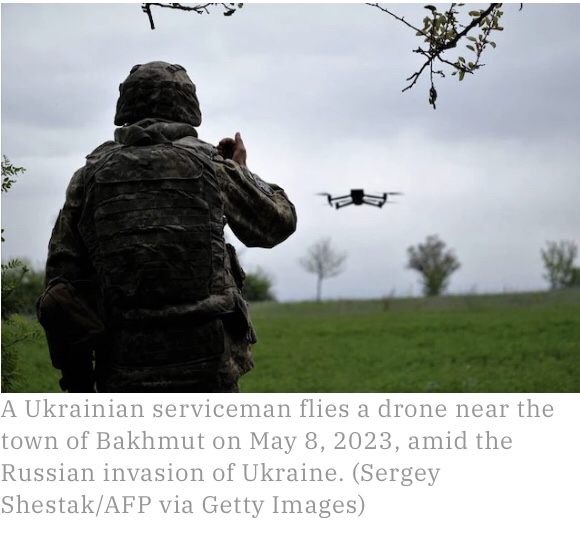
“After observing the use of non-traditional weapons from non-traditional sources in Ukraine, the committee supports maturing and focusing ‘innovation organizations’ on rapidly fielding new capabilities from new sources at scale,” the report states.
Elevating DIU
The establishment of the portfolio, and the associated funding, would be a significant boost for DIU and follows Defense Secretary Lloyd Austin’s recent decision to elevate the office to report directly to him. The committee highlights the move in its report, saying the transition provides “a timeline milestone to deliberately create a hedge portfolio.”
“If properly executed, this hedge has the potential to reduce the taxpayer’s burden by leveraging private capital, expand America’s economic advantage by accelerating emerging technology, and broaden the pool of talent supporting national defense,” the committee states.
The proposed $1 billion allocation includes more than $612 million in additional funding for DIU, with the remaining $420 million transferred from existing accounts. Congress appropriated just $191 million for the organization in fiscal 2023.
The bulk of the new funding is in a “Defense Innovation Unit Fielding” account, which supports a range of AI-related technology, including $10 million for AI-enabled drones, $23 million for autonomous virtual take-off and landing logistics systems and $13 million for digital engineering. It also would provide $220 million to rapidly funnel field-ready hedge projects to combatant commands.
The bill also recommends that the secretary of each military service create a Non-traditional Innovation Fielding Enterprise lead who would be responsible for working with commercial industry partners and shepherding projects within the service. The new organizations would “bring together the nexus of best practices identified in the last several years of defense innovation.”
“These designated Nexus fielding projects will begin with a problem statement and will iteratively mature requirements while developing software and hardware for fielding at scale within three years using small teams of warfighters, acquirers and technologists,” the committee said.
Courtney Albon is C4ISRNET’s space and emerging technology reporter. She has covered the U.S. military since 2012, with a focus on the Air Force and Space Force. She has reported on some of the Defense Department’s most significant acquisition, budget and policy challenges.
New innovations can seem like they come out of nowhere. How could so many people have missed the solution to the problem for so long? And how in the world did the first person come up with that solution at all? In fact, most people who come up with creative solutions rely on a relatively straightforward method: finding a solution inside the collective memory of the people working on the problem. That is, someone working to solve the problem knows something that will help them find a solution — they just haven’t realized yet that they know it. When doing creative problem solving, the statement of the problem is the cue to memory. That is what reaches in to memory and draws out related information. In order to generate a variety of possible solutions to a problem, the problem solver (or group) can change the description of the problem in ways that lead new information to be drawn from memory. The most consistently creative people and groups are ones that find many different ways to describe the problem being solved.
Typical stories of creativity and invention focus on finding novel ways to solve problems. James Dyson found a way to adapt the industrial cyclone to eliminate the bag in a vacuum cleaner. Pablo Picasso and Georges Braque developed cubism as a technique for including several views of a scene in the same painting. The desktop operating system developed at Xerox PARC replaced computer commands with a spatial user interface.
These brief descriptions of these innovations all focus primarily on the novel solution. The problem they solve seems obvious.
But framing innovations in this way makes creativity seem like a mystery. How could so many people have missed the solution to the problem for so long? And how in the world did the first person come up with that solution at all?
In fact, most people who come up with creative solutions to problems rely on a relatively straightforward method: finding a solution inside the collective memory of the people working on the problem. That is, someone working to solve the problem knows something that will help them find a solution — they just haven’t realized yet that they know it.
Sure, some people stumble on the answer. When Archimedes stepped into the bath and noticed the water level rise, he lucked into the solution for finding the volume of an ornately decorated crown. And others invest decades and millions (or even billions) of dollars into research and development (see drug companies). But tapping into the individual’s or group’s memory is one of the most cost effective and repeatable problem-solving approaches.
The key to this method is to get the right information out of memory to solve the problem.
Human memory is set up in a way that encountering a piece of information serves as a cue to retrieve other related things. If I ask you to imagine a birthday party, you can quickly retrieve information about birthday parties you have attended, and you will likely be able to think about party hats, cake, and singing “Happy Birthday.” You don’t have to expend much effort to recall this information; it emerges as a result of the initial cue.
If you want to retrieve something else from memory, you need to change the cue. If I now ask you to think about salad, you can likely call to mind information about lettuce, tomatoes, and dressing, even though you were thinking about birthday parties just a minute ago.
When doing creative problem solving, the statement of the problem is the cue to memory. That is what reaches in to memory and draws out related information.
In order to generate a variety of possible solutions to a problem, then, the problem solver (or group) can change the description of the problem in ways that lead new information to be drawn from memory.
For example, it is hard to see how Dyson would have gotten to industrial cyclones from thinking about vacuum cleaner bags. But an alternative way to describe the problem is that a vacuum takes in a combination of dirt and air and has to separate the dirt from the air. Bags do this by acting as a filter that traps the dirt and lets the air pass through pores in the bag. But there are many ways to separate particles from air. Industrial cyclones create a spinning mass of air that throws particles to the edges by centrifugal force.
This way of describing a vacuum is that it generalizes the problem by removing some of the specific components typically used to solve it. The phrase “separating dirt from air” does not mention the bag at all. When you focus on the bag, you’ll naturally be reminded of aspects of bags. The large list of patent numbers on most vacuum cleaner bags suggests that many inventors have done just that. A radically new solution to a problem, though, requires a new problem statement.
So how do you create the problem statement you need to find a solution to your business problem? Unfortunately, there is no ideal problem statement. Instead, the most consistently creative people and groups are ones that find many different ways to describe the problem being solved. Some of those statements will be specific and talk about the objects being acted on (e.g. vacuum bags). That leads to retrieval of specific information that is highly related to the problem (e.g. different types of vacuum bags). Then, groups should find several ways to describe the essence of the problem being solved in ways that focus on the relationships among the objects or a more abstract description of the goal (e.g. separate dirt from air). Each of these descriptions will help people to recall knowledge that is more distantly related to the domain in which the problem is stated.
Most of us have been looking in the wrong place for our creative insights. We ask people to “think outside the box,” but we should be asking people to find more descriptions of the box and see what that causes us to remember.
The group will build on NIST’s Risk Management Framework to tackle risks of rapidly advancing generative AI.
June 22, 2023
WASHINGTON — Today, U.S. Secretary of Commerce Gina Raimondo announced that the National Institute of Standards and Technology (NIST) is launching a new public working group on artificial intelligence (AI) that will build on the success of the NIST AI Risk Management Framework to address this rapidly advancing technology. The Public Working Group on Generative AI will help address the opportunities and challenges associated with AI that can generate content, such as code, text, images, videos and music. The public working group will also help NIST develop key guidance to help organizations address the special risks associated with generative AI technologies. The announcement comes on the heels of a meeting President Biden convened earlier this week with leading AI experts and researchers in San Francisco, as part of the Biden-Harris administration’s commitment to seizing the opportunities and managing the risks posed by AI.
“President Biden has been clear that we must work to harness the enormous potential while managing the risks posed by AI to our economy, national security and society,” Secretary Raimondo said. “The recently released NIST AI Risk Management Framework can help minimize the potential for harm from generative AI technologies. Building on the framework, this new public working group will help provide essential guidance for those organizations that are developing, deploying and using generative AI, and who have a responsibility to ensure its trustworthiness.”
The public working group will draw upon volunteers, with technical experts from the private and public sectors, and will focus on risks related to this class of AI, which is driving fast-paced changes in technologies and marketplace offerings.
“This new group is especially timely considering the unprecedented speed, scale and potential impact of generative AI and its potential to revolutionize many industries and society more broadly,” said Under Secretary of Commerce for Standards and Technology and NIST Director Laurie E. Locascio. “We want to identify and develop tools to better understand and manage those risks, and we hope to attract broad participation in this new group.”
NIST has laid out short-term, midterm and long-term goals for the working group. Initially, it will serve as a vehicle for gathering input on guidance that describes how the NIST AI Risk Management Framework (AI RMF) may be used to support development of generative AI technologies. This type of guidance, called a profile, will support and encourage use of the AI RMF in addressing related risks.
In the midterm, the working group will support NIST’s work on testing, evaluation and measurement related to generative AI. This will include support of NIST’s participation in the AI Village at the 2023 DEF CON, the longest running and largest computer security and hacking conference.
Longer term, the group will explore specific opportunities to increase the likelihood that powerful generative AI technologies are productively used to address top challenges of our time in areas such as health, the environment and climate change. The group can help ensure that risks are addressed and managed before, during and after AI applications are developed and used.
Those interested in joining the NIST Generative AI Public Working Group, which will be facilitated via a collaborative online workspace, should complete this formno later than July 9. Participants will have the opportunity to choose to help develop the generative AI profile for the AI RMF as part of their contributions to the group.
Generative AI is also the subject of the first two in a new series of NIST video interviews with leaders in AI to explore issues critical to improving the trustworthiness of fast-paced AI technologies. Part 1 features Jack Clark, co-founder of Anthropic, and Navrina Singh, founder and CEO of CREDO AI, who are interviewed by Elham Tabassi, associate director for emerging technologies in NIST’s Information Technology Laboratory. In Part 2, Rishi Bommasani, a Ph.D. student at Stanford University, and Irene Solaiman, policy director at Hugging Face, are interviewed by Reva Schwartz, principal investigator, AI bias, at NIST. All videos in the “NIST Conversations on AI” series will be available on the NIST website.
Additionally, today, the National Artificial Intelligence Advisory Committee delivered its first report to the president and identified areas of focus for the committee for the next two years. The full report, including all of its recommendations, is available on the AI.gov website.
Questions about the public working group or NIST’s other work relating to generative AI may be sent to: generativeAI@nist.gov.
NAIAC’s work supports the Biden-Harris administration’s ongoing efforts to advance a comprehensive approach to AI-related risks and opportunities.
June 22, 2023
WASHINGTON — The National Artificial Intelligence Advisory Committee (NAIAC) has delivered its first report to the president, established a Law Enforcement Subcommittee to address the use of AI technologies in the criminal justice system, and completed plans to realign its working groups to allow it to explore the impacts of AI on workforce, equity, society and more.
The report recommends steps the U.S. government can take to maximize the benefits of AI technology, while reducing its harms. This includes new steps to bolster U.S. leadership in trustworthy AI, new R&D initiatives, increased international cooperation, and efforts to support the U.S. workforce in the era of AI. The report also identifies areas of focus for NAIAC for the next two years, including in rapidly developing areas of AI, such as generative AI.
“We are at a pivotal moment in the development of AI technology and need to work fast to keep pace with the changes it is bringing to our lives,” said U.S. Deputy Secretary of Commerce Don Graves. “As AI opens up exciting opportunities to improve things like medical diagnosis and access to health care and education, we have an obligation to make sure we strike the right balance between innovation and risk. We can lead the world in establishing trustworthy, inclusive and beneficial AI, and I look forward to considering the committee’s recommendations as we do that.”
When it comes to AI, President Biden has been clear that in order to seize the opportunities AI presents, we must first mitigate its risks. NAIAC’s work supports the Biden-Harris administration’s ongoing efforts to promote responsible American innovation in AI and protect people’s rights and safety.
Given the fast pace of development and deployment of AI technology such as generative AI, which includes the large language models that power chatbots and other tools that create new content, the committee also plans to consider various mechanisms for carrying out its work on short time frames in the coming years.
The committee recently completed plans to realign its working groups to allow it to explore the impacts of AI on workforce, equity, society and more. The new NAIAC focus areas are:
AI Futures: Sustaining Innovation in Next Gen AI
AI in Work and the Workforce
AI Regulation and Executive Action
Engagement, Education and Inclusion
Generative and NextGen AI: Safety and Assurance
Rights-Respecting AI
International Arena: Collaboration on AI Policy and AI-Enabled Solutions
Procurement of AI Systems
AI and the Economy
The full report, including all of its recommendations, is available on the AI.gov website. Join our mailing list to receive updates on committee activities.
The NAIAC was created by the National AI Initiative Act of 2020 to advise the president and the National AI Initiative Office in the White House Office of Science and Technology Policy. The authorizing statute called for a Law Enforcement Subcommittee, the membership of which was finalized in April 2023. The NAIAC is administered by the U.S Department of Commerce’s National Institute of Standards and Technology (NIST).
June 24, 2023Digital and AI are fundamentally reshaping how we work and live. Businesses understand this, but most of them are struggling with the “how”—how to build these capabilities successfully and ensure that they work together across the enterprise. McKinsey senior partners Eric Lamarre, Kate Smaje, and Rodney W. Zemmel published a new playbook to give leaders that understanding. Rewired: The McKinsey Guide to Outcompeting in the Age of Digital and AI, which McKinsey has been developing and using with clients for the past six years, contains diagnostic assessments, operating model designs, best practices, and detailed implementation methods, all exemplified with real-life case studies. It’s designed to help leaders understand the “how” of AI and digital transformation so they can move with speed and confidence to unlock value. Check out these insights for interviews with the authors, understand the true meaning of “digital transformation,” and order the #RewiredBook before embarking on your digital transformation journey.
In his recent meeting with Chinese Foreign Minister Qin Gang, U.S. Ambassador Nicholas Burns reportedly emphasized the importance of stabilizing the bilateral relationship. After an alarming downturn in U.S.-China relations, an easing of tensions could indeed provide a welcome breather for two countries confronting intractable domestic problems. Washington continues to grapple with slowing growth, bitter partisan feuding, and surging gun violence, among other issues. China’s government faces its own formidable challenges, including weakening economic performance, grim demographic trends, and stubbornly high youth unemployment. Regarding China’s national-security threats, Xi Jinping said at the 20th Party Congress that authorities had at best contained the menaces of “ethnic separatism, religious extremists, and violent terrorists,” and merely made “important progress” against crime.
No One Has Seen a Rivalry Like This
With their weakened state capacity, disengaged publics, and imbalancedeconomies, the United States and China break the pattern seen in other rivalries between great powers. The recognition that U.S.-China competition differs dramatically from that of the Cold War is hardly novel. But less remarked-upon are the ways in which the current rivalry indeed differs from all great-power rivalries over the past two centuries.
With their weakened state capacity, disengaged publics, and imbalanced economies, the United States and China break the pattern seen in other rivalries between great powers.Share on Twitter
The Cold War featured its own distinctive dynamics, but it shared important features with the two World Wars, and even with the wars of the Napoleonic era. The state of technologies differed dramatically, of course, but the similarities in social, political, and economic features are striking. Those epic contests involved centralized, unitary states with a high degree of internal cohesion and robust patriotic popular support. Governments enjoyed strong legitimacy, in part due to the expansion of opportunities for political participation and economic self-betterment. Industrial Age warfaretypically centered on strategies of mass mobilization that permitted the fielding of vast armies consisting of citizen-soldiers equipped with standardized uniforms and equipment.
Noting the jarring contrast with such rivalries, baffled observers have struggled to make sense of the novel features of the current contest. Some have insisted that the two countries are headed for conflict. Others reject this view, arguing war is hardly inevitable and urging a more-responsible approach to managing competition. Still others question the wisdom of competition at all and urge greater cooperation instead.
The Rise of Neomedievalism
A starting point for making sense of the U.S.-China rivalry’s unusual features is to recognize that our world is experiencing a moment of epochal transformation. In a recent RAND report, we present evidence that suggests the world entered a new epoch, which we call “neomedievalism,” beginning around 2000. This epoch is characterized by weakening states, fragmenting societies, imbalanced economies, pervasive threats, and the informalization of warfare. Such trends evoke patterns commonly seen in pre-industrial societies. They stem from the waning strength of the developed countries that created the Industrial Age in the first place. The net result is likely to be a severe weakening of all states, with profound implications for U.S. national security.
These trends will also impact our nation’s competition with China in at least three ways. First, weakening states will likely become a central feature of the contemporary contest. Nation-states are declining in political legitimacy and governance capacity. This weakness opens vulnerabilities and opportunities for competition, and it delivers contingencies that defense planners need to account for.
Coping with domestic and transnational threats may be just as important as deterring a conventional military attack.
Second, coping with domestic and transnational threats may be just as important as deterring a conventional military attack. The principal threat to states increasingly stems from internal rather than external sources—sources such as pandemics, crime, and political violence. Because failure to ensure domestic security directly implicates the legitimacy of the state, controlling such dangers will become an urgent priority. Resources may need to be allocated accordingly.
Third, the transition from an industrial to a neomedieval era may carry more dangers than a potential power transition between China and the United States. The proliferation of hazards it will bring about will confront perpetually weak states and a scarcity of resources to address the issues. U.S.-China peacetime competition seems like it will unfold under conditions featuring a high degree of international disorder; diminishing state legitimacy and capacity; pervasive and acute domestic challenges; and severe constraints imposed by economic and social factors that are vastly different from what industrial nation-states experienced in the 19th and 20th centuries.
These trends will decrease the relevance of many of the strategies employed by great powers against one another over the past two centuries. New theories and ideas will be required to cope with problems largely unknown to the great-power rivals of the recent past. The United States has adapted in the past to overcome immense international challenges. It will need to do so again to succeed in an era of neomedievalism.
Timothy R. Heath is a senior international defense researcher at the RAND Corporation.
This commentary originally appeared on 1945 on June 6, 2023. Commentary gives RAND researchers a platform to convey insights based on their professional expertise and often on their peer-reviewed research and analysis.
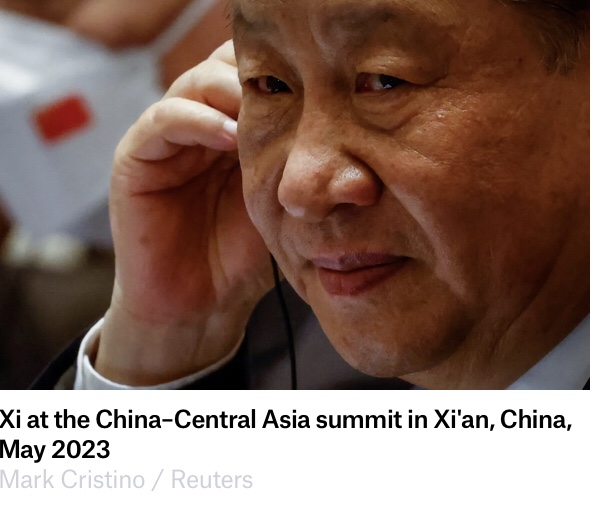
In March, at the end of Chinese President Xi Jinping’s visit to Moscow, Russian President Vladimir Putin stood at the door of the Kremlin to bid his friend farewell. Xi told his Russian counterpart, “Right now, there are changes—the likes of which we haven’t seen for 100 years—and we are the ones driving these changes together.” Putin, smiling, responded, “I agree.”
The tone was informal, but this was hardly an impromptu exchange: “Changes unseen in a century” has become one of Xi’s favorite slogans since he coined it in December 2017. Although it might seem generic, it neatly encapsulates the contemporary Chinese way of thinking about the emerging global order—or, rather, disorder. As China’s power has grown, Western policymakers and analysts have tried to determine what kind of world China wants and what kind of global order Beijing aims to build with its power. But it is becoming clear that rather than trying to comprehensively revise the existing order or replace it with something else, Chinese strategists have set about making the best of the world as it is—or as it soon will be.
While most Western leaders and policymakers try to preserve the existing rules-based international order, perhaps updating key features and incorporating additional actors, Chinese strategists increasingly define their goal as survival in a world without order. The Chinese leadership, from Xi on down, believes that the global architecture that was erected in the aftermath of World War II is becoming irrelevant and that attempts to preserve it are futile. Instead of seeking to save the system, Beijing is preparing for its failure.
Although China and the United States agree that the post–Cold War order is over, they are betting on very different successors. In Washington, the return of great-power competition is thought to require revamping the alliances and institutions at the heart of the post–World War II order that helped the United States win the Cold War against the Soviet Union. This updated global order is meant to incorporate much of the world, leaving China and several of its most important partners—including Iran, North Korea, and Russia—isolated on the outside.
But Beijing is confident that Washington’s efforts will prove futile. In the eyes of Chinese strategists, other countries’ search for sovereignty and identity is incompatible with the formation of Cold War–style blocs and will instead result in a more fragmented, multipolar world in which China can take its place as a great power.
Ultimately, Beijing’s understanding may well be more accurate than Washington’s and more closely attuned to the aspirations of the world’s most populous countries. The U.S. strategy won’t work if it amounts to little more than a futile quest to update a vanishing order, driven by a nostalgic desire for the symmetry and stability of a bygone era. China, by contrast, is readying itself for a world defined by disorder, asymmetry, and fragmentation—a world that, in many ways, has already arrived.
SURVIVOR: BEIJING
The very different responses of China and the United States to Russia’s invasion of Ukraine revealed the divergence in Beijing’s and Washington’s thinking. In Washington, the dominant view is that Russia’s actions are a challenge to the rules-based order, which must be strengthened in response. In Beijing, the dominant opinion is that the conflict shows the world is entering a period of disorder, which countries will need to take steps to withstand.
The Chinese perspective is shared by many countries, especially in the global South, where Western claims to be upholding a rules-based order lack credibility. It is not simply that many governments had no say in creating these rules and therefore see them as illegitimate. The problem is deeper: these countries also believe that the West has applied its norms selectively and revised them frequently to suit its own interests or, as the United States did when it invaded Iraq in 2003, simply ignored them. For many outside the West, the talk of a rules-based order has long been a fig leaf for Western power. It is only natural, these critics maintain, that now that Western power is declining, this order should be revised to empower other countries.
Hence Xi’s claim that “changes unseen in a century” are coming to pass. This observation is one of the guiding principles of “Xi Jinping Thought,” which has become China’s official ideology. Xi sees these changes as part of an irreversible trend toward multipolarity as the East rises and the West declines, accelerated by technology and demographic shifts. Xi’s core insight is that the world is increasingly defined by disorder rather than order, a situation that in his view harks back to the nineteenth century, another era characterized by global instability and existential threats to China. In the decades after China’s defeat by Western powers in the First Opium War in 1839, Chinese thinkers, including the diplomat Li Hongzhang—sometimes referred to as “China’s Bismarck”—wrote of “great changes unseen in over 3,000 years.” These thinkers observed with concern the technological and geopolitical superiority of their foreign adversaries, which inaugurated what China now considers to be a century of humiliation. Today, Xi sees the roles as reversed. It is the West that now finds itself on the wrong side of fateful changes and China that has the chance to emerge as a strong and stable power.
Other ideas with roots in the nineteenth century have also experienced a renaissance in contemporary China, among them social Darwinism, which applied Charles Darwin’s concept of “the survival of the fittest” to human societies and international relations. In 2021, for instance, the Research Center for a Holistic View of National Security, a government-backed body linked to the Chinese security ministry, published National Security in the Rise and Fall of Great Powers, edited by the economist Yuncheng Zhang. The book, part of a series explaining the new national security law, claims that the state is like a biological organism that must evolve or die—and that China’s challenge is to survive. And this line of thinking has taken hold. One Chinese academic told me that geopolitics today is a “struggle for survival” between fragile and inward-looking superpowers—a far cry from the expansive and transformative visions of the Cold War superpowers. Xi has adopted this framework, and Chinese government statements are full of references to “struggle,” an idea that is found in communist rhetoric but also in social Darwinist writings.
This notion of survival in a dangerous world necessitates the development of what Xi describes as “a holistic approach to national security.” In contrast to the traditional concept of “military security,” which was limited to countering threats from land, air, sea, and space, the holistic approach to security aims to counter all challenges, whether technical, cultural, or biological. In an age of sanctions, economic decoupling, and cyberthreats, Xi believes that everything can be weaponized. As a result, security cannot be guaranteed by alliances or multilateral institutions. Countries must therefore do all that they can to safeguard their own people. To that end, in 2021, the Chinese government backed the creation of a new research center dedicated to this holistic approach, tasking it with considering all aspects of China’s security strategy. Under Xi, the Chinese Communist Party (CCP) is increasingly conceived of as a shield against chaos.
CLASHING VISIONS
Chinese leaders see the United Statesas the principal threat to their survival and have developed a hypothesis to explain their adversary’s actions. Beijing believes that Washington is responding to domestic polarization and its loss of global power by ramping up its competition with China. U.S. leaders, according to this thinking, have decided that it is only a matter of time before China becomes more powerful than the United States, which is why Washington is trying to pit Beijing against the entire democratic world. Chinese intellectuals, therefore, speak of a U.S. shift from engagement and partial containment to “total competition,” spanning politics, economics, security, ideology, and global influence.
Chinese strategists have watched the United States try to use the war in Ukraine to cement the divide between democracies and autocracies. Washington has rallied its partners in the G-7 and NATO, invited East Asian allies to join the NATO meeting in Madrid, and forged new security partnerships, including AUKUS, a trilateral pact among Australia, the United Kingdom, and the United States, and the Quad (Quadrilateral Security Dialogue), which aligns Australia, India, and Japan with the United States. Beijing is particularly concerned that Washington’s engagement in Ukraine will lead it to be more assertive on Taiwan. One scholar said he feared that Washington is gradually trading its “one China” policy—under which the United States agrees to regard the People’s Republic of China as the only legal government of Taiwan and the mainland—for a new approach that one Chinese interlocutor called “one China and one Taiwan.” This new kind of institutionalization of ties between the United States and its partners, implicitly or explicitly aimed at containing Beijing, is seen in China as a new U.S. attempt at alliance building that brings Atlantic and European partners into the Indo-Pacific. It is, Chinese analysts believe, yet another instance of the United States’ mistaken belief that the world is once more dividing itself into blocs.
With only North Korea as a formal ally, China cannot win a battle of alliances. Instead, it has sought to make a virtue of its relative isolation and tap into a growing global trend toward nonalignment among middle powers and emerging economies. Although Western governments take pride in the fact that 141 countries have supported UN resolutions condemning the war in Ukraine, Chinese foreign policy thinkers, including the international relations professor and media commentator Chu Shulong, argue that the number of countries enforcing sanctions against Russia is a better indication of the power of the West. By that metric, he calculates that the Western bloc contains only 33 countries, with 167 countries refusing to join in the attempt to isolate Russia. Many of these states have bad memories of the Cold War, a period when their sovereignty was squeezed by competing superpowers. As one prominent Chinese foreign policy strategist explained to me, “The United States isn’t declining, but it is only good at talking to Western countries. The big difference between now and the Cold War is that [then] the West was very effective at mobilizing developing countries against [the Soviet Union] in the Middle East, North Africa, Southeast Asia, and Africa.”
To capitalize on waning U.S. influence in these regions, China has sought to demonstrate its support for countries in the global South. In contrast to Washington, which Beijing sees as bullying countries into picking sides, China’s outreach to the developing world has prioritized investments in infrastructure. It has done so through international initiatives, some of which are already partially developed. These include the Belt and Road Initiative and the Global Development Initiative, which invest billions of dollars of state and private-sector money in other countries’ infrastructure and development. Others are new, including the Global Security Initiative, which Xi launched in 2022 to challenge U.S. dominance. Beijing is also working to expand the Shanghai Cooperation Organization, a security, defense, and economic group that brings together major players in Eurasia, including India, Pakistan, and Russia and is in the process of admitting Iran.
STUCK IN THE PAST?
China is confident that the United States is mistaken in its assumption that a new cold war has broken out. Accordingly, it is seeking to move beyond Cold War–style divides. As Wang Honggang, a senior official at a think tank affiliated with China’s Ministry of State Security, put it, the world is moving away from “a center-periphery structure for the global economy and security and towards a period of polycentric competition and co-operation.” Wang and like-minded scholars do not deny that China is also trying to become a center of its own, but they argue that because the world is emerging from a period of Western hegemony, the establishment of a new Chinese center will actually lead to a greater pluralism of ideas rather than a Chinese world order. Many Chinese thinkers link this belief with the promise of a future of “multiple modernity.” This attempt to create an alternative theory of modernity, in contrast to the post–Cold War formulation of liberal democracy and free markets as the epitome of modern development, is at the core of Xi’s Global Civilization Initiative. This high-profile project is intended to signal that unlike the United States and European countries, which lecture others on subjects such as climate change and LGBTQ rights, China respects the sovereignty and civilization of other powers.
For many decades, China’s engagement with the world was largely economic. Today, China’s diplomacy goes well beyond matters of trade and development. One of the most dramatic and instructive examples of this shift is China’s growing role in the Middle East and North Africa. This region was formerly dominated by the United States, but as Washington has stepped back, Beijing has moved in. In March, China pulled off a major diplomatic coup by brokering a truce between Iran and Saudi Arabia. Whereas Chinese involvement in the region was once limited to its status as a consumer of hydrocarbons and an economic partner, Beijing is now a peacemaker busily engaged in building diplomatic and even military relationships with key players. Some Chinese scholars regard the Middle East today as “a laboratory for a post-American world.” In other words, they believe that the region is what the entire world will look like in the next few decades: a place where, as the United States declines, other global powers, such as China, India, and Russia, compete for influence, and middle powers, such as Iran, Saudi Arabia, and Turkey, flex their muscles.
Many in the West doubt China’s ability to achieve this goal, mostly because Beijing has struggled to win over potential collaborators. In East Asia, South Korea is moving closer to the United States; in Southeast Asia, the Philippines is developing closer relations with Washington to protect itself from Beijing; and there has been an anti-Chinese backlash in many African countries, where complaints about Beijing’s colonial behavior are rife. Although some countries, including Saudi Arabia, want to strengthen their ties with China, they are motivated at least in part by a desire for the United States to reengage with them. But these examples should not mask the broader trend: Beijing is becoming more active and steadily more ambitious.
SPARE WHEELS AND BODY LOCKS
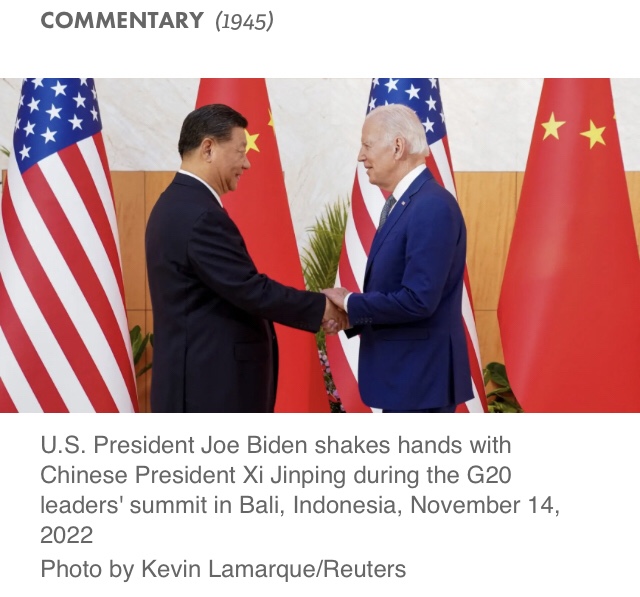
Economic competition between China and the United States is also increasing. Many Chinese thinkers predicted that the election of U.S. President Joe Biden in 2020 would lead to improved relations with Beijing, but they have been disappointed: the Biden administration has been much more aggressive toward China than they expected. One senior Chinese economist likened Biden’s pressure campaign against the Chinese technology sector, which includes sanctions on Chinese technology companies and chip-making firms, to U.S. President Donald Trump’s actions against Iran. Many Chinese commentators have argued that Biden’s desire to freeze Beijing’s technological development to preserve the United States’ edge is no different than Trump’s efforts to stop Tehran’s development of nuclear weapons. A consensus has formed in Beijing that Washington’s goal is not to make China play by the rules; it is to stop China from growing.
This is incorrect: both Washington and the European Union have made it clear that they do not intend to shut China out of the global economy. Nor do they want to fully decouple their economies from China’s. Instead, they seek to ensure that their businesses do not share sensitive technologies with Beijing and to reduce their reliance on Chinese imports in critical sectors, including telecommunications, infrastructure, and raw materials. Thus, Western governments increasingly talk of “reshoring” and “friend shoring” production in such sectors or at least diversifying supply chains by encouraging companies to base production in countries such as Bangladesh, India, Malaysia, and Thailand.
Xi’s response has been what he calls “dual circulation.” Instead of thinking about China as having a single economy linked to the world through trade and investment, Beijing has pioneered the idea of a bifurcated economy. One-half of the economy—driven by domestic demand, capital, and ideas—is about “internal circulation,” making China more self-reliant in terms of consumption, technology, and regulations. The other half—“external circulation”—is about China’s selective contacts with the rest of the world. Simultaneously, even as it decreases its dependence on others, Beijing wants to boost the dependence of other players on China so that it can use these links to increase its power and exert pressure. These ideas have the potential to reshape the global economy.
The influential Chinese economist Yu Yongding has explained the notion of dual circulation with two new concepts: “the spare wheel” and “the body lock.” Following the “spare wheel” concept, China should have ready alternatives if it loses access to natural resources, components, and critical technologies. This idea has come in response to the increasing use of Western sanctions, which Beijing has watched with concern. The Chinese government is now working to shield itself from any attempts to cut it off in case of a conflict by making enormous investments in critical technologies, including artificial intelligence and semiconductors. But Beijing is also attempting to exploit the new reality to reduce the global economy’s reliance on Western economic demand and the U.S.-led financial system. At home, the CCP is promoting a shift from export-led growth to growth driven by domestic demand; elsewhere, it is promoting the yuan as an alternative to the dollar. Accordingly, the Russians are increasing their yuan reserve holdings, and Moscow no longer uses the dollar when trading with China. The Shanghai Cooperation Organization has recently agreed to use national currencies, rather than just the dollar, for trade among its member states. Although these developments are limited, Chinese leaders are hopeful that the weaponization of the U.S. financial system and the massive sanctions against Russia will lead to further disorder and increase other countries’ willingness to hedge against the dollar’s dominance.
The “body lock” is a wrestling metaphor. It means that Beijing should make Western companies reliant on China, thereby making decoupling more difficult. That is why it is working to bind as many countries as possible to Chinese systems, norms, and standards. In the past, the West struggled to make China accept its rules. Now, China is determined to make others bow to its norms, and it has invested heavily in boosting its voice in various international standard-setting bodies. Beijing is also using its Global Development and Belt and Road Initiatives to export its model of subsidized state capitalism and Chinese standards to as many countries as possible. Whereas China’s objective was once integration into the global market, the collapse of the post–Cold War international order and the return of nineteenth-century-style disorder have altered the CCP’s approach.
Xi has therefore invested heavily in self-reliance. But as many Chinese intellectuals point out, the changes in Chinese attitudes toward globalization have been driven as much by domestic economic challenges as by tensions with the United States. In the past, China’s large, young, and cheap labor force was the principal driver of the country’s growth. Now, its population is aging rapidly, and it needs a new economic model, one built on boosting consumption. As the economist George Magnus points out, however, doing so requires raising wages and pursuing structural reforms that would upset China’s delicate societal power balance. Rekindling population growth, for instance, would require substantial upgrades to the country’s underdeveloped social security system, which in turn would need to be paid for with unpopular tax increases. Promoting innovation would require a reduction of the role of the state in the economy, which runs counter to Xi’s instincts. Such changes are hard to imagine in the current circumstances.
A WORLD DIVIDED?
Between 1945 and 1989, decolonization and the division between the Western powers and the Soviet bloc defined the world. Empires dissolved into dozens of states, often as the result of small wars. But although decolonization transformed the map, the more powerful force was the ideological competition of the Cold War. After winning their independence, most countries quickly aligned themselves with either the democratic bloc or the communist bloc. Even those countries that did not want to choose sides nevertheless defined their identity in reference to the Cold War, forming a “nonaligned movement.”
Both trends are in evidence today, and the United States believes that this history is repeating itself as policymakers try to revive the strategy that succeeded against the Soviet Union. It is, therefore, dividing the world and mobilizing its allies. Beijing disagrees, and it is pursuing policies suited to its bet that the world is entering an era in which self-determination and multialignment will trump ideological conflict.
Beijing’s judgment is more likely to be accurate because the current era differs from the Cold War era in three fundamental ways. First, today’s ideologies are much weaker. After 1945, both the United States and the Soviet Union offered optimistic and compelling visions of the future that appealed to elites and workers worldwide. Contemporary China has no such message, and the traditional U.S. vision of liberal democracy has been greatly diminished by the Iraq war, the global financial crisis of 2008, and the presidency of Donald Trump, all of which made the United States seem less successful, less generous, and less reliable. Moreover, rather than offering starkly different and opposing ideologies, China and the United States increasingly resemble each other on matters from industrial policy and trade to technology and foreign policy. Without ideological messages capable of creating international coalitions, Cold War–style blocs cannot form.
Second, Beijing and Washington do not enjoy the same global dominance that the Soviet Union and the United States did after 1945. In 1950, the United States and its major allies (NATO countries, Australia, and Japan) and the communist world (the Soviet Union, China, and the Eastern bloc) together accounted for 88 percent of global GDP. But today, these groups of countries combined account for only 57 percent of global GDP. Whereas nonaligned countries’ defense expenditures were negligible as late as the 1960s (about one percent of the global total), they are now at 15 percent and growing fast.
Third, today’s world is extremely interdependent. At the beginning of the Cold War, there were very few economic links between the West and the countries behind the Iron Curtain. The situation today could not be more different. Whereas trade between the United States and the Soviet Union remained at around one percent of both countries’ total trade in the 1970s and 1980s, trade with China today makes up almost 16 percent of both the United States’ and the EU’s total trade balance. This interdependence prohibits the formation of the stable alignment of blocs that characterized the Cold War. What is more likely is a permanent state of tension and shifting allegiances.
China’s leaders have made an audacious strategic bet by preparing for a fragmented world. The CCP believes the world is moving toward a post-Western order not because the West has disintegrated but because the consolidation of the West has alienated many other countries. In this moment of change, it may be that China’s stated willingness to allow other countries to flex their muscles may make Beijing a more attractive partner than Washington, with its demands for ever-closer alignment. If the world truly is entering a phase of disorder, China could be best placed to prosper.







 healthcarereimagined