healthcarereimagined

Envisioning healthcare for the 21st century

  • About
  • Economics

OSINT Goes Mainstream: How Security Teams Can Use Open-Source Intelligence To Help Companies Understand Risk – Forbes

Posted by timmreardon on 06/07/2022
Posted in: Uncategorized. Leave a comment

Fred BurtonForbes Councils Member

Forbes Technology Council COUNCIL POST| Membership (fee-based)

Jun 7, 2022,09:00am EDT

New York Times best-selling author, former special agent and security expert who helms the Ontic Center for Protective Intelligence.

The war in Ukraine may be the most documented conflict in human history. On social media, we can watch in near real time as military units prepare for battle. A few hours later, we see the aftermath.

Images are being posted and recirculated by an online community of open-source intelligence professionals and enthusiasts. The more analytically rigorous among them may have military, intelligence agency, IT and think tank backgrounds where they learned the skills and abilities that inform their analyses, providing in-depth explanations of battlefield successes and failures to anyone with an internet connection. Information and intelligence that was once available only to governments and intelligence services can now be seen and understood by anyone.

According to the Office of the U.S. Director of National Intelligence, open-source intelligence, also known as OSINT, is defined as “publicly available information appearing in print or electronic form including radio, television, newspapers, journals, the Internet, commercial databases, and videos, graphics, and drawings.” Typically, OSINT doesn’t include any information obtained using clandestine means, making it available to anyone with the ability to uncover it or pay for it.

As a former counter-terrorism agent and executive protection professional, I’ve used open-source intelligence extensively to understand my operating environment and maintain situational awareness, as have protective intelligence teams around the world. But the scope and scale of the OSINT we’re seeing in Ukraine demonstrate how much these capabilities have improved in recent years and how widely available the information has become.

For casual observers not involved in security operations, these developments may mark the first time they’ve seen OSINT used in practice. It demonstrates the incredible value—and risks—of freely available information. But the mainstreaming of OSINT also marks an opportunity for security professionals whose domains have expanded beyond “guns and gates” to include areas like supply chain risk, social unrest, labor shortages, pandemic monitoring and travel security. OSINT’s prevalence in our lives and this wider spread of awareness can make it a topic and bridge to engage colleagues across the organization—and to prove and enhance the value security teams provide businesses.

Here’s how.

First, we have the lightbulb moment. The growing societal awareness of the types of OSINT that are available and their value is an opportunity for a companywide discussion of what data and intelligence the organization might need, the best ways to find that data and how the analysis of that data could be leveraged to help other departments understand and mitigate organizational risk. This is especially true for business functions that focus on specific geographic locations, like logistics, travel security and strategic planning, or those that may deal with specific individuals, like HR, legal and mergers and acquisitions teams. Because the security team is likely already using OSINT as part of their operations, they’re often uniquely placed to understand where the most valuable OSINT can be found, how it can be used and potential pitfalls to avoid.

Second, OSINT can only help your organization if you’re able to identify and integrate the critical insights without getting stuck in information overload. The amount of OSINT available is staggering, but without a plan to analyze and integrate that information, your company will be drinking from a firehose of information. The growing usefulness of OSINT creates an invitation for collaboration between multiple business units to find ways to integrate their data within shared platforms and tools, finding the most useful data in proprietary and open sources to create a more comprehensive picture of the situation. The collaboration between units like HR, risk management, legal and security can decrease resource redundancy while real-time information is made available to the appropriate stakeholders.

Overlaying your internal datasets with OSINT material could yield positive results in many areas. For example, watching the war in Ukraine, it’s not uncommon for online sleuths to match an infrared picture from drone footage posted online to Google Maps data, giving clues about where operations are taking place. In companies, security teams may be able to extract metadata from social media posts to identify the locations of threat actors. In certain situations, this type of information could be integrated into travel and route planning for key executives.

Third, security teams can help the organization understand and communicate the risks and challenges that are present with open-source data. Security teams are often trained to analyze data to spot a wide variety of potential problems in different types of information. For example, information produced by certain outlets may contain biases based on its ownership, which could make their conclusions less reliable. Advanced analysis of images and videos may reveal where or how they were created. It’s not enough to merely find OSINT—the data must be evaluated and analyzed in an attempt to ensure its accuracy and reliability to determine if it’s also actionable.

Security teams are also uniquely placed to help companies understand the risks posed by publicly available corporate information. Employee information available online, either intentionally or accidentally, can be used to concoct social engineering schemes that could be the first step in a cyberattack. Maps of corporate facilities, building plans and photos taken inside facilities could be used to facilitate pre-operational surveillance in preparation for a physical attack. Members of the security team can help the organization see OSINT about the company through the eyes of an attacker and work to create ways to mitigate threats that the OSINT might create.

For some, OSINT is merely a curiosity. Harnessing the value of OSINT for your company and mitigating its risks are complex undertakings, but the mainstreaming of OSINT can provide your organization with a new way of looking at your operations and understanding risks.

Article link: https://www.forbes.com/sites/forbestechcouncil/2022/06/07/osint-goes-mainstream-how-security-teams-can-use-open-source-intelligence-to-help-companies-understand-risk/amp/


Forbes Technology Council is an invitation-only community for world-class CIOs, CTOs and technology executives. Do I qualify?

The Future of Open Source Intelligence for UK National Security – RUSI

Posted by timmreardon on 06/07/2022
Posted in: Uncategorized. Leave a comment

Ardi Janjeva, Alexander Harris and JoeByrne 7 June 2022

DOWNLOAD PDF(18MB)

Click to access 330_OP_FutureOfOpenSourceIntelligence_FinalWeb.pdf

Topographic map concept. Courtesy of cherezoff / Adobe Stock.

Main Image Credit Topographic map concept. Courtesy of cherezoff / Adobe Stock.


This paper explores the use of publicly available information and open source intelligence for national security purposes, and provides recommendations for future policy development.

This joint paper from RUSI and the Alan Turing Institute’s Centre for Emerging Technology and Security aims to establish an independent evidence base to inform future government policy development regarding the use of publicly available information (PAI) and open source intelligence (OSINT) for national security purposes. The findings are based on in-depth consultations with stakeholders from across academia, civil society, commercial organisations, law enforcement and the UK government.

The paper explores the extent to which the increasing proliferation of PAI – and wider accessibility of tools leveraging PAI for OSINT – is changing perceptions of modern intelligence. From this foundation, it asks what the commercial, cultural, policy and technological implications are for UK national security stakeholders.

Article link: https://rusi.org/explore-our-research/publications/occasional-papers/future-open-source-intelligence-uk-national-security

Solarium Successor Wants the White House to Lead on Cyber Workforce Strategy – Nextgov

Posted by timmreardon on 06/07/2022
Posted in: Uncategorized. Leave a comment

By NATALIE ALMSJUNE 3, 2022

One recommendation: establish cyber excepted service authorities, like the Department of Homeland Security’s newly launched cyber hiring initiative, government-wide.

An expert panel is calling on the White House-based Office of the National Cyber Director to steer a governmentwide cybersecurity workforce strategy to address long-standing workforce shortages.

The report, issued Thursday, comes from an offshoot of the congressionally chartered Cyberspace Solarium Commission called CSC 2.0, housed at the nonprofit Foundation for the Defense of Democracies. 

It’s a “blueprint to help address the problem,” CSC 2.0 co-chair, Rep.Mike Gallagher (R-Wis.), told FCW.

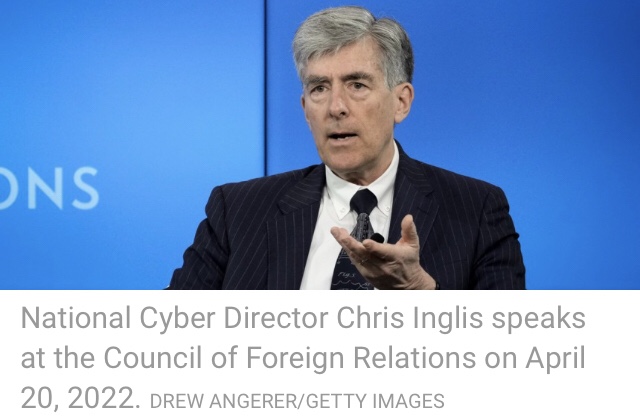
The panel wants National Cyber Director Chris Inglis to use his position to review agencies’ cyber budgets, revamp hiring mechanisms across the government and potentially even work with Congress to establish expected service authorities for cyber personnel across the government.

“I think we should be concerned about the jobs that have cyber [or] IT in them that go unfilled,” said Inglis, himself a member of the original Solarium Commission, during a Thursday panel discussion held by the Foundation for the Defense of Democracies.

His role, he continued, is making sure that authorities and resources are aligned across the government.

“We have to make sure we first have a strategy that defines what’s missing,” Inglis said. “We then have to make use of all the parts that are already there and connect them to that strategy.”

There are nearly 600,000 cyber job openings nationwide, and for the government alone, there are almost 39,000 job openings, according to the National Institute of Standards and Technology-based CyberSeek.

Currently, the government’s strategy is ad hoc. Federal hiring practices are onerous, and degree and level of experience requirements for jobs often block out entry-level hires. The government’s existing cyber workforce is also less diverse than the rest of the federal workforce.

As with another cyber workforce report issued this year by a different expert panel at the National Academy of Public Administration (NAPA), the latest recommendations call on Inglis to coordinate existing, disparate efforts with new leadership and coordination structures.

One key focus is chronic problems with actually hiring cyber workers into government using antiquated and bulky processes.

“We all know how many jobs we’d like to fill, but there aren’t any vehicles, or many vehicles, that essentially would take that aspiration and meaningfully assist people” to be hired into government jobs, said Inglis, continuing to point to qualification requirements and saying that the government needs to be more flexible and invest in early career hires. “People who show up today at the front door of a government organization with a bachelor of science in computer science, but no experience in hand, typically are turned away,” he said.

The report’s authors recommend various fixes, such as working with the Office of Personnel Management to modernize cybersecurity job codes or expand existing direct hire authorities. 

The preference is a third option, though, something report co-author and CSC 2.0 director, Mark Montgomery, called the “Rosetta Stone.”

That recommendation is that Inglis push Congress to authorize governmentwide excepted service authorities for cyber personnel, a category distinct from the competitive service — the majority of rank-and-file feds, governed by particular civil service rules for hiring, firing and pay — or the administrators of the senior executive service.

The report references the Department of Homeland Security’s Cybersecurity Talent Management System, an excepted service system for cyber professionals that launched last fall, but has struggled to scale, only onboarding in a few new hires thus far. 

The Department of Defense has similar hiring authorities.

“In essence, this option would take the authorities that underpin CTMS and CES and expand them to the whole of the federal government,” the report states. “This option would maximize the federal government’s flexibility in hiring and managing cyber talent, by creating systems built for the cyber workforce.”

Such a move would likely face opposition, Montgomery said Thursday.

“This will be tough. There will be people who fight this both in Congress and in federal government organizations. And it’s going to cost money, but … no one ever thought fixing federal cybersecurity workforce was going to be a cheap endeavor,” he said. “We really do have to come up with a new hiring mechanism.”

The recent NAPA report also referenced CTMS, saying that it should be evaluated and, if successful, scaled to other agencies.

The CSC 2.0 also pushes Inglis to use his office’s congressional mandate to assess the effectiveness of cyber policies and annual budget proposals from agencies, and the double-hatting of one top official, Chris DeRusha, as the deputy cyber director and federal chief information security officer out of the Office of Management and Budget, to “review and align” agencies’ cybersecurity workforce budgets alongside OMB.

Finally, one of the top challenges is data about the government’s cyber workforce, which is inconsistent and siloed within agencies, said Montgomery. 

The NAPA study recommended a cybersecurity data bureau, while this latest report calls for Inglis to focus accountability for existing data mandates and for Congress to extend and amend the law governing data collection on the government’s cyber workers, the Federal Cybersecurity Workforce Assessment Act of 2015.

Article link: https://www.nextgov.com/cybersecurity/2022/06/solarium-successor-wants-white-house-lead-cyber-workforce-strategy/367728/

DOD Recommends NIST Align Frameworks for Cybersecurity Risk Management – Nextgov

Posted by timmreardon on 06/06/2022
Posted in: Uncategorized. Leave a comment

By MARIAM BAKSHJUNE 6, 2022 04:17 PM ET

An effort to update the framework for securing critical infrastructure from cyberattack is coming face to face with issues that have plagued the Commerce agency from the beginning.

It’s time the National Institute of Standards and Technology point to how organizations should be assessing the risk they’re associating with systems when deciding what security controls to implement for their protection, according to the Defense Department.   

“Enhance Section 4.0 (Self-Assessing Cybersecurity Risk with the Framework) to integrate guidance on how [Special Publication 800-30, revision 1] can be leveraged to perform the risk measurement to assign a value,” wrote Michele Iversen, director of risk assessment and operational integration at DOD’s chief information office for cybersecurity. “It appears that [the Cybersecurity Framework] depends on measuring, or assessing risk, but [avoids] alignment to the NIST standard commonly used to assess cybersecurity risks.”

Iversen’s comment is in response to a request for information NIST issued toward a second update of the agency’s landmark cybersecurity framework. NIST on Friday released a summary of the comments it’s received—over 130, mostly from industry—since the request in February.

Originally issued in 2014, the Cybersecurity Framework, or CSF, points to various security controls organizations should consider implementing. But the document leaves it up to the user to determine which of those to prioritize, depending on how much risk they’re looking to address, or are willing to accept. And the question of how to measure whether use of the framework was successful was never really answered.

“Further guidance for measuring the performance of an entity in establishing and improving a cybersecurity program was a key need expressed in the RFI responses,” NIST wrote. “As with previous RFIs, comments on drafts, and discussions at NIST forums, metrics and measurement remain a lively topic among respondents. Many recognize that cybersecurity program implementation and improvement are not a pass/fail exercise, and that an effective program must be able to assess, coordinate and report measurable activities. Others stated that such detailed metrics, such as specific control objectives, ‘defeat the broad applicability and flexibility that make the CSF valuable.’”

That tension between the desire for broad applicability and specific guidance is another general challenge for the framework, with groups like BSA | The Software Alliance asking for examples of how federal agencies have used it, as required.

“The level of detail and specificity in the CSF reflects the scalability and flexibility necessary to meet the needs of a wide range of stakeholders—small and large organizations in various sectors,” NIST wrote. “There were more than 500 references in the comments supporting the need for more guidance to support CSF implementation, and many users expressed a desire for greater detail in the CSF while maintaining a non-prescriptive approach. Identifying the proper balance between simplicity and detail in updates to the CSF is a key takeaway that will need further discussion.”

From DOD’s perspective, measurement is “NIST’s core competency” and the agency should be doing more to facilitate whole-of-government risk assessments which also consider the supply chain components of commercial information and communications technology. 

“The current practice of departments and agencies developing their own overlays results in variability … The individual department or agency may be operating at low risk to their mission w/o realizing how others may be impacted by the residual risks that they manage,” read the Defense Department comments. “Whole-of-government activities (national security, national commerce, etc.) need a capstone resource to enable integrated risk assessments grounded in the broader/shared uncertainties associated with observation and measurement particularly for their common operating space of ICT, cyber and cyber-security.”

Article link: https://www.nextgov.com/cybersecurity/2022/06/dod-recommends-nist-align-frameworks-cybersecurity-risk-management/367815/

Data gap poses risks for launch site of VA’s new health record – FCW

Posted by timmreardon on 06/06/2022
Posted in: Uncategorized. Leave a comment

By ADAM MAZMANIANJUNE 3, 2022

The commercial electronic health record system being introduced by the Department of Veterans Affairs is proving difficult and expensive to adapt to the agency’s data reporting requirements.

The Cerner electronic health records system the Department of Veterans Affairs acquired for $10 billion over 10 years to replace its homegrown Vista software is falling short on data reporting requirements, according to a watchdog report.

The VA’s Office of Inspector General reported on Wednesday that the Mann-Grandstaff Medical Center in Spokane, Washington, the first site to implement the new health record system, isn’t providing metrics needed to support the hospital’s accreditation. A loss in accreditation “may affect patient’s trust in the facility and can also hinder the facility’s ability to recruit quality staff who may prefer to work for an accredited facility,” the report states.

The OIG found that “gaps in available quality and patient safety metrics, more than a year after go-live, hindered publication of quality and patient safety metrics as legislatively required.”

The go-live for the Cerner software at Mann-Grandstaff took place in October 2020. Several oversight reports from VA’s watchdog have identified multiple issues relating to workflows, training, patient safety and more. The project, which is expected to cost at least $21 billion overall, includes a $10 billion contract with Cerner for software, storage and services.

Related articles

VA’s new health record still putting patients at risk

VA plans new health record deployments, despite critical watchdog reports

A Veterans Health Administration official interviewed for the report told the OIG that the agency decided to try to produce reports internally after learning that Cerner would charge $12 million for 50 metrics reports and noted that Cerner did not appear to have the expertise sought by VHA when it came to metrics.

Cerner has “had lots of people leave, lots of buyouts,” the official was quoted as saying in the report. “So sometimes you’ll get somebody that has 20 years. Sometimes you’ll get somebody that just came out of college. We would get stuff when we were validating [metrics reports created by Cerner] that didn’t work right off the bat. Had spelling errors, you know, just simple, simple things.”

Cerner was recently acquired by Oracle for approximately $28.3 billion. Oracle announced on Wednesday that the deal was cleared by U.S. antitrust regulators.

The OIG report included two recommendations for VA Deputy Secretary Donald Remy, whose position includes executive oversight of the Electronic Health Record Modernization program. The report requests that Remy evaluate gaps in metrics and examine issues around the availability of data and taking corrective action as needed. VA agreed with both recommendations and expects to complete the work by October 2022.

In reply comments, Remy noted that many of the problems flagged in the report, which was based on an investigation conducted from July to October 2021, have already been addressed.

Article link: https://fcw.com/it-modernization/2022/06/data-gap-poses-risks-launch-site-vas-new-health-record/367753/

GAO: Federal Broadband Efforts ‘Fragmented, Overlapping’ – Nextgov

Posted by timmreardon on 06/04/2022
Posted in: Uncategorized. Leave a comment

By FRANK KONKELJUNE 3, 2022

The watchdog recommends synchronizing federal broadband efforts.

Despite tens of billions of dollars in fundingand numerous efforts to improve internet availability across America, millions of Americans still lack broadband internet, according to a new audit from the Government Accountability Office.

Released May 31, the audit posits reasons why the federal government’s broadband efforts haven’t been more successful.

“Federal broadband efforts are fragmented and overlapping, with more than 100 programs administered by 15 agencies,” auditors stated. “Many programs have broadband as their main purpose, and several overlap because they can be used for the purpose of broadband deployment.”

The audit indicates the federal government invested more than $44 billion in broadband from 2015 to 2020. However, the audit makes clear that many efforts are disjointed and suffer programmatic differences. In one example, the National Telecommunications and Information Administration, which is responsible for coordinating telecommunications matters across the executive branch and improving broadband coordination, “did not identify which statutory provisions limit alignment nor recommend any changes” when it led an interagency group that reviewed differing broadband programs in 2018.

“Improved alignment is needed to help address fragmentation and overlap. Without legislative proposals for Congress to consider, agencies may continue to face limitations in aligning programs to close the digital divide,” auditors state.

The auditors also make the case for a new national broadband strategy with “clear roles, goals, objectives and performance measures.”

“In 2021, the Executive Office of the President, through the National Economic Council and in collaboration with other White House offices, took the lead for coordinating broadband programs,” the audit states. “The Executive Office of the President has not decided if a national strategy is needed, but it is well positioned to develop and implement one. A strategy to help better align programs could also include legislative proposals for Congress. Without such a strategy, federal broadband efforts will not be fully coordinated, and thereby continue to risk overlap and duplication of effort.”

GAO issued three recommendations. NTIA agreed with such recommendations to identify statutory limitations to program alignment and develop legislative proposals. The Executive Office of the President did not take a position on GAO’s recommendation to develop a national broadband strategy.

Article link: https://www.nextgov.com/it-modernization/2022/06/gao-federal-broadband-efforts-fragmented-overlapping/367684/

Oracle’s $28.3-Billion Purchase of Cerner Gets Green Light – IT News Africa

Posted by timmreardon on 06/02/2022
Posted in: Uncategorized. Leave a comment

By Luis Monzon – June 2, 2022

US-based software provider Oracle Corporation has announced that all required antitrust approvals have been obtained for its proposed acquisition of American health ICT company Cerner, including European Commission clearance. Oracle is expected to acquire Cerner for $28.3-billion, according to Gulf Business.

Cerner is a leading provider of digital information systems used within hospitals and health systems to enable medical professionals to deliver better healthcare to individual patients and communities.

Oracle expects to complete the tender offer promptly following the expiration of that offer at midnight Eastern time on June 6, 2022. Completion of the tender offer remains subject to the conditions described in the tender offer statement on Schedule TO filed by Oracle with the U.S. Securities and Exchange Commission on January 19, 2022, as amended.

Oracle Chairman and CTO Larry Ellison will discuss the Cerner acquisition and Oracle’s new suite of cloud-based health management applications at an online event on June 9, 2022.

“Working together, Cerner and Oracle have the capability to transform healthcare delivery by providing medical professionals with a new generation of healthcare information systems,” said Ellison about the acquisition.

“Better information enables better treatment decisions resulting in better patient outcomes. Our new, easy-to-use systems are designed to lower the administrative workload burdening our medical professionals while improving patient privacy and lowering overall healthcare costs.”

“We expect this acquisition to be substantially accretive to Oracle’s earnings on a non-GAAP basis in fiscal year 2023,” said Safra Catz, CEO, Oracle.

“Healthcare is the world’s largest and most important vertical market—$3.8 trillion last year in the United States alone. We expect Cerner to be a huge growth engine for years to come.”

“Cerner has been a leader in helping digitize medical care, and now it’s time to realize the real promise of that work with the care delivery tools that get information to the right caregivers at the right time,” said David Feinberg, CEO and President, Cerner.

“Joining Oracle as a dedicated Industry Business Unit provides an unprecedented opportunity to accelerate our work modernizing electronic health records, improving the caregiver experience, and enabling more connected, high-quality and efficient patient care.”


Edited by Luis Monzon

Article link: https://www.itnewsafrica.com/2022/06/oracles-purchase-of-cerner-gets-green-light/

Lawmakers Call for End to Government’s Use of Facial Recognition Tech – Nextgov

Posted by timmreardon on 06/02/2022
Posted in: Uncategorized. Leave a comment

By FRANK KONKELFEBRUARY 9, 2022

The request specifically calls out “dangers” in multiple federal agencies operating Clearview AI’s facial recognition technology.

A bicameral cadre of lawmakers Wednesday called on the departments of Justice, Homeland Security, Defense, Interior and Health and Human Services to cease their use of facial recognition technology—specifically calling concern to their use of Clearview AI’s tools.

“Facial recognition tools pose a serious threat to the public’s civil liberties and privacy rights, and Clearview AI’s product is particularly dangerous,” the lawmakers wrote in a letter to agency secretaries. “We urge you to immediately stop the Department’s use of facial recognition technology, including Clearview AI’s tools.”

The letter follows the IRS’ decision to move away from forcing Americans to verify their identities by taking selfies through the ID.me service in order to file tax returns, aftersignificant public backlash.

However, the IRS is only one of several large federal agencies that employ facial recognition tools, according to a 92-page report the Government Accountability Office published last June. According to GAO—Congress’ investigative arm—10 federal agencies deployed systems made by Clearview AI, whose controversial software allows users to match photos of unknown people to their online images. Among the agencies using Clearview AI’s software were the Bureau of Alcohol, Tobacco, Firearms and Explosives; FBI; Capitol Police; Marshals Service; Park Police; Customs and Border Protection and Border Patrol; and the U.S. Postal Inspection Service. Agencies reported using various public- and private-sector biometrics tools for a variety of purposes, including surveillance, traveler verification, COVID-19 response and research, and development projects.

Critics have contended facial recognition tools violate Americans’ privacy rights, particularly among minorities.

“Use of increasingly powerful technologies like Clearview AI’s have the concerning potential to violate Americans’ privacy rights and exacerbate existing injustices,” the lawmakers wrote. “Facial recognition technology like Clearview’s poses unique threats to marginalized communities in ways that extend beyond the tools’ inaccuracy issues. Communities of color are systematically subjected to over-policing, and the proliferation of biometric surveillance tools is, therefore, likely to disproportionately infringe upon the privacy of individuals in Black, Brown and immigrant communities.”

The letter was authored by Sens. Ed Markey, D-Mass., and Jeff Merkley, D-Ore., and Reps. Pramila Jayapal, D-Wash., and Ayanna Pressley, D-Mass. Over the summer, Pressley introduced legislation that would ban the use of facial recognition in public housing due to privacy concerns.

Article link: https://www.nextgov.com/policy/2022/02/lawmakers-call-end-governments-use-facial-recognition-tech/361781/

US military may need innovation overhaul to fight future wars, Milley says – C4ISRNET

Posted by timmreardon on 06/01/2022
Posted in: Uncategorized. Leave a comment

By Joe Gould Jun 1, 12:31 PM

LONDON ― The U.S. military may need to reorganize to fight future wars, which will be profoundly changed by artificial intelligence, robotics and other advanced technologies, according to Army Gen. Mark Milley, chairman of the Joint Chiefs of Staff.

The nation’s top military officer said during a trip to Europe this week that he’s working on recommendations that could lead to a high-level reorganization. After launching Army Futures Command in 2018 to drive modernization when he was that service’s chief of staff, Milley said he’s mulling a similar effort for the joint force.

“You’re going to have to do really fundamental changes to our military in order to take advantage of this change in the character of war. In order to do that, you need organizations to drive that,” he told reporters. “You look at what the Army did with Army Futures Command, for example. Can that be done at the joint level, at the DoD level?”

How Army Futures Command could be adapted across the services, which have innovation efforts of their own, is unclear, and Milley wasn’t ready to say whether he’d be proposing an umbrella “Joint Futures Command.” Army civilian leaders have movedsome of the service’s command’s powers back to its senior civilian acquisitions office, though it shepherded 24 modernization programs since its inception.

The comments follow a warning he gave graduating cadets at the U.S. Military Academy at West Point last week that the military’s technological edge is in danger. No longer the unchallenged global power, America is being tested in Europe by Russian aggression and in Asia by China’s dramatic economic and military growth.

“We’re going to have to really think hard about fundamental shifts to our military,” Milley said in London. “The country that maximizes development of these technologies with their doctrines and organizations, in the time we have available, could be decisive in the next conflict … I would suggest, in 10 to 15 years, you have to do these fundamental changes.”

The Pentagon has been trumpeting its stepped up investments in emerging technologies and last week made its latest tech-focused organizational move. An Emerging Capabilities Policy Office will help integrate autonomous systems, hypersonic tech, directed-energy weapons, and other innovations into the department strategy, planning guidance and budget processes.

The principal military advisor to the president and the secretary of defense, Milley said he is also thinking through the implications of emerging technologies, following the lead of Defense Secretary Lloyd Austin. The military is examining options for operational design and structure of the force ― its brigades, divisions and fleets ― but also its institutions.

“The institutions we have today may or may not be optimally designed to leverage these technologies,” he said.

Drawing a parallel with the horse bit and stirrups that allowed for mounted warfare some 3,000 years ago, Milley said that the existing technology behind Fitbits and iPhones allow soldiers to sense their environment like never before while accurate, long-range precision munitions let them destroy targets like never before.

Coupled with AI’s potential to speed battlefield decision-making and the robotics and the autonomous technologies that are transforming the character of labor, militaries and warfare could be entirely transformed. Trucking, which is already adapting to driverless vehicles, and other industries that lend themselves to robotics will fundamentally change, Milley said.

“With respect to the military, that’s no less true. We have a wide variety of tasks that can be and probably will be conducted by some form of robot,” he said. “The unmanned aerial vehicle is an example, but you could see in the future, pilotless air forces ― manned/unmanned teaming where you have one aircraft that’s got a human in it and the rest of the squadron are robots.

“You could see tank formations where maybe one armored vehicle is manned and the rest are robotic,” Milley said. “You could see a sailor-less Navy where one or two ships are command-type ships and the rest are all robotic ships.”

With the potential to reduce casualties and manpower costs, and revamp logistics, the implications are “almost infinite,” he said, adding that the Pentagon should be investing in those technologies, and changing the concepts of how it fights, its doctrine, organizations, leadership development.

“I believe we that we are in a fundamental change in the character of war, and by that I mean how you fight, where you fight, the doctrine, the equipment, the tactics, techniques and procedures, and so on,” Milley said. “We’re in the middle of a real, unbelievable fundamental change, which is probably the biggest fundamental change in the history of warfare.”

With Jen Judson in Washington, D.C.

Article link: https://www.c4isrnet.com/congress/2022/06/01/us-military-may-need-innovation-overhaul-to-fight-future-wars-milley-says/?

About Joe Gould

Joe Gould is senior Pentagon reporter for Defense News, covering the intersection of national security policy, politics and the defense industry.

The Federal Government Must Overcome 2 Challenges to Advance Cloud-Smart Strategies – Nextgov

Posted by timmreardon on 05/31/2022
Posted in: Uncategorized. Leave a comment

By CHIP GEORGE MAY 27, 2022

The U.S. federal government is ahead of other industries in the adoption of multicloud, which is imperative to mission success.

To say the U.S. federal government has made significant digital strides in recent years would be an understatement. As one of the few industries responsible for managing an overabundance of sensitive data and mission-critical applications that hundreds of millions of constituents depend on—all while using and modernizing decades-old legacy IT infrastructure to do so—the U.S. federal government’s rapid acceleration of its digital transformations is quite phenomenal. 

Especially impressive are the federal government’s strides in public cloud and multicloud IT infrastructures. Findings from the fourth annual Public Sector Enterprise Cloud Index from Nutanix show that the federal government and public education sub-sectors lead the charge in the adoption of public cloud services—which deliver IT services to organizations directly over the internet—as well as the deployment of multicloud—an IT environment that embodies two or more different clouds, private and/or public. With federal agencies now racing ahead of other industries in cloud-smart agility, they have the opportunity to meet soaring increases in demand, new mandates and new missions, as well as collaborate with global mission partners to protect and serve the public. However, there are two key challenges posing a threat to their cloud-smart progress that agencies should tackle in the year ahead:  

Manageability 

The ECI revealed that the federal government has unusually high multicloud usage with a penetration level of 47%—11% higher than the global average. This is a promising sign as multicloud promotes agility, performance, cost savings and time savings to ultimately allow agencies to be responsible stewards of resources.

However, management across cloud borders is complex and remains a major challenge for public sector organizations, with 85% agreeing that to succeed, their organizations need to simplify the management of multiple clouds. To address this challenge, 75% agree that a hybrid multicloud model, an IT operating model with multiple clouds both private and public with interoperability between, is ideal. In the year ahead, federal government organizations should look to hybrid multicloud solutions. 

Application mobility

Moving an application to a different IT infrastructure, or application mobility, is a critical multicloud and cloud-smart optimization enabler. At the same time, application mobility is also cited by nearly two-thirds (63%) of federal government ECI respondents as a multicloud challenge. With the majority of ECI respondents saying that moving apps can be time-consuming and costly, it’s expected that the adoption of containers and other AI-driven, hybrid multicloud tools will rise alongside multicloud deployments to enable apps to run and move nearly anywhere. Looking ahead, by the time most federal government ECI respondents are ready for these tools on a large scale, they’ll likely have more options available than are on the market today.

As federal government and other public sector organizations continue their cloud journeys, it’s clear that there is no one-size-fits-all approach to the cloud, making hybrid multicloud the ideal IT environment according to 75% of ECI respondents. This model will help address some of the key challenges of multicloud deployments by providing a unified cloud environment on which security and data governance policies can be applied uniformly.

Article link: https://www.nextgov.com/ideas/2022/05/federal-government-must-overcome-2-challenges-advance-cloud-smart-strategies/367243/

Chip George is the vice president of Public Sector at Nutanix. He has more than 20 years’ experience working in government markets for various technology companies and started his career in the United States Navy as a Nuclear Submarine Officer on the USS Philadelphia (SSN 690).

Posts navigation

← Older Entries
Newer Entries →
  • Search site

  • Follow healthcarereimagined on WordPress.com
  • Recent Posts

    • Are AI Tools Ready to Answer Patients’ Questions About Their Medical Care? – JAMA 03/27/2026
    • How AI use in scholarly publishing threatens research integrity, lessens trust, and invites misinformation – Bulletin of the Atomic Scientists 03/25/2026
    • VA Prepares April Relaunch of EHR Program – GovCIO 03/19/2026
    • Strong call for universal healthcare from Pope Leo today – FAN 03/18/2026
    • EHR fragmentation offers an opportunity to enhance care coordination and experience 03/16/2026
    • When AI Governance Fails 03/15/2026
    • Introduction: Disinformation as a multiplier of existential threat – Bulletin of the Atomic Scientists 03/12/2026
    • AI is reinventing hiring — with the same old biases. Here’s how to avoid that trap – MIT Sloan 03/08/2026
    • Fiscal Year 2025 Year In Review – PEO DHMS 02/26/2026
    • “𝗦𝗼𝗰𝗶𝗮𝗹 𝗠𝗲𝗱𝗶𝗮 𝗠𝗮𝗻𝗶𝗽𝘂𝗹𝗮𝘁𝗶𝗼𝗻 𝗳𝗼𝗿 𝗦𝗮𝗹𝗲” – NATO Strategic Communications COE 02/26/2026
  • Categories

    • Accountable Care Organizations
    • ACOs
    • AHRQ
    • American Board of Internal Medicine
    • Big Data
    • Blue Button
    • Board Certification
    • Cancer Treatment
    • Data Science
    • Digital Services Playbook
    • DoD
    • EHR Interoperability
    • EHR Usability
    • Emergency Medicine
    • FDA
    • FDASIA
    • GAO Reports
    • Genetic Data
    • Genetic Research
    • Genomic Data
    • Global Standards
    • Health Care Costs
    • Health Care Economics
    • Health IT adoption
    • Health Outcomes
    • Healthcare Delivery
    • Healthcare Informatics
    • Healthcare Outcomes
    • Healthcare Security
    • Helathcare Delivery
    • HHS
    • HIPAA
    • ICD-10
    • Innovation
    • Integrated Electronic Health Records
    • IT Acquisition
    • JASONS
    • Lab Report Access
    • Military Health System Reform
    • Mobile Health
    • Mobile Healthcare
    • National Health IT System
    • NSF
    • ONC Reports to Congress
    • Oncology
    • Open Data
    • Patient Centered Medical Home
    • Patient Portals
    • PCMH
    • Precision Medicine
    • Primary Care
    • Public Health
    • Quadruple Aim
    • Quality Measures
    • Rehab Medicine
    • TechFAR Handbook
    • Triple Aim
    • U.S. Air Force Medicine
    • U.S. Army
    • U.S. Army Medicine
    • U.S. Navy Medicine
    • U.S. Surgeon General
    • Uncategorized
    • Value-based Care
    • Veterans Affairs
    • Warrior Transistion Units
    • XPRIZE
  • Archives

    • March 2026 (8)
    • February 2026 (6)
    • January 2026 (8)
    • December 2025 (11)
    • November 2025 (9)
    • October 2025 (10)
    • September 2025 (4)
    • August 2025 (7)
    • July 2025 (2)
    • June 2025 (9)
    • May 2025 (4)
    • April 2025 (11)
    • March 2025 (11)
    • February 2025 (10)
    • January 2025 (12)
    • December 2024 (12)
    • November 2024 (7)
    • October 2024 (5)
    • September 2024 (9)
    • August 2024 (10)
    • July 2024 (13)
    • June 2024 (18)
    • May 2024 (10)
    • April 2024 (19)
    • March 2024 (35)
    • February 2024 (23)
    • January 2024 (16)
    • December 2023 (22)
    • November 2023 (38)
    • October 2023 (24)
    • September 2023 (24)
    • August 2023 (34)
    • July 2023 (33)
    • June 2023 (30)
    • May 2023 (35)
    • April 2023 (30)
    • March 2023 (30)
    • February 2023 (15)
    • January 2023 (17)
    • December 2022 (10)
    • November 2022 (7)
    • October 2022 (22)
    • September 2022 (16)
    • August 2022 (33)
    • July 2022 (28)
    • June 2022 (42)
    • May 2022 (53)
    • April 2022 (35)
    • March 2022 (37)
    • February 2022 (21)
    • January 2022 (28)
    • December 2021 (23)
    • November 2021 (12)
    • October 2021 (10)
    • September 2021 (4)
    • August 2021 (4)
    • July 2021 (4)
    • May 2021 (3)
    • April 2021 (1)
    • March 2021 (2)
    • February 2021 (1)
    • January 2021 (4)
    • December 2020 (7)
    • November 2020 (2)
    • October 2020 (4)
    • September 2020 (7)
    • August 2020 (11)
    • July 2020 (3)
    • June 2020 (5)
    • April 2020 (3)
    • March 2020 (1)
    • February 2020 (1)
    • January 2020 (2)
    • December 2019 (2)
    • November 2019 (1)
    • September 2019 (4)
    • August 2019 (3)
    • July 2019 (5)
    • June 2019 (10)
    • May 2019 (8)
    • April 2019 (6)
    • March 2019 (7)
    • February 2019 (17)
    • January 2019 (14)
    • December 2018 (10)
    • November 2018 (20)
    • October 2018 (14)
    • September 2018 (27)
    • August 2018 (19)
    • July 2018 (16)
    • June 2018 (18)
    • May 2018 (28)
    • April 2018 (3)
    • March 2018 (11)
    • February 2018 (5)
    • January 2018 (10)
    • December 2017 (20)
    • November 2017 (30)
    • October 2017 (33)
    • September 2017 (11)
    • August 2017 (13)
    • July 2017 (9)
    • June 2017 (8)
    • May 2017 (9)
    • April 2017 (4)
    • March 2017 (12)
    • December 2016 (3)
    • September 2016 (4)
    • August 2016 (1)
    • July 2016 (7)
    • June 2016 (7)
    • April 2016 (4)
    • March 2016 (7)
    • February 2016 (1)
    • January 2016 (3)
    • November 2015 (3)
    • October 2015 (2)
    • September 2015 (9)
    • August 2015 (6)
    • June 2015 (5)
    • May 2015 (6)
    • April 2015 (3)
    • March 2015 (16)
    • February 2015 (10)
    • January 2015 (16)
    • December 2014 (9)
    • November 2014 (7)
    • October 2014 (21)
    • September 2014 (8)
    • August 2014 (9)
    • July 2014 (7)
    • June 2014 (5)
    • May 2014 (8)
    • April 2014 (19)
    • March 2014 (8)
    • February 2014 (9)
    • January 2014 (31)
    • December 2013 (23)
    • November 2013 (48)
    • October 2013 (25)
  • Tags

    Business Defense Department Department of Veterans Affairs EHealth EHR Electronic health record Food and Drug Administration Health Health informatics Health Information Exchange Health information technology Health system HIE Hospital IBM Mayo Clinic Medicare Medicine Military Health System Patient Patient portal Patient Protection and Affordable Care Act United States United States Department of Defense United States Department of Veterans Affairs
  • Upcoming Events

Blog at WordPress.com.
healthcarereimagined
Blog at WordPress.com.
  • Subscribe Subscribed
    • healthcarereimagined
    • Join 153 other subscribers
    • Already have a WordPress.com account? Log in now.
    • healthcarereimagined
    • Subscribe Subscribed
    • Sign up
    • Log in
    • Report this content
    • View site in Reader
    • Manage subscriptions
    • Collapse this bar
 

Loading Comments...