healthcarereimagined

Envisioning healthcare for the 21st century

  • About
  • Economics

Pentagon’s Electronic Health Record Gets a Life Extension – Nextgov

Posted by timmreardon on 11/01/2013
Posted in: Uncategorized. Tagged: Armed Forces Health Longitudinal Technology Application, Chuck Hagel, Composite Health Care System, Defense Department, Electronic health record, Pentagon, SAIC, United States Department of Defense. Leave a comment

The Defense Health Agency plans to extend the life of the department’s electronic health record — the Armed Forces Health Longitudinal Technology Application, or AHLTA — through 2018, a sign that it will take until then to field a new and improved EHR.

DHA said in a request for information yesterday that it also plan to extend the contract for the underlying Composite Healthcare System (CHCS).

AHLTA is the front end of the military EHR, used by clinicians to document and view patient data, while CHSC serves as the back end, with modules that handle lab tests, prescriptions and scheduling.

SAIC won the original $1 billion contract in 1988, followed by a two-and-a half year, $158 million extension in 2009. SAIC stands a good chance of winning the new extension contract, for a total of 26 years as the CHCS contractor.

The timeline for the new AHLTA/CHCS extension indicates that the Defense Department has fallen behind plans to deploy pieces of a modernized electronic health record by next year, with fuill deployment by 2017.

That was the timeline for the integrated EHR the Pentagon and the Veterans Affairs Department planned to jointly develop, until Secretary of Defense Chuck Hagel decided in May to abandon the iEHR and instead develop a military system based on commercial products.

I’m picking up medium strength signals that the Pentagon initially pegged the cost of its new EHR at $4 billion, a cost now viewed as unrealistically low, so why not just keep AHLTA humming along?

Article link: http://www.nextgov.com/defense/whats-brewin/2013/10/pentagons-electronic-health-record-gets-life-extension/73045/

Bob Brewin

Bob Brewin joined Government Executive in April 2007, bringing with him more than 20 years of experience as a journalist focusing on defense issues and technology. Bob covers the world of defense and information technology for Nextgov, and is the author of the “What’s Brewin” blog.

Addressing Fragmentation in Healthcare – Mayo Clinic

Posted by timmreardon on 11/01/2013
Posted in: Uncategorized. Tagged: Doctor of Medicine, John Noseworthy, Mayo, Mayo Clinic, Mayo Clinic Care Network, Minnesota, Patient, United States. Leave a comment

Massachusetts Medical Society’s Forum
Posted on October 30th, 2013 by John Noseworthy, M.D.
http://futureofhealthcareblog.mayoclinic.org/discussion/massachusetts-medical-societys-forum?6638549=1

Dr. Noseworthy at  Mass Medical
This morning, I presented at the Massachusetts Medical Society’s “State of the State’s Health Care Leadership Forum” in Waltham, Mass. I shared how Mayo Clinic as an academic, integrated group practice of medicine is responding to profound change in health care.

Fragmentation is real and a profound problem for health care in America. It results in uneven quality and drives up health care spending. Too often, as providers, we use resources in ways that lead to repeated tests, procedures and treatment delays.

Mayo Clinic believes providers have an obligation to lead. To address fragmentation, Mayo Clinic is focused on efforts to create value, improve quality and reduce costs.

This approach is reflected in Mayo Clinic’s work today — through initiatives that improve safety, access and integration of care for patients. Examples include Mayo Clinic Care Network, our work in telestroke and efforts to help patients recover from surgery more quickly.

Mass Medical tweetsWe are sharing knowledge to deliver patients the best health care, health guidance and health information.

We recognize and appreciate that the cost of care is a tough nut to crack. We believe that driving change is best done with data and teams of people working together to address the problem. For Mayo, our most scalable asset is our knowledge. We have found sharing knowledge is a powerful integrator that reduces fragmentation, improves quality and drives down costs.

Editor’s note: John Noseworthy, M.D., is the president and CEO of Mayo Clinic.

Four Steps to Resolving Conflicts in Health Care – HBR

Posted by timmreardon on 11/01/2013
Posted in: Uncategorized. Tagged: Barry Dorn, New England Journal of Medicine, Patient Protection and Affordable Care Act, PCP, Physician assistant, Primary care physician, Twitter, United States. Leave a comment
by Barry Dorn, Leonard Marcus  and Eric J. McNulty  |   1:00 PM October 31, 2013

Conflict in health care has dominated the news in the United States lately with the political showdown over the Affordable Care Act followed by the shaky launch of the federal health insurance exchange. Conflict, however, is not new to the health care system; it is a fragmented landscape with many players with sometimes conflicting interests and objectives. Yet the nuances of negotiation and conflict resolution are too rarely taught in medical or business schools.

We have been engaged in health care negotiation and conflict resolution for two decades. We have worked on conflicts as mundane as work assignments and as complex as hospital mergers. We use and teach a simple four-step structured process that works in cases ranging from simple one-on-one interactions to extended multi-party discussions.

After assembling representatives of all stakeholders in a conflict, the first step is to have each stakeholder articulate their “self-interests” so that they are heard by the others. What does each need to get from this exchange? The second step is to look at where the overlap among these self-interests reveals agreement, what we call the “enlarged interests.” In our experience, these agreements always outnumber the disagreements.  The third step is to collaborate to develop solutions to the remaining disagreements, or “enlightened interests.” This is the time for creative problem solving. The fourth step is to certify what has now become a larger set of agreements, or “aligned interests.” Any outstanding disagreements are held to the side for future negotiations. We’ve taught people in as little as 30 minutes how to use this approach. (See our book Renegotiating Health Care for more detail on the process.)

We call this process the Walk in the Woods after a play that dramatized a well-known negotiation over nuclear arms reduction. The delegations from the United States and the Soviet Union were at loggerheads. During a break, the two lead negotiators went for a walk during which they unearthed their personal as well as each nation’s deeper, shared interests in peace and security. This understanding enabled them to break the deadlock and move forward.

The same negotiation principles that can reduce nuclear stockpiles can be effectively applied even at the front lines in health care. For example, there is often pressure to change who does what when new technologies are deployed or initiatives are undertaken to lower costs. Consider the situation in a traditional orthopedic practice where a physician sees every patient who comes through the door. Is this really best for the patient, the practice, and the larger system?

Most patients who arrive at an orthopedic office suffer from straightforward conditions such as a simple, non-displaced fracture or a sprain. These can be adequately treated by a properly trained physician’s assistant (PA), and patients can typically be seen much more quickly by a PA than by a specialist. If outcome quality and patient satisfaction can be maintained and costs lowered, this should be an easy move to make. Such shifts in responsibility, however, are often resisted and the resulting conflict can be acrimonious. Why?

Both physicians and patients have come to expect to interact with each other. Doctors prize their clinical autonomy and their relationships with those they treat, and the fee-for-service model rewards them for taking care of patients themselves. Patients, meanwhile, want to be treated by an “M.D.” and often a board-certified specialist rather than their primary care physician (PCP). The PCPs value their relationships with the specialists in the network and focus on their gatekeeper role rather than stretching the scope of care they provide. Insurers want to control costs, of course, and they and others exert pressure to divert simple cases from high-cost specialists to less expensive physician’s assistants or other non-specialist care-givers. No one is happy with the resulting conflict: Orthopods fear losing their patients; patients are anxious about getting lesser care; PCPs worry that their relationships with specialists will erode; and insurers and administrators find the resistance by all parties frustrating, time-consuming, and expensive.

Now, imagine that the physicians in our orthopedic practice host an open house Walk in the Woods discussion that includes referring PCPs, patients, and representatives from insurers. Engaging in the four-step process, the parties would find that high outcome quality, patient satisfaction, and keeping care affordable are on everyone’s list of self-interests. Through the process, the orthopedists could educate both the PCPs and patients on when a specialist’s expertise is truly needed. Patients could articulate how they weigh the trade-off between waiting time and the provider they would see. The insurers could explain some of the cost implications of different options. One can envision the idea of physician’s assistants treating routine injuries emerging from the process as each party identifies the benefits that meet their combined and self-interests:  The orthopods may be freed up to see a greater number of more complex and interesting cases; the PAs are able to work to the level of their ability; the PCPs expand their relationships with more members of the orthopedic practice; the insurer reimburses less for uncomplicated treatments; and patients would get appropriate care, save time, and help keep premiums down.

The two aspects of this approach that can be extrapolated to myriad other conflicts are the use of a structured process and inclusion of all key decision-making stakeholders. The structured process minimizes the ego battles and tangential scuffles by keeping all parties focused on productively resolving the central issues. Depending on the number of parties and complexity of the negotiation a Walk can take from 10 minutes to 10 days or more.

The inclusion of all stakeholders is essential because people only truly embrace solutions that they help create. Anytime that one party tries to impose something on another, the natural inclination of the imposed upon party is to resist. A little time spent upfront engaging in joint problem solving saves many hours — and headaches — that come with a mandate.

Follow the Leading Health Care Innovation insight center on Twitter @HBRhealth. E-mail us at healtheditors@hbr.org, and sign up to receive updates here.

Leading Health Care Innovation From the Editors of Harvard Business Review and the New England Journal of Medicine
  • Employee Engagement Drives Health Care Quality and Financial Returns
  • Why Can’t U.S. Health Care Costs Be Cut in Half?
  • Bringing Outside Innovations into Health Care
  • How to Rehabilitate Medicare’s “Post-Acute” Services

More blog posts by  Barry Dorn, Leonard Marcus  and Eric J. McNulty
More on: Conflict, Health, Negotiating

80-Barry-Dorn

Barry Dorn

Barry Dorn, MD, is associate director of the Program for Health Care Negotiation and Conflict Resolution at the Harvard School of Public Health and a co-author of “Renegotiating Health Care: Resolving Conflict to Build Collaboration”.

80-Leonard-Marcus

Leonard Marcus

Leonard Marcus, MD, is director of the Program for Health Care Negotiation and Conflict Resolution at the Harvard School of Public Health and a co-author of “Renegotiating Health Care: Resolving Conflict to Build Collaboration”.

80-eric-mcnulty

Eric J. McNulty

Eric J. McNulty is the co-author of “Renegotiating Health Care: Resolving Conflict to Build Collaboration”. He is director of research and professional programs at the National Preparedness Leadership Initiative, a joint program of the Harvard School of Public Health and Harvard’s Kennedy School of Government.

Article link: http://blogs.hbr.org/2013/10/four-steps-to-resolving-conflicts-in-health-care/

Why Can’t U.S. Health Care Costs Be Cut in Half? – HBR

Posted by timmreardon on 10/29/2013
Posted in: Uncategorized. Tagged: Bangalore, Harvard Business Review, Health care in the United States, Henry Ford, India, Karl Benz, New England Journal of Medicine, United States. Leave a comment

20131030_4

by Vijay Govindarajan  and Ravi Ramamurti  |   9:00 AM October 29, 2013
Article link

Technological improvements in health care have given us the quality of life we enjoy today. But chronic conditions, end-of-life care, and an aging society will bankrupt the United States if it doesn’t make dramatic changes to its health care system. America — and many other countries — need an audacious goal to get off the unsustainable path.

What if the United States set itself the goal of cutting healthcare costs in half — without sacrificing quality, and in about a decade?

Sound undoable? In “Delivering World-Class Health Care, Affordably,” we argued that some Indian hospitals are delivering high-quality care at 5% to 10% of U.S. prices. Of course, the United States is not India, so its costs will always be higher. But even with all the constraints, cutting U.S. healthcare costs in half is not preposterous. After all, it’s been done in other industries, sometimes in less time (think computers or consumer electronics).

Or take the example of autos. When Karl Benz introduced the Mercedes Benz in 1876, each car was handmade from start to finish. Every customer was assumed to be unique and so was every car. Making autos was a craft, and very few people were skilled enough to put one together. Buyers visited the Benz factory and stayed for a week to test drive the car and fix any bugs before taking delivery. The net result: The craft approach produced only a few automobiles at extremely high cost for the very rich.

Enter Henry Ford, who revolutionized the industry with his manufacturing innovations, lowering the price of cars from $2,000 in 1908 to just $260 by 1925 — an 87% reduction! He didn’t do it by making cars shoddier or offshoring production to low-wage countries. His secret was mass production in a “focused factory,” using interchangeable parts, specialization, and the assembly line. (See this HBR article on attempts to apply the focused factory concept to health care.) By making only one type of car (Model T) in volume, he cut unit costs dramatically. Ford shifted the auto industry from craft to mass production, and the Japanese later took it a step further to lean production. At each step, costs fell sharply yet quality improved.

If we go back a hundred years, medicine had to be practiced in a craft mode since each patient was unique and our ability to diagnose diseases and treat them was rather limited. Knowledge and technology have advanced at a such a rapid pace that today that quite a number of medical conditions can be treated using a “process” approach. Yet, too much of U.S. health care is stuck in the craft mode. It is producing a Rolls Royce for each patient! Why can’t U.S. health care go vastly farther in streamlining operations, standardizing protocols, and rationalizing facilities to create focused hospitals for heart surgery, hernia repairs, cataract surgery, hip and knee replacements, organ transplants, or even cancer treatment — anything that’s not an emergency procedure and can be scheduled in advance?

Many U.S. health care providers are going down this road (see “Fixing Health Care on the Frontlines”). But the most innovative Indian hospitals are doing much more. Narayana Health in Bangalore, India, uses the focused-factory approach to perform open-heart surgeries for $3,000, versus $75,000 to $150,000 in the United States. The total number of open-heart surgeries performed in the United States is about 550,000 — six times India’s — but this volume is spread across too many hospitals. The same can be said of other procedures that might lend themselves to mass or lean production.

Aravind Eye Care in Madurai, India, performs cataract surgery in assembly-line fashion. Doctors focus their time on diagnosis and the most intricate aspects of surgery, while less-skilled paramedics take care of everything else. Care Hospitals in Hyderabad performs angioplasties with remarkable efficiency and efficacy. Lifespring focuses on uncomplicated maternity care for the urban poor. HCG Oncology performs advanced diagnoses and procedures in its Bangalore “center of excellence,” while its spoke facilities provide radiation and chemotherapy treatments. Onco-pathologists and medical physicists, who are scarce in India, sit in Bangalore and provide services remotely, using telecommunication links to patients at spoke hospitals. (See this HBR article on how to redesign knowledge work, including health care.)

Changing U.S. health care to achieve a 50% cost reduction will require patients, providers, insurers, and others to make major adjustments. But such changes happen routinely in other industries. With costs spiraling out of control, the day has come when the same must happen in health care.

Follow the Leading Health Care Innovation insight center on Twitter @HBRhealth. E-mail us at healtheditors@hbr.org, and sign up to receive updates here.

Leading Health Care Innovation From the Editors of Harvard Business Review and the New England Journal of Medicine
  • Bringing Outside Innovations into Health Care
  • How to Rehabilitate Medicare’s “Post-Acute” Services
  • The Sequestration Cuts that Are Harming Health Care
  • Negotiation Strategies for Doctors — and Hospitals

More blog posts by  Vijay Govindarajan  and Ravi Ramamurti
More on: Health, India, Operations, Productivity

80-vijay-govindarajan

Vijay Govindarajan

Vijay Govindarajan is the Earl C. Daum 1924 Professor of International Business at the Tuck School of Business at Dartmouth. He is coauthor of Reverse Innovation (HBR Press, April 2012).

80-Ravi-Ramamurti

Ravi Ramamurti

Ravi Ramamurti is D’Amore-McKim Distinguished Professor of International Business and Strategy, and Director of the Center for Emerging Markets at Northeastern University

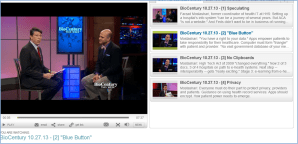
Farzad Mostashari on ACA, BlueButton, Privacy – BioCentury This Week 10.27.13

Posted by timmreardon on 10/29/2013
Posted in: Uncategorized. Tagged: Electronic health record, Farzad Mostashari, Food and Drug Administration, Health Information Exchange, Health information technology, Health Information Technology for Economic and Clinical Health Act, Iran, Office of the National Coordinator for Health Information Technology. Leave a comment

http://www.biocenturytv.com/player/2764083460001/2764874120001

BioCentury

Bringing Outside Innovations into Health Care – HBR

Posted by timmreardon on 10/29/2013
Posted in: Uncategorized. Tagged: Cross-functional team, Glossary of chess, Kaiser Permanente, Lean manufacturing, Memorial Hospital of South Bend, Mike Wagner, Six Sigma, Whirlpool Corporation. Leave a comment

by Mike Wagner  |   9:00 AM October 28, 2013

Spurred by government reforms and market expectations, healthcare leaders are being forced to reinvent their organizations. The model for healthcare is being flipped upside down — from decades of focusing on acute care episodes and encouraging utilization to a future where successful organizations are able to reduce utilization, manage population health, and activate patients in the consumption (and delivery) of their own care.

But, most organizations are likely to fail in this pursuit. History shows that 65% of transformation efforts yield no improvement while 20% of efforts result in worsened outcomes.  Even when there is improvement, performance usually returns to previous levels within a few years.

This failure is not for lack of effort — health systems are making massive investments in new infrastructure, technology, processes and managerial approaches designed to manage change, such as electronic health records, Six Sigma and Lean Management.  But, all of these efforts are dependent on people for both initial implementation and long term execution. The only organizations that will prosper in this environment of disruptive and massive change are those that build a resilient and adaptive culture in which staff members:

  • Welcome and seek change, rather than resist it;
  • Experiment and innovate, rather than maintain the status quo; and
  • Make hard decisions without relying on approval from senior leaders.

There is no simple or single approach to building such a culture. But in our experience helping hundreds of hospitals and health systems manage this transformation, we have found three disciplines that are essential to the effort:  Importing new knowledge, strategically deploying existing skills, and disseminating leadership across the ranks.  This and posts to follow will explore each of these disciplines.

Importing New Knowledge

While businesses in other sectors have become adept at bringing in ideas from outside their walls, health care has lagged behind. A key reason is that healthcare leaders are often blind when it comes to creatively responding to the industry’s challenges.  The source of this blindness is twofold.

  • Humans are not wired to seek contradictory perspectives.  Instead, we seek to reinforce what we already believe to be true.  No surprise, therefore, that 80.6% of healthcare leaders believe the quality of care at their hospital is better than at the “typical” hospital.  And only 1.2% believe their hospitals are below average in performance.  As a result, most leaders in health care are slow to react to their changing environment because they are convinced that they already outperform their peers.
  • The second blinder is more common in health care than in other sectors — leaders often actively isolate themselves from the outside world, believing that their industry’s challenges are entirely unique.  These leaders resist the idea of learning from exemplars outside of health care.  As a result, they are often ignorant of the managerial advances being made in other industries.

To respond to disruptive change, health care leaders need to first acknowledge their blindness and then actively overcome it by learning how other industries are addressing similar challenges. This requires developing creative approaches to finding new ideas from outside of healthcare. While this concept has been around for some time (pioneers like Virginia Mason started importing lean six-sigma practices into health care at least a decade ago) it is still not widely accepted and is rarely done as a matter of routine.

One hospital that has done this well is Memorial Hospital of South Bend, Indiana. They introduced the concept of the “Innovisit” — a routine and structured outreach that sends staff members to visit businesses in other industries.  Support from the top is critical to the success of such initiatives, as it has been at Memorial where president and CEO Phil Newbold has championed the program.

At Memorial, each Innovisit involves a cross-functional team of “Innovisitors” who have been specially recruited and prepared for these events.  Visits are carefully planned with the host organization and key questions are crafted in advance.  Upon their return, innovisitors share their observations during special conferences and educational sessions offered at Memorial’s own “Innovation Café” — a dedicated space that was remodeled to support creative thinking and sharing.  The “Innovation Café” itself is the result of an innovisit to a Whirlpool Corporation facility that included an Innovation Training Center.   

The development of Memorial’s Heart and Vascular building is another example of ideas inspired by innovisits. While on one such visit, the innovistor team learned of a design consultancy whose architectural approach seemed like a much better fit with Memorial’s needs than the approach in development. The fact that the planning process was well underway did not deter Memorial from tapping the design consultancy to experiment with new design principles that resulted in a more patient-friendly center, replete with a meditation garden.  Memorial further supports the organization’s innovation effort through its “Wizard School” that trains the entire staff — from parking lot attendants to C-suite executives — to think creatively.

Kaiser Permanente has sponsored similar excursions.  For example, during a tour of a flight school, Kaiser staff took note of the “sterile cockpit” concept — specific times during a flight when no conversations are allowed between pilots unless they are necessary for safely flying the plane.  This concept was adapted to create safer medication administration protocols that reduced interruptions and errors.

At Kaiser, spreading new ideas is a massive undertaking due to the size of the organization — more than 175,000 employees. To meet this challenge, Kaiser’s Innovation Consultancy — an internal consulting group — will routinely run pilot projects in order to test and prove a concept.  The Consultancy will then use the results of those pilot projects to encourage other departments to adopt new ideas and improvements as well: its input in developing the Nurse Knowledge Exchange is an example of that. Working with nurses and patients, and tapping new tracking software for data input, the Consultancy team helped develop a quick, reliable and efficient process for transferring patient information between nurses at a patient’s bedside during shift changes. The impact of the Nurse Knowledge Exchange in boosting the quality of the information exchange and enhancing patient care soon led to its deployment at all Kaiser hospitals. In effect, the Consultancy accelerates the adoption of new ideas by doing much of the legwork required to implement new practices across multiple locations: Line managers are not burdened with the effort and work required to share and spread ideas with others.  (Here’s more on the Consultancy’s approach.)

A leadership team that has been constantly bombarded with mind-stretching ideas from other organizations and disparate industries will possess a treasure trove of proven and practical ideas ready to be adapted and implemented.  Many of the challenges that healthcare leaders will soon face — collapsing prices (consider Blu-Ray players now selling for $49); disruptive technologies (digital photography supplanting film); fierce competition (iPhones stealing the market made by Blackberry); and entirely new business models (Netflix doing what Blockbuster could not) — have already been seen in other industries, and have given rise to adaptive new strategies. Health care leaders would be unwise to repeat the mistakes of others; they would be foolish to overlook strategies and solutions that have already been developed and proven effective elsewhere.

Follow the Leading Health Care Innovation insight center on Twitter @HBRhealth. E-mail us at healtheditors@hbr.org, and sign up to receive updates here.

Leading Health Care Innovation From the Editors of Harvard Business Review and the New England Journal of Medicine
  • How to Rehabilitate Medicare’s “Post-Acute” Services
  • The Sequestration Cuts that Are Harming Health Care
  • Negotiation Strategies for Doctors — and Hospitals
  • How to Turn Employees Into Value Shoppers for Health Care

More blog posts by  Mike Wagner
More on: Health, Innovation, Organizational culture

80-mike-wagner

Electronic Health Records Benefits: An ePatient Story

Posted by timmreardon on 10/28/2013
Posted in: Uncategorized. Tagged: Electronic health record, Health, Health informatics, Health system, July, Medicine, ONC, Patient portal. 1 Comment

October 21, 2013, 2:23 pm
Alisa Hughley

Electronic health records benefits may be clear for providers – cutting redundancy of tests, coordinating care during discharges, etc. — but these benefits also will ultimately accrue to patients in the form of better health.

In July, I participated in the Tenth Annual Healthcare Unbound Conference. I was delighted to be invited to speak on an ONC panel dedicated to “Looking Forward to the Next Frontier in Public/Private Collaboration to Promote Patient Engagement.” More importantly, I was pleased to see a government entity interested in focusing on an area that has become a personal mission of mine.

When I began electronically consolidating my health information last summer, the definition for success was simple: Gather all paper records in PDF format. Academic medical centers easily processed my request within days and provided an option for electronic delivery. Community hospital capabilities, in contrast, remained stuck in the last century with policies that allowed 30 days for the delivery of records by fax or snail mail. Perhaps, my greatest disappointment came when a world-renowned health center where I was getting specialized care took three months to mail a hard copy of my records. While MRI results were saved on DVD, it required a second request and 30 more days to receive this vital component of my medical history.

Electronic health records benefits for patients include:

  • More timely consults.
  • Better coordination of care through data sharing.
  • Evidence-based decision support.

Do I want my physicians to have timely consults, sharing lab results and imaging studies with one another? Absolutely! This however is not yet the reality. I’m currently under the care of one generalist and three specialists. Over a lifetime, I expect this number will surpass 20. I know that each is extraordinarily busy spending long days with a high volume of patients, and overflowing voicemail or email inboxes. Physicians triage care when necessary. Weeks go by before consults actually take place. Necessity dictated I become proactive in coordinating my care.  An ability to share health information with providers at the point of care shortens the timeline and begins that consult. This is the solution Blue Button aims to achieve.

Meaningful use has been designed to enhance patient engagement. I implore physicians and healthcare executives from organizations of all sizes to consider access-view-download-transmit as the central dogma of care coordination and shared decision-making. These capabilities lay the foundation for well-designed EHR/EMRs and patient portals, giving patients and family caregivers the tools necessary to fully engage their health care teams. Yet, the aim should not be to elicit medical compliance in the traditional sense, but rather to ensure patient healthcare choices are informed by evidence-based medicine with the provider’s clinical judgment and then aligned to the patient’s own values. Bioethicists call this respect for patient autonomy. To ePatients, it’s good medicine.

While the mission to electronically consolidate my health information continues, I’m moving forward with better tools to help me accomplish this task.

Alisa Hughley is a patient advocate and healthcare consultant. She advises healthcare organizations in community engagement and promotes organ donation and advance planning including the use of advance directives. Alisa’s journey in patient engagement began when her family was thrust into navigating the health care system after her brother Carey Hughley III was murdered by a person with untreated paranoid schizophrenia. Her brother’s organs were donated to assist others patiently waiting on the donor list for critical organs. She has since dedicated much of life to empowering patients to be active participants in managing their health and using health information technology not only as a tool in that effort but also as a communication tool to enhance the patient-provider relationship.

http://www.healthit.gov/buzz-blog/ehr-case-studies/electronic-health-records-benefits-epatient-story/

Interoperability, HIE among most vexing certification challenges

Posted by timmreardon on 10/28/2013
Posted in: Uncategorized. Tagged: Amit Trivedi, CCHIT, Certification Commission for Healthcare Information Technology, EHR, Electronic health record, Health information technology, Orthopaedic Nurse Certified, Professional certification. Leave a comment

Source: Diana Manos     Date: Oct 23, 2013

“It has been a slow start,” said Alisa Ray, executive director and CEO of the Certification Commission for Health Information Technology, of EHR vendors’ readiness for Stage 2 meaningful use. “They’re working hard. They’re struggling a little bit.”

That stands to reason, considering that, when comparing Stage 1 to Stage 2 certification, technology developers are “navigating a higher bar and increased complexity,” she said.

As the end of 2013 closes in, most federal certification bodies are noticing an uptick in the number of vendors who are applying to become certified under the 2014 criteria — the same criteria that will be required for the EHR products providers must use to attest to meaningful use Stage 2.

But not all of them are finding the process to be a cakewalk. Ray said there are three areas of Stage 2 that are proving the most challenging for certification: clinical quality measures, interoperability, and automated measure calculation for reporting metrics.

Automated measure calculation “requires almost a whole day of testing,” she said. “There are just a lot fewer products than were there with the Stage 1 or 2011 criteria.”

CCHIT has close to 40 companies with products listed. “Of the 2011 products we certified, we’ve seen 21 or 22 percent having been completely certified to date,” Ray continued. “It’s a testament to how much harder it is.”

Amit Trivedi, healthcare program manager at ICSA Labs, added that many vendors might also be going through certification fatigue, and explained that in stage 1 there were close to 3,000 listings, and many vendors had multiple entries (Cerner had 800) but for Stage 2, so far there are fewer than 300 on ONC’s Certified Health IT Products List.

And without naming names, Ray said that “almost everyone has struggled and been surprised by the complexities,” and a number of them have had to go through several certification trials, after not meeting certain criteria. “There are companies that have been testing every year since 2006 with the CCHIT programs; it’s not like they’re novices. And when they get into it, there’s a new wrinkle or something they may not have anticipated or configured correctly.”

See more – http://www.hiewatch.com/news/interoperability-hie-among-most-vexing-certification-challenges

EHRs At Risk of Becoming Irrelevant

Posted by timmreardon on 10/28/2013
Posted in: Uncategorized. Tagged: Andrew Watson, EHR, Electronic health record, Electronic medical record, EMR, mHealth, Partners HealthCare, University of Pittsburgh Medical Center. Leave a comment
October 28, 2013 | Eric Wicklund – Editor, mHealthNews

POSTED IN: Meaningful Use, Electronic Health Records, Mobile/Wireless

With mHealth becoming the norm instead of the exception, a panel at Partners HealthCare’s 10th Annual Connected Health Symposium last week concluded that EHR vendors will have to find a way to modify their products to focus on data that the patient and his or her care team want, or they’ll become obsolete.Important information for a patient’s care actually exists outside the electronic medical record, panelists said.
[See also: Object of beauty, or ungainly nuisance?]“In many ways the EHRs are on the outside,” said Andrew Watson, MD, medical director for the Center for Connected Medicine at the University of Pittsburgh Medical Center and the panel’s moderator. “This is on the inside. It’s not the paranormal … any more – it’s the normal.”

The session, one of the first during the two-day summit at the Seaport World Trade Center in Boston, focused on what Watson termed the “para-EHR,” which he defined as all of the phone calls, texts, e-mails and other doctor-doctor and doctor-patient communications that aren’t entered into the EHR. They could include everything from Skype chats between doctors to Post-It notes to data residing on mobile devices and sensors.

Watson, who’s also a colorectal surgeon at UPMC, estimated that 70 percent of his work with patients is conducted in that informal region outside the EHR. His fellow panelists put that number closer to 90 percent.

“The systems that we have today are not geared toward clinical efficiency,” said Rasu Shrestha, MD, UPMC’s vice president of medical information technology, who said EHRs are instead geared toward billing. He called the para-EHR “this other bucket of information” that more closely resembles the doctor-patient encounter.

[See also: EMR usability key to implementation.]

“Whatever it is today, it’s going to get bigger,” added Kent Gale, founder and chairman of KLAS.

Watson and his colleagues – who also included Eleanor Chye, assistant vice president of AT&T’s ForHealth department, laid the blame for this disconnect squarely on the shoulders of modern technology. The ability to communicate and capture data in real time through mobile devices and wearable sensors, they said, has made the typical EHR obsolete.

“When the digital age collided with healthcare, which I think was around 2007, healthcare stumbled heavily,” Watson said. Shrestha added: ‘We focused on where the money was as we moved from analog to digital.”

Chye said the healthcare industry’s efforts to catch up aren’t having the desired effect. Meaningful use, she said, “has created a big, sucking sound and taken all the air out of the room.”

The true patient record lies in the margins outside the EHR, and contains “data that would save a patient’s life,” Shrestha pointed out. When prodded by Watson, the audience agreed. One person pointed out that there is no place in the EHR for the patient’s story, while another questioned whether the electronic health record should be organized like a Wiki page.

“I don’t think that any single EHR can humanly tackle this,” Watson said.

“I do think there is a burning need to focus back on the PHR,” Shrestha said, pointing out that those records contain all the information important to the patient – and nothing more. ‘You don’t want to be inundated with data back to the point where it’s noise,” he added.

Chye said EHR vendors have to decide whether to build out to capture that data or encourage innovation outside the EHR. In addition, she pointed out, should all of that unfiltered information be given to the patient?

‘If it’s there, it ultimately will be discoverable, and it ultimately will be pursued,” said Gale, who offered that EHRs are currently designed to be provider-centric, rather than patient-centric.

And in a system rapidly moving toward patient-centered healthcare, he added, that’s not a good business plan.
http://m.healthcareitnews.com/news/ehr-holding-back-top-care

Physician Capability to Electronically Exchange Clinical Information – American Journal of Managed Care

Posted by timmreardon on 10/28/2013
Posted in: Uncategorized. Tagged: Data exchange, EHR, Electronic health record, Health informatics, Health Information Exchange, Health information technology, Health Information Technology for Economic and Clinical Health Act, Office of the National Coordinator for Health Information Technology. Leave a comment

Published Online: October 23, 2013 Vaishali Patel, PhD, MPH; Matthew J. Swain, MPH; Jennifer King, PhD; and Michael F. Furukawa, PhD

Objectives: To provide national estimates of physician capability to electronically share clinical information with other providers and to describe variation in exchange capability across states and electronic health record (EHR) vendors using the 2011 National Ambulatory Medical Care Survey Electronic Medical Record Supplement.

Study Design: Survey of a nationally representative sample of nonfederal office–based physicians who provide direct patient care.

Methods: The survey was administered by mail with telephone follow-up and had a 61% weighted response rate. The overall sample consisted of 4326 respondents. We calculated estimates of electronic exchange capability at the national and state levels, and applied multivariate analyses to examine the association between the capability  to exchange different types of clinical information and physician and practice characteristics.

Results: In 2011, 55% of physicians had computerized capability to send prescriptions electronically; 67% had the capability to view lab results electronically; 42% were able to incorporate lab results into their EHR; 35% were able to send lab orders electronically; and, 31% exchanged patient clinical summaries with other providers. The strongest predictor of exchange capability is adoption of an  EHR. However, substantial variation exists across geography and EHR vendors in exchange capability, especially electronic exchange of clinical summaries.

Conclusions: In 2011, a majority of office-based physicians could exchange lab and medication data, and approximately one-third could exchange clinical summaries with patients or other providers. EHRs serve as a key mechanism  by which physicians can exchange clinical data, though physicians’ capability to exchange varies by vendor and by state.

Am J Manag Care. 2013;19(10):835-843 – See more at: http://www.ajmc.com/publications/issue/2013/2013-1-vol19-n10/Physician-Capability-to-Electronically-Exchange-Clinical-Information-2011#sthash.wM7YRTll.dpuf

The capability to electronically share and view clinical data has the potential to enable clinical information to follow patients wherever they go to seek care and thereby improve the safety, quality, and efficiency of healthcare.1 Despite promising benefits, historically physicians have not exchanged clinical information  electronically due to the high costs associated with implementation and limited incentives for data sharing.2 Exchange activity has largely been confined to regions of the country where there are operational health information organizations that support clinical data exchange within their community.3 Furthermore, physicians have typically had to use stand-alone e-prescribing systems or proprietary portals that  support the exchange of specific types of clinical data (eg, viewing lab data), which can be costly, difficult to incorporate into their clinical work flow, and possess limited capability to support integrated data as with an electronic health record (EHR).4-7

A number of federal programs and other initiatives are under way to help address some of these barriers. The Health Information  echnology for Economic and Clinical Health (HITECH) Act of 2009 includes up to $22.5 billion in financial incentives for eligible professionals who demonstrate “meaningful use” of interoperable EHRs capable of electronic exchange. HITECH also awarded more than $540 million to the Office of the National Coordinator for Health Information Technology (ONC) State Health Information Exchange (HIE) Program, which provides support for state-designated entities to ensure mechanisms are in place to enable providers to exchange clinical information.8 Furthermore, ONC’s Health Information Technology Certification Program seeks to ensure that EHR products include functionality that enables electronic exchange.9 In addition to the HITECH incentives and programs, a public-private initiative provides relatively simple technical solutions to enable directed exchange between 2 known providers.10 A community of participants from the public and private sector focus on providing tools, services, and guidance to promote functional interoperability.11

In the first stage of meaningful use, it was sufficient for providers to perform a test to demonstrate their EHR’s capacity to electronically exchange information.12,13 Stage 2 meaningful use requirements related to HIE have evolved to become more advanced. Physicians must go beyond demonstrating capability to exchange; they must actually electronically exchange key clinical data among providers and patient-authorized entities. Additionally, physicians must demonstrate the capability to send summary-of-care documents electronically to recipients with a different EHR vendor.14

Yet little is known about current physician capability to electronically exchange clinical information at a national or state level, both of which are relevant in implementing ONC’s strategy and in assessing its potential for success. We used a nationally representative survey of office-based physicians conducted in 2011 to provide a snapshot of physicians’ capability to electronically exchange clinical information  associated with key national priorities: pharmacy exchange(e-prescribing), laboratory exchange (including receipt of results and lab orders), and clinical summary exchange with patients and providers.15 This assessment provides both a portrait of exchange capability as of stage 1 meaningful use and a baseline for monitoring progress going forward as new policies and initiatives to accelerate HIE are implemented—in particular, stage 2 meaningful use. Future trends in physicians’ HIE capability could help assess the effectiveness of these policies. We describe physician exchange capability geographically across states and by EHR vendor. Finally, we examined the association between physician and practice characteristics, including adoption of EHRs, with physician capability to exchange different types of clinical information. – See more at: http://www.ajmc.com/publications/issue/2013/2013-1-vol19-n10/physician-capability-to-electronically-exchange-clinical-information-2011/1#sthash.H3s71xpQ.dpuf

Posts navigation

← Older Entries
Newer Entries →
  • Search site

  • Follow healthcarereimagined on WordPress.com
  • Recent Posts

    • Why opinion on AI is so divided – MIT Technology Review 04/14/2026
    • The Global Healthcare System Is Broken. Japan Fixed It for $4,100 Per Person. 04/10/2026
    • When Not to Use AI – MIT Sloan 04/01/2026
    • There are more AI health tools than ever—but how well do they work? – MIT Technology Review 03/30/2026
    • Are AI Tools Ready to Answer Patients’ Questions About Their Medical Care? – JAMA 03/27/2026
    • How AI use in scholarly publishing threatens research integrity, lessens trust, and invites misinformation – Bulletin of the Atomic Scientists 03/25/2026
    • VA Prepares April Relaunch of EHR Program – GovCIO 03/19/2026
    • Strong call for universal healthcare from Pope Leo today – FAN 03/18/2026
    • EHR fragmentation offers an opportunity to enhance care coordination and experience 03/16/2026
    • When AI Governance Fails 03/15/2026
  • Categories

    • Accountable Care Organizations
    • ACOs
    • AHRQ
    • American Board of Internal Medicine
    • Big Data
    • Blue Button
    • Board Certification
    • Cancer Treatment
    • Data Science
    • Digital Services Playbook
    • DoD
    • EHR Interoperability
    • EHR Usability
    • Emergency Medicine
    • FDA
    • FDASIA
    • GAO Reports
    • Genetic Data
    • Genetic Research
    • Genomic Data
    • Global Standards
    • Health Care Costs
    • Health Care Economics
    • Health IT adoption
    • Health Outcomes
    • Healthcare Delivery
    • Healthcare Informatics
    • Healthcare Outcomes
    • Healthcare Security
    • Helathcare Delivery
    • HHS
    • HIPAA
    • ICD-10
    • Innovation
    • Integrated Electronic Health Records
    • IT Acquisition
    • JASONS
    • Lab Report Access
    • Military Health System Reform
    • Mobile Health
    • Mobile Healthcare
    • National Health IT System
    • NSF
    • ONC Reports to Congress
    • Oncology
    • Open Data
    • Patient Centered Medical Home
    • Patient Portals
    • PCMH
    • Precision Medicine
    • Primary Care
    • Public Health
    • Quadruple Aim
    • Quality Measures
    • Rehab Medicine
    • TechFAR Handbook
    • Triple Aim
    • U.S. Air Force Medicine
    • U.S. Army
    • U.S. Army Medicine
    • U.S. Navy Medicine
    • U.S. Surgeon General
    • Uncategorized
    • Value-based Care
    • Veterans Affairs
    • Warrior Transistion Units
    • XPRIZE
  • Archives

    • April 2026 (3)
    • March 2026 (9)
    • February 2026 (6)
    • January 2026 (8)
    • December 2025 (11)
    • November 2025 (9)
    • October 2025 (10)
    • September 2025 (4)
    • August 2025 (7)
    • July 2025 (2)
    • June 2025 (9)
    • May 2025 (4)
    • April 2025 (11)
    • March 2025 (11)
    • February 2025 (10)
    • January 2025 (12)
    • December 2024 (12)
    • November 2024 (7)
    • October 2024 (5)
    • September 2024 (9)
    • August 2024 (10)
    • July 2024 (13)
    • June 2024 (18)
    • May 2024 (10)
    • April 2024 (19)
    • March 2024 (35)
    • February 2024 (23)
    • January 2024 (16)
    • December 2023 (22)
    • November 2023 (38)
    • October 2023 (24)
    • September 2023 (24)
    • August 2023 (34)
    • July 2023 (33)
    • June 2023 (30)
    • May 2023 (35)
    • April 2023 (30)
    • March 2023 (30)
    • February 2023 (15)
    • January 2023 (17)
    • December 2022 (10)
    • November 2022 (7)
    • October 2022 (22)
    • September 2022 (16)
    • August 2022 (33)
    • July 2022 (28)
    • June 2022 (42)
    • May 2022 (53)
    • April 2022 (35)
    • March 2022 (37)
    • February 2022 (21)
    • January 2022 (28)
    • December 2021 (23)
    • November 2021 (12)
    • October 2021 (10)
    • September 2021 (4)
    • August 2021 (4)
    • July 2021 (4)
    • May 2021 (3)
    • April 2021 (1)
    • March 2021 (2)
    • February 2021 (1)
    • January 2021 (4)
    • December 2020 (7)
    • November 2020 (2)
    • October 2020 (4)
    • September 2020 (7)
    • August 2020 (11)
    • July 2020 (3)
    • June 2020 (5)
    • April 2020 (3)
    • March 2020 (1)
    • February 2020 (1)
    • January 2020 (2)
    • December 2019 (2)
    • November 2019 (1)
    • September 2019 (4)
    • August 2019 (3)
    • July 2019 (5)
    • June 2019 (10)
    • May 2019 (8)
    • April 2019 (6)
    • March 2019 (7)
    • February 2019 (17)
    • January 2019 (14)
    • December 2018 (10)
    • November 2018 (20)
    • October 2018 (14)
    • September 2018 (27)
    • August 2018 (19)
    • July 2018 (16)
    • June 2018 (18)
    • May 2018 (28)
    • April 2018 (3)
    • March 2018 (11)
    • February 2018 (5)
    • January 2018 (10)
    • December 2017 (20)
    • November 2017 (30)
    • October 2017 (33)
    • September 2017 (11)
    • August 2017 (13)
    • July 2017 (9)
    • June 2017 (8)
    • May 2017 (9)
    • April 2017 (4)
    • March 2017 (12)
    • December 2016 (3)
    • September 2016 (4)
    • August 2016 (1)
    • July 2016 (7)
    • June 2016 (7)
    • April 2016 (4)
    • March 2016 (7)
    • February 2016 (1)
    • January 2016 (3)
    • November 2015 (3)
    • October 2015 (2)
    • September 2015 (9)
    • August 2015 (6)
    • June 2015 (5)
    • May 2015 (6)
    • April 2015 (3)
    • March 2015 (16)
    • February 2015 (10)
    • January 2015 (16)
    • December 2014 (9)
    • November 2014 (7)
    • October 2014 (21)
    • September 2014 (8)
    • August 2014 (9)
    • July 2014 (7)
    • June 2014 (5)
    • May 2014 (8)
    • April 2014 (19)
    • March 2014 (8)
    • February 2014 (9)
    • January 2014 (31)
    • December 2013 (23)
    • November 2013 (48)
    • October 2013 (25)
  • Tags

    Business Defense Department Department of Veterans Affairs EHealth EHR Electronic health record Food and Drug Administration Health Health informatics Health Information Exchange Health information technology Health system HIE Hospital IBM Mayo Clinic Medicare Medicine Military Health System Patient Patient portal Patient Protection and Affordable Care Act United States United States Department of Defense United States Department of Veterans Affairs
  • Upcoming Events

Blog at WordPress.com.
healthcarereimagined
Blog at WordPress.com.
  • Subscribe Subscribed
    • healthcarereimagined
    • Join 153 other subscribers
    • Already have a WordPress.com account? Log in now.
    • healthcarereimagined
    • Subscribe Subscribed
    • Sign up
    • Log in
    • Report this content
    • View site in Reader
    • Manage subscriptions
    • Collapse this bar
 

Loading Comments...