healthcarereimagined

Envisioning healthcare for the 21st century

  • About
  • Economics

Winning Hearts and Minds at the VA -Defense One

Posted by timmreardon on 08/06/2014
Posted in: Blue Button, Global Standards, Health Care Costs, Health Care Economics, Health IT adoption, Health Outcomes, Healthcare Delivery, Healthcare Informatics, Healthcare Security, Innovation, Integrated Electronic Health Records, Military Health System Reform, Mobile Healthcare, National Health IT System, Patient Centered Medical Home, Patient Portals, PCMH, Quadruple Aim, Quality Measures, Rehab Medicine, Uncategorized, Veterans Affairs. Leave a comment

Colin Wilhelm The Atlantic August 5, 2014
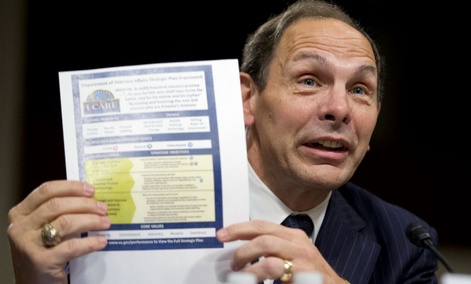
defense-large-VA
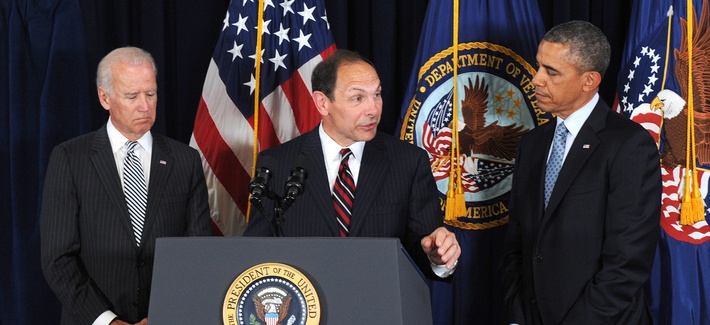
Deeply rooted cultural problems, seemingly endemic within the Department of Veterans Affairs, have put veterans health care at the forefront of our national news cycle this summer. Last week, Congress passed a bill to address a culture of dysfunction that built for years under a layer of red tape. Will this rare compromise defeat the bureaucratic demons that led to some in the VA neglecting their mission?

Probably not on its own. That will take a cultural shift at VA. But it’s likely a step in the right direction, at least in the short-term, if VA uses the tools it gives them properly.

In a best-case scenario, the $10 billion this bill provides for veterans who need care but can’t receive it from a nearby or timely VA facility will serve as a bridge to quality health providers outside the VA’s boundaries, until the government can better serve them. In a worst-case scenario much of that money will go untouched, or misused, by a VA uninterested in referring patients outside due to an almost paranoid fear that it will lead to a privatization of the entire department.

An example of this worst-case scenario occurred when the VA hospital at Columbia, South Carolina, was granted extra resources in 2011 to deal with a long line of veterans seeking routine cancer screenings. Instead of using the money to refer vets to private physicians and reimburse them, staff sat on about 80 percent of the money while a backlog of thousands of veterans built up, with some waiting more than a year. Several dozen of those waiting for consults developed cancer that could have been caught and removed, according to an internal investigation.

Reforming an organization the size of the VA is inherently difficult. It’s the second largest department in the federal government in terms of personnel (about 270,000 people work full-time for the VA, though not all in health care) and its health wing operates across 23 semi-autonomous regional healthcare networks that operate across state lines.

A little known episode in 2006 illustrates the challenges. Eight years ago, Congress initiated a pilot program called Project HERO in the four regional health-care service networks that kept patients waiting the longest. (Sound familiar?) HERO used a private contractor to coordinate care outside the VA health system, with a pre-screened network of private care providers for patients.

The pilot had mostly positive results: HERO set a goal of scheduling patients to see health-care providers within 30 days and hit that goal 88.2 percent of the time, as self-reported by the contractor. Not perfect, but the Congressional Research Service’s 2010 report said HERO could be “categorized as an enhancement regular fee basis care program,” the technical term for outside referrals to private contractors. Yet during the program “almost all [four regional networks] stated that there has been organizational resistance to change.” The pilot ended in spring last year, and the VA claims to have applied its lessons nationally, though that was met with skepticism during a House subcommittee hearing in 2012.

A common quip is that “if you’ve seen one VA [facility], you’ve seen one VA.” The independence the department grants health-care administrators allows regional hospitals and community-care centers to ostensibly allocate resources as they see best fit, and most of the time that’s what happens. But it can also give cover to a go-along-get-along culture of bureaucratic intransigence with little fear of repercussion until that comes to light as patients start dying as a result.

The new reform bill will make it far easier to discipline or fire VA managers for malfeasance or ineptitude (some, like the Washington Post’s editorial board, say too easy) to curb a culture of apathy that seems to have built in some parts of the department, hurting both the veterans it exists to care for and the reputation of VA employees who do their work well. The legislation demonstrates how the VA is at a crossroads, choosing between whether to continue building or leasing new facilities, or to use private health professionals more often. Congress allocates $1.5 billion for the leasing of 27 new facilities, most for outpatient care. Another $5 billion goes toward increasing medical staffing. The bill also increases graduate medical education funding to aid recruitment efforts.

Nonprofit veteran-service organizations like the American Legion, Wounded Warrior Project, and Iraq and Afghanistan Veterans of America are split. Older groups typically want the department to focus on medical centers, community clinics, and employment, while newer ones tend to be more open to incorporating the private sector, though virtually no one’s calling for complete privatization.

This reform leans toward the private sector. That can work if the VA is able to track how, what, and where its patients receive care outside its system, but the Government Accountability Office has criticized the department for its inability to do so before. Once again, the success will depend mostly on better organization and less apathy towards dysfunction.

This emergency-reform bill’s funding only lasts two years, during which VA will have to authorize and address the findings of an independent top-to-bottom review of the system. The VA’s budget has increased—sizably, from approximately $39 billion for the department’s medical administration in 2008’s fiscal year to appropriations of $59.1 billion in this current one—over the last several years, even as the rest of the government has had to make due with less. If that report comes back saying that VA needs to improve, the way forward may be more reliance on outside private care than continued reinvestment of personnel and resources into the system.

Congress is flooding the VA with resources to deliver care in a timely manner to vets. It will be up to newly confirmed VA Secretary Robert McDonald to change the hearts and minds of the department.

Article link: http://www.defenseone.com/management/2014/08/winning-hearts-and-minds-va/90671/?oref=defenseone_today_nl


DOD, VA at the Forefront of Rehab Medicine – Health.mil

Posted by timmreardon on 08/06/2014
Posted in: DoD, Global Standards, Health Care Costs, Health Care Economics, Health IT adoption, Health Outcomes, Healthcare Delivery, Healthcare Informatics, Healthcare Security, Innovation, Integrated Electronic Health Records, Military Health System Reform, National Health IT System, Patient Centered Medical Home, Patient Portals, PCMH, Quadruple Aim, Rehab Medicine, U.S. Air Force Medicine, U.S. Army Medicine, U.S. Navy Medicine, Uncategorized, Veterans Affairs, Warrior Transistion Units. Leave a comment

John Crawford, VA Research Communications

7/28/2014

Technology, Innovation, Innovation Highlights
artificial limb
An amputee wearing the DARPA-funded “Modular Prosthetic Limb,” shakes hands with a fellow attendee at the Federal Advanced Amputation Skills Training symposium in Arlington, Va., in July 2014.

An amputee wearing the DARPA-funded “Modular Prosthetic Limb,” shakes hands with a fellow attendee at the Federal Advanced Amputation Skills Training symposium in Arlington, Va., in July 2014. Photo by Randy McCracken.

Fred Downs is a bit of an anomaly. An infantry Veteran of Vietnam, he’s more Andy Griffith than Robocop. It’s easier to imagine him telling the grandkids a story than demonstrating space-age technology in front of a room full of clinicians and researchers from VA and the Department of Defense. But that’s just what he was doing in early July during a three-day symposium at the VHA National Conference Center in Arlington, Va. The event, titled “Federal Advanced Amputation Skills Training (FAAST),” was sponsored by the VHA Employee Education System, the VHA Office of Rehabilitation and Prosthetic Services, and the Department of Defense.

For more on the Modular Prosthetic Limb see the article from VA Research Communications.

Article link: http://www.health.mil/Reference-Center/Articles/2014/07/28/DOD-and-VA-at-the-Forefront-of-Rehab-Medicine

Restoring Trust in VA Health Care – New England Journal of Medicine

Posted by timmreardon on 08/06/2014
Posted in: Blue Button, Global Standards, Health Care Costs, Health Care Economics, Health IT adoption, Health Outcomes, Healthcare Delivery, Healthcare Informatics, Healthcare Security, Innovation, Integrated Electronic Health Records, Military Health System Reform, National Health IT System, Patient Centered Medical Home, Patient Portals, PCMH, Quadruple Aim, Quality Measures, Uncategorized, Veterans Affairs. Leave a comment

perspectives-image-bar
Kenneth W. Kizer, M.D., M.P.H., and Ashish K. Jha, M.D., M.P.H.

N Engl J Med 2014; 371:295-297July 24, 2014DOI: 10.1056/NEJMp1406852

It has been nearly 20 years since the Veterans Health Administration (VHA), the subcabinet agency that oversees the Department of Veterans Affairs (VA) health care system, implemented a series of sweeping reforms that markedly improved quality, boosted access, and increased efficiency.1,2 Recent revelations about long wait times for veterans compounded by systematic cover-up by VHA administrators make it clear that reforms are again needed. Apparent manipulation and falsification of wait-time data at more than 40 facilities indicate a serious systemic problem.

To some observers, the VA’s problems confirm that government cannot manage health care. To others, they tell a simple story of insufficient funding: the VA needs more money to care for the large number of veterans returning from the wars in Iraq and Afghanistan and for aging Vietnam veterans. Unfortunately, neither narrative adequately captures the challenges facing this organization or provides guidance on how we might address them.

Inadequate numbers of primary care providers, aged facilities, overly complicated scheduling processes, and other difficult challenges have thwarted the VA’s efforts to meet soaring demand for services. For years, it has been no secret that the VA’s front lines of care delivery are understaffed for the needs. And though there can be no excuse for falsifying data, we believe that VA leadership created a toxic milieu when they imposed an unrealistic performance standard and placed high priority on meeting it in the face of these difficult challenges. They further compounded the situation by using a severely flawed wait-time–monitoring system and expressing a “no excuses” management attitude.

Without diminishing the seriousness of the problems of data manipulation and prolonged wait times, we would argue that these are symptoms of deeper pathology. Quite simply, the VA has lost sight of its primary mission of providing timely access to consistently high-quality care. Although it has garnered less attention than the wait-time problems, a disturbing pattern of increasingly uneven quality of care has also evolved in recent years. To be sure, the quality of health care provided by VA hospitals is, on average, similar to or better than that in the private sector.1-3 When VA hospitals are compared with top-tier integrated delivery systems, however, their quality advantage diminishes. Some VA hospitals excel, but others are struggling with the basics. The Phoenix VA Medical Center — ground zero of the wait-time scandal — has mortality rates for common conditions that are among the highest within the VA and higher than those in many private hospitals. Its rates of catheter-related bloodstream infections are nearly three times the national average.

After the VA gained a hard-won reputation for providing superior-quality care 15 years ago, how did cracks appear in its delivery of safe, effective, patient-centered care? We believe there are three main causes: an unfocused performance-measurement program, increasingly centralized control of care delivery and associated increased bureaucracy, and increasing organizational insularity.

The performance-measurement program — a management tool for improving quality and increasing accountability that was introduced in the reforms of the late 1990s — has become bloated and unfocused.4 Originally, approximately two dozen quality measures were used, all of which had substantial clinical credibility. Now there are hundreds of measures with varying degrees of clinical salience. The use of hundreds of measures for judging performance not only encourages gaming but also precludes focusing on, or even knowing, what’s truly important.

In addition, the tenor of management has changed substantially over the past decade. During the reforms of the 1990s, decentralization of operational decision making was a core principle. Day-to-day responsibility for running the health care system was largely delegated to the local facility and regional-network managers within the context of clear performance goals, while central-office staff focused on setting strategic direction and holding the “field” accountable for improving performance. In recent years, there has been a shift to a more top-down style of management, whereby the central office has oversight of nearly every aspect of care delivery.4 Concomitantly, the VHA’s central-office staff has grown markedly — from about 800 in the late 1990s to nearly 11,000 in 2012.

Finally, the VA health care system has become increasingly insular and inward-looking. It now has little engagement with private-sector health care, and too often it has declined to make its performance data public. For example, it contributes only a small proportion of its data to the national public reporting program for hospitals, Hospital Compare, and has declined to participate in other public performance reporting forums such as the Leapfrog Group’s efforts to assess patient safety.

So how can the VA turn the ship around? We propose a few first steps.

First, after ensuring that all veterans on wait lists are screened and triaged for care, the VA should refocus its performance-management system on fewer measures that directly address what is most important to veteran patients and clinicians — especially outcome measures. The agency’s recently developed Strategic Analytics for Improvement and Learning (SAIL) dashboard, which focuses on 28 meaningful metrics including access to care, mortality rates, infection rates, and patient satisfaction, is a good start that will improve with use and would help hold the VA accountable for results.

Second, conceptualizing access to care in terms of a “continuous healing relationship,”5 the agency should design a new access strategy that draws on modern information and advanced communications technologies to facilitate caregiver–patient connectivity and that uses personalized care plans to address patients’ individual access needs and preferences. Facility-by-facility assessments should determine whether VA facilities are using technology to leverage the best possible “care delivery return on investment” and whether personnel are working at the top of their skills. Perhaps some of the resources supporting the central and network office bureaucracies could be redirected to bolster the number of caregivers.

Third, we believe the VA needs to engage more with private-sector health care organizations and the general public — participating fully in performance-reporting initiatives, expanding learning-and-improvement partnerships with outside entities (as it did in the late 1990s in spearheading national patient-safety improvement efforts1), and making performance data broadly available. Transparency may expose vulnerabilities, but it is easier to improve when weaknesses are publicly acknowledged.

VA health care is at a crossroads. We learned from the last round of reforms that the VA’s problems can be fixed. The agency continues to employ an army of highly dedicated clinicians and administrators who are deeply committed to providing high-quality care to veterans. New leadership should help them succeed.

The views expressed in this article are those of the authors and do not necessarily reflect those of the Department of Veterans Affairs.

Dr. Kizer reports serving as Under Secretary for Health in the Department of Veterans Affairs from 1994 through 1999. Dr. Jha is a staff physician at the Boston VA Healthcare System.

Disclosure forms provided by the authors are available with the full text of this article at NEJM.org.

This article was published on June 4, 2014, at NEJM.org.

Article link:http://www.nejm.org/doi/full/10.1056/NEJMp1406852

Improving Health Care for Veterans — A Watershed Moment for the VA – New England Journal of Medicine

Posted by timmreardon on 08/06/2014
Posted in: Blue Button, Global Standards, Health Care Costs, Health Care Economics, Health IT adoption, Health Outcomes, Healthcare Delivery, Healthcare Informatics, Healthcare Security, Innovation, Integrated Electronic Health Records, Military Health System Reform, National Health IT System, Open Data, Quadruple Aim, Uncategorized. Leave a comment

perspectives-image-bar
Dave A. Chokshi, M.D.

N Engl J Med 2014; 371:297-299July 24, 2014DOI: 10.1056/NEJMp1406868

On May 30, Eric Shinseki resigned as secretary of veterans affairs (VA), taking ultimate responsibility for the falsification of records of veterans’ wait times for medical appointments. Two days earlier, an interim report by the VA’s Office of Inspector General (OIG) had found that “significant delays in access to care negatively impacted the quality of care” at the Phoenix VA health care system and that “inappropriate scheduling practices are a systemic problem nationwide.” An intense political and media spotlight remains focused on the VA during this election year. Will it engender improvements in care for veterans?

Health care is one of three core functions of the VA, along with cemetery administration and disbursement of earned benefits such as job training, the post-9/11 GI Bill, and disability compensation. Of the 22 million veterans throughout the United States, about 9 million are enrolled in VA health care, up from 7.7 million in 2005. Annually, approximately 6 million veterans are seen as patients in 151 medical centers and 820 outpatient clinics. The increase in the number of enrolled veterans, along with a more general shift from hospital-based care to ambulatory care, propelled a surge in outpatient visits from 58 million in 2005 to a projected 95 million in 2014. Over the same period, the VA’s health care budget approximately doubled, to $60 billion, with much of the funding growth occurring during the Obama administration.

Yet access to care, particularly to outpatient appointments, has been an enduring problem for the VA, as documented in multiple reports from the OIG and the Government Accountability Office (GAO). According to a December 2012 GAO report, investigators found that the VA’s reported outpatient medical appointment wait times were unreliable. A key reason was inconsistency in the recording and tracking of wait times according to the “desired date,” defined as the date by which a patient wants to be seen or a health care provider wants him or her to be seen.1 A preliminary VA audit showed that 13% of scheduling staff — at 64% of the 258 surveyed facilities — had been instructed to enter a different desired date than that requested by the veteran, though it remains unclear what proportion of these changes represents willful falsification.2

There is anecdotal evidence that scheduling issues led to adverse health outcomes for veterans in Phoenix and elsewhere; more systematic assessments are under way. However, there is precedent for concern, since a September 2013 OIG report concluded that delayed gastroenterology consultations for colon-cancer screening had led to delayed diagnoses for more than 50 veterans, some of whom ended up dying of colon cancer.3

Beyond access to care, health system performance should be evaluated on the basis of health outcomes, the quality and safety of the care delivered, patient satisfaction, and costs. In many of these domains, the VA has kept pace with or surpassed private-sector health systems. A 2010 systematic review comparing the quality of care in VA and non-VA settings found that the VA generally performed better on quality measures for medical conditions (e.g., blood-pressure control and diabetes management) and was noninferior to non-VA settings in terms of risk-adjusted outcomes after interventional procedures (e.g., coronary-artery bypass graft surgery).4 On a 2013 patient survey, the American Customer Satisfaction Index, VA health care earned overall satisfaction indexes of 84 (out of 100) for inpatient services and 82 for outpatient care, while the U.S. hospital industry scored 80 and 83 in those categories, respectively.5 When asked how likely they would be to return to a VA medical center for outpatient care, veterans responded with a score of 95 out of 100, indicating strong likelihood of return for care.

These divergent results — systemic access problems but competitive performance on quality and satisfaction measures — may reflect differing fates for veterans who were “established” in care and those who were not. Quality and satisfaction are more often measured among patients who have succeeded in obtaining ongoing care than among those with sporadic health care interactions. The vast majority of veterans do not use the VA for health care. Many of these veterans have access to health care through private coverage or other government programs, but some do not. More than 1 million veterans had no health coverage, according to the 2010 American Community Survey — though the Affordable Care Act will reduce that number. Uninsured veterans and others at the margins of the current system deserve access to the same high-quality health care as veterans who are established in care.

Some key reforms could help ensure that the current VA crisis stimulates improvements in care for veterans. In the near term, scheduling and other access constraints will have to be addressed, perhaps through deployment of rapid-response teams that call on external technical expertise as needed. Then, capacity limitations will have to be overcome, potentially by taking a portion of the $9 billion proposed for primary care doctors in President Obama’s 2015 budget and tying it to staffing of VA facilities. Attracting additional clinicians to high-demand areas and forging collaborative agreements between the VA and specialists at academic medical centers also merit consideration. In addition, core performance measures could be revisited, with an eye to rigorous benchmarking of access, population health, and cost metrics against other leading integrated delivery systems, as well as dissemination of results and best practices.

Finally, new leadership would do well to take a deliberate approach to transforming the VA’s culture, particularly in terms of communication between local facilities and administrative headquarters. If Dr. Jeffrey Murawsky, the President’s nominee for Under Secretary for Health, is confirmed by the Senate, he and Acting Secretary Sloan Gibson will have to maintain morale while initiating warranted turnover in management and staffing.

Congress is already deliberating over some key changes. The VA Management Accountability Act of 2014, which was introduced by Republicans and recently passed the House by a vote of 390 to 33, would give the VA secretary greater latitude to dismiss top executives. A more comprehensive bill introduced by Senator Bernie Sanders (I-VT) would include this provision while also facilitating veterans’ access to community and other federal health care providers, authorizing the VA to enter into 27 medical-facility leases, and providing emergency funding for the VA to hire more doctors and other health professionals.

The VA is a historic institution with a long tradition of providing care to former military service members. In recent years, the agency has made progress in addressing a backlog of disability claims and in sharply reducing veterans’ homelessness. In the 1990s, VA health care, facing a similar crisis of confidence and bipartisan calls for privatization, was transformed into a more technologically advanced, decentralized, and quality-oriented system. Now it needs to protect the best elements of its infrastructure, built around longitudinal, holistic care of each veteran, while embarking on another round of reforms.

Dr. Chokshi reports serving as a White House Fellow at the Department of Veterans Affairs during 2012–2013.

Disclosure forms provided by the author are available with the full text of this article at NEJM.org.

This article was published on June 4, 2014, at NEJM.org.

Article link: http://www.nejm.org/doi/full/10.1056/NEJMp1406868

How Designers Are Reinventing Trauma Care to Save Soldiers’ Lives – Wired

Posted by timmreardon on 07/28/2014
Posted in: Global Standards, Health Care Costs, Health Care Economics, Health IT adoption, Health Outcomes, Healthcare Delivery, Healthcare Informatics, Healthcare Security, Innovation, Integrated Electronic Health Records, Military Health System Reform, Mobile Healthcare, National Health IT System, Patient Centered Medical Home, PCMH, U.S. Air Force Medicine, U.S. Army Medicine, U.S. Navy Medicine, Uncategorized, Veterans Affairs, Warrior Transistion Units. Leave a comment

By Liz Stinson 07.25.14 | 6:30 am | Permalink

Trauma-1-660x427
Cedars-Sinai’s OR360 is a simulation space where doctors can play out hypothetical emergency situations. The ceiling is a gridded trolley system that allows the space to be endlessly reconfigurable. CannonDesign

Trauma care is hectic by its very nature. But in hospitals, where a minute lost to disorganization and miscommunications can make the difference between life, death or an extended stay, even the tiniest of extraneous disruptions can turn into a huge problem.

Trauma bays and operating rooms are designed to run as smoothly as possible, but inefficiencies still plague the system. Cedars-Sinai Hospital in Los Angeles partnered with the Department of Defense to build out the OR360, a new innovation center where doctors and military personnel can simulate hypothetical scenarios in order to simplify and streamline trauma care.

“It’s no different than the erector sets where everything could be screwed, unscrewed and changed very quickly.”

Funded by $3.8 million in grants from the DoD and designed by CannonDesign, the nearly 10,000-square-foot space is the hospital’s answer to the big question of: How can you make trauma care, both in hospitals and in military situations, faster and more effective? “In a world where the availability of treatments is growing but the money available to treat people is shrinking, being able to work out ways in which to be more efficient becomes much more valuable and important,” says Ken Catchpole, director of surgical safety and human factors at Cedars-Sinai. “It’s not about the technical ability of a surgeon or nurse, it’s actually about what are the things that are getting in the way, preventing them from using that expertise in the best possible way?”

Trauma-2-660x458
The entryway to OR360, which is off the main Cedars-Sinai campus. The space looks out onto the rolling Hollywood Hills. CannonDesign

The logic here is simple. The faster you care for a patient, the more likely he or she is to survive. These “flow disruptions,” things like poorly organized equipment and lack of communication between team members, can be hugely detrimental to a patient’s health. The OR360, then, is a place to work out the kinks and try out new ideas and workflows. After all, it’s hard to beta-test solutions in a real operating room.

The OR360 space takes up an entire floor in an old medical office building off the main Cedars-Sinai campus. It’s part meeting space for brainstorm sessions, part simulation center. Of course, simulation is common practice at hospitals. But while most simulation spaces aim to be a mirror of actual operating rooms, OR360 prides itself on its ability to undergo chameleon-like transformation.

CannonDesign designed the space to be endlessly reconfigurable, by implementing a gridded trolley system on the ceiling that allows the surgical lights, equipment booms and the glass walls to be repositioned or removed altogether. “It’s no different than the erector sets where everything could be screwed, unscrewed and changed very quickly without having to be an engineer,” says Carlos Amato, Healthcare Design Leader for CannonDesign.

The designers wanted OR360 to function more like a theater where doctors and military professionals could set the stage for whatever scenario they needed to test. “If you really want to simulate, you cannot begin with a predefined box,” says Amato. “Starting with a traditional simulation room where you’re bound by the limits of the space, suggests that you have to do things one way.”

Trauma-3-660x489
The goal is to use the space for not just simulation, but brainstorming and happenstance meetings between different groups from the hospital. CannonDesign

A Wealth of Solutions

Cedars-Sinai staff began using the OR360 earlier this year, and since then they’ve turned it a battlefield OR room, they’ve brought in a Hollywood set designer to remake it into a bedroom in order to test an on-patient drug delivery system, and they’ve simulated a simultaneous fire and earthquake scenario to see how doctors would react. “We can set up complex scenarios that we might wait for a long time to see in emergency department in real life,” says Catchpole.

Based on their findings, doctors have implemented some fundamental changes in the real operating room. They include:
◾Color-coded trauma bays, which reduce confusion and friction between team members who need to grab equipment.
◾Whiteboards in trauma bays that display key information about patients before they arrive via ambulance and conducting pre-briefings.
◾An iPhone app with patient diagnostic data (blood pressure and vital signs) that will be used hospital wide to disseminate data to various teams of doctors.

These seem like fairly obvious improvements, but keep in mind this was all stuff that didn’t exist prior to opening the simulation center. For what it’s worth, the whiteboards and pre-briefings reduced the time to capture first radiological images by more than 10 percent and the time to draw blood for first lab tests by more than 20 percent. The standardized, color-coded trauma bays reduced the time needed to collect supplies by about 15 percent.

It’s a good start, but Cedars-Sinai believes that the space has only begun to help them smooth over other issues that have long plagued the healthcare system. “It really does fire up people’s imaginations,” says Catchpole. “Every day were in our own little worlds. We aren’t always able to escape that and see there’s a better ways of doing things.”

Article link: http://www.wired.com/2014/07/how-the-military-is-helping-reinvent-trauma-care/?mbid=social_twitter

VA Secretary Nominee Views IT as Key to VA Reform – Nextgov

Posted by timmreardon on 07/24/2014
Posted in: Health Care Costs, Health Care Economics, Health IT adoption, Health Outcomes, Healthcare Delivery, Healthcare Informatics, Healthcare Security, Integrated Electronic Health Records, Military Health System Reform, National Health IT System, Uncategorized, Veterans Affairs. Leave a comment

By Bob Brewin

July 23, 2014

nextgov-medium 1

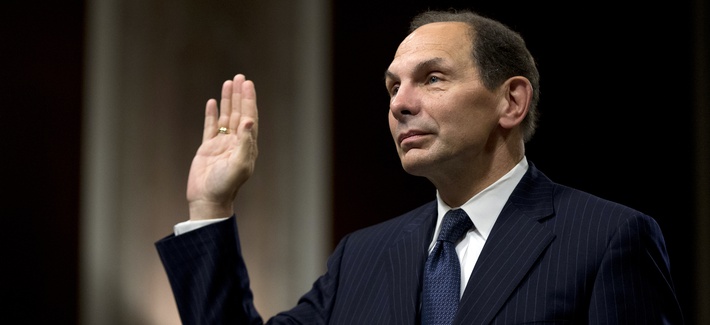
Robert McDonald, the former Procter & Gamble chief executive and President Barack Obama’s pick to lead the Department of Veterans Affairs, has been strongly endorsed by all members of the Senate Committee on Veterans’ Affairs.

At his nomination hearing yesterday, McDonald said he would apply his experience with information technology and leadership both in the Army and at P&G to improve patient care, customer service and the disability claims system.

A 1975 West Point graduate, McDonald said although he received an engineering degree, he also studied computer science. During his time at the academy, McDonald said he even wrote some basic computer code in assembly language.

McDonald went on to serve in top executive positions at P&G from 2007 through 2013, and said in his written testimony the company under his leadership “worked to digitize the operations of P&G from end to end, including using digital technology in remote areas to acquire and serve new customers.”

McDonald told the committee he viewed VA’s Veterans Health Information Systems and Technology Architecture, or VistA, as “world class” and said he wants to develop an “equally world-class [patient] scheduling system” to replace the Electronic Wait List system. That system, first deployed in 2002, has been the root cause of delayed treatment for veterans across the country and the ensuing investigations and scandal led to VA Secretary Eric Shinseki’s resignation May 30.

Though McDonald said he viewed development of a new scheduling system as a priority, he did not provide the committee with a timeline for that. Yesterday, a VA spokeswoman told Nextgov that VA’s Office of Information and Technology “is still determining what acquisition route to pursue and a potential date.”

McDonald also told the committee he has already met with Defense Secretary Chuck Hagel — at Hagel’s request — to ensure veterans do not encounter unnecessary barriers as they transition from active service to veteran status. McDonald said this should include a compatible electronic health records system, which the two departments had pursued for years and then canceled in February 2013 because of extreme costs.

Since then, DOD and VA have pursued development of their own health records based on the concept that key information can be transferred between the two by using a system to exchange standard clinical health data. That will allow the departments to develop a single, shared electronic health record without having to build a joint system from scratch.

McDonald told the hearing some advances have been made on compatible DOD-VA record systems, but based on what he knows from public accounts, “more progress needs to be made,” he said.

To address the leadership issues, which led to the patent-scheduling debacle and problems with disability claims processing, McDonald said if appointed, “on day one, I will lay out my leadership vision directly to all VA employees on a national video conference with all VA sites.”

He said he will then embark on a nationwide tour to meet top VA managers and front-line employees to emphasize the need for a veteran-focused operation conducted with the highest level of integrity and honesty.

Numerous committee members expressed frustration that for years, they experienced problems in receiving speedy responses to their oversight queries. Early on in the hearing, which stretched to nearly 2.5 hours, McDonald said he would solve that problem by providing each member of the panel with his personal cell phone number to call if they had problems.

Sen. Mazie Hirono, D-Hawaii, said this would make McDonald, if confirmed, the first VA secretary to make such an offer. At the tail end of the hearing, Sen. Jay Rockefeller, D-W. Va., said he and his staff also needed quicker responses to their questions — and added a caveat that McDonald needed to be assertive in his dealings with the committee.

McDonald, who repeated his offer to provide members with his personal cell phone number, then requested Rockefeller’s number. Rockefeller, however, did not reply to this show of assertiveness as the hearing camera lingered on his frustrated grimace.

By Bob Brewin

July 23, 2014

http://www.nextgov.com/defense/2014/07/va-secretary-nominee-views-it-key-va-reform/89393/

A New VA Secretary Is Just One Step on a Long Road to Reform – Defense One

Posted by timmreardon on 07/24/2014
Posted in: Health Care Costs, Health Care Economics, Health IT adoption, Health Outcomes, Healthcare Delivery, Healthcare Informatics, Healthcare Security, Integrated Electronic Health Records, Military Health System Reform, National Health IT System, Uncategorized, Veterans Affairs. Leave a comment

By Molly O’Toole
defense-large
July 22, 2014

This story has been updated.

The easiest part about the job of the next Secretary of Veterans Affairs may be getting it.

The Senate Veterans Affairs committee on Tuesday gave unanimous support to former Procter & Gamble CEO Robert McDonald to serve as VA secretary, green lighting President Barack Obama’s nominee, who is expected to be confirmed before Congress leaves for its August recess next week.

But more than 50 days since former VA Secretary Eric Shinseki resigned in the wake of a still-growing scandal over wait times at VA health facilities, McDonald’s confirmation is just one, albeit significant, step forward for the Sisyphean effort he is set to soon lead: fixing a VA broken in both spirit and function.

“For me, taking care of veterans is personal. I come from and care deeply for military families,” McDonald said at the hearing, describing himself as a “forward-looking leader.” McDonald is an Army veteran and graduate of West Point, but it’s his business acumen that distinguishes him from the string of military officials who have served before him in the cabinet post — a welcome departure that many say is badly needed as Congress attempts to overhaul the behemoth $163 billion agency.

“While there is much that is going well, there have been systematic failures,” he said. “There is a lot of work to do to transform the department and it will not be easy, but it is essential and can be achieved.”

Ranking Member Sen. Richard Burr, R-N.C., put it another way: “It’s hard to know why anybody would take this job.”

To which McDonald responded: “If not me, who?”

“You come to this position with heightened scrutiny because the issues affecting the veterans administration of course do not go away with a change of leadership at the top,” Sen. Mazie Hirono, D-Hawaii, said.

“There are a lot of issues facing the VA, but I think people will want to pass Mr. McDonald right now,” committee chairman Sen. Bernie Sanders, I-Vt., told Defense One on Monday night, saying that no one had raised any specific concerns with him about the president’s pick to replace Shinseki. “I hope very much the hearing goes well and that he gets the votes he needs to get into his new job before the August break.” Sanders said the committee will formally vote Wednesday to pass McDonald’s nomination to the Senate.

But when asked about the growing likelihood that McDonald’s confirmation will be the only action taken on VA reform before the recess, Sanders said, “You’re right, you’re absolutely right — I am concerned.”

“Look, we are working on it right now very, very hard, and you’re right, we are up against the wall — there are real time limits on are we gonna get this thing done, and I hope we will.”

Early momentum in Congress to respond quickly to the crisis with a sweeping VA reform bill has ebbed in recent weeks, replaced by intransigence over the estimated price tag of $30 billion per year beginning in 2016, according to the Congressional Budget Office.

The Senate early last month overwhelmingly passed a $35 billion VA reform bill using emergency funding “as a cost of war,” according to Sanders. The Senate bill closely followed the House’s unanimous passage of a similar measure to address wait times and accountability — but offsetting the cost. Lawmakers’ pledged to have a bill ready for Obama’s pen by the July 4 recess, but the bipartisan committee charged with hammering out the differences between the two chambers’ legislation quickly became jammed over the question of how it should be paid for.

Sanders reported a breakthrough in negotiations Monday night, with senators agreeing to include some budget cuts to offset the final bill. He said he expects to “end up with” final funding substantially less than what the Senate voted for. At the hearing Tuesday, Sen. Jerry Moran, R-Kan. — the first senator to call for Shinseki’s resignation — went so far as to suggest that senators not adjourn for the August recess before reaching a conclusion on the legislation.

Despite the progress, Majority Leader Sen. Harry Reid, D-Nev., expressed cynicism that the VA bill will pass.

“When we’re being asked to spend a few dollars to take care of these people who have come back in need, as our veterans, it looks to me they’re going to come back to nothing,” Reid said on the Senate floor Monday. “Why? Because they have to spend some money on these people who they were glad to spend the money to take them to war.”

“It is time to get it done now,” Vice President Joe Biden said in a speech Monday at the Veterans of Foreign Wars national convention in St. Louis. “Stop fooling around.”

“Congress has a job to do,” he added. “We urge them to quickly confirm Bob McDonald and finish the work on the veterans legislation currently in conference.”

Acting VA Secretary Sloan Gibson — who just last week told Congress the embattled agency would need some $17 billion more over the next three years to meet demand and cut down on wait times — followed the vice president at the Veterans of Foreign Wars conference on Tuesday and said McDonald is the man for the job.

“Bob and I have been friends for 40 years, beginning with our time together as cadets at West Point,” Gibson said. “He brings strong leadership and exceptional management skills to this role, and he has one of the strongest moral compasses I’ve ever seen, always has had. This combination of executive skills and values are ideal for VA at this critical time,” he said, adding, “I hope for a speedy confirmation.”

While expressing unanimous support for McDonald, committee members questioned him on potential solutions to the long list of problems plaguing the VA, such as wait times; manipulating data; inconsistent care, particularly on mental health; bureaucracy; perverse incentives and retaliation against whistleblowers.

McDonald laid out his broad plan for “immediate actions” if confirmed, including asking employees to bring forward any concerns, getting out in the field, restructuring employees’ performance metrics and reorganizing the department.

“The VA is in crisis. The veterans are in need. There is much to do,” McDonald said. “But I can think of no higher calling.”

The Senate Veterans’ Affairs Committee voted 14-0 on Wednesday to confirm McDonald as VA secretary.

By Molly O’Toole // Molly O’Toole is the politics reporter for Defense One. O’Toole previously worked as a news editor at The Huffington Post. She has covered national and international politics for Reuters, The Nation, the Associated Press and Newsweek International, among others, from Washington, New York, Mexico City and London. She received her dual-masters degree in journalism and international relations from New York University and her bachelor’s from Cornell University.

July 22, 2014

http://www.defenseone.com/politics/2014/07/new-va-secretary-just-one-step-long-road-reform/89363/

VA cites progress on backlog; Congress disagrees – Army Times

Posted by timmreardon on 07/21/2014
Posted in: Health Care Costs, Health Care Economics, Health IT adoption, Health Outcomes, Healthcare Delivery, Healthcare Security, Military Health System Reform, Patient Centered Medical Home, Uncategorized, Veterans Affairs. Leave a comment

Jul. 15, 2014 – 12:23PM | armytimes.com

Hickey
Allison Hickey, under secretary for benefits, Department of Veterans Affairs, testifies before the House Committee on Veterans’ Affairs.Allison Hickey, under secretary for benefits, Department of Veterans Affairs, testifies before the House Committee on Veterans’ Affairs.
WASHINGTON — The Department of Veterans Affairs says it has made “tremendous progress” in reducing a disability claims backlog that reached above 600,000 early last year. Members of Congress and the department’s assistant inspector general don’t believe it.

Allison Hickey, the VA’s undersecretary for benefits, told Congress that at the insistence of officials from President Barack Obama on down, the benefits backlog has been whittled down to about 275,000 — a 55 percent decrease from the peak.

Hickey’s claims were met with disbelief by some. Rep. Jeff Miller, R-Fla., chairman of the House Veterans Affairs Committee, told her flatly that he thinks the VA’s numbers are inaccurate.

“I don’t believe anybody at the table is telling the truth from the VA,” Miller said at a contentious hearing that lasted more than five hours Monday night. “I believe you are hiding numbers.”

Asked if she trusted numbers produced by VA, the agency’s assistant inspector general, Linda Halliday, said no.

“I don’t want to say I trust them,” Halliday said.

In a report issued earlier Monday, Halliday said that in its rush to reduce the backlog of disability claims, the VA has made benefits payments of more than $85 million to veterans who lacked adequate medical evidence that they deserve them. Without improvements, the VA could make unsupported payments to veterans totaling about $371 million over the next five years for claims of 100 percent disability alone, Halliday said.

The IG’s office also found widespread problems at VA regional offices in Philadelphia and Baltimore, including mail bins full of disability claims and associated evidence that had not been electronically scanned for three years.

“Improved financial stewardship at the agency is needed,” Halliday told the House veterans panel. “More attention is critical to minimize the financial risk of making inaccurate benefit payments.”

Special initiatives designed to remove older claims and speed processing of new claims are worthwhile, Halliday said, but in some cases they “have had an adverse impact on other workload areas” such as managing appeals filed by veterans and reducing overpayments to veterans.

Hickey defended her agency, saying the department has spent the past four years redesigning and streamlining the way it delivers benefits and services to veterans.

Last year, the Veterans Benefits Administration, which she oversees, completed a record 1.2 million disability rating claims, Hickey said. The agency is on track to complete more than 1.3 million rating claims this year and pay a total of $67 billion in benefits — about half the VA’s budget, Hickey said. More than 90 percent of the claims are being processed electronically, she said.

The VA has long struggled to cope with disability claims. The backlog intensified in recent years as more solders returned from Iraq and Afghanistan, and as the VA made it easier for Vietnam-era veterans to get disability compensation stemming from exposure to Agent Orange.

The VA has set a goal to process all claims within 125 days at 98 percent accuracy in 2015, but so far has fallen far short. The agency now processes most claims within 154 days — or more than five months — at a 90 percent accuracy rate, compared with an accuracy rate of 86 percent three years ago, Hickey said. At one point, veterans were forced to wait an average nine to 10 months for their disability claims to be processed.

“It has never been acceptable to VA … that our veterans are experiencing long delays in receiving the benefits they have earned and deserve,” Hickey said, adding that she was “saddened and offended” by related problems that have plagued VA health centers in recent months. Investigators have found long waits for appointments at VA hospitals and clinics, and falsified records to cover up the delays.

Halliday, in her report, said she found similar problems with the benefits agency, including faulty claims processing that “increases the risk of improper payments to veterans and their families.”

Inspectors surveying Philadelphia’s VA benefits center in June found mail bins brimming with claims and associated evidence dating to 2011 that had not been electronically scanned, she said.

Inspectors also found evidence that staffers at the Philadelphia regional office were manipulating dates to make old claims appear newer. The findings are similar to problems in which investigators have found long waits for appointments at VA hospitals and clinics, and falsified records to cover up the delays.

In Baltimore, investigators discovered that an employee had inappropriately stored in his office thousands of documents, including some that contained Social Security data, “for an extensive period of time.” About 8,000 documents, including 80 claims folders, unprocessed mail and Social Security information of dead or incarcerated veterans, were stored in the employee’s office, Halliday said.

Kristen Ruell, an employee at the VA’s Pension Management Center in Philadelphia, told the committee that mail routinely “sat in boxes untouched for years” at the pension office. Once, after becoming concerned that unopened mail was being shredded, Ruell opened the boxes and took photos. Instead of addressing the problem, she said, VA supervisors enacted a policy prohibiting taking photos.

After VA officials in Washington issued a directive last year ordering that a backlog of claims older than 125 days be reduced, the Philadelphia office “took this to mean that they could change the dates of every claim older than six weeks,” Ruell said. While pension center managers later told the IG’s office that the mislabeling was based on a misunderstanding of the directive, Ruell said, “these behaviors are intentional.”

“The VA’s problems are a result of morally bankrupt managers that through time and (government service) grade have moved up into powerful positions where they have the power to and continue to ruin people’s lives,” Ruell said

Hundreds of Thousands of VA Electronic Disability Claims Not Processed – Next Gov

Posted by timmreardon on 07/11/2014
Posted in: Health IT adoption, Healthcare Delivery, Military Health System Reform, National Health IT System, Patient Centered Medical Home, Uncategorized, Veterans Affairs. Leave a comment

By Bob Brewin
July 3, 2014
nextgov-medium 6
Veterans gather at a rally in January 2013 in Harrisburg,. Veterans gather at a rally in January 2013 in Harrisburg,
Mark Van Scyoc/Shutterstock.com

Hundreds of thousands of disability claims filed with the Department of Veterans Affairs’ eBenefits portal launched in February 2013 are incomplete and could start to expire this month, Nextgov has learned.

VA Undersecretary for Benefits Allison Hickey touted the new portal in June 2013 as simple as filing taxes online and a way to whittle down the claims backlog.

“Veterans can now file their claims online through eBenefits like they might do their taxes online,” she said, including the documentation needed for a fully developed claim in cooperation with Veterans Service Organizations, or VSOs, such as the American Legion or Veterans of Foreign Wars.

Gerald Manar, deputy director of the National Veterans Service at VFW, told Nextgov the Veterans Benefits Administration on June 26 briefed VSOs on problems with the eBenefits portal, including the fact that only 72,000 claims filed through eBenefits have been completed and approved since last June, with another 228,000 incomplete.

VA spokeswoman Meagan Lutz said since February 2013, just over 445,000 online applications have been initiated. Of those, approximately 70,000 compensation claims have been submitted and another 70,000 nonrating (add a dependent, etc.) have been submitted, leaving a total of 300,000 incomplete claims. Because a number of claims started are more than 365 days old, they have now expired, totaling an estimated 230,000 unprocessed claims.

Manar said he still is trying to understand why so many vets did not complete their online claims and whether they opted to file a paper claim. Lutz said an important element of the electronic claim submission process is the ability for veterans to start a claim online with limited information to hold a date of claim, while simultaneously providing 365 days to collect data, treatment records and other related information.

Lutz said a veteran simply hits “save” and any information provided is saved in temporary tables. During that 365-day period, a veteran may add additional data or upload documents associated with that specific claim. At any point during that timeframe, a veteran can hit the “submit” button and a claim will be automatically established within the Veterans Benefits Management System, designed to entirely automate claims processing by next year, and documents will be uploaded to the veteran’s e-folder.

Claims submitted in eBenefits may be incomplete because “many users can potentially start a claim as part of their exploration of the system … The VA eBenefits team has no way of actually knowing which claims that might be started within eBenefits are valid and or have been abandoned for any number of reasons

After 365 days, Lutz said, the data is made inaccessible and the initiated claim date is removed from the system. The system was designed to provide the veteran as much flexibility as possible in preserving that start date as well as support the Fully Developed Claim initiative, which gives the veteran the opportunity to accrue additional benefits for providing all the data needed to rate the claim.

Lutz said if vets try to submit electronically hundreds of documents, such as PDFs of medical records, “that volume of documents makes electronic submission very difficult, and we always recommend that they work with a Veterans Service Organization, as the VSOs have the expertise to ensure that the right information is gathered and submitted.”

VSOs have little visibility into the claims filed to date through the eBenefits portal because of design problems with the information technology system set up, the Stakeholder Enterprise Portal, Manar said. That portal only allows for broad searches for claims at the state and the VBA regional office level, and limits any search to 1,000 claims. If the search results in more than 1,000 records, SEP returns a message that the system is not available, rather than the search went over the 1,000 file limit, Manar said.

SEP is also not set up to notify VSOs when a claim is filed through eBenefits, nor does it provide alerts when claims are due to expire, Manar said and urged VA to fix SEP to provide such notifications.

SEP, Manar said, was not “well thought-out” when fielded and “the whole system was not ready for prime time.”

Lutz said VA SEP design team is working as quickly as possible to help VSOs to review more than 1,000 files in SEP without getting an incorrect error message.

She said VA plans a new release of SEP this month to VSOs, which will allow VSOs to submit claims directly to VBMS for veterans who hold power of attorney. This update would eliminate the need for the veteran to submit from the eBenefits portal.

“This, we believe, will be a major milestone in the VSO community that will accelerate acceptance of the electronic process,” Lutz said.

(Image via Mark Van Scyoc / Shutterstock.com)

http://www.nextgov.com/defense/2014/07/exclusive-hundreds-thousands-va-electronic-disability-claims-not-processed/87808/

VA official ‘sickened’ by whistleblower retaliation – Army Times

Posted by timmreardon on 07/09/2014
Posted in: Blue Button, Healthcare Delivery, Integrated Electronic Health Records, Military Health System Reform, Uncategorized, Veterans Affairs. Leave a comment

The Veterans Affairs

Department’s second-ranking health official offered a blunt, harsh assessment of his department to Congress on Tuesday night: “We failed in the trust America placed in us.”

The comment, the latest in a long line of mea culpas from departmental leaders over the past two months, came as the House Veterans’ Affairs Committee probed into allegations of yet another public embarrassment for VA, this time over the treatment of whistleblowers who have face retaliation for trying to fix hospital problems.

Dr. James Tuchschmidt, VA’s acting principal deputy undersecretary for health, said he was “disheartened,” “disillusioned” and “sickened” by a steady stream of reports that employees who pointed out fraud and abuse have faced more punishment from superiors than the wrongdoers they were reporting.

He promised that changes are coming — but acknowledged that winning back the trust of veterans will be difficult given the failures of the past.

That’s been a common theme among VA officials testifying before Congress in recent weeks, many of whom find themselves in higher leadership roles after the departure of senior officials.

Tuchschmidt took over his provisional role a few weeks ago when his predecessor, Dr. Robert Jesse, was promoted to temporarily take over the top VA health job from Dr. Robert Petzel, who was forced to resign in the wake of the ongoing care delay scandal.

Jesse has since retired as well, and Dr. Carolyn Clancy is now filling that role while the search for a permanent replacement goes on.

Acting VA Secretary Sloan Gibson — who assumed that role June 1 after the resignation of Eric Shinseki — has publicly promised to correct the cultural problems within VA, including providing not just protection but also encouragement for department whistleblowers.

But lawmakers listening to Tuchschmidt’s apologies on Tuesday said they doubt even sincere internal efforts at reform will be enough to restore VA’s operational effectiveness and reputation. The concerns were further exacerbated by a steady stream of reports from whistleblowers and the Office of the Special Counsel damning what it said is a continuing inclination by supervisors to cover up problems.

Dr. Katherine Mitchell, a medical director at the Phoenix VA Health Care System, told lawmakers her complaints about inexperienced and insufficient staff at clinic waiting rooms were met first with silence, then threats, then a suspension for “improper conduct” when she went outside the department for solutions.

Dr. Jose Mathews, former chief of psychiatry at the St. Louis VA Health Care System, said he was demoted and marginalized for efforts to increase mental health care appointments and for raising questions about avoidable patient deaths at his hospital.

Special Counsel Carolyn Lerner said her office is investigating 67 claims from VA employees about whistleblower retaliation, a case file that has steadily grown over the last two months.

She said she is encouraged by Gibson’s comments and recent actions from VA leaders to fix the retaliation problem — a few hours before the hearing, VA announced a restructuring of its Office of Medical Investigation in an effort to ensure reports of wrongdoing are taken more seriously — but said significant improvements need to happen quickly.

Lawmakers on the committee sounded less angry and more resigned than in recent oversight hearings, lamenting the whistleblower problem as yet another discouraging mark on VA’s reputation.

Rep. Tim Walz, D-Minn., praised recent reform efforts but added: “I don’t believe with any fiber of my being you’re going to get this right.”

Committee Chairman Rep. Jeff Miller, R-Fla., called gaming the rules for personal gain “a widespread cancer within the VA” and said he sees a lack of cultural focus on the best interests of veterans.

Still, Tuchschmidt said he believes VA “will be a great system again.” But he also acknowledged making that happen will take time.

Posts navigation

← Older Entries
Newer Entries →
  • Search site

  • Follow healthcarereimagined on WordPress.com
  • Recent Posts

    • The Global Healthcare System Is Broken. Japan Fixed It for $4,100 Per Person. 04/10/2026
    • When Not to Use AI – MIT Sloan 04/01/2026
    • There are more AI health tools than ever—but how well do they work? – MIT Technology Review 03/30/2026
    • Are AI Tools Ready to Answer Patients’ Questions About Their Medical Care? – JAMA 03/27/2026
    • How AI use in scholarly publishing threatens research integrity, lessens trust, and invites misinformation – Bulletin of the Atomic Scientists 03/25/2026
    • VA Prepares April Relaunch of EHR Program – GovCIO 03/19/2026
    • Strong call for universal healthcare from Pope Leo today – FAN 03/18/2026
    • EHR fragmentation offers an opportunity to enhance care coordination and experience 03/16/2026
    • When AI Governance Fails 03/15/2026
    • Introduction: Disinformation as a multiplier of existential threat – Bulletin of the Atomic Scientists 03/12/2026
  • Categories

    • Accountable Care Organizations
    • ACOs
    • AHRQ
    • American Board of Internal Medicine
    • Big Data
    • Blue Button
    • Board Certification
    • Cancer Treatment
    • Data Science
    • Digital Services Playbook
    • DoD
    • EHR Interoperability
    • EHR Usability
    • Emergency Medicine
    • FDA
    • FDASIA
    • GAO Reports
    • Genetic Data
    • Genetic Research
    • Genomic Data
    • Global Standards
    • Health Care Costs
    • Health Care Economics
    • Health IT adoption
    • Health Outcomes
    • Healthcare Delivery
    • Healthcare Informatics
    • Healthcare Outcomes
    • Healthcare Security
    • Helathcare Delivery
    • HHS
    • HIPAA
    • ICD-10
    • Innovation
    • Integrated Electronic Health Records
    • IT Acquisition
    • JASONS
    • Lab Report Access
    • Military Health System Reform
    • Mobile Health
    • Mobile Healthcare
    • National Health IT System
    • NSF
    • ONC Reports to Congress
    • Oncology
    • Open Data
    • Patient Centered Medical Home
    • Patient Portals
    • PCMH
    • Precision Medicine
    • Primary Care
    • Public Health
    • Quadruple Aim
    • Quality Measures
    • Rehab Medicine
    • TechFAR Handbook
    • Triple Aim
    • U.S. Air Force Medicine
    • U.S. Army
    • U.S. Army Medicine
    • U.S. Navy Medicine
    • U.S. Surgeon General
    • Uncategorized
    • Value-based Care
    • Veterans Affairs
    • Warrior Transistion Units
    • XPRIZE
  • Archives

    • April 2026 (2)
    • March 2026 (9)
    • February 2026 (6)
    • January 2026 (8)
    • December 2025 (11)
    • November 2025 (9)
    • October 2025 (10)
    • September 2025 (4)
    • August 2025 (7)
    • July 2025 (2)
    • June 2025 (9)
    • May 2025 (4)
    • April 2025 (11)
    • March 2025 (11)
    • February 2025 (10)
    • January 2025 (12)
    • December 2024 (12)
    • November 2024 (7)
    • October 2024 (5)
    • September 2024 (9)
    • August 2024 (10)
    • July 2024 (13)
    • June 2024 (18)
    • May 2024 (10)
    • April 2024 (19)
    • March 2024 (35)
    • February 2024 (23)
    • January 2024 (16)
    • December 2023 (22)
    • November 2023 (38)
    • October 2023 (24)
    • September 2023 (24)
    • August 2023 (34)
    • July 2023 (33)
    • June 2023 (30)
    • May 2023 (35)
    • April 2023 (30)
    • March 2023 (30)
    • February 2023 (15)
    • January 2023 (17)
    • December 2022 (10)
    • November 2022 (7)
    • October 2022 (22)
    • September 2022 (16)
    • August 2022 (33)
    • July 2022 (28)
    • June 2022 (42)
    • May 2022 (53)
    • April 2022 (35)
    • March 2022 (37)
    • February 2022 (21)
    • January 2022 (28)
    • December 2021 (23)
    • November 2021 (12)
    • October 2021 (10)
    • September 2021 (4)
    • August 2021 (4)
    • July 2021 (4)
    • May 2021 (3)
    • April 2021 (1)
    • March 2021 (2)
    • February 2021 (1)
    • January 2021 (4)
    • December 2020 (7)
    • November 2020 (2)
    • October 2020 (4)
    • September 2020 (7)
    • August 2020 (11)
    • July 2020 (3)
    • June 2020 (5)
    • April 2020 (3)
    • March 2020 (1)
    • February 2020 (1)
    • January 2020 (2)
    • December 2019 (2)
    • November 2019 (1)
    • September 2019 (4)
    • August 2019 (3)
    • July 2019 (5)
    • June 2019 (10)
    • May 2019 (8)
    • April 2019 (6)
    • March 2019 (7)
    • February 2019 (17)
    • January 2019 (14)
    • December 2018 (10)
    • November 2018 (20)
    • October 2018 (14)
    • September 2018 (27)
    • August 2018 (19)
    • July 2018 (16)
    • June 2018 (18)
    • May 2018 (28)
    • April 2018 (3)
    • March 2018 (11)
    • February 2018 (5)
    • January 2018 (10)
    • December 2017 (20)
    • November 2017 (30)
    • October 2017 (33)
    • September 2017 (11)
    • August 2017 (13)
    • July 2017 (9)
    • June 2017 (8)
    • May 2017 (9)
    • April 2017 (4)
    • March 2017 (12)
    • December 2016 (3)
    • September 2016 (4)
    • August 2016 (1)
    • July 2016 (7)
    • June 2016 (7)
    • April 2016 (4)
    • March 2016 (7)
    • February 2016 (1)
    • January 2016 (3)
    • November 2015 (3)
    • October 2015 (2)
    • September 2015 (9)
    • August 2015 (6)
    • June 2015 (5)
    • May 2015 (6)
    • April 2015 (3)
    • March 2015 (16)
    • February 2015 (10)
    • January 2015 (16)
    • December 2014 (9)
    • November 2014 (7)
    • October 2014 (21)
    • September 2014 (8)
    • August 2014 (9)
    • July 2014 (7)
    • June 2014 (5)
    • May 2014 (8)
    • April 2014 (19)
    • March 2014 (8)
    • February 2014 (9)
    • January 2014 (31)
    • December 2013 (23)
    • November 2013 (48)
    • October 2013 (25)
  • Tags

    Business Defense Department Department of Veterans Affairs EHealth EHR Electronic health record Food and Drug Administration Health Health informatics Health Information Exchange Health information technology Health system HIE Hospital IBM Mayo Clinic Medicare Medicine Military Health System Patient Patient portal Patient Protection and Affordable Care Act United States United States Department of Defense United States Department of Veterans Affairs
  • Upcoming Events

Blog at WordPress.com.
healthcarereimagined
Blog at WordPress.com.
  • Subscribe Subscribed
    • healthcarereimagined
    • Join 153 other subscribers
    • Already have a WordPress.com account? Log in now.
    • healthcarereimagined
    • Subscribe Subscribed
    • Sign up
    • Log in
    • Report this content
    • View site in Reader
    • Manage subscriptions
    • Collapse this bar
 

Loading Comments...