healthcarereimagined

Envisioning healthcare for the 21st century

  • About
  • Economics

Alternative Science and Human Reproduction – NEJM

Posted by timmreardon on 07/30/2017
Posted in: Uncategorized. Leave a comment

R. Alta Charo, J.D.

N Engl J Med 2017; 377:309-311July 27, 2017DOI: 10.1056/NEJMp1707107

ArticleReferencesMetrics

Audio Interview

Interview with Prof. R. Alta Charo on recent Trump administration appointees and the implications of alternative science for women’s health.

Interview with Prof. R. Alta Charo on recent Trump administration appointees and the implications of alternative science for women’s health. (10:44)

  • Listen
  • Download

Human reproduction has become the victim of alternative science, rife with alternative definitions of well-understood medical conditions and characterized by rejection of the scientific method as the standard for generating and evaluating evidence. Alternative science begins with alternative facts of the sort propounded by the Trump administration and its appointees, including Health and Human Services (HHS) Secretary Tom Price, who has claimed that “there’s not one” woman who can’t afford birth control on her own (despite the high up-front cost of the most reliable contraceptives). Alternative science is similarly embraced by recent executive-branch appointees Valerie Huber, Teresa Manning, Charmaine Yoest, and Katy Talento.

As the new deputy assistant secretary of HHS for population affairs, Manning, formerly a lobbyist for the National Right to Life Committee, will help to shape federal programs for family planning, despite her stated opposition to such a governmental role. She insists that contraception is ineffective, despite evidence that hormonal methods are 91% effective and long-acting reversible contraceptives such as intrauterine devices (IUDs) are 99% effective at preventing pregnancy.

Yoest, former head of the antiabortion advocacy group Americans United for Life, helped to develop the strategy for a Texas statute that was so filled with obstacles to abortion services, presented in the guise of protections for women’s health, that the U.S. Supreme Court abandoned its usual degree of deference to state legislatures and struck down the law because its underlying factual claims were patently false. Now Yoest will serve as assistant secretary for public affairs at HHS. She asserts that condoms (whose use reduces the risk of HIV transmission by at least 70%) do not protect against HIV or other sexually transmitted infections. Yoest also claims contraception does not reduce the number of abortions and says that to accept this argument “would be, frankly, carrying water for the other side to allow them to redefine the issue in that way.”1

Yoest and Manning are joined by Katy Talento, who has been named to the Domestic Policy Council, in claiming that the most effective types of contraceptives cause infertility and miscarriages. Talento has published some particularly outlandish articles on this topic, mis-citing a 2012 study whose author disavowed her description of his work in asserting that contraceptives are “breaking your uterus.”2 Facts matter.

The new appointees are also known for a disregard for rigorous research. Huber, recently named to an HHS position in which she will help run programs on adolescent health, was the head of Ascend, formerly the National Abstinence Education Association, which asserts a causal connection between abstinence-only sex education and reduction in poverty. But though it is true that teen pregnancy is associated with poverty, abstinence-only programs have repeatedly been shown to be ineffective at preventing those pregnancies.

Even worse, Yoest continues to cite long-discredited studies that used retrospective reporting to support her assertion that abortion causes breast cancer, despite the overwhelming evidence to the contrary from properly constructed prospective studies. Such statements by the person now in charge of public affairs at HHS will only encourage the alarming pattern of state legislation requiring physicians to provide this misinformation in the name of “informed consent.” Nor, as she has claimed, does abortion cause mental illness; in fact, a long-term study that compared women who were denied abortions with those who were able to obtain them revealed that it is being forced to carry an unwanted pregnancy to term that is associated with near-term adverse psychological outcomes.3 Scientific method matters.

Various misrepresentations related to human reproduction have been used to support abortion restrictions. Some state legislatures have tried to redefine pregnancy dating, shifting from the standard measure of time since last menses to time since probable fertilization. Such a definition falsely enhances the viability statistics for lower gestational ages and helps to bolster arguments for 20-week limits on abortion rights. Other legislatures have continued to cite fetal pain for the same purpose, even though the fetus does not have the physiological (let alone psychological) capacity to experience pain until at least 24 weeks of gestation (as properly estimated from last menses).4

Perhaps the most insidious and politically potent assertion by these appointees is that common forms of contraception are actually abortifacients. This is not a new claim. It has been around for decades, but it has taken on enormous importance with the rise of “conscience clause” refusals by physicians, nurses, and pharmacists to prescribe or provide hormonal contraceptives, emergency contraceptives, and IUDs because they oppose abortion.

To make this syllogism work, one must begin by rejecting long-standing medical knowledge. Pregnancy does not begin until implantation has occurred, a fact recognized not only by physicians, but also by the federal government in regulations (45 C.F.R. § 46.202) that define pregnancy as “the period of time from implantation to delivery.” An abortion terminates an ongoing pregnancy. Roughly half of all blastocysts naturally fail to implant, but getting one’s menstrual period is not having a miscarriage.

Hormonal contraceptives work primarily by preventing ovulation and thereby preventing fertilization. Even in cases in which they affect the endometrium, studies more recent than those used for the initial Food and Drug Administration–approved labeling have shown they do not interrupt an established pregnancy.5 As to IUDs, the most commonly requested devices inhibit fertilization by altering the uterine environment in a manner that is hostile to sperm. At times they can also prevent implantation, but again, they do not interrupt pregnancy, and a drug or device that prevents fertilization or implantation is a contraceptive, not an abortifacient.

Despite these medical facts, legislatures and even the Supreme Court have tolerated individuals’ making up their own definitions for abortifacient and pregnancy and then using them to justify refusals to fill prescriptions or offer insurance coverage for contraceptives. People who accord moral status to the fertilized egg prior to implantation should argue their case openly and on its own merits. Framing these refusals as opposition to abortion is a tactic to garner more public sympathy than one could by properly framing them as opposition to contraception. Medical terminology matters.

For too long, we have seen alternative science used to convince the public that there is no need to face difficult policy choices. This tactic was used 20 years ago, when opponents of embryonic stem-cell research misrepresented the uses of other kinds of stem cells, in efforts to convince the public that embryonic stem cells weren’t needed and that research and patient care would be unaffected if we banned their use. The same tactic is used today, when opponents of fetal-tissue research either deny its value or claim that crucial studies can be done just as well with other tissues, so that the needs of patients will not have to be factored into legislative efforts to block the work. Good policy requires that we confront these choices, not redefine reality or scientific method to avoid them.

Reasonable people may disagree about how to interpret data, but they do not ignore scientific method by giving credence to flawed, fraudulent, or misrepresented studies. They may disagree about the moral significance of fertilization, but they do not delete implantation from the stages of pregnancy and do not confuse the public debate by conflating opposition to abortion with opposition to contraception. They may disagree about the morality of using cadaveric fetal tissue for research, but they do not claim that it is useless. Ignoring, denying, or reimagining reality has real consequences for public policy and human health. Whether in the debates regarding climate change, evolutionary theory, or human reproduction, alternative facts are just fiction, and alternative science is just bad policy.

Disclosure forms provided by the author are available at NEJM.org.

This article was published on June 14, 2017, at NEJM.org.

Source Information

From the University of Wisconsin Law School, Madison.

Article link: http://www.nejm.org/doi/full/10.1056/NEJMp1707107?query=TOC


ONC looks to fill new Health Information Technology Advisory Committee = Healthcare IT News

Posted by timmreardon on 07/30/2017
Posted in: Uncategorized. Leave a comment

Applications are being accepted for the HHS group under a provision of the 21st Century Cures Act.

By Mike Miliard   July 25, 2017  12:15 PM

Price

The Office of the National Coordinator for Health IT has opened applications for the new Health Information Technology Advisory Committee at the U.S. Department of Health and Human Services.

The 21st Century Cures Act establishes HITAC to develop recommendations to ONC about policies, standards, implementation specifications, certification criteria and more.

The law calls for the Secretary of Health and Human Services to appoint three members to the committee, with one a representative of HHS and one a public health official. Fourteen remaining members will be appointed by the U.S. Comptroller General and the majority and minority leaders of the Senate, and the speaker and minority leader of the House of Representatives.

The committee should reflect the perspective of healthcare providers, ancillary health care workers, consumers, purchasers, payers, IT developers and others as ONC works to advance quality, privacy, security, information exchange and more.

ONC says healthcare professionals interested in committee or future task force membership should apply at online. Applications for appointments to HITAC will be accepted until August 4, 2017, at noon EST.

Article link: http://www.healthcareitnews.com/news/onc-looks-fill-new-health-information-technology-advisory-committee


VA expects to add an integrator to health record mix – FCW

Posted by timmreardon on 07/04/2017
Posted in: Uncategorized. Leave a comment


By Adam Mazmanian

Jun 20, 2017


The Department of Veterans Affairs expects to strike a deal with a commercial electronic health records provider Cerner in about four months, and after that it will begin the process of finding a vendor or vendors to handle some of the tasks of integrating the new system with the VA’s homegrown legacy Vista system.

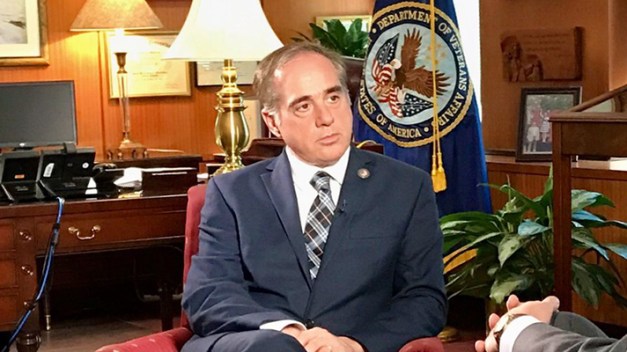
“Right now my issue is getting there quickly,” VA Secretary David Shulkin said about the shift to a commercial system. “I’ve determined the best way to do this is directly with Cerner, and we will be looking for help from what I’d call an integrator through separate procurement,” Shulkin said at a June 20 breakfast with reporters hosted by the Christian Science Monitor.

<a href=”https://pubads.g.doubleclick.net/gampad/jump?iu=/5978/eof.fcw&t=item%253d2fed673d_bbab_44e7_94ce_06782a3b6126%26pos%253dBOX_C1%26Topic%253dVeterans_Affairs%252cLegacy_Systems%252cHealth_Technology%252cAgencies%252cTechnology&sz=300×250|1×1&tile=2&c=123456789″ target=”_blank” > <img src=”https://pubads.g.doubleclick.net/gampad/ad?iu=/5978/eof.fcw&t=item%253d2fed673d_bbab_44e7_94ce_06782a3b6126%26pos%253dBOX_C1%26Topic%253dVeterans_Affairs%252cLegacy_Systems%252cHealth_Technology%252cAgencies%252cTechnology&sz=300×250|1×1&tile=2&c=123456789″ border=”0″ alt=”” /> </a>            

The VA is going to face some tough hurdles in delivering a commercial system to its thousands of locations — not the least of which will be designing the Cerner record to be interoperable with legacy data and applications.

“We … have a strong need to build back in ties to our current electronic medical records. We have 30 years of really useful data, but also innovations that have been developed by our clinicians. I’m not willing to give up on that. DOD did not build back into their legacy systems the way that we’re going to need to,” Shulkin said.

The Defense Department entered into a $4.3 billion contract with a vendor group led by Leidos that included Cerner and Accenture to license the electronic health record software and do implementation and training across military facilities worldwide. The VA has a larger patient base and more complex needs, Shulkin noted. While he didn’t comment on the price tag of a VA commercial system, it is expected to exceed the DOD contract.

Shulkin said that VA has been working with Pentagon contracting officials to benefit from the two-year DOD Healthcare Management System Modernization procurement that resulted in the adoption of the Cerner record. That experience, the VA chief said “has essentially, I think, carved years off our process” for change management and procurement.

VA has set up a program office for the procurement that includes Christopher Miller, who managed the DHMSM acquisition at the Pentagon.

Leidos is watching VA’s planned shift to the Cerner health record closely.

“This is frankly faster than we would have expected VA to move,” Leidos CEO Roger Krone said at a June 14 investor conference in Boston hosted by Citi. While there are no formal solicitations or drafts out yet, Krone said he sees a role for Leidos to help VA with the integration.

“We have had some very top-level conversations with folks at VA about the value we have provided and Leidos’ ability to reduce the risk of implementation,” Krone said. “I’m not sure how that will manifest itself in contracts — whether we’ll be a sub to Cerner or there will be a separate integration contract or we provide advisory services, but we’re starting from a position where we had very little presence in [electronic health records] at VA, to where they’ve made a strategic decision to harmonize with DOD where we have the prime contract, and they picked our set of vendors,” he said.

More COTS for VA

Vista permeates the VA enterprise  —  not just in health records but in scheduling, procurement, facilities management and other functions. Shulkin said that he was pushing ahead with plans to go commercial across the VA enterprise. He cited a recent procurement for an off-the-shelf scheduling system and a financial system upgrade.

“You’ll see more and more of these types of announcements as we start replacing these systems,” Shulkin said.

At the same time, he said that Vista was going to have a long sunset.

“We will be living off of our Vista system for years in the future because you can’t essentially make the transition in all these systems all at once,” Shulkin said. “It has to be done in a way that we’re not dropping any data or dropping any services. This is going to be a slow transition, but what we’ve done is set the path toward future modernization of all of our IT systems,” he said.

Article link: https://fcw.com/articles/2017/06/20/shulkin-vista-cerner-integrate.aspx?m=1

About the Author

Adam Mazmanian is executive editor of FCW.

Before joining the editing team, Mazmanian was an FCW staff writer covering Congress, government-wide technology policy, health IT and the Department of Veterans Affairs. Prior to joining FCW, Mr. Mazmanian was technology correspondent for National Journal and served in a variety of editorial roles at B2B news service SmartBrief. Mazmanian started his career as an arts reporter and critic, and has contributed reviews and articles to the Washington Post, the Washington City Paper, Newsday, Architect magazine, and other publications. He was an editorial assistant and staff writer at the now-defunct New York Press and arts editor at the About.com online network in the 1990s, and was a weekly contributor of music and film reviews to the Washington Times from 2007 to 2014.

Click here for previous articles by Mazmanian. Connect with him on Twitter at @thisismaz.

Health, Wealth, and the U.S. Senate – NEJM

Posted by timmreardon on 07/04/2017
Posted in: Uncategorized. Leave a comment

Debra Malina, Ph.D., Stephen Morrissey, Ph.D., Mary Beth Hamel, M.D., M.P.H., Caren G. Solomon, M.D., M.P.H., Arnold M. Epstein, M.D., Edward W. Campion, M.D., and Jeffrey M. Drazen, M.D.

June 27, 2017DOI: 10.1056/NEJMe1708506

The Better Care Reconciliation Act (BCRA), as the U.S. Senate calls the health care bill released by a small working group of Republican senators last week, is not designed to lead to better care for Americans. Like the House bill that was passed in early May, the American Health Care Act (AHCA), it would actually do the opposite: reduce the number of people with health insurance by about 22 million, raise insurance costs for millions more, and give states the option to allow insurers to omit coverage for many critical health care services so that patients with costly illnesses, preexisting or otherwise, would be substantially underinsured and saddled with choking out-of-pocket payments — all with predictably devastating effects on the health and lives of Americans. What would get “better” under the BCRA is the tax bill faced by wealthy individuals, which would be reduced by hundreds of billions of dollars over the next decade — about $5,000 per year for families making over $200,000 per year and $50,000 or more for those making over $1 million, according to analysis of the AHCA, which included a similar set of tax provisions.1 We believe that that trade-off is not one to which we — physicians, patients, or American society — should be reconciled.

Under the BCRA, states could easily receive waivers to drop many of the insurance regulations created by the Affordable Care Act (ACA). Although the ACA requirement that insurers take all comers would nominally remain intact, states could reject the ACA’s mandated essential benefits, allowing insurers to refuse to cover such critical services as emergency care, mental health care, maternity care, chemotherapy, and prescription drugs, among others. In some states, health plans could become largely worthless, particularly for patients with preexisting conditions (a group that includes 23 to 51 percent of nonelderly Americans, depending on the criteria used2). By redefining essential health benefits, states would also restore insurers’ ability to place annual and lifetime limits on enrollees’ coverage, since the ACA protections against such limits apply only to benefits designated as essential.3 Older Americans all over the country could be charged five times as much as younger ones for coverage, whereas the ACA limited age-based variation to a 3:1 ratio. And the BCRA would repeal cost-sharing reductions for low-income persons as of the end of 2019, leaving them with unaffordable deductibles and coinsurance after that. As Americans know all too well from the pre-ACA era, many underinsured and uninsured people would risk being bankrupted by health care costs3 — or would die for lack of access to needed care.

Perhaps in a nod to pleas for a reform less “mean” than the AHCA, the Senate bill would phase down federal funding for the ACA’s Medicaid expansion more slowly than House Republicans proposed to do — but it would impose the same cuts in the long run, and it would implement an even more draconian version of the House’s proposal to cap federal Medicaid funding per enrollee or turn the program into block grants. All told, the bill would cut more than $700 billion from the program over the next decade. The poorest Americans, those requiring nursing home care, and those with disabilities or mental illness would suffer. These attacks on Medicaid would undercut health care for the 74 million Americans who rely on it.

Women’s health care would also suffer major blows under the BCRA. In states that chose to stop mandating coverage of maternity care, women of child-bearing age could be forced to pay unaffordably high rates for basic pregnancy coverage. Planned Parenthood would be defunded for a year, severely restricting access not just to family planning services but to an array of important preventive care services, including cancer screenings, for millions of low-income women. Another provision would prohibit the use of tax credits for any individual insurance plan that covered abortion services (with exceptions for rape, incest, and risk to the woman’s life).

And at a time when about 60,000 Americans are dying each year from opioid overdoses, the Senate bill would drastically reduce the funds available for confronting this massive crisis and providing affected people the help they need to become functioning, contributing members of society. In addition to removing many people with opioid use disorder from the Medicaid or individual-insurance rolls, the BCRA would provide a mere $2 billion over 10 years for efforts that experts estimate would cost $183 billion.4

The public response to the very similar House bill indicates that the GOP’s approach to health care reform is deeply unpopular throughout the country, with an approval rating below 20%5 — and for good reason. Like many U.S. physician and hospital organizations that are speaking out against the BCRA, we whole-heartedly oppose sacrificing Americans’ health care and health to further enrichment of the wealthy. The future of our health care system and the lives of our patients are at stake.

Disclosure forms provided by the authors are available with the full text of this editorial at NEJM.org.

This editorial was published on June 27, 2017, at NEJM.org.

Article link: http://www.nejm.org/doi/full/10.1056/NEJMe1708506

References

    1. 1

      Fiedler M, Aaron HJ, Adler L, Ginsburg PB. Moving in the wrong direction — health care under the AHCA. N Engl J Med 2017;376:2405-2407
      Free Full Text | Medline

    1. 2

      Department of Health and Human Services. Health insurance coverage for Americans with pre-existing conditions: the impact of the Affordable Care Act. ASPE Issue Brief. January 5, 2017 (https://aspe.hhs.gov/system/files/pdf/255396/Pre-ExistingConditions.pdf).

    1. 3

      Fiedler M. Like the AHCA, the Senate’s health care bill could weaken ACA protections against catastrophic costs. Washington, DC: Brookings, June 23, 2017 (https://www.brookings.edu/blog/up-front/2017/06/23/like-the-ahca-the-senates-health-care-bill-could-weaken-aca-protections-against-catastrophic-costs/).

    1. 4

      Frank RG. Ending Medicaid expansion will leave people struggling with addiction without care. The Hill. June 20, 2017 (http://thehill.com/blogs/pundits-blog/healthcare/338579-ending-medicaid-expansion-will-leave-people-struggling-with).

  1. 5

    Warshaw C, Broockman D. G.O.P. senators might not realize it, but not one state supports the Republican health bill. New York Times. June 14, 2017 (https://www.nytimes.com/2017/06/14/upshot/gop-senators-might-not-realize-it-but-not-one-state-supports-the-ahca.html).

Three Meaningful Strategies for Managing Rapid Change – MIT Sloan Management Review

Posted by timmreardon on 06/30/2017
Posted in: Uncategorized. Leave a comment

Faced with a need to adapt to a changing business environment, many companies opt for quick fixes that ultimately fail. But there are better options.

The last decade has shown that global, social, and marketplace shifts triggered by advances in technology and digital data — are rapidly transforming the nature of work and how existing organizations in both the private and public sector can best adapt to global change.

This explains the popularity of startups, which unlike existing organizations, lack legacy processes or technologies. Startup founders can reimagine a new way of doing business without the burden of how things “used to work” in their organization. Yet even startups today will accumulate similar legacy burdens. In the next three to four years how they previously worked when they started will no longer fit with the latest disruptive technology landscape, changing marketplace, and public demand.

So how can both established and relatively new organizations find new ways to be nimble and adaptive? How can organizations avoid the trap of becoming saddled with legacy processes, legacy technologies, or legacy ways of thinking?

Three Adaptations to Avoid

There are three quick — yet ultimately superficial — adaptations that organizations confronting rapid change often find tempting, but should avoid. These apply to organizational change in general, and more specifically to organizations attempting digital transformations.

  1. Avoid creating a transformation office unconnected to the rest of the organization: Transformation is everyone’s responsibility. Creating a disconnected office that does not include staff drawn or rotated in from the rest of the organization risks creating a culture of “cool kids” isolated from the rest of the workforce. This also risks dismissing those individuals already doing valuable transformation work elsewhere in the organization.
  2. Avoid digitizing processes without rethinking the organization’s business model: Focusing solely on IT misses the primary point that a rapidly changing world requires new business models. Just digitizing existing manual processes overlooks massive opportunities to improve how the organization works — and meaningful improvement must include transforming how the organization operates.
  3. Avoid just hiring a lone “chief     officer”: This pins the entire hopes of the organization on one individual, when in fact helping the organization adapt to the shifting future of work is everyone’s responsibility. Expertise only comes from experiments, and thus all C-suite leaders must recognize the need to deliver results that matter by using existing business models while also experimenting with new and better ones in parallel.

Why Adapting to a Changing World Is Hard

Organizations (and most people) aren’t prone to change when things are going well. When an organization is doing well, the few prescient voices scanning the future and urging the organization to change its business model are ignored, marginalized, or worse.

When the external environment in which an organization operates changes, and the existing business processes no longer work, there usually remains a lot of denial that the world has changed. Often leaders and managers will revert to the refrain of “if we just get back to our principles of X years ago, then the organization will be fine.” Organizations that deny the world has changed will push to work harder at the old business model, or perhaps make an incremental improvement, attempting to get back to the old days that were so successful. It’s only when things get truly bad that an organization might finally embrace those voices that express the urgent need to do something completely different in the new environment. This is akin to waiting until an airplane has unexpectedly descended from a cruising altitude of 38,000 feet to less than 2,000 feet with the hopes of pulling the plane, with all its weight and inertia, back up before it hits the ground.

Three Meaningful Strategies to Deliver Results

In such “truly bad” scenarios, some organizations might risk doing one of the aforementioned quick yet ultimately superficial adaptations. It’s important to note that any one of those strategies isn’t entirely bad if there are more meaningful actions accompanying it. Leaders need to recognize that a quick adaptation rarely, if ever, helps an existing organization through the hard work of adapting to a changing world.

Here are three more meaningful strategies:

  1. Reward delivering results differently and better: Instead of striving to change organizational cultures (plural) head-on, an organization’s C-suite should visibly give permission — and reward — to those parts of the existing organization that deliver results differently and better. This will incentivize the more change-averse parts of your organization to expand their search space and provide top-cover to those prescient voices who can see future trends and successfully translate them into implementation and delivery of positive outcomes.
  2. Adapt the practiced values and goals of an organization to the changing world instead of attempting to change mission statements: Organizations that remain nimble and adaptive do so by explicitly recognizing that outcomes matter, and what an organization aims for and values on a regular basis in practice is much more important than any mission statement. What individuals in an organization perceive as intrinsically valued and rewarded will motivate them to adapt in ways that are long lasting. This then translates delivering results differently and better and ultimately transforms organizational cultures.
  3. Champion everyone across the organization to be positive change agents: Specifically, change agents are leaders who “illuminate the way” and manage the friction of stepping outside the status quo. Meaningful change happens across an organization when everyone realizes that anyone in an organization can be a change agent. There is no need to be a designated manager or supervisor. There is no need to receive formal authority to do so. By individually making improvements in the context of our own roles, this work will reverberate across an existing organization and collectively will adapt better to our changing world.
About the Author
David A. Bray is an Eisenhower Fellow to Taiwan and Australia and was named one of the top “24 Americans Who Are Changing the World” by Business Insider in 2016.

Article link: http://sloanreview.mit.edu/article/three-meaningful-strategies-for-managing-rapid-change/?utm_source=twitter&utm_medium=social&utm_campaign=sm-direct

House committee earmarks $65 million for VA’s Cerner EHR transition, but there’s a catch – Healthcare IT News

Posted by timmreardon on 06/30/2017
Posted in: Uncategorized. Leave a comment

Appropriations Committee says the VA must detail how the new EHR would be interoperable with the DoD and private sector systems.

By Jessica DavisJune 13, 201704:11 PM

shulkin-twitter-

A military budget bill passed by the U.S. House Appropriations Committee on Monday would provide $65 million for the U.S. Department of Veterans Affairs to move its VistA IT system to Cerner.

However, those funds come with strings.

According to the budget, the VA must provide Congress with a detail explanation of its solicitation with Cerner for its development of the agency’s EHR. Further, the VA must detail how the new EHR would be interoperable with the DoD and private sector systems.

[Also: VA secretary: Cerner EHR choice brings big clinical gains]

The agency must share with Congress how it plans to maintain the functionality of VistA during the transition, while explaining how it will manage the transition process — including pilot programs and user training.

The 2018 Military Construction and Veterans Affairs Appropriations bill allocates $182.3 billion to the VA.

VA Secretary David Shulkin, MD announced last week that it would make the shift from its outdated VistA system to Cerner — the same platform as the U.S. Department of Defense.

[Also: VA picks Cerner to replace VistA; Trump says EHR will fix agency’s data sharing ‘once and for all’]

The funding will “ensure the swift implementation of the plan for the VA to use an identical electronic record system as the DoD,” officials said in a statement. “This will also ensure our veterans get proper care, with timely and accurate medical data transferred between the VA, DoD and the private sector.”

Under terms of the bill, The VA must also create and share a detailed plan on how it will develop and implement the EHR, including timelines, performance milestones, a master schedule and both annual and lifecycle cost estimates.

DoD’s entire Defense Healthcare Management Systems Modernization is projected to cost $4.3 billion. The VA is significantly larger than DoD, so it’s likely the overhaul will cost significantly more.

Shulkin has yet to provide an estimate on cost or when the VA will begin the process. However, at a May House Committee on Veterans Affairs, Shulkin said he planned to return to Congress to ask for more funding if the agency chose to go with a commercial-off-the-shelf EHR.

“We’ve charted a course for modernization: We need help to improve growth and make healthcare a reality for all veterans,” Shulkin said in his opening statement.

Article link: http://www.healthcareitnews.com/news/house-committee-earmarks-65-million-vas-cerner-ehr-transition-theres-catch

Twitter: @JessieFDavis
Email the writer: jessica.davis@himssmedia.com

Value-Based Care Alone Won’t Reduce Health Spending and Improve Patient Outcomes – HBR

Posted by timmreardon on 06/30/2017
Posted in: Uncategorized. Leave a comment

David J. Bailey

June 16, 2017HBR 11

Despite spending twice what other developed nations spend on a per capita basis for health care, the United States has a longstanding trend of having lower life expectancy, greater prevalence of chronic disease, and overall poorer health outcomes. One proposed solution for this is to change the payment model of our health care system from the predominant fee-for-service (FFS) model, which reimburses services regardless of outcome, to a value-based model in which outcomes are reimbursed.

Our experience at the Nemours Children’s Health System suggests that value-based care (VBC) is necessary to significantly improve health outcomes and to lower costs for children with chronic illness and complex medical conditions. We have found that a VBC approach can decrease the direct costs of care for a group of children with a chronic condition. However, transitioning to a VBC approach involves added infrastructure, training costs, and complexity of delivering care in an environment that mixes fee-for-service and value-based reimbursement. In addition, we believe that in order to deliver on the promise of improved health and reduced spending, VBC must be augmented with a structured approach to eliminate waste and be delivered in conjunction with a broad-based effort to address factors that are outside of the traditional boundaries of healthcare.

One example illustrates this well. In 2012 Nemours implemented a pilot program to improve asthma outcomes — asthma is the most common chronic disease in childhood — for a population of children in Delaware, where we had an established network of primary care clinics and where, in 2004, we established Nemours Health and Prevention Services, a freestanding population health division dedicated to addressing the social determinants of health in collaboration with the larger community.

A significant body of evidence shows that at least 80% of what affects health outcomes is typically outside of the clinical realm. It includes social factors (employment, family and social support, income, education), behaviors (diet and exercise, tobacco, alcohol and drugs, sexual activity), and the physical environment (housing, air and water quality, transportation).

Passage of the Affordable Care Act, in 2010, signaled the advent of VBC and an emphasis on population care. Since most of Nemours’s patient revenue was from fee-for-service contracts, we designed this pilot program to integrate our population health expertise with our clinical operation, in an effort to better understand value-based care and reimbursement models and to further improve health outcomes in a population of children with asthma.

Our pilot effort was supported in part by a federal grant. The primary care clinics involved became certified patient-centered medical homes, and we expanded the typical physician-nurse team that managed asthma to include a social worker, a psychologist, and a case manager. Evaluation, diagnosis, and treatment were standardized according to the best evidence and templated in the electronic health record so that the only deviations to clinical care were driven by individual patient factors. School nurses were given access to the electronic health record with parental permission.

In addition, we hired community health workers to work with families at home and in school to evaluate for triggers of asthma, as well as to educate and support them in dealing with various issues that could affect the child’s asthma care. These community liaisons linked families to community resources, explored community factors potentially affecting asthma, and advocated at the state and local policy level for system changes, such as the cessation of buses idling around schools, which contributes to poor air quality and can trigger an acute asthma attack. Other actions outside our usual provision of care included finding housing for some families, providing transportation, lobbying to change the type of pesticides used in public housing, and even encouraging the donation of new mattresses for some children.

The results after three years were remarkable for the children enrolled in the pilot: We saw a 60% reduction of asthma-related ER visits, a 44% reduction in asthma-related hospital admissions, and more than a $2,100 reduction in annual medical costs per child. Their asthma was much more stable, requiring fewer office visits and fewer hospital services. The outpatient costs associated with this care model were increased due to the large expansion of the team. However, this was outweighed by the reduction in utilization of hospital services.

In a FFS model, which still describes the majority of our patient care revenue, this reduced medical cost per child benefits only the payer. We suffered a financial loss because there was a significant reduction of utilization of hospital services that otherwise would have been reimbursed (the grant mitigated some of that loss.) The pilot ended after three years, and we have maintained that model of care for children with asthma. However, despite the remarkable improvement of outcomes demonstrated in the pilot, that model of care is simply not sustainable when implemented broadly with FFS reimbursement. There were also many other barriers to effective care, including lack of transportation, inadequate housing, and inability to read prescriptions. These barriers could not be addressed with FFS. Even some value-based reimbursement models would not lead to financial sustainability of our piloted care model, due to their complexity and the significant investment required at the home, community, and policy levels.

A number of reimbursement methods fall under the general phrase “value-based reimbursement.” These include pay-for-performance, shared savings, bundled payments, alternative payment methods associated with accountable care organizations and patient-centered medical homes, and full risk-bearing for providers as seen in capitation. Most health systems will need to manage a multitude of reimbursement methodologies. The increasing complexity of having to track performance for many different payment systems and meet different reporting requirements of quality and safety outcomes will likely increase administrative costs.

As the movement to VBC has proceeded at an uncertain tempo, with the possibility of operating in a mixed reimbursement environment for quite some time, Nemours has pursued an additional avenue to transform care and enhance value that is compatible with any model of care or reimbursement. For the past five years, we’ve committed to the philosophy and tools of the lean methodology, a structured approach to creating more value with fewer resources. Lean’s core principles include value being defined by the customer’s (patient’s) needs, aggressively removing waste from processes, improving processes continually, and engaging employees actually doing the work to identify issues and provide solutions. This approach is helping us improve outcomes and reduce cost, which creates a foundation for success regardless of the reimbursement model.

Using lean, we have decreased hospital length of stay and readmissions across our network, increased unit capacity without expansion, and reduced spending for capital projects. One example of a process improvement delivering value directly to patients is the virtual elimination of preadmission testing before the day of surgery — we’re now able to accomplish all of the work on the day of surgery. This has resulted in fewer cancellations of surgical cases and improved patient satisfaction, with no adverse impact on surgical start times. The cumulative effect of changes such as this has been improved quality and safety, top-tier patient satisfaction, and millions of dollars in annual cost savings. These savings partially mitigate the high costs associated with transitioning to a value-based system and are helping fund our ongoing population health efforts (which we believe are necessary to make VBC work) that remain independent of the reimbursement model.

The changes necessary to transform the health of any population are simple: Embed healthful behaviors from birth, reward care efforts for outcomes rather than volume, and provide patients with the ability and tools to truly engage in their own health. But implementation is exceedingly complex. We believe that value-based care, implemented using lean principles and in conjunction with an ongoing, community-wide effort to address social determinants of health, can reduce health spending and deliver on the promise of better health, for children and for all.

Article link: https://hbr.org/2017/06/value-based-care-alone-wont-reduce-health-spending-and-improve-patient-outcomes

David J. Bailey, MD, MBA is the President and CEO of Nemours Children’s Health System.

This article is about CHANGE MANAGEMENT

Senators pressure DoD, VA to collaborate on EHR for veterans – Health Data Management

Posted by timmreardon on 06/30/2017
Posted in: Uncategorized. Leave a comment
By Geg Slabodkin

Published June 28 2017, 6:40am EDT

Senators are pressuring the departments of Defense and Veterans Affairs to share the DoD’s best practices and lessons learned from implementing its Cerner electronic health record system, as the VA looks to replace its legacy EHR with the same commercial off-the-shelf platform.

Sens. Johnny Isakson (R-Ga.), Jerry Moran (R-Kan.) and John McCain (R-Ariz.) sent a June 26 letter to Secretary of Defense James Mattis and VA Secretary David Shulkin, urging them to work closely and to look for opportunities for their respective staffs to collaborate.

“We remain optimistic about the VA’s EHR transition; however, we hold great concern that the scope of this project brings several risks related to excess costs and implementation delays,” states the letter.

“We implore the VA to work with DoD’s experts to adopt any lessons learned and best practices from DoD’s recent experience with Military Health System (MHS) Genesis implementation,” wrote the senators. “We cannot afford any mistakes on this project, as it has immense implications for the future of the VA and the proper care of our millions of veterans.”

Pentagon4

Earlier this month, VA announced that it plans to replace its decades-old Veterans Health Information Systems and Technology Architecture with the same Cerner Millennium EHR that DoD is currently rolling out to military sites in the Pacific Northwest.

Also See: DoD rolls out deployment of Cerner EHR system to Fairchild AFB

In 2015, the Pentagon awarded a $4.3 billion contract to a Leidos-Cerner team to modernize DoD’s EHR. However, the VA’s system has the potential to cost significantly more, given the size of the veteran population and the number of healthcare facilities.

During a Senate appropriations subcommittee hearing last week, Sen. Jon Tester (D-Montana) estimated that the VA acquisition of a new Cerner system could cost as much as $16 billion. It’s a price tag that worries lawmakers. But, so far, Shulkin and other officials will not provide a cost estimate for the procurement.

To ensure DoD and VA work together to “create an integrated EHR platform,” senators have asked Mattis and Shulkin to provide them with the following information:

  • An implementation and phasing plan, including a projected timeline and major expected milestones.
  • The DoD best practices and lessons learned from MHS Genesis that can be adopted by the VA.
  • Assessments of business process re-engineering the VA plans to undertake early in the Cerner EHR acquisition lifecycle.
  • Efforts that will be made to integrate Investment Review Boards at the beginning of the budget process to ensure sound financial decision-making is a key part of the EHR initiative.
  • Whether DoD and VA intend to align the tenure of program executives responsible for the execution of the initiative with key decision points to improve their ability to hold responsible personnel accountable.

“Capitalizing on joint ventures between DoD and VA reduces redundancies, realizes economies of scale and combines shared resources for more comprehensive solutions,” the senators’ letter concludes. “The unification of EHRs serves as the linchpin for further joint solutions.”

Article link: https://www.healthdatamanagement.com/news/senators-pressure-dod-va-to-collaborate-on-ehr-for-veterans

CHART: Who Wins, Who Loses With Senate Health Care Bill – NPR

Posted by timmreardon on 06/30/2017
Posted in: Uncategorized. Leave a comment

HC bill 1Senate Majority Leader Mitch McConnell leaves the chamber after announcing the release of the Republicans’ health care bill on Thursday.
J. Scott Applewhite/AP

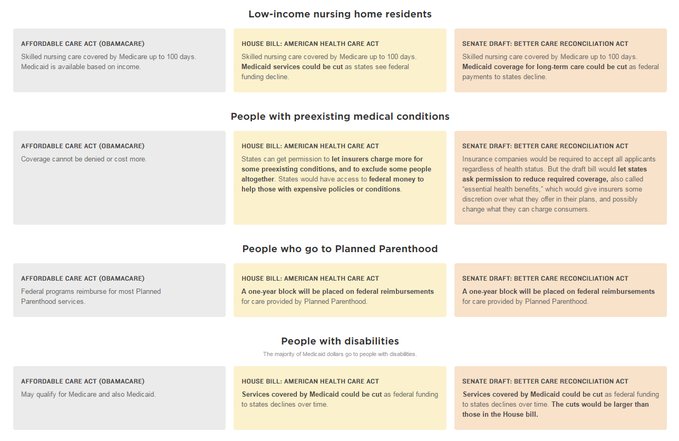
Senate Republicans on Thursday unveiled their plan to repeal and replace the Affordable Care Act — also known as Obamacare. The long-awaited plan marks a big step toward achieving one of the Republican Party’s major goals.
HC bill 2

The Senate proposal is broadly similar to the bill passed by House Republicans last month, with a few notable differences. Senate Majority Leader Mitch McConnell, who has been criticized for drafting the bill in secret with just a dozen Republican Senate colleagues, says the proposal — which he calls a discussion draft — will stabilize insurance markets, strengthen Medicaid and cut costs to consumers.
“We agreed on the need to free Americans from Obamacare’s mandates. And policies contained in the discussion draft will repeal the individual mandates so Americans are no longer forced to buy insurance they don’t need or can’t afford,” McConnell said.
Instead, the bill entices people to voluntarily buy a policy by offering them tax credits based on age and income to help pay premiums.
This bill is better designed than the House version, according to Avik Roy, founder of the Foundation for Research on Equal Opportunity, because it offers more help to older people who can’t afford insurance while making coverage cheaper for young healthy people.

Article link: http://www.npr.org/sections/health-shots/2017/06/22/533942041/who-wins-who-loses-with-senate-health-care-bill?utm_source=twitter.com&utm_medium=social&utm_campaign=npr&utm_term=nprnews&utm_content=20170623


Health, Wealth, and the U.S. Senate – NEJM

Posted by timmreardon on 06/30/2017
Posted in: Uncategorized. Leave a comment

Debra Malina, Ph.D., Stephen Morrissey, Ph.D., Mary Beth Hamel, M.D., M.P.H., Caren G. Solomon, M.D., M.P.H., Arnold M. Epstein, M.D., Edward W. Campion, M.D., and Jeffrey M. Drazen, M.D.

June 27, 2017DOI: 10.1056/NEJMe1708506

The Better Care Reconciliation Act (BCRA), as the U.S. Senate calls the health care bill released by a small working group of Republican senators last week, is not designed to lead to better care for Americans. Like the House bill that was passed in early May, the American Health Care Act (AHCA), it would actually do the opposite: reduce the number of people with health insurance by about 22 million, raise insurance costs for millions more, and give states the option to allow insurers to omit coverage for many critical health care services so that patients with costly illnesses, preexisting or otherwise, would be substantially underinsured and saddled with choking out-of-pocket payments — all with predictably devastating effects on the health and lives of Americans. What would get “better” under the BCRA is the tax bill faced by wealthy individuals, which would be reduced by hundreds of billions of dollars over the next decade — about $5,000 per year for families making over $200,000 per year and $50,000 or more for those making over $1 million, according to analysis of the AHCA, which included a similar set of tax provisions.1 We believe that that trade-off is not one to which we — physicians, patients, or American society — should be reconciled.

Under the BCRA, states could easily receive waivers to drop many of the insurance regulations created by the Affordable Care Act (ACA). Although the ACA requirement that insurers take all comers would nominally remain intact, states could reject the ACA’s mandated essential benefits, allowing insurers to refuse to cover such critical services as emergency care, mental health care, maternity care, chemotherapy, and prescription drugs, among others. In some states, health plans could become largely worthless, particularly for patients with preexisting conditions (a group that includes 23 to 51 percent of nonelderly Americans, depending on the criteria used2). By redefining essential health benefits, states would also restore insurers’ ability to place annual and lifetime limits on enrollees’ coverage, since the ACA protections against such limits apply only to benefits designated as essential.3 Older Americans all over the country could be charged five times as much as younger ones for coverage, whereas the ACA limited age-based variation to a 3:1 ratio. And the BCRA would repeal cost-sharing reductions for low-income persons as of the end of 2019, leaving them with unaffordable deductibles and coinsurance after that. As Americans know all too well from the pre-ACA era, many underinsured and uninsured people would risk being bankrupted by health care costs3 — or would die for lack of access to needed care.

Perhaps in a nod to pleas for a reform less “mean” than the AHCA, the Senate bill would phase down federal funding for the ACA’s Medicaid expansion more slowly than House Republicans proposed to do — but it would impose the same cuts in the long run, and it would implement an even more draconian version of the House’s proposal to cap federal Medicaid funding per enrollee or turn the program into block grants. All told, the bill would cut more than $700 billion from the program over the next decade. The poorest Americans, those requiring nursing home care, and those with disabilities or mental illness would suffer. These attacks on Medicaid would undercut health care for the 74 million Americans who rely on it.

Women’s health care would also suffer major blows under the BCRA. In states that chose to stop mandating coverage of maternity care, women of child-bearing age could be forced to pay unaffordably high rates for basic pregnancy coverage. Planned Parenthood would be defunded for a year, severely restricting access not just to family planning services but to an array of important preventive care services, including cancer screenings, for millions of low-income women. Another provision would prohibit the use of tax credits for any individual insurance plan that covered abortion services (with exceptions for rape, incest, and risk to the woman’s life).

And at a time when about 60,000 Americans are dying each year from opioid overdoses, the Senate bill would drastically reduce the funds available for confronting this massive crisis and providing affected people the help they need to become functioning, contributing members of society. In addition to removing many people with opioid use disorder from the Medicaid or individual-insurance rolls, the BCRA would provide a mere $2 billion over 10 years for efforts that experts estimate would cost $183 billion.4

The public response to the very similar House bill indicates that the GOP’s approach to health care reform is deeply unpopular throughout the country, with an approval rating below 20%5 — and for good reason. Like many U.S. physician and hospital organizations that are speaking out against the BCRA, we whole-heartedly oppose sacrificing Americans’ health care and health to further enrichment of the wealthy. The future of our health care system and the lives of our patients are at stake.

Disclosure forms provided by the authors are available with the full text of this editorial at NEJM.org.

Article Link: http://www.nejm.org/doi/full/10.1056/NEJMe1708506


This editorial was published on June 27, 2017, at NEJM.org.

Posts navigation

← Older Entries
Newer Entries →
  • Search site

  • Follow healthcarereimagined on WordPress.com
  • Recent Posts

    • The Global Healthcare System Is Broken. Japan Fixed It for $4,100 Per Person. 04/10/2026
    • When Not to Use AI – MIT Sloan 04/01/2026
    • There are more AI health tools than ever—but how well do they work? – MIT Technology Review 03/30/2026
    • Are AI Tools Ready to Answer Patients’ Questions About Their Medical Care? – JAMA 03/27/2026
    • How AI use in scholarly publishing threatens research integrity, lessens trust, and invites misinformation – Bulletin of the Atomic Scientists 03/25/2026
    • VA Prepares April Relaunch of EHR Program – GovCIO 03/19/2026
    • Strong call for universal healthcare from Pope Leo today – FAN 03/18/2026
    • EHR fragmentation offers an opportunity to enhance care coordination and experience 03/16/2026
    • When AI Governance Fails 03/15/2026
    • Introduction: Disinformation as a multiplier of existential threat – Bulletin of the Atomic Scientists 03/12/2026
  • Categories

    • Accountable Care Organizations
    • ACOs
    • AHRQ
    • American Board of Internal Medicine
    • Big Data
    • Blue Button
    • Board Certification
    • Cancer Treatment
    • Data Science
    • Digital Services Playbook
    • DoD
    • EHR Interoperability
    • EHR Usability
    • Emergency Medicine
    • FDA
    • FDASIA
    • GAO Reports
    • Genetic Data
    • Genetic Research
    • Genomic Data
    • Global Standards
    • Health Care Costs
    • Health Care Economics
    • Health IT adoption
    • Health Outcomes
    • Healthcare Delivery
    • Healthcare Informatics
    • Healthcare Outcomes
    • Healthcare Security
    • Helathcare Delivery
    • HHS
    • HIPAA
    • ICD-10
    • Innovation
    • Integrated Electronic Health Records
    • IT Acquisition
    • JASONS
    • Lab Report Access
    • Military Health System Reform
    • Mobile Health
    • Mobile Healthcare
    • National Health IT System
    • NSF
    • ONC Reports to Congress
    • Oncology
    • Open Data
    • Patient Centered Medical Home
    • Patient Portals
    • PCMH
    • Precision Medicine
    • Primary Care
    • Public Health
    • Quadruple Aim
    • Quality Measures
    • Rehab Medicine
    • TechFAR Handbook
    • Triple Aim
    • U.S. Air Force Medicine
    • U.S. Army
    • U.S. Army Medicine
    • U.S. Navy Medicine
    • U.S. Surgeon General
    • Uncategorized
    • Value-based Care
    • Veterans Affairs
    • Warrior Transistion Units
    • XPRIZE
  • Archives

    • April 2026 (2)
    • March 2026 (9)
    • February 2026 (6)
    • January 2026 (8)
    • December 2025 (11)
    • November 2025 (9)
    • October 2025 (10)
    • September 2025 (4)
    • August 2025 (7)
    • July 2025 (2)
    • June 2025 (9)
    • May 2025 (4)
    • April 2025 (11)
    • March 2025 (11)
    • February 2025 (10)
    • January 2025 (12)
    • December 2024 (12)
    • November 2024 (7)
    • October 2024 (5)
    • September 2024 (9)
    • August 2024 (10)
    • July 2024 (13)
    • June 2024 (18)
    • May 2024 (10)
    • April 2024 (19)
    • March 2024 (35)
    • February 2024 (23)
    • January 2024 (16)
    • December 2023 (22)
    • November 2023 (38)
    • October 2023 (24)
    • September 2023 (24)
    • August 2023 (34)
    • July 2023 (33)
    • June 2023 (30)
    • May 2023 (35)
    • April 2023 (30)
    • March 2023 (30)
    • February 2023 (15)
    • January 2023 (17)
    • December 2022 (10)
    • November 2022 (7)
    • October 2022 (22)
    • September 2022 (16)
    • August 2022 (33)
    • July 2022 (28)
    • June 2022 (42)
    • May 2022 (53)
    • April 2022 (35)
    • March 2022 (37)
    • February 2022 (21)
    • January 2022 (28)
    • December 2021 (23)
    • November 2021 (12)
    • October 2021 (10)
    • September 2021 (4)
    • August 2021 (4)
    • July 2021 (4)
    • May 2021 (3)
    • April 2021 (1)
    • March 2021 (2)
    • February 2021 (1)
    • January 2021 (4)
    • December 2020 (7)
    • November 2020 (2)
    • October 2020 (4)
    • September 2020 (7)
    • August 2020 (11)
    • July 2020 (3)
    • June 2020 (5)
    • April 2020 (3)
    • March 2020 (1)
    • February 2020 (1)
    • January 2020 (2)
    • December 2019 (2)
    • November 2019 (1)
    • September 2019 (4)
    • August 2019 (3)
    • July 2019 (5)
    • June 2019 (10)
    • May 2019 (8)
    • April 2019 (6)
    • March 2019 (7)
    • February 2019 (17)
    • January 2019 (14)
    • December 2018 (10)
    • November 2018 (20)
    • October 2018 (14)
    • September 2018 (27)
    • August 2018 (19)
    • July 2018 (16)
    • June 2018 (18)
    • May 2018 (28)
    • April 2018 (3)
    • March 2018 (11)
    • February 2018 (5)
    • January 2018 (10)
    • December 2017 (20)
    • November 2017 (30)
    • October 2017 (33)
    • September 2017 (11)
    • August 2017 (13)
    • July 2017 (9)
    • June 2017 (8)
    • May 2017 (9)
    • April 2017 (4)
    • March 2017 (12)
    • December 2016 (3)
    • September 2016 (4)
    • August 2016 (1)
    • July 2016 (7)
    • June 2016 (7)
    • April 2016 (4)
    • March 2016 (7)
    • February 2016 (1)
    • January 2016 (3)
    • November 2015 (3)
    • October 2015 (2)
    • September 2015 (9)
    • August 2015 (6)
    • June 2015 (5)
    • May 2015 (6)
    • April 2015 (3)
    • March 2015 (16)
    • February 2015 (10)
    • January 2015 (16)
    • December 2014 (9)
    • November 2014 (7)
    • October 2014 (21)
    • September 2014 (8)
    • August 2014 (9)
    • July 2014 (7)
    • June 2014 (5)
    • May 2014 (8)
    • April 2014 (19)
    • March 2014 (8)
    • February 2014 (9)
    • January 2014 (31)
    • December 2013 (23)
    • November 2013 (48)
    • October 2013 (25)
  • Tags

    Business Defense Department Department of Veterans Affairs EHealth EHR Electronic health record Food and Drug Administration Health Health informatics Health Information Exchange Health information technology Health system HIE Hospital IBM Mayo Clinic Medicare Medicine Military Health System Patient Patient portal Patient Protection and Affordable Care Act United States United States Department of Defense United States Department of Veterans Affairs
  • Upcoming Events

Blog at WordPress.com.
healthcarereimagined
Blog at WordPress.com.
  • Subscribe Subscribed
    • healthcarereimagined
    • Join 153 other subscribers
    • Already have a WordPress.com account? Log in now.
    • healthcarereimagined
    • Subscribe Subscribed
    • Sign up
    • Log in
    • Report this content
    • View site in Reader
    • Manage subscriptions
    • Collapse this bar
 

Loading Comments...