healthcarereimagined

Envisioning healthcare for the 21st century

  • About
  • Economics

Eisenhower Farewell Address

Posted by timmreardon on 01/28/2022
Posted in: Uncategorized. Leave a comment

Above chart from several years ago.


FY2022 Budget $715 billion. The budget funds five branches of the U.S. military: the Army, Navy, Marine Corps, Air Force, and Space Force. In May 2021, the President’s defense budget request for fiscal year 2022 (FY2022) is $715 billion, up $10 billion, from FY2021’s $705 billion.

https://en.m.wikipedia.org/wiki/Military_budget_of_the_United_States

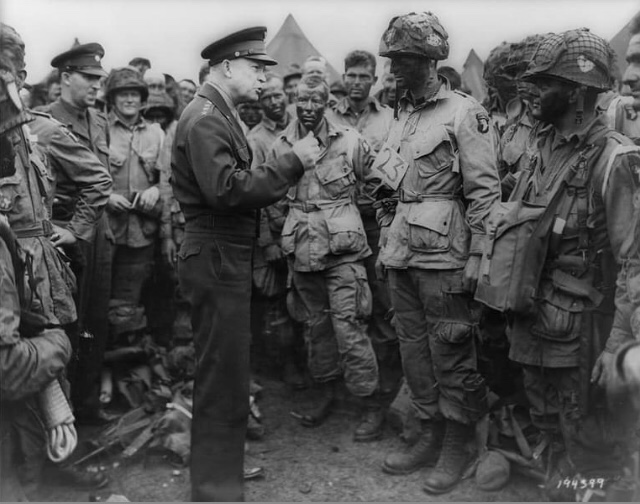
Eisenhower D-Day Speech

Posted by timmreardon on 01/28/2022
Posted in: Uncategorized. Leave a comment

Ike’s 8 Characteristics of Leadership – The Fivecoat Consulting Group

Posted by timmreardon on 01/27/2022
Posted in: Uncategorized. Leave a comment

January 25, 2022 by David Fivecoat

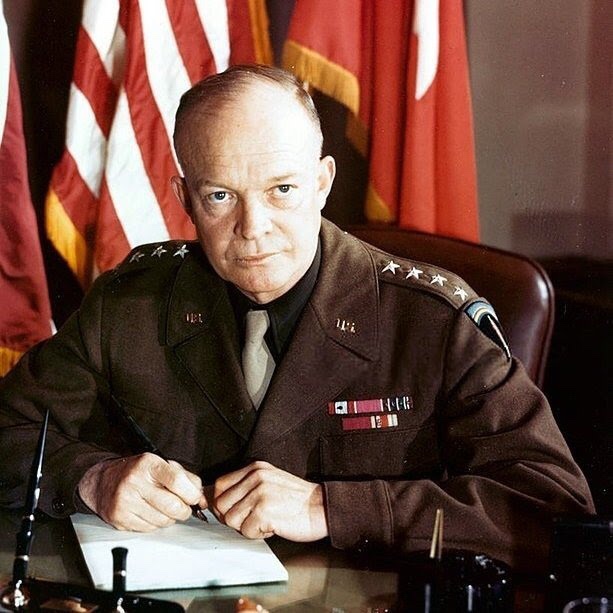
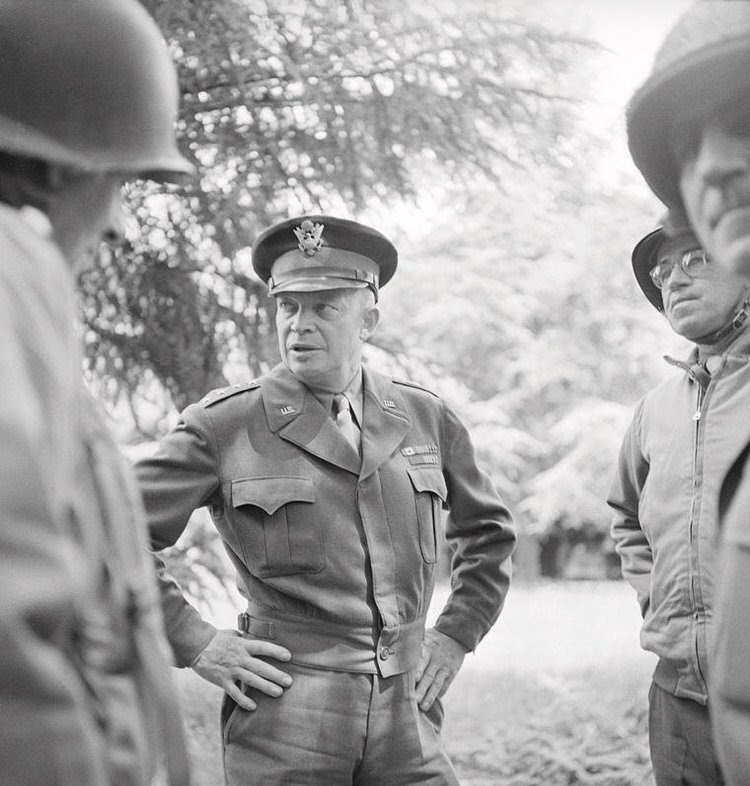
Dwight D. Eisenhower was one of the great people of the 20th century. Born in Texas in 1890 to pacifist parents and raised in Kansas, he attended West Point where he played football. As an infantry officer in the Army, Ike, as he was known to his friends, was an excellent planner and staff officer, serving under Generals John J. Pershing, Fox Conner, and Douglas MacArthur. After Pearl Harbor, General George C. Marshall called him to Washington where he developed the war plans for the United States Army in World War II. He did such a good job as a planner he was selected to command the Allied Forces during the amphibious assault in North Africa in November 1942, the amphibious assault of Sicily on July 9, 1943, and the amphibious assault of the Italian mainland on September 3, 1943. Due to his experience conducting joint operations, his ability to maintain the Allied coalition, his team building skills, and his relationship with both President Franklin Roosevelt and Prime Minister Winston Churchill, he was selected as the Supreme Commander, Allied Expeditionary Forces to lead the Overlord Operation on D-Day, June 6, 1944. 

After the war, he retired from the Army and became President of Columbia University. Recalled to active duty, he assumed command over the new NATO forces being assembled in 1951. At the age of 62, he decided to pursue a political career. In 1952, he ran for and was elected as the 34th President of the United States. His campaign slogan was “I Like Ike.” During his eight years in office, he pursued a centrist approach while maintaining a balanced budget. Amongst his administrations’ many accomplishments include ending the Korean War, starting the Interstate Highway System, supporting the desegregation of schools, passing civil rights legislation, and formalizing the National Security Council.

When he left office, he retired to his farm near Gettysburg, Pennsylvania. In 1965, the Reader’s Digest magazine asked him to write an article entitled “What is Leadership?” Here is the essence of General Dwight D. Eisenhower’s concept of leadership:

General Dwight Eisenhower’s 8 Characteristics of Leadership

  1. Selfless Dedication. Perhaps the greatest of the leadership qualities is single-minded and selfless dedication to the task at hand. Any leader worth his salt must of course possess a certain amount of ego, a justifiable pride in his own accomplishments. But if he or she is a truly great leader, the cause must predominate over self. An old and respected commander of mine used to say, “Always take your job seriously, never yourself.” 
  2. Courage and Conviction. Real leaders are firm in the support of their convictions. Most important of all, real leaders never deviate from their higher purpose and don’t allow personal ambition to cloud their view. (If you’d like more on how to enhance your personal purpose (Post #96) or organization’s purpose (Post #104) click on the links.)
  3. Fortitude. Closely related to dedication is another vital ingredient of leadership: fortitude of spirit – the capacity to stand strong under reverses, to rise from defeat and do battle again, to learn from one’s mistakes and push on to the ultimate goal. (I call this resilience. Here is a great post on Dan Gable and Resilience if you want to learn some ideas on how to improve your resilience.)
  4. Humility. A sense of humility is a quality I have observed in every leader whom I have deeply admired. My own conviction is that every leader should have enough humility to accept, publicly, the responsibility for the mistakes of the subordinates he has himself selected and, likewise, to give them credit, publicly, for their triumphs.
  5. Thorough Homework. Another quality common to leaders is their willingness to work hard, to prepare themselves, and to know their field of activity thoroughly.
  6. Power of Persuasion. A trait always noticeable in a successful leader is his (or her) ability to persuade others. There are times, of course, when every leader must make a decision and see that it is carried out regardless of what others may think. But whenever men (and women) can be persuaded rather than ordered – when they can be made to feel that they have participated in developing the plan – they approach their tasks with understanding and enthusiasm. 
  7. Heart and Mind. The qualities of leadership wear no single outward badge. Each leader is different and can bring about exceptional results using their heart, mind, and personality in their own unique way. 
  8. At Every Level. I have been talking here about leadership in military and government service, but the same fundamentals apply at every level, in every walk of life. In the Army, good leadership must go down through the ranks to the youngest corporal; in business there is always need of men (and women) who can direct others effectively; in community life we need men and women who, by right thinking and sound deeds, influence others. This is the way leadership works in a democracy. And from the ranks of little leaders eventually come big leaders. 

Conclusion

“What is Leadership” by General Eisenhower entire article is here. If you want to learn more about Eisenhower and how to improve the visits you make to parts of your business, check out Post #177.

If you’d like some more ideas on how to improve yourself take a look at my book, Grow Your Grit, available for sale at Amazon. Or reach out to me here to start the discussion about how to use these lessons and others from Dwight D. Eisenhower to develop your team.

Article link:
https://www.thefivecoatconsultinggroup.com/the-coronavirus-crisis/ikes-8-leadership-characteristics

Go on the offensive in 2022 and use General Eisenhower’s 8 Characteristics of Leadership to enhance your leadership skills.

The 15 Diseases of Leadership, According to Pope Francis – HBR

Posted by timmreardon on 01/26/2022
Posted in: Uncategorized. Leave a comment

by Gary Hamel

April 14, 2015

Summary.

Pope Francis has not tried to hide his desire to radically reform the administrative structures of the Catholic Church, which he sees as imperious and insular. The Church is, essentially, a bureaucracy, full of good-hearted but imperfect people – not much different than any organization, making the Pope’s counsel relevant for leaders everywhere. Pope Francis’s 2014 address of the Roman Curia can be translated into corporate-speak. It identifies 15 “diseases” of leadership that can weaken the effectiveness of any organization. These diseases include excessive busyness that neglects the need for rest, and mental and emotional “petrification” that prevents compassion and humility. The Pope also warns against poor coordination, losing a sense of community by failing to work together. A set of questions corresponding to the 15 diseases can help you determine if you are a “healthy” leader.close

Pope Francis has made no secret of his intention to radically reform the administrative structures of the Catholic church, which he regards as insular, imperious, and bureaucratic. He understands that in a hyper-kinetic world, inward-looking and self-obsessed leaders are a liability.

Last year, just before Christmas, the Pope addressed the leaders of the Roman Curia — the Cardinals and other officials who are charged with running the church’s byzantine network of administrative bodies. The Pope’s message to his colleagues was blunt. Leaders are susceptible to an array of debilitating maladies, including arrogance, intolerance, myopia, and pettiness. When those diseases go untreated, the organization itself is enfeebled. To have a healthy church, we need healthy leaders.

Through the years, I’ve heard dozens of management experts enumerate the qualities of great leaders. Seldom, though, do they speak plainly about the “diseases” of leadership. The Pope is more forthright. He understands that as human beings we have certain proclivities — not all of them noble. Nevertheless, leaders should be held to a high standard, since their scope of influence makes their ailments particularly infectious.

The Catholic Church is a bureaucracy: a hierarchy populated by good-hearted, but less-than-perfect souls. In that sense, it’s not much different than your organization. That’s why the Pope’s counsel is relevant to leaders everywhere.

With that in mind, I spent a couple of hours translating the Pope’s address into something a little closer to corporate-speak. (I don’t know if there’s a prohibition on paraphrasing Papal pronouncements, but since I’m not Catholic, I’m willing to take the risk.)

Herewith, then, the Pope (more or less):

____________________

The leadership team is called constantly to improve and to grow in rapport and wisdom, in order to carry out fully its mission. And yet, like any body, like any human body, it is also exposed to diseases, malfunctioning, infirmity. Here I would like to mention some of these “[leadership] diseases.” They are diseases and temptations which can dangerously weaken the effectiveness of any organization.

  1. The disease of thinking we are immortal, immune, or downright indispensable, [and therefore] neglecting the need for regular check-ups. A leadership team which is not self-critical, which does not keep up with things, which does not seek to be more fit, is a sick body. A simple visit to the cemetery might help us see the names of many people who thought they were immortal, immune, and indispensable! It is the disease of those who turn into lords and masters, who think of themselves as above others and not at their service. It is the pathology of power and comes from a superiority complex, from a narcissism which passionately gazes at its own image and does not see the face of others, especially the weakest and those most in need. The antidote to this plague is humility; to say heartily, “I am merely a servant. I have only done what was my duty.”
  2. Another disease is excessive busyness. It is found in those who immerse themselves in work and inevitably neglect to “rest a while.” Neglecting needed rest leads to stress and agitation. A time of rest, for those who have completed their work, is necessary, obligatory and should be taken seriously: by spending time with one’s family and respecting holidays as moments for recharging.
  3. Then there is the disease of mental and [emotional] “petrification.” It is found in leaders who have a heart of stone, the “stiff-necked;” in those who in the course of time lose their interior serenity, alertness and daring, and hide under a pile of papers, turning into paper pushers and not men and women of compassion. It is dangerous to lose the human sensitivity that enables us to weep with those who weep and to rejoice with those who rejoice! Because as time goes on, our hearts grow hard and become incapable of loving all those around us. Being a humane leader means having the sentiments of humility and unselfishness, of detachment and generosity.
  4. The disease of excessive planning and of functionalism. When a leader plans everything down to the last detail and believes that with perfect planning things will fall into place, he or she becomes an accountant or an office manager. Things need to be prepared well, but without ever falling into the temptation of trying to eliminate spontaneity and serendipity, which is always more flexible than any human planning. We contract this disease because it is easy and comfortable to settle in our own sedentary and unchanging ways.
  5. The disease of poor coordination. Once leaders lose a sense of community among themselves, the body loses its harmonious functioning and its equilibrium; it then becomes an orchestra that produces noise: its members do not work together and lose the spirit of camaraderie and teamwork. When the foot says to the arm: ‘I don’t need you,’ or the hand says to the head, ‘I’m in charge,’ they create discomfort and parochialism.
  6. There is also a sort of “leadership Alzheimer’s disease.” It consists in losing the memory of those who nurtured, mentored and supported us in our own journeys. We see this in those who have lost the memory of their encounters with the great leaders who inspired them; in those who are completely caught up in the present moment, in their passions, whims and obsessions; in those who build walls and routines around themselves, and thus become more and more the slaves of idols carved by their own hands.
  7. The disease of rivalry and vainglory. When appearances, our perks, and our titles become the primary object in life, we forget our fundamental duty as leaders—to “do nothing from selfishness or conceit but in humility count others better than ourselves.” [As leaders, we must] look not only to [our] own interests, but also to the interests of others.
  8. The disease of existential schizophrenia. This is the disease of those who live a double life, the fruit of that hypocrisy typical of the mediocre and of a progressive emotional emptiness which no [accomplishment or] title can fill. It is a disease which often strikes those who are no longer directly in touch with customers and “ordinary” employees, and restrict themselves to bureaucratic matters, thus losing contact with reality, with concrete people.
  9. The disease of gossiping, grumbling, and back-biting.This is a grave illness which begins simply, perhaps even in small talk, and takes over a person, making him become a “sower of weeds” and in many cases, a cold-blooded killer of the good name of colleagues. It is the disease of cowardly persons who lack the courage to speak out directly, but instead speak behind other people’s backs. Let us be on our guard against the terrorism of gossip!
  10. The disease of idolizing superiors. This is the disease of those who court their superiors in the hope of gaining their favor. They are victims of careerism and opportunism; they honor persons [rather than the larger mission of the organization]. They think only of what they can get and not of what they should give; small-minded persons, unhappy and inspired only by their own lethal selfishness. Superiors themselves can be affected by this disease, when they try to obtain the submission, loyalty and psychological dependency of their subordinates, but the end result is unhealthy complicity.
  11. The disease of indifference to others. This is where each leader thinks only of himself or herself, and loses the sincerity and warmth of [genuine] human relationships. This can happen in many ways: When the most knowledgeable person does not put that knowledge at the service of less knowledgeable colleagues, when you learn something and then keep it to yourself rather than sharing it in a helpful way with others; when out of jealousy or deceit you take joy in seeing others fall instead of helping them up and encouraging them.
  12. The disease of a downcast face. You see this disease in those glum and dour persons who think that to be serious you have to put on a face of melancholy and severity, and treat others—especially those we consider our inferiors—with rigor, brusqueness and arrogance. In fact, a show of severity and sterile pessimism are frequently symptoms of fear and insecurity. A leader must make an effort to be courteous, serene, enthusiastic and joyful, a person who transmits joy everywhere he goes. A happy heart radiates an infectious joy: it is immediately evident! So a leader should never lose that joyful, humorous and even self-deprecating spirit which makes people amiable even in difficult situations. How beneficial is a good dose of humor! …
  13. The disease of hoarding. This occurs when a leader tries to fill an existential void in his or her heart by accumulating material goods, not out of need but only in order to feel secure. The fact is that we are not able to bring material goods with us when we leave this life, since “the winding sheet does not have pockets” and all our treasures will never be able to fill that void; instead, they will only make it deeper and more demanding. Accumulating goods only burdens and inexorably slows down the journey!
  14. The disease of closed circles, where belonging to a clique becomes more powerful than our shared identity. This disease too always begins with good intentions, but with the passing of time it enslaves its members and becomes a cancer which threatens the harmony of the organization and causes immense evil, especially to those we treat as outsiders. “Friendly fire” from our fellow soldiers, is the most insidious danger. It is the evil which strikes from within. As it says in the bible, “Every kingdom divided against itself is laid waste.”
  15. Lastly: the disease of extravagance and self-exhibition. This happens when a leader turns his or her service into power, and uses that power for material gain, or to acquire even greater power. This is the disease of persons who insatiably try to accumulate power and to this end are ready to slander, defame and discredit others; who put themselves on display to show that they are more capable than others. This disease does great harm because it leads people to justify the use of any means whatsoever to attain their goal, often in the name of justice and transparency! Here I remember a leader who used to call journalists to tell and invent private and confidential matters involving his colleagues. The only thing he was concerned about was being able to see himself on the front page, since this made him feel powerful and glamorous, while causing great harm to others and to the organization.

Friends, these diseases are a danger for every leader and every organization, and they can strike at the individual and the community levels.

____________________

So, are you a healthy leader? Use the Pope’s inventory of leadership maladies to find out. Ask yourself, on a scale of 1 to 5, to what extent do I . . .

  • Feel superior to those who work for me?
  • Demonstrate an imbalance between work and other areas of life?
  • Substitute formality for true human intimacy?
  • Rely too much on plans and not enough on intuition and improvisation?
  • Spend too little time breaking silos and building bridges?
  • Fail to regularly acknowledge the debt I owe to my mentors and to others?
  • Take too much satisfaction in my perks and privileges?
  • Isolate myself from customers and first-level employees?
  • Denigrate the motives and accomplishments of others?
  • Exhibit or encourage undue deference and servility?
  • Put my own success ahead of the success of others?
  • Fail to cultivate a fun and joy-filled work environment?
  • Exhibit selfishness when it comes to sharing rewards and praise?
  • Encourage parochialism rather than community?
  • Behave in ways that seem egocentric to those around me?

As in all health matters, it’s good to get a second or third opinion. Ask your colleagues to score you on the same fifteen items. Don’t be surprised if they say, “Gee boss, you’re not looking too good today.” Like a battery of medical tests, these questions can help you zero in on opportunities to prevent disease and improve your health. A Papal leadership assessment may seem like a bit of a stretch. But remember: the responsibilities you hold as a leader, and the influence you have over others’ lives, can be profound. Why not turn to the Pope — a spiritual leader of leaders — for wisdom and advice?

Article link: https://hbr.org/2015/04/the-15-diseases-of-leadership-according-to-pope-francis

  • Gary Hamel is a visiting professor at London Business School and the founder of the Management Lab. He is a co-author of Humanocracy: Creating Organizations as Amazing as the People Inside Them (Harvard Business Review Press, 2020).

Don’t Want to get vaccinated?

Posted by timmreardon on 01/26/2022
Posted in: Uncategorized. Leave a comment

Dr. Kristin Ball Motley, of Health Care Solutions of Delaware Valley, created this video for a virtual MLK Day event about the importance of wearing masks and getting vaccinated. She specifically discusses the impact of racism and mistrust on parents’ decisions to vaccinate themselves and their children.
https://youtu.be/ClGdyu6c75U

Office of Management and Budget Releases Federal Strategy to Move the U.S. Government Towards a Zero Trust Architecture – WH.GOV

Posted by timmreardon on 01/26/2022
Posted in: Uncategorized. Leave a comment

Today, the Office of Management and Budget (OMB) released a Federal strategy to move the U.S. Government toward a “zero trust” approach to cybersecurity. The strategy represents a key step forward in delivering on President Biden’s Executive Order on Improving the Nation’s Cybersecurity, which focuses on advancing security measures that dramatically reduce the risk of successful cyber attacks against the Federal Government’s digital infrastructure.

The growing threat of sophisticated cyber attacks has underscored that the Federal Government can no longer depend on conventional perimeter-based defenses to protect critical systems and data. The Log4j vulnerability is the latest evidence that adversaries will continue to find new opportunities to get their foot in the door. The zero trust strategy will enable agencies to more rapidly detect, isolate, and respond to these types of threats. By detailing a series of specific security goals for agencies, the new strategy will serve as a comprehensive roadmap for shifting the Federal Government to a new cybersecurity paradigm that will help protect our nation. These goals are directly aligned with and support existing zero trust models.  

“In the face of increasingly sophisticated cyber threats, the Administration is taking decisive action to bolster the Federal Government’s cyber defenses,” said Acting OMB Director Shalanda Young. “This zero trust strategy is about ensuring the Federal Government leads by example, and it marks another key milestone in our efforts to repel attacks from those who would do the United States harm.”

“Security is the cornerstone of our efforts to build exceptional digital experiences for the American public,” said Federal Chief Information Officer Clare Martorana. “Federal agency CIOs and IT leadership are leaning into this challenge, and the zero trust strategy provides a clear roadmap for deploying technology that is secure by design and responsive to the needs of our workforce so they can better deliver for the American public.”

“It was extremely important for us to work collaboratively with top experts across the government, industry and academia and build consensus around the highest value starting points for a defensible zero trust architecture,” said Federal Chief Information Security Officer Chris DeRusha.“This strategy will serve as the foundation for a paradigm shift in Federal cybersecurity, and provide a model for others to follow.” 

 “This strategy is a major step in our efforts to build a defensible and coherent approach to our federal cyber defenses,” said National Cyber Director Christopher Inglis. “We are not waiting to respond to the next cyber breach. Rather, this Administration is continuing to reduce the risk to our nation by taking proactive steps towards a more resilient society.”

“As our adversaries continue to pursue innovative ways to breach our infrastructure, we must continue to fundamentally transform our approach to federal cybersecurity,” said CISA Director Jen Easterly.“Zero trust is a key element of this effort to modernize and strengthen our defenses. CISA will continue to provide technical support and operational expertise to agencies as we strive to achieve a shared baseline of maturity.”

“OMB’s Zero Trust Strategy is an important milestone in the President’s effort to modernize the federal government’s cyber security to meet current threats, as outlined in Executive Order 14028,” said Deputy National Security Advisor for Cyber Anne Neuberger. “As OMB Acting Director Young noted, agency leadership plays a key role in making this strategy real, ensuring that agency CISOs have the support they need from their agencies’ financial and acquisition teams to execute this strategy.”

In September 2021, OMB released an initial draft of the strategy for public comment and received additional insights from cybersecurity professionals, non-profit organizations, and private industry that helped inform the final strategy.

###

Article link:
https://www.whitehouse.gov/omb/briefing-room/2022/01/26/office-of-management-and-budget-releases-federal-strategy-to-move-the-u-s-government-towards-a-zero-trust-architecture/

High-Performing Teams Need Psychological Safety. Here’s How to Create It – HBR

Posted by timmreardon on 01/26/2022
Posted in: Uncategorized. Leave a comment

“There’s no team without trust,” says Paul Santagata, Head of Industry at Google. He knows the results of the tech giant’s massive two-year study on team performance, which revealed that the highest-performing teams have one thing in common: psychological safety, the belief that you won’t be punished when you make a mistake. Studies show that psychological safety allows for moderate risk-taking, speaking your mind, creativity, and sticking your neck out without fear of having it cut off — just the types of behavior that lead to market breakthroughs.

Ancient evolutionary adaptations explain why psychological safety is both fragile and vital to successin uncertain, interdependent environments. The brain processes a provocation by a boss, competitive coworker, or dismissive subordinate as a life-or-death threat. The amygdala, the alarm bell in the brain, ignites the fight-or-flight response, hijacking higher brain centers. This “act first, think later” brain structure shuts down perspective and analytical reasoning. Quite literally, just when we need it most, we lose our minds. While that fight-or-flight reaction may save us in life-or-death situations, it handicaps the strategic thinking needed in today’s workplace.

Twenty-first-century success depends on another system — the broaden-and-build mode of positive emotion, which allows us to solve complex problems and foster cooperative relationships. Barbara Fredrickson at the University of North Carolina has found that positive emotions like trust, curiosity, confidence, and inspiration broaden the mind and help us build psychological, social, and physical resources. We become more open-minded, resilient, motivated, and persistent when we feel safe. Humor increases, as does solution-finding and divergent thinking — the cognitive process underlying creativity.

When the workplace feels challenging but not threatening, teams can sustain the broaden-and-build mode. Oxytocin levels in our brains rise, eliciting trust and trust-making behavior. This is a huge factor in team success, as Santagata attests: “In Google’s fast-paced, highly demanding environment, our success hinges on the ability to take risks and be vulnerable in front of peers.”

So how can you increase psychological safety on your own team? Try replicating the steps that Santagata took with his:

1. Approach conflict as a collaborator, not an adversary.We humans hate losing even more than we love winning. A perceived loss triggers attempts to reestablish fairness through competition, criticism, or disengagement, which is a form of workplace-learned helplessness. Santagata knows that true success is a win-win outcome, so when conflicts come up, he avoids triggering a fight-or-flight reaction by asking, “How could we achieve a mutually desirable outcome?”

2. Speak human to human.Underlying every team’s who-did-what confrontation are universal needs such as respect, competence, social status, and autonomy. Recognizing these deeper needs naturally elicits trust and promotes positive language and behaviors. Santagata reminded his team that even in the most contentious negotiations, the other party is just like them and aims to walk away happy. He led them through a reflection called “Just Like Me,”which asks you to consider:

  • This person has beliefs, perspectives, and opinions, just like me.
  • This person has hopes, anxieties, and vulnerabilities, just like me.
  • This person has friends, family, and perhaps children who love them, just like me.
  • This person wants to feel respected, appreciated, and competent, just like me.
  • This person wishes for peace, joy, and happiness, just like me.

3. Anticipate reactions and plan countermoves. “Thinking through in advance how your audience will react to your messaging helps ensure your content will be heard, versus your audience hearing an attack on their identity or ego,” explains Santagata.

Skillfully confront difficult conversations head-on by preparing for likely reactions. For example, you may need to gather concrete evidence to counter defensiveness when discussing hot-button issues. Santagata asks himself, “If I position my point in this manner, what are the possible objections, and how would I respond to those counterarguments?” He says, “Looking at the discussion from this third-party perspective exposes weaknesses in my positions and encourages me to rethink my argument.”

Specifically, he asks:

  • What are my main points?
  • What are three ways my listeners are likely to respond?
  • How will I respond to each of those scenarios?

4. Replace blame with curiosity. If team members sense that you’re trying to blame them for something, you become their saber-toothed tiger. John Gottman’s research at the University of Washington shows that blame and criticism reliably escalate conflict, leading to defensiveness and — eventually — to disengagement. The alternative to blame is curiosity. If you believe you already know what the other person is thinking, then you’re not ready to have a conversation. Instead, adopt a learning mindset, knowing you don’t have all the facts. Here’s how:

  • State the problematic behavior or outcome as an observation, and use factual, neutral language. For example, “In the past two months there’s been a noticeable drop in your participation during meetings and progress appears to be slowing on your project.”
  • Engage them in an exploration. For example, “I imagine there are multiple factors at play. Perhaps we could uncover what they are together?”
  • Ask for solutions. The people who are responsible for creating a problem often hold the keys to solving it. That’s why a positive outcome typically depends on their input and buy-in. Ask directly, “What do you think needs to happen here?” Or, “What would be your ideal scenario?” Another question leading to solutions is: “How could I support you?”

5. Ask for feedback on delivery.Asking for feedback on how you delivered your message disarms your opponent, illuminates blind spots in communication skills, and models fallibility, which increases trust in leaders. Santagata closes difficult conversations with these questions:

  • What worked and what didn’t work in my delivery?
  • How did it feel to hear this message?
  • How could I have presented it more effectively?

For example, Santagata asked about his delivery after giving his senior manager tough feedback. His manager replied, “This could have felt like a punch in the stomach, but you presented reasonable evidence and that made me want to hear more. You were also eager to discuss the challenges I had, which led to solutions.”

6. Measure psychological safety.Santagata periodically asks his team how safe they feel and what could enhance their feeling of safety. In addition, his team routinely takes surveys on psychological safety and other team dynamics. Some teams at Google include questions such as, “How confident are you that you won’t receive retaliation or criticism if you admit an error or make a mistake?”

If you create this sense of psychological safety on your own team starting now, you can expect to see higher levels of engagement, increased motivation to tackle difficult problems, more learning and development opportunities, and better performance.

Article link: https://hbr-org.cdn.ampproject.org/c/s/hbr.org/amp/2017/08/high-performing-teams-need-psychological-safety-heres-how-to-create-it

Laura Delizonna, PhD, is an executive coach, instructor at Stanford University, international speaker, and founder of ChoosingHappiness.com.

Simplified Human/Machine Interfaces Top List of Critical DOD Technologies – DoD News

Posted by timmreardon on 01/26/2022
Posted in: Uncategorized. Leave a comment

JAN. 19, 2022 |BY C. TODD LOPEZ, DOD NEWS

A modern-day cell phone packs quite a wallop when it comes to computing technology and capability. But most cell phones barely come with a “quick start guide,” let alone an instruction manual that spells out how to use all the features.

Cell phone companies have mastered the interface between humans and technology, making their use entirely intuitive and rendering thick instruction manuals a thing of the past.

The same thing should be happening for weapons systems used by servicemembers, Heidi Shyu, who serves as the undersecretary of defense for research and engineering, said. During a virtual discussion today with the Potomac Officers Club near Washington, D.C., she said intuitive, easy-to-use human/machine interfaces is something that’s a priority for her and the Defense Department.

“When I [served as an executive for the] Army before, one of the experiences I learned is with a lot of our weapons system, you really have to have a manual and go through weeks of training, if not months and years to be proficient, which is ridiculous,” she said. “[Weapons systems] ought to be designed with the appropriate ease-of-use human/machine interface, so it will become much more intuitive.”

As the Defense Department’s chief technology officer, Shyu said she’s interested in developing better ways to simplify the way service members use the technology they are given in order to reduce the training burden and learning curve.

“I really would like to see how we can change our weapons systems’ human/machine interface to be a lot more intuitive, to ease the amount of training that’s required,” she said.

For most service members, combat means use of a weapon such as a rifle, an aircraft that can drop a bomb or launch a missile, or a ship or tank that fires a large gun that requires a round to be loaded. All of these kinetic weapons systems fire solid projectiles which need to be carried along with warfighters, and which may eventually run out. But a new generation of weapons systems, which uses directed energy rather than expendable ammunition or ordnance, is on the horizon, Shyu said.

“In the area of directed energy, we’re … finally at the cusp of developing laser technology,” she said. “After 30 years, we’re finally getting to the point of fielding the prototypes. So I’m thrilled. Army and Navy are [both] fielding laser systems. I’m really happy to see that. We’re also developing high-power microwave systems as well.”

The Optical Dazzling Interdictor, Navy program, or ODIN for short, is a nonlethal weapons system used to confuse and perhaps render harmless an enemy drone — rather than shooting it down.

The ODIN system is already installed on multiple Arleigh Burke-class guided-missile destroyers within the Navy’s fleet, and there are plans to install additional systems as well.

The Army is also developing several directed energy systems. One of those is the Directed Energy Maneuver-Short Range Air Defense, or DE M-SHORAD system, which involves a 50kW-class laser to protect divisions and brigade combat teams from unmanned aerial systems, rotary-wing aircraft, and threats from rockets, artillery and mortars.

The department is also interested in the development of advanced materials, Shyu said.

“I’m certainly interested in materials that can handle higher heat, higher temperature, next-generation hypersonic materials,” she said. “I’m interested in material that’s stronger, but lighter weight. It certainly can help us reduce the logistics burden; and also materials that can have higher efficiency — materials that can potentially change properties. [There are] a lot of different areas within advanced materials we need to continue to push the research in.”

The department is also doing its part to bring the manufacture of microelectronics back to the U.S. to improve supply chain reliability, Shyu said.

“You guys have all heard about the situation that we’re in with the supply chain, where 70% of our chips are coming from Asia,” she said. “That poses a supply chain risk. You can see there’s a lot of interest on the Hill in terms of helping out the microelectronics foundries to try to onshore some of the capabilities.”

Shyu said the Defense Department is working closely with the Department of Commerce and with foundry companies to make that happen.

“We also work very closely with intelligence communities to make sure we understand all the needs and figure out how we can leverage commercial processes which can evolve at a much faster rate than just the defense-unique foundry,” she said.

Finally, Shyu said, the department is interested in having the U.S. take the lead on the development of 5G technologies — and the advancement of the next-generation of radio communications as well.

“I call it the ‘next G’,” she said. “Namely, beyond 5G. What I don’t want to happen is for us to take our eyes off the ball and play catch-up. I’m interested in making sure we’re developing technologies on 6G and 7G, so we, the U.S., can shape the standards, as opposed to some other country shaping the standard and us playing catch-up.”

Article link: https://www.defense.gov/News/News-Stories/Article/Article/2904627/simplified-humanmachine-interfaces-top-list-of-critical-dod-technologies/

Army CIO: ADTS Key Objectives for 2022 – The MeriTalk

Posted by timmreardon on 01/25/2022
Posted in: Uncategorized. Leave a comment

BY: LISBETH PEREZ

Jan 14, 2022

For 2022 the United States Army is once again zeroed in on its digital transformation, specifically focusing on six key areas – cloud, cyber, data, application modernization, network, and service delivery and user experience.

Dr. Raj Iyer, the Army chief information officer (CIO), joined other Army officials on Jan. 13 for AFCEA’s Army IT Day to overview the Army’s key fiscal year 2022 efforts to advance the Army Digital Transformation Strategy (ADTS).

The Army released the ADTS in October 2021, representing another significant component of the branch’s overarching technology modernization effort. The ADTS was established to lead the Army through changes in technology, processes, and overall culture, in response to the rapid evolution of digital and modernization programs.

“Digital transformation is about how you fundamentally change how you run your business operations while leveraging these digital technologies,” Iyer said. For the new year, the Army points to six key efforts that will help advance ADTS efforts, he added.

The first is cloud; the Army will focus on various cloud initiatives such as hybrid cloud, cloud Service Management, and cloud cost optimization. The second key objective for 2022 is cyber, where the Army plans to focus on initiatives such as cloud-based internet isolation, software-defined networking, and auto red teaming. The third objective is data, and this includes a focus on implementing initiatives such as enterprise decision analytics framework, army standards assessment program, common operating environment data model.

In 2022, the Army will also focus on application modernization to advance the ADTS. This includes focusing on initiatives like application rationalization, DevSecOps, and implementing a software factory. The fifth key effort is network, focusing on initiatives such as voice modernization, data center optimization, and implementing a proper mission partner environment. And lastly, the Army will also focus on service delivery and user experience initiatives such as creating a service catalog, IT service management, and virtual desktop infrastructure

“It’s about how we can fundamentally change how we operate as an Army through transformative digital technologies, empowering our workforce, and re-engineering our rigid institutional processes to be more agile,” Iyer said.

Article link: https://www.meritalk.com/articles/army-cio-adts-key-objectives-for-2022/

Cybersecurity Tool Sprawl Can Lead to Team Overload and Lower Impact – Acceleration Economy Network

Posted by timmreardon on 01/24/2022
Posted in: Uncategorized. Leave a comment

By Chris HughesJanuary 24, 2022Updated:January 21, 2022

There’s no denying that we’re living in a time where the cybersecurity threat landscape is increasingly dynamic and complex. The landscape includes cloud-native environments, Infrastructure-as-Code (IaC), containers, secrets management, remote work—and that’s just to name a few.

These new technologies and practices logically require security tooling to help address potential vulnerabilities and respond to threats and incidents when they do occur. However, there is a cost associated with the increased tool introduction and use.

Studies have shown that despite the rampant growth in security tooling, there are some concerning metrics that suggest the tools aren’t having the desired impact. For example, Ponemon reports that organizations on average have over 40 security tools, with team members admitting they don’t know how well they are actually working. And a study from Market Cube points out that teams are adding tools faster than they can effectively use them. And, ironically, the burden of tool maintenance is compromising threat response and ultimately security postures.

There’s no single thing to blame for this reality. One factor is the well known cybersecurity talent shortfall. Organizations and the industry as a whole don’t have the number of qualified and competent cybersecurity professionals necessary to meet their security needs. Another is the never-ending onslaught of vendor pitches that IT and security leaders are facing, coupled with their need to scramble to try and cover the ever-increasing threat landscape. There’s also the issue that many of these tools aren’t very interoperable and often require their own unique implementation, along with dashboards and outputs.

With the introduction of each tool comes an increase in the overall cognitive load placed on a team of individuals. It takes time to learn the tool, provision and configure it, and then monitor it to make actionable use of its telemetry. 

So, where can we as security leaders begin to address these challenges and let our security teams operate more effectively, and ultimately be better positioned to address organizational risks?

Cognitive Load

One topic that is beginning to gain more traction is the recognition that technology teams have cognitive load limitations. Cognitive load recognizes that individuals can only hold and handle so much information in their brain at a given time, and this applies to teams that are collections of individuals. 

This applies to your security team as well. You cannot continue to throw an indefinite amount of tooling and technologies at a fixed set of team members and expect them to fully master and operationalize them, due to the reality that cognitive load limitations do exist. If you are a security leader that continues to add security tooling to your security program and enterprise environment without considering a parallel growth in the number of people required to operate and maintain the tooling, you may be setting yourself and your organization up for failure. 

As studies have shown, that approach ultimately leaves organizations less secure in the long run. It also leads to team burnout and attrition, resulting in the need to bring in new folks to learn the tools again. It can become a vicious rinse and repeat cycle.

Tool Rationalization

We’ve acknowledged that there is a valid need for new security tooling. Whether it is being driven by advances in technologies that you must secure or by more modern and robust tooling with new features and automation, the demand can be real. 

However, as you look at your portfolio of tooling and introduce tools, you should also be looking to rationalize and retire tooling where appropriate. Failing to do so leaves the team with an outsized portfolio of tools to maintain and distracts them from the most relevant threats and alerts. The reality is that some security vendors simply haven’t kept pace with modern threats and technologies, in which case those tools may need to be put out to pasture.

Vendor Recommendations 

If you’re on the vendor side of the scenario, you can be assured that security leaders are increasingly going to be asking about your application and products’ ability to integrate with others.

Does your application have robust APIs where it can be queried and pulled into other tools or destinations, such as a security data lake, SIEM, or others? Perhaps they want a method where the information can be queried and aggregated without the need to have the team access yet another UI. If you’re a security leader considering vendor solutions, you can also ask these questions to help drive the organizational and industry change necessary to mitigate tool sprawl. 

Lastly, there are vendors gaining attention who have set out to address this issue through Unified Vulnerability Management solutions, such as Nucleus Security and others. Their goal is to create unified assets, vulnerabilities, and associated data, making it easier for teams to understand their risk posture and make actionable security decisions.

Chris Hughes is an Acceleration Economy Analyst focusing on Cyber Security. Chris currently serves as the Co-Founder and CISO of Aquia. Chris has nearly 20 years of IT/Cybersecurity experience. This ranges from active duty time with the U.S. Air Force, a Civil Servant with the U.S. Navy and General Services Administration (GSA)/FedRAMP as well as time as a consultant in the private sector. In addition, he also is an Adjunct Professor for M.S. Cybersecurity programs at Capitol Technology University and University of Maryland Global Campus. Chris also participates in industry Working Groups such as the Cloud Security Alliances Incident Response Working Group and serves as the Membership Chair for Cloud Security Alliance D.C. Chris also co-hosts the Resilient Cyber Podcast. Chris holds various industry certifications such as the CISSP/CCSP from ISC2 as holding both the AWS and Azure security certifications. He regularly consults with IT and Cybersecurity leaders from various industries to assist their organizations with their Cloud migration journeys while keeping Security a core component of that transformation.

Article link: https://accelerationeconomy.com/cyber-security/cybersecurity-tool-sprawl-can-lead-to-team-overload-and-lower-impact/

Posts navigation

← Older Entries
Newer Entries →
  • Search site

  • Follow healthcarereimagined on WordPress.com
  • Recent Posts

    • When Not to Use AI – MIT Sloan 04/01/2026
    • There are more AI health tools than ever—but how well do they work? – MIT Technology Review 03/30/2026
    • Are AI Tools Ready to Answer Patients’ Questions About Their Medical Care? – JAMA 03/27/2026
    • How AI use in scholarly publishing threatens research integrity, lessens trust, and invites misinformation – Bulletin of the Atomic Scientists 03/25/2026
    • VA Prepares April Relaunch of EHR Program – GovCIO 03/19/2026
    • Strong call for universal healthcare from Pope Leo today – FAN 03/18/2026
    • EHR fragmentation offers an opportunity to enhance care coordination and experience 03/16/2026
    • When AI Governance Fails 03/15/2026
    • Introduction: Disinformation as a multiplier of existential threat – Bulletin of the Atomic Scientists 03/12/2026
    • AI is reinventing hiring — with the same old biases. Here’s how to avoid that trap – MIT Sloan 03/08/2026
  • Categories

    • Accountable Care Organizations
    • ACOs
    • AHRQ
    • American Board of Internal Medicine
    • Big Data
    • Blue Button
    • Board Certification
    • Cancer Treatment
    • Data Science
    • Digital Services Playbook
    • DoD
    • EHR Interoperability
    • EHR Usability
    • Emergency Medicine
    • FDA
    • FDASIA
    • GAO Reports
    • Genetic Data
    • Genetic Research
    • Genomic Data
    • Global Standards
    • Health Care Costs
    • Health Care Economics
    • Health IT adoption
    • Health Outcomes
    • Healthcare Delivery
    • Healthcare Informatics
    • Healthcare Outcomes
    • Healthcare Security
    • Helathcare Delivery
    • HHS
    • HIPAA
    • ICD-10
    • Innovation
    • Integrated Electronic Health Records
    • IT Acquisition
    • JASONS
    • Lab Report Access
    • Military Health System Reform
    • Mobile Health
    • Mobile Healthcare
    • National Health IT System
    • NSF
    • ONC Reports to Congress
    • Oncology
    • Open Data
    • Patient Centered Medical Home
    • Patient Portals
    • PCMH
    • Precision Medicine
    • Primary Care
    • Public Health
    • Quadruple Aim
    • Quality Measures
    • Rehab Medicine
    • TechFAR Handbook
    • Triple Aim
    • U.S. Air Force Medicine
    • U.S. Army
    • U.S. Army Medicine
    • U.S. Navy Medicine
    • U.S. Surgeon General
    • Uncategorized
    • Value-based Care
    • Veterans Affairs
    • Warrior Transistion Units
    • XPRIZE
  • Archives

    • April 2026 (1)
    • March 2026 (9)
    • February 2026 (6)
    • January 2026 (8)
    • December 2025 (11)
    • November 2025 (9)
    • October 2025 (10)
    • September 2025 (4)
    • August 2025 (7)
    • July 2025 (2)
    • June 2025 (9)
    • May 2025 (4)
    • April 2025 (11)
    • March 2025 (11)
    • February 2025 (10)
    • January 2025 (12)
    • December 2024 (12)
    • November 2024 (7)
    • October 2024 (5)
    • September 2024 (9)
    • August 2024 (10)
    • July 2024 (13)
    • June 2024 (18)
    • May 2024 (10)
    • April 2024 (19)
    • March 2024 (35)
    • February 2024 (23)
    • January 2024 (16)
    • December 2023 (22)
    • November 2023 (38)
    • October 2023 (24)
    • September 2023 (24)
    • August 2023 (34)
    • July 2023 (33)
    • June 2023 (30)
    • May 2023 (35)
    • April 2023 (30)
    • March 2023 (30)
    • February 2023 (15)
    • January 2023 (17)
    • December 2022 (10)
    • November 2022 (7)
    • October 2022 (22)
    • September 2022 (16)
    • August 2022 (33)
    • July 2022 (28)
    • June 2022 (42)
    • May 2022 (53)
    • April 2022 (35)
    • March 2022 (37)
    • February 2022 (21)
    • January 2022 (28)
    • December 2021 (23)
    • November 2021 (12)
    • October 2021 (10)
    • September 2021 (4)
    • August 2021 (4)
    • July 2021 (4)
    • May 2021 (3)
    • April 2021 (1)
    • March 2021 (2)
    • February 2021 (1)
    • January 2021 (4)
    • December 2020 (7)
    • November 2020 (2)
    • October 2020 (4)
    • September 2020 (7)
    • August 2020 (11)
    • July 2020 (3)
    • June 2020 (5)
    • April 2020 (3)
    • March 2020 (1)
    • February 2020 (1)
    • January 2020 (2)
    • December 2019 (2)
    • November 2019 (1)
    • September 2019 (4)
    • August 2019 (3)
    • July 2019 (5)
    • June 2019 (10)
    • May 2019 (8)
    • April 2019 (6)
    • March 2019 (7)
    • February 2019 (17)
    • January 2019 (14)
    • December 2018 (10)
    • November 2018 (20)
    • October 2018 (14)
    • September 2018 (27)
    • August 2018 (19)
    • July 2018 (16)
    • June 2018 (18)
    • May 2018 (28)
    • April 2018 (3)
    • March 2018 (11)
    • February 2018 (5)
    • January 2018 (10)
    • December 2017 (20)
    • November 2017 (30)
    • October 2017 (33)
    • September 2017 (11)
    • August 2017 (13)
    • July 2017 (9)
    • June 2017 (8)
    • May 2017 (9)
    • April 2017 (4)
    • March 2017 (12)
    • December 2016 (3)
    • September 2016 (4)
    • August 2016 (1)
    • July 2016 (7)
    • June 2016 (7)
    • April 2016 (4)
    • March 2016 (7)
    • February 2016 (1)
    • January 2016 (3)
    • November 2015 (3)
    • October 2015 (2)
    • September 2015 (9)
    • August 2015 (6)
    • June 2015 (5)
    • May 2015 (6)
    • April 2015 (3)
    • March 2015 (16)
    • February 2015 (10)
    • January 2015 (16)
    • December 2014 (9)
    • November 2014 (7)
    • October 2014 (21)
    • September 2014 (8)
    • August 2014 (9)
    • July 2014 (7)
    • June 2014 (5)
    • May 2014 (8)
    • April 2014 (19)
    • March 2014 (8)
    • February 2014 (9)
    • January 2014 (31)
    • December 2013 (23)
    • November 2013 (48)
    • October 2013 (25)
  • Tags

    Business Defense Department Department of Veterans Affairs EHealth EHR Electronic health record Food and Drug Administration Health Health informatics Health Information Exchange Health information technology Health system HIE Hospital IBM Mayo Clinic Medicare Medicine Military Health System Patient Patient portal Patient Protection and Affordable Care Act United States United States Department of Defense United States Department of Veterans Affairs
  • Upcoming Events

Blog at WordPress.com.
healthcarereimagined
Blog at WordPress.com.
  • Subscribe Subscribed
    • healthcarereimagined
    • Join 153 other subscribers
    • Already have a WordPress.com account? Log in now.
    • healthcarereimagined
    • Subscribe Subscribed
    • Sign up
    • Log in
    • Report this content
    • View site in Reader
    • Manage subscriptions
    • Collapse this bar
 

Loading Comments...