healthcarereimagined

Envisioning healthcare for the 21st century

  • About
  • Economics

AI is helping treat healthcare as if it’s a supply chain problem – MIT Technology Review

Posted by timmreardon on 03/09/2022
Posted in: Uncategorized. Leave a comment

Global health groups are turning to supply chain software to help patients get better access to treatment and testing.

By 

  • Will Douglas Heaven

March 9, 2022

Running a healthcare system is like juggling bees. Millions of moving pieces—from mobile clinics to testing kits—need to be in the right places at the right time. That’s even harder to do in countries with limited resources and endemic disease.

But getting stuff where it’s needed is a problem big companies deal with all the time. Now global healthcare groups are adopting some of their techniques: a number of the world’s poorer countries have started to use AI-powered supply-chain management tools to help people get better access to testing and treatment.

Healthcare organizations are using the software to help decide where to set up new clinics, how to allocate equipment and staff, and what spending to prioritize. And the same tools could soon end up helping to run health programs in the US, too.

Only 1% of clinics and 14% of hospitals in low- and middle-income countries have the equipment or staff they need to diagnose endemic diseases, such as HIV, tuberculosis, and malaria, according to a 2017 report in the Bulletin of the World Health Organization. A commission set up by the medical journal the Lancet in 2021 concluded that nearly half of the world’s population has limited or no access to testing services. Even when tests are available, the results are often inaccurate or come too late to be of clinical use. 

Global health organizations have realized that if you zoom out far enough, these shortcomings start to look a lot like a supply-chain problem. “Why is it that Coca-Cola can deliver ice-cold cola to some of the most remote places in the world but we can’t do something similar in health care?” asks John Sargent, a doctor and co-founder of BroadReach Group. The health care delivery organization manages one of the world’s largest HIV care and treatment programs using AI software, including digital twins—tools that simulate complex processes by mirroring real-world resources such as goods, warehouses, and transport links. Machine learning algorithms can use these simulations to predict problems and propose solutions.

Over the last few years, companies across industries from retail to manufacturing have started using digital twins to weather the worst of the world’s ongoing supply-chain disruptions. “We wanted to step back and look at a country’s whole health care network,” says Heidi Albert, head of FIND South Africa. “That’s what led us to supply-chain thinking.” FIND (Foundation for Innovative New Diagnostics) is a nonprofit based in Switzerland. Testing is one of the weakest links in global health care, says Albert: “Our aim is to make sure that everyone who needs a test has access to one.”

That involves allocating a limited number of resources across an entire health care system, turning it into an optimization problem: how to make the most of what’s available. By modeling resources and the dependencies between them, digital twins identify gaps in a service, anticipate disruptions, and tweak the setup to explore various possible scenarios.  

Related Story

How AI digital twins help weather the world’s supply chain nightmare

Just-in-time shipping is dead. Long live supply chains stress-tested with AI digital twins.

FIND is working with US-based Coupa, a business-management software vendor, to build a tool for optimizing testing services. Coupa has been adapting its business software called OptiDx for health care applications for the last four years. By using a range of computational techniques to model and analyze complex processes, including machine learning, its tools predict demand and identify optimal setups to meet it.   

OptiDx is designed to use that technology to help health care managers, from government officials to nurses, allocate resources effectively, making sure that equipment and staff are in the best locations. By simulating increased demand in the digital twin of a country’s testing facilities, for example, the government can see what additional clinics and equipment it might need and tweak variables to explore hypothetical scenarios.

FIND and Coupa have already piloted the software in Zambia, Vietnam, Bangladesh, and Burkina Faso. In Zambia, the tool’s recommendations cut the average distance HIV test samples had to be transported to three miles—11 times less than before.

FIND is now rolling OptiDx out to 15 more countries, including Kenya, Lesotho, India, and the Philippines. In the Philippines the software has shown that one clinic could conduct the same number of tests with fewer instruments than expected, allowing the clinic to reallocate some of its budget.

FIND is monitoring whether the tool’s recommendations are useful as well as whether they are put into practice. “This needs to be something that countries can own themselves,” says Albert. “A key thing is to put the power of the data in the hands of the people [who] need to make the decisions.”

Catching up to smartphones

BroadReach uses a simulation tool called Vantage, built in partnership with Microsoft, to identify understaffed clinics and send health care workers where they are needed most. In 2020, during the first few weeks of the pandemic, BroadReach worked with FIND to assess how prepared two provinces in South Africa were for covid, flagging shortages in protective equipment and staff in more than 300 clinics in just three days. 

Sargent says he learned about health care systems in Africa firsthand when working in refugee camps before he went to medical school. He later founded BroadReach with fellow doctor Ernest Darkoh, who grew up in Tanzania and Kenya. “You can go into rural clinics in places like Zambia, and you will see patient records sitting around on paper,” says Sargent. Yet the technology is there: “The nurses are using smartphones and Facebook is suggesting posts they might like.”

In addition to monitoring shortages, BroadReach tracks individual patients across more than a thousand clinics in several African countries, monitoring whether they are getting the treatment they need as well as continuing to follow it. Clinics already do that, but Vantage also uses machine learning, trained on hundreds of thousands of anonymized clinical records and social data, to identify people who are likely to drop out of treatment and suggest that health care workers check in with them proactively.

The Institute of Virology Nigeria used Vantage in 2021 to predict which of 30,000 people being treated for HIV across three sites in Nigeria were at risk of stopping their medication. The tool found that 91% of those who received a call or visit from a health care worker as a result were up to date with their medication, compared with 55% of those who had not been contacted.

According to BroadReach, health care workers at a number of HIV clinics have said that the tool helps them maintain closer relationships with their patients by helping them focus on those most in need of intervention. 

The so-called developed world

BroadReach now wants to make its software available in the US. “Right around the time covid hit we sort of woke up to realize that a lot of quote-unquote developed-world health systems weren’t that great, and large swaths of the population were being left behind,” says Sargent. 

BroadReach is involved in four pilot projects with US health care providers and insurers. In one, it tackled low rates of vaccinations in parts of Colorado by using machine learning to predict where vaccination sites should be set up and which communities should be canvassed. Local health officials had assumed that resources should be focused on urban areas to vaccinate as many people as possible. But Vantage revealed that focusing on low-income rural, minority communities would have a greater impact. 

BroadReach is also working with an insurer in California that sees significant disparities in the way people in various groups keep to a treatment regimen of statins, drugs used to treat high cholesterol. By looking at the data, BroadReach wants to identify potential explanations for what the insurer is finding. Some communities have poor transport links to clinics, which may stop people from visiting their doctors to update prescriptions. Others simply have a longstanding distrust of the health care system, says Sargent. 

Eventually he wants to see Vantage predict risk factors for individual patients. For example, for a Spanish speaker who does not live near a clinic, the software would recommend that the insurer provide a Spanish-speaking social worker and a voucher for a taxi, he says. 

But it’s difficult to get hold of the data needed to train AI to make such predictions accurately. In the US, health care data is typically not shared between providers. Sargent says BroadReach is getting around this by combining medical records with socioeconomic data, such as people’s ZIP codes and credit histories. “We have partnerships with consumer data companies, because you can tell a lot about a patient if you know their patterns of behavior and what conditions they live in,” he says. “We stitch all of this together to get a view of an overall population and a view of each patient.” 

How people feel about this kind of surveillance will depend on what benefits it actually brings them. A range of bodies—including credit companies, hiring agencies, the police, and more—already use the socioeconomic data BroadReach draws on to predict the likely future behavior of individuals. Biases in these systems have rightly led to strong pushback from civil rights groups. 

Government proposals to share medical data in several countries have generated backlash, including in the US, the UK, and Australia, says Nicholson Price, who studies legal and ethical questions around the use of personal data at the University of Michigan. But that hasn’t stopped companies from combining medical and consumer data. “Companies have been doing this for several years, just at a lower profile,” says Price.

“There’s a sense of resignation that it’s happening and we appear to have no ability to stop it,” he says. “That said, maybe there’s a silver lining that some good stuff will come out of this, too, instead of just being advertised at and manipulated.”

Article link: https://www.technologyreview.com/2022/03/09/1046976/ai-is-helping-treat-healthcare-as-if-its-a-supply-chain-problem/
4 Major Programs & Offices Being Rolled Under John Sherman With DOD CDAO Appointment – GovConwire

Posted by timmreardon on 03/08/2022
Posted in: Uncategorized. Leave a comment

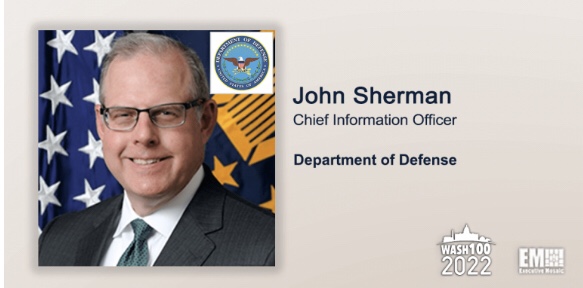
4 Major Programs & Offices Being Rolled Under John Sherman With DOD CDAO Appointment

In recent months, the Department of Defense has placed greater emphasis and importance on artificial intelligence. The technology has been included on the White House’s critical and emerging technologies list, and the department in December created a new position meant to oversee artificial intelligence, digital-focused initiatives and data.

Now, with John Sherman’s confirmation as the Department of Defense’s chief information officer at the close of 2021, and his more recent appointment to the role of acting chief digital and AI officer in February, the intelligence community veteran has assumed responsibility for a number of AI-focused programs, initiatives and offices at the Pentagon.

Sherman, a 2022 Wash100 Award winner, now oversees the following key areas within the DOD:

Joint AI Center

The DoD’s Joint Artificial Intelligence Center, established in 2018, aims to leverage AI in its mission to “safeguard American citizens, support our allies and partners, and improve the affordability and effectiveness of military operations.”

Among JAIC’s recent projects is the creation of an integration layer that will help accelerate the development of AI algorithms for combatant commands. Ltg. Michael Groen, director of JAIC and a Wash100 Award recipient, said the DOD needs a central platform for data feeds in order to speed the application generation process and better support rapid decision making capabilities.

In February, the U.S. Army Contracting Command awarded 79 companies positions on a blanket purchase agreement to support the ethical, responsible development of AI systems. Awarded on behalf of JAIC, the BPA will set test and evaluation standards as well as best practices for automated testing of AI-enabled systems.

Defense Digital Service

Described by Sherman as the DOD’s “digital fire brigade,” the Defense Digital Service is a team of engineers, data scientists and software developers from government and industry that seek to rapidly improve technology across the department.

DDS in December played a vital role in the department’s pursuit of tracking down Log4j cyber vulnerabilities. The service leveraged its bug bounty competition to identify the vulnerabilities on public-facing military websites, The Record reported.

Chief Data Officer

The Office of the Chief Data Officer, occupied by Wash100 Award winner David Spirk, is also being rolled under the responsibility of John Sherman as CDAO.

Since his appointment to chief data officer in June 2020, Spirk has spearheaded initiatives to update the DoD’s data policies, implement new standards and streamline data access in alignment with the department’s overarching mission to become more data-centric.

Spirk said he has plans to optimize information sharing in military operations through expanded partnerships with U.S. allies and allied organizations.

CMMC

Released in 2020, the Cybersecurity Maturity Model Certification framework is comprised of cybersecurity requirements and protection standards to safeguard the defense industrial base from cyberattacks and bolster national security.

In November 2021, the second iteration of the CMMC was published, updating the program to respond to increasingly complex and severe cyber threats.

Sherman said CMMC 2.0 could help raise the “waterline” of the Defense Department’s cybersecurity defenses. The DOD CIO plans to more closely engage with small and mid-sized businesses and clarify requirements in an effort to strengthen the CMMC program.

Additionally, the CMMC’s realignment under the CIO office is expected to increase the program’s integration with other cybersecurity programs across the department.

Under dedicated governance, the above programs and offices are expected to work more collaboratively to deliver synchronized AI capabilities and systems to the Defense Department.

“Look at it as a continuum, an ecosystem, all the way from data discovery and collection through how we’re going to store, curate, make sense of that data, unlock that data, and then to run advanced analytics,” Sherman said of the realignment.

John Sherman is slated to keynote the Potomac Officers Club’s 3rd Annual CIO Summit on April 26. Sherman will join a roster of prominent CIOs from vital government agencies, who will gather to share their innovative insights and discuss the challenges, priorities, initiatives and technologies that drive their organizations.

Article link: https://www.govconwire.com/2022/03/4-major-programs-and-offices-being-rolled-under-john-sherman-with-dod-cdao/

Insider Threat Mitigation for U.S. Critical Infrastructure Entities – CISA

Posted by timmreardon on 03/08/2022
Posted in: Uncategorized. Leave a comment

Although often less appreciated than remote-access cyber threats, insider threats to U.S. critical infrastructure can be just as damaging. Learn how to defend against threats from witting or unwitting insiders at: https://lnkd.in/ewQS2Vd

Document link: https://www.dni.gov/files/NCSC/documents/nittf/20210319-Insider-Threat-Mitigation-for-US-Critical-Infrastru-March-2021updated-5Apr21b.pdf

DoD’s new R&D chief prioritizes moving prototypes to real-world applications – Federal News Network

Posted by timmreardon on 03/08/2022
Posted in: Uncategorized. Leave a comment

Across the sprawling Defense bureaucracy, it’s not a stretch to say there are dozens of different organizations who each see themselves at the forefront of buying or building innovative technologies. So it makes a certain degree of sense for the Pentagon’s top technology official to start her tenure by asking who’s working on what.

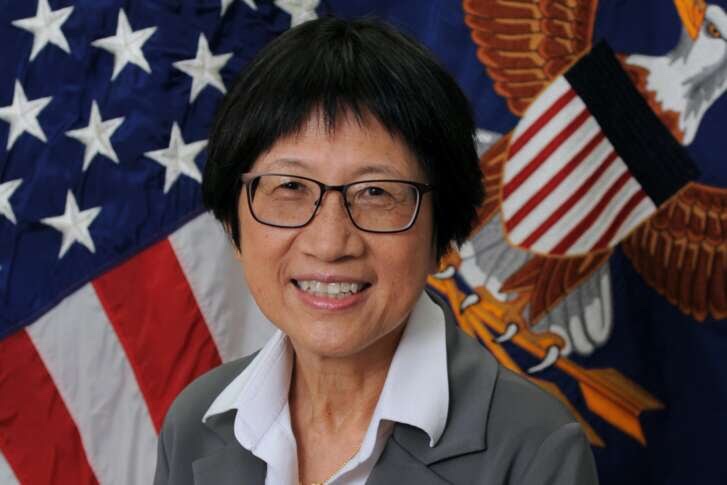
Heidi Shyu, the undersecretary of Defense for research and engineering, says one of her top priorities since being sworn in three months ago has been to build a better understanding of what’s actually happening across DoD’s vast innovation ecosystem — not just for the benefit of her own office, but for those working inside the military services and DoD’s various innovation organizations.

To the greatest extent possible, she said, she wants to limit the number of Defense R&D dollars and time that go toward reinventing the wheel.

“We’re looking across the entire DoD to look at all the different innovation activity that’s ongoing. I’d like to get my arms around just how many innovation organizations that we have,” she said during an interview with Federal News Network at the annual Association of the U.S. Army conference. “We’re asking questions like, ‘What is your mission? What have you procured? What capabilities do these products have? What have you transitioned into the hands of the warfighter, and which company are you buying these products from?’ The second piece I would like to understand is what the best practices are in each organization. If we can share those across the board, that would be valuable.”

        Insight by Qlik: Federal News Network surveyed five agencies to detail the current and future impact of SaaS across their mission areas. Download the survey to learn more.

The discovery process is happening under the auspices of DoD’s Innovation Steering Group, which Deputy Defense Secretary Kathleen Hicks established earlier this year. Hicks appointed Shyu to lead the group after she took the post as undersecretary and chief technology officer in June.

In a related effort, Shyu said she has also begun asking the military services for specific prototype technologies that could fill “capability gaps” that have already been identified as joint requirements for the Pentagon.

After working with the Joint Staff and DoD’s global combatant commands to identify which requirements needed to be met most urgently, Shyu said the steering group got 203 white papers from the military services over the course of just five weeks, identifying prototypes they’d already started developing that could fill those gaps. Her office has recommended that 32 of them be funded and tested in joint exercises next fiscal year.

“We’ve briefed what we’re planning to do, and we were given the thumbs up. So one of the key things we’re doing now is going through the detailed planning. All the details of planning will be done in Fiscal 2022 to enable the execution in FY 23,” she said. “But the thing that’s exciting is three of those projects are actually joint projects with our allies. We definitely want to partner with allies and partner nations to be able to deliver capabilities much quicker.”

Ultimately, Shyu wants the outcome of those efforts to be a much easier discovery process for anyone in the Defense Department who’s looking for a particular capability. As of now, there’s no easy way for a program office to find out whether one of its counterparts is working on — or has already solved — an individual technology problem.

“R&E looks across every service. We’ve already gone to the Air Force, the Navy, the Marines, the Army, the [Defense Innovation Unit] and the [Strategic Capabilities Office] to try to understand what process they utilize and what companies they have gone out to,” she said. “So all of those things will be pulled together. We’d like to create a database we can tap into so that I can basically Google for a specific capability or product. Right now, you’re making a zillion phone calls.”

To the extent the department’s technology efforts are disjointed and decentralized, that’s not just a problem for DoD itself — but also for the sorts of nontraditional companies DoD said it wants to attract into its science and technology ecosystem. For small businesses, getting through the Pentagon’s front door has always been hard. Creating dozens of new and different doors doesn’t necessarily help, unless they’re well-marked.

Shyu, who previously served as assistant secretary of the Army for acquisition, logistics and technology during the Obama administration, said she learned that lesson directly during an interlude in private industry during the past four years.

        Read more: On DoD 

“Having worked with a number of small companies on the outside, it made me really realize how difficult it is to work with the Pentagon,” she said. “You don’t know who to talk to, and there’s no focal point. You talk to Person A, who will refer you to Person B and then Person C, and vendors go around and around and around before they find someone to go talk to and who’s interested in what they have.”

Starting to catalogue the department’s capability gaps and innovation activities should help with that problem, Shyu said, even if DoD can’t always share the precise details of its most urgent capability gaps. The needs statements the Innovation Steering Group sent to the military services earlier this year, for example, were entirely classified.

“But once we get all of that information together, we can go the next step. Figuring out what we already have — pulling a database together to share across the board will speak volumes,” she said. “Then, we need to figure out if there is a specific entry point we need to highlight even more to the small businesses. It’s a stepwise process we’re going through.”

Article link: https://federalnewsnetwork-com.cdn.ampproject.org/c/s/federalnewsnetwork.com/on-dod/2021/10/dods-new-rd-chief-prioritizes-moving-prototypes-to-real-world-applications/?amp=1

Intelligence community gets new CIO in Adele Merritt – Fedscoop

Posted by timmreardon on 03/08/2022
Posted in: Uncategorized. Leave a comment

Written by Billy Mitchell
Mar 7, 2022 | FEDSCOOP

Director of National Intelligence Avril Haines announced Adele Merritt as the new CIO of the intelligence community on Monday.

Merritt officially took the role, housed under the Office of the Director of National Intelligence, in late January.

Michael Waschull had been serving as acting CIO of the IC since January 2021 and will continue on in his official role as deputy CIO.

“Dr. Merritt will lead our ongoing modernization efforts to transform the IC Information Technology Enterprise, ensure the security of the IC’s Information Technology systems, and enhance IT cooperation within the IC,” Haines said in her announcement. “Dr. Merritt brings over 20 years of technical, analytic, and policy expertise in cyber and national security operations to the role. Her accomplishments span the U.S. government.”

Within that portfolio, she’ll also be responsible for the continued rollout of the IC multi-cloud offering, the Commercial Cloud Enterprise (C2E) program.

Merritt comes to the IC after serving most recently as a program manager for Dreamport, a nonprofit associated with the Maryland Innovation and Security Institute and created by U.S. Cyber Command. Prior to that, she spent time in government as principal deputy CIO for cyber at the Department of Energy and as acting senior director for intelligence programs on the National Security Council during the Obama administration.

She’ll be the first permanent CIO for the IC since Matthew Kozma stepped away from the role. Before that, John Sherman — now serving as the CIO at the Department of Defense — held the role for several years.

Article link: https://www.fedscoop.com/intelligence-community-gets-new-cio-in-adele-merritt/

-In this Story- 

Adele Merritt, intelligence community (IC), john sherman, Michael Waschull, Office of the Director of National Intelligence (ODNI)

A Closer Look at Tesla’s Nvidia-powered Supercomputer for Training Deep Neural Networks – FutureCar

Posted by timmreardon on 03/07/2022
Posted in: Uncategorized. Leave a comment

Eric Walz Jun 22, 2021 11:00 AM WST

At the fourth annual Computer Vision and Pattern Recognition (CVPR 2021) conference this week, Tesla’s senior director of AI, Andrej Karpathy, shared details the company’s latest supercomputer that will be used to train deep neural networks (DNN) for Tesla’s Autopilot and Full Self-Driving (FSD) autonomous driving features. 

Tesla said its new supercomputer will be ready by the end of the year. It’s actually the predecessor to Tesla’s more powerful supercomputer nicknamed “Dojo”, which Tesla Chief Executive Elon Musk says should be ready by the end of the year.

“Project Dojo” was first announced at Tesla’s Autonomy Investor Day in April 2019. Musk mentioned the supercomputing power of “Dojo” will help Tesla better label visual data, which is a difficult and time consuming task for developers of  self-driving vehicles.

For autonomous vehicles, neural networks are used to train software for complex tasks, such as identifying street signs, detecting pedestrians and predicting their movements, as well as for safe navigation. A typical self-driving vehicle can use dozens of DNNs for perception, localization and path planning.

However training neural networks requires a hefty amount of processing power, which is why Tesla built its supercomputer using powerful Nvidia GPUs.

Tesla’s supercomputer uses 720 nodes of 8x NVIDIA A100 Tensor Core GPUs (5,760 GPUs total) to achieve an unparalleled 1.8 exaflops of performance, making it one of the world’s most powerful computers. This kind of processing power is mind boggling. One exaFLOP is one quintillion (1018) floating-point operations per second.

NVIDIA’s A100 GPUs power the world’s highest-performing data centers. The A100 GPU provides up to 20x higher performance over the prior generation, according to NVIDIA.

“This is a really incredible supercomputer,” Karpathy said during his presentation at CVRP 2021. “I actually believe that in terms of flops, this is roughly the No. 5 supercomputer in the world.”

Tesla uses the data from more than one million Tesla vehicles on the road to refine and build new autonomous driving features for continuous improvement. Having a fleet of connected vehicles to regularly collect data from gives Tesla an enormous advantage over other automakers in the development of autonomous driving technology.

Camera data from Tesla vehicles is continuously fed into the supercomputer in order to improve the software powering Autopilot and FSD. The neural networks are used to label 4D data from videos taken from eight onboard cameras that make up each vehicle’s 360-degree perception system. 

How Tesla’s Supercomputer is Put to Work

In a blog post, Nivida’s Senior Director of Automotive, Danny Shapiro, provided an overview of how Tesla’s supercomputer is used to train its deep neural networks for autonomous driving. Tesla’s cyclical development actually begins in the car, he said.

Whenever a Tesla vehicle is driving, a deep neural network running in the background known as “shadow mode” quietly perceives and makes predictions without actually controlling the vehicle, explained Shapiro.

The predictions are recorded, and any mistakes or misidentifications are logged. Tesla engineers then take this information and use each instance to create a training dataset of difficult and diverse scenarios to refine the DNN for improved performance.

The dataset is a collection of roughly one million 10-second clips recorded at 36 frames per second, equal to around 1.5 petabytes of data. The DNN runs through these scenarios in the data center over and over until it operates without a mistake. From there, it’s sent back to the vehicle and the process repeats.

Karpathy said training a DNN in this manner and on such a large amount of data requires a massive amount of compute power, which led Tesla to build and deploy the current generation supercomputer with NVIDIA’s high-performance A100 GPUs.

In addition to training DNNs, Tesla’s supercomputer provides vehicle engineers with the high performance needed to experiment and iterate in the development process.

Karpathy said the current DNN structure that Tesla is deploying allows a team of 20 engineers to work on a single network at once, isolating different features for parallel development, which is much faster.

These DNNs can then be run through training datasets at speeds faster than what has been previously possible for rapid iteration.

“Computer vision is the bread and butter of what we do and enables Autopilot,” said Karpathy. “For that to work, you need to train a massive neural network and experiment a lot.”That’s why we’ve invested a lot into the compute.”

Tesla’s autonomous driving system uses just radar and cameras, while most other developers of self-driving vehicles rely on supplemental lidar data. However, as Tesla’s computer vision capabilities improve, the radar will no longer be needed. Tesla said it would drop radar altogether, and began transitioning solely to the camera-based system in its Model 3 and Model Y vehicles starting in May.

Earlier this year, Musk said during the company’s fourth quarter earnings call in January that its upcoming Dojo supercomputer could potentially be offered as a service for other companies for training their neural networks.

“So some of the others need neural net training, we’re not trying to keep it to ourselves,” Musk said in January. “So I think there could be a whole line of business in and of itself.”

Tesla’s supercomputer is also a work in progress and the company plans to build an even more powerful one than the upcoming Dojo in the future. Although Karpathy declined to elaborate on the next iteration of Dojo, he said it will take Tesla’s supercomputing plans to the “next level”, which might get Musk closer to his target of level-5 autonomous driving, which requires no human supervision whatsoever.

Article link: https://m.futurecar.com/4698/A-Closer-Look-at-Teslas-Nvidia-powered-Supercomputer-for-Training-Deep-Neural-Networks

DOD Working to Improve Cybersecurity for Its Industrial Base – DOD News

Posted by timmreardon on 03/07/2022
Posted in: Uncategorized. Leave a comment

MARCH 3, 2022 |BY DAVID VERGUN, DOD NEWS

The Defense Department’s industrial base is huge, encompassing some 220,000 companies. With criminals and nefarious state actors intent on stealing intellectual property or taking down networks, cybersecurity is a huge concern for the department, the companies and national security. 

As a result, the department is bolstering defense industrial base cybersecurity by sharing threat information, offering easy-to-implement ways the industrial base can shore up its own cyber defenses, and looking for ways to make further improvements as the threat continues to evolve, according to a DOD panel that spoke during a recent town hall. 

“I think we’ve thwarted a good number of attacks by our intelligence sharing and your sharing of information about things going on in your network,” said David McKeown, DOD’s chief information security officer and deputy chief information officer for cybersecurity. 

Spotlight: Science & Tech

In addition to intelligence sharing, the department requires industrial base companies to achieve Cybersecurity Maturity Model Certification, which sets the minimum cybersecurity requirements for companies, he said, noting that the department has been working to streamline those requirements to make it easier for companies to comply. 

He also said the department wants companies to review the National Institute of Standards and Technology’s special publication 800-171, “Protecting Controlled Unclassified Information in Nonfederal Systems and Organizations.”‘

A third requirement, he said, is that if there’s a major cybersecurity breech, it must be reported within 72 hours to the DOD Cyber Crime Center. The center’s hotline is 410-981-0104 or 877-838-2174, and the website is https://dibnet.dod.mil.  

“We would love to see you go beyond those requirements,” McKeown said. 

An excellent place to start is by visiting https://dibnet.dod.mil, which is DOD’s gateway for defense contractor reporting and voluntary participation in DOD’s Defense Industrial Base Cybersecurity Program, he said. 

On that site, companies can report a cyber incident, as well as become a DOD voluntary public-private cybersecurity partner, he said. The site also has points of contact for anyone having questions or needing additional information. 

DOD Partnerships 

The defense industrial base is one of 16 critical infrastructure sectors, identified in the presidential policy directive “Critical Infrastructure Security and Resilience”, said Kristi Hunt in the office of the undersecretary of defense for policy. 

That document spells out the policy for how the federal government will work to build trust with those sectors, how those sectors will work with other sectors, and how the whole effort for public-private partnership will advance national unity of effort to strengthen and maintain secure functioning and resilient critical infrastructure, she said. 

Hunt said her agency works closely with the Department of Homeland Security and the Office of the Director of National Intelligence, sharing mitigation strategies, threat indicators, critical incidents and best practices. 

Kristina Walter, chief of defense industrial base cyber defense at the National Security Agency, said, “NSA has great insight into foreign actors targeting DOD Information on DOD networks, national security system as well as defense industrial base networks.” 

However, the NSA must rely on industry partners to mitigate cybersecurity threats, she said. 

“You are experts in your networks. We understand what foreign actors are doing, and when we work together, we can understand more rapidly what’s happening and address the issue,” she said. 

The NSA, in partnership with the FBI, has set up a collaboration channel to get out as much information before an incident occurs, she said. More information can be found at https://www.nsa.gov/About/Cybersecurity-Collaboration-Center/.

Krystal Covey, director of DOD’s Defense Industrial Base Collaborative Information Sharing Environment, said the Defense Cybercrime Center hosts cybersecurity conferences and performs malware analysis, publishes cyber threat analyses, and shares actionable cybersecurity incidents. 

Covey said that although only cleared defense contractors are covered by Code of Federal Regulations, Title 32, Part 236, there is work within the department to incorporate other companies into this program.

Article link: https://www.defense.gov/News/News-Stories/Article/Article/2953204/dod-working-to-improve-cybersecurity-for-its-industrial-base/

For More Information 

DOD Focused on Protecting the Defense Industrial Base From Cyber Threats 

Link to Town Hall video on DVIDS 

Link to DOD CIO slides on DOD CIO library

NSA Details Network Infrastructure Best Practices

Posted by timmreardon on 03/05/2022
Posted in: Uncategorized. Leave a comment

FORT MEADE, Md. — The National Security Agency (NSA) released the “Network Infrastructure Security Guidance” Cybersecurity Technical Report today. The report captures best practices based on the depth and breadth of experience in supporting customers and responding to threats.

Network environments are dynamic and evolve as new technologies, exploits, and defenses affect them. While compromise occurs and is a risk to all networks, network administrators can greatly reduce the risk of incidents as well as reduce the potential impact in the event of a compromise. This guidance focuses on the design and configurations that protect against common vulnerabilities and weaknesses on existing networks.

Recommendations include perimeter and internal network defenses to improve monitoring and access controls throughout the network.

Existing networks likely have some or most of the recommended configurations and devices noted, so administrators can use the report to help prioritize next steps in continuing to harden their network against cyber threats.

Read the full technical report here.

Visit our full library for more cybersecurity information and technical guidance.

Related Press Advisories

NSA Publishes Best Practices for Selecting Cisco Password Types

NSA, FBI, CISA Release Advisory on Protecting Cleared Defense Contractor Networks Against Years-Long Activity by Russian State-Sponsored Actors

CISA, FBI, NSA and International Partners Issue Advisory on Ransomware Trends from 2021 

cybersecurity Cybersecurity GuidanceCybersecurity Technical Reportnetwork infrastructure architecture security wired network securityendpoint security

Article link: https://www.nsa.gov/Press-Room/News-Highlights/Article/Article/2949885/nsa-details-network-infrastructure-best-practices/

Former Google CEO: AI Will Be ‘Force Multiplier Like You’ve Never Seen Before’ – Air Force Magazine

Posted by timmreardon on 03/05/2022
Posted in: Uncategorized. Leave a comment

March 4, 2022 | By Greg Hadley

The Defense Department needs to upgrade its IT, add more software specialists, and empower certain programs to be more innovative—especially when it comes to artificial intelligence, the former CEO of Google said March 3.

Eric Schmidt, who led Google and its parent company Alphabet from 2001 to 2015 and chaired the Defense Innovation Advisory Board, delivered a keynote address at the AFA Warfare Symposium in Orlando, Fla., offering what he called several “blunt” criticisms and recommendations for the Pentagon.

“In the tradition of the military, I will be direct and I hope that’s OK,” Schmidt told an audience of Airmen, Guardians, and industry leaders. “If I look at the totality of what you’re doing, you’re doing a very good job of making things that you currently have better, over and over and over again. But I’m an innovator. And I would criticize, if I could say right up front, that the current structure, which is an interlock between the White House, the Congress, the Secretary of Defense’s , the various military contractors, the various services, and so forth, is a bureaucracy in and of its own. And it’s doing a good job at what it has been asked to do, but it hasn’t been asked to do some new things.”

Schmidt did note one exception to that criticism—the B-21 Raider program. Praising the Rapid Capabilities Office, Schmidt said the Air Force developed the new stealth bomber in a “new and innovative” way. 

The challenge now is to take that approach and apply it to programs across the DOD, Schmidt said, especially to non-hardware platforms.

“Every time you try to do something in software, one of these strange scavenging groups within the administration takes your money away. It’s insane,” Schmidt said. “The core issue here in the military is you don’t have enough software people. And by software people, I mean people who think the way I do. You come out of a different background, and you just don’t have enough of these people. 

“These are hard people to manage. They’re often very obnoxious—sorry, welcome to my field. They’re difficult. They’re sort of full of things, but they can change the world, and a small team can increase your productivity of whatever you’re doing.”

This issue is particularly glaring when it comes to artificial intelligence (AI), Schmidt said. And not only does the military lack the necessary personnel, the defense industrial base does too. Touring the symposium’s exhibition hall, Schmidt said he only saw “like two AI companies, … and by the way, they’re the little ones in the corner.”

Just like the B-21 program has been innovative, there are some examples of good software development, Schmidt said, pointing to Project Maven, a DOD AI project that ignitedcontroversy among Google employees, but which Schmidt said has had “very successful classified use in the right ways.”

But Project Maven was just one project, and “to be very blunt, you don’t have enough people, you don’t have the right contractors, and you don’t have the right strategy to fill in this,” Schmidt said of the Pentagon’s work in AI. “We need 20, 30, 40 such groups—more, more, more. And as that transformation happens, the people who work for you, the incredibly courageous people, will have so much more powerful tools.”

Schmidt’s intense enthusiasm for artificial intelligence is born out of his belief that “AI is a force multiplier like you’ve never seen before,” he said. “It sees patterns that no human can see. And all interesting future military decisions will have as part of that an AI assistant.”

Schmidt is hardly alone in predicting AI will have a seismic impact on warfare. But advocates say they’ve also encountered resistance and inertia within the Pentagon.

Such doubts are preventing the U.S. military from fully embracing AI’s possibilities and forcing service members to “spend all day looking at screens doing something that a computer should do.”

Potential uses include precision weapons targeting, precision analysis, and autonomous systems, Schmidt said. But to get there, there’s something the Pentagon has to do first.

“The real problem you have is that you don’t have enough bandwidth, … which no one ever tells you this,” Schmidt said. “Your networks, excuse the term, suck. You’ve got to get the networks upgraded. You just have to, because all of these things depend on that kind of connectivity, right?”

Schmidt’s comments were met with applause from his audience—the issue of poor network connectivity and IT systems is a constant source of frustration among Airmen and Guardians.

Yet despite all this, perhaps the biggest issue facing the Air Force’s software and AI efforts isn’t really about software.

“We love to talk about strategy, and we need more money over here, and by the way we do, and we need more partnerships over here, and yes we do, and we need more of this over here, and every state has to have its money and all of that’s fine,” Schmidt said. “But what we don’t have and we need a lot more of is the kind of talent to drive this world.”

To attract and retain talent, Schmidt said, the military needs to empower innovators instead of holding them back, granting them a certain level of autonomy to make decisions and take risks. In that regard, his comments echo ones made by Chief of Staff Gen. Charles Q. Brown Jr., who has made empowering Airmen one of the key themes and goals of his tenure.

Article link: https://www.airforcemag.com/former-google-ceo-ai-force-multiplier-pentagon/

Addressing DOD’s Tech Focus Areas Requires New Approaches – DOD News

Posted by timmreardon on 03/04/2022
Posted in: Uncategorized. Leave a comment

MARCH 3, 2022 |BY C. TODD LOPEZ, DOD NEWS

Earlier this year, the Defense Department’s chief technology officer, Heidi Shyu, released a list of 14 technology areas deemed most critical for investment, including biotechnology, advanced materials, trusted artificial intelligence and microelectronics.

A handful of products related to those focus areas — such as hypersonics and directed energy weapons — are almost exclusively military-related, but the majority are already being developed for the commercial market by private companies that may not have done business with the federal government. Those innovations include next-generation wireless communications, microelectronics, and human-machine interfaces. 

For DOD to have its needs addressed by the private sector with or without DOD involvement, the department will need to do a better job of engaging with those companies. 

Spotlight: Engineering in the DOD

DOD’s Defense Innovation Unit is one segment of the government already on board with locating companies involved in the development of critical technologies and helping them become suppliers. 

“We’re really trying to look at what all of the innovative companies are doing around the country … because most of what we need to do to modernize the Defense Department is led by industry now; it’s commercial technologies,” Mike Brown, director of the DIU, said during a discussion Wednesday at George Mason University’s Center for Government Contracting in Northern Virginia. 

“We have to be harnessing what the private industry is doing if we’re going to be giving our warfighters the capability that they need,” Brown said. 

DIU, Brown said, has been working to accelerate adoption of commercial technology using “other transaction authority,” which is different from classic procurement contracts and is instead used for things like research or prototyping. 

The approach DIU uses is called “commercial solutions open,” and Brown said this includes things like agile work statements, modular contracts and working at commercial speeds. 

“We don’t start with requirements, which often dictates how the department might start to bring in a new capability — a process that’s well-honed if you’re going to build a new aircraft or tank,” Brown said. “If you’re going to look at commercial technology, you don’t need to start with requirements. The commercial market has already built that.” 

When DIU was looking at counterdrone technologies, Brown said, it didn’t need to specify requirements because the commercial market had already developed things DOD could use. 

With modular contracts, he said, comes the flexibility to bring in different vendors and have them work together and go from a successful prototyping effort directly into production. 

Finally, modular contracts can limit the challenging requirements for intellectual property that might delay the transition of a capability from the private sector into warfighter hands, he said. 

“We’re trying to get companies on contract in 60 to 90 days, in commercial terms — that means no onerous IP [intellectual property] requirements for companies that we work with,” Brown said. 

Budgeting is also an issue, Brown said. Traditional budgeting requires planning as much as two years in advance before dollars can be spent. 

“That’s not the agile process we need to compete with China in technology,” he said. “We need to be able to move not the whole $750 billion defense budget, but we need some flexibility at the edges to respond to emerging threats and plug in new commercial technology solutions that address those threats. 

The Commission on Planning, Programming, Budgeting, and Execution Reform, as directed in the 2022 National Defense Authorization Act, is looking now at better solutions to budgeting so that the department can be more agile in the technology it procures. That’s something Brown said he’s glad to see.

Article link: https://www.defense.gov/News/News-Stories/Article/Article/2953893/addressing-dods-tech-focus-areas-requires-new-approaches/

Posts navigation

← Older Entries
Newer Entries →
  • Search site

  • Follow healthcarereimagined on WordPress.com
  • Recent Posts

    • Are AI Tools Ready to Answer Patients’ Questions About Their Medical Care? – JAMA 03/27/2026
    • How AI use in scholarly publishing threatens research integrity, lessens trust, and invites misinformation – Bulletin of the Atomic Scientists 03/25/2026
    • VA Prepares April Relaunch of EHR Program – GovCIO 03/19/2026
    • Strong call for universal healthcare from Pope Leo today – FAN 03/18/2026
    • EHR fragmentation offers an opportunity to enhance care coordination and experience 03/16/2026
    • When AI Governance Fails 03/15/2026
    • Introduction: Disinformation as a multiplier of existential threat – Bulletin of the Atomic Scientists 03/12/2026
    • AI is reinventing hiring — with the same old biases. Here’s how to avoid that trap – MIT Sloan 03/08/2026
    • Fiscal Year 2025 Year In Review – PEO DHMS 02/26/2026
    • “𝗦𝗼𝗰𝗶𝗮𝗹 𝗠𝗲𝗱𝗶𝗮 𝗠𝗮𝗻𝗶𝗽𝘂𝗹𝗮𝘁𝗶𝗼𝗻 𝗳𝗼𝗿 𝗦𝗮𝗹𝗲” – NATO Strategic Communications COE 02/26/2026
  • Categories

    • Accountable Care Organizations
    • ACOs
    • AHRQ
    • American Board of Internal Medicine
    • Big Data
    • Blue Button
    • Board Certification
    • Cancer Treatment
    • Data Science
    • Digital Services Playbook
    • DoD
    • EHR Interoperability
    • EHR Usability
    • Emergency Medicine
    • FDA
    • FDASIA
    • GAO Reports
    • Genetic Data
    • Genetic Research
    • Genomic Data
    • Global Standards
    • Health Care Costs
    • Health Care Economics
    • Health IT adoption
    • Health Outcomes
    • Healthcare Delivery
    • Healthcare Informatics
    • Healthcare Outcomes
    • Healthcare Security
    • Helathcare Delivery
    • HHS
    • HIPAA
    • ICD-10
    • Innovation
    • Integrated Electronic Health Records
    • IT Acquisition
    • JASONS
    • Lab Report Access
    • Military Health System Reform
    • Mobile Health
    • Mobile Healthcare
    • National Health IT System
    • NSF
    • ONC Reports to Congress
    • Oncology
    • Open Data
    • Patient Centered Medical Home
    • Patient Portals
    • PCMH
    • Precision Medicine
    • Primary Care
    • Public Health
    • Quadruple Aim
    • Quality Measures
    • Rehab Medicine
    • TechFAR Handbook
    • Triple Aim
    • U.S. Air Force Medicine
    • U.S. Army
    • U.S. Army Medicine
    • U.S. Navy Medicine
    • U.S. Surgeon General
    • Uncategorized
    • Value-based Care
    • Veterans Affairs
    • Warrior Transistion Units
    • XPRIZE
  • Archives

    • March 2026 (8)
    • February 2026 (6)
    • January 2026 (8)
    • December 2025 (11)
    • November 2025 (9)
    • October 2025 (10)
    • September 2025 (4)
    • August 2025 (7)
    • July 2025 (2)
    • June 2025 (9)
    • May 2025 (4)
    • April 2025 (11)
    • March 2025 (11)
    • February 2025 (10)
    • January 2025 (12)
    • December 2024 (12)
    • November 2024 (7)
    • October 2024 (5)
    • September 2024 (9)
    • August 2024 (10)
    • July 2024 (13)
    • June 2024 (18)
    • May 2024 (10)
    • April 2024 (19)
    • March 2024 (35)
    • February 2024 (23)
    • January 2024 (16)
    • December 2023 (22)
    • November 2023 (38)
    • October 2023 (24)
    • September 2023 (24)
    • August 2023 (34)
    • July 2023 (33)
    • June 2023 (30)
    • May 2023 (35)
    • April 2023 (30)
    • March 2023 (30)
    • February 2023 (15)
    • January 2023 (17)
    • December 2022 (10)
    • November 2022 (7)
    • October 2022 (22)
    • September 2022 (16)
    • August 2022 (33)
    • July 2022 (28)
    • June 2022 (42)
    • May 2022 (53)
    • April 2022 (35)
    • March 2022 (37)
    • February 2022 (21)
    • January 2022 (28)
    • December 2021 (23)
    • November 2021 (12)
    • October 2021 (10)
    • September 2021 (4)
    • August 2021 (4)
    • July 2021 (4)
    • May 2021 (3)
    • April 2021 (1)
    • March 2021 (2)
    • February 2021 (1)
    • January 2021 (4)
    • December 2020 (7)
    • November 2020 (2)
    • October 2020 (4)
    • September 2020 (7)
    • August 2020 (11)
    • July 2020 (3)
    • June 2020 (5)
    • April 2020 (3)
    • March 2020 (1)
    • February 2020 (1)
    • January 2020 (2)
    • December 2019 (2)
    • November 2019 (1)
    • September 2019 (4)
    • August 2019 (3)
    • July 2019 (5)
    • June 2019 (10)
    • May 2019 (8)
    • April 2019 (6)
    • March 2019 (7)
    • February 2019 (17)
    • January 2019 (14)
    • December 2018 (10)
    • November 2018 (20)
    • October 2018 (14)
    • September 2018 (27)
    • August 2018 (19)
    • July 2018 (16)
    • June 2018 (18)
    • May 2018 (28)
    • April 2018 (3)
    • March 2018 (11)
    • February 2018 (5)
    • January 2018 (10)
    • December 2017 (20)
    • November 2017 (30)
    • October 2017 (33)
    • September 2017 (11)
    • August 2017 (13)
    • July 2017 (9)
    • June 2017 (8)
    • May 2017 (9)
    • April 2017 (4)
    • March 2017 (12)
    • December 2016 (3)
    • September 2016 (4)
    • August 2016 (1)
    • July 2016 (7)
    • June 2016 (7)
    • April 2016 (4)
    • March 2016 (7)
    • February 2016 (1)
    • January 2016 (3)
    • November 2015 (3)
    • October 2015 (2)
    • September 2015 (9)
    • August 2015 (6)
    • June 2015 (5)
    • May 2015 (6)
    • April 2015 (3)
    • March 2015 (16)
    • February 2015 (10)
    • January 2015 (16)
    • December 2014 (9)
    • November 2014 (7)
    • October 2014 (21)
    • September 2014 (8)
    • August 2014 (9)
    • July 2014 (7)
    • June 2014 (5)
    • May 2014 (8)
    • April 2014 (19)
    • March 2014 (8)
    • February 2014 (9)
    • January 2014 (31)
    • December 2013 (23)
    • November 2013 (48)
    • October 2013 (25)
  • Tags

    Business Defense Department Department of Veterans Affairs EHealth EHR Electronic health record Food and Drug Administration Health Health informatics Health Information Exchange Health information technology Health system HIE Hospital IBM Mayo Clinic Medicare Medicine Military Health System Patient Patient portal Patient Protection and Affordable Care Act United States United States Department of Defense United States Department of Veterans Affairs
  • Upcoming Events

Blog at WordPress.com.
healthcarereimagined
Blog at WordPress.com.
  • Subscribe Subscribed
    • healthcarereimagined
    • Join 153 other subscribers
    • Already have a WordPress.com account? Log in now.
    • healthcarereimagined
    • Subscribe Subscribed
    • Sign up
    • Log in
    • Report this content
    • View site in Reader
    • Manage subscriptions
    • Collapse this bar
 

Loading Comments...