healthcarereimagined

Envisioning healthcare for the 21st century

  • About
  • Economics

VA’s New Master Record Aims to be a ‘Single Source of Truth’ for Veteran Data – Nextgov

Posted by timmreardon on 08/04/2022
Posted in: Uncategorized. Leave a comment

By ALEXANDRA KELLEYJULY 25, 2022

The new VA Profile system is a back-end data storage program that will give agency offices and systems a single source for accurate veteran information.

The Department of Veterans Affairs aims to further streamline and share critical information about its veterans with a new Master Data Management system, a back-end system that prioritizes taking accurate data elements and distributing them across VA entities, becoming a centralized backbone data system for the agency. 

Previously announced in the Federal Register, the VA Profile platform communicates with preexisting VA application programming interfaces and allows them to access an expansive amount of veteran data, such as contact information and benefits eligibility, deploying it across agency offices and internal records.

The software will gather this information from other agency data sources to help power everyday VA business operations, especially facilitating services between VA officials and veterans.

Speaking with Nextgov, James Whited, the director of customer master data and APIs within the data analytics product line in the VA’s Office of Information and Technology, explained that the new VA Profile will leverage authoritative data sources from multiple systems within the VA and create a master record. 

“VA Profile is really trying to provide a single source of truth for common and shared data for the veteran…throughout the VA into VA systems,” Whited said.

He added that the key innovative component of the VA Profile is how it summons and connects diverse data sources to officials across the VA. It also aims to help employees find critical data easily while working. 

“VA Profile, you can think of it…like, behind the scenes wiring between those systems,” Whited said. “We want to provide that data to you quickly, easily with a modern technology stack and modern interface, so that you can quickly move on to doing what’s really going to drive and provide value to the veteran and help VA employees efficiently do their jobs.”

Initially, the VA Profile only gathered veteran contact information, later expanding to include benefit eligibility, military service and demographic data.  

This data already exists in VA datasets, but is now consolidated in the VA Profile as a master veteran profile. With existing data now streamlined and located in one platform, Whited said that VA employees will be able to do their jobs more efficiently by not having to hunt data across agency systems. 

“VA Profile is simply the mechanism that’s going to give you that data, provide that access point,” he said. Conversely, having key veteran information stored in one digital location also helps veterans themselves easily access and update their information through interfaces like va.gov.

Once augmented, data stored within the VA Profile will be distributed across many other systems at the VA—though not all. Whited confirmed that VA Profile will interact with the embattled electronic health record system, distributing relevant, updated veteran data into an EHR. 

Whited said his office plans on adding more data into VA Profiles, including key indicators like veteran interactions with VA call center agents. 

Editor’s note: This story was updated to clarify the description of VA Profile.

Article link: https://www.nextgov.com/analytics-data/2022/07/vas-new-master-record-aims-be-single-source-truth-veteran-data/374878/


Agencies Are Struggling to Hire and Spend Money Due to Incessant Stopgap Funding Bills – Government Executive

Posted by timmreardon on 08/04/2022
Posted in: Uncategorized. Leave a comment
GAO issues a warning as Congress struggles to reach fiscal 2023 spending agreement.

ERIC KATZ | AUGUST 3, 2022 05:28 PM ET

With lawmakers already cautioning of the potential need for a stopgap funding bill to avoid a shutdown in October, the government’s top watchdog has issued a warning of its own on the damage caused by those short-term measures. 

Continuing resolutions, the temporary spending bills Congress has passed in all but three of the last 46 years, have wide-ranging impacts on agency operations, including their ability to bring in new employees. Agencies often limit or pause entirely hiring while CRs are in effect, as they have been in 47 different instances since 2010. 

The Government Accountability Office based its findings primarily on discussions with three program offices across government. Officials at the departments of Agriculture, Education, and Health and Human Services said CRs led to “administrative inefficiencies and limited management options,” including preparations they must take for a potential shutdown, reduced travel funds and a diminished ability to plan at all. They also noted the process hurts their hiring capacities, as some agencies do not extend new hire offers during a CR. That can hinder strategic plans and delivery of services, officials said.

Agencies reported an inability to finalize contracts and grant awards. Education’s Predominantly Black Institutions program, for example, delays its award notices during CRs, which in turn causes recipient schools to postpone decisions about how to spend potential funds. At HHS’ Low Income Home Energy Assistance Program, CRs cause disruptions for grantees providing assistance at different rates throughout the year due to seasonal changes. The stopgap bills cause administrative burdens for agencies, such as having to regularly update their allocation formulas to adjust for amounts doled out in the various spending measures. Agencies and grantees also said they have to take special efforts to get money out the door in a more concentrated timeframe when Congress only provides full-year appropriations late into the year. 

Despite those obstacles, GAO found the agencies continued to provide services without major disruptions. Officials said they relied on previous experience with CRs and how to prioritize resources, including a familiarity among program office staff with adjusting allocations throughout the year. They have also offset potential disruptions by using authorities to repurpose funding that Congress originally provided for another purpose.

Lawmakers can also provide “anomalies” as part of CRs, as they have done in 690 instances since 2010. Those provisions give agencies a different, specific amount of money than they would normally receive or extend authorities otherwise set to expire. Requests for those anomalies come from the Office of Management and Budget, which typically asks agencies to send over their potential needs in early July of each year. In recent years, lawmakers have included around a dozen anomalies in each CR. In rare instances, agencies can receive multi-year appropriations that also offset the impact of stopgap funding bills. 

Democrats and Republicans remain significantly divided as they approach the expiration of current funding. Democrats in the House and Senate have put forward separate bills for each of the 12 annual measures Congress must pass each year, doing so without any Republican support. The two sides have yet to agree on top-line funding levels for defense and non-defense spending, or the specific allocations for the 12 bills. Sen. Richard Shelby, R-Ala., the top Republican on the Senate Appropriations Committee, denounced the Democratic bills, saying they marked a step backward toward a possible resolution. He criticized Democrats for including “poison pill” provisions and for failing to include a sufficient increase for military spending.

“Democrats know the path to a successful appropriations process, but today they chose to move in a different direction,” Shelby said. “Today’s effort shows we have a long way to go. Democrats need to get serious or, regrettably, I believe we will end up with a long-term CR.”

Sen. Patrick Leahy, D-Vt., who chairs the committee, said historically high rates of inflation would make a long-term continuing resolution to keep agencies funded at their current levels “untenable” and called on Republicans to resume negotiations “with the urgency that this moment requires.”

Article link: https://www.govexec.com/management/2022/08/agencies-are-struggling-hire-and-spend-money-due-incessant-stopgap-funding-bills/375348/

Protecting Our Veterans – Patient Safety and Electronic Health Record Modernization – Committee on VeteransAffairs

Posted by timmreardon on 08/04/2022
Posted in: Uncategorized. Leave a comment

https://youtu.be/v16XW1ufK0w

VA Appoints Functional Champion to Help Streamline Embattled EHR Rollout – Nextgov

Posted by timmreardon on 08/04/2022
Posted in: Uncategorized. Leave a comment

By EDWARD GRAHAMAUGUST 3, 2022 04:54 PM ET

The selection of Dr. David Massaro to the senior role fills out the leadership team of the VA office tasked with “processing and resolving patient care concerns” related to the agency’s new electronic health record system

The Department of Veterans Affairs this week appointed Dr. David Massaro as the functional champion for the agency’s Electronic Health Record Modernization Integration Office, which is tasked with implementing and deploying the VA’s new Oracle-Cerner Millennium electronic health record system. 

The selection of Massaro “completes the Office of the Functional Champion leadership team,” according to an email to staff from recently-confirmed VA Undersecretary for Health Dr. Shereef Elnahal that was obtained by Nextgov. 

As part of an updated EHR implementation plan announced in December 2021, VA empowered the OFC to have a more direct role in bridging gaps between the IT team, Oracle-Cerner and patient delivery teams, as well as “having a principal role in processing and resolving patient safety concerns.”

As the functional champion, Massaro will represent the Veterans Health Administration as its clinical executive and lead “functional initiatives to support VA’s medical personnel,” according to the VA’s website. This work includes coordinating the ongoing development and implementation of the VA’s multi-billion EHR system, which has been hampered by cost overruns, technical issues that have affected patient care, and software outages. 

The VA announced last month that it was postponing planned deployments of the new system at medical sites until January 2023 to address ongoing concerns about the Oracle-Cerner software’s rollout. The decision to delay future deployments came after a highly critical report from the VA’s Office of Inspector General found that the software implemented at the first site of the EHR system rollout—the Mann-Grandstaff VA Medical Center in Spokane, Washington—contained a serious flaw that improperly routed over 11,000 clinical orders for veterans to an “unknown queue” without alerting clinicians.

That watchdog report, along with a recent cost estimate from the Institute for Defense Analyses—which found that the Oracle-Cerner system would cost $50.8 billion over 28 years in implementation and maintenance expenses—has led some lawmakers to consider “pulling the plug” on the new EHR system. 

Dr. Terry Adirim, program executive director for the VA’s EHRM Integration Office, said in a statement that Massaro “was selected due to his commitment to deploying an electronic health record that enables VHA to function as a High Reliability Organization and Learning Health System that places the veteran first.”

Prior to assuming the role of functional champion on Aug. 1, Massaro served as the acting chief health informatics officer for the Office of Community Care within the VHA’s Office of Health Informatics. He began working for the VA in 2006 at the Aleda E. Lutz VA Medical Center in Saginaw, Michigan, and has also served as a VHA physician executive across the agency’s healthcare systems.

Article link: https://www.nextgov.com/technology-news/2022/08/va-appoints-functional-champion-help-streamline-embattled-ehr-rollout/375351/

Justice Department Probing 2020 Federal Court System Breach

Posted by timmreardon on 08/03/2022
Posted in: Uncategorized. Leave a comment

Senator Accuses Court System of Hiding Attack and National Security ConsequencesPrajeet Nair (@prajeetspeaks) • July 29, 2022

The U.S. federal judicial court system experienced in 2020 a cyber incident of “startling breadth and scope,” a member of Congress disclosed. 

See Also: OnDemand | Zero Tolerance: Controlling The Landscape Where You’ll Meet Your Adversaries

It was perpetuated by three foreign state actors, House Judiciary Committee Chair Jerry Nadler said during a Thursday hearing. 

“Perhaps even more concerning is the disturbing impact the security breach had and on pending civil and criminal litigation, as well as an ongoing national security or intelligence matters,” Nadler said.

The Department of Justice is investigating, Assistant Attorney General for National Security Matthew Olsen told the New York Democrat. 

“While I can’t speak directly to the nature of the ongoing investigation of the type of threats that you’ve mentioned regarding the effort to compromise public judicial dockets, this is of course a significant concern for us given the nature of the information that’s often held by the courts,” Olsen said.

The Administrative Office of the U.S. Courts disclosed in early 2021 an “apparent compromise” in the confidentiality of its digital docketing system. The incident came to light as a result of a security audit taken in the wake of the Russian nation-state hack of ubiquitous network management tool maker SolarWinds. 

But the attack against the court system was not a result of the SolarWinds, said Nadler.

Little is publicly known about the incident, other than the court system announced it would no longer accept highly sensitive court documents through its digital docket system, known as CM/ECF. Attorneys instead must file those documents through paper or secure thumb drive for storage on a computer system not connected to the internet, the court administrative office said at the time. 

Sen. Ron Wyden, an Oregon Democrat and member of the Senate Intelligence Committee, wrote the judicial administrative office in a Thursday letterexpressing “serious concerns that the federal judiciary has hidden” the national security consequences of the incident. 

“The federal judiciary has yet to publicly explain what happened,” Wyden added. He said the court system faces “unmanageable security risks” since responsibility for cybersecurity risks is delegated to the 94 district and 12 appellate court chief judges.

Article link: https://www.govinfosecurity.com/justice-department-probing-2020-federal-court-system-breach-a-19665

New optical switch could lead to ultrafast all-optical signal processing – CA Institute of Technology

Posted by timmreardon on 08/01/2022
Posted in: Uncategorized. Leave a comment

by California Institute of Technology

Engineers at Caltech have developed a switch—one of the most fundamental components of computing—using optical, rather than electronic, components. The development could aid efforts to achieve ultrafast all-optical signal processing and computing.

Optical devices have the capacity to transmit signals far faster than electrical devices by using pulses of light rather than electrical signals. That is why modern devices often employ optics to send data; for example, think of the fiberoptic cables that provide much faster internet speeds than conventional Ethernet cables.

The field of optics has the potential to revolutionize computing by doing more, at faster speeds, and with less power. However, one of the major limitations of optics-based systems at present is that, at a certain point, they still need to have electronics-based transistors to efficiently process the data.

Now, using the power of optical nonlinearity (more on that later), a team led by Alireza Marandi, assistant professor of electrical engineering and applied physics at Caltech, has created an all-optical switch. Such a switch could eventually enable data processing using photons. The research was published in the journal Nature Photonics on July 28.

Switches are among the simplest components of a computer. A signal comes into the switch and, depending on certain conditions, the switch either allows the signal to move forward or halts it. That on/off property is the foundation of logic gates and binary computation, and is what digital transistors were designed to accomplish. However, until this new work, achieving the same function with light has proved difficult. Unlike electrons in transistors, which can strongly affect each other’s flow and thereby cause “switching,” photons usually do not easily interact with each other.

Two things made the breakthrough possible: the material Marandi’s team used, and the way in which they used it. First, they chose a crystalline material known as lithium niobate, a combination of niobium, lithium, and oxygen that does not occur in nature but has, over the past 50 years, proven essential to the field of optics. The material is inherently nonlinear: Because of the special way the atoms are arranged in the crystal, the optical signals that it produces as outputs are not proportional to the input signals.

While lithium niobate crystals have been used in optics for decades, more recently, advances in nanofabrication techniques have enabled Marandi and his team to create lithium niobate-based integrated photonic devices that allow for the confinement of light in a tiny space. The smaller the space, the greater the intensity of light with the same amount of power. As a result, the pulses of light carrying information through such an optical system could provide a stronger nonlinear response than would otherwise be possible.

Marandi and his colleagues also confined the light temporally. Essentially, they decreased the duration of light pulses, and used a specific design that would keep the pulses short as they propagate through the device, which resulted in each pulse having higher peak power.

The combined effect of these two tactics—the spatiotemporal confinement of light—is to substantially enhance the strength of nonlinearity for a given pulseenergy, which means the photons now affect each other much more strongly.

The net result is the creation of a nonlinear splitter in which the light pulses are routed to two different outputs based on their energies, which enables switching to occur in less than 50 femtoseconds (a femtosecond is a quadrillionth of a second). By comparison, state-of-the-art electronic switches take tens of picoseconds (a picosecond is a trillionth of a second), a difference of many orders of magnitude.

The paper is titled “Femtojoule femtosecond all-optical switching in lithium niobate nanophotonics.”

Article link: https://phys-org.cdn.ampproject.org/c/s/phys.org/news/2022-08-optical-ultrafast-all-optical.amp

Which are the world’s top 5 supercomputers?

Posted by timmreardon on 08/01/2022
Posted in: Uncategorized. Leave a comment

Jan 21, 2022

Marcus Lu

Financial Writer, Visual Capitalist

This article is part of:Shaping the Future of Technology Governance: Artificial Intelligence and Machine Learning

  • Visual Capitalist has taken the world’s top 5 supercomputers and compared their performance and computing power, measured by teraflops.
  • The most advanced consumer devices do not come close to supercomputing power.
  • Supercomputer Fugaku is officially the world’s most powerful supercomputer.
  • China is set to reveal an even more powerful supercomputer.

A supercomputer is a machine that is built to handle billions, if not trillions of calculations at once. Each supercomputer is actually made up of many individual computers (known as nodes) that work together in parallel.

A common metric for measuring the performance of these machines is flops, or floating point operations per second.

In this visualization, we’ve used November 2021 data from TOP500 to visualize the computing power of the world’s top five supercomputers. For added context, a number of modern consumer devices were included in the comparison.

Ranking by Teraflops

Because supercomputers can achieve over one quadrillion flops, and consumer devices are much less powerful, we’ve used teraflops as our comparison metric.

1 teraflop = 1,000,000,000,000 (1 trillion) flops.

Table ranks supercomputers by teraflops. Image: Visual Capitalist

Supercomputer Fugaku was completed in March 2021, and is officially the world’s most powerful supercomputer. It’s used for various applications, including weather simulations and innovative drug discovery.

Sunway Taihulight is officially China’s top supercomputer and fourth most powerful in the world. That said, some experts believe that the country is already operating two much more powerful systems, based on data from anonymous sources.

As you can see, the most advanced consumer devices do not come close to supercomputing power. For example, it would take the combined power of 4,000 Nvidia Titan RTX graphics cards (the most powerful consumer card available) to measure up to the Fugaku.

Upcoming Supercomputers

One of China’s unrevealed supercomputers is supposedly named Oceanlite, and is a successor to Sunway Taihulight. It’s believed to have reached 1.3 exaflops, or 1.3 quintillion flops. The following table makes it easier to follow all of these big numbers.

Table shows a list of upcoming supercomputers.Image: Visual Capitalist

In the U.S., rival chipmakers AMD and Intel have both won contracts from the U.S. Department of Energy to build exascale supercomputers. On the AMD side, there’s Frontier and El Capitan, while on the Intel side, there’s Aurora.

Have you read?

  • These are the world’s most powerful supercomputers
  • The 8 most powerful supercomputers and where to find them
  • The world’s supercomputers joined forces against COVID-19 – why such collaborations are critical for tackling future emergencies

Also involved in the EL Capitan project is Hewlett Packard Enterprise (HPE), which claims the supercomputer will be able to reach 2 exaflops upon its completion in 2023. All of this power will be used to support several exciting endeavors:

Enable advanced simulation and modeling to support the U.S. nuclear stockpile and ensure its reliability and security.

Accelerate cancer drug discovery from six years to one year through a partnership with pharmaceutical company, GlaxoSmithKline.

Understand the dynamic and mutations of RAS proteins that are linked to 30% of human cancers.

Altogether, exascale computing represents the ability to conduct complex analysis in a matter of seconds, rather than hours. This could unlock an even faster pace of innovation.

Understand the dynamic and mutations of RAS proteins that are linked to 30% of human cancers.

Altogether, exascale computing represents the ability to conduct complex analysis in a matter of seconds, rather than hours. This could unlock an even faster pace of innovation.

Article link: https://www.weforum.org/agenda/2022/01/visualizing-power-supercomputers-teraflops-technology/?

At Booz Allen, a Vast U.S. Spy Operation, Run for Private Profit – NYT

Posted by timmreardon on 07/29/2022
Posted in: Uncategorized. Leave a comment

By Matthew Rosenberg

  • Oct. 6, 2016

WASHINGTON — In the six weeks since federal agents raided a suburban Maryland home and arrested Harold T. Martin III on suspicion of stealing classified information from the National Security Agency, another organization has quietly prepared to face the fallout: Booz Allen Hamilton, Mr. Martin’s employer.

Booz Allen, a consulting firm that earns billions of dollars by working for American intelligence agencies, has been called the world’s most profitable spy organization. News this week of Mr. Martin’s arrest in August could renew scrutiny of the firm’s operations and, more broadly, the lucrative contracting business that American intelligence now relies on to run its vast, global surveillance operations.

Mr. Martin’s arrest is the second time in three years that a Booz Allen contractor has been accused of stealing potentially damaging material from the N.S.A. The company also employed Edward J. Snowden, who spirited out a cache of documents that, in 2013, exposed the extent of American surveillance programs in the United States and around the world.

Booz Allen is one of a handful of defense and intelligence contractors that blur the line between the government’s intelligence work and private enterprise.

Tens of thousands of contractors are believed to work for American intelligence agencies (the exact number is not known). They do everything from helping secure the military against cyberattacks and plan intelligence operations, to training spies and running war games for NATO generals.

“What most people don’t realize is just the sheer scale of the intelligence work force that is outsourced,” said Peter W. Singer, a national security expert at New America, a think tank in Washington. “There will be meetings, and less than 10 percent of the people there are official U.S. government employees as opposed to contractors.”

Firms like Booz Allen provide a ready and potentially lucrative option for federal employees who are looking to cash in on their government experience.

Booz Allen, founded in 1914, has done especially well at building its government business. Its clients include every branch of the military and a long list of intelligence organizations, from the N.S.A. to lesser-known outfits, such as the National Geospatial-Intelligence Agency, which is essentially a high-tech mapping operation. Overseas, Booz Allen has helped the United Arab Emirates build its own high-tech spy agency.

The director of national intelligence during the George W. Bush administration, Mike McConnell, was an executive at Booz Allen; President Obama’s director of national intelligence, James R. Clapper Jr., worked for the firm before returning to government to oversee the nation’s spy agencies.

In its last fiscal year, which ended in March, Booz Allen earned $3.9 billion — about three quarters of its total revenue — from its defense and intelligence business. Once its work for other parts of the government is factored in, Booz Allen’s government contracting accounted for 97 percent of its revenue.

But as the two thefts have made clear, employing large numbers of contractors brings security risks, though experts point out that there have been many leaks in recent years that came from government employees, as well.

Booz Allen weathered the Snowden leaks, and it was cleared of any wrongdoing by the Air Force. It has so far had little to say about the Martin case, issuing a brief statement on Wednesday saying it had fired Mr. Martin and was cooperating with the investigation.

Unlike Mr. Snowden, some officials have said, Mr. Martin does not appear to have leaked any of the information he is suspected of stealing, which is believed to be highly classified computer code.

But the problem for Booz Allen is that at least some of the documents alleged to have been found in Mr. Martin’s possession date to 2014. That would call into question the effectiveness of reforms aimed at safeguarding the nation’s secrets announced in the wake of the Snowden affair.

“We have been and will continue to assess the proper role of contract employees in the intelligence community, many of whom play a vital role,” said Representative Adam B. Schiff of California, the ranking Democrat on the House Intelligence Committee. “We must be careful not to overcorrect or to draw the wrong lessons. This issue is fundamentally about preventing and detecting insider threats, both from contractors like Edward Snowden and this individual, and from government employees.”

The leak in 2013 of the materials stolen by Mr. Snowden prompted calls from Sen. Dianne Feinstein of California, then the Democratic chairwoman of the Senate Intelligence Committee, for contractors like Booz Allen to lose their access to highly sensitive intelligence. The Obama administration, meanwhile, tightened security measures at intelligence agencies, and slashed the number of employees with access to classified information by 17 percent.

The role of contractors has grown since the 1990s, when they were seen as a way to save money, and accelerated in the aftermath of the Sept. 11 terrorist attacks.

Proponents of using contractors say they allow the government to quickly bring in people with technical expertise, and allow government agencies to get around staffing and budgetary constraints set by Congress.

A glaring example of how contractors are used to get around staffing limits can be seen in Afghanistan. There, the Obama administration has set a hard limit on the number of troops that can be deployed — it currently stands at 9,800. The Defense Department and State Department have, as a result, brought in thousands of contractors to do everything from serve food to analyze secret intelligence. There are currently believed to be about six contractors for every American government employee in Afghanistan.

At the same time, the use of contractors has often failed to deliver on the promised savings. Critics also say that shifting sensitive work into the hands of private businesses, which are not subject to same disclosure rules as federal agencies, often limits the ability of Congress to provide oversight.


Jo Becker contributed reporting from New York.

Article link; https://www-nytimes-com.cdn.ampproject.org/c/s/www.nytimes.com/2016/10/07/us/booz-allen-hamilton-nsa.amp.html

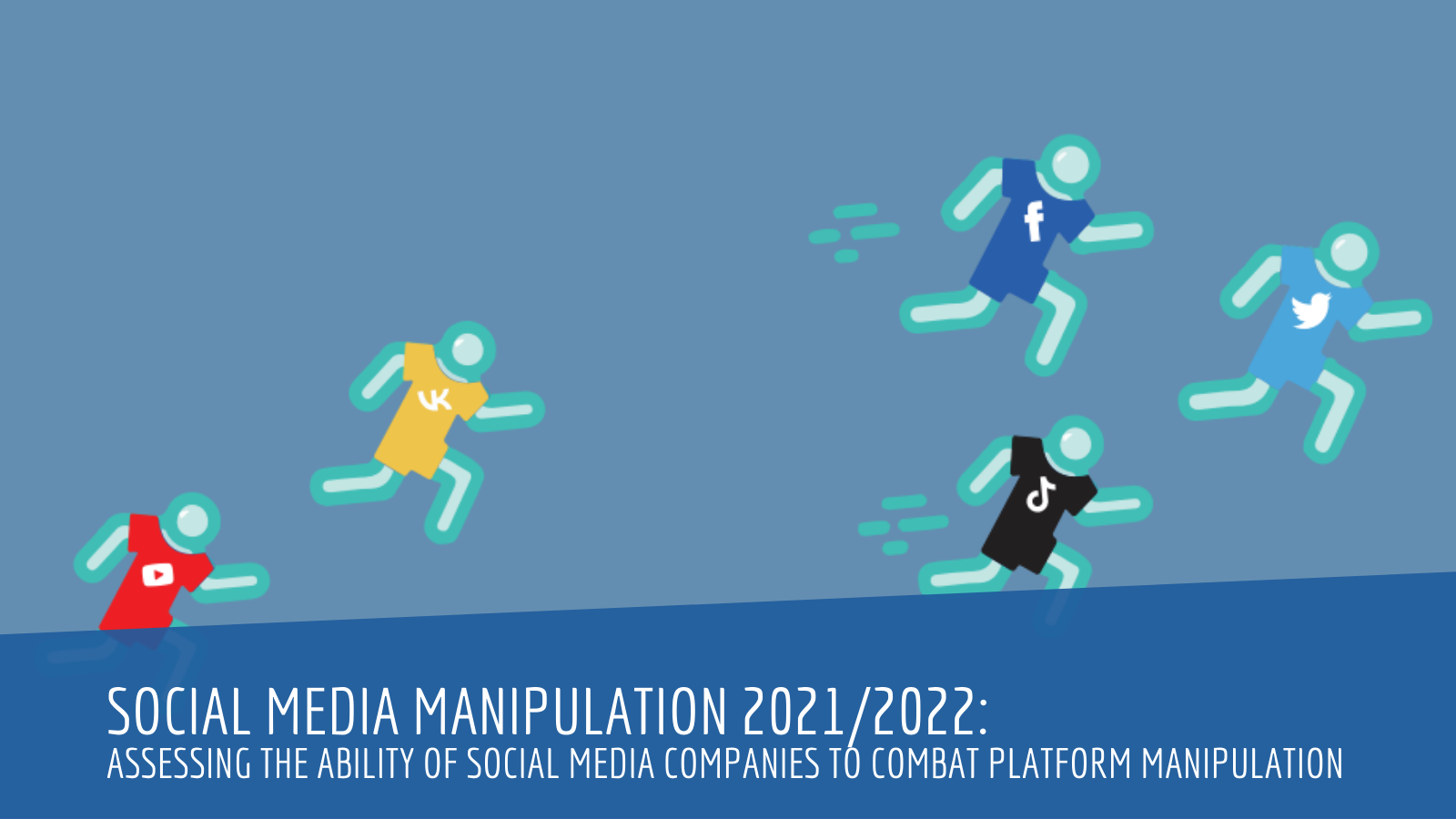
Social Media Manipulation 2021/2022: Assessing the Ability of Social Media Companies to Combat Platform Manipulation – NATO

Posted by timmreardon on 07/29/2022
Posted in: Uncategorized. Leave a comment

By: Rolf Fredheim Sebastian Bay

Related topics: Social Media DisinformationInformation Manipulation

Social Media Manipulation 2021/2022: Assessing the Ability of Social Media Companies to Combat Platform Manipulation

Publication details

ISBN:978-9934-619-16-8Year:2022Format:PDFPages:46Size:1.41 MB

Read online

Download

The ongoing war in Ukraine has shown the importance of being able to defend and influence the information environment in order to win a modern conflict. Coordinated social media manipulation campaigns continue to be an important tool for adversaries. Therefore, assessing the abilities of social media companies to protect their platforms against manipulation continues to be important for understanding how well our societies are able to protect our information environment against antagonistic threats. To further our understanding of platform manipulation, we re-ran our groundbreaking experiment to assess the ability of social media companies to counter platform manipulation. This year, we added a sixth social media platform, VKontakte, to our experiment.

Article link: https://stratcomcoe.org/publications/social-media-manipulation-20212022-assessing-the-ability-of-social-media-companies-to-combat-platform-manipulation/242

Air Force Secretary Frank Kendall Says He’s “Prepared to Accept Risk” to Field Capabilities Faster – GovConWire

Posted by timmreardon on 07/28/2022
Posted in: Uncategorized. Leave a comment

As the U.S. Air Force continues its aggressive pursuit of modernization and prepares for the future fight, the head of the service wants to put words into action and get meaningful military capabilities into the hands of warfighters faster than ever before.

“I’m not very interested in experimentations or demos. I’m prepared to accept risk and move towards fielding with engineering and system development programs that lead to production and lead to production at scale,” Air Force Secretary Frank Kendalltold an audience at the Potomac Officers Club’s 2022 Air Force Summit in Tysons, VA.

“If the risk appears to be manageable and we have reasonable mitigations, we need to get on with it and get towards production,” said Kendall, a Wash100 Award recipient. “The result of that inevitably would be some cost and schedule hiccups as we go forward, but I’m afraid we’re going to have to pay that price to get to where we need to go.”

This urgency stems in part from what Kendall has seen as a decline in the Air Force’s dominance since the Cold War. Speaking from his breadth of experience in government, military and industry, Kendall acknowledged that the Air Force’s analytical, science and engineering capabilities have atrophied in the past few decades. Now, as the head of the Air Force, Kendall hopes to reestablish that dominance.

Kendall was sworn in as Air Force secretary in July 2021, and in his remarks during the event, he reflected on the strides the service has made — as well as the ways in which the threat landscape has changed — throughout his first year in the role.

“I came into office with two fundamental roles. One was to put us in a better position relative to our principal competitor, and that is of course, China,” Kendall reiterated.

Priority Number One: China

China’s military modernization program is something Kendall has expressed deep concern about since his return to the public sector in 2010, when he took on the role of principal deputy under secretary and acting under secretary of defense for acquisition, technology and logistics at the Department of Defense.

At that time, Kendall said he could already see that China was on a path to field systems that were intended to defeat the United States’ ability to project power. “We had to respond to that,” he remembered. In the 12 years since that point, however, the systems that China had in development have been fielded, and now the country is working on even newer systems.

“So this is an ongoing quest for technological military superiority that we have got to move quickly in, but we also have to make the right choices about what we invest in,” Kendall said.

Looking at the risk profile the U.S. faces today, Kendall noted that it will not lessen over time. Instead, the nation’s adversaries will be looking ahead to our capabilities in the pipeline for the future and building systems to defeat them.

“We have got to be thinking ahead of that and moving ahead of that. That risk is going to go up over time, and you’re seeing increasing aggressive behaviors on the part of China,” he warned.

Priority Number Two: Reestablishing Air Force’s Operational Power

The second objective Kendall had coming into the Air Force was to leave the Air Force better than he found it. This objective, he admitted, “covers an enormously wide swath of things” including, importantly, strengthening the institution’s technological capability.

Kendall’s second objective also led to the creation of his seven Operational Imperatives — an effort which he describes as a “list of seven things that I felt that we had to do better at to be successful operationally in conventional power projection.”

These imperatives cover top programs and mission areas including space, the Advanced Battle Management System, Next Generation Air Dominance and Air Force readiness in the future battlespace. In the seven months since Kendall revealed his Operational Imperatives, he has put together teams — led by operators, technologists and acquisition executives — to see the imperatives to fruition.

Reflecting on this progress, Kendall said, “The teams have done great work at pulling together what we need to do. The problem now, for me, is to resource it.”

Budget

Fortunately, Kendall expects the Air Force’s top priority programs to be well-funded. “Congress is likely to provide a significant increase in [2023] from what we asked for. This would reset our baseline for [2024],” he projected.

The Air Force’s most recent Program Objective Memorandum, or POM, is just a starting point for the budget and funding conversations Kendall expects to have in the next few months. However, until budgets are finalized, the Air Force won’t know for sure which resources will be allocated to which programs.

“We don’t really know where we’re going to end up in terms of resources, but I think we’ve positioned the Department of the Air Force very well to compete for those resources, because we have identified the specific things that we need to do.”

Though Kendall could not share details about the latest POM, he did say, “I will tell you that I made tradeoffs in the POM to fund as much of the Operational Imperatives as I could.”

DOD-Wide Cultural Shifts Necessary

Ultimately, Kendall acknowledged that the Air Force won’t overcome the myriad of threats it faces if the Department of Defense doesn’t integrate and operate as a cohesive joint force.

“There’s an enormous amount of parochialism, turfism, etc. that I have seen in the Department of Defense, and we’ve got to get beyond that,” Kendall urged. “We’ve got to think about what our mission is and how we contribute to that mission and make sure that what we’re doing contributes as much as possible and not spend our time just trying to take care of our little part of the budget.”

“One team, one fight” is a mantra that guides Kendall in his role as he hopes to drive out the “dysfunctional” behavior in the Pentagon and enact the same mentality across the entire DOD enterprise.

The 2022 Air Force Summit is part of the Potomac Officers Club’s annual military service-focused program of events. The next installment of the series will be the 2022 7th Annual Army Summit on Aug. 24 at the McLean Hilton.

Hon. Gabe Camarillo, undersecretary of the Army and chief management officer for the U.S. Department of the Army, is slated to keynote this highly-anticipated in-person event. Click here to register.

Article link: https://www.govconwire.com/2022/07/air-force-secretary-frank-kendall-prepared-to-accept-risk-to-field-capabilities/

Posts navigation

← Older Entries
Newer Entries →
  • Search site

  • Follow healthcarereimagined on WordPress.com
  • Recent Posts

    • Heeding the pope’s call to ensure AI protects human dignity – MIT Sloan Management 06/01/2026
    • Association between Wealth and Mortality in the United States and Europe – New England Journal of Medicine 05/30/2026
    • U.S. Health Care from a Global Perspective, 2026 – The Commonwealth Fund 05/30/2026
    • Anthropic co-founder Chris Olah’s remarks on Pope Leo XIV’s encyclical “Magnifica humanitas” 05/28/2026
    • Magnifica_Humanitas – Full English 05/26/2026
    • Pope Leo XIV to launch his first encylical, a document on artificial intelligence, with Anthropic’s co-founder – PBS 05/24/2026
    • Quantum Computing is Approaching A Critical “Prove It” Phase 05/22/2026
    • Hidden Prices, Broken Promises: Why Health Care Transparency Is a Matter of Justice – Sanders Institute 05/15/2026
    • The Very Uncertain Future of Arms Control – Bulletin of the Atomic Scientists 05/13/2026
    • Now Available: Expanded and Enhanced International Health Care System Profiles – Commonwealth Fund 05/13/2026
  • Categories

    • Accountable Care Organizations
    • ACOs
    • AHRQ
    • American Board of Internal Medicine
    • Big Data
    • Blue Button
    • Board Certification
    • Cancer Treatment
    • Data Science
    • Digital Services Playbook
    • DoD
    • EHR Interoperability
    • EHR Usability
    • Emergency Medicine
    • FDA
    • FDASIA
    • GAO Reports
    • Genetic Data
    • Genetic Research
    • Genomic Data
    • Global Standards
    • Health Care Costs
    • Health Care Economics
    • Health IT adoption
    • Health Outcomes
    • Healthcare Delivery
    • Healthcare Informatics
    • Healthcare Outcomes
    • Healthcare Security
    • Helathcare Delivery
    • HHS
    • HIPAA
    • ICD-10
    • Innovation
    • Integrated Electronic Health Records
    • IT Acquisition
    • JASONS
    • Lab Report Access
    • Military Health System Reform
    • Mobile Health
    • Mobile Healthcare
    • National Health IT System
    • NSF
    • ONC Reports to Congress
    • Oncology
    • Open Data
    • Patient Centered Medical Home
    • Patient Portals
    • PCMH
    • Precision Medicine
    • Primary Care
    • Public Health
    • Quadruple Aim
    • Quality Measures
    • Rehab Medicine
    • TechFAR Handbook
    • Triple Aim
    • U.S. Air Force Medicine
    • U.S. Army
    • U.S. Army Medicine
    • U.S. Navy Medicine
    • U.S. Surgeon General
    • Uncategorized
    • Value-based Care
    • Veterans Affairs
    • Warrior Transistion Units
    • XPRIZE
  • Archives

    • June 2026 (1)
    • May 2026 (12)
    • April 2026 (4)
    • March 2026 (9)
    • February 2026 (6)
    • January 2026 (8)
    • December 2025 (11)
    • November 2025 (9)
    • October 2025 (10)
    • September 2025 (4)
    • August 2025 (7)
    • July 2025 (2)
    • June 2025 (9)
    • May 2025 (4)
    • April 2025 (11)
    • March 2025 (11)
    • February 2025 (10)
    • January 2025 (12)
    • December 2024 (12)
    • November 2024 (7)
    • October 2024 (5)
    • September 2024 (9)
    • August 2024 (10)
    • July 2024 (13)
    • June 2024 (18)
    • May 2024 (10)
    • April 2024 (19)
    • March 2024 (35)
    • February 2024 (23)
    • January 2024 (16)
    • December 2023 (22)
    • November 2023 (38)
    • October 2023 (24)
    • September 2023 (24)
    • August 2023 (34)
    • July 2023 (33)
    • June 2023 (30)
    • May 2023 (35)
    • April 2023 (30)
    • March 2023 (30)
    • February 2023 (15)
    • January 2023 (17)
    • December 2022 (10)
    • November 2022 (7)
    • October 2022 (22)
    • September 2022 (16)
    • August 2022 (33)
    • July 2022 (28)
    • June 2022 (42)
    • May 2022 (53)
    • April 2022 (35)
    • March 2022 (37)
    • February 2022 (21)
    • January 2022 (28)
    • December 2021 (23)
    • November 2021 (12)
    • October 2021 (10)
    • September 2021 (4)
    • August 2021 (4)
    • July 2021 (4)
    • May 2021 (3)
    • April 2021 (1)
    • March 2021 (2)
    • February 2021 (1)
    • January 2021 (4)
    • December 2020 (7)
    • November 2020 (2)
    • October 2020 (4)
    • September 2020 (7)
    • August 2020 (11)
    • July 2020 (3)
    • June 2020 (5)
    • April 2020 (3)
    • March 2020 (1)
    • February 2020 (1)
    • January 2020 (2)
    • December 2019 (2)
    • November 2019 (1)
    • September 2019 (4)
    • August 2019 (3)
    • July 2019 (5)
    • June 2019 (10)
    • May 2019 (8)
    • April 2019 (6)
    • March 2019 (7)
    • February 2019 (17)
    • January 2019 (14)
    • December 2018 (10)
    • November 2018 (20)
    • October 2018 (14)
    • September 2018 (27)
    • August 2018 (19)
    • July 2018 (16)
    • June 2018 (18)
    • May 2018 (28)
    • April 2018 (3)
    • March 2018 (11)
    • February 2018 (5)
    • January 2018 (10)
    • December 2017 (20)
    • November 2017 (30)
    • October 2017 (33)
    • September 2017 (11)
    • August 2017 (13)
    • July 2017 (9)
    • June 2017 (8)
    • May 2017 (9)
    • April 2017 (4)
    • March 2017 (12)
    • December 2016 (3)
    • September 2016 (4)
    • August 2016 (1)
    • July 2016 (7)
    • June 2016 (7)
    • April 2016 (4)
    • March 2016 (7)
    • February 2016 (1)
    • January 2016 (3)
    • November 2015 (3)
    • October 2015 (2)
    • September 2015 (9)
    • August 2015 (6)
    • June 2015 (5)
    • May 2015 (6)
    • April 2015 (3)
    • March 2015 (16)
    • February 2015 (10)
    • January 2015 (16)
    • December 2014 (9)
    • November 2014 (7)
    • October 2014 (21)
    • September 2014 (8)
    • August 2014 (9)
    • July 2014 (7)
    • June 2014 (5)
    • May 2014 (8)
    • April 2014 (19)
    • March 2014 (8)
    • February 2014 (9)
    • January 2014 (31)
    • December 2013 (23)
    • November 2013 (48)
    • October 2013 (25)
  • Tags

    Business Defense Department Department of Veterans Affairs EHealth EHR Electronic health record Food and Drug Administration Health Health informatics Health Information Exchange Health information technology Health system HIE Hospital IBM Mayo Clinic Medicare Medicine Military Health System Patient Patient portal Patient Protection and Affordable Care Act United States United States Department of Defense United States Department of Veterans Affairs
  • Upcoming Events

Blog at WordPress.com.
healthcarereimagined
Blog at WordPress.com.
  • Subscribe Subscribed
    • healthcarereimagined
    • Join 153 other subscribers
    • Already have a WordPress.com account? Log in now.
    • healthcarereimagined
    • Subscribe Subscribed
    • Sign up
    • Log in
    • Report this content
    • View site in Reader
    • Manage subscriptions
    • Collapse this bar

Loading Comments...