healthcarereimagined

Envisioning healthcare for the 21st century

  • About
  • Economics

Inside the messy ethics of making war with machines – MIT Technology Review

Posted by timmreardon on 08/27/2023
Posted in: Uncategorized.

AI is making its way into decision-making in battle. Who’s to blame when something goes wrong?

  • Arthur Holland Michelarchive page

August 16, 2023

In a near-future war—one that might begin tomorrow, for all we know—a soldier takes up a shooting position on an empty rooftop. His unit has been fighting through the city block by block. It feels as if enemies could be lying in silent wait behind every corner, ready to rain fire upon their marks the moment they have a shot.

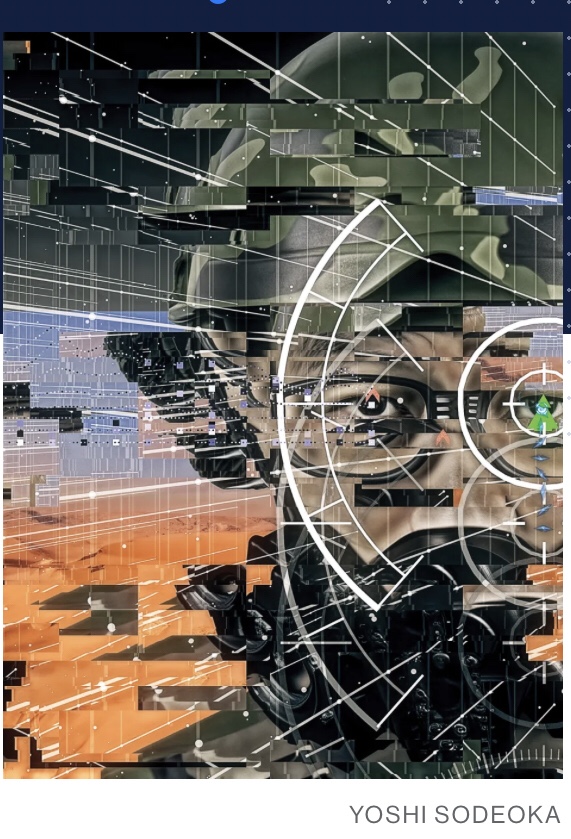
Through his gunsight, the soldier scans the windows of a nearby building. He notices fresh laundry hanging from the balconies. Word comes in over the radio that his team is about to move across an open patch of ground below. As they head out, a red bounding box appears in the top left corner of the gunsight. The device’s computer vision system has flagged a potential target—a silhouetted figure in a window is drawing up, it seems, to take a shot.

The soldier doesn’t have a clear view, but in his experience the system has a superhuman capacity to pick up the faintest tell of an enemy. So he sets his crosshair upon the box and prepares to squeeze the trigger. 

In different war, also possibly just over the horizon, a commander stands before a bank of monitors. An alert appears from a chatbot. It brings news that satellites have picked up a truck entering a certain city block that has been designated as a possible staging area for enemy rocket launches. The chatbot has already advised an artillery unit, which it calculates as having the highest estimated “kill probability,” to take aim at the truck and stand by. 

According to the chatbot, none of the nearby buildings is a civilian structure, though it notes that the determination has yet to be corroborated manually. A drone, which had been dispatched by the system for a closer look, arrives on scene. Its video shows the truck backing into a narrow passage between two compounds. The opportunity to take the shot is rapidly coming to a close. 

For the commander, everything now falls silent. The chaos, the uncertainty, the cacophony—all reduced to the sound of a ticking clock and the sight of a single glowing button:

“APPROVE FIRE ORDER.” 

To pull the trigger—or, as the case may be, not to pull it. To hit the button, or to hold off. Legally—and ethically—the role of the soldier’s decision in matters of life and death is preeminent and indispensable. Fundamentally, it is these decisions that define the human act of war.

Related Story
assisted suicide machine

The messy morality of letting AI make life-and-death decisions

Automation can help us make hard choices, but it can’t do it alone.

It should be of little surprise, then, that states and civil society have taken up the question of intelligent autonomous weapons—weapons that can select and fire upon targets without any human input—as a matter of serious concern. In May, after close to a decade of discussions, parties to the UN’s Convention on Certain Conventional Weapons agreed, among other recommendations, that militaries using them probably need to “limit the duration, geographical scope, and scale of the operation” to comply with the laws of war. The line was nonbinding, but it was at least an acknowledgment that a human has to play a part—somewhere, sometime—in the immediate process leading up to a killing.

But intelligent autonomous weapons that fully displace human decision-making have (likely) yet to see real-world use. Even the “autonomous” drones and ships fielded by the US and other powers are used under close human supervision. Meanwhile, intelligent systems that merely guide the hand that pulls the trigger have been gaining purchase in the warmaker’s tool kit. And they’ve quietly become sophisticated enough to raise novel questions—ones that are trickier to answer than the well-­covered wrangles over killer robots and, with each passing day, more urgent: What does it mean when a decision is only part human and part machine? And when, if ever, is it ethical for that decision to be a decision to kill?

For a long time, the idea of supporting a human decision by computerized means wasn’t such a controversial prospect. Retired Air Force lieutenant general Jack Shanahan says the radar on the F4 Phantom fighter jet he flew in the 1980s was a decision aid of sorts. It alerted him to the presence of other aircraft, he told me, so that he could figure out what to do about them. But to say that the crew and the radar were coequal accomplices would be a stretch. 

That has all begun to change. “What we’re seeing now, at least in the way that I see this, is a transition to a world [in] which you need to have humans and machines … operating in some sort of team,” says Shanahan.

The rise of machine learning, in particular, has set off a paradigm shift in how militaries use computers to help shape the crucial decisions of warfare—up to, and including, the ultimate decision. Shanahan was the first director of Project Maven, a Pentagon program that developed target recognition algorithms for video footage from drones. The project, which kicked off a new era of American military AI, was launched in 2017 after a study concluded that “deep learning algorithms can perform at near-­human levels.” (It also sparked controversy—in 2018, more than 3,000 Google employees signed a letter of protest against the company’s involvement in the project.)

With machine-learning-based decision tools, “you have more apparent competency, more breadth” than earlier tools afforded, says Matt Turek, deputy director of the Information Innovation Office at the Defense Advanced Research Projects Agency. “And perhaps a tendency, as a result, to turn over more decision-making to them.”

A soldier on the lookout for enemy snipers might, for example, do so through the Assault Rifle Combat Application System, a gunsight sold by the Israeli defense firm Elbit Systems. According to a company spec sheet, the “AI-powered” device is capable of “human target detection” at a range of more than 600 yards, and human target “identification” (presumably, discerning whether a person is someone who could be shot) at about the length of a football field. Anna Ahronheim-Cohen, a spokesperson for the company, told MIT Technology Review, “The system has already been tested in real-time scenarios by fighting infantry soldiers.”
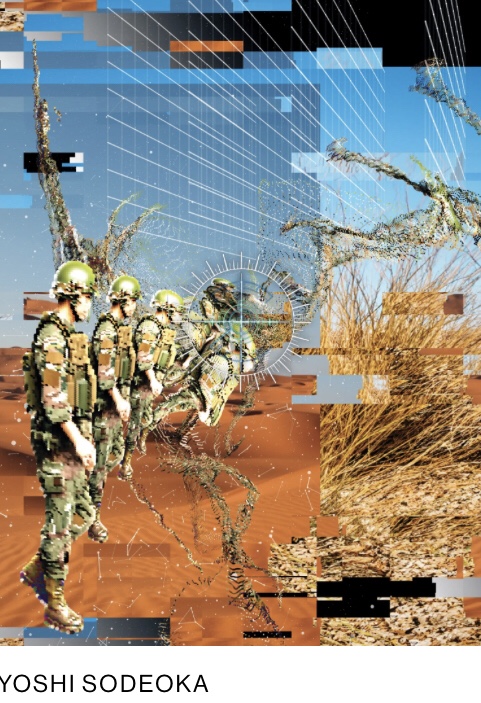
Another gunsight, built by the company Smartshooter, is advertised as having similar capabilities. According to the company’s website, it can also be packaged into a remote-controlled machine gun like the one that Israeli agents used to assassinate the Iranian nuclear scientist Mohsen Fakhrizadeh in 2021. 

Decision support tools that sit at a greater remove from the battlefield can be just as decisive. The Pentagon appears to have used AI in the sequence of intelligence analyses and decisions leading up to a potential strike, a process known as a kill chain—though it has been cagey on the details. In response to questions from MIT Technology Review, Laura McAndrews, an Air Force spokesperson, wrote that the service “is utilizing a human-­machine teaming approach.”

The range of judgment calls that go into military decision-making is vast. And it doesn’t always take artificial super-intelligence to dispense with them by automated means.

Other countries are more openly experimenting with such automation. Shortly after the Israel-Palestine conflict in 2021, the Israel Defense Forces said it had used what it described as AI tools to alert troops of imminent attacks and to propose targets for operations.

The Ukrainian army uses a program, GIS Arta, that pairs each known Russian target on the battlefield with the artillery unit that is, according to the algorithm, best placed to shoot at it. A report by The Times, a British newspaper, likened it to Uber’s algorithm for pairing drivers and riders, noting that it significantly reduces the time between the detection of a target and the moment that target finds itself under a barrage of firepower. Before the Ukrainians had GIS Arta, that process took 20 minutes. Now it reportedly takes one.

Russia claims to have its own command-and-control system with what it calls artificial intelligence, but it has shared few technical details. Gregory Allen, the director of the Wadhwani Center for AI and Advanced Technologies and one of the architects of the Pentagon’s current AI policies, told me it’s important to take some of these claims with a pinch of salt. He says some of Russia’s supposed military AI is “stuff that everyone has been doing for decades,” and he calls GIS Arta “just traditional software.”

The range of judgment calls that go into military decision-making, however, is vast. And it doesn’t always take artificial super-­intelligence to dispense with them by automated means. There are tools for predicting enemy troop movements, tools for figuring out how to take out a given target, and tools to estimate how much collateral harm is likely to befall any nearby civilians. 

None of these contrivances could be called a killer robot. But the technology is not without its perils. Like any complex computer, an AI-based tool might glitch in unusual and unpredictable ways; it’s not clear that the human involved will always be able to know when the answers on the screen are right or wrong. In their relentless efficiency, these tools may also not leave enough time and space for humans to determine if what they’re doing is legal. In some areas, they could perform at such superhuman levels that something ineffable about the act of war could be lost entirely.

Eventually militaries plan to use machine intelligence to stitch many of these individual instruments into a single automated network that links every weapon, commander, and soldier to every other. Not a kill chain, but—as the Pentagon has begun to call it—a kill web.

In these webs, it’s not clear whether the human’s decision is, in fact, very much of a decision at all. Rafael, an Israeli defense giant, has already sold one such product, Fire Weaver, to the IDF (it has also demonstrated it to the US Department of Defense and the German military). According to company materials, Fire Weaver finds enemy positions, notifies the unit that it calculates as being best placed to fire on them, and even sets a crosshair on the target directly in that unit’s weapon sights. The human’s role, according to one video of the software, is to choose between two buttons: “Approve” and “Abort.”


Let’s say that the silhouette in the window was not a soldier, but a child. Imagine that the truck was not delivering warheads to the enemy, but water pails to a home. 

Of the DoD’s five “ethical principles for artificial intelligence,” which are phrased as qualities, the one that’s always listed first is “Responsible.” In practice, this means that when things go wrong, someone—a human, not a machine—has got to hold the bag. 

Of course, the principle of responsibility long predates the onset of artificially intelligent machines. All the laws and mores of war would be meaningless without the fundamental common understanding that every deliberate act in the fight is always on someone. But with the prospect of computers taking on all manner of sophisticated new roles, the age-old precept has newfound resonance. 

Of the Department of Defense’s 5 “ethical principles for artificial intelligence,” which are phrased as qualities, the one that’s always listed first is “Responsible.”

“Now for me, and for most people I ever knew in uniform, this was core to who we were as commanders: that somebody ultimately will be held responsible,” says Shanahan, who after Maven became the inaugural director of the Pentagon’s Joint Artificial Intelligence Center and oversaw the development of the AI ethical principles.

This is why a human hand must squeeze the trigger, why a human hand must click “Approve.” If a computer sets its sights upon the wrong target, and the soldier squeezes the trigger anyway, that’s on the soldier. “If a human does something that leads to an accident with the machine—say, dropping a weapon where it shouldn’t have—that’s still a human’s decision that was made,” Shanahan says.

But accidents happen. And this is where things get tricky. Modern militaries have spent hundreds of years figuring out how to differentiate the unavoidable, blameless tragedies of warfare from acts of malign intent, misdirected fury, or gross negligence. Even now, this remains a difficult task. Outsourcing a part of human agency and judgment to algorithms built, in many cases, around the mathematical principle of optimization will challenge all this law and doctrine in a fundamentally new way, says Courtney Bowman, global director of privacy and civil liberties engineering at Palantir, a US-headquartered firm that builds data management software for militaries, governments, and large companies. 

“It’s a rupture. It’s disruptive,” Bowman says. “It requires a new ethical construct to be able to make sound decisions.”

This year, in a move that was inevitable in the age of ChatGPT, Palantir announced that it is developing software called the Artificial Intelligence Platform, which allows for the integration of large language models into the company’s military products. In a demo of AIP posted to YouTube this spring, the platform alerts the user to a potentially threatening enemy movement. It then suggests that a drone be sent for a closer look, proposes three possible plans to intercept the offending force, and maps out an optimal route for the selected attack team to reach them.

And yet even with a machine capable of such apparent cleverness, militaries won’t want the user to blindly trust its every suggestion. If the human presses only one button in a kill chain, it probably should not be the “I believe” button, as a concerned but anonymous Army operative once put it in a DoD war game in 2019. 

In a program called Urban Reconnaissance through Supervised Autonomy (URSA), DARPA built a system that enabled robots and drones to act as forward observers for platoons in urban operations. After input from the project’s advisory group on ethical and legal issues, it was decided that the software would only ever designate people as “persons of interest.” Even though the purpose of the technology was to help root out ambushes, it would never go so far as to label anyone as a “threat.”

This, it was hoped, would stop a soldier from jumping to the wrong conclusion. It also had a legal rationale, according to Brian Williams, an adjunct research staff member at the Institute for Defense Analyses who led the advisory group. No court had positively asserted that a machine could legally designate a person a threat, he says. (Then again, he adds, no court had specifically found that it would be illegal, either, and he acknowledges that not all military operators would necessarily share his group’s cautious reading of the law.) According to Williams, DARPA initially wanted URSA to be able to autonomously discern a person’s intent; this feature too was scrapped at the group’s urging.

Bowman says Palantir’s approach is to work “engineered inefficiencies” into “points in the decision-­making process where you actually do want to slow things down.” For example, a computer’s output that points to an enemy troop movement, he says, might require a user to seek out a second corroborating source of intelligence before proceeding with an action (in the video, the Artificial Intelligence Platform does not appear to do this).

“If people of interest are identified on a screen as red dots, that’s going to have a different subconscious implication than if people of interest are identified on a screen as little happy faces.”Rebecca Crootof, law professor at the University of Richmond

In the case of AIP, Bowman says the idea is to present the information in such a way “that the viewer understands, the analyst understands, this is only a suggestion.” In practice, protecting human judgment from the sway of a beguilingly smart machine could come down to small details of graphic design. “If people of interest are identified on a screen as red dots, that’s going to have a different subconscious implication than if people of interest are identified on a screen as little happy faces,” says Rebecca Crootof, a law professor at the University of Richmond, who has written extensively about the challenges of accountability in human-in-the-loop autonomous weapons.

In some settings, however, soldiers might only want an “I believe” button. Originally, DARPA envisioned URSA as a wrist-worn device for soldiers on the front lines. “In the very first working group meeting, we said that’s not advisable,” Williams told me. The kind of engineered inefficiency necessary for responsible use just wouldn’t be practicable for users who have bullets whizzing by their ears. Instead, they built a computer system that sits with a dedicated operator, far behind the action. 

But some decision support systems are definitely designed for the kind of split-second decision-­making that happens right in the thick of it. The US Army has said that it has managed, in live tests, to shorten its own 20-minute targeting cycle to 20 seconds. Nor does the market seem to have embraced the spirit of restraint. In demo videos posted online, the bounding boxes for the computerized gunsights of both Elbit and Smartshooter are blood red.


Other times, the computer will be right and the human will be wrong. 

If the soldier on the rooftop had second-guessed the gunsight, and it turned out that the silhouette was in fact an enemy sniper, his teammates could have paid a heavy price for his split second of hesitation.

This is a different source of trouble, much less discussed but no less likely in real-world combat. And it puts the human in something of a pickle. Soldiers will be told to treat their digital assistants with enough mistrust to safeguard the sanctity of their judgment. But with machines that are often right, this same reluctance to defer to the computer can itself become a point of avertable failure. 

Aviation history has no shortage of cases where a human pilot’s refusal to heed the machine led to catastrophe. These (usually perished) souls have not been looked upon kindly by investigators seeking to explain the tragedy. Carol J. Smith, a senior research scientist at Carnegie Mellon University’s Software Engineering Institute who helped craft responsible AI guidelines for the DoD’s Defense Innovation Unit, doesn’t see an issue: “If the person in that moment feels that the decision is wrong, they’re making it their call, and they’re going to have to face the consequences.” 

For others, this is a wicked ethical conundrum. The scholar M.C. Elish has suggested that a human who is placed in this kind of impossible loop could end up serving as what she calls a “moral crumple zone.” In the event of an accident—regardless of whether the human was wrong, the computer was wrong, or they were wrong together—the person who made the “decision” will absorb the blame and protect everyone else along the chain of command from the full impact of accountability.

In an essay, Smith wrote that the “lowest-paid person” should not be “saddled with this responsibility,” and neither should “the highest-paid person.” Instead, she told me, the responsibility should be spread among everyone involved, and the introduction of AI should not change anything about that responsibility. 

In practice, this is harder than it sounds. Crootof points out that even today, “there’s not a whole lot of responsibility for accidents in war.” As AI tools become larger and more complex, and as kill chains become shorter and more web-like, finding the right people to blame is going to become an even more labyrinthine task. 

Those who write these tools, and the companies they work for, aren’t likely to take the fall. Building AI software is a lengthy, iterative process, often drawing from open-source code, which stands at a distant remove from the actual material facts of metal piercing flesh. And barring any significant changes to US law, defense contractors are generally protected from liability anyway, says Crootof.

Related Story

silhouette of a woman made with burning paper

Responsible AI has a burnout problem

Companies say they want ethical AI. But those working in the field say that ambition comes at their expense.

Any bid for accountability at the upper rungs of command, meanwhile, would likely find itself stymied by the heavy veil of government classification that tends to cloak most AI decision support tools and the manner in which they are used. The US Air Force has not been forthcoming about whether its AI has even seen real-world use. Shanahan says Maven’s AI models were deployed for intelligence analysis soon after the project launched, and in 2021 the secretary of the Air Force said that “AI algorithms” had recently been applied “for the first time to a live operational kill chain,” with an Air Force spokesperson at the time adding that these tools were available in intelligence centers across the globe “whenever needed.” But Laura McAndrews, the Air Force spokesperson, saidthat in fact these algorithms “were not applied in a live, operational kill chain” and declined to detail any other algorithms that may, or may not, have been used since. 

The real story might remain shrouded for years. In 2018, the Pentagon issued a determination that exempts Project Maven from Freedom of Information requests. Last year, it handed the entire program to the National Geospatial-Intelligence Agency,which is responsible for processing ​America’s vast intake of secret aerial surveillance. Responding to questions about whether the algorithms are used in kill chains, Robbin Brooks, an NGA spokesperson, told MIT Technology Review, “We can’t speak to specifics of how and where Maven is used.”


In one sense, what’s new here is also old. We routinely place our safety—indeed, our entire existence as a species—in the hands of other people. Those decision-­makers defer, in turn, to machines that they do not entirely comprehend. 

In an exquisite essay on automation published in 2018, at a time when operational AI-enabled decision support was still a rarity, former Navy secretary Richard Danzig pointed out that if a president “decides” to order a nuclear strike, it will not be because anyone has looked out the window of the Oval Office and seen enemy missiles raining down on DC but, rather, because those missiles have been detected, tracked, and identified—one hopes correctly—by algorithms in the air defense network. 

As in the case of a commander who calls in an artillery strike on the advice of a chatbot, or a rifleman who pulls the trigger at the mere sight of a red bounding box, “the most that can be said is that ‘a human being is involved,’” Danzig wrote.

In an essay, Smith wrote that the “lowest-paid person” should not be “saddled with this responsibility,” and neither should “the highest-paid person.” Instead, she told me, the responsibility should be spread among everyone involved, and the introduction of AI should not change anything about that responsibility. 

In practice, this is harder than it sounds. Crootof points out that even today, “there’s not a whole lot of responsibility for accidents in war.” As AI tools become larger and more complex, and as kill chains become shorter and more web-like, finding the right people to blame is going to become an even more labyrinthine task. 

Those who write these tools, and the companies they work for, aren’t likely to take the fall. Building AI software is a lengthy, iterative process, often drawing from open-source code, which stands at a distant remove from the actual material facts of metal piercing flesh. And barring any significant changes to US law, defense contractors are generally protected from liability anyway, says Crootof.

Related Story

silhouette of a woman made with burning paper

Responsible AI has a burnout problem

Companies say they want ethical AI. But those working in the field say that ambition comes at their expense.

Any bid for accountability at the upper rungs of command, meanwhile, would likely find itself stymied by the heavy veil of government classification that tends to cloak most AI decision support tools and the manner in which they are used. The US Air Force has not been forthcoming about whether its AI has even seen real-world use. Shanahan says Maven’s AI models were deployed for intelligence analysis soon after the project launched, and in 2021 the secretary of the Air Force said that “AI algorithms” had recently been applied “for the first time to a live operational kill chain,” with an Air Force spokesperson at the time adding that these tools were available in intelligence centers across the globe “whenever needed.” But Laura McAndrews, the Air Force spokesperson, saidthat in fact these algorithms “were not applied in a live, operational kill chain” and declined to detail any other algorithms that may, or may not, have been used since. 

The real story might remain shrouded for years. In 2018, the Pentagon issued a determination that exempts Project Maven from Freedom of Information requests. Last year, it handed the entire program to the National Geospatial-Intelligence Agency,which is responsible for processing ​America’s vast intake of secret aerial surveillance. Responding to questions about whether the algorithms are used in kill chains, Robbin Brooks, an NGA spokesperson, told MIT Technology Review, “We can’t speak to specifics of how and where Maven is used.”


In one sense, what’s new here is also old. We routinely place our safety—indeed, our entire existence as a species—in the hands of other people. Those decision-­makers defer, in turn, to machines that they do not entirely comprehend. 

In an exquisite essay on automation published in 2018, at a time when operational AI-enabled decision support was still a rarity, former Navy secretary Richard Danzig pointed out that if a president “decides” to order a nuclear strike, it will not be because anyone has looked out the window of the Oval Office and seen enemy missiles raining down on DC but, rather, because those missiles have been detected, tracked, and identified—one hopes correctly—by algorithms in the air defense network. 

As in the case of a commander who calls in an artillery strike on the advice of a chatbot, or a rifleman who pulls the trigger at the mere sight of a red bounding box, “the most that can be said is that ‘a human being is involved,’” Danzig wrote.

“In warfighting,” says Bowman of Palantir, “[in] the application of any technology, let alone AI, there is some degree of harm that you’re trying to—that you have to accept, and the game is risk reduction.” 

It is possible, though not yet demonstrated, that bringing artificial intelligence to battle may mean fewer civilian casualties, as advocates often claim. But there could be a hidden cost to irrevocably conjoining human judgment and mathematical reasoning in those ultimate moments of war—a cost that extends beyond a simple, utilitarian bottom line. Maybe something just cannot be right, should not be right, about choosing the time and manner in which a person dies the way you hail a ride from Uber. 

To a machine, this might be suboptimal logic. But for certain humans, that’s the point. “One of the aspects of judgment, as a human capacity, is that it’s done in an open world,” says Lucy Suchman, a professor emerita of anthropology at Lancaster University, who has been writing about the quandaries of human-machine interaction for four decades. 

The parameters of life-and-death decisions—knowing the meaning of the fresh laundry hanging from a window while also wanting your teammates not to die—are “irreducibly qualitative,” she says. The chaos and the noise and the uncertainty, the weight of what is right and what is wrong in the midst of all that fury—not a whit of this can be defined in algorithmic terms. In matters of life and death, there is no computationally perfect outcome. “And that’s where the moral responsibility comes from,” she says. “You’re making a judgment.” 

The gunsight never pulls the trigger. The chatbot never pushes the button. But each time a machine takes on a new role that reduces the irreducible, we may be stepping a little closer to the moment when the act of killing is altogether more machine than human, when ethics becomes a formula and responsibility becomes little more than an abstraction. If we agree that we don’t want to let the machines take us all the way there, sooner or later we will have to ask ourselves: Where is the line? 

Arthur Holland Michel writes about technology. He is based in Barcelona and can be found, occasionally, in New York.

Article link: https://www.technologyreview.com/2023/08/16/1077386/war-machines/
Ransomware Wipes Out Data Access for ‘Majority’ of Cloud Provider’s Customers – PC Magazine

Posted by timmreardon on 08/26/2023
Posted in: Uncategorized.

Danish company CloudNordic essentially has to start over and rebuild its systems. ‘I don’t expect that there will be any customers left with us when this is over,’ an exec says.

by Michael Kan|Aug 24, 2023

A cloud hosting firm in Denmark has lost a “majority” of its customer data after a ransomware attack infected the company’s systems. 

“Unfortunately, it has proved impossible to recreate more data, and the majority of our customers have thus lost all data with us,” CloudNordic wrote in a translated post.

CloudNordic supplies servers to host email, websites, and other IT services for its customers. But the attack is so devastating CloudNordic must start from scratch in rebuilding the company’s IT systems. “In addition to data, we also lost all our systems and servers and have had difficulty communicating,” the company says. 

“We have now re-established blank systems, e.g. name servers (without data), web servers (without data) and mail servers (without data),” CloudNordic adds. A sister company called Azero Cloud suffered the same attack, and has postedan identical notice to the public. 

The incident occurred on Friday, Aug. 18, when the company was physically moving some servers from one data center to another. CloudNordic suspects that some of the servers it was moving contained a dormant malware infection. The infected servers were then hooked up to company networks that had access to all of CloudNordic’s server infrastructure, giving the hackers access to both a central admin system and backup systems. 

“The attackers succeeded in encrypting all servers’ disks, as well as on the primary and secondary backup system, whereby all machines crashed and we lost access to all data,” the company adds. 

But while the hackers have locked down access to that data, they do not appear to have removed it from the company’s servers, CloudNordic says. The unidentified ransomware group behind the attack reportedly wants 6 bitcoins ($157,914), but CloudNordic has refused to pay.

Although CloudNordic is hoping customers will stick around as it attempts to recover, the director for the company told Danish media: “I don’t expect that there will be any customers left with us when this is over.”

Article link: https://me.pcmag.com/en/security/18953/ransomware-wipes-out-data-access-for-majority-of-cloud-providers-customers

Calling all student leaders! IBM Quantum is looking for more teams to participate in the Qiskit Fall Fest.

Posted by timmreardon on 08/26/2023
Posted in: Uncategorized.

The Qiskit Fall Fest is a collection of quantum computing events on university campuses worldwide. We’re partnering with students from 30+ different schools to help plan and support quantum computing and Qiskit-themed events this fall. At last year’s Qiskit Fall Fest, we saw student leaders organize overnight hackathons, workshops for hundreds of students, social events at local museums, coding competitions, and more. This year we have a few spots left, and are opening up some of those last spots to you!

For those of you who may be a little too busy to host large-scale hackathons or workshops, we’re also offering smaller activities that you can do in smaller groups to build your skills.

If you’re a student and this sounds like something you’d like to participate in, come to a special info session on Wednesday, August 30th, at 10am ET. Scan the QR code below or follow this link to learn more: https://ibm.co/45K2bNy

We’ll see you this Fall!

Article link: https://www.linkedin.com/posts/ibm-quantum_calling-all-student-leaders-ibm-quantum-activity-7100839407707934721-aMKV?

Navy says it’s achieved big UX improvements amid DoD effort to ‘fix our computers’ – Federal News Network

Posted by timmreardon on 08/25/2023
Posted in: Uncategorized.

Jared Serbu@jserbuWFED

August 24, 2023 7:50 am

Listen:

https://federalnewsnetwork.com/wp-content/plugins/hbi-dc-shows/podigee-podcast-player/build/podigee-podcast-player.html?id=16a6f028&iframeMode=script

Read

Up until this summer, it wasn’t uncommon for Navy IT users, even at the most senior ranks in the Pentagon, to plan part of their mornings around the 10 minutes it took for their computers to boot. But as part of a concerted effort to improve user experience, the service has shown it’s possible to cut those maddening daily waits to only about 30 seconds.

The dramatic improvements are part of a broader push across the Defense Department to improve user experience — spurred in part by a viral social media post that implored Defense officials to “fix our computers” — a Defense Business Board study that found 80% of employees are deeply dissatisfied with government IT, and direction from the deputy Defense secretary to start solving the problem.

Although the Navy’s efforts are still only in pilot stages that began with relatively small populations of users inside the Pentagon, officials believe they’ve learned enough about the root causes to start making bigger changes that will improve the average sailor or civilian’s experience at bases around the world within the year.

“What we did at the Pentagon early on was we started a playbook so that we could crowdsource this to other bases who were volunteering, and who were leaning forward,” Justin Fanelli, the Department of the Navy’s acting chief technology officer, said during an extended interview about the UX improvement effort on Federal News Network’s On DoD. “The volunteer queue has grown — in some cases they’ve started proactively, and in some cases they’re begging … a couple of the folks in the pilot have said, ‘Please, let’s scale this and not end it. If I have to switch back from this IT experience to what I had before, they would have to take this computer out of my clutching hands.’”

Fanelli said the UX improvements the Navy hopes to make in the coming months and years will have to be multi-pronged — the department knew at the outset that there wouldn’t be a single answer to its users’ frustrations, given the worldwide diversity in how those employees connect to networks and other local conditions.

But one thing the pilots have proven out is that, at least in most cases, fixing the computers isn’t about the hardware capabilities of the laptops and desktops themselves. The challenges have a lot more to do with bandwidth at individual worksites, and with software bloat on those endpoints — a years-long accretion of things like duplicative security and management tools that bog down otherwise-capable computers.

“Hardware refreshes have helped, but in more cases, the issue is the sprawl of software without necessarily one owner on top of all of it,” Fanelli said. “So we worked on a new operating system baseline. We had three different groups — two outside of the Department the Navy and one inside of the Navy — and we shark tanked whose image of the operating system was highest-performance. On the winner, we’re regularly seeing over 18x improvement on boot times. And we now get emails from E-3s and admirals alike saying, ‘Wow, this is much, much better.’ And that’s something that we want to scale to everyone as soon as possible.”

Some of the network-related challenges will take longer, particularly on bases that still use decades-old copper infrastructure and technologies like time-division multiplexing in the “last mile” between fast fiber networks and office spaces.

“For new construction, it’s a no-brainer to use newer technologies. We’ve piloted and we’ve gotten smarter on how to apply them on military bases in the last six months,” Fanelli said. “And for sites that are maybe seven years old, we’re pretty confident that you can remediate that through configuration as opposed to rewiring. But the 20-years-old-plus site rewiring [will have to be] part of a normal cycle. This is the Golden Gate Bridge of upgrades — you’re always doing some upgrade everywhere. But that normal cycle and figuring out how to do that differently, and cheaper, has been one that we’ve learned on … I wouldn’t say that the goal is to overhaul all transport by any means. It’s hooking up to the right solution for the right problem.”

One thing that’s helping the Navy figure out the right solution to the right problems is a drastic increase in proactive monitoring on individual IT endpoints.

For example, those figures about improvements in boot time aren’t just anecdotal or guesswork. They’re based on real-world metrics the service is gathering from performance measurement tools that are now installed on a sample of desktops and laptops at every base. The Navy can now gather data on what the user experience is like on 27,000 individual endpoints — up from just 200 at the start of the pilots.

“That takes us to a sample of about 6%, and it tells us how desktops at each site, each echelon, each systems command are performing,” Fanelli said. “It moves us out of being reactive, where we only have enough information to troubleshoot problems. Now we know who’s going to call before they call, and in some cases, we’ve solved the problem before they knew to call the help desk. Those are the real success stories that we’re after. We want as many people as possible to not have to think about their IT on a daily basis.”

Apart from the sheer number of UX-focused pilots the Navy has been conducting — there have been more than 20 this year — another reason the Navy’s been able to find fixes relatively quickly is that it’s been building on work already done in other parts of DoD.

The Air Force, in particular, helped the Navy start “on second base,” Fanelli said.

In a Medium post on Tuesday, Colt Whittall, the Air Force’s chief experience officer, noted that his service has also been aggressively monitoring end-device performance, and has seen similar results by proactively solving problems, surveying users, replacing outdated hardware and taking several other steps focused on UX improvement.

“In 2020 and 2021, dissatisfied users outnumbered satisfied users. In 2023 that’s reversed. Satisfied users outnumber dissatisfied users about two to one,” he wrote. “That is extraordinary progress for that period of time. Activity Response Time of Outlook, a key metric we follow, has improved significantly on the vast majority of bases, often by 50% or more.”

And Fanelli emphasized the effort to “fix our computers” is very much a joint effort, including via regular meetings and conversations with DoD’s chief digital and artificial intelligence office — where, by the way, the author of one of those viral social posts now works.

“The difference has been the number of folks who are hungry for change coming to the table, being willing to lean forward, working hard when no one’s looking, and we’re receiving outcomes in spades as a result of that,” he said. “If there are hungry people who want to continue to engage in this fight, we’re looking for civil servants who want to make things happen. We’re looking for vendors and partners with a bias towards action, and we’re going to go hard until our warfighters are happy.”

Article link: https://federalnewsnetwork.com/on-dod/2023/08/navy-says-its-achieved-big-ux-improvements-amid-dod-effort-to-fix-our-computers/?readmore=1

New Army CIO wants to trade bureaucracy for speedier modernization – Defense News

Posted by timmreardon on 08/24/2023
Posted in: Uncategorized.

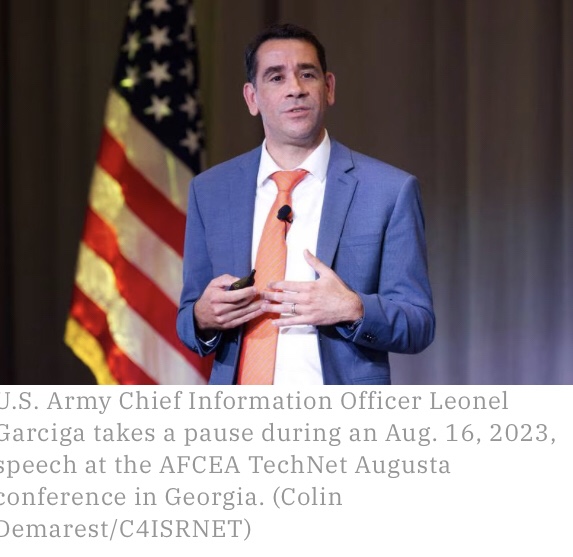
AUGUSTA, Ga. — Leonel Garciga, the U.S. Army’s new chief information officer, is known as a “bureaucracy hacker” in some circles.

With such a moniker, indicating his dislike for red tape, come expectations. And one month into the role, he indicated he’s ready to sidestep outdated or unwieldy policy for much-needed modernization.

“We’ve got to move fast, right? We have to be able to adapt. We cannot be stuck with the bureaucracy,” Garciga said at the AFCEA TechNet Augusta conference in Georgia on Aug. 16. “I live for people telling me why I can’t do something that’s written down, or that I’m already allowed to do, because of an interpretation.”

Garciga was named CIO in July. He succeeds Raj Iyer, who after nearly three years atop the Army information-technology behemoth rejoined private industry.

Garciga previously served as the top tech officer for Army intelligence and spent years at the Department of Defense’s improvised explosive device research arm. He is also a Navy veteran.

“We’ve got a lot — a lot — of folks in critical positions right now that are all about hacking that bureaucracy and not allowing, in some cases, decades of practice remain that don’t need to,” Garciga said at the conference. “As an intel guy, when I was at acquisition and sustainment, when I was at DoD CIO, I never ran into a real thing where the policy said I couldn’t do it.”

The Defense Department has long been chided for its slow-to-adapt nature. Garciga said he plans to slash bureaucratic bloat and get “a lot better” at delivering on promises already made.

The Army, the military’s largest service, is pushing what it calls digital transformation: the phasing in of new technologies, connectivity and online practices. The service in fiscal 2023 sought $16.6 billion in cyber and IT funding, or roughly 10% of the overall budget blueprint.

“Cloud? Let’s run as fast as we can, let’s learn as fast as we can. Defensive cyber? Let’s move as fast as we can, learn as fast as we can,” he said. “We’re in, kind of, the next stage. A little bit of the foundation is in place, and now we’ve got to pick up all the pieces.”

About Colin Demarest

Colin Demarest is a reporter at C4ISRNET, where he covers military networks, cyber and IT. Colin previously covered the Department of Energy and its National Nuclear Security Administration — namely Cold War cleanup and nuclear weapons development — for a daily newspaper in South Carolina. Colin is also an award-winning photographer.

Article link: https://www.defensenews.com/battlefield-tech/it-networks/2023/08/17/new-army-cio-wants-to-trade-bureaucracy-for-speedier-modernization/?

Five Reasons Software Is Eclipsing Hardware In Pentagon Technology Plans – Forbes

Posted by timmreardon on 08/23/2023
Posted in: Uncategorized.

Loren Thompson Senior Contributor

I write about national security, especially its business dimensions.

Aug 14, 2023, 11:02am EDT

On August 11, the editors of Aviation Week & Space Technology posted a podcast with the provocative title, “Why AmazonAMZN Could Be The Next Big Defense Prime.” The discussion wasn’t so much about Amazon as about how software-driven projects increasingly are shaping military modernization plans.

AvWeek’s Chief Technology Editor, Graham Warwick, noted in the exchange that the Air Force’s next-generation fighter will be largely defined by its software, without which the aircraft would be unable to meet its performance requirements.

Some observers believe that the evolution of combat aircraft is inexorably progressing towards a future in which human pilots will no longer be part of the design, and software will enable every facet of aircraft operations—presumably with speed and precision that no human operator could match.

It is easy to overstate the degree to which software is eclipsing hardware in current military plans. What good is the source code without the plane? However, the Pentagon’s latest software modernization strategy, released last year, expresses what looks to be the conventional wisdom in asserting “software increasingly defines military capabilities.”

Viewed from this perspective, the Pentagon’s recent embrace of artificial intelligence is just the latest chapter in a long-running trend that is concentrating military power in algorithms and code rather than human hands.

Pentagon officials insist that life-and-death decisions will never be turned over to machines, but the reality is that if adversaries like China follow the same course, at some point the only alternative to automating warfare may be to accept defeat.

Here are five reasons why software increasingly dominates the thinking of military visionaries, sometimes to the exclusion of traditional industrial (and human) processes.

Software enhances the performance of hardware. The electronic content of warfighting systems has been growing for generations, and with the advent of the digital revolution, that content increasingly includes high-power computers that run applications software for onboard systems.

The result has been huge gains in functionality. Don’t take my word for it, just compare the performance of your current iPhone with the cellphone you used ten years ago. The incredible versatility concentrated in this compact device is largely enabled by software, and supported by a network that is itself software-driven.

A similar dynamic applies to military technology. The 75 improvements that will be integrated in the next round of F-35 fighter upgrades will depend on agile software running on more powerful computers. The same is true of ongoing upgrades to the Aegis combat system on destroyers—without the underlying software, they would be literally impossible.

Software takes less time to develop. Today’s military software can contain millions of lines of code, but it is easier to develop and field than hardware. It typically consists of modular building blocks constructed according to open architecture principles, and much of the code is itself generated using software. In other words, the generation of software is automated in a way that construction of fighters or warships cannot be.

A senior shipbuilding executive involved in the construction of warships once remarked to me that the state of play in his yards reflected decisions made by Congress seven years earlier. That tells you something about how long it takes to build complex military hardware. The Air Force’s F-35 became operational 15 years after the contract was awarded.

Software generally is developed and fielded according to more compressed timelines. In fact, all the steps from design to development to testing to installation can be accomplished in a fraction of the time required for new hardware. So, the acquisition system naturally defaults to software as the preferred way of upgrading capabilities.

Software is less expensive to implement. Developing and producing new military hardware involves big investments in capital equipment and the creation of articulated supply chains. A skilled workforce must be trained to integrate components unique to a particular program.

Such challenges are not unheard of in generating software, but they usually require far less financial resources to overcome. One reason is that coding of software often is fungible across diverse applications and industries—hence AvWeek’s notion that Amazon skills might be useful in advancing military capabilities. The Pentagon’s search for commercial technologies relevant to warfighting is grounded largely in leveraging private-sector software skills for new uses.

Software can take the place of costly personnel. Replacing humans with software may raise ethical concerns for the warfighting profession, but it potentially has big budgetary benefits. Retired Major General Arnold Punaro, a legendary Washington insider, figures that the fully loaded cost of a single soldier in the All-Volunteer Force is $400,000 annually. Even at that steep price, the services are having trouble attracting new recruits.

Many military jobs can be performed more cost-effectively by using software in imaginative ways. That is particularly true with the advent of artificial intelligence programs using deep-learning processes. With the federal government spending a trillion dollars more than it takes in each year, the fiscal appeal of substituting software for people will become increasingly attractive—and not just in the military.

Software lowers barriers to entry. Policymakers frequently complain that high barriers to entry in the defense industry limit options for introducing new products and processes. Greater reliance on software potentially ameliorates this problem, because there are hundreds of successful commercial software firms that can apply their skills to military tasks. Even when they perform as subcontractors to traditional primes, such firms can stimulate the adoption of new ideas.

The above five considerations barely scratch the surface of reasons why software is eclipsing hardware in military technology plans. As Grahan Warwick points out in the August 11 podcast, even when the subject is hardware, the underlying processes (like prototyping) are increasingly software-driven. The digital revolution is transforming the technological landscape, and agile software has become the coin of the realm.

Article link: https://www-forbes-com.cdn.ampproject.org/c/s/www.forbes.com/sites/lorenthompson/2023/08/14/five-reasons-software-is-eclipsing-hardware-in-pentagon-technology-plans/amp/

New post-quantum cryptography guidance offers first steps toward migration – Nextgov

Posted by timmreardon on 08/22/2023
Posted in: Uncategorized.

By ALEXANDRA KELLEYAUGUST 21, 2023 05:31 PM ET

Several agencies partnered to release the first federal recommendations for organizations to begin upgrading their networks and systems to quantum cryptography-resilient security schemes.

Federal agencies are leading the charge to usher in the shift to post-quantum cryptography standards, releasing an authoritative factsheet Monday surrounding PQC standards and the impact of quantum information technologies. 

The Quantum-Readiness: Migration to Post-Quantum Cryptography fact sheet — co-released by the Cybersecurity and Infrastructure Security Agency, the National Security Agency and the National Institutes of Standards and Technology — lays out a roadmap for public and private entities to use as quantum computing technologies continue to advance and potentially threaten the standard cryptographic schemes that safeguards modern digital infrastructure.

Among the recommendations included in the roadmap is an emphasis on close communication between organizations and technology vendors — a reflection of the Biden administration’s goal of fostering better partnerships between the public and private sectors.

“It is imperative for all organizations, especially critical infrastructure, to begin preparing now for migration to post-quantum cryptography,” said CISA Director Jen Easterly in a statement. “CISA will continue to work with our federal and industry partners to unify and drive efforts to address threats posed by quantum computing. Our collective aim is to ensure that public and private sector organizations have the resources and capabilities necessary to effectively prepare and manage this transition.”

Upgrading today’s cryptography to be able to withstand a potential attack from a fault-tolerant quantum computer is a long overhaul. CISA and NIST recommend in their new document to begin by having firms analyze which parts of their network systems and assets rely on quantum-vulnerable cryptography; that is, which network components create and validate security measures like digital signatures.

“Having an inventory of quantum-vulnerable systems and assets enables an organization to begin the quantum risk assessment processes, demonstrating the prioritization of migration,” the document says. 

The agencies prioritize technology vendors’ role in facilitating migration efforts. Given that PQC migration will involve software and occasional firmware updates, the document prompts vendors to chart their own timelines for PQC migration efforts for successful product integration. 

“The authoring agencies also urge organizations to proactively plan for necessary changes to existing and future contracts,” the document says. “Considerations should be in place ensuring that new products will be delivered with PQC built-in, and older products will be upgraded with PQC to meet transition timelines.”

This new guidance supports the timelineimposed by a Biden administration memorandum, which requests that government agencies modernize their networks to PQC standards by the year 2035. 

“Post-quantum cryptography is about proactively developing and building capabilities to secure critical information and systems from being compromised through the use of quantum computers,” said Rob Joyce, director of NSA Cybersecurity. “The transition to a secured quantum computing era is a long-term intensive community effort that will require extensive collaboration between government and industry. The key is to be on this journey today and not wait until the last minute.”

Article link: https://www.nextgov.com/emerging-tech/2023/08/new-post-quantum-cryptography-guidance-offers-first-steps-toward-migration/389595/

Proof That Positive Work Cultures Are More Productive – HBR

Posted by timmreardon on 08/20/2023
Posted in: Uncategorized.
  • Emma Seppälä
  • Kim Cameron

December 01, 2015

Too many companies bet on having a cut-throat, high-pressure, take-no-prisoners culture to drive their financial success.

But a large and growing body of research on positive organizational psychology demonstrates that not only is a cut-throat environment harmful to productivity over time, but that a positive environment will lead to dramatic benefits for employers, employees, and the bottom line.

Although there’s an assumption that stress and pressure push employees to perform more, better, and faster, what cutthroat organizations fail to recognize is the hidden costs incurred.

First, health care expenditures at high-pressure companies are nearly 50% greater than at other organizations. The American Psychological Association estimates that more than $500 billion is siphoned off from the U.S. economy because of workplace stress, and 550 million workdays are lost each year due to stress on the job. Sixty percent to 80% of workplace accidents are attributed to stress, and it’s estimated that more than 80% of doctor visits are due to stress. Workplace stress has been linked to health problems ranging from metabolic syndrome to cardiovascular disease and mortality.

The stress of belonging to hierarchies itself is linked to disease and death. One study showed that, the lower someone’s rank in a hierarchy, the higher their chances of cardiovascular disease and death from heart attacks. In a large-scale study of over 3,000 employees conducted by Anna Nyberg at the Karolinska Institute, results showed a strong link between leadership behavior and heart disease in employees. Stress-producing bosses are literally bad for the heart.

INSIGHT CENTER

  • How to Be a Company That Employees LoveIt takes a careful mix of mission, management, and culture.

Second is the cost of disengagement. While a cut-throat environment and a culture of fear can ensure engagement (and sometimes even excitement) for some time, research suggests that the inevitable stress it creates will likely lead to disengagement over the long term. Engagement in work — which is associated with feeling valued, secure, supported, and respected — is generally negatively associated with a high-stress, cut-throat culture.

And disengagement is costly. In studies by the Queens School of Business and by the Gallup Organization, disengaged workers had 37% higher absenteeism, 49% more accidents, and 60% more errors and defects. In organizations with low employee engagement scores, they experienced 18% lower productivity, 16% lower profitability, 37% lower job growth, and 65% lower share price over time. Importantly, businesses with highly engaged employees enjoyed 100% more job applications.

Lack of loyalty is a third cost. Research shows that workplace stress leads to an increase of almost 50% in voluntary turnover. People go on the job market, decline promotions, or resign. And the turnover costs associated with recruiting, training, lowered productivity, lost expertise, and so forth, are significant. The Center for American Progress estimatesthat replacing a single employee costs approximately 20% of that employee’s salary.

For these reasons, many companies have established a wide variety of perks from working from home to office gyms. However, these companies still fail to take into account the research. A Gallup poll showed that, even when workplaces offered benefits such as flextime and work-from-home opportunities, engagement predicted wellbeing above and beyond anything else. Employees prefer workplace wellbeing to material benefits.

Wellbeing comes from one place, and one place only — a positive culture.

Creating a positive and healthy culture for your team rests on a few major principles. Our own research (see here and here) on the qualities of a positive workplace culture boils down to six essential characteristics:

  • Caring for, being interested in, and maintaining responsibility for colleagues as friends.
  • Providing support for one another, including offering kindness and compassion when others are struggling.
  • Avoiding blame and forgive mistakes.
  • Inspiring one another at work.
  • Emphasizing the meaningfulness of the work.
  • Treating one another with respect, gratitude, trust, and integrity.

As a boss, how can you foster these principles? The research points to four steps to try:

1. Foster social connections. A large number of empirical studies confirm that positive social connections at work produce highly desirable results. For example, people get sick less often, recover twice as fast from surgery, experience less depression, learn faster and remember longer, tolerate pain and discomfort better, display more mental acuity, and perform better on the job. Conversely, research by Sarah Pressman at the University of California, Irvine, found that the probability of dying early is 20% higher for obese people, 30% higher for excessive drinkers, 50% higher for smokers, but a whopping 70% higher for people with poor social relationships. Toxic, stress-filled workplaces affect social relationships and, consequently, life expectancy.

2. Show empathy. As a boss, you have a huge impact on how your employees feel. A telling brain-imaging study found that, when employees recalled a boss that had been unkind or un-empathic, they showed increased activation in areas of the brain associated with avoidance and negative emotion while the opposite was true when they recalled an empathic boss. Moreover, Jane Dutton and her colleagues in the CompassionLab at the University of Michigan suggest that leaders who demonstrate compassion toward employees foster individual and collective resilience in challenging times. 

3. Go out of your way to help.Ever had a manager or mentor who took a lot of trouble to help you when he or she did not have to? Chances are you have remained loyal to that person to this day.  Jonathan Haidt at New York University’s Stern School of Business shows in his research that when leaders are not just fair but self-sacrificing, their employees are actually moved and inspired to become more loyal and committed themselves. As a consequence, they are more likely to go out of their way to be helpful and friendly to other employees, thus creating a self-reinforcing cycle. Daan Van Knippenberg of Rotterdam School of Management shows that employees of self-sacrificing leaders are more cooperative because they trust their leaders more. They are also more productive and see their leaders as more effective and charismatic.

4. Encourage people to talk to you – especially about their problems. Not surprisingly, trusting that the leader has your best interests at heart improves employee performance. Employees feel safe rather than fearful and, as research by Amy Edmondson of Harvard demonstrates in her work on psychological safety, a culture of safety i.e. in which leaders are inclusive, humble, and encourage their staff to speak up or ask for help, leads to better learning and performance outcomes. Rather than creating a culture of fear of negative consequences, feeling safe in the workplace helps encourage the spirit of experimentation so critical for innovation. Kamal Birdi of Sheffield University has shownthat empowerment, when coupled with good training and teamwork, leads to superior performance outcomes whereas a range of efficient manufacturing and operations practices do not.

When you know a leader is committed to operating from a set of values based on interpersonal kindness, he or she sets the tone for the entire organization. In Give and Take, Wharton professor Adam Grant demonstrates that leader kindness and generosity are strong predictors of team and organizational effectiveness. Whereas harsh work climates are linked to poorer employee health, the opposite is true of positive work climates where employees tend to have lower heart rates and blood pressure as well as a stronger immune systems. A positive work climate also leads to a positive workplace culture which, again, boosts commitment, engagement, and performance. Happier employees make for not only a more congenial workplace but for improved customer service. As a consequence, a happy and caring culture at work not only improves employee well-being and productivity but also improved client health outcomes and satisfaction.

In sum, a positive workplace is more successful over time because it increases positive emotions and well-being. This, in turn, improves people’s relationships with each other and amplifies their abilities and their creativity. It buffers against negative experiences such as stress, thus improving employees’ ability to bounce back from challenges and difficulties while bolstering their health. And, it attracts employees, making them more loyal to the leader and to the organization as well as bringing out their best strengths. When organizations develop positive, virtuous cultures they achieve significantly higher levels of organizational effectiveness — including financial performance, customer satisfaction, productivity, and employee engagement.

Editor’s note : Due to a typo, this article initially misstated the number of workdays lost due to stress each year. That number is estimated at 550 million, not 550 billion. The sentence has been corrected.

Article link: https://hbr.org/2015/12/proof-that-positive-work-cultures-are-more-productive?

  • Emma Seppälä, PhD, is a faculty member at the Yale School of Management, faculty director of the Yale School of Management’s Women’s Leadership Program and author of The Happiness Track. She is also science director of Stanford University’s Center for Compassion and Altruism Research and Education. Follow her work at www.emmaseppala.com, on Instagramor Twitter.
  • KCKim Cameron, PhD, is the William Russell Kelly Professor of Management and Organizations at the Ross School of Business at the University of Michigan and the author of Positive Leadership, Practicing Positive Leadership, and Positively Energizing Leadership.

Yes, you can measure software developer productivity – McKinsey

Posted by timmreardon on 08/19/2023
Posted in: Uncategorized.

Measuring, tracking, and benchmarking developer productivity has long been considered a black box. It doesn’t have to be that way.

Measuring, tracking, and benchmarking developer productivity has long been considered a black box. It doesn’t have to be that way.

Compared with other critical business functions such as sales or customer operations, software development is perennially undermeasured. The long-held belief by many in tech is that it’s not possible to do it correctly—and that, in any case, only trained engineers are knowledgeable enough to assess the performance of their peers. Yet that status quo is no longer sustainable. Now that most companies are becoming (to one degree or another) software companies, regardless of industry, leaders need to know they are deploying their most valuable talent as successfully as possible.

Sidebar

About the authors

This article is a collaborative effort by Chandra Gnanasambandam, Martin Harrysson, Alharith Hussin, Jason Keovichit, and Shivam Srivastava, representing views from McKinsey’s Digital and Technology, Media & Telecommunications Practices.

There is no denying that measuring developer productivity is difficult. Other functions can be measured reasonably well, some even with just a single metric; whereas in software development, the link between inputs and outputs is considerably less clear. Software development is also highly collaborative, complex, and creative work and requires different metrics for different levels (such as systems, teams, and individuals). What’s more, even if there is genuine commitment to track productivity properly, traditional metrics can require systems and software that are set up to allow more nuanced and comprehensive measurement. For some standard metrics, entire tech stacks and development pipelines need to be reconfigured to enable tracking, and putting in place the necessary instruments and tools to yield meaningful insights can require significant, long-term investment. Furthermore, the landscape of software development is changing quickly as generative AI tools such as CopilotX and ChatGPT have the potential to enable developers to complete tasks up to two times faster.

To help overcome these challenges and make this critical task more feasible, we developed an approach to measuring software developer productivity that is easier to deploy with surveys or existing data (such as in backlog management tools). In so doing, we built on the foundation of existing productivity metrics that industry leaders have developed over the years, with an eye toward revealing opportunities for performance improvements. 

This new approach has been implemented at nearly 20 tech, finance, and pharmaceutical companies, and the initial results are promising. They include the following improvements:

  • 20 to 30 percent reduction in customer-reported product defects
  • 20 percent improvement in employee experience scores
  • 60-percentage-point improvement in customer satisfaction ratings

Leveraging productivity insights

With access to richer productivity data and insights, leaders can begin to answer pressing questions about the software engineering talent they fought so hard to attract and retain, such as the following:

  • What are the impediments to the engineers working at their best level? 
  • How much does culture and organization affect their ability to produce their best work? 
  • How do we know if we’re using their time on activities that truly drive value?
  • How can we know if we have all the software engineering talent we need?

Understanding the foundations

To use a sufficiently nuanced system of measuring developer productivity, it’s essential to understand the three types of metrics that need to be tracked: those at the system level, the team level, and the individual level. Unlike a function such as sales, where a system-level metric of dollars earned or deals closed could be used to measure the work of both teams and individuals, software development is collaborative in a distinctive way that requires different lenses. For instance, while deployment frequency is a perfectly good metric to assess systems or teams, it depends on all team members doing their respective tasks and is, therefore, not a useful way to track individual performance. 

Another critical dimension to recognize is what the various metrics do and do not tell you. For example, measuring deployment frequency or lead time for changes can give you a clear view of certain outcomes, but not of whether an engineering organization is optimized. And while metrics such as story points completed or interruptions can help determine optimization, they require more investigation to identify improvements that might be beneficial.

In building our set of metrics, we looked to expand on the two sets of metrics already developed by the software industry. The first is DORA metrics, named for Google’s DevOps research and assessment team. These are the closest the tech sector has to a standard, and they are great at measuring outcomes. When a DORA metric returns a subpar outcome, it is a signal to investigate what has gone wrong, which can often involve protracted sleuthing. For example, if a metric such as deployment frequency increases or decreases, there can be multiple causes. Determining what they are and how to resolve them is often not straightforward.

The second set of industry-developed measurements is SPACE metrics (satisfaction and well-being, performance, activity, communication and collaboration, and efficiency and flow), which GitHub and Microsoft Research developed to augment DORA metrics. By adopting an individual lens, particularly around developer well-being, SPACE metrics are great at clarifying whether an engineering organization is optimized. For example, an increase in interruptions that developers experience indicates a need for optimization. 

On top of these already powerful metrics, our approach seeks to identify what can be done to improve how products are delivered and what those improvements are worth, without the need for heavy instrumentation. Complementing DORA and SPACE metrics with opportunity-focused metrics can create an end-to-end view of software developer productivity (Exhibit 1).

These opportunity-focused productivity metrics use a few different lenses to generate a nuanced view of the complex range of activities involved with software product development.

Inner/outer loop time spent. To identify specific areas for improvement, it’s helpful to think of the activities involved in software development as being arranged in two loops (Exhibit 2). An inner loop comprises activities directly related to creating the product: coding, building, and unit testing. An outer loop comprises other tasks developers must do to push their code to production: integration, integration testing, releasing, and deployment. From both a productivity and personal-experience standpoint, maximizing the amount of time developers spend in the inner loop is desirable: building products directly generates value and is what most developers are excited to do. Outer-loop activities are seen by most developers as necessary but generally unsatisfying chores. Putting time into better tooling and automation for the outer loop allows developers to spend more time on inner-loop activities.

Top tech companies aim for developers to spend up to 70 percent of their time doing inner-loop activities. For example, one company that had previously completed a successful agile transformation learned that its developers, instead of coding, were spending too much time on low-value-added tasks such as provisioning infrastructure, running manual unit tests, and managing test data. Armed with that insight, it launched a series of new tools and automation projects to help with those tasks across the software development life cycle.

Developer Velocity Index benchmark. The Developer Velocity Index (DVI) is a survey that measures an enterprise’s technology, working practices, and organizational enablement and benchmarks them against peers. This comparison helps unearth specific areas of opportunity, whether in backlog management, testing, or security and compliance.1 For example, one company, well known for its technological prowess and all-star developers, sought to define standard working practices more thoughtfully for cross-team collaboration after discovering a high amount of dissatisfaction, rework, and inefficiency reported by developers.

Contribution analysis. Assessing contributions by individuals to a team’s backlog (starting with data from backlog management tools such as Jira, and normalizing data using a proprietary algorithm to account for nuances) can help surface trends that inhibit the optimization of that team’s capacity. This kind of insight can enable team leaders to manage clear expectations for output and improve performance as a result. Additionally, it can help identify opportunities for individual upskilling or training and rethinking role distribution within a team (for instance, if a quality assurance tester has enough work to do). For example, one company found that its most talented developers were spending excessive time on noncoding activities such as design sessions or managing interdependencies across teams. In response, the company changed its operating model and clarified roles and responsibilities to enable those highest-value developers to do what they do best: code. Another company, after discovering relatively low contribution from developers new to the organization, reexamined their onboarding and personal mentorship program. 

Talent capability score. Based on industry standard capability maps, this score is a summary of the individual knowledge, skills, and abilities of a specific organization. Ideally, organizations should aspire to a “diamond” distribution of proficiency, with the majority of developers in the middle range of competency.2 This can surface coaching and upskilling opportunities, and in extreme cases call for a rethinking of talent strategy. For example, one company found a higher concentration of their developers in the “novice” capability than was ideal. They deployed personalized learning journeys based on specific gaps and were able to move 30 percent of their developers to the next level of expertise within six months. 

Avoiding metrics missteps

As valuable as it can be, developer productivity data can be damaging to organizations if used incorrectly, so it’s important to avoid certain pitfalls. In our work we see two main types of missteps occur: misuse of metrics and failing to move past old mindsets. 

Misuse is most common when companies try to employ overly simple measurements, such as lines of code produced, or number of code commits (when developers submit their code to a version control system). Not only do such simple metrics fail to generate truly useful insights, they can have unintended consequences, such as leaders making inappropriate trade-offs. For example, optimizing for lead time or deployment frequency can allow quality to suffer. Focusing on a single metric or too simple a collection of metrics can also easily incentivize poor practices; in the case of measuring commits, for instance, developers may submit smaller changes more frequently as they seek to game the system. 

To truly benefit from measuring productivity, leaders and developers alike need to move past the outdated notion that leaders “cannot” understand the intricacies of software engineering, or that engineering is too complex to measure. The importance of engineering talent to a company’s success, and the fierce competition for developer talent in recent years, underscores the need to acknowledge that software development, like so many other things, requires measurement to be improved. Further, attracting and retaining top software development talent depends in large part on providing a workplace and tools that allow engineers to do their best work and encourages their creativity. Measuring productivity at a system level enables employers to see hidden friction points that impede that work and creativity. 

Getting started

The mechanics of building a developer productivity initiative can seem daunting, but there is no time like the present to begin to lay the groundwork. The factors driving the need to elevate the conversation about software developer productivity to C-level leaders outweigh the impediments to doing so. 

The increase in remote work and its popularity among developers is one overriding factor. Developers have long worked in agile teams, collaborating in the same physical space, and some technology leaders believe that kind of in-person teamwork is essential to the job. However, the digital tools that are so central to their work made it easy to switch to remote work during the pandemic lockdowns, and as in most sectors, this shift is hard to undo. As remote and hybrid working increasingly becomes the norm, organizations will need to rely on broad, objective measurements to maintain confidence in these new working arrangements and ensure they are steadily improving the function that could easily determine their future success or failure. The fact that the markets are now putting greater emphasis on efficient growth and ROI only makes it more important than ever to know how they can optimize the performance of their highly valued engineering talent. 

Another key driver of this need for greater visibility is the rapid advances in AI-enabled tooling, especially large-language models such as generative AI. These are already rapidly changing the way work is done, which means that measuring software developers’ productivity is only a first step to understanding how these valuable resources are deployed. 

But as critical as developer productivity is becoming, companies shouldn’t feel they have to embark on a massive, dramatic overhaul almost overnight. Instead, they can begin the process with a number of key steps:

Learn the basics. All C-suite leaders who are not engineers or who have been in management for a long time will need a primer on the software development process and how it is evolving.

Assess your systems. Because developer productivity has not typically been measured at the level needed to identify improvement opportunities, most companies’ tech stacks will require potentially extensive reconfiguration. For example, to measure test coverage (the extent to which areas of code have been adequately tested), a development team needs to equip their codebase with a tool that can track code executed during a test run. 

Build a plan. As with most analytics initiatives, getting lost in mountains of data is a risk. It’s important to start with one area that you know will result in a clear path to improvement, such as identifying friction points and bottlenecks. Be explicit about the scope of such a plan, as even the best approaches, no matter how comprehensive, will not be a silver bullet.

Remember that measuring productivity is contextual. The point is to look at an entire system and understand how it can work better by improving the development environment at the system, team, or individual level. 

No matter the specific approach, measuring productivity should ideally create transparency and insights into key improvement areas. Only then can organizations build specific initiatives to drive impact for both developer productivity and experience—impact that will benefit both those individuals and the company as a whole.

ABOUT THE AUTHOR(S)

Chandra Gnanasambandam and Martin Harrysson are senior partners in McKinsey’s Bay Area office, where Alharith Hussin and Shivam Srivastava are partners; and Jason Keovichit is an associate partner in the New York office. 

The authors wish to thank Pedro Garcia, Diana Rodriguez, and Jeremy Schneider for their contributions to this article.

Article link: https://www.mckinsey.com/industries/technology-media-and-telecommunications/our-insights/yes-you-can-measure-software-developer-productivity

IBM Research introduces an analog AI chip that could make artificial intelligence (AI) more energy efficient.

Posted by timmreardon on 08/17/2023
Posted in: Uncategorized.

IBM Research introduces an analog AI chip that could make artificial intelligence (AI) more energy efficient.

The chip’s components work in a way similar to synapses in human brains.

Sejal Sharma

Sejal Sharma

| Aug 14, 2023 11:22 AM EST

Tech corporation IBM has unveiled a new “prototype” of an analog AI chip that works like a human brain and performs complex computations in various deep neural networks (DNN) tasks.

The chip promises more. IBM says the state-of-the-art chip can make artificial intelligence remarkably efficient and less battery-draining for computers and smartphones.

Introducing the chip in a paperpublished by IBM Research, the company said: “The fully integrated chip features 64 AIMC cores interconnected via an on-chip communication network. It also implements the digital activation functions and additional processing involved in individual convolutional layers and long short-term memory units.”

Reinventing ways in which AI is computed

The new AI chip is developed in IBM’s Albany NanoTech Complex and comprises 64 analog in-memory compute cores. By borrowing key features of how neural networks run in biological brains, IBM explains that it has embedded the chip with compact, time-based analog-to-digital converters in each tile or core to transition between the analog and digital worlds. 

Each tile (or core) is also integrated with lightweight digital processing units that perform simple nonlinear neuronal activation functions and scaling operations, explained IBM in a blog published on August 10.

A replacement for current digital chips?

In the future, IBM’s prototype chip could replace the current chips powering heavy AI applications in computers and phones. “A global digital processing unit is integrated into the middle of the chip that implements more complex operations that are critical for the execution of certain types of neural networks,” further said the blog.

With more and more foundation models and generative AI tools entering the market, the performance and energy efficiency of traditional computing methods that these models run on are at a testing limit.

IBM wants to bridge that gap. The company says that many of the chips being developed today have a split in their memory and processing units, thus slowing down computation. “This means the AI models are typically stored in a discrete memory location, and computational tasks require constantly shuffling data between the memory and processing units.”

Speaking to BBC, Thanos Vasilopoulos, a scientist based at IBM’s research lab in Switzerland, compared the human brain to traditional computers and said that the former “is able to achieve remarkable performance while consuming little power.” 

He said that the superior energy efficiency (of the IBM chip) would mean “large and more complex workloads could be executed in low power or battery-constrained environments”, for example, cars, mobile phones, and cameras.

“Additionally, cloud providers will be able to use these chips to reduce energy costs and their carbon footprint,” he added.

Article link: https://m.facebook.com/story.php?story_fbid=pfbid02TVF5mzSVmh2jg65j4XDwAeYgKg5f9DkbrHRQStL9hPNbYArih2d67mbLH5yEhfxPl&id=100064843384938&mibextid=ncKXMA

Posts navigation

← Older Entries
Newer Entries →
  • Search site

  • Follow healthcarereimagined on WordPress.com
  • Recent Posts

    • Heeding the pope’s call to ensure AI protects human dignity – MIT Sloan Management 06/01/2026
    • Association between Wealth and Mortality in the United States and Europe – New England Journal of Medicine 05/30/2026
    • U.S. Health Care from a Global Perspective, 2026 – The Commonwealth Fund 05/30/2026
    • Anthropic co-founder Chris Olah’s remarks on Pope Leo XIV’s encyclical “Magnifica humanitas” 05/28/2026
    • Magnifica_Humanitas – Full English 05/26/2026
    • Pope Leo XIV to launch his first encylical, a document on artificial intelligence, with Anthropic’s co-founder – PBS 05/24/2026
    • Quantum Computing is Approaching A Critical “Prove It” Phase 05/22/2026
    • Hidden Prices, Broken Promises: Why Health Care Transparency Is a Matter of Justice – Sanders Institute 05/15/2026
    • The Very Uncertain Future of Arms Control – Bulletin of the Atomic Scientists 05/13/2026
    • Now Available: Expanded and Enhanced International Health Care System Profiles – Commonwealth Fund 05/13/2026
  • Categories

    • Accountable Care Organizations
    • ACOs
    • AHRQ
    • American Board of Internal Medicine
    • Big Data
    • Blue Button
    • Board Certification
    • Cancer Treatment
    • Data Science
    • Digital Services Playbook
    • DoD
    • EHR Interoperability
    • EHR Usability
    • Emergency Medicine
    • FDA
    • FDASIA
    • GAO Reports
    • Genetic Data
    • Genetic Research
    • Genomic Data
    • Global Standards
    • Health Care Costs
    • Health Care Economics
    • Health IT adoption
    • Health Outcomes
    • Healthcare Delivery
    • Healthcare Informatics
    • Healthcare Outcomes
    • Healthcare Security
    • Helathcare Delivery
    • HHS
    • HIPAA
    • ICD-10
    • Innovation
    • Integrated Electronic Health Records
    • IT Acquisition
    • JASONS
    • Lab Report Access
    • Military Health System Reform
    • Mobile Health
    • Mobile Healthcare
    • National Health IT System
    • NSF
    • ONC Reports to Congress
    • Oncology
    • Open Data
    • Patient Centered Medical Home
    • Patient Portals
    • PCMH
    • Precision Medicine
    • Primary Care
    • Public Health
    • Quadruple Aim
    • Quality Measures
    • Rehab Medicine
    • TechFAR Handbook
    • Triple Aim
    • U.S. Air Force Medicine
    • U.S. Army
    • U.S. Army Medicine
    • U.S. Navy Medicine
    • U.S. Surgeon General
    • Uncategorized
    • Value-based Care
    • Veterans Affairs
    • Warrior Transistion Units
    • XPRIZE
  • Archives

    • June 2026 (1)
    • May 2026 (12)
    • April 2026 (4)
    • March 2026 (9)
    • February 2026 (6)
    • January 2026 (8)
    • December 2025 (11)
    • November 2025 (9)
    • October 2025 (10)
    • September 2025 (4)
    • August 2025 (7)
    • July 2025 (2)
    • June 2025 (9)
    • May 2025 (4)
    • April 2025 (11)
    • March 2025 (11)
    • February 2025 (10)
    • January 2025 (12)
    • December 2024 (12)
    • November 2024 (7)
    • October 2024 (5)
    • September 2024 (9)
    • August 2024 (10)
    • July 2024 (13)
    • June 2024 (18)
    • May 2024 (10)
    • April 2024 (19)
    • March 2024 (35)
    • February 2024 (23)
    • January 2024 (16)
    • December 2023 (22)
    • November 2023 (38)
    • October 2023 (24)
    • September 2023 (24)
    • August 2023 (34)
    • July 2023 (33)
    • June 2023 (30)
    • May 2023 (35)
    • April 2023 (30)
    • March 2023 (30)
    • February 2023 (15)
    • January 2023 (17)
    • December 2022 (10)
    • November 2022 (7)
    • October 2022 (22)
    • September 2022 (16)
    • August 2022 (33)
    • July 2022 (28)
    • June 2022 (42)
    • May 2022 (53)
    • April 2022 (35)
    • March 2022 (37)
    • February 2022 (21)
    • January 2022 (28)
    • December 2021 (23)
    • November 2021 (12)
    • October 2021 (10)
    • September 2021 (4)
    • August 2021 (4)
    • July 2021 (4)
    • May 2021 (3)
    • April 2021 (1)
    • March 2021 (2)
    • February 2021 (1)
    • January 2021 (4)
    • December 2020 (7)
    • November 2020 (2)
    • October 2020 (4)
    • September 2020 (7)
    • August 2020 (11)
    • July 2020 (3)
    • June 2020 (5)
    • April 2020 (3)
    • March 2020 (1)
    • February 2020 (1)
    • January 2020 (2)
    • December 2019 (2)
    • November 2019 (1)
    • September 2019 (4)
    • August 2019 (3)
    • July 2019 (5)
    • June 2019 (10)
    • May 2019 (8)
    • April 2019 (6)
    • March 2019 (7)
    • February 2019 (17)
    • January 2019 (14)
    • December 2018 (10)
    • November 2018 (20)
    • October 2018 (14)
    • September 2018 (27)
    • August 2018 (19)
    • July 2018 (16)
    • June 2018 (18)
    • May 2018 (28)
    • April 2018 (3)
    • March 2018 (11)
    • February 2018 (5)
    • January 2018 (10)
    • December 2017 (20)
    • November 2017 (30)
    • October 2017 (33)
    • September 2017 (11)
    • August 2017 (13)
    • July 2017 (9)
    • June 2017 (8)
    • May 2017 (9)
    • April 2017 (4)
    • March 2017 (12)
    • December 2016 (3)
    • September 2016 (4)
    • August 2016 (1)
    • July 2016 (7)
    • June 2016 (7)
    • April 2016 (4)
    • March 2016 (7)
    • February 2016 (1)
    • January 2016 (3)
    • November 2015 (3)
    • October 2015 (2)
    • September 2015 (9)
    • August 2015 (6)
    • June 2015 (5)
    • May 2015 (6)
    • April 2015 (3)
    • March 2015 (16)
    • February 2015 (10)
    • January 2015 (16)
    • December 2014 (9)
    • November 2014 (7)
    • October 2014 (21)
    • September 2014 (8)
    • August 2014 (9)
    • July 2014 (7)
    • June 2014 (5)
    • May 2014 (8)
    • April 2014 (19)
    • March 2014 (8)
    • February 2014 (9)
    • January 2014 (31)
    • December 2013 (23)
    • November 2013 (48)
    • October 2013 (25)
  • Tags

    Business Defense Department Department of Veterans Affairs EHealth EHR Electronic health record Food and Drug Administration Health Health informatics Health Information Exchange Health information technology Health system HIE Hospital IBM Mayo Clinic Medicare Medicine Military Health System Patient Patient portal Patient Protection and Affordable Care Act United States United States Department of Defense United States Department of Veterans Affairs
  • Upcoming Events

Blog at WordPress.com.
healthcarereimagined
Blog at WordPress.com.
  • Subscribe Subscribed
    • healthcarereimagined
    • Join 153 other subscribers
    • Already have a WordPress.com account? Log in now.
    • healthcarereimagined
    • Subscribe Subscribed
    • Sign up
    • Log in
    • Report this content
    • View site in Reader
    • Manage subscriptions
    • Collapse this bar

Loading Comments...