healthcarereimagined

Envisioning healthcare for the 21st century

  • About
  • Economics

Successful EHR Implementation Hinges on Change Management – GovCIO

Posted by timmreardon on 11/21/2023
Posted in: Uncategorized.

Federal leaders working on the VA, DOD electronic health records reflect on managing through change.

Anastasia Obis

Fri, 09/22/2023 – 14:04

Key change management principles in the federal effort to modernize electronic health records includes effective communication and maintaining integration with the legacy system to ensure seamless rollout and implementation.

For years, the Office of Marine and Aviation Operations at the National Oceanic and Atmospheric Administration (NOAA) had several medical programs to support its commissioned officers, but there was not a NOAA-owned EHR. That changed this summer after NOAA joined the joint EHR with the Defense Department and Coast Guard called MHS Genesis.

“We are able to now freely exchange information between our branches. … Additionally, just having that connection to the military treatment facilities was huge,” Cmdr. Scott Miller, director of the Office of Health Services at NOAA, said at the Sept. 21 Health IT Summit in Bethesda, Maryland. Miller explained the service previously relied on information that was provided from those applying to be officers. “Through health information exchange, we’re able to see much more complete pictures.”

Critical in the EHR rollout effort has been effective communication — one of the leading practices among change management principles.

“Once we got to landing on MHS Genesis and in preparing for an implementation, going back to the people component of it, communicating out information freely, frequently, to all the users, all the patients that were going to be affected, all the executive leadership just to make sure everybody was on the same level as far as what to expect,” said Miller. 

John Windom, deputy director at the Federal Electronic Health Record Modernization (FEHRM) office, which is overseeing implementation of DOD’s record along with the Department of Veterans Affairs, emphasized the importance of embracing change.

“My boss Bill Tinston often says, ‘People hate the system until you tell him you’re going to change it. Then everybody likes it again.’ We wrestle with that, and we’ll continue to do so,” Windom said. 

“But homing in on the people, understanding the way people learn. Everyone doesn’t learn the same way. And so, you’ve got to be resilient in many cases. You’ve got to be steadfast in your resolve because sometimes the easy thing is just to give up and go back to what you’ve been doing,” he added.

Of course, the technology component is important, particularly for VA, which will be moving from its legacy VistA system to the new Oracle-Cerner platform. Red Hat Chief Architect Ben Cushing noted the importance of a bidirectional data plane and the need to consider modernizing the existing legacy EHR.

“The existing EHR, generally, is not going to go away for quite a while. … VistA is probably going to be around for a decade or more, if not forever. … When you’re actually doing the change management or actually doing the migration, you’re going to have two EHRs or more running at the same time. And that’s a significant patient safety problem,” Cushing said. “In this case, you really need to have a bidirectional data plane so that the records themselves are available between the different systems, and that reality has to exist for quite a while. And it’s a challenge. It’s an interoperability challenge.”

Slow migration, rather than introducing major changes in one fell swoop, will also contribute to a successful EHR implementation. 

“Gradual change is something that we as humans are much more adaptive to. So while you have that legacy EHR, you can slowly start to do that migration over time, and people feel much more comfortable with that, as opposed to like one day lifting the thing they know how to use and dropping something else in place right in front of them and then watch them panic because they can’t do their day job,” said Cushing. 

As there are no two systems that are exactly alike, it is vital to allow the ecosystem to grow. 

“Adding on other tools that do things like care coordination or … advanced analytics and AI — those are things that are not going to generally come from your EHR. Those are part of the health care ecosystem, and you want to bolt them on to create a more complex and sophisticated health system,” Cushing added.

Article link: Successful EHR Implementation Hinges on Change Management

AI Ethics at Unilever: From Policy to Process – MIT Sloan Management Review

Posted by timmreardon on 11/21/2023
Posted in: Uncategorized.

Thomas H. Davenport and Randy BeanNovember 15, 2023Reading Time: 9 min

Many large companies today — most surveys suggest over 70% globally — have determined that artificial intelligence is important to their future and are building AI applications in various parts of their businesses. Most also realize that AI has an ethical dimension and that they need to ensure that the AI systems they build or implement are transparent, unbiased, and fair. 

Thus far, many companies pursuing ethical AI are still in the early stages of addressing it. They might have exhorted their employees to take an ethical approach to AI development and use or drafted a preliminary set of AI governance policies. Most have not done even that; in one recent survey, 73% of U.S. senior leaders said they believe that ethical AI guidelines are important, yet only 6% had developed them.

We see five stages in the AI ethics process: evangelism, when representatives of the company speak about the importance of AI ethics; development of policies, where the company deliberates on and then approves corporate policies around ethical approaches to AI; recording, where the company collects data on each AI use case or application (using approaches such as model cards); review, where the company performs a systematic analysis of each use case (or outsources it to a partner company) to determine whether the case meets the company’s criteria for AI ethics; and action, where the company either accepts the use case as it is, sends it back to the proposing owner for revision, or rejects it.

It is only in the higher-level stages — review and action — that a company can actually determine whether its AI applications meet the transparency, bias, and fairness standards that it has established. For it to put those stages in place, it has to have a substantial number of AI projects, processes, and systems for gathering information, along with governance structures for making decisions about specific applications. Many companies do not yet have those preconditions in place, but they will be necessary as companies exhibit greater AI maturity and emphasis. 

Early Policies at Unilever

Unilever, the British consumer packaged goods company whose brands include Dove, Seventh Generation, and Ben & Jerry’s, has long had a focus on corporate social responsibility and environmental sustainability. More recently, the company has embraced AI as a means of dramatically improving operations and decision-making across its global footprint. Unilever’s Enterprise Data Executive, a governance committee, recognized that the company could build on its robust privacy, security, and governance controls by embedding the responsible and ethical use of AI into the company’s data strategies. The goal was to take advantage of AI-driven digital innovation to both maximize the company’s capabilities and promote a fairer and more equitable society. A multifunctional team was created and tasked with exploring what this meant in practice and building an action program to operationalize the objective.

Unilever has now implemented all of the five stages described above, but, looking back, its first step was to create a set of policies. One policy, for example, specified that any decision that would have a significant life impact on an individual should not be fully automated and should instead ultimately be made by a human. Other AI-specific principles that were adopted include the edicts “We will never blame the system; there must be a Unilever owner accountable” and “We will use our best efforts to systematically monitor models and the performance of our AI to ensure that it maintains its efficacy.” 

Committee members realized quickly that creating broad policies alone would not be sufficient to ensure the responsible development of AI. To build confidence in the adoption of AI and truly unlock its full potential, they needed to develop a strong ecosystem of tools, services, and people resources to ensure that AI systems would work as they were supposed to.

One Unilever policy states that any decision that has a significant life impact on an individual should not be fully automated.

Committee members also knew that many of the AI and analytics systems at Unilever were being developed in collaboration with outside software and services vendors. The company’s advertising agencies, for example, often employed programmatic buying software that used AI to decide what digital ads to place on web and mobile sites. The team concluded that its approach to AI ethics needed to include attention to externally sourced capabilities.

Developing a Robust AI Assurance Process

Early on in Unilever’s use of AI, the company’s data and AI leaders noticed that some of the issues with the technology didn’t involve ethics at all — they involved systems that were ineffective at the tasks they were intended to accomplish. Giles Pavey, Unilever’s global director of data science, who had primary responsibility for AI ethics, knew that this was an important component of an AI use case. “A system for forecasting cash flow, for example, might involve no fairness or bias risk but may have some risk of not being effective,” he said. “We decided that efficacy risk should be included along with the ethical risks we evaluate.” The company began to use the term AI assurance to broadly encompass its overview of a tool’s effectiveness and ethics.

The basic idea behind the Unilever AI assurance compliance process is to examine each new AI application to determine how intrinsically risky it is, both in terms of effectiveness and ethics. The company already had a well-defined approach to information security and data privacy, and the goal was to employ a similar approach that would ensure that no AI application was put into production without first being reviewed and approved. Integrating the compliance process into the compliance areas that Unilever already had in place, such as privacy risk assessment, information security, and procurement policies, would be the ultimate sign of success. 

Debbie Cartledge, who took on the role of data and AI ethics strategy lead for the company, explained the process the team adopted: 

When a new AI solution is being planned, the Unilever employee or supplier proposes the outlined use case and method before developing it. This is reviewed internally, with more complex cases being manually assessed by external experts. The proposer is then informed of potential ethical and efficacy risks and mitigations to be considered. After the AI application has been developed, Unilever, or the external party, runs statistical tests to ascertain whether there is a bias or fairness issue and could examine the system for efficacy in achieving its objectives. Over time, we expect that a majority of cases can be fully assessed automatically based on information about the project supplied by the project proposer.

Depending on where within the company the system will be employed, there also might be local regulations for the system to comply with. All resume checking, for example, is now done by human reviewers. If resume checking were fully automated, the review might conclude that the system needs a human in the loop to make final decisions about whether to move a candidate to interview. If there are serious risks that can’t be mitigated, the AI assurance process will reject the application on the grounds that Unilever’s values prohibit it. Final decisions on AI use cases are made by a senior executive board, including representatives from the legal, HR, and data and technology departments. 

Here’s an example: The company has areas in department stores where it sells its cosmetics brands. A project was developed to use computer vision AI to automatically register sales agents’ attendance through daily selfies, with a stretch objective to look at the appropriateness of agents’ appearance. Because of the AI assurance process, the project team broadened their thinking beyond regulations, legality, and efficacy to also consider the potential implications of a fully automated system. They identified the need for human oversight in checking photos flagged as noncompliant and taking responsibility for any consequent actions. 

Working With an Outside Partner, Holistic AI

Unilever’s external partner in the AI assurance process is Holistic AI, a London-based company. Founders Emre Kazim and Adriano Koshiyama have both worked with Unilever AI teams since 2020, and Holistic AI became a formal partner for AI risk assessment in 2021. 

Holistic AI has created a platform to manage the process of reviewing AI assurance. In this context, “AI” is a broad category that encompasses any type of prediction or automation; even an Excel spreadsheet used to score HR candidates would be included in the process. Unilever’s data ethics team uses the platform to review the status of AI projects and can see which new use cases have been submitted; whether the information is complete; and what risk-level assessment they have received, coded red, yellow (termed “amber” in the U.K.), or green. 

The traffic-light status is assessed at three points: at triage, after further analysis, and after final mitigation and assurance. At this final point, the ratings have the following interpretations: A red rating means the AI system does not comply with Unilever standards and should not be deployed; yellow means the AI system has some acceptable risks and the business owner is responsible for being aware of and taking ownership of it; and green means the AI system adds no risks to the process. Only a handful of the several hundred Unilever use cases have received red ratings thus far, including the cosmetics one described above. All of the submitters were able to resolve the issues with their use cases and move them up to a yellow rating.

For leaders of AI projects, the platform is the place to start the review process. They submit a proposed use case with details, including its purpose, the business case, the project’s ownership within Unilever, team composition, the data used, the type of AI technology employed, whether it is being developed internally or by an external vendor, the degree of autonomy, and so forth. The platform uses the information to score the application in terms of its potential risk. The risk domains include explainability, robustness, efficacy, bias, and privacy. Machine learning algorithms are automatically analyzed to determine whether they are biased against any particular group. 

For leaders of AI projects, the platform is the place to start the review process.

An increasing percentage of the evaluations in the Holistic AI platform are based on the European Union’s proposed AI Act, which also ranks AI use cases into three categories of risk (unacceptable, high, and not high enough to be regulated). The act is being negotiated among EU countries with hopes for an agreement by the end of 2023. Kazim and Koshiyama said that even though the act will apply only to European businesses, Unilever and other companies are likely to adopt it globally, as they have with the EU’s General Data Protection Regulation.

Related Articles

Generative AI at Mastercard: Governance Takes Center Stage | Thomas H. Davenport and Randy Bean 

The Impact of Generative AI on Hollywood and Entertainment | Thomas H. Davenport and Randy Bean 

How Northwestern Mutual Embraces AI | Thomas H. Davenport and Randy Bean 

Action and Inaction on Data, Analytics, and AI | Thomas H. Davenport and Randy Bean 

Kazim and Koshiyama expect Holistic AI to be able to aggregate data across companies and benchmark across them in the future. The software could assess benefits versus costs, the efficacy of different external providers of the same use case, and the most effective approaches to AI procurement. Kazim and Koshiyama have also considered making risk ratings public in some cases and partnering with an insurance company to insure AI use cases against certain types of risks. 

We’re still in the early stages of ensuring that companies take ethical approaches to AI, but that doesn’t mean that it’s enough to issue pronouncements and policies with no teeth. Whether AI is ethical or not will be determined use case by use case. Unilever’s AI assurance process, and its partnership with Holistic AI to evaluate each use case about its ethical risk level, is the only current way to ensure that AI systems are aligned with human interests and well-being.

Article link: https://sloanreview.mit.edu/article/ai-ethics-at-unilever-from-policy-to-process/

Research reveals rare metal could offer revolutionary switch for future quantum devices – Phys.org

Posted by timmreardon on 11/21/2023
Posted in: Uncategorized.

by Queen’s University Belfast

Quantum scientists have discovered a rare phenomenon that could hold the key to creating a ‘perfect switch’ in quantum devices which flips between being an insulator and a superconductor.

The research, led by the University of Bristol and published in Science, found these two opposing electronic states exist within purple bronze, a unique one-dimensional metal composed of individual conducting chains of atoms.

Tiny changes in the material, for instance, prompted by a small stimulus like heat or light, may trigger an instant transition from an insulating state with zero conductivity to a superconductor with unlimited conductivity, and vice versa. This polarized versatility, known as “emergent symmetry,” has the potential to offer an ideal On/Off switch in future quantum technology developments.

Lead author Nigel Hussey, Professor of Physics at the University of Bristol, said, “It’s a really exciting discovery which could provide a perfect switch for quantum devices of tomorrow.

“The remarkable journey started 13 years ago in my lab when two Ph.D. students, Xiaofeng Xu and Nick Wakeham, measured the magnetoresistance—the change in resistance caused by a magnetic field—of purple bronze.”

In the absence of a magnetic field, the resistance of purple bronze was highly dependent on the direction in which the electrical current was introduced. Its temperature dependence was also rather complicated. Around room temperature, the resistance is metallic, but as the temperature is lowered, this reverses and the material appears to be turning into an insulator. Then, at the lowest temperatures, the resistance plummets again as it transitions into a superconductor.

Despite this complexity, surprisingly, the magnetoresistance was found to be extremely simple. It was essentially the same irrespective of the direction in which the current or field was aligned and followed a perfect linear temperature dependence all the way from room temperature down to the superconducting transition temperature.

“Finding no coherent explanation for this puzzling behavior, the data lay dormant and published unpublished for the next seven years. A hiatus like this is unusual in quantum research, though the reason for it was not a lack of statistics,” Prof Hussey explained.

“Such simplicity in the magnetic response invariably belies a complex origin and as it turns out, its possible resolution would only come about through a chance encounter.”

In 2017, Prof Hussey was working at Radboud University and saw advertised a seminar by physicist Dr. Piotr Chudzinski on the subject of purple bronze. At the time few researchers were devoting an entire seminar to this little-known material, so his interest was piqued.

Prof Hussey said, “In the seminar Chudzinski proposed that the resistive upturn may be caused by interference between the conduction electrons and elusive, composite particles known as dark excitons. We chatted after the seminar and together proposed an experiment to test his theory. Our subsequent measurements essentially confirmed it.”

Buoyed by this success, Prof Hussey resurrected Xu and Wakeham’s magnetoresistance data and showed them to Dr. Chudzinski. The two central features of the data—the linearity with temperature and the independence of the orientation of current and field—intrigued Chudzinski, as did the fact that the material itself could exhibit both insulating and superconducting behavior depending on how the material was grown.

Dr. Chudzinski wondered whether rather than transforming completely into an insulator, the interaction between the charge carriers and the excitons he’d introduced earlier could cause the former to gravitate towards the boundary between the insulating and superconducting states as the temperature is lowered. At the boundary itself, the probability of the system being an insulator or a superconductor is essentially the same.

Prof Hussey said, “Such physical symmetry is an unusual state of affairs and to develop such symmetry in a metal as the temperature is lowered, hence the term ’emergent symmetry,” would constitute a world-first.”

Physicists are well versed in the phenomenon of symmetry breaking: lowering the symmetry of an electron system upon cooling. The complex arrangement of water molecules in an ice crystal is an example of such broken symmetry. But the converse is an extremely rare, if not unique, occurrence. Returning to the water/ice analogy, it is as though upon cooling the ice further, the complexity of the ice crystals ‘melts’ once again into something as symmetric and smooth as the water droplet.

Dr. Chudzinski, now a research fellow at Queen’s University Belfast, said, “Imagine a magic trick where a dull, distorted figure transforms into a beautiful, perfectly symmetric sphere. This is, in a nutshell, the essence of emergent symmetry. The figure in question is our material, purple bronze, while our magician is nature itself.”

To further test whether the theory held water, an additional 100 individual crystals, some insulating and others superconducting, were investigated by another Ph.D. student, Maarten Berben, working at Radboud University.

Prof Hussey added, “After Maarten’s Herculean effort, the story was complete and the reason why different crystals exhibited such wildly different ground states became apparent. Looking ahead, it might be possible to exploit this ‘edginess’ to create switches in quantum circuits whereby tiny stimuli induce profound, orders-of-magnitude changes in the switch resistance.”

Article link: https://phys.org/news/2023-11-reveals-rare-metal-revolutionary-future.html

Office of Management and Budget Releases Draft Memorandum for Modernizing the Federal Risk and Authorization Management Program (FedRAMP)

Posted by timmreardon on 11/21/2023
Posted in: Uncategorized.

OCTOBER 27, 2023

OMB is requesting public comment on a new draft memorandum to strengthen and enhance the Federal Risk and Authorization Management Program (FedRAMP).

Historically, the Federal Government has spent significant resources on physical data centers, missing out on the flexibility, security and performance of commercial cloud infrastructure. In 2011, OMB created FedRAMP to address these issues, and since then FedRAMP has served as a process for evaluating the security of commercial cloud services that helps agencies safely incorporate these products into their work and better focus their resources.

FedRAMP has worked well for that purpose, but the FedRAMP framework was built for a smaller job at a simpler time, and today’s cloud challenges are different. In the last decade, the security environment has become more complex, and the diversity of cloud services has grown dramatically. There are now many thousands of cloud-based services that Federal agencies could use to serve the American people, including tools for enterprise collaboration, product development, and improving an enterprise’s own cybersecurity. While there are currently 318 authorized services in the FedRAMP Marketplace, the tools that agencies need to deliver on their missions are not always included there. 

To help FedRAMP adapt to the new cloud environment, today OMB is releasing draft FedRAMP guidancefor public comment. The proposed guidance, which would replace previous guidance[1] that established the FedRAMP Program more than 10 years ago, sets out a plan to scale FedRAMP, strengthen its approach to security review, and accelerate the secure adoption of cloud products and services in the Federal Government.  Development of the draft guidance is a key milestone in a broader effort to strengthen the FedRAMP program, building on the Administration’s recent efforts in partnering with Congress to pass the FedRAMP Authorization Act in 2022 and establishing the Federal Secure Cloud Advisory Committee.  FedRAMP provides significant value to Federal agencies and industry and must keep pace with the evolving cloud marketplace so that agencies can take advantage of the full breadth of cloud-based products and services. This will result in a reduced technology footprint for agencies to manage and more efficient and accessible government services for the American public.

OMB has previously engaged with FedRAMP stakeholders, including the Federal Secure Cloud Advisory Committee (FSCAC), during the development of the draft guidance and looks forward to getting further input from the public comment process.

“In order to design policy that works, it’s critical that we engage stakeholders,” said Clare Martorana, Federal Chief Information Officer. “We are taking a human-centered policy design approach and soliciting input to learn about how government and industry experience the FedRAMP process and how we could evolve the program to increase its use and drive greater impact.”    

The proposed guidance would define the scope of cloud products subject to FedRAMP, set requirements for agencies to use FedRAMP-authorized services, outline the responsibilities of the FedRAMP Board and the FedRAMP Program Management Office (PMO), and promote a transparent and consistent process for the issuance of security authorizations for cloud services. 

“The draft FedRAMP guidance builds on the Administration’s priorities and principles outlined in Executive Order 14028, Improving the Nation’s Cybersecurity and the President’s National Cybersecurity Strategy,” said Chris DeRusha, Federal Chief Information Security Officer and Deputy National Cyber Director for Federal Cybersecurity. “This White House is committed to modernizing and strengthening government’s cybersecurity practices and posture.” 

Key areas of the draft guidance address how the FedRAMP Program would:   

  • Become more responsive to the risk profiles of individual services, as well as evolving risks throughout the cyber environment. 
  • Increase the quantity of products and services receiving FedRAMP authorizations by bringing agencies together to evaluate the security of cloud offerings and strongly incentivizing reuse of one FedRAMP authorization by multiple agencies.
  • Streamline the authorization process by automating appropriate portions of security evaluations, consistent with industry best practices.
  • Improve sharing of information with the private sector, including about emerging threats and best practices.

“FedRAMP was created to safeguard the cloud services relied upon by the Federal Government and to enable us to better deliver critical public services,” said Kemba Walden, Acting National Cyber Director. “This Administration has been clear through both Executive Order 14028 and the National Cybersecurity Strategy that the Federal Government must lead the way in improving the nation’s cybersecurity posture.  Over the next 30 days, we welcome feedback on how we can improve this vital program and drive better cybersecurity and innovation across the Federal Government.”


OMB is soliciting public comment on the draft guidance until November 27, 2023. To submit a public comment, visit https://www.regulations.gov/document/OMB-2023-0021-0001

Article link: https://www.whitehouse.gov/omb/briefing-room/2023/10/27/office-of-management-and-budget-releases-draft-memorandum-for-modernizing-the-federal-risk-and-authorization-management-program-fedramp/#

Mainstreaming universal health, with Japan at the helm as a long-lived nation – WEF

Posted by timmreardon on 11/19/2023
Posted in: Uncategorized.

Dec 21, 2022

Naoko Kutty

Writer, Forum Agenda

Naoko Tochibayashi

Public Engagement Lead, World Economic Forum, Japan

This article is part of:Centre for Health and Healthcare

Listen to the article

  • Japan’s early adoption of universal health coverage has attracted attention from around the world.
  • It is seen in may quarters as one of the foundations of an equitable society.
  • The key challenge is to ensure the funding and HR requirements are in place to make this approach sustainable. 

Japan’s early adoption of Universal Health Coverage (UHC) has attracted worldwide attention, as it is the country with the longest healthy life expectancy in the world. 

One of the reasons for this is that for more than half a century Japan has maintained a health insurance system that all permanent residents of Japan for more than three months are required to join, allowing people living in Japan to access appropriate healthcare services at a cost they can afford. This is characterized by a free-access system that allows patients to choose any healthcare provider, from small clinics to large hospitals with the latest medical facilities, and all medical services are provided at a uniform price anywhere in Japan.

In addition, the Japanese government has increased the number of medical schools, especially in rural areas, in order to increase the number of physicians under the One Prefecture, One Medical School policy approved by the Cabinet in 1973. This has also contributed to the high quality of healthcare services in the country.

Have you read?
  • How can we deliver sustainable healthcare? 3 industry leaders lay out solutions 
  • Governments urged to invest in healthcare systems despite global economic uncertainty
  • Here’s how countries compare on healthcare expenditure and life expectancy

Japan’s initiative for global health

With such a history and system of insured health care, Japan issued the Basic Policy for Peace and Health in 2015, and based on its own experience, has shown a commitment to strengthen the necessary support for mainstreaming universal health coverage in the international community.

At the G7 Ise-Shima Summit and G7 Kobe Health Ministers’ Meeting held in 2016, Japan became the first G7 country to set the promotion of UHC as a major theme at the summit-level meeting. Japan expressed its commitment to play a leading role in international discussions by supporting the establishment of universal health coverage in Africa, Asia, and other regions in cooperation with the international community and organizations.

Subsequently, in 2017, Japan co-hosted the high-level forum on UHC with the World Bank, the World Health Organization (WHO), and the United Nations Children’s Fund (UNICEF). Government leaders from over 30 countries, as well as representatives and experts from international organizations, gathered to discuss how to promote universal health coverage in their countries, and adopted the Tokyo Declaration on UHC, which includes a commitment to accelerate efforts to achieve UHC by 2030. 

In May 2022, the Kishida administration set forth its new Global Health Strategy based on the experience of responding to the spread of COVID-19. Placing the achievement of more resilient, equitable and sustainable UHC at the centre of Japan’s international cooperation in the health sector, the strategy provides guidelines for efforts to build a global health architecture and strengthen health systems to prepare for future public health crises, including pandemics.

https://cdn.jwplayer.com/players/haJ55Xtl-ncRE1zO6.html

Corporate contribution to the realization of UHC

Ajinomoto, a Japanese food company, has been developing a project to improve infant nutrition in Ghana since 2009, working with Japan International Cooperation Agency (JICA) to promote baby nutritional supplements to reduce infant mortality due to malnutrition.

In addition, LEBER, Inc. has developed a healthcare app that can connect doctors and users anytime, anywhere, to solve the problems of people living in areas where access to healthcare is difficult. The app enables 24/7 remote doctor consultation via smartphone. With one of the largest networks of doctors in Japan, the app also functions as a physical condition management tool as well as a doctor consultation platform. 

Maintaining and operating the mechanism is a challenge

Universal health coverage is attracting attention as an excellent approach, but the key issue is how to maintain and operate the system once it has been realized. Securing an operating budget and training human resources with expertise are essential to making UHC sustainable.

Even in Japan, a leading universal health coverage country, there is a growing view that the current health insurance system is at risk of collapsing in the future due to increasing medical costs associated with the rapid aging of the population and sluggish income growth caused by slow economic growth. If Japan is to further develop its healthcare functions, there is an urgent need to rebuild a sustainable healthcare system that can respond to changes in the demographic structure. To address this challenge, the Ministry of Health, Labour and Welfare has launched Health Care 2035 to discuss a paradigm shift in Japan’s healthcare, with the aim to achieve this by 2035.

Universal health coverage as the foundation for a sustainable society

It will soon be three years since the first outbreak of COVID-19. The virus has repeatedly mutated, with numerous infectious outbreaks and convergence cycles that have taken a long-term toll on the economies of countries and peoples around the world. We have become acutely aware that health issues are closely linked to economic and social issues, and the importance of Sustainable Development Goal number 3 – good health and well-being – has also been highlighted once again.

What is noteworthy about Goal 3, which is comprised of 13 targets, is that the achievement of UHC is stated as being related to all of the targets and as the foundation of the entire goal. The need for universal health coverage has become even more urgent, not only to correct the world’s increasingly pronounced health disparities, but as a foundation for economic and social stability and global health security.

Developed countries have extended assistance to people in developing countries to ensure that they have access to adequate healthcare services. On the other hand, the pandemic has also pushed the healthcare systems of developed countries to the brink of collapse. In 2023, the G7 summit is scheduled to take place in Hiroshima. In conjunction with the summit, Health Ministers’ Meeting will be held in Nagasaki in May. As the chair, Japan is expected to lead the discussion on overcoming this crises and rebuilding cooperation among countries.

Article link: https://www.weforum.org/agenda/2022/12/mainstreaming-universal-health-coverage-with-japan-at-the-helm-as-a-leading-health-nation/?utm_campaign=social_video_2023&utm_content=28517_Japan_universal_healthcare&utm_medium=social_video&utm_source=linkedin&utm_term=1_1

The first IBM Quantum System One on a university campus comes to RPI

Posted by timmreardon on 11/17/2023
Posted in: Uncategorized.

The utility-scale quantum computer will be housed in RPI’s Voorhees Computing Center, a former cathedral.

There’s a chapel in Troy, New York much like any other, with colorful stained-glass windows, beautifully crafted spaces — and an ornate chandelier. But this chandelier is unique. It’s the heart of a quantum computing system.

Rensselaer Polytechnic Institute (RPI) today broke ground on the first IBM Quantum System One to be housed on a college campus in the US. The new computer, which is expected to be online by early 2024, is part of the new Curtis Priem Quantum Constellation. The installation will be part of the new center for collaborative research funded by Priem, which is hiring additional faculty to get the most out of the quantum system. Priem, a graduate of RPI, cofounded the processor company NVIDIA in 1993.

The quantum computer is inside RPI’s Voorhees Computing Center (VCC), which was originally built as a chapel in 1933. RPI took it over as a facility building in the 1960s and transformed it into the current computing center in 1979. George Low, the RPI President at the time, called the VCC “the most unique computing center in the world.”

And it’s about to stand out even more. The new IBM quantum computer will be housed next to stained glass windows, glistening in a kaleidoscope of colors below gothic-style archways. It’s safe to say there are few other computer systems, quantum or otherwise, that have such a serene setting.

An event celebrating the groundbreaking took place at RPI’s Curtis R. Priem Experimental Media and Performing Arts Center theater, just down the road from the eventual location of the computer. In attendance were several leaders at IBM and RPI, including Marty Schmidt, RPI’s president, Darío Gil, senior vice president and director of IBM Research, John E. Kelly III, the chair of RPI’s Board of Trustees and former director of IBM Research, as well as Curtis Priem, who also serves the RPI Board of Trustees vice chair.

The greater Albany, New York area has a long history of being involved in building the future of computing, with many of the biggest breakthroughs in semiconductor design and productionhappening along the Hudson River.

“Our new quantum computational center will benefit the Capital Region and the State of New York by dramatically enhancing our area’s research capabilities,” Schmidt said recently. “We look forward to working with our partners in the region to transform the Hudson River Valley into ‘Quantum Valley.’”

IBM Quantum System One Groundbreaking Celebration at RPI

Article link: https://research.ibm.com/blog/rpi-quantum-system-one

A new chip architecture points to faster, more energy-efficient AI – IBM

Posted by timmreardon on 11/17/2023
Posted in: Uncategorized.

A new chip prototype from IBM Research’s lab in California, long in the making, has the potential to upend how and where AI is used efficiently.

We’re in the midst of a Cambrian explosion in AI. Over the last decade, AI has gone from theory and small tests to enterprise-scale use cases. But the hardware used to run AI systems, although increasingly powerful, was not designed with today’s AI in mind. As AI systems scale, the costs skyrocket. And Moore’s Law, the theory that the density of circuits in processors would double every two years, has slowed.

But new research out of IBM Research’s lab in Almaden, California, nearly two decades in the making, has the potential to drastically shift how we can efficiently scale up powerful AI hardware systems.

Since the birth of the semiconductor industry, computer chips have primarily followed the same basic structure, where the processing units and the memory storing the information to be processed are stored discretely. While this structure has allowed for simpler designs that have been able to scale well over the decades, it’s created what’s called the von Neumann bottleneck, where it takes time and energy to continually shuffle data back and forth between memory, processing, and any other devices within a chip. The work by IBM Research’s Dharmendra Modha and his colleagues aims to change this, taking inspiration from how the brain computes. “It forges a completely different path from the von Neumann architecture,” according to Modha.

Over the last eight years, Modha has been working on a new type of digital AI chip for neural inference, which he calls NorthPole. It’s an extension of TrueNorth, the last brain-inspired chip that Modha worked on prior to 2014. In tests on the popular ResNet-50 image recognition and YOLOv4 object detection models, the new prototype device has demonstrated higher energy efficiency, higher space efficiency, and lower latency than any other chip currently on the market, and is roughly 4,000 times faster than TrueNorth.

The first promising set of results from NorthPole chips were published today in Science. NorthPole is a breakthrough in chip architecture that delivers massive improvements in energy, space, and time efficiencies, according to Modha. Using the ResNet-50 model as a benchmark, NorthPole is considerably more efficient than common 12-nm GPUs and 14-nm CPUs. (NorthPole itself is built on 12 nm node processing technology.) In both cases, NorthPole is 25 times more energy efficient, when it comes to the number of frames interpreted per joule of power required. NorthPole also outperformed in latency, as well as space required to compute, in terms of frames interpreted per second per billion transistors required. According to Modha, on ResNet-50, NorthPole outperforms all major prevalent architectures — even those that use more advanced technology processes, such as a GPU implemented using a 4 nm process.

How does it manage to compute with so much efficiency than existing chips? One of the biggest differences with NorthPole is that all of the memory for the device is on the chip itself, rather than connected separately. Without that von Neumann bottleneck, the chip can carry out AI inferencing considerably faster than other chips already on the market. NorthPole was fabricated with a 12-nm node process, and contains 22 billion transistors in 800 square millimeters. It has 256 cores and can perform 2,048 operations per core per cycle at 8-bit precision, with potential to double and quadruple the number of operations with 4-bit and 2-bit precision, respectively. “It’s an entire network on a chip,” Modha said.

“Architecturally, NorthPole blurs the boundary between compute and memory,” Modha said. “At the level of individual cores, NorthPole appears as memory-near-compute and from outside the chip, at the level of input-output, it appears as an active memory.” This makes NorthPole easy to integrate in systems and significantly reduces load on the host machine.

But the biggest advantage of NorthPole is also a constraint: it can only easily pull from the memory it has onboard. All of the speedups that are possible on the chip would be undercut if it had to access information from another place. Via an approach called scale-out, NorthPole can actually support larger neural networks by breaking them down into smaller sub-networks that fit within NorthPole’s model memory, and connecting these sub-networks together on multiple NorthPole chips. So while there is ample memory on a NorthPole (or collectively on a set of NorthPoles) for many of the models that would be useful for specific applications, this chip is not meant to be a jack of all trades. “We can’t run GPT-4 on this, but we could serve many of the models enterprises need,” Modha said . “And, of course, NorthPole is only for inferencing.”

This efficacy means that the device also doesn’t need bulky liquid-cooling systems to run — fans and heat sinks are more than enough — meaning that it could be deployed in some rather small spaces.

Potential applications for NorthPole

While research into the NorthPole chip is still ongoing, its structure lends itself to emerging AI use cases, as well as more well-established ones.

In testing, NorthPole team focused primarily on computer vision-related uses, in part because funding for the project came from the U.S. Department of Defense. Some of the primary applications in consideration were detection, image segmentation, and video classification. But it was also tested in other arenas, such as natural language processing (on the encoder-only BERT model) and speech recognition (on the DeepSpeech2 model). The team is currently exploring mapping decoder-only large language models to NorthPole scale-out systems.

When you think of these AI tasks, all sorts of fantastical use cases spring to mind, from autonomous vehicles, to robotics, digital assistants, or spatial computing. Many sorts of edge applications that require massive amounts of data processing in real time could be well-suited for NorthPole. For example, it could potentially be the sort of device that’s needed to move autonomous vehicles from machines that require set maps and routes to operate on a small scale, to ones that can think and react to the rare edge-case situations that make navigating in the real world so challenging even for proficient human drivers. These sorts of edge-cases are the exact sweet spot for future NorthPole applications. NorthPole could enable satellites that monitor agriculture and manage wildlife populations, monitor vehicle and freight for safer and less congested roads, operate robots safely, and detect cyber threats for safer businesses.

What’s next

This is just the start of the work for Modha on NorthPole. The current state of the art for CPUs is 3 nm — and IBM itself is already years into research on 2 nm nodes. That means there’s a handful of generations of chip processing technologies NorthPole could be implemented on, in addition to fundamental architectural innovations, to keep finding efficiency and performance gains.

But for Modha, this is just one important milestone along a continuum that has dominated the last 19 years of his professional career. He’s been working on digital brain-inspired chips throughout that time, knowing that the brain is the most energy-efficient processor we know, and searching for ways to replicate that digitally. TrueNorth was fully inspired by the structures of neurons in the brain — and had as many digital “synapses” in it as the brain of a bee. But sitting on a park bench in 2015 in San Francisco, Modha said he was thinking through his work to date. He had the belief that there was something in marrying the best of traditional processing devices with the structure of processing in the brain, where memory and processing are interspersed throughout the brain. The answer was “brain-inspired computing, with silicon speed,” according to Modha.

Over the next eight years, Modha and his colleagues were single-minded and hermetic in their goal of turning this vision into a reality. Toiling inconspicuously in Almaden, the team didn’t give any lectures or publish any papers on their work, until this year. Each person brought different skills and perspective yet everyone collaborated so that as a whole the team’s contribution was much greater than the sum of the parts. Now, the plan is to show what NorthPole could do, while exploring how to translate the designs into smaller chip production processes and further exploring the architectural possibilities.

This work stemmed from simple ideas — how can we make computers that work like the brain — and after years of fundamental research, has come up with an answer. Something that is really only possible today at a place like IBM Research, where there is the time and space to explore the big questions in computing, and where they can take us. “NorthPole is a faint representation of the brain in the mirror of a silicon wafer,” Modha said.

Article link: https://research.ibm.com/blog/northpole-ibm-ai-chip

Pentagon developing repository to document when AI goes wrong – DefenseScoop

Posted by timmreardon on 11/16/2023
Posted in: Uncategorized.

The new toolkit already includes links to an open-source database that is “dedicated to indexing the collective history of harms or near harms realized in the real world by the deployment of artificial intelligence systems. Like similar databases in aviation and computer security, the AI Incident Database aims to learn from experience so we can prevent or mitigate bad outcomes,” according to the website. Examples of such incidents include autonomous vehicles hitting pedestrians and faulty facial recognition systems, among others.

Other aids that are in the works as part of the Pentagon’s responsible AI implementation effort include an executive dashboard laying out project goals; incident response guidance including an interactive web application for end-user auditing; an acquisition guide for potential buyers of artificial intelligence products; and a senior leadership guide for reviewing program managers overseeing AI projects.

There’s also a “use case repository” in development that will include a rundown of artificial intelligence use cases, and a tool to help organizations define and establish roles and responsibilities for AI projects. The Pentagon recently established Task Force Lima to look at a slew of potential use cases for generative AI.

A “human bias red-teaming toolkit” and a bias bounty guidebook are also expected to be released.

In July, the Pentagon’s Chief Digital and AI Office (CDAO) issued a call for “discovery papers” in its search for vendors to set up a new bounty program.

“The DoD is interested in supporting grassroots/crowdsourced red-teaming efforts to ensure that their AI-enabled systems — and the contexts in which they run — are safe, secure, reliable, and equitable. Bias — the systematic errors that an AI system generates due to incorrect assumptions of various types, is a threat to achieving this outcome. Therefore, as part of this priority, the current call seeks industry partners to help develop and run an AI bias bounty program to algorithmically audit models, facilitate experimentation with addressing identified risks, and ensure the systems are equitable given their particular deployment context,” according to a notice posted on the CDAO’s Tradewind website.

The Pentagon expects vendors to have equipped the department and its components with the tools needed to organize and run their own bias bounty programs in the future, according to the notice.

Meanwhile, the CDAO this week also launched of a new digital on-demand learning platform to boost the AI know-how of the Defense Department’s military and civilian personnel by providing them access to MIT’s Horizon library, which will offer “bite-sized learning assets” related to artificial intelligence, the Internet of Things, 5G, edge computing, cybersecurity and big data analytics, according to a release.

The capability — which will be provided through the Air and Space Forces’ Digital University — is intended to “foster a baseline understanding of AI systems and other emerging technologies,” CDAO chief Craig Martell said in a statement. “This resource demonstrates to the DoD workforce how they fit into the future of these advancements and further enables their adoption throughout the Department.”

In a statement, Kathleen Kennedy, senior director of MIT Horizon and executive director of the MIT Center for Collective Intelligence, said: “The DoD is on a historical journey of building a digital workforce. When it comes to AI and emerging technologies, it is really important that their employees are all speaking the same language.”

To use the library, DOD personnel should create an account via the digitalu.af.mil website using their .mil email address, and search for “MIT Horizon,” according to the release.

Article link: https://defensescoop.com/2023/11/16/pentagon-developing-repository-to-document-when-ai-goes-wrong/?

House Veterans Affairs Subcommittee on Technology Modernization

Posted by timmreardon on 11/16/2023
Posted in: Uncategorized.

Driving innovation from the middle – Nextgov

Posted by timmreardon on 11/16/2023
Posted in: Uncategorized.

By STEVE KELMANNOVEMBER 13, 2023

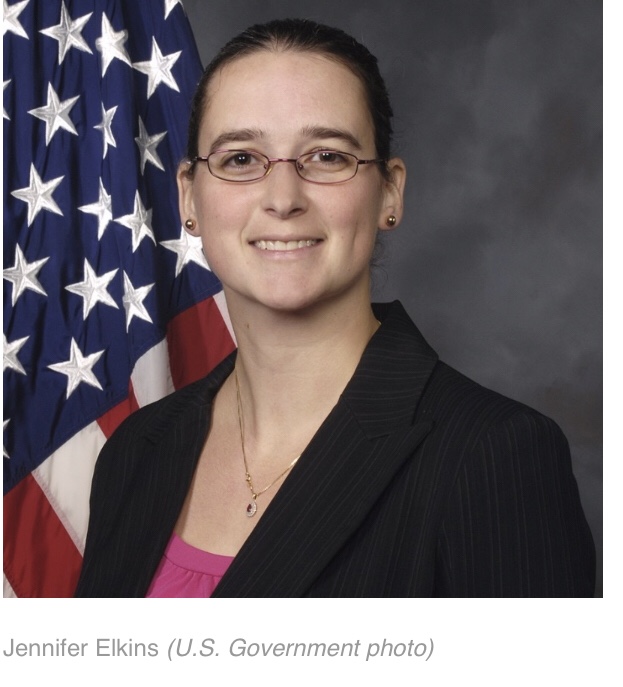
COMMENTARY | NASA’s Jennifer Elkins is an example of how senior civil servants can affect change in large organizations.

We often think about innovations in organizations as being driven either from the top or the bottom — a top leader who inspires or drives change, or young new employees with a fire in their belly. In a Kennedy School executive education program for GS-15s in which I just taught, I got to know a woman who was leading an innovation effort from neither of those positions, but as a non-supervisory procurement analyst at NASA.

Jennifer Elkins came to NASA headquarters two years ago to take charge of a cross-agency Integrated Product Team to promote innovation at all NASA centers. Before an executive education program starts, I always read through the biographies of all the participants, to see what kinds of interests they have and whether there are any common connections (often I know some other folks at their agency). In her bio, Jennifer described herself as working on something called the “acquisition innovation launchpad,” which she described as ”providing avenues for managed risk-taking through the submission, review, prioritization, approval, and measurement of agency testbed efforts submitted by Innovation Champions from across the enterprise.” I immediately told myself I wanted to talk, and after I was done doing my teaching in the program during the first week, I asked her if we could meet after her classes one day were done. We ended up sitting down together for several hours, and it was time well-spent.

Elkins works as a program manager in NASA headquarters. For many years, she worked in Defense Department, with her last job there as Director of Acquisition and Contracts Policy for Missile Defense Agency. Her first exposure to innovation was working as an Army civilian on a contract under the Small Business Innovation Research program, and she got hooked. When the Army got the authority to do “other transactions,” which allowed freedom from many procurement regulations, the senior procurement executive was looking for somebody to work on this for him, and she volunteered. She worked on establishing an Army-wide integrated product team with representatives from a large number of Army installations to work on innovations.

At NASA she successfully competed for a job to coordinate innovation activities at all the NASA centers. Since arriving, she has eliminated stovepiped meetings of the various functionals in her IPT — the way many government IPT’s unfortunately operate — and replaced this with more brainstorming sessions where IPT members talk with each other. She has focused on use of new contract types and new incentive arrangements to improve contractor performance.

One thing that made an impression on me was that she said that her most-important source for innovative ideas was something called the periodic table of acquisition innovations, a document developed through a partnership between ACT-IAC and the Chief Acquisition Officers Council and first published in 2020. The table lists about 20 different innovative techniques, such as reverse industry days and (a long-time favorite of mine) using challenges (also called contests) as a way to bring forth innovations in the procurement system. Wilkins also adopted the emphasis in the periodic table on pre-RFP market research that existing procurement regs call for but has often in reality been a formalistic paper exercise. The same periodic table Jennifer noted also caught the eye of the White House in a procurement innovation update published a few days ago.

Jennifer is an example of someone I’ve repeatedly encountered in dealing with government folks, but which gets little attention — civil servants trying to innovate and make a difference. My hat off to her and those like her.

Article link: https://www.nextgov.com/ideas/2023/11/driving-innovation-middle/391974/

Posts navigation

← Older Entries
Newer Entries →
  • Search site

  • Follow healthcarereimagined on WordPress.com
  • Recent Posts

    • Heeding the pope’s call to ensure AI protects human dignity – MIT Sloan Management 06/01/2026
    • Association between Wealth and Mortality in the United States and Europe – New England Journal of Medicine 05/30/2026
    • U.S. Health Care from a Global Perspective, 2026 – The Commonwealth Fund 05/30/2026
    • Anthropic co-founder Chris Olah’s remarks on Pope Leo XIV’s encyclical “Magnifica humanitas” 05/28/2026
    • Magnifica_Humanitas – Full English 05/26/2026
    • Pope Leo XIV to launch his first encylical, a document on artificial intelligence, with Anthropic’s co-founder – PBS 05/24/2026
    • Quantum Computing is Approaching A Critical “Prove It” Phase 05/22/2026
    • Hidden Prices, Broken Promises: Why Health Care Transparency Is a Matter of Justice – Sanders Institute 05/15/2026
    • The Very Uncertain Future of Arms Control – Bulletin of the Atomic Scientists 05/13/2026
    • Now Available: Expanded and Enhanced International Health Care System Profiles – Commonwealth Fund 05/13/2026
  • Categories

    • Accountable Care Organizations
    • ACOs
    • AHRQ
    • American Board of Internal Medicine
    • Big Data
    • Blue Button
    • Board Certification
    • Cancer Treatment
    • Data Science
    • Digital Services Playbook
    • DoD
    • EHR Interoperability
    • EHR Usability
    • Emergency Medicine
    • FDA
    • FDASIA
    • GAO Reports
    • Genetic Data
    • Genetic Research
    • Genomic Data
    • Global Standards
    • Health Care Costs
    • Health Care Economics
    • Health IT adoption
    • Health Outcomes
    • Healthcare Delivery
    • Healthcare Informatics
    • Healthcare Outcomes
    • Healthcare Security
    • Helathcare Delivery
    • HHS
    • HIPAA
    • ICD-10
    • Innovation
    • Integrated Electronic Health Records
    • IT Acquisition
    • JASONS
    • Lab Report Access
    • Military Health System Reform
    • Mobile Health
    • Mobile Healthcare
    • National Health IT System
    • NSF
    • ONC Reports to Congress
    • Oncology
    • Open Data
    • Patient Centered Medical Home
    • Patient Portals
    • PCMH
    • Precision Medicine
    • Primary Care
    • Public Health
    • Quadruple Aim
    • Quality Measures
    • Rehab Medicine
    • TechFAR Handbook
    • Triple Aim
    • U.S. Air Force Medicine
    • U.S. Army
    • U.S. Army Medicine
    • U.S. Navy Medicine
    • U.S. Surgeon General
    • Uncategorized
    • Value-based Care
    • Veterans Affairs
    • Warrior Transistion Units
    • XPRIZE
  • Archives

    • June 2026 (1)
    • May 2026 (12)
    • April 2026 (4)
    • March 2026 (9)
    • February 2026 (6)
    • January 2026 (8)
    • December 2025 (11)
    • November 2025 (9)
    • October 2025 (10)
    • September 2025 (4)
    • August 2025 (7)
    • July 2025 (2)
    • June 2025 (9)
    • May 2025 (4)
    • April 2025 (11)
    • March 2025 (11)
    • February 2025 (10)
    • January 2025 (12)
    • December 2024 (12)
    • November 2024 (7)
    • October 2024 (5)
    • September 2024 (9)
    • August 2024 (10)
    • July 2024 (13)
    • June 2024 (18)
    • May 2024 (10)
    • April 2024 (19)
    • March 2024 (35)
    • February 2024 (23)
    • January 2024 (16)
    • December 2023 (22)
    • November 2023 (38)
    • October 2023 (24)
    • September 2023 (24)
    • August 2023 (34)
    • July 2023 (33)
    • June 2023 (30)
    • May 2023 (35)
    • April 2023 (30)
    • March 2023 (30)
    • February 2023 (15)
    • January 2023 (17)
    • December 2022 (10)
    • November 2022 (7)
    • October 2022 (22)
    • September 2022 (16)
    • August 2022 (33)
    • July 2022 (28)
    • June 2022 (42)
    • May 2022 (53)
    • April 2022 (35)
    • March 2022 (37)
    • February 2022 (21)
    • January 2022 (28)
    • December 2021 (23)
    • November 2021 (12)
    • October 2021 (10)
    • September 2021 (4)
    • August 2021 (4)
    • July 2021 (4)
    • May 2021 (3)
    • April 2021 (1)
    • March 2021 (2)
    • February 2021 (1)
    • January 2021 (4)
    • December 2020 (7)
    • November 2020 (2)
    • October 2020 (4)
    • September 2020 (7)
    • August 2020 (11)
    • July 2020 (3)
    • June 2020 (5)
    • April 2020 (3)
    • March 2020 (1)
    • February 2020 (1)
    • January 2020 (2)
    • December 2019 (2)
    • November 2019 (1)
    • September 2019 (4)
    • August 2019 (3)
    • July 2019 (5)
    • June 2019 (10)
    • May 2019 (8)
    • April 2019 (6)
    • March 2019 (7)
    • February 2019 (17)
    • January 2019 (14)
    • December 2018 (10)
    • November 2018 (20)
    • October 2018 (14)
    • September 2018 (27)
    • August 2018 (19)
    • July 2018 (16)
    • June 2018 (18)
    • May 2018 (28)
    • April 2018 (3)
    • March 2018 (11)
    • February 2018 (5)
    • January 2018 (10)
    • December 2017 (20)
    • November 2017 (30)
    • October 2017 (33)
    • September 2017 (11)
    • August 2017 (13)
    • July 2017 (9)
    • June 2017 (8)
    • May 2017 (9)
    • April 2017 (4)
    • March 2017 (12)
    • December 2016 (3)
    • September 2016 (4)
    • August 2016 (1)
    • July 2016 (7)
    • June 2016 (7)
    • April 2016 (4)
    • March 2016 (7)
    • February 2016 (1)
    • January 2016 (3)
    • November 2015 (3)
    • October 2015 (2)
    • September 2015 (9)
    • August 2015 (6)
    • June 2015 (5)
    • May 2015 (6)
    • April 2015 (3)
    • March 2015 (16)
    • February 2015 (10)
    • January 2015 (16)
    • December 2014 (9)
    • November 2014 (7)
    • October 2014 (21)
    • September 2014 (8)
    • August 2014 (9)
    • July 2014 (7)
    • June 2014 (5)
    • May 2014 (8)
    • April 2014 (19)
    • March 2014 (8)
    • February 2014 (9)
    • January 2014 (31)
    • December 2013 (23)
    • November 2013 (48)
    • October 2013 (25)
  • Tags

    Business Defense Department Department of Veterans Affairs EHealth EHR Electronic health record Food and Drug Administration Health Health informatics Health Information Exchange Health information technology Health system HIE Hospital IBM Mayo Clinic Medicare Medicine Military Health System Patient Patient portal Patient Protection and Affordable Care Act United States United States Department of Defense United States Department of Veterans Affairs
  • Upcoming Events

Blog at WordPress.com.
healthcarereimagined
Blog at WordPress.com.
  • Subscribe Subscribed
    • healthcarereimagined
    • Join 153 other subscribers
    • Already have a WordPress.com account? Log in now.
    • healthcarereimagined
    • Subscribe Subscribed
    • Sign up
    • Log in
    • Report this content
    • View site in Reader
    • Manage subscriptions
    • Collapse this bar

Loading Comments...