healthcarereimagined

Envisioning healthcare for the 21st century

  • About
  • Economics

Army Restructures Warrior Transition Units – U.S. Dept. of Defense

Posted by timmreardon on 01/09/2014
Posted in: Health Outcomes, Healthcare Delivery, U.S. Army, Warrior Transistion Units. Leave a comment

Article link: http://www.defense.gov/releases/release.aspx?releaseid=16471

The United States Army announced today a restructuring of its warrior transition units (WTUs) as the service prepares for a scheduled withdrawal of troops from Afghanistan and a continued decline in the number of combat wounded.

According to Brig. Gen. David Bishop, commander, Warrior Transition Command and Assistant Surgeon General for Warrior Care and Transition, “These changes will improve the care and transition of soldiers through increased standardization, increased cadre to soldier ratios, improved access to resources on installations, and reduced delays in care.  They are not related to budget cuts, sequestration or furloughs.”
As part of the restructuring, the Army will inactivate five WTUs and establish more than a dozen community care units (CCUs) across 11 installations by September 30, 2014.  The transition to CCUs will result in the inactivation of nine community-based warrior transition units (CBWTUs), which currently provide outpatient care and services for Army Reserve and National Guard soldiers who do not require day-to-day care, allowing soldiers to continue their recovery closer to home.
Warrior transition units are located at major military treatment facilities and provide support to wounded, ill and injured soldiers who require at least six months of rehabilitative care and complex medical management.  Under community care, CBWTU soldiers – those healing at home – will be assigned to CCUs at WTUs located on Army installations.  Soldiers will not have to move or change their care plans.
Thirteen CCUs will stand up at the following Army installations: Fort Carson, Colo.; Joint Base Lewis-McChord, Wash.; Forts Hood and Bliss, Texas; Fort Riley, Kan.; Fort Knox, Ky.; Forts Benning, Stewart, and Gordon, Ga.; Fort Bragg, N.C.; and Fort Belvoir, Va.  Forts Belvoir and Knox will each have two CCUs.  All nine CBWTUs are identified for inactivation:  Alabama, Arkansas, California, Florida, Illinois, Massachusetts, Puerto Rico, Utah and Virginia.  The Puerto Rico CBWTU will become a community care detachment under the mission command of the Fort Gordon Warrior Transition Battalion.
WTUs slated for inactivation include:  Fort Irwin, Calif.; Fort Huachuca, Ariz.; Fort Jackson, S.C.; Joint Base McGuire-Dix-Lakehurst, N.J.; and the United States Military Academy, West Point, N.Y.  Each location has fewer than 38 Soldiers assigned to the WTU (as of Dec. 20, 2013).
Every attempt will be made to allow reserve component (RC) cadre to serve out their tours.  Active duty personnel assigned to units set for inactivation or force structure reductions will be reassigned in accordance with current Army Human Resources Command policies.  Civilian employees impacted by the force structure changes will be reassigned based on their skill sets, the needs of the Army and available employment opportunities.
For additional information, please contact Warrior Transition Command public affairs office at 703-325-0470 or email cynthia.l.vaughan6.civ@mail.mil.

Report finds billions wasted on healthcare – Boston Globe

Posted by timmreardon on 01/09/2014
Posted in: Global Standards, Health Care Costs, Health Care Economics, Health Outcomes, Helathcare Delivery, Integrated Electronic Health Records. Leave a comment

Article link: http://www.bostonglobe.com/business/2014/01/09/billions-dollars-wasted-massachusetts-each-year-unneeded-medical-care-says-policy-group/7Cfbz2dyRFMK5020l1LaaJ/story.html

By Liz Kowalczyk|  GLOBE STAFF

JANUARY 09, 2014

It’s no surprise that money is routinely wasted on unneeded medical care, but for the first time, officials have estimated just how many health care dollars may be squandered in Massachusetts. It could be as much as $27 billion a year.

Between 21 and 39 percent of medical expenditures in the state may be wasteful, according to the state’s newly formed Health Policy Commission. That added up to $14.7 billion to $26.9 billion in 2012. One large chunk of that went toward readmitting hospital patients who could have stayed home if their discharge planning had been better, such as having proper instructions for taking medication.

The commission, which released the report on health care cost trends Wednesday, said hospital readmissions may account for $700 million in unnecessary spending annually. It also blamed emergency room visits that could have been prevented with better primary care and treatment for hospital-acquired infections. Other factors included inappropriate imaging tests for low back pain, and unnecessarily inducing labor early in women, which can increase health problems for infants.

The group arrived at the findings a variety of ways, including using information from previous reports and analyzing new data from the state’s All-Payer Claims Database. That database contains information on all medical claims paid by private insurers and Medicare. The group was able to identify patients with low back pain who got CT scans or MRIs to diagnose the condition, rather than wait a few weeks for the pain to go away, which is usually what happens.

Economists and policy specialists also employed a formula typically used to estimate waste in health care spending nationally, said David Cutler, a Harvard University health economist and commission member. He said it is the first time wasteful spending has been estimated for a smaller geographic region.

In its report, the group pointed out that per-person spending on health care in Massachusetts is the highest in the nation.

Quote Icon

The commission, established by the state’s health care cost control law passed in 2012, is an independent state agency responsible for slowing growth in medical spending, improving access to care, and creating better ways to pay for care.

In its report, the group pointed out that per-person spending on health care in Massachusetts is the highest in the nation and grew far faster than the national average until 2009. After that, increases in both national and state spending slowed.

Lynn Nicholas, president of the Massachusetts Hospital Association, said some of the report’s assertions are misleading. Since 2009, medical-cost growth has slowed more in Massachusetts than nationally, she said.

And the commission based its analysis of hospital readmissions, for example, on 2009 data, and hospitals and other providers have worked hard to become more efficient since then, Nicholas said. “It’s beginning to pay off,’’ she said, and those efforts are not reflected in the data.

The commission also analyzed high-cost patients, providing the first statewide attempt at “hot-spotting’’ — the identification of chronically ill patients who repeatedly visit emergency rooms and are often hospitalized.

It found that 5 percent of patients accounted for nearly half of all medical spending among those covered by Medicare and commercial insurance. Many of these patients also had mental health problems, or were poor. The commission said it hopes the findings will help focus resources as providers and insurers develop programs to improve primary care.

Dr. Ronald Dunlap, president of the Massachusetts Medical Society, said the problem is “we have two different cultures clashing.’’

On the one hand, he said, doctors who work in hospitals push hard to get patients diagnosed and discharged as quickly as possible to keep down costs. But the systems are not yet in place to make sure those patients have appropriate home visits and other follow-up care to keep them on the road to recovery. Doctors and nurses are trying to spend more time talking to and visiting patients to keep them healthy at home, he said, but insurers do not yet routinely pay for this extra work.

“We have already started to change our behavior, but the payment system has not caught up yet,’’ he said.

CPOE has come a long way in 10 years, but there so much more to do – Healthcare IT News

Posted by timmreardon on 01/08/2014
Posted in: Global Standards, Health Care Costs, Health Care Economics, Health Outcomes, Helathcare Delivery, ICD-10, Innovation, Integrated Electronic Health Records, Mobile Healthcare, Quality Measures. Leave a comment
CPOE has come a long way in 10 years, but there so much more to do
CPOE has come a long way in 10 years, but there so much more to do.
Neil Versel, Contributing Writer Neil Versel is a freelance health IT journalist in Chicago. He has been a professional journalist since 1992, focusing on healthcare since 2000.

Systems have come a long way, but there’s still room for innovation

January 7, 2014

Ten years ago, the Center for Information Technology Leadership at Partners HealthCare in Boston published a widely heralded report suggesting that nationwide adoption of ambulatory CPOE, tightly coupled with electronic health records and clinical decision support, could prevent 2 million adverse drug events, 130,000 life-threatening medication errors and 190,000 hospital admissions per year – all while saving $44 billion, largely from avoiding duplication.

“Those were the days when electronic medical records were kind of a gleam in some people’s eyes,” recalled Jan Walker, RN, who served as executive director of the now-defunct CITL at the time the report came out.

Those also were the days when the Leapfrog Group, a Washington-based coalition of large healthcare purchasers, was heavily promoting CPOE adoption as a way to boost patient safety.

Most notably, though, hospitals were treading carefully after Cedars-Sinai Medical Center in Los Angeles turned off its CPOE system in early 2003. Medical staff there rebelled after a house-wide “big bang” rollout, realizing that the poorly planned system increased their workloads and encouraged cutting corners. It took another eight years before Cedars successfully implemented CPOE.

In the past decade, several studies have been published suggesting that CPOE can introduce and even magnify errors without proper safeguards, particularly against physicians suffering from “alert fatigue” turning off notifications.

meaningful use in 2011, even as some remain wary.

A February 2013 paper in the Journal of the American Medical Informatics Association estimated that nearly a third of U.S. acute care hospitals had fully implemented CPOE by 2008.

Leapfrog used to give hospitals credit if they were merely planning on installing CPOE. Now, the technology not only has to be operational, it has to work properly.

In 2008, when Leapfrog began evaluating CPOE systems, 108 hospitals met the organization’s minimum standards. Five years later, 847 reported having functional CPOE and 523 passed the test. That represents about half of all hospitals reporting to the Leapfrog Group, and is up from 292 reporting and 181 passing in 2011.

“It’s a completely new ball game,” said Binder. She said meaningful use, which began in 2011, is the primary driver, even if the Stage 1 CPOE requirement of at least one medication order for 30 percent of patients was so low.

[See also: Brace for CPOE in MU Stage 2] and [CPOE seen as vital to meaningful use]

In Stage 2, the minimum increases to 60 percent of patients for medication orders, 30 percent for lab orders and 30 percent for radiology orders.

Leapfrog’s criteria are more stringent. The organization tests to make sure clinical decision support mechanisms are in place. A hospital has to show that more than 75 percent of medication orders are entered electronically in at least one inpatient unit because Leapfrog members want to emphasize prevention of adverse drug events.

“We have no better measure right now in this country for medication errors,” Binder explained. Medication error is the “No. 1 patient safety problem by far,” she continued. “We use CPOE as a proxy measure.”

From the provider side, CPOE can be a big help – or, as some learned years ago, an untenable burden.

Graham Hughes, MD, chief medical officer of analytics firm SAS, was at GE Healthcare during those heady days of the mid-2000s, and previously designed and developed CPOE systems.

“I’ve lived it and I have the scars,” Hughes quipped.

Today, what Hughes describes as the “PlayStation-Xbox generation” of physicians enter practice wondering why the level of automation has been so poor, said Hughes. “The difficulty with CPOE has been making it part of a physician’s natural workflow,” he suggested.

Longtime medical informatics professional Howard Landa, MD, tried to implement CPOE at Loma Linda University Medical Center in California in 2001, two years before the Cedars debacle. He brought it up on one unit, then took it down shortly thereafter because physicians complained of having to do too much work.

[See also: CPOE remains a challenge for many, surveys show.]

“We weren’t accounting for the workflows,” said Landa, now the chief medical information officer for Alameda County Medical Center in Oakland, Calif.

Landa, vice chairman of the Association of Medical Directors of Information Systems, knows today that there is a balance between facilitating workflow and disrupting it.

“We tried to do too much without understanding the integration of decision support into the workflow,” Landa said of earlier CPOE efforts. “All that does is frustrate.”

He believes CPOE has improved markedly in the last few years after a long period of stagnation. Landa used a Technicon Data Systems CPOE system as an intern at New York University in 1983.

“Between then and the early 2000s, you didn’t see much difference,” he said. There was little in the way of clinical decision support or workflow support for order entry, he said.

“I look at CPOE as a piece of decision support,” said Landa. “Rules and alerts require CPOE.” He added, “It is hard to do meaningful use without an aggressive CPOE program.”

Hughes said that there is kind of a spectrum of alert fatigue. System designers have begun to distinguish between subtle guidance and “you need to act now” kind of guidance.

“There is becoming stratification of alerts,” he said. And context matters. For example, test results often are abnormal in patients in intensive care, so it is almost counterproductive for a CPOE to keep flagging abnormal values in an ICU, he noted.

“I would say were in the second, maybe third generation of CPOE systems, we have a lot more refining to do,” Hughes said. “There’s a huge amount of opportunity for innovation still ahead.”

Topics: Meaningful use, Electronic Health Record (EHR), Quality and Safety, Partners HealthCare, Computerized Physician Order Entry (CPOE), Cedars Sinai, Clinical Decision Support (CDS), Analytics, GE Healthcare, Alert Fatigue

Empowering People to Drive Innovation – IBM

Posted by timmreardon on 01/08/2014
Posted in: Global Standards, Health Care Costs, Health Care Economics, Health Outcomes, Helathcare Delivery, ICD-10, Innovation, Integrated Electronic Health Records, Mobile Healthcare, Quality Measures. Tagged: Innovation. 1 Comment

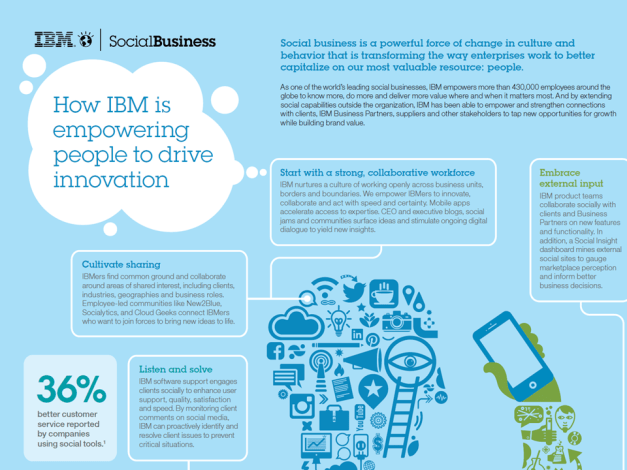
Empowering People to Drive Innovation - IBM

Social business is a powerful force of change in culture and behavior that is transforming the way enterprises work to better capitalize on our most valuable resource: people.

3 tasks that will get you 80 percent of the way to ICD-10 – Medical Practice Insider

Posted by timmreardon on 01/08/2014
Posted in: Global Standards, Health Care Costs, Health Care Economics, Health Outcomes, Helathcare Delivery, ICD-10, Integrated Electronic Health Records, Mobile Healthcare, Quality Measures. Leave a comment
January 08, 2014  | Tom Sullivan – Executive Editor, HIMSS Media
Article link: http://www.medicalpracticeinsider.com/best-practices/3-tasks-will-get-you-80-percent-way-icd-10

Fast track. That’s what it’s going to take to get your practice both into compliance and in shape to take advantage of ICD-10’s reimbursement benefits.

KPMG’s target is that by the summer of 2014, both providers and payers need to be testing for the go-live in October, according to Wayne Cafran, KPMG’s advisory principal for healthcare and life sciences.

But as of now, the consultancy found in research published on Jan. 8, many healthcare entities are lagging behind that timeline in terms of budgeting, testing, training and bracing for the permanent productivity losses that ICD-10 is expected to bring.

All that despite the finding that 73 percent of respondents fully anticipate moderate to severe revenue cycle impacts, coming largely in denials management and claims preparations and edits.

Where it gets worse is the general consensus that large health organizations tend to be further along than medium and smaller medical groups, an assertion several consultants and recognized experts have made to Medical Practice Insider through the last few months.

“The larger systems have indeed started earlier,” Cafran explained. “The mandate, of course applies to all payers and providers equally.”

Medical practices can catch up if they do these three things right:

1. Clinical documentation implementation programs, or CDI, is an area of increasing importance. By starting to focus on CDI requirements today, in fact, healthcare organizations can do more than merely comply with ICD-10; instead they can even optimize reimbursement. But KPMG found that the top CDI challenges are educating staff and understanding documentation complexities and nuances, neither of which can feasibly be ironed out overnight. And while 34 percent of those surveyed indicated they have implemented enhanced CDI strategies for ICD-10, 48 percent remain unsure if they have or will.

2. Recruitment, training and retention of coders. These professionals must quickly get up to speed on the new codes. “From a provider perspective, it’s not just the coders who have to be properly trained but physicians as well to prevent disruptions when ICD-10 is implemented.” Cafran said. And when it comes to those permanent productivity losses, 45 percent have not even calculated that impact, and among the ones who have, 22 percent expect a dip of 11-20 percent.

3. Ensure IT systems are ready to interface for data quality. Easier said that done. More than systems remediation for the 7-digit codes, this will tie back into internal and external testing of which 42 percent of respondents are currently doing so, 24 percent are not but plan to, while the remaining 34 percent are unsure when or if that will happen. When it comes to end-to-end testing, only 33 percent are conducting that today, 28 percent plan to, 36 percent are unsure. And 3 percent indicated that they do not plan to engage in end-to-end testing at all.

Cafran added that if medical practices can manage to correctly perform those 3 pieces of the ICD-10 transition they will be approximately 80 percent of the way there.

“If you have not started your implementation plan, is it impossible to get ready at this time?” Cafran asked rhetorically. “It’s not impossible but you need a quality assessment and a flawless execution of your implementation strategy — and that needs to happen now.”

Related articles:

Was 2013 the year ICD-10 stood still?

Tips for early ICD-10 readiness

ICD-10 is imminent: Are you ready?

Senators press for EHR interoperability – Healthcare IT News

Posted by timmreardon on 01/07/2014
Posted in: Global Standards, Health Care Costs, Health Care Economics, Health Outcomes, Helathcare Delivery, Integrated Electronic Health Records, Mobile Healthcare, Quality Measures. Leave a comment
Senator John Thune
Senator John Thune

House and Senate bills also revisit the HITECH Act

WASHINGTON | January 6, 2014

Anthony Brino, Editor, HIEWatch
Anthony Brino is the editor of HIEWatch and associate editor for Healthcare Payer News and Government Health IT, covering a range of issues affecting the healthcare payer and government markets.

With Congress working on a long-term Medicare “SGR fix” in the recent short-term budget deal, lawmakers laid down seeds for addressing issues such as value-based reimbursement and EHR interoperability.

The House and Senate bills also revisit the HITECH Act. Senators John Thune and Mike Enzi, Republicans from South Dakota and Wyoming, added an amendment requiring “interoperability to be achieved by 2017 to be meaningful user under the Electronic Health Record Meaningful Use program,” with rules established via federal committee under the direction of the HHS Office of the National Coordinator.

Senator John Cornyn, a Republican from Texas, added a more specific and different amendment, directing HHS to adopt a common interoperability standard by 2017, as part of the rules for Meaningful Use Stage 3.

See also: [Stage set for big interoperability push.]

Members of the House Energy and Commerce Committee added similar provisions to their version of the SGR bill and also issued a report outlining their visions for health information technology, pointing out the connections between interoperability and quality and cost improvements.

Senator Mike Enzi“While technology has begun to change the way doctors provide care and patients engage in their health, we must recognize that these technologies will be unable to truly transform our health system unless they can easily locate and exchange health information,” the members wrote. “For this effort to be successful, however, more must be done to bolster interoperability. The Administration, acting through the Office of the National Coordinator for Health IT, must provide appropriate guidance to providers and to industry on its vision for interoperability and work to engage all stakeholders in adoption of those systems.”

The committee suggested that HHS adopt interoperability standards that “allow every healthcare provider to access and use longitudinal data on the patients they treat to make evidence-based decisions, coordinate care, and improve health outcomes as quickly as possible.”

With many payment reforms riding on information exchange, interoperability by 2018 “is reasonable,” they said, and “should be the highest priority for ONC in order to enable healthcare providers to measure, report, track, and perform on the quality measures and payment updates required by this legislation.”

[See also: Chasing the tail of interoperability.]

The timelines proposed for meaningful use fit within similar requirements Congress set for VA and DoD military health interoperability in the Defense Authorization Act, which even withholds some project funds until the agencies offer a plan for intergrated or interoperable systems.

The House and Senate attached riders to the budget, offering a three-month delay of the dreaded Medicare sustainable growth rate payment adjustment widely expected to be signed by President Obama.

The measure is billed as a bridge to more permanent solutions, if Congress and the President can find a compromise on certain matters this spring. With a 0.5 percent payment update instead of a 24 percent cut scheduled under the SGR, it give physicians a reprieve and time to build support for new ideas.

Among the amendments tacked onto the Senate bill are provisions for new integrated mental and behavioral health demonstrations, an increase in medical residency slots, and a mechanism for HHS to set aside funds for a stop-loss program to support hospitals seeing declines from the disproportionate share hospital program.

Topics: Meaningful use, Electronic Health Record (EHR), Health Information Exchange (HIE), Medicare, Health Information Technology for Economic and Clinical Health (HITECH) Act, Department of Health & Human Services (HHS), Interoperability, The Office of the National Coordinator for Health Information Technology (ONC), Department of Defense (DoD), President Barack Obama

Why We Don’t Trust Technology Companies – Scientific American

Posted by timmreardon on 01/07/2014
Posted in: Global Standards, Health Care Costs, Health Care Economics, Health Outcomes, Helathcare Delivery, Integrated Electronic Health Records, Mobile Healthcare, Quality Measures. Leave a comment

Tech companies promise the world, but how do we know that we’re not the ones being sold out?

By David Pogue

Last October, T-Mobile made an astonishing announcement: from now on, when you travel internationally with a T-Mobile phone, you get free unlimited text messages and Internet use. Phone calls to any country are 20 cents a minute.

T-Mobile’s plan changes everything. It ends the age of putting your phone in airplane mode overseas, terrified by tales of $6,000 overage charges. I figured my readers would be jubilant. But a surprising number had a very different reaction. “Why should I believe them?” they wrote. “Cell carriers have lied to us for years.”

That’s not the first time that promises from a tech company have been greeted not with joy but with skepticism. When Apple introduced a fingerprint scanner into the Home button of the iPhone 5S, you might have expected the public’s reaction to be, “Wow, that’s much faster than having to type in a password 50 times a day!” But instead a common reaction was: “Oh, great. So now Apple can give my fingerprints to the NSA.”

Really? That’s your reaction to the first cell phone with a finger scanner that actually works?

And it’s not so unreasonable.

Technology used to be admired in America. We marveled at the first radio, the laptop computer, the flat TV. Tech companies were our blue-chip companies. An IBM man was a good catch—respected, impressive. We were proud of our technological prowess and of the companies that were at the forefront.

Today it’s not so simple. Our tech companies have a trust problem.

Over the years they’ve brought it on themselves. Google tested privacy tolerance when it introduced Gmail—with ads relating to the content of your messages. (It doesn’t seem to matter that software algorithms, not people, scan your mail.)

Then a team of researchers discovered that when you synced your iPhone, your computer downloaded a log of your geographical movements, in a form accessible with simple commands. (Apple quickly revised its software.) When Barnes & Noble understated the weight of its Nook e-reader in 2010 or overstated the resolution of the Nook in 2011, suddenly even product specs could no longer be trusted.

Next came news about the National Security Agency and its collection of e-mail correspondence, chat transcripts and other data from Microsoft, Google, Facebook, Apple and others. Those companies admit to complying with the occasional warrant for individuals’ data, but they strenuously deny providing the nsa with bigger sets of data. Do you think that makes the news any easier to take?

Of course not. We’re human. We look for patterns. Each new headline further shakes our trust in the whole system.

These days tech companies make efforts to respect, or at least to humor, the public’s alarm. In the latest iPhone software, for example, Apple has provided an almost hilariously complete set of on/off switches, one for every app that might want access to your location information.

But it may be too late for that. These companies’ products are impossibly complex. There’s no way for an individual to verify that software does exactly what we think it does. How do we know those iOS 7 switches do anything at all?

Every time a company slips up, we can only assume that it is just the tip of the iceberg. It may take years for these companies to regain our trust.

But this “I don’t trust them anymore” thing sounds distinctly familiar. And it isn’t specific to tech companies. At one time or another, haven’t we also learned not to trust our government? Our police? Our hospitals? Our newspapers? Our medicines? And, goodness knows, our phone companies?

It’s too bad. Mistrust means a life of wariness. It means constant psychic energy, insecurity, less happiness. And then, when we finally get what should be terrific news from a tech company, we’re deprived of that little burst of unalloyed pleasure.

This article was originally published with the title In Tech We Don’t Trust.

ABOUT THE AUTHOR(S)

David Pogue is the anchor columnist for Yahoo Tech and host of several NOVA miniseries on PBS.

Sensmeier on integration and interoperability – Healthcare IT News

Posted by timmreardon on 01/03/2014
Posted in: Global Standards, Health Care Costs, Health Care Economics, Health Outcomes, Helathcare Delivery, Integrated Electronic Health Records. Leave a comment
The Interoperability Showcase made its debut at HIMSS06 and has been growing in size, popularity and capability ever since.Article link:http://www.healthcareitnews.com/news/sensmeier-integration-and-interoperability?single-page=true

March 13, 2012From the March 2012 print issue

Bernie Monegain, Editor
Bernie Monegain is the Editor of Healthcare IT News. Bernie covers hospitals and IDNs, industry trends and is responsible for overall coverage decisions.
The umbrella of informatics is fairly broad. Really it’s applying technology to a particular area. So, in this case, it’s applying it to healthcare. It’s analyzing what components of technology are necessary to improve things. As you apply it to interoperability, for example, it’s taking a look at the components that you need to allow systems to communicate. I see my role as nursing informatics, but in interoperability and IHE (Integrating the Healthcare Enterprise), it takes it more broadly beyond nursing.

The umbrella of informatics is fairly broad. Really it’s applying technology to a particular area. So, in this case, it’s applying it to healthcare. It’s analyzing what components of technology are necessary to improve things. As you apply it to interoperability, for example, it’s taking a look at the components that you need to allow systems to communicate. I see my role as nursing informatics, but in interoperability and IHE (Integrating the Healthcare Enterprise), it takes it more broadly beyond nursing.

Every couple of years we do a survey of our nursing community at HIMSS. For a number of years, their response to the question: ‘What is the biggest barrier that you see to being able to do your job well?’ their response has been typically finance – getting enough resources to do their job as they would like to do it.

The last time we did that survey in 2011, the response was lack of interoperability. I found it extremely interesting that now nurses in the informatics role understand that for the systems to really give the nurses information that they need, they need to be interoperable.

At the point of care, the nurse would really want to have information about that patient regardless of care setting. So if a patient came from a nursing home or a long-term care site to have that information pulled forward. If they came up from the emergency room rather than have to get on the phone and wait for that face-to-face or phone dialogue about the patient, that information should be available through the system.

That’s giving a simple example within a hospital environment. The whole idea is it’s critical to have all of the data that you need to give effective patient care. Nurses understand that.

The other thing I believe that’s happening with mobile healthcare and with mobile devices being connected with the systems, there are even more places of disparate data where, for example, vital signs, are being captured on machines – and that should flow clearly and safely into the electronic health record. To do that we have to have interoperability solved to have nurses be able to take advantage of that. So I’m kind of intertwining my nursing background with giving a case for why interoperability is important.

We’ve been working on IHE for about 11 years. We have developed a very comprehensive technical framework that describes how standards should be implemented in electronic health record systems so that they can communicate from a Cerner system to a Siemens system to an Epic system, etc. Every year we have a Connectathon where we host the testing of that work. Vendors can come and bring their systems and do the testing to see that first of all they’re complying with IHE specifications, but secondly that they’re able to have information flow from system to system.

What’s been interesting is that the Connectathon now is being used for other purposes including the vendors working with each other to resolve problems before they go to a customer site. Another use this year was that the health information exchanges came and were beginning to test with each other to see how the information was pulling in. They were using IHE specifications to make that health information exchange be realized. So they were using the Connectathon to test that out. That’s been a very important product that we have built as a result of our IHE effort.

The last piece of that is what we see at the HIMSS conference and that is the Interoperability Showcase. That has grown hugely. We have a very large component of that that shows the Office of the National Coordinator and the different projects that they have funded and now are beginning to realize interoperability as well across the federal agencies. The vendors are participating in IHE and using real world cases.

Both of those events – the Connectathon and the Interopeability Showcase at HIMSS have grown exponentially. We had nearly 500 systems engineers at the Connectathon and about 140 vendor systems there that were being tested.

Then at the Interoperability Showcase, I think it’s about 80 vendors participating in that this year. So, these are two examples of efforts that HIMSS has invested in that I try to help lead and influence. Multiple individuals and companies and organizations and government agencies participate to move this big snowball up the hill.

The Connectathon has been going for 11 years. The Showcase has been since 2006, and that was really my project, initially, sort of my brainchild, so to speak. But, it has grown way beyond my initial thoughts. It was originally more focused on IHE’s – vendors that were implementing IHE and then it grew to incorporate all standards-based health information exchange – primarily IHE, but not exclusively anymore.

Topics: Interoperability, Integrating the Healthcare Enterprise (IHE), Electronic Health Record (EHR), Cerner, Epic, Health Information Exchange (HIE), Healthcare Information and Management Systems Society (HIMSS)

Stage set for big interoperability push – Healthcare IT News

Posted by timmreardon on 01/03/2014
Posted in: Global Standards, Health Care Costs, Health Care Economics, Health Outcomes, Helathcare Delivery, Integrated Electronic Health Records. Leave a comment
The IHE North America Connectathon continues its work toward interoperability
Article Link: http://www.healthcareitnews.com/news/author/68
The IHE North America Connectathon continues its work toward interoperability.

Organizers add Connectathon Conference Jan. 29 to the annual IHE Connectathon event in Chicago

CHICAGO | January 3, 2014

The push for meaningful use Stage 3 has reached a point where a confluence of power structures are ready for more breakthroughs – hence, the impetus for collaboration among IHE USA, ONC and S&I Framework, officials from these groups say.
Closer ties between Integrating the Healthcare Enterprise USA, the Office of the National Coordinator for Health IT and Standards and the ONC’s Interoperability Framework is necessary for interoperability to reach meaningful use Stage 3, said Joyce Sensmeier, IHE USA president and HIMSS vice president of informatics.
Joyce Sensmeier“There is an increasing need for interoperability capability to achieve meaningful use Stage 3 goals,” she said. “We really need all groups working in the same direction — HIE, HL7 and Health Story Project all working toward similar goals and leveraging for the same purpose. The leadership of the ONC and S&I Framework became more involved and brought new proposals to consider for help with Stage 3. It’s for the good of everybody.”

[See also: Sensmeier on integration and interoperability.]
Participants in the IHE North America Connectathon Jan. 27-31 and the Connectathon Conference on Jan. 29, in Chicago will learn more about how the collaboration will work and what roles each organization will play.

Conference keynote speaker Doug Fridsma, MD, will outline the ONC’s interoperability strategy and highlight the work being done to develop and harmonize standards. In his role as chief science officer and director for the ONC Office of Science and Technology, Fridsma oversees several efforts to streamline health information exchange and interoperability.

[See also: Connectathon is where rubber meets road.]

The S&I Framework within the ONC came about to collect input from the public and private sectors to create harmonized health IT specifications for use throughout the U.S. The program represents “a unique approach to developing and evolving a transparent model of health information exchange” an ONC statement reads, and “operates on the belief that many of the critical elements for health IT interoperability success already exist.”
For IHE USA, the collaboration “definitely means some changes,” Sensmeier said. “We will be rolling out a membership program to get more individuals involved with new committees; we will get more involved in the technical focus committees to develop work that is U.S.-centric. We are taking that proposal to the board to identify what committees we need and how to move forward.”
Integral to the collaboration is the New DDoug Fridsmairections program debut at the Connectathon as well as at the Interoperability Showcase during HIMSS14, Feb. 23-27 in Orlando, Fla.
“New Directions has four S&I initiatives involved, with Health Story Project, Continua’s Plugfest, ONC’s S&I Framework and Health eDecisions in the mix,” said Alexander Lippitt Jr., HIMSS senior director of standards and interoperability. “We’re working with [the National Institute of Standards and Technology] on virtual testing and we have some cool scenarios for the Interoperability Showcase vignettes, such as Health Story focusing on heavy ambulatory cases.”
The New Directions component also gives the Connectathon a process “to test things that aren’t fully published profiles yet,” Sensemeier said. “Allowing testing to come about before final profiles is part of laying the path forward and is a benefit to everyone. Are we heading down the right path? We may have to fine tune some things, but people can clearly see where things are headed – just not what is fully baked and ready for primetime.”
Sensemeier and representatives of the partnering groups are working to promote the new collaboration, leveraging resources of HIMSS, the Radiological Society of North America and Electronic Health Records Association.
“It shows the commitment of everyone involved and we’re all working together to meet the needs of the industry,” she said.

John Andrews, Contributing Writer
John Andrews is an independent freelance writer from Des Plaines, Ill. A professional journalist for more than 30 years, he has written exclusively for the healthcare industry since 1990 and has appeared in dozens of trade publications during his career.

[See also: Swan song for Connectathon in Windy City.]

Topics: Meaningful use, Electronic Health Record (EHR), Health Information Exchange (HIE), The Office of the National Coordinator for Health Information Technology (ONC), Integrating the Healthcare Enterprise (IHE), Interoperability, Healthcare Information and Management Systems Society (HIMSS), Health Level 7 International (HL7)

This market will not take off until we can scale.”

Posted by timmreardon on 01/03/2014
Posted in: Global Standards, Health Care Costs, Health Care Economics, Health Outcomes, Helathcare Delivery, Integrated Electronic Health Records, Mobile Healthcare, Quality Measures. Leave a comment
“This market will not take off until we can scale,” was Clint McClellan’s opening assertion

The Dec. 10 session at the mHealth Summit was titled: M2M Now Money Talks mHealth.

McClellan, senior director of business development at Qualcomm Life and president and chairman of the board at standards and interface developer Continua Health Alliance, figures the mHealth market needs both scale and money. Standards play a big role in being able to scale.

Someone else had titled McClellan’s slide deck: “Is mHealth in the waiting room.” Had McClellan done it himself, he would have chosen another title.

“Is mHealth in the waiting room? It should never be in the waiting room,” he said. “The idea is to keep people at home. Our role is to keep you outside the hospital, keep them healthy, help them recover quickly and then learn to manage their health with these tools.”

“When you’re in the hospital, as Dr. Topol likes to say (Eric Topol, MD), it’s the most expensive hotel room in the country.”

[See also: mHealth brings, ‘Can you heal me now?’.]

McClellan advocates for an OnStar-like program that provides as much critical information about health as OnStar does about cars. It turns out, it’s not the ability to find a good restaurant while out and about that drivers desire, McClellan asserted; it’s detailed data on their cars – performance, tire size and wear, oil levels.

“I heard the word ‘super app’ mentioned earlier. It’s really super correlation,” he said. “It’s taking all this data and correlating it and giving us feedback. The idea again is to keep people at home.”

When the panel moderator asked Reid Oakes of Oracle whether the outlook for mHealth was good, or perhaps stalled, Oakes said: “I think we’re at a great point in terms of systems – lots of siloed kinds of environments out there.”

The challenge he’s heard from the industry from talking with people, he said, was what to do with the data, where does it go, how does it actually effect change?

“I think we’re waiting on the next wave of super app,” Oakes said. People in the industry say they need something more disruptive, he added, in order to make the leap to take it to the consumer – to broader adoption.

[See also: mHealth to see big growth, barriers.]

The moderator turned to the only healthcare provider on the panel: Paul Frisch, chief of biomedical physics and engineering at Memorial Sloan-Kettering Cancer Center.

Responding to: “Is there a there?” Frisch said, “I think the type of things people look for are very diverse. Some work is going on in parallel,” he added,
“and the results often become diluted over time. There are more sensors, more data than ever before, but often there’s a trend to use new technologies and new data shoved into old processes, and it takes time to learn how to use that better.

“So that in itself is a stumbling block.”

The Dec. 10 session at the mHealth Summit was titled: M2M Now Money Talks mHealth.

McClellan, senior director of business development at Qualcomm Life and president and chairman of the board at standards and interface developer Continua Health Alliance, figures the mHealth market needs both scale and money. Standards play a big role in being able to scale.

Someone else had titled McClellan’s slide deck: “Is mHealth in the waiting room.” Had McClellan done it himself, he would have chosen another title.

“Is mHealth in the waiting room? It should never be in the waiting room,” he said. “The idea is to keep people at home. Our role is to keep you outside the hospital, keep them healthy, help them recover quickly and then learn to manage their health with these tools.”

“When you’re in the hospital, as Dr. Topol likes to say (Eric Topol, MD), it’s the most expensive hotel room in the country.”

[See also: mHealth brings, ‘Can you heal me now?’.]

McClellan advocates for an OnStar-like program that provides as much critical information about health as OnStar does about cars. It turns out, it’s not the ability to find a good restaurant while out and about that drivers desire, McClellan asserted; it’s detailed data on their cars – performance, tire size and wear, oil levels.

“I heard the word ‘super app’ mentioned earlier. It’s really super correlation,” he said. “It’s taking all this data and correlating it and giving us feedback. The idea again is to keep people at home.”

When the panel moderator asked Reid Oakes of Oracle whether the outlook for mHealth was good, or perhaps stalled, Oakes said: “I think we’re at a great point in terms of systems – lots of siloed kinds of environments out there.”

The challenge he’s heard from the industry from talking with people, he said, was what to do with the data, where does it go, how does it actually effect change?

“I think we’re waiting on the next wave of super app,” Oakes said. People in the industry say they need something more disruptive, he added, in order to make the leap to take it to the consumer – to broader adoption.

[See also: mHealth to see big growth, barriers.]

The moderator turned to the only healthcare provider on the panel: Paul Frisch, chief of biomedical physics and engineering at Memorial Sloan-Kettering Cancer Center.

Responding to: “Is there a there?” Frisch said, “I think the type of things people look for are very diverse. Some work is going on in parallel,” he added,
“and the results often become diluted over time. There are more sensors, more data than ever before, but often there’s a trend to use new technologies and new data shoved into old processes, and it takes time to learn how to use that better.

“So that in itself is a stumbling block.”

Posts navigation

← Older Entries
Newer Entries →
  • Search site

  • Follow healthcarereimagined on WordPress.com
  • Recent Posts

    • The Global Healthcare System Is Broken. Japan Fixed It for $4,100 Per Person. 04/10/2026
    • When Not to Use AI – MIT Sloan 04/01/2026
    • There are more AI health tools than ever—but how well do they work? – MIT Technology Review 03/30/2026
    • Are AI Tools Ready to Answer Patients’ Questions About Their Medical Care? – JAMA 03/27/2026
    • How AI use in scholarly publishing threatens research integrity, lessens trust, and invites misinformation – Bulletin of the Atomic Scientists 03/25/2026
    • VA Prepares April Relaunch of EHR Program – GovCIO 03/19/2026
    • Strong call for universal healthcare from Pope Leo today – FAN 03/18/2026
    • EHR fragmentation offers an opportunity to enhance care coordination and experience 03/16/2026
    • When AI Governance Fails 03/15/2026
    • Introduction: Disinformation as a multiplier of existential threat – Bulletin of the Atomic Scientists 03/12/2026
  • Categories

    • Accountable Care Organizations
    • ACOs
    • AHRQ
    • American Board of Internal Medicine
    • Big Data
    • Blue Button
    • Board Certification
    • Cancer Treatment
    • Data Science
    • Digital Services Playbook
    • DoD
    • EHR Interoperability
    • EHR Usability
    • Emergency Medicine
    • FDA
    • FDASIA
    • GAO Reports
    • Genetic Data
    • Genetic Research
    • Genomic Data
    • Global Standards
    • Health Care Costs
    • Health Care Economics
    • Health IT adoption
    • Health Outcomes
    • Healthcare Delivery
    • Healthcare Informatics
    • Healthcare Outcomes
    • Healthcare Security
    • Helathcare Delivery
    • HHS
    • HIPAA
    • ICD-10
    • Innovation
    • Integrated Electronic Health Records
    • IT Acquisition
    • JASONS
    • Lab Report Access
    • Military Health System Reform
    • Mobile Health
    • Mobile Healthcare
    • National Health IT System
    • NSF
    • ONC Reports to Congress
    • Oncology
    • Open Data
    • Patient Centered Medical Home
    • Patient Portals
    • PCMH
    • Precision Medicine
    • Primary Care
    • Public Health
    • Quadruple Aim
    • Quality Measures
    • Rehab Medicine
    • TechFAR Handbook
    • Triple Aim
    • U.S. Air Force Medicine
    • U.S. Army
    • U.S. Army Medicine
    • U.S. Navy Medicine
    • U.S. Surgeon General
    • Uncategorized
    • Value-based Care
    • Veterans Affairs
    • Warrior Transistion Units
    • XPRIZE
  • Archives

    • April 2026 (2)
    • March 2026 (9)
    • February 2026 (6)
    • January 2026 (8)
    • December 2025 (11)
    • November 2025 (9)
    • October 2025 (10)
    • September 2025 (4)
    • August 2025 (7)
    • July 2025 (2)
    • June 2025 (9)
    • May 2025 (4)
    • April 2025 (11)
    • March 2025 (11)
    • February 2025 (10)
    • January 2025 (12)
    • December 2024 (12)
    • November 2024 (7)
    • October 2024 (5)
    • September 2024 (9)
    • August 2024 (10)
    • July 2024 (13)
    • June 2024 (18)
    • May 2024 (10)
    • April 2024 (19)
    • March 2024 (35)
    • February 2024 (23)
    • January 2024 (16)
    • December 2023 (22)
    • November 2023 (38)
    • October 2023 (24)
    • September 2023 (24)
    • August 2023 (34)
    • July 2023 (33)
    • June 2023 (30)
    • May 2023 (35)
    • April 2023 (30)
    • March 2023 (30)
    • February 2023 (15)
    • January 2023 (17)
    • December 2022 (10)
    • November 2022 (7)
    • October 2022 (22)
    • September 2022 (16)
    • August 2022 (33)
    • July 2022 (28)
    • June 2022 (42)
    • May 2022 (53)
    • April 2022 (35)
    • March 2022 (37)
    • February 2022 (21)
    • January 2022 (28)
    • December 2021 (23)
    • November 2021 (12)
    • October 2021 (10)
    • September 2021 (4)
    • August 2021 (4)
    • July 2021 (4)
    • May 2021 (3)
    • April 2021 (1)
    • March 2021 (2)
    • February 2021 (1)
    • January 2021 (4)
    • December 2020 (7)
    • November 2020 (2)
    • October 2020 (4)
    • September 2020 (7)
    • August 2020 (11)
    • July 2020 (3)
    • June 2020 (5)
    • April 2020 (3)
    • March 2020 (1)
    • February 2020 (1)
    • January 2020 (2)
    • December 2019 (2)
    • November 2019 (1)
    • September 2019 (4)
    • August 2019 (3)
    • July 2019 (5)
    • June 2019 (10)
    • May 2019 (8)
    • April 2019 (6)
    • March 2019 (7)
    • February 2019 (17)
    • January 2019 (14)
    • December 2018 (10)
    • November 2018 (20)
    • October 2018 (14)
    • September 2018 (27)
    • August 2018 (19)
    • July 2018 (16)
    • June 2018 (18)
    • May 2018 (28)
    • April 2018 (3)
    • March 2018 (11)
    • February 2018 (5)
    • January 2018 (10)
    • December 2017 (20)
    • November 2017 (30)
    • October 2017 (33)
    • September 2017 (11)
    • August 2017 (13)
    • July 2017 (9)
    • June 2017 (8)
    • May 2017 (9)
    • April 2017 (4)
    • March 2017 (12)
    • December 2016 (3)
    • September 2016 (4)
    • August 2016 (1)
    • July 2016 (7)
    • June 2016 (7)
    • April 2016 (4)
    • March 2016 (7)
    • February 2016 (1)
    • January 2016 (3)
    • November 2015 (3)
    • October 2015 (2)
    • September 2015 (9)
    • August 2015 (6)
    • June 2015 (5)
    • May 2015 (6)
    • April 2015 (3)
    • March 2015 (16)
    • February 2015 (10)
    • January 2015 (16)
    • December 2014 (9)
    • November 2014 (7)
    • October 2014 (21)
    • September 2014 (8)
    • August 2014 (9)
    • July 2014 (7)
    • June 2014 (5)
    • May 2014 (8)
    • April 2014 (19)
    • March 2014 (8)
    • February 2014 (9)
    • January 2014 (31)
    • December 2013 (23)
    • November 2013 (48)
    • October 2013 (25)
  • Tags

    Business Defense Department Department of Veterans Affairs EHealth EHR Electronic health record Food and Drug Administration Health Health informatics Health Information Exchange Health information technology Health system HIE Hospital IBM Mayo Clinic Medicare Medicine Military Health System Patient Patient portal Patient Protection and Affordable Care Act United States United States Department of Defense United States Department of Veterans Affairs
  • Upcoming Events

Blog at WordPress.com.
healthcarereimagined
Blog at WordPress.com.
  • Subscribe Subscribed
    • healthcarereimagined
    • Join 153 other subscribers
    • Already have a WordPress.com account? Log in now.
    • healthcarereimagined
    • Subscribe Subscribed
    • Sign up
    • Log in
    • Report this content
    • View site in Reader
    • Manage subscriptions
    • Collapse this bar
 

Loading Comments...