healthcarereimagined

Envisioning healthcare for the 21st century

  • About
  • Economics

House panel tells VA officials to appear next week or face subpoenas – Stars & Stripes

Posted by timmreardon on 05/22/2014
Posted in: Uncategorized. Leave a comment

By Travis Tritten

Stars and Stripes
Published: May 22, 2014

Article link: http://www.stripes.com/news/veterans/house-panel-tells-va-officials-to-appear-next-week-or-face-subpoenas-1.284602#.U34Upp4_JpU.twitter

WASHINGTON — House lawmakers on Thursday told Department of Veterans Affairs executives to appear May 28 on Capitol Hill or face subpoenas, saying the department has failed for weeks to fully comply with an inquiry into falsified documents and dozens of veteran deaths at a Phoenix hospital.

On Wednesday evening, VA executives were told to appear Thursday morning at a House Veterans Affairs Committee meeting to explain why requested documents have not been supplied, but told frustrated lawmakers they could not attend.

Rep. Jeff Miller, R-Fla., chairman of the Veterans Affairs Committee, said members would issue subpoenas if the VA does not provide testimony next week by the deputy undersecretary for health and clinical operations, assistant secretary for congressional affairs, and a congressional relations officer.

A whistleblower has alleged a Phoenix VA hospital had an off-the-books waiting list that might have led to 40 patient deaths, and similar reports have surfaced in at least 10 other states.

Miller said the VA has not been forthcoming despite a May 8 subpoena of 27 employees for documents related to the Phoenix allegations and an early admission that a secret waiting list was kept to conceal long wait times.

“It is not very hard in this day and age to give us the info we are asking for … search through the emails,” he said.

Still, the department provided 201 emails in a “rolling block” of info and another 3,000 documents in the early morning hours before the Thursday committee hearing, Miller said.

That has not been good enough for committee members.

“It is unbelievable to me that you could not get those emails done in a few hours,” Rep. David Roe, R-Tenn., said. “We are loosing the trust of our veterans … we are about to blow it up right here on Memorial Day weekend.”

The House push comes after calls from members of Congress and veterans’ groups for Shinseki to resign.

Yesterday, amid the growing pressure, President Barack Obama called the embattled secretary to the White House for a meeting with deputy chief of staff Rob Nabors, who has been called in to help oversee a department review following the scandal.

And, late Wednesday, the House overwhelming passed a bill designed to put more pressure on VA management by giving VA Secretary Eric Shinseki wider power to fire and demote senior executives in the wake of the agency’s nationwide scandal over patient wait times and related deaths at its facilities.

Obama, who has also drawn fire from congressional Republicans for his handling of the VA, pledged to support Shinseki while the VA inspector general conducts an investigation that is due in August.

tritten.travis@stripes.com
Twitter: @Travis_Tritten

Senators point to 50 studies on VA problems; Shinseki urges more patience – Stars & Stripes

Posted by timmreardon on 05/16/2014
Posted in: Blue Button, DoD, Global Standards, Health Care Costs, Health Care Economics, Health IT adoption, Health Outcomes, Healthcare Informatics, Healthcare Security, Helathcare Delivery, Innovation, Integrated Electronic Health Records, Military Health System Reform, National Health IT System, Patient Centered Medical Home, Quadruple Aim, Quality Measures, Uncategorized, Veterans Affairs, Warrior Transistion Units. Leave a comment

shinseki

Veterans Affairs Secretary Eric. K. Shinseki speaks at a conference in Washington on Nov. 19, 2009. Shinseki on Friday, May 9, 2014, placed a VA nurse on leave for an email that contained directions on how to game the system.
Michael J. Carden/U.S. Army

WASHINGTON — Senators grilled embattled Veterans Affairs Secretary Eric Shinseki Thursday, saying about 50 federal reports in recent years warned of problems long before a scheduling scandal involving veteran deaths exploded last month.

Shinseki said he is “mad as hell” that employees may have falsified records on VA wait times and urged patience from Capitol Hill lawmakers as his agency investigates allegations. But he told lawmakers he has no intention of resigning.

The retired four-star general’s job appears under threat as the Department of Veterans Affairs is rocked by reports of wrongdoing in at least 10 states. In Arizona, allegations surfaced in late April that a Phoenix VA hospital kept a secret list concealing long waits for health treatment while 40 veterans died.

Veterans’ groups and members of Congress have called for Shinseki to resign, and the VA inspector general has launched a probe in Phoenix. That probe will not be completed until August, the IG testified.

On Wednesday, President Barack Obama directed one of his top advisers to assist in a review the VA service, which constitutes the largest integrated health care system in the United States and serves 6.5 million vets per year. White House deputy chief of staff Rob Nabors will be temporarily assigned to the VA to work on a review focused on policies for patient safety rules and the scheduling of patient appointments, officials said Wednesday.

The Associated Press noted that the move is similar to the action the White House took last year when it assigned longtime Obama aide Jeffrey Zients to take over management of the troubled HealthCare.gov website from officials at the Health and Human Services Department. HHS Secretary Kathleen Sebelius later resigned her post.

“If any of these allegations are true in Phoenix and elsewhere … they are completely unacceptable to me, to veterans and the vast majority of VA employees who come to work every day to do their best for those veterans,” Shinseki said. “It is important, however, to allow the inspector general to complete his duty.”

He said the VA has fired or moved employees, including senior officials, in the wake of the scandal and will also spend the next three weeks reviewing its health care system, which has some 1,700 points of entry, and will use those results to make improvements.

Sen. Bernie Sanders, I-Vt., the Senate Veterans’ Affairs Committee chairman, asked the VA secretary why, year after year, new federal reports are published describing access and care problems at the agency’s facilities.

Shinseki said various reports by the IG and Government Accountability Office have been used by the VA to improve its system. The department reacted to long treatment wait times at its facilities by last year requiring that all patients be seen within 14 days of requesting an appointment. But whistleblowers are now alleging that VA employees falsified records to make monthslong waits appear to fall within the two-week rule.

“It doesn’t mean we have solved every issue,” he said. “It does mean we have taken care to address those issues.”

Sen. Richard Burr, R-N.C., asked Shinseki if he was aware of a report that a VA facility in his state double-booked veteran patients for the same appointments and recorded patient visits to “ghost clinics,” facilities that do not exist or are not in operation. He said the allegations were sent in a letter to President Obama.

“I can’t say that I remember it,” Shinseki said.

When asked why he should not resign, the former Army chief of staff and Vietnam veteran said he came to the VA to improve the agency and provide health care to those he had served with over a 38-year military career.

“I intend to continue this mission until I’ve satisfied that goal or I am told by the commander in chief that my time is served,” he said.

The Phoenix VA scheduling scandal that exploded in April coupled with the years of problems left Senators and national veterans’ groups questioning VA leadership. Sen. Jerry Moran, R-Kan., said he had worked with nine directors of the VA over his political career and health care has been deteriorating under Shinseki’s tenure.

“The quality of that service is diminishing and that was not true until recently,” Moran said.

Senators told Shinseki they wanted action.

Sen. John McCain, R-Ariz., who made a special appearance at the hearing Wednesday, said VA beneficiaries should immediately be given more flexibility in choosing where they get treatment to avoid long waits at clinics.

“My fellow veterans can’t wait the many months that it may take to finish [the IG] report,” he said.

The nation’s largest veterans groups also testified, saying they were angered by the allegations that some were dying while waiting for care, and that better leadership was needed.

Tom Tarantino, chief policy officer for Iraq and Afghanistan Veterans of America, said long wait times are not new to the VA but would be solved if “good leaders have the information they need to fix it.”

But instead, the long delays in scheduling health care for veterans appears to have been hidden by VA employees that doctored hospital records, Tarantino said.

“This is indicative of a culture of failed oversight and accountability,” he said.

Veterans expect action to correct the problems to be “taken in weeks, not months” and urged completely independent investigations of the scheduling and health care claims independent of the VA, Tarantino said.

“Veterans need to see the secretary step out in front of this issue and lead,” he said. “We want a proactive secretary, not a reactive one.”

tritten.travis@stripes.com
Twitter: @Travis_Tritten

Congress grows impatient on inquiry in VA deaths – Army Times

Posted by timmreardon on 05/16/2014
Posted in: Health Outcomes, Healthcare Delivery, Healthcare Security, Military Health System Reform, Patient Centered Medical Home, Quadruple Aim, Veterans Affairs, Warrior Transistion Units. Leave a comment
Eric Shinseki

Veterans Affairs Secretary Eric Shinseki listens to a reporters question while speaking with the news media Thursday on Capitol Hill in Washington after testifying before the Senate Veterans Affairs Committee hearing to examine the state of Veterans Affairs health care. (Cliff Owen / AP)
Article link: http://www.armytimes.com/article/20140516/NEWS05/305160031?utm_source=twitterfeed&utm_medium=twitter
By Matthew Daly
The Associated Press
  • Filed Under
    • News
    • Congress & DOD

Related Links
  • VA investigation results not due until August
  • Shinseki: VA ‘must do better’ on patient care

WASHINGTON — Patience is wearing thin in Congress as lawmakers confront allegations of treatment delays and falsified patient-appointment reports at health centers run by the Veterans Affairs Department. A former clinic director says dozens of veterans died while awaiting treatment at the Phoenix VA hospital.

Reports of problems at VA medical facilities date back at least 14 years, and in each case were followed by promises of action, Sen. Patty Murray, D-Wash., said.

“We have come to the point where we need more than good intentions,” Murray told VA Secretary Eric Shinseki at a hearing Thursday of the Senate Veterans Affairs Committee.

“What we need from you now is decisive action to restore veterans’ confidence in VA, create a culture of transparency and accountability and change these system-wide, yearslong problems,” Murray said.

Lawmakers from both parties were equally blunt.

Sen. Mark Udall, D-Colo., said the VA is “suffering from an absence of public leadership and is foundering as a result.”

Sen. John McCain, R-Ariz., said the Obama administration “has failed to respond in an effective manner” to reports about the Phoenix VA and other facilities across the country.

“This has created in our veterans community a crisis of confidence toward the VA,” McCain said.

Ryan Gallucci, deputy director for national legislative service of the Veterans of Foreign Wars, told the committee that VFW members are outraged and frustrated that nearly a month after the allegations surfaced, “we still do not know who the veterans are who may have died waiting for care.”

The VA operates the largest single health care system in the country, serving some 9 million veterans a year. Surveys show that patients are mostly satisfied with their care but that access to it is becoming more of a problem as Vietnam veterans age and increasing numbers of veterans from the Iraq and Afghanistan wars seek treatment for physical and mental health problems, including post-traumatic stress disorder.

“If the system is failing, it is their duty to fix it,” Gallucci said of Shinseki and his top aides.

Udall said Shinseki’s experience as a senior military leader makes him ideally suited to resolve many of the challenges facing the VA.

“Unfortunately, given evidence of mismanagement on multiple fronts in Colorado and across the nation, it appears that you have either been shielded from the realities on the ground or have decided to keep your distance from critical issues and delegate site visits to others,” Udall told Shinseki in a letter.

Shinseki, a retired four-star Army general who has headed the VA since 2009, has promised a preliminary report within three weeks on treatment delays and falsified patient-appointment reports at VA health centers.

The report — and another due in August from the department’s inspector general — should give officials a window into complaints about long waitlists and falsified records at the VA’s 150 medical centers and 820 community outpatient clinics nationwide, Shinseki said. Separately, President Barack Obama has named deputy White House chief of staff Rob Nabors to review VA health care procedures and policies.

As a sign of his seriousness, Shinseki said that in 2012 and again in 2013 the agency “involuntarily removed” 3,000 of its 300,000 employees for poor performance or misconduct. Some employees were given new assignments, others retired and some were fired, Shinseki said.

But some in Congress say more must be done.

Sen. Richard Blumenthal, D-Conn., told Shinseki it was time to call in the FBI, “given that the IG’s resources are so limited, that the task is so challenging and the need for results is so powerful.”

Blumenthal, a former state attorney general and federal prosecutor, said in an interview that if Shinseki does not seek help from the FBI, “I will almost certainly make the request on my own” to Attorney General Eric Holder and FBI Director James Comey.

Richard Griffin, acting inspector general for the VA, said an initial review of 17 people who died while awaiting appointments at the Phoenix VA hospital found that none of their deaths appeared to have been caused by delays in treatment.

“It’s one thing to be on a waiting list, and it’s another thing to conclude that as a result of being on the waiting list that’s the cause of death, depending on what your illness might have been at the beginning,” Griffin told the Senate panel. “On those 17, we didn’t conclude so far that the delay caused the death.”

Griffin said his office was working off several lists of patients at the giant Phoenix facility, which treats more than 80,000 veterans a year. He said a widely reported list of 40 patients who died while awaiting appointments there “does not represent the total number of veterans that we’re looking at.”

He said his office had 185 employees working on the Phoenix case, including criminal investigators, and said he expected to have a report completed in August. The U.S. Attorney’s Office in Arizona and the Justice Department’s Public Integrity Section also were assisting in the investigation.

Since reports of the Phoenix problems came to light last month, allegations about problems at VA facilities have spread nationwide. At least 10 new allegations about manipulated waiting times and other problems have surfaced in the past three weeks, Griffin said.

———

Associated Press writer Pauline Jelinek contributed to this report.

The Long Road to Lower Healthcare Costs – Robert Wood Johnson Foundation

Posted by timmreardon on 05/05/2014
Posted in: Health Care Costs, Health Care Economics, Health IT adoption, Health Outcomes, Healthcare Delivery, Healthcare Informatics, Healthcare Security, Innovation, Integrated Electronic Health Records, Lab Report Access, Military Health System Reform, National Health IT System, Patient Centered Medical Home, Patient Portals. 1 Comment

Article link: http://www.rwjf.org/en/research-publications/find-rwjf-research/2014/04/the-long-road-to-lower-health-care-costs.html

The Long Road to Lower Health Care Costs

 A decade ago, the public officials running King County, Washington were perturbed by their soaring employee benefits expenses. The upward cost trend in 2003 hit 13 percent, and at that rate, the budget of the county encompassing Seattle and its suburbs would be blown apart within a decade.

County Executive Ron Sims convened a task force, and gave it a broad mandate: re-examine how the county buys its health benefits, but don’t stop there. Look also at the structure and dynamic of the delivery of health care in the region. Six months later, the task force produced a report, and shortly after that the county introduced its Healthy Incentives program for its 19,000 employees and their spouses and domestic partners.

Healthy Incentives asks county workers and their families to take better care of themselves and to patronize higher-quality providers. Over the years since it went into effect, the smoking rate has dropped from 12 percent to 5 percent, and the amount of weight lost by county employees is measured in tons. These measures have saved the county taxpayers $46 million in projected costs between 2007 and 2011.

“We haven’t done a lot of cost shifting to employees,” said county administrative officer Caroline Whalen. “Our reduction is in most part from how people are using health care.” Then she shook her head. “Cost control is very difficult.”

The county’s partner in this endeavor has been the Washington Health Alliance, a collaboration of purchasers and other health care stakeholders that grew out of that first county task force. The Alliance’s work “has been so important to us,” said Brooke Bascom, the county’s communications director for Healthy Incentives. “The environment in which employees choose where to get care has a huge impact on our costs.”

The then-Puget Sound Health Alliance was founded in 2004 with funding from King County. In 2007, the Alliance became one of the four original pilot sites selected by the Robert Wood Johnson Foundation as part of its Aligning Forces for Quality initiative, a multi-year effort that grew to include 16 sites focusing on improving health care quality and affordability.

In January 2014 the Alliance expanded to encompass the entire state and changed its name.

Today, the Alliance has 175 members, ranging from the city of Seattle and the Port of Seattle, to multinational businesses including Boeing Co., Starbucks, and Alaska Air Group. It also includes most of the major hospitals and larger medical groups in the area, as well as health insurers, pharmaceutical companies, benefits consultants, labor unions, and community organizations.

If the Alliance reaches its goals, by 2017 doctors, hospitals, and ancillary providers in Western Washington will land in the top 10 percent in national comparisons of quality, evidence-based care, with a reduction in undesirable variation in cost, quality, and utilization.

“Let’s move everybody up to the 90th percentile,” said Larry P. McNutt, administrator of the Carpenters Trusts of Western Washington and a booster of the Alliance. “Raise all boats in the community, and train the population to understand the value metric.”

“[The Washington Health Alliance] has been the nursery that has allowed quality improvement and process improvement to grow.”
Peter McGough, MD, Chief Medical Officer, UW Neighborhood Clinics
 

Today, the organization supports itself mainly through dues paid by its members. Most recently the Washington State Office of Financial Management (OFM) was awarded $3.4 million from the federal government to create a statewide data center that will help make medical pricing more transparent. OFM is partnering with the Washington Health Alliance in this work.

The dues structure “will keep us on a strong foundation” as the Alliance weans itself from the RWJF funding through 2015, said David C. Grossman, MD, Alliance treasurer and a senior medical director at Group Health.

HELPING WORKERS “OWN” THEIR HEALTH

Although it includes members from all sectors of the health care economy, the Washington Health Alliance is at its root a purchaser-led organization, and has focused on identifying value in terms of patient experience, quality, and price. The Alliance has published several comprehensive reports, called “Community Checkups,” that give comparative data on health plans and provider organizations. They show how each medical practice stacks up on a variety of measures, such as diabetes care, prevention, avoidance of unnecessary imaging and use of antibiotics, and patient experience. Hospitals are evaluated on how they perform on care, for conditions including pneumonia and heart failure. Health plans are evaluated on how well they help members stay healthy, manage chronic disease and become good health care consumers, as well as how plans use provider contracting and payment to drive improved quality and value.

Purchasers and consumers are encouraged to consult these resources when planning their care or choosing a provider or insurance company.

These data have been particularly meaningful for King County. With two million people, comprising 30 percent of the state’s population, it’s the 13th most populous in the country.

King County leaders successfully took the research and reports produced by the Alliance and attuned them to their goals. At the county’s request, the Alliance delivered a pre-packaged campaign to raise awareness among county employees of what they could do to improve their health and reduce their expenses. The campaign included a series of posters, some videos, and a web site that all the media outreach drives employees to. Still, the communications challenge has been enormous.

“Our employees, like many, think more care is better care,” Bascom said.

Like many government entities, King County offers generous benefits with low copays. The work force is diverse, ranging from MDs and PhDs to bus drivers. The average age is 52, and people stay in their jobs until they retire. Health benefits have to be negotiated with the county’s 192 employee bargaining units. The county, which is self-insured, pays all insurance premiums; its levers to influence behavior are out-of-pocket expenses at the point of service.

In 2005 the county administration refocused the health benefits around a wellness plan that had three tiers—bronze, silver, and gold—of out-of-pocket expenses. Employees who participated in wellness got the lowest copays and deductibles. The unions agreed to use the neutral third-party data gathered by the Alliance as a point of orientation.

The county’s four basic goals for its working population were: eat smart, move more, quit smoking, and get a flu shot. “We have data to show gains on all these,” Whalen said.

The obesity program helped 284 members achieve significant weight loss in the first year. Over five years, 38 percent lost at least 5 percent of their body weight—“a large improvement,” according to an article published in the Journal of Occupational and Environmental Medicine in 2011. The program was most impactful for women, people older than 60, African Americans, and workers who didn’t graduate from college.

Data gathered by the Alliance allowed county officials to see that their fill rate for generic prescriptions was well below the national average. After introducing lower co-pays for generics, the generic fill rate rose to 75 percent, contributing to a $3.5 million savings over three years.

Participation in the program by county employees has hit 90 percent.

The latest iteration of the program, devised in conjunction with the Alliance, is called “Own Your Health.” All employees receive an email every month reminding them what kinds of questions they should ask their doctors, and informing them what quality care should feel like. The county’s Healthy Incentives program has been so successful that it has received the Innovations in American Government Award from the Kennedy School at Harvard. The state of Washington has now picked up this program for its employees.

THE VALUE PROPOSITION: GETTING INSURERS ON BOARD

A large portion of the county’s savings came from sharing with its employees the value of Group Health, the 615,000-member staff model health maintenance organization (HMO) based in Seattle. King County offers employees the choice of two health plans: a preferred provider organization (PPO) through Regence Blue Shield, or Group Health. The annual savings for employees using Group Health is more than $4,000 a year than those employees choosing the Regence PPO.

“So we want to steer people toward Group Health,” Bascom said. “We do that using the quality data. It’s not enough to say it’s cheaper. It’s not just cheaper, it’s better.” At the beginning, 18 percent of the county’s lives were signed up with Group Health. Now 33 percent are.

This goes to the heart of why a provider/health plan organization like Group Health is such an enthusiastic supporter of the Washington Health Alliance. “We see the Alliance as an opportunity to measure improvement and track performance relative to the market,” Grossman said. “We take the data seriously.” Having a neutral rating body demonstrate the excellence of the Group Health model should move the market, the HMO believes. Indeed, Group Health’s health centers, compared to other groups, has exceeded the regional average for the most clinical quality measures for seven years running.

That’s why it came as a shock when Group Health scored somewhere in the middle of the pack in the survey of “consumer engagement” for the 2012 Community Checkup on health plans; Group Health also performed in an average manner in the Alliance’s two patient experience surveys done in 2011 and 2013. “We expected to do better,” Grossman said.

While not a clinical quality measurement, consumer engagement and patient experience are critical to a patient’s overall trust. Someone who hasn’t felt heard by the doctor or staff might be less likely to adhere to the treatment plan. “It’s about setting up a foundation of trust and reliability,” Grossman said.

The average results were brought to the attention of the HMO’s leadership, who then pushed through a service quality improvement initiative. Doctors and staff are working on their listening skills and follow-through. After demonstrating the potential perils of using homegrown metrics, Group Health is now starting to track patient experience using a more standardized metric that can be easily benchmarked, Grossman said.  

The Long Road to Lower Health Care Costs
 

BUILDING CONSENSUS ON TRANSPARENCY

The Alliance has made strong progress toward transparency in quality reporting. Yet the expectation that quality improvement alone would lead to lower costs has proven unfounded. Employers are perplexed by this.

“If you can’t look around the room and say, they are getting paid X and they are getting paid Y,” McGough said, how can you begin to calculate what is the best value for purchasers and consumers? The black box in the equation is the price of services.

“We have huge differentials in price, and we don’t have price transparency,” Whalen said. Yet insurers won’t release price data. “I feel it should be available,” she said. “I want to be able to direct my employees to value.”

Each locality participating in Aligning Forces determines its own priority goals; in Washington state the top priority is now reducing the price of health care. “What matters to consumers is price—it’s a big deal,” McGough said in an interview atop the University of Washington’s administrative tower in Seattle. “We have a fantasy we live in a market health care economy. In fact, consumers don’t have any of the information they need for medical shopping.” What people need to see are “actual reimbursable charges—not ‘charges,’ not ‘costs,’ whatever they may be,” he said.

In Western Washington some providers are coming around to the viewpoint that transparency in pricing might not be such a bad thing. The Everett Clinic is seriously considering putting some of its prices for services—for instance, advanced imaging—online. “Our prices are competitive. The Everett Clinic is absolutely supportive of price transparency,” Albert W. Fisk, MD, chief medical officer of the Everett Clinic, said. “Sometimes we look great, and sometimes we don’t look so good.”

The Alliance wants to compile a database of pricing information for the use of its members and consumers. Gov. Jay Inslee, a Democrat, has raised the issue to a legislative priority. In January 2014, he proposed a bill to create an “all-payer claims database” that would collect information on price and quality from hospitals, physicians, and other providers around the state. The concept is supported by the state hospital association, the medical association, the Seattle area chamber of commerce, the National Federation of Independent Business, and all but two of the health plans operating in the state. A version of the bill that mandates data submissions only for some state-purchased health care and contains significant restrictions on the data’s use passed in March 2014.

“We would be the steward of the data,” said Mary McWilliams, the Alliance’s executive director.

Yet resistance to the measure came from the large regional health plans: Regence Blue Shield and Premera Blue Cross, both of them members of the Alliance from the start.

“We’re not convinced that an all-payer claims database is the most effective way to address the questions around transparency,” said Beth Johnson, vice president for network management and contract strategy at Regence Blue Shield, based in Seattle. When individuals are making decisions about care, she said, they can avail themselves of tools provided by their insurance carriers that explain their options and the cost of those options.

Further, Regence doesn’t accept the premise that costs will decline once this data is collected and disseminated. When low-cost providers see that others are being paid better than they are, they are likely to demand higher fees. “There isn’t a mechanism built into this database to preclude that from happening,” Johnson said.

At Premera, “we have not found a strong market interest in sharing that data,” said spokesman Eric Earling. A significant portion of the health insurance marketplace in Washington is comprised of large, self-funded employers. The data belongs to them; Premera only administers the benefits plan. The employers would have to agree to contribute their data.

To Fisk, at the Everett Clinic, the solution is obvious: “The employers want to know, what’s an appendectomy going to cost at X hospital versus Y hospital?” Just give them what they want, and everybody will adapt. He doesn’t believe transparency of pricing data will allow providers to raise their prices.

To McWilliams, though, it does make a certain amount of sense. “Data is a strategic asset,” she said. “And it’s highly proprietary, particularly as it relates to contract terms with providers. It would make the health plans’ provider contracting more difficult.” McWilliams should know. She used to be president of Regence Blue Shield in Washington.

Whichever way the all-payer database conflict plays out in the legislature, the Washington Health Alliance is likely to hold together. The participants have worked through too many issues and overcome too many obstacles to let it fall apart at this late juncture.

“This is the right group to do this,” McNutt said. “These are hard questions. We’re thinking about things that people don’t even know are questions yet.”

America’s Broken Health Care System: The Role of Drug, Device Manufacturers – Forbes

Posted by timmreardon on 04/26/2014
Posted in: Health Care Costs, Health Care Economics, Health Outcomes, Healthcare Delivery, Healthcare Security, Military Health System Reform, National Health IT System. Leave a comment

Pharma & Healthcare 4/24/2014 @ 1:00PM

Article link:http://www.forbes.com/sites/robertpearl/2014/04/24/americas-broken-health-care-system-the-role-of-drug-device-manufacturers/

Robert Pearl, M.D.
Robert Pearl, M.D. Contributor

Health care costs are dramatically higher in the U.S. than in the rest of the world. Yet our health care outcomes – from life expectancy to infant mortality – are average at best. There is little dispute over these facts.

The real debate comes when we ask why. While there isn’t one single answer, the rapidly rising cost of drugs and medical devices is a significant factor.

And the magnitude of this problem is likely to spike in the future if not properly addressed.

Pharmaceutical and medical device manufacturers have been criticized for their role in health care for over a decade. Little has changed. Americans pay significantly more for prescription drugs and medical devices than patients in the rest of the world.

The justifications for these extraordinarily high prices vary, but the industry is well aware that most patients have no choice but to pay whatever they charge.

English: American currency (bills and coins in...
The rising cost of American health care has close ties to the rapidly rising cost of prescription drugs and medical devices. (Photo credit: Wikipedia)

Pricing Not Always Justified, Even For Better Products

Pharmaceutical pricing has long been a point of contention among manufacturers, patients and payers of health care (including insurers, employers and unions).

The U.S. drug patent system allows a drug discoverer to exclusively sell the new drug for an extended time period. Theoretically, this protection is designed to encourage new medical discoveries and enable a drug or device company to recoup its R&D investment.

Because the theory makes sense, drug manufacturers use it to defend their prices. Certainly, those higher prices could be justified for developing clinically superior products but, all too often, the added cost far exceeds the incremental benefit.

How does drug pricing work? It’s hard to say. Pharmaceutical pricing is opaque. Drug manufacturers aren’t asked to quantify their costs or compare them to projected sales and profits. Business school students learn that the price of a product isn’t determined by what’s reasonable but what the market will bear. A wide array of drug pricing examples would indicate that pharmaceutical and medical device companies hire a lot of business school graduates.

The Forbes eBook On Obamacare
Inside Obamacare: The Fix For America’s Ailing Health Care System explores the ways the Affordable Care Act will affect your health care and is available for download now.

How One Drug Might Earn Its Maker A 2,500% ROI

Take sofosbuvir, a new drug used to treat Hepatitis C. It’s marketed as Sovaldi by Gilead Sciences.

As a more effective treatment of Hepatitis C than those available today, this drug will be a positive addition to the physician’s armamentarium. Its effectiveness at ridding the body of this virus justifies a higher price than the treatments available today.

But at $1000 a pill, its pricing is exorbitant, monopolistic, and disrespectful to the purchasers and patients who will bear the brunt of the massive cost.

It is estimated that total treatment costs will range from $84,000 to $200,000 per patient, depending on treatment length. That’s 10 to 20 times the cost of today’s approach. Is this a reasonable return for the company?

Drugs this expensive are typically produced for those with rare conditions. These “orphan drugs” should cost more per patient because of the limited treatment population. But Hepatitis C is a very common disease. It affects nearly 4 million Americans, according to the American Liver Foundation. So, this can’t be the reason.

High development costs are another oft-cited explanation for extremely high drug pricing. Typically, manufacturers don’t disclose exact R&D costs but Gilead is reported to have paid $11 billion for Pharmasset, the drug company that developed the medication that led to Sovaldi. From this purchase price, we can estimate the R&D costs of this drug.

At Sovaldi’s price-point, Gilead is estimated to recoup its total investment in less than 18 months with revenue estimates of $269 billion over the drug’s lifespan.

That would be a 2,500 percent return on investment.

Manufacturers of luxury cars or yachts can rightfully charge wherever they choose, but when patients in need have no alternative option, that’s just wrong. Interestingly, two other drugs with similar therapeutic responses will be available in the near future. It will be fascinating to see how they’re priced.

Compounding the high price of many medications is the reality that patients in others countries don’t pay nearly as much as those in the United States. The reason is that most governments across the globe regulate drug prices. To date, the U.S. Congress has prohibited the practice here.

The result is that drug sales in the U.S. subsidize a disproportionate share of a drug company’s research costs and contribute to much of the company’s margin, regardless of where in the world it is headquartered. If we want our businesses to be globally competitive, this needs to change.

Aggressive Advertising Gives Manufacturers An Edge

Clinically superior products may very well warrant incrementally higher prices. But what of the increasing prices for products that don’t add much value?

Let’s compare the laparoscope to the prostate robot. First, the laparoscope.

In the past, removing a patient’s gallbladder required a large abdominal incision. Then along came a new technologically enhanced laparoscopic removal with remarkably better results. Suddenly, rather than making an incision under the entire right rib cage and cutting through the abdominal muscles, surgeons could remove the gallbladder with two tiny punctures and a telescope-like device.

Before, the surgeon would have to leave large rubber drains in place for several days to reduce the risk of infection. Average recovery times took up to six weeks. In contrast, gallbladder removal today is a routine, minimally invasive outpatient procedure that most people recuperate from in a week.

Laparoscopic surgery was a miracle advancement. Hardly the same story as the prostate surgery robot.

Mention “robot” to most patients and they’ll assume it’s a space-age advancement with major clinical benefits. It sounds sexy and, intuitively, its approach to prostate surgery makes sense. After all, the robot has steady hands and requires a smaller incision.

The problem is the outcome data doesn’t support the hype or the cost. The results – in terms of both cancer eradication and surgical complications – are similar to traditional alternatives, according to most studies. And for most surgeons, the robot-assisted procedure takes longer.

The price tag for this device is over $1 million, but that’s just the beginning. The company behind the robot designed it with disposable “arms” and built in an obsolescence factor that forces the hospital to replace each arm after 10 uses. The motivation isn’t safety. It’s profit. The manufacturer could have built a robot that could complete 100 procedures. But that would reduce profits dramatically.

If the robots add little clinical value yet significantly increase costs, why do so many hospitals tout them? The answer: Aggressive advertising.

By simultaneously marketing to consumers and hospitals, these devices were strategically positioned to help hospitals lure patients from their competitors. And, of course, it worked. Big billboards helped early adopting hospitals attract patients with the promise of a new “high-tech wonder.” Once a few hospitals jumped on board, others had no choice but to follow.

1 2 3

10 Breakthrough Technologies – MIT Tech Review

Posted by timmreardon on 04/24/2014
Posted in: Uncategorized. Leave a comment

Introduction

Technology news is full of incremental developments, but few of them are true milestones. Here we’re citing 10 that are. These advances from the past year all solve thorny problems or create powerful new ways of using technology. They are breakthroughs that will matter for years to come.

-The Editors

Article link: http://www.technologyreview.com/lists/technologies/2014/?utm_campaign=newsletters&utm_source=newsletter-daily-all&utm_medium=email&utm_content=20140424

  • Agricultural Drones

    Relatively cheap drones with advanced sensors and imaging capabilities are giving farmers new ways to increase yields and reduce crop damage.

  • Ultraprivate Smartphones

    New models built with security and privacy in mind reflect the Zeitgeist of the Snowden era.

  • Brain Mapping

    A new map, a decade in the works, shows structures of the brain in far greater detail than ever before, providing neuroscientists with a guide to its immense complexity.

  • Neuromorphic Chips

    Microprocessors configured more like brains than traditional chips could soon make computers far more astute about what’s going on around them.

  • Genome Editing

    The ability to create primates with intentional mutations could provide powerful new ways to study complex and genetically baffling brain disorders.

  • Microscale 3-D Printing

    Inks made from different types of materials, precisely applied, are greatly expanding the kinds of things that can be printed.

  • Mobile Collaboration

    The smartphone era is finally getting the productivity software it needs.

  • Oculus Rift

    Thirty years after virtual-reality goggles and immersive virtual worlds made their debut, the technology finally seems poised for widespread use.

  • Agile Robots

    Computer scientists have created machines that have the balance and agility to walk and run across rough and uneven terrain, making them far more useful in navigating human environments.

  • Smart Wind and Solar Power

    Big data and artificial intelligence are producing ultra-accurate forecasts that will make it feasible to integrate much more renewable energy into the grid.

10
Breakthrough
Technologies
2014

  • Introduction
  • Agricultural Drones
  • Ultraprivate Smartphones
  • Brain Mapping
  • Neuromorphic Chips
  • Genome Editing
  • Microscale 3-D Printing
  • Mobile Collaboration
  • Oculus Rift
  • Agile Robots
  • Smart Wind and Solar Power
  • Archive of Past Lists

Lawmakers To Withhold Funding Until VA, DOD Make EHR Progress – iHealthBeat

Posted by timmreardon on 04/18/2014
Posted in: Big Data, Blue Button, DoD, GAO Reports, Global Standards, Health Care Costs, Health Care Economics, Health IT adoption, Health Outcomes, Healthcare Delivery, Healthcare Informatics, Healthcare Security, Innovation, Integrated Electronic Health Records, Lab Report Access, Military Health System Reform, Mobile Healthcare, National Health IT System, Open Data, Patient Centered Medical Home, Patient Portals, PCMH, Quadruple Aim, Quality Measures, U.S. Air Force Medicine, U.S. Army, U.S. Army Medicine, U.S. Navy Medicine, Veterans Affairs, Warrior Transistion Units. Leave a comment

Friday, April 18, 2014

 Article link: http://www.ihealthbeat.org/articles/2014/4/18/lawmakers-to-withhold-funding-until-va-dod-make-ehr-progress

Last week, the House Appropriations Committee approved a fiscal year 2015 budget plan that would withhold 75% of the funding the Department of Veterans Affairs requested for electronic health record system upgrades until the department can prove that it has made progress on EHR interoperability with the Department of Defense, the Military Times reports (Shane, Military Times, 4/16).

Similar language is expected to be included in the committee’s budget bill for DOD, according to EHR Intelligence (Bresnick, EHR Intelligence, 4/17).

Background

In February 2013, DOD and VA officials announced plans to halt a joint integrated EHR, or iEHR system, and instead focus on making their current EHR systems more interoperable.

The iEHR project was aimed at allowing every service member to maintain a single EHR throughout his or her career and lifetime.

The House and Senate in December 2013 approved a funding bill — the National Defense Authorization Act — that required VA and DOD to develop a plan for an interoperable or single electronic health record system by Jan. 31 (iHealthBeat, 4/7).

In January, DOD announced that it would keep its current EHR system through the end of 2018.

Last month, the Government Accountability Office released a report that said DOD and VA “have not substantiated their claims” that implementing separate, interoperable EHR systems will be more affordable and quicker than their original plan to develop a joint EHR system for both agencies (iHealthBeat, 3/17).

Details of Budget Cuts

The House budget proposal for VA includes about $65 billion in discretionary funding in FY 2015, a $1.5 billion increase from 2014’s funding levels. However, the funding is roughly $400 million less than what Obama administration officials had requested (Military Times, 4/16).

VA had requested $251 million for upgrading its current EHR system, called VistA Evolution, and $32.8 million to work on its Virtual Lifetime Electronic Health Record.

The 2014 Omnibus Appropriations Act prohibits VA and DOD from collecting more than 25% of their funding if they fail to meet EHR interoperability goals.

Lawmakers’ Comments

Rep. John Culberson (R-Texas) said if the departments “want their money, they’re going to have to earn it” (EHR Intelligence, 4/17).

Rep. Sanford Bishop (D-Ga.) added that he hopes the funding cuts will “finally [get] the two departments’ attention, and I expect to see some real progress on this soon” (Military Times, 4/16).

FDASIA Health IT Report – Proposed Strategy and Recommendations for a Risk-Based Framework – ONC HIT

Posted by timmreardon on 04/18/2014
Posted in: Big Data, Blue Button, DoD, FDA, FDASIA, Global Standards, Health Care Costs, Health Care Economics, Health IT adoption, Health Outcomes, Healthcare Delivery, Healthcare Informatics, Healthcare Security, HIPAA, ICD-10, Innovation, Integrated Electronic Health Records, Lab Report Access, Military Health System Reform, Mobile Healthcare, National Health IT System, Open Data, Patient Centered Medical Home, PCMH, Quadruple Aim, Quality Measures, U.S. Air Force Medicine, U.S. Army, U.S. Navy Medicine, Veterans Affairs. Leave a comment

Report link: HealthITreport_FINALFDASIA Health IT Report - Proposed Strategy and Recommendations for a Risk-Based Framework - ONC HIT

A nationwide health information technology (health IT) infrastructure can offer tremendous benefits to the American public, including the prevention of medical errors, improved efficiency and health care quality, reduced costs, and increased consumer engagement. However, if health IT is not designed, developed, implemented, maintained, or used properly, it can pose risks to patients.

Section 618 of the Food and Drug Administration Safety and Innovation Act (FDASIA), Public Law 112-144, requires that the Food and Drug Administration (FDA), in consultation with the Office of the National Coordinator for Health Information Technology (ONC) and the Federal Communications Commission (FCC) (collectively referred to for purposes of this report as “the Agencies”1), develop and post on their respective web sites “a report that contains a proposed strategy and recommendations on an appropriate, risk-based regulatory framework pertaining to health information technology, including mobile medical applications, that promotes innovation, protects patient safety, and avoids regulatory duplication.” This report fulfills the Section 618 requirement.

A Robust Health Data Infrastructure – AHRQ, JASON, MITRE

Posted by timmreardon on 04/18/2014
Posted in: AHRQ, Big Data, Blue Button, DoD, Global Standards, Health Care Costs, Health Care Economics, Health IT adoption, Health Outcomes, Healthcare Delivery, Healthcare Informatics, Healthcare Security, HIPAA, Innovation, Integrated Electronic Health Records, Lab Report Access, Military Health System Reform, Mobile Healthcare, National Health IT System, Open Data, Patient Centered Medical Home, Patient Portals, PCMH, Quadruple Aim, Quality Measures, U.S. Air Force Medicine, U.S. Army, U.S. Navy Medicine, Veterans Affairs. Tagged: AHRQ, JASON, MITRE. Leave a comment

Report link: ptp13-700hhs_white

1.1 Introduction
The promise of improving health care through the ready access and integration of health data has drawn significant national attention and federal investment. David Blumenthal (former National Coordinator for Health Information Technology) and Marilyn Tavenner (current Administrator for the Centers for Medicare & Medicaid Services, CMS) have characterized the situation well:

“The widespread use of electronic health records in the United States is inevitable. EHRs will improve caregivers’ decisions and patients’ outcomes. Once patients experience the benefits of this technology, they will demand nothing less from their providers. Hundreds of thousands of physicians have already seen these benefits in their clinical practice.
But inevitability does not mean easy transition. We have years of professional agreement and bipartisan consensus regarding the potential value of EHRs. Yet we have not moved significantly to extend the availability of EHRs from a few large institutions to the smaller clinics and practices where most Americans receive their health care.” [1]

The two overarching goals of moving to the electronic exchange of health information are improved health care and lower health care costs. Whether either, or both, of these goals can be achieved remains to be seen, and the challenges are immense. Health care is one of the largest segments of the US economy, approaching 20% of GDP. Despite the obvious technological aspects of modern medicine, it is one of the last major segments of the economy to become widely accepting of digital information technology, for a variety of practical and cultural reasons. That said, the adoption of electronic records in medicine has been embraced, particularly by health care administrators in the private sector and by the leaders of agencies of the federal and state governments with responsibility for health care. Although the transition to electronic records now seems a foregone conclusion, it is beset by many challenges, and the form and speed of that transition is uncertain. Furthermore, there are questions about whether that transition will actually improve the quality of life, in either a medical or economic sense.

Accountable Care Success Requires Strong Health IT – Information Week

Posted by timmreardon on 04/16/2014
Posted in: Health Care Costs, Health Care Economics, Health IT adoption, Health Outcomes, Healthcare Delivery, Healthcare Informatics, Healthcare Security, Innovation, Integrated Electronic Health Records, Military Health System Reform, Mobile Healthcare, National Health IT System, Patient Centered Medical Home, Patient Portals, PCMH, Quadruple Aim. Leave a comment

The accountable care organization model has produced mixed results to date. In ACO success stories, technologies such as analytics play a big role.

Engage Patients: 16 Creative Healthcare Strategies

Engage Patients: 16 Creative Healthcare Strategies

(Click image for larger view and slideshow.)

While the number of Pioneer accountable care organizations (ACOs) shrank last fall, overall ACO enrollment is up — and participants are investing heavily in technologies that analyze, save, and streamline to help generate the model’s promised benefits.

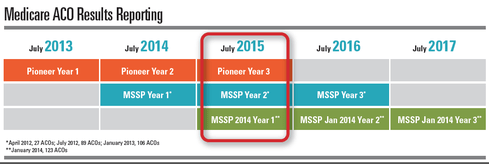
The Pioneers were the showcase healthcare systems recruited by the Centers for Medicare and Medicaid Services (CMS) to prove the value of reorgnizing reimbursement for care around quality and efficiency — for example, with incentives for eliminating unnecessary tests or eliminating expensive treatments for diabetics through better preventative care. That was followed by the launch of the Medicare Shared Savings Program in which participants were allowed to keep a portion of the savings they achieved on behalf of Medicare. Some private insurers introduced their own ACOs even before the federal ACO initiatives were initiated under the Affordable Care Act, and the federal programs are spurring more private sector activity.

The ACO movement has also seen some setbacks. Medicare recruited 32 Pioneer ACOs in December 2011, but membership dropped to 23 last year as some participants found the program’s goals difficult to achieve. On the other hand, late last year 123 new organizations became Medicare Shared Savings Program ACOs, meaning they will be allowed to keep a portion of the savings they achieve. That was just the latest expansion — overall, there are now 366 Medicare ACOs. Healthcare providers also work together to forge commercial ACOs, bringing the total number of ACOs to 606, according to CMS. Within two years, there could be between 700 and 1,000 ACOs.

[Are you ready for the ACO model? See CIO To CIO: Advice On ACOs.]

Because their business model demands both quality and cost efficiencies, ACOs recognize they must use technology wisely to improve patient care and efficiencies, said Laura Beerman, healthcare network manager at Decision Resources Group, in an interview. After CMS released first-year results for Pioneer ACOs in July 2013, industry executives scrutinized the information to try and determine how to make the model succeed — for patients, payers, and providers. Decision Resources found mixed results across ACOs in performance, savings, and patient benefits, Beerman said, but ACOs can learn from peers’ experiences.

(Source: Decision Resources Group; designer: Steve Benton)

(Source: Decision Resources Group; designer: Steve Benton)

One answer: Use technology to eliminate redundancies, inefficiencies, and errors.

“We’ve been able to gather some data on how ACOs plan to distribute any shared savings that are achieved. Any shared savings are going to be initially reinvested back into infrastructure, and I think it’s safe to assume [health] IT is a big part of that,” Beerman said.

That’s the case at Apollo Medical Holdings, operator of ApolloMed ACO. It announced Monday that it now has 30,000 Medicare beneficiaries and more than 700 member physicians. Executives credit technology and analytics (as well as a great staff) for its ability to reduce expenditures by $3.1 million during its first year as an ACO. As a result, the organization is expanding beyond Southern California into northern areas of the state, Mississippi, and Ohio, Dr. Warren Hosseinion, CEO of Apollo Medical Holdings, said in a statement.

As key tools for success, he cited the organization’s expertise in analytics and particularly population health management — analysis of risks and trends across the population of the ACO’s members to identify opportunities to intervene. The goal is “to more efficiently manage patient costs through improved care delivery with a focus on higher quality patient outcomes, more efficient utilization, and better care coordination among providers,” he wrote.

Integrating data across healthcare organizations is vital, agreed Jeff Smith, president of Mid-Atlantic initiative and strategic business development at ACO consulting firm Lumeris. “It’s critical, to be successful in this new model, to incorporate both clinical and financial information into the new platform the provider is going to use. If I only have clinical — where EHRs have historically provided information — or financial — there’s no complete picture,” he said in an interview. “You actually have to combine both, the clinical and the financial information, so a provider is able to do not only a better job treating patients across the whole continuum of care, [but] they also need the comparative cost information. [Having both] enables the physician and the patient to embrace that consumer-directed model that everyone’s been talking about.”

Download Healthcare IT In The Obamacare Era, the InformationWeek Healthcare digital issue on changes driven by regulation. Modern technology created the opportunity to restructure the healthcare industry around accountable care organizations, but ACOs also put new demands on IT.

Alison Diana has written about technology and business for more than 20 years. She was editor, contributors, at Internet Evolution; editor-in-chief of 21st Century IT; and managing editor, sections, at CRN. She has also written for eWeek, Baseline Magazine, Redmond Channel … View Full Bio

Article link: http://www.informationweek.com/healthcare/analytics/accountable-care-success-requires-strong-health-it/d/d-id/1204454?

Posts navigation

← Older Entries
Newer Entries →
  • Search site

  • Follow healthcarereimagined on WordPress.com
  • Recent Posts

    • The Global Healthcare System Is Broken. Japan Fixed It for $4,100 Per Person. 04/10/2026
    • When Not to Use AI – MIT Sloan 04/01/2026
    • There are more AI health tools than ever—but how well do they work? – MIT Technology Review 03/30/2026
    • Are AI Tools Ready to Answer Patients’ Questions About Their Medical Care? – JAMA 03/27/2026
    • How AI use in scholarly publishing threatens research integrity, lessens trust, and invites misinformation – Bulletin of the Atomic Scientists 03/25/2026
    • VA Prepares April Relaunch of EHR Program – GovCIO 03/19/2026
    • Strong call for universal healthcare from Pope Leo today – FAN 03/18/2026
    • EHR fragmentation offers an opportunity to enhance care coordination and experience 03/16/2026
    • When AI Governance Fails 03/15/2026
    • Introduction: Disinformation as a multiplier of existential threat – Bulletin of the Atomic Scientists 03/12/2026
  • Categories

    • Accountable Care Organizations
    • ACOs
    • AHRQ
    • American Board of Internal Medicine
    • Big Data
    • Blue Button
    • Board Certification
    • Cancer Treatment
    • Data Science
    • Digital Services Playbook
    • DoD
    • EHR Interoperability
    • EHR Usability
    • Emergency Medicine
    • FDA
    • FDASIA
    • GAO Reports
    • Genetic Data
    • Genetic Research
    • Genomic Data
    • Global Standards
    • Health Care Costs
    • Health Care Economics
    • Health IT adoption
    • Health Outcomes
    • Healthcare Delivery
    • Healthcare Informatics
    • Healthcare Outcomes
    • Healthcare Security
    • Helathcare Delivery
    • HHS
    • HIPAA
    • ICD-10
    • Innovation
    • Integrated Electronic Health Records
    • IT Acquisition
    • JASONS
    • Lab Report Access
    • Military Health System Reform
    • Mobile Health
    • Mobile Healthcare
    • National Health IT System
    • NSF
    • ONC Reports to Congress
    • Oncology
    • Open Data
    • Patient Centered Medical Home
    • Patient Portals
    • PCMH
    • Precision Medicine
    • Primary Care
    • Public Health
    • Quadruple Aim
    • Quality Measures
    • Rehab Medicine
    • TechFAR Handbook
    • Triple Aim
    • U.S. Air Force Medicine
    • U.S. Army
    • U.S. Army Medicine
    • U.S. Navy Medicine
    • U.S. Surgeon General
    • Uncategorized
    • Value-based Care
    • Veterans Affairs
    • Warrior Transistion Units
    • XPRIZE
  • Archives

    • April 2026 (2)
    • March 2026 (9)
    • February 2026 (6)
    • January 2026 (8)
    • December 2025 (11)
    • November 2025 (9)
    • October 2025 (10)
    • September 2025 (4)
    • August 2025 (7)
    • July 2025 (2)
    • June 2025 (9)
    • May 2025 (4)
    • April 2025 (11)
    • March 2025 (11)
    • February 2025 (10)
    • January 2025 (12)
    • December 2024 (12)
    • November 2024 (7)
    • October 2024 (5)
    • September 2024 (9)
    • August 2024 (10)
    • July 2024 (13)
    • June 2024 (18)
    • May 2024 (10)
    • April 2024 (19)
    • March 2024 (35)
    • February 2024 (23)
    • January 2024 (16)
    • December 2023 (22)
    • November 2023 (38)
    • October 2023 (24)
    • September 2023 (24)
    • August 2023 (34)
    • July 2023 (33)
    • June 2023 (30)
    • May 2023 (35)
    • April 2023 (30)
    • March 2023 (30)
    • February 2023 (15)
    • January 2023 (17)
    • December 2022 (10)
    • November 2022 (7)
    • October 2022 (22)
    • September 2022 (16)
    • August 2022 (33)
    • July 2022 (28)
    • June 2022 (42)
    • May 2022 (53)
    • April 2022 (35)
    • March 2022 (37)
    • February 2022 (21)
    • January 2022 (28)
    • December 2021 (23)
    • November 2021 (12)
    • October 2021 (10)
    • September 2021 (4)
    • August 2021 (4)
    • July 2021 (4)
    • May 2021 (3)
    • April 2021 (1)
    • March 2021 (2)
    • February 2021 (1)
    • January 2021 (4)
    • December 2020 (7)
    • November 2020 (2)
    • October 2020 (4)
    • September 2020 (7)
    • August 2020 (11)
    • July 2020 (3)
    • June 2020 (5)
    • April 2020 (3)
    • March 2020 (1)
    • February 2020 (1)
    • January 2020 (2)
    • December 2019 (2)
    • November 2019 (1)
    • September 2019 (4)
    • August 2019 (3)
    • July 2019 (5)
    • June 2019 (10)
    • May 2019 (8)
    • April 2019 (6)
    • March 2019 (7)
    • February 2019 (17)
    • January 2019 (14)
    • December 2018 (10)
    • November 2018 (20)
    • October 2018 (14)
    • September 2018 (27)
    • August 2018 (19)
    • July 2018 (16)
    • June 2018 (18)
    • May 2018 (28)
    • April 2018 (3)
    • March 2018 (11)
    • February 2018 (5)
    • January 2018 (10)
    • December 2017 (20)
    • November 2017 (30)
    • October 2017 (33)
    • September 2017 (11)
    • August 2017 (13)
    • July 2017 (9)
    • June 2017 (8)
    • May 2017 (9)
    • April 2017 (4)
    • March 2017 (12)
    • December 2016 (3)
    • September 2016 (4)
    • August 2016 (1)
    • July 2016 (7)
    • June 2016 (7)
    • April 2016 (4)
    • March 2016 (7)
    • February 2016 (1)
    • January 2016 (3)
    • November 2015 (3)
    • October 2015 (2)
    • September 2015 (9)
    • August 2015 (6)
    • June 2015 (5)
    • May 2015 (6)
    • April 2015 (3)
    • March 2015 (16)
    • February 2015 (10)
    • January 2015 (16)
    • December 2014 (9)
    • November 2014 (7)
    • October 2014 (21)
    • September 2014 (8)
    • August 2014 (9)
    • July 2014 (7)
    • June 2014 (5)
    • May 2014 (8)
    • April 2014 (19)
    • March 2014 (8)
    • February 2014 (9)
    • January 2014 (31)
    • December 2013 (23)
    • November 2013 (48)
    • October 2013 (25)
  • Tags

    Business Defense Department Department of Veterans Affairs EHealth EHR Electronic health record Food and Drug Administration Health Health informatics Health Information Exchange Health information technology Health system HIE Hospital IBM Mayo Clinic Medicare Medicine Military Health System Patient Patient portal Patient Protection and Affordable Care Act United States United States Department of Defense United States Department of Veterans Affairs
  • Upcoming Events

Blog at WordPress.com.
healthcarereimagined
Blog at WordPress.com.
  • Subscribe Subscribed
    • healthcarereimagined
    • Join 153 other subscribers
    • Already have a WordPress.com account? Log in now.
    • healthcarereimagined
    • Subscribe Subscribed
    • Sign up
    • Log in
    • Report this content
    • View site in Reader
    • Manage subscriptions
    • Collapse this bar
 

Loading Comments...