healthcarereimagined

Envisioning healthcare for the 21st century

  • About
  • Economics

Health care fails to adopt technology. Here are 5 reasons why – KevinMD

Posted by timmreardon on 11/25/2014
Posted in: Accountable Care Organizations, ACOs, Big Data, Blue Button, Data Science, EHR Interoperability, Emergency Medicine, Global Standards, Health Care Costs, Health Care Economics, Health IT adoption, Health Outcomes, Healthcare Delivery, Healthcare Informatics, Healthcare Security, Innovation, Integrated Electronic Health Records, Lab Report Access, Military Health System Reform, Mobile Healthcare, National Health IT System, Open Data, Patient Centered Medical Home, Patient Portals, Primary Care, Public Health, Quadruple Aim, Quality Measures, U.S. Air Force Medicine, U.S. Army Medicine, U.S. Navy Medicine, Veterans Affairs. Leave a comment

Robert Pearl, MD | Tech | September 25, 2014

Why do so many seemingly great technologies fail to penetrate the health care system?

I hope the following five answers shed some light on the realities of technology adoption in health care.

1. Many new technologies don’t address the real problem

Tech entrepreneurs often take a backward approach to invention. They start by discovering a nifty technology. Later, they figure out how people can use it.

This technique often teaches entrepreneurs a tough lesson: Technology is worth nothing if it doesn’t solve an important problem or improve lives.

Alan Cooper, considered by many to be the father of modern user experience design (UXD), said the ideal approach is “goal directed.”

Meaning, innovators should start with the goals of the end-user. The solutions come next. When the order is reversed, the results usually disappoint.

As an example, the health care world recently has become enthralled with wearable devices. Many of these devices help solve the problem of what gift to give a loved one during the holidays. But few of these devices solve major health problems.

These wristbands, sensors, headsets and even “smart clothes” can obtain and transmit huge amounts of data on anything from heart rhythms to blood pressure. But there’s little evidence those wearing them overcome abnormal heart rhythms or elevated blood pressures better than those who don’t.

Besides, physicians don’t want all that data anyway. They find it overwhelming, redundant and unlikely to make a clinical difference.

Physicians would love a tool that truly helps patients better manage their diet, exercise and stress levels. Many applications available today claim to modify behavior through alerts, reminders and real-time feedback, but few have demonstrated measurable success.

Entrepreneurs hoping to make a positive impact on our health should focus on helping patients avoid chronic diseases and manage health problems when they arise. And they would be wise to do this using technology that already exists while developing solutions that are easy to use and inexpensive to buy.

Apps using new, complex or expensive technologies will face an uphill battle for adoption.

2. No one wants to pay for new technologies

Creating an innovative tool or app that can help doctors and patients isn’t enough. These products must also be monetized.

In health care, that proves difficult.

Patients, physicians, hospitals and insurance companies long for the benefits and value of new technology. However, each thinks someone else should pay for it.

Further, entrepreneurs must understand the financial difficulties inherent in health care’s current fee-for-service payment model. Doctors and hospitals will be slow to embrace any technology that lowers costs or reduce patient visits. Why? Because today’s payment model financially rewards doctors and hospitals for the volume and cost of services they provide — not the quality of outcomes they achieve.

Until our payment model moves from fee-for-service to “pay-for-value,” some of the most effective technological solutions will be hard to sell.

3. Physicians are reluctant to show patients their medical information

Prior to the modern electronic health record (EHR), common wisdom was that doctors owned the medical information contained in a patient’s chart.

It made sense at the time. With only one copy of the medical record on hand, the safest place for it was the chart room located in the back of the doctor’s office.

Many doctors believed it was necessary to keep it out of the hands of patients, worrying the information could be harmful if read.

Much has changed in the era of information technology and consumerism. More and more, patients object to the paternalism of the past – asserting their right to access to their own health records.

But now there’s new medical record problem arising. As computers and keyboards replace charts and pens in exam rooms across the country, technology is now the physical barrier between patients and physicians.

But computers don’t have to create distance.

Some doctors are flipping their computers around and using the health data on screen to educate patients. This transparency ensures the information is accurate. It invites patients to participate more closely in their own treatment plans.

Still, today’s exam-room computers are clunky. Physicians would relish a more user-friendly tablet, capable of rapid data entry and mobility. And patients want access to their health data beyond the doctor’s office. Entrepreneurs who can address both of these needs will find an eager market.

4. Technology slows down many physicians

For the average physician, entering data into an EHR takes longer than keeping a paper record.

The problem isn’t just the time it takes to type but also the structured format of the data entry. It simply takes more time when the application prevents physicians from skipping steps or leaving out clinical details.

Frustrating as it may be for doctors, the added information reduces the risks of medical error, avoids redundant testing, and facilitates easier access to test results. But the benefits to the patient are clear, even when the technology adds time for the physician.

Just think, an EHR can prompt surgeons to ask patients about drug allergies as part of their medical history. Using this information, an EHR app can trigger an alert should the doctor accidentally try to order an antibiotic the patient is allergic to.

Physicians like to assume they’d never make such a mistake. Science proves otherwise. Some estimate the rate of drug errors by doctors has jumped 50 percent in recent years. Another study found 1 in 5 medications used by seniors are prescribed inappropriately.

Entrepreneurs can help physicians reduce the time needed for data entry by developing software applications that include macros and smart lists. Apps with alerts can help reduce medical errors.

But, of course, getting doctors to embrace these more effective approaches will be the next big challenge.

5. Many physicians see technology as impersonal

Go ahead and ask a baby boomer physician, “What is personalized medical care?”

The doctor is likely to talk about the importance of the human touch or about how subjective the “art of medicine” is.

Yes, these are important factors in medicine. But providing personalized care in the future will require much more than that.

With the advent of gene sequencing and the exponential growth of medical information, physicians won’t be able to meet the unique medical requirements of individual patients without advanced IT systems.

As medical knowledge advances, the perceived rift between “high tech” and “high touch” is becoming a relic of the past.

Telling a patient he has cancer requires time, compassion and well-honed interpersonal skills. This is the traditional art of medicine. But figuring out the exact cancer treatment — given dozens of alternatives, the patient’s unique genetics and the many sub-types of each cancer – is more a matter of technology and science. Increasingly, treatment possibilities exceed the human mind.

In addition, when doctors lament modern medical practice becoming impersonal, they fail to understand how most people prefer to manage their lives.

In today’s era of consumerism, if you ask patients what they mean by personalized medical care, they’ll talk about being able to decide how, when and where they obtain information and treatment — just like they do when they travel or buy retail products and services.

Today’s busy people want to receive care through technologically enabled alternatives like video visits and secure email, rather than through the traditional office visit. And they’re frustrated by a health care system that refuses to accommodate them.

There’s a waiting market for entrepreneurs who can help people receive care virtually, without having to miss work or school — particularly if the solutions are less expensive.

To meet these preferences, entrepreneurs need to look further than at the hundreds of millions of smartphones resting in the hands or pockets of Americans today.

Overcoming these barriers

Across history, it often has been the next generation that figures out how best to use new technology. Health care may be no different.

But if hungry entrepreneurs don’t want to wait 10 or 15 years for the demographics to change, they would be smart to provide solutions that use currently available technology to solve patient’s problems in the simplest and least expensive ways.

Robert Pearl is a physician and CEO, The Permanente Medical Group. This article originally appeared on Forbes.com.

Article link: http://www.kevinmd.com/blog/2014/09/health-care-fails-adopt-technology-5-reasons.html

Electronic Medical Records, Built For Efficiency, Often Backfire – NPR

Posted by timmreardon on 11/14/2014
Posted in: Accountable Care Organizations, ACOs, Data Science, EHR Interoperability, Global Standards, Health Care Costs, Health Care Economics, Health IT adoption, Health Outcomes, Healthcare Delivery, Healthcare Informatics, Healthcare Security, Innovation, Integrated Electronic Health Records, Military Health System Reform, Mobile Healthcare, National Health IT System, Patient Centered Medical Home, Patient Portals, PCMH. Leave a comment

November 07, 201412:09 PM ET
Scott Hensley

computerized-records-sap-doctors-time
A survey of more than 400 doctors asked how electronic medical records had affected their free time on the job. The answers weren’t pretty.

Electronic medical records were supposed to usher in the future of medicine.

Prescriptions would be beamed to the pharmacy. A doctor could call up patients’ medical histories anywhere, anytime. Nurses and doctors could easily find patients’ old lab results or last X-rays to see what how they’re doing. The computer system could warn doctors about dangerous drug combinations before it was too late.

Many of those things are an everyday reality in doctors’ offices and hospitals across the country. But a survey of more than 400 internists with experience using electronic medical records, or EMRs, documents what doctors have complained about for years: computerized records chew up a lot of time.

Writing up a patient’s visit on the computer can take more time than you might expect. More than 60 percent of the doctors surveyed said that note writing took longer using computerized records than before they were implemented.

One reason: There are all kinds of boxes to check that have more to do with the billing department than the patient.

Heather Garris, a custodian of medical records, organizes patients’ files at Colorado Springs Internal Medicine in Colorado Springs, Colo.

Overall, the survey found that attending physicians, the doctors in charge of care, lost an average of 48 minutes a day because of EMRs. Doctors in training lost 18 minutes a day.

Dr. Billy Oley (left) talks with Dr. William George in the Beartooth Billings Clinic in Red Lodge, Mont. The hospital became part of the Billings Clinic system in exchange for help with its digital medical records.

The results, first released online in September, were published Monday in the latest JAMA Internal Medicine.

“EMRs are like democracy,” says Dr. Leora Horwitz, director of the Center for Healthcare Innovation and Delivery Science at NYU Langone Medical Center. “It’s the worst form of medical records except for all the others ones.” Horwitz, an internist, tells Shots. Her own experience jibes with the survey’s findings, “I definitely lose an hour a day, but I wouldn’t go back.”

What’s wrong with electronic records? “There are so many ways they are really bad,” she says. “It used to be that as I was I sitting with patients I was writing the notes, and I would be done when they left the room. Now, 100 percent of time I have to stay afterward, and I’m a really fast typist.”

Horwitz says the record systems are poorly organized and never seem to reflect the needs of doctors and nurses. There’s an enormous amount of time-consuming clicking, scrolling and typing.

The benefits from computerized records outweigh the drawbacks, she says, but that doesn’t mean the record systems shouldn’t be a lot better.

Entering the data is only half the problem. “The time suck is not just on the doing side, it’s also on the receiving side,” says Rob Lamberts, an internist in Augusta, Ga.

When a specialist or hospital sends him a report about a patient, it’s often so full of useless information related to billing, medical coding and rote checkoffs that Lamberts struggles to find the nuggets he needs. “It’s like getting a big box full of packaging material, and there’s a thumb drive in it,” says Lamberts, who accepts no insurance and is paid a monthly fee by his patients.

Sometimes another doctor’s EMR wastes his time by automatically sending a report that he didn’t ask for and doesn’t need. A recent fax from a vascular specialist who saw one of Lamberts’ patients was so laughable, he scanned it and tweeted it.

This is amazing. First line is “Please disregard this fax.” Reason? It’s from the EMR. Hah! pic.twitter.com/BP5J9Q2BdC
— Dr. Rob Lamberts (@doc_rob) November 7, 2014

Lamberts was happy to ignore the fax. At least it told him from the start to that was OK: “The thing I appreciated about this fax was that it was brief.”

Article link:http://www.npr.org/blogs/health/2014/11/07/361148976/electronic-medical-records-built-for-efficiency-often-backfire

Is This The End Of Primary Care? – Forbes

Posted by timmreardon on 11/14/2014
Posted in: Global Standards, Health Care Costs, Health Care Economics, Health IT adoption, Health Outcomes, Healthcare Delivery, Healthcare Informatics, Healthcare Security, Innovation, Integrated Electronic Health Records, Military Health System Reform, National Health IT System, Open Data, Patient Centered Medical Home, Patient Portals, PCMH, Primary Care. Leave a comment

Dan Munro
11/03/2014

The friction is palpable. Providers are frustrated to the point of openly criticizing payers ‒ seemingly oblivious to the reality that insurance is for most Americans the only mechanism for any healthcare at all.

On the other side are patients who are equally frustrated by providers who demand adherence to antiquated (often analog) processes around scheduling and redundant bureaucracies while the ubiquitous smartphone moves everyone further and further into a mobile and connected reality.

The gulf is widening and the trajectory for many primary care physicians is entirely unsustainable for a host of reasons. Here are the top 3 that I see.
1.The economics for the old model of low‒acuity primary care simply doesn’t work
2.New models of low acuity/primary care are pushing prices even lower
3.In a mobile, smartphone‒connected world, the value proposition around primary care is being redefined

Clearly, the definition of primary care itself has blurred substantially, but the model that’s on life‒support (even if it’s not technically dead) has the following general profile.
•Low‒acuity, general (or “family”) practice in a single geographic location
•Standalone clinic often located in a small strip center (or medical practice archipelago)
•Requires patient scheduling for on‒premise, exam‒room consultations
•Uses 3rd party insurance (public or private) as the primary means of reimbursement

The economics for this model are brutal ‒ and getting worse. By any measure, primary care providers are the lowest paid (of 25 specialties) and often the hardest working. A 2012 study opened with this introduction:

“Estimates suggest that a primary care physician would spend 21.7 hours per day to provide all recommended acute, chronic, and preventive care for a panel of 2,500 patients. The average US panel size is about 2,300. Estimating a Reasonable Patient Panel Size for Primary Care Physicians With Team-Based Task Delegation ‒ Annals of Family Medicine

A summary assessment on the future of primary care in this 2008 study was equally grim.

“Our estimates suggest that the marginal cost of a primary care physician visit is between $51 and $77 and the marginal cost of a primary care physician-provided Medicare relative value unit (RVU) of work is between $37-$50. At current levels of supply, the marginal social costs of primary care visits appear to be equal to or greater than marginal social benefits. We estimate that the private return to primary care practice is between 7-9%. These estimates suggest that substantial increases in primary care physician supply are unlikely to be socially beneficial. Moreover, at current fee levels, such increases are unlikely to occur. Alternative, lower cost strategies are needed for supplying primary care services. The Cost of Primary Care Doctors

While it’s tempting to discount this summary given the age (now about 6 years old), healthcare isn’t that fast moving and the prices quoted for this level of service haven’t changed significantly. Adding a $10 bill would more than likely account for any statistical discrepancy for the last 5 or 6 years.

Lower cost retail models are also emerging that put even more pricing pressure on primary care practices of all stripes. Last month Walmart announced $40 pricing for a visit to one of their in‒store clinics and they claim it’s a full 50% of the industry standard ($80). Walmart currently operates about a dozen in‒store clinics and they expect to add another 5 by the end of this year. That’s a small number to be sure, but the potential is provocative (as both a retail and work-site clinic).

Sutter Express Care offers a similar flat‒fee visit for $75. Most common health screenings and minor illness or injury visits through CVS Minute Clinics range from about $60 to $100 (price list here).

That’s just the economics. Patients are equally frustrated with the inconvenience of advance scheduling, redundant paperwork and waiting in exam rooms that are inconvenient because of their location in archipelagos of medical practices. All of which has to be navigated for a brief encounter with a physician who’s often glued to a keyboard and monitor for data-entry.

Here’s a recent tweet from a mom with 2 kids in tow ‒ who just happens to be the Chief Medical Officer and Executive Director of The Advisory Board Company.

She’s right of course. The old analog model just can’t compete with a hectic, busy life ‒ and the luxury of accommodating healthcare delivery with antiquated thinking (and technology) just won’t last.

The numbers aren’t trivial. For 2010, the CDC estimated about 550 million “primary care” visits (here) and cited “cough” as the most frequent principal illness‒related reason for the visit. The most commonly diagnosed condition was “essential hypertension” (high‒blood pressure with no identifiable cause).

All of which means that the old model of primary care may not be completely dead, but it’s definitely on life‒support. Whether we agree with the efficacy of low-acuity, retail healthcare or not, there’s no question ‒ it has arrived.

Article link: http://www.forbes.com/sites/danmunro/2014/11/03/is-this-the-end-of-primary-care/

Ahead of Veteran’s Day, VA Announces Major Reforms – Defense One

Posted by timmreardon on 11/14/2014
Posted in: Accountable Care Organizations, EHR Interoperability, Health Care Economics, Health IT adoption, Health Outcomes, Healthcare Delivery, Healthcare Informatics, Innovation, Integrated Electronic Health Records, Military Health System Reform, National Health IT System, Open Data, Patient Centered Medical Home, Patient Portals, Primary Care, Uncategorized, Veterans Affairs. Leave a comment

Ben Watson November 10, 2014
McDonald

In what he called “the largest restructuring in the department’s history,” McDonald sent a memo to employees on Monday informing them that he was creating a Chief Customer Service Officer, who would report directly to him, streamlining the agency’s regional structure and establishing a Community Veteran Advisory Council.

“Please keep in mind that this is a long-term process and we are just beginning to plan how this will all unfold. As we move forward with these changes, your feedback, ideas and perspective will be invaluable,” McDonald wrote in the memo.

The VA also created an intranet web tool, called the MyVA Idea House, where employees can log on and provide feedback.

Since taking office about 100 days ago, McDonald, the former CEO of Proctor & Gamble, has taken to calling veterans “customers.” He’s also been working hard to rebuild the VA’s image after several scandals, including allegations that appointment wait times led to the deaths of veterans at the Phoenix VA Hospital.

McDonald’s reforms didn’t come with much details. There’s no word on who will serve as his Chief Customer Service Officer, and the memo says the creation of a single regional framework “will simplify internal coordination, facilitate partnering and enhance customer service. This will allow veterans to more easily navigate VA without having to understand our inner structure.”

“Right now [veterans] face nine different organization structures across the country so they don’t know where to go and if they do find somebody to go to that person may be an expert in benefits but not an expert in heath care,” McDonald told CBS News’ “60 Minutes” on Sunday night. “And we want to create a customer service representative that that person can go to. Secondly they face multiple websites that require multiple user names and multiple passwords and that’s not acceptable. We’ve got to get to one website, one entry point, and then fan people out from there.”

Last week, McDonald told reporters recent changes have led to a decline in the average patient wait time by 18 percent. The first phase of a program to allow some vets short-term access to private healthcare providers to help support a strained VA system is also under way. McDonald said Friday there were more than 1,000 VA employees who could lose their job for “violat[ing] our values.”

“The report we’ve passed up to the Senate Committee and House Committee, has about 35 names on it,” McDonald said. “I’ve got another report that has over 1,000.”

Though reforms have been passed to make it easier to fire VA employees, the system still takes time, he said.

Iraq and Afghanistan Veterans of America, which represents post-9/11 veterans, said McDonald has his work cut out for him.

“As the second largest bureaucracy in the federal government and after a summer of scandal, the VA has a mammoth challenge ahead of itself and Secretary McDonald has the toughest job in Washington,” IAVA CEO and founder Paul Rieckoff said in a statement. “He inherited an organization with a badly damaged reputation that only positive results can repair. And he will need tremendous support from Congress, the president, the public, and the veteran community to achieve those results.”

Article link: http://www.defenseone.com/management/2014/11/ahead-veterans-day-va-announces-major-reforms/98663/?oref=defenseone_today_nl

JASON Task Force – Part Deux – Chilmark Research

Posted by timmreardon on 11/07/2014
Posted in: Accountable Care Organizations, ACOs, AHRQ, Big Data, Data Science, EHR Interoperability, Emergency Medicine, Genetic Data, Global Standards, Health Care Costs, Health Care Economics, Health IT adoption, Health Outcomes, Healthcare Delivery, Healthcare Informatics, Healthcare Security, Innovation, Integrated Electronic Health Records, JASONS, Lab Report Access, Military Health System Reform, Mobile Healthcare, National Health IT System, Open Data, Patient Centered Medical Home, Patient Portals, PCMH, Primary Care, Public Health, Quadruple Aim, Quality Measures, Rehab Medicine, U.S. Air Force Medicine, U.S. Army Medicine, U.S. Navy Medicine, Uncategorized, Veterans Affairs. Leave a comment

Posted on October 31, 2014 by Brian — No Comments ↓

images1 - Jason

In a post two weeks ago, we were critical of some aspects of the JASON Task Force’s (JTF) Final Report on healthcare interoperability. Two members of the JTF reached out to us in order to clarify the intent of the report as it relates to EHRs and the use of a “public” API to help make healthcare applications more interoperable. During a long conversation, we had a chance to discuss the issues in detail. Following that discussion we took some time to reconsider our opinions.

We now have to agree that the JTF itself was not EHR vendor dominated and have corrected the previous post. The Task Force was comprised of a wide range of stakeholders including several providers. Unfortunately, however, the testimony the JTF received was overwhelmingly from HIT vendors, consultants, or their proxies. We doubt this was intentional, but simply the vendor community having a more vested interest in influencing the JTF. But it does lead us to the conclusion that it is incumbent upon the JTF to proactively solicit provider testimony before policymakers act on the recommendations of the JTF report.

Despite our long conversation with these members of the JTF, we still have a difference of opinion on one key issue: The central importance of the EHR with regards to public APIs and interoperability.

The original JASON Report points squarely at EHRs as the source of interoperability ills. It also called for EHRs to adopt the public API. By our count, the JTF Final Report uses three different ways to describe where the public API should sit: a “Data Sharing Network”, “CEHRT”, or “clinical and financial systems.” In our follow-up discussion, JTF representatives maintained that the intent to include EHRs is clear and that the task force struggled on this issue of how broad their mandate was.

The JTF decided to cast a broader net than just the JASON Report’s initial focus on EHRs. But they did not clarify an already complicated issue, nor did they unequivocally single out EHRs as where the need for a public API should begin. We think that their intention to include EHRs is sincere but maintain the position that the JTF should explicitly recommend that EHRs expose services and data with the public API. Without such clarity, the fuzzy language used in the JTF report could end up being adopted in future rule-making or legislation, creating the potential for uncertain outcomes.

Our Thesis:
Good, bad, or otherwise, the EHR is the dominant application supporting clinical workflows and the source of most patient healthcare data.

Every provider we have ever talked to says that improved patient care and more effective care coordination would be possible with better access to other providers’ EHRs. On the other hand, we have not talked to many providers who say that better patient care and better care coordination would be possible if only there was better access to other providers’ financial systems. The majority of providers have never heard of a Data Sharing Network (and no, we do not believe Direct can fill this bill) so the public API is pretty much dead in the water there as well – though most any HIE/CNM vendor worth their salt would welcome a public API.

So let’s be perfectly clear in the JTF report – if we want EHRs to adopt a public API, then let’s just say so rather than beating around the bush. To do otherwise sends the wrong message to the market – that EHRs are somehow not central to the interoperability problem.

Article link: http://www.chilmarkresearch.com/2014/10/31/jason-task-force-part-deux/

JASON Task Force Says Status Quo is Better than Supersession – Chilmark Research

Posted by timmreardon on 11/07/2014
Posted in: AHRQ, Big Data, Blue Button, Data Science, EHR Interoperability, Global Standards, Health Care Costs, Health Care Economics, Health IT adoption, Health Outcomes, Healthcare Delivery, Healthcare Informatics, Healthcare Security, Innovation, Integrated Electronic Health Records, Lab Report Access, Military Health System Reform, Mobile Healthcare, National Health IT System, Open Data, Patient Centered Medical Home, Patient Portals, PCMH, Primary Care, Public Health, Quadruple Aim, Quality Measures, Rehab Medicine, U.S. Air Force Medicine, U.S. Army Medicine, U.S. Navy Medicine, U.S. Surgeon General, Veterans Affairs. Leave a comment

Posted on October 20, 2014 by Brian — 1 Comment ↓

The JASON Report created quite a fuss in the HIT marketplace as some screamed foul and others were encouraged that maybe, just maybe the JASON image Jasonreport may force movement to more open systems. To clear the air, the JASON Task Force (JTF) was formed to solicit industry feedback for policy makers. The JTF released their findings earlier this month.

The JASON Report was an AHRQ- and HHS-sponsored study of healthcare interoperability issues. Its basic conclusion was that the existing EHR-based HIT infrastructure should be superseded by something more open and amenable to use by other applications and across organizations. The JASON Report advocated radical solutions to the interoperability crisis: using MU3 to replace existing EHRs and requiring a uniform set of APIs for EHRs across the industry.

Vendor response was rapid and unified. HITPC appointed a task force representing stakeholders from across the industry (virtually all have been on other ONC workgroups, so somewhat cloistered) who worked with alacrity through the summer. The tone of vendor testimony before JTF reflected a level of alarm that contrasts sharply with HCO’s non-participation.

JTF and its vendor members have some legitimate beefs: the JASON Report is not exactly disinterested. It substantially reflects the view of the clinical research community which sees itself as the long-suffering victim of EHR intransigence. The JASON Report glosses over genuine, if crepuscular, progress in healthcare interoperability. Another point that we believe has not been made forcefully enough by EHR vendors is that they are constrained by their HCO customer’s ability to change. The organizational obstacles to healthcare data liquidity are significant and EHR vendors move only as fast as HCOs despite their claims to the reverse. However, we think that JTF is wrong to deflect attention away from the EHR-oriented APIs.

JTF’s proposed alternative to EHR supersession involves something it calls Data Sharing Networks (DSN). These are a rebranding of the HIE supplemented with a uniform set of APIs to support access to something never specified in much detail. JTF suggests that these APIs be based on the replacement to HL7 – FHIR.

Without doubt, FHIR represents a significant improvement over HL7 along multiple dimensions. But the idea that FHIR alone can cure the interoperability ills of healthcare is all smoke. Behind this smokescreen, EHR vendors are hoping that people eventually lose interest or stop talking about interoperability. With this bit of redirection, JTF has basically let the EHR vendors off the hook.

This begs the question: Where is the best place to have a uniform set of APIs reside, the DSN (HIE) or the EHR?

Our answer: Both!

The HIE is really a stopgap measure in the sense that discrete access to EHRs and other data sources across organizations via a uniform set of APIs and SOA will greatly reduce the need for an HIE. If applications could access all of a patient’s data directly from native data sources in different HCOs, there isn’t much point in maintaining separate and comprehensive CDRs at different sites in the overall healthcare system.

But rather than move in this direction, the JTF favors the politically powerful EHR vendors at the expense of the HIE vendor community.

No doubt creating a set of uniform APIs to EHRs would be costly. Upward and backward compatibility, a hallmark of every successful IT platform, requires deeper pockets than most EHR vendors can muster. But some EHR vendors are better positioned to support such APIs than others. Many hospital EHR vendors could make the investment. Smaller, community-focused, or client-server based EHR vendors and their customers though would struggle.

Our HIE research has shown – year after year – that data flows downhill from hospital to community. Hospital-based EHR data is valuable to community-based clinicians. It is also extremely valuable to those hospitals to ensure that physicians in a community get discharge summaries to minimize readmissions and associated penalties. Hospital-based EHRs are a good place to start with uniform APIs. The reality is that community-based EHR data could also be better used in hospital settings to facilitate care. This is especially true as we move away from fee for service to more risk-based payments models.

Unfortunately, facilitating data flows between community and hospitals is something we’ll be patching together with string, baling wire and duct tape for the duration. The JASON Report and subsequent JTF report have not moved the ball forward on this issue. It is our opinion that there is little that the policy folks in Washington D.C. can do with additional prescriptive meaningful use requirements. HHS would better serve the market by using financial incentives that promote healthcare organizations to demand better interoperability capabilities from their vendors as it is the customer that vendors really listen to, not D.C., policy wonks.

Article link: http://www.chilmarkresearch.com/2014/10/20/jason-task-force-says-status-quo-is-better-than-supersession/

Race is On for Defense Health Record – but VA Backs Out of Competition – Nextgov Health IT

Posted by timmreardon on 10/31/2014
Posted in: Big Data, Blue Button, Data Science, DoD, EHR Interoperability, Global Standards, Health Care Costs, Health Care Economics, Health IT adoption, Health Outcomes, Healthcare Delivery, Healthcare Informatics, Healthcare Security, Innovation, Integrated Electronic Health Records, Military Health System Reform, Mobile Healthcare, National Health IT System, Open Data, Patient Portals, PCMH, Primary Care, Quadruple Aim, Quality Measures, U.S. Air Force Medicine, U.S. Army Medicine, U.S. Navy Medicine, U.S. Surgeon General, Veterans Affairs. Leave a comment

Bob Brewin | Nextgov | October 30, 2014

Vista1

Four commercial vendors will submit proposals Friday for the Defense Department’s $11 billion electronic health record system contract. But the Department of Veterans Affairs has backed off an idea floated by former VA Secretary Eric Shinseki to enter a new version of its own longstanding EHR system into the competition.

Teams bidding on the Pentagon’s EHR system – formally known as the Defense Healthcare Management System Modernization – are:
•Computer Sciences Corp., partnered with HP and EHR developer Allscripts
•IBM, aligned with Epic Systems
•Leidos, joined up with Accenture Federal
•PricewaterhouseCoopers, with General Dynamics Information Technology, DSS Inc. and MedSphere as partners

Shinseki told lawmakers at a House Veterans Affairs Committee hearing in March that VA had started development of a new version of its decades-old and proven Veterans Health Information Systems and Technology Architecture – or VistA – that would be equivalent to commercial software.

“We want to be in competition for [the] DOD [EHR],” Shinseki said.

But Genevieve Billia, a VA spokeswoman, told Nextgov today: “VA never planned to formally bid in DOD’s acquisition. VA supports DOD’s need to replace its system and understands DOD is pursuing an open competition.”

She added: “Our prior statements referenced VA’s efforts to improve VistA to enable companies offering VistA-based solutions to have a more viable product to enter into competition. Whatever DOD decides, VA is working closely to ensure seamless interoperability of health care data.”

DSS Inc. and Medsphere both offer EHRs based on open source VistA software. The source code used by Epic is based on the underlying Massachusetts General Hospital Utility Multi-Programming System – or MUMPS – code.

When fully deployed in 2017, the DOD health system will serve more than 400 clinicians who treat more than 9.6 million patients in some 400 hospitals and clinics, making it the largest EHR system in the country.

The Epic system, used by Kaiser Permanente, and the VA health care system, which serves about 8.6 million patients, are the two other largest systems in the nation.

Article link: http://m.nextgov.com/health/health-it/2014/10/race-defense-health-record-va-backs-out-competition/97820/?oref=nextgov_today_nl

Epic Systems makes strategic next moves for expansion – Isthmus Mobile

Posted by timmreardon on 10/31/2014
Posted in: Big Data, Blue Button, Data Science, DoD, EHR Interoperability, Emergency Medicine, Global Standards, Health Care Costs, Health Care Economics, Health IT adoption, Health Outcomes, Healthcare Delivery, Healthcare Informatics, Healthcare Security, Innovation, Integrated Electronic Health Records, Lab Report Access, Military Health System Reform, Mobile Healthcare, National Health IT System, Open Data, Patient Centered Medical Home, Patient Portals, Primary Care, Quadruple Aim, Quality Measures, U.S. Air Force Medicine, U.S. Army Medicine, U.S. Navy Medicine, Veterans Affairs. Leave a comment

close-up of a patient chart at the foot of a hospital bed
Epic expat: ‘There’s been a realization that Epic has saturated its classic market.’

What do you do after you’ve won the gold rush? When you’ve claimed the richest veins of ore? That’s the big question for Epic Systems, the medical software giant that has become Dane County’s signature company with 8,000 or so employees at its fairyland campus in Verona.

Epic is the big winner in the federally subsidized effort to shift American medical care from paper to electronic records. As part of President Obama’s economic stimulus plan, Congress approved a $27 billion incentive program in 2009 that touched off a mad scramble to modernize health systems in the name of improved efficiency and better care.

These health systems, which involve hospital and physician networks, can be complicated contraptions, and no company was better situated to harmonize its knotty internal operations than the well-seasoned Epic, which was founded in 1979 in the shadow of UW-Madison by the charismatic computer wizard Judith Faulkner.

Epic cleaned up in that gold rush. Today, one out of two Americans have their medical records on Epic software, and revenues at the fast-growing privately held company hit $1.7 billion in 2013.

Famously insular and only occasionally open to nosey reporters, Epic declined to provide an executive to be interviewed about its recent strategic moves. But local Epic watchers, a few on the record and more speaking not for attribution (they’re reticent because Epic is feared as well as respected), see a new strategy taking hold.

“There’s been a realization that Epic has saturated its classic market — the whales, academics and pediatrics,” says an Epic expat who’s active in the Madison entrepreneurial community.

Translation: Epic successfully targeted the biggest and most complicated health systems — “whales” like multi-state Kaiser Permanente, academic health systems like UW Health, and children’s hospitals. All told, Epic has more than 300 clients, including top-tier players like Cleveland Clinic and Johns Hopkins Medicine.

A few whales are still out there — notably Mayo Clinic and the larger for-profit hospital chains — that Epic may yet land. But it’s clear that Epic is looking elsewhere to grow. Here are four targets.

International expansion

Epic had a rotten experience when it partnered with Netherlands-based Philips Medical Systems. In 2006, it pulled the plug on a three-year collaborative effort to develop health IT for midsized hospitals. Several Epic expats said the Philips experience “scarred” Epic in terms of international work and partnering.

But Epic’s Netherlands office wasn’t closed, and it became the base for Epic’s solo expansion into hospitals in the Netherlands, Denmark and England and farther afield in Dubai, Abu Dhabi, Australia and Singapore.

Globally, health IT expenditures are expected to hit $97 billion in 2015, with about 40% occurring overseas. Faulkner, in an interview with Modern Healthcare, said U.S. IT companies are primed to do well in the overseas competition, including Epic, which she said had painstakingly “internationalized” its code. But given the realities of the Third World, she said the international market is “not gigantic.”

That may be because China, the biggest market of all, is apparently not an Epic target. “They’re really nervous about their intellectual property, the software, being stolen,” a former Epic employee says of company executives.

New partnerships

Epic sees its customers, not other IT companies, as its partners. But in the past year Epic has revealed two big-name partnerships nevertheless. It’s joined with Apple — another famously idiosyncratic, go-it-alone enterprise — on the HealthKit app and with IBM in pursuing one of the last great whales. Moby-Dick in this case is the 10-year, $11 billion federal contract to provide electronic health records (EHRs) for the Department of Defense.

The military health system is the largest in the nation — some 9.6 million beneficiaries treated at 50-plus military hospitals and 600-plus clinics. The feds have encouraged team proposals (IBM has extensive experience in federal contracting), so Epic’s IT rivals, including Cerner and Allscripts, have put together their own posses.

The Apple partnership is bigger on promise, thus far, than delivery. That promise is the merger of consumer-collected data from the ubiquitous health apps that many people use with the doctor-created medical information contained, for example, on Epic’s MyChart patient portal. Serious questions have been raised about functionality, but most everyone recognizes that if Apple and Epic (Mayo is a third partner) manage to pull this off in a meaningful way, it will be a big step in advancing the Big Data revolution down to the individual consumer level.

Angle for smaller fish

Once upon a time Faulkner as Epic’s Captain Ahab would never consider a 300-bed hospital as a worthy catch. They’re too small to afford Epic’s pricey suite of integrated software programs. But now Epic has a two-fold strategy to capture the smaller fish schooling around the whales.

Epic’s Community Connect program allows regional health systems to sell copies of their customized Epic software to the community hospitals and independent medical practices in their networks. Putting everybody on the same tech platform is good for patients. For Epic, it means new software licensing fees.

More interesting is Epic’s quiet move into cloud-based electronic health records, seen by many as the next big advance in health IT. Epic confirmed to Isthmus that it has built a data center on its Verona campus for hosting EHRs for clients and is planning a backup data farm in western Wisconsin.

Often criticized for its alleged old technology, Epic is taking a big step here. Smaller medical practices and hospitals often don’t want to invest in the servers and staff to host their own data systems. They would rather pay a vendor to take care of the back shop. Epic is preparing to enter that business.

Consulting services

Optimizing Epic software after installation has become a booming industry for consulting companies — Nordic, Sagacious, BlueTree and lots more — that recruit the steady stream of Epic burnouts who’ve tired of the company’s demanding pace. Madison’s Nordic, with more than 400 employees, is the largest.

This seems like a logical move for Epic. Increasingly, the “meaningful use” requirement for the federal EHR subsidy will financially penalize health systems for poor or wasteful care. The promise of fully functioning EHRs is streamlined treatments and deep-data analytics that produce new insights into best medical practices.

Economist Kay Plantes, a San Diego business consultant with Madison ties, points out that as an industry matures, value climbs up the economic chain and away from the core product. So in health IT the greater value (and profits) in the years to come won’t be so much in selling EHR systems but in crunching and utilizing their data to improve care.

The consulting companies say that Epic’s targeting of their work doesn’t worry them.

“At the end of the day I view Epic as no different than any other competitor,” says Nordic Consulting Partners CEO Mark Bakken. “We have to prove our value every day.”

“Both of our interests align really well,” Shane Adams, founder of Sagacious Consultants, says of Epic. “We’re both looking to make our clients more profitable, and we’re both trying to improve health care quality.”

BlueTree Network cofounder Ted Gurman says that BlueTree clients recognize the difference between a vendor offering advice and an outside consultant doing the same. “They truly want a third-party opinion.”

Bakken says the same: “We can freely say what is the best solution.”

The critics

The Epic juggernaut faces challenges on multiple fronts, not just from consultants who feed off its software. Epic’s EHR competitors lash out at what they complain is the difficulty in exchanging patient data with hospitals and doctors using Epic software. Faulkner occasionally breaks her public silence to contest these claims, but the rebuttals have failed to silence her rivals, who’ve organized as the CommonWell Health Alliance.

Faulkner herself has become a conservative bête noir. She’s denounced as Obama’s crony by critics who connect Epic’s success to Faulkner’s ample political support of liberals and their causes. Given that Faulkner began her pioneering work on medical records when Obama was still a teenager, Epic’s success would seem to require a more complex explanation.

Insiders point to her extraordinary work ethic and singular vision through the decades. No matter the passing controversy, Epic is still focused on “the worldwide domination” of its software, one of the expats jokes.

Article link: http://m.isthmus.com/article.php?article=43874

How the Military’s EHR Reboot Will Impact Interoperability – Health Leaders

Posted by timmreardon on 10/31/2014
Posted in: Blue Button, Data Science, EHR Interoperability, Global Standards, Health Care Costs, Health Care Economics, Health IT adoption, Health Outcomes, Healthcare Delivery, Healthcare Informatics, Healthcare Security, Innovation, Integrated Electronic Health Records, Military Health System Reform, National Health IT System, Open Data, Patient Centered Medical Home, Patient Portals, PCMH, Primary Care, Public Health, Quadruple Aim, Quality Measures, U.S. Air Force Medicine, U.S. Army Medicine, U.S. Navy Medicine, U.S. Surgeon General, Uncategorized, Veterans Affairs. Leave a comment

Scott Mace, for HealthLeaders Media , October 28, 2014

A massive government procurement will speak volumes about the market share, and clout, of one lucky electronic health records system technology. The rest of the healthcare IT industry will be living with the ramifications of the Department of Defense’s decision for years to come.

In much of tech, market share plays an outsize role in determining which standards get adopted. The dawn of the Internet was never supposed to be based upon TCP/IP, but instead on OSI protocols, which blue-ribbon committees carefully crafted to be the best possible foundation for open networks. But then TCP/IP grabbed all the market share and there was nothing left for the OSI protocols to do but fade into history.

The same thing may be about to play out in electronic health records. While the Office of the National Coordinator reboots its various blue-ribbon committees, and struggles to adapt to losing its deputy, Jacob Reider MD, and the loan of its chief, Karen DeSalvo to the administration’s response to Ebola, a massive government procurement will speak volumes about the market share, and clout, of one lucky EHR technology.

That procurement goes by the acronym DHMSM, commonly pronounced “dim sum” and short for the DoD Healthcare Management System Modernization. Final bids for DHMSM are due this Friday, on Halloween. Nearly 10 million active-duty military personnel and their beneficiaries will be affected by this procurement, which will replace and migrate data out of the incumbent Armed Forces Health Longitudinal Technology Application (AHLTA).

Even though leading EHR vendors such as Epic and Cerner are competing for DHMSM, I did not initially think the DoD procurement would have much impact on the civilian market. But this isn’t the entire story. It turns out that about 60 % of the care provided to DoD beneficiaries is delivered in commercial hospitals, according to Jerry Hogge, deputy group president of Leidos Health Solutions Group, the prime bidder partnering with Cerner.

Enter Epic, Cerner
That kind of statistic is all you need to know about why Epic and Cerner, among others, are grasping for this win. One can easily imagine regions of the country where civilian provider will want to be aligned with the EHR at military facilities nearby. And there can be only one DHMSM winner.

But didn’t large, commercial EHR vendors get the U.S. into its current interoperability mess, requiring ONC to create a fix-it plan that will take 3 to 10 years, if successful?

Well, yes. It’s a funny thing. Talk to each of these vendors and they will boast how many standards they support – HL7 and its Consolidated CDA document format, SNOMED, LOINC, IHE, the list goes on and on. And the DoD procurement calls for support of these standards as well. But as we’ve long since learned, mere support of a set of standards does not assure interoperability.

Perhaps no more ridiculous example of just how ill-equipped today’s EHRs are as communication tools than the fact that Thomas Eric Duncan, the Ebola victim treated by Texas Health Presbyterian Hospital, accumulated a 1,400-page electronic medical record over the course of his treatment. All the standards in the world could not correct deficiencies of EHR technology which often presents too much information. Although the EHR (in this case, Epic, but it could have been any number of others) did its best not to present all 1,400 pages at once. Presenting the right information at the right time is tricky at best.

Committees are not the crucible of the breakthrough technology for which technology is best known. Standards alone did not create the iPhone. Skeptics fear, with some justification, that the ONC 10-year roadmap, or DoD’s procurement, expected to be awarded next year, will produce a camel – a horse designed by committee.

But is that fair? Camels are pretty useful animals, after all.

Memories of Healthcare.gov
Also hanging over the DoD procurement is the fresh memory of last fall’s bungled healthcare.gov rollout. Inside-the-beltway operatives managed to snag the contract while a disjointed team of federal agencies failed to coordinate their efforts, and we all saw the result.

In fact, the DoD tried and failed to jointly procure a new EHR system with the Department of Veterans Affairs, and despite spending $1 billion and five years of effort, it was utterly unsuccessful.

Considering the other troubles the VA’s scheduling system had, some critics can be excused for condemning the old-style DoD procurement and demand outright privatization of both DoD’s healthcare system and the VA.

But technology is just a tool, and so far, private industry hasn’t solved the interoperability problems healthcare faces. Not even close. (For the latest example, look at how Walgreen’s and Rite-Aid snubbed ApplePay so they could float their own proprietary phone payment standard.)

Moreover, amalgams of public and private initiatives bring the kind of creativity that built the Internet. Or have we forgotten the role the National Science Foundation played in doing that?

For that matter, there is a team bidding on a commercialized version of the VA’s VistA EHR as the potential DHMSM winner.

Among the features of the VistA-based entrant are “federal-grade security, military-grade cyber-threat detection and response,” says Dan Garrett, principal, health industries & leader of the HIT practice at PricewaterhouseCoopers, which is leading the VistA-powered bid.

Unbeknownst to many, open-source-based VistA is deployed at numerous civilian hospitals, and has its own industry consortium, OSEHRA, promoting innovation on top of existing software. General Dynamics is supplying IT expertise, and DSS, which has worked with the VA for years on enhancing VistA, has implemented a modern user interface on top of VistA.

Some industry analysts believe PwC’s bid has an edge, because a core requirement of DHMSM is to have seamless interoperability between the DoD EHR and VA’s implementation of VistA, as active-duty personnel retire and enter the VA system.

Is It Truly Open Source?
Then there is the issue of the open-source nature of VistA. Critics point out that open source is not the same as open standards. Open source is a licensing arrangement that permits customers to see and modify the source code of the software. Most software outside of Microsoft (and even some within) contains at its core some open source-derived code – even the iPhone. VistA has a lot more in common with Linux than it does with Apple, though, since companies such as Apple layer millions of lines of proprietary code on top of or aside open source.

I recently learned that every Epic customer has the ability to inspect Epic’s source code. But that is not an open source license, since those customers cannot modify the code in any way that can be shared without Epic’s express permission. They would be in big, big trouble if they tried.

Therefore, VistA proponents are banking on its open source licensing to permit a level of innovation simply not possible on top of Epic, Cerner or other proprietary EHRs.

There is also a problem when the work of agencies such as the VA only makes it partway into the standards world. The VA created an application called Blue Button, which makes it easy for VA patients to download their records. Unfortunately, ONC only championed the idea of patient access, not specific data formats so that the downloaded data could become a standardized platform upon which innovation could flower.

When ONC tried to champion a standardized Blue Button, known as Blue Button Plus, specifying the data formats, EHR vendors didn’t adopt it, probably because it would have helped commoditize their EHRs. DoD, for whatever reason, does not appear to be requesting Blue Button Plus, only the earlier Blue Button.

Therefore, the DoD has minimized the amount of clout it could wield in the interoperability space, and yet it still faces a difficult choice. Try to go with a market-share leader such as Epic or Cerner, and enjoy whatever interoperability that brings, or go with the VistA solution which trails in market share (outside of the VA that is) and unleash the innovation so badly needed to avoid the next 1,400-page Ebola care record fiasco.

Go with the proprietary solution, and face what could be a difficult and costly mission of seamlessly integrating with the VA’s VistA, or go with the open-source solution, and face the costly mission of integrating with the leading commercial EHRs in the private sector. Either way, the rest of the healthcare IT industry will be living with the ramifications of the DoD decision for years to come.

Article link: http://healthleadersmedia.com/print/TEC-309751/How-the-Militarys-EHR-Reboot-Will-Impact-Interoperability

4 Ways Cameras Are Changing Healthcare – Forbes

Posted by timmreardon on 10/22/2014
Posted in: Data Science, EHR Interoperability, Emergency Medicine, Global Standards, Health Care Costs, Health Care Economics, Health IT adoption, Health Outcomes, Healthcare Delivery, Healthcare Security, Innovation, Integrated Electronic Health Records, Mobile Healthcare, National Health IT System, Uncategorized. Leave a comment

When discussing innovation in healthcare technology, much of the terminology is exotic-sounding and futuristic. Recent examples from this column include: functional MRIs to detect lies, active cancellation of tremor (ACT) to stabilize food utensils for Parkinson’s patients, and virtual assistant apps for people with cognitive disabilities.

But it’s important to remember that a lot of progress can be and is made by applying older technologies in new, transformative ways. Take, for example, a technological wonder of the 19th century – the camera. Obviously, cameras and imaging technologies have improved dramatically over the past few decades and are already used today in many parts of the hospital environment (e.g., laparoscopic surgeries and MRI scans). The use of advanced imaging technologies will continue to grow rapidly. Here are four new and exciting ways that cameras will impact the clinical landscape in the years ahead.

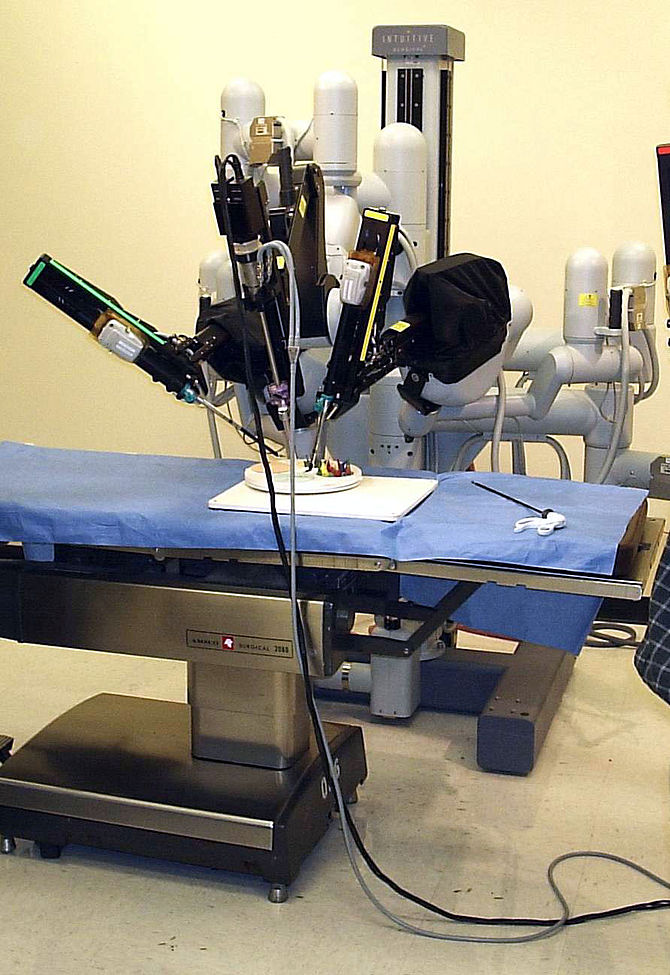
670px-laproscopic_surgery_robot

A laparoscopic robotic surgery machine. The use of cameras and advanced imaging technologies will start to expand beyond traditional surgical and scanning applications. (Photo credit: Wikipedia)

1) Facial recognition to determine pain levels: Until now, the best gauge of a patient’s pain level has been his or her self-assessment on a scale from 1 – 10. This subjective “measure” is a vague one. For something as important as pain management, more precise methods are badly needed. At the University of Notre Dame’s Robotics, Health, and Communication Lab, researchers are “creating high-fidelity robotic human patient simulators (HPS) that have the ability to exhibit realistic, clinically-relevant facial expressions – critical cues providers need to assess and treat patients.” Binghamton University has built a 3D Facial Expression Database, which the researchers say “aims to achieve a high rate of accuracy in identifying a wide range of facial expressions, with the ultimate goal of increasing the general understanding of facial behavior and 3D structure of facial expressions on a detailed level.” Both of these projects are building blocks towards cameras linked with data that can identify and quantify pain states.

2) Automated detection of patient activity: Traditionally, monitoring of patients has required some sort of physical contact with the monitoring device, such as EEG patches and fingertip oxygen sensors. For patients at risk for falls or self-injury, the solution has usually been “patient-sitters” who are stationed in the room. These sitters are often volunteers from the patient’s family, or hourly employees whose services aren’t covered by insurance. Cisco offers a Video Surveillance Manager that feeds high-def video to an operations center where trained staff can notify appropriate personnel by two-way video, voice, text, paging, or integration with existing nurse call systems. Fujitsu has gone further, creating a camera that recognizes when a patient sits up in bed, gets out of bed, or is tossing and turning in a restless effort to get to sleep.

3) Measurement of changes in heart rate from head movement: Researchers from MIT’s Computer Science and Artificial Intelligence Lab (CSAIL) are working to improve their algorithms that detect the head motion associated with each heartbeat. In other words, each time your heart beats, your head moves slightly. CSAIL is developing technology to translate video of those head movements into accurate data on heart activity. For now, the margin of error is large enough to prevent the data from being clinically useful, but that should change as the imaging and analysis elements improve.

4) Peripheral vein imaging: Finding a viable vein for an injection or IV can be tricky, even for experienced phlebotomists. Multiple sticks can waste time during an emergency, in addition to causing the patient discomfort. A company called Christie Medical Holdings is marketing a product called VeinViewer to make seeing the veins easier. They claim, “Projected near-infrared light is absorbed by blood and reflected by surrounding tissue. The information is captured, processed and projected digitally in real time directly onto the surface of the skin. It provides a real time accurate image of the patient’s blood pattern.” Technology like this would be very welcome in hospitals, outpatient labs, chemotherapy suites, and blood drives.

As with any advances in technology, these innovations may also pose ethical and legal challenges. Privacy concerns of patients being observed by remote cameras are an obvious example. Are the images being recorded and stored? Who has access to the images, and how? One factor that could speed widespread acceptance is demonstrating that these concerns are addressed within the technology itself, or by procedural safeguards.

The use of cameras in the clinical environment will become ubiquitous as image-processing techniques provide more accurate and timely monitoring of critical physiological indicators.

Rob Szczerba is the CEO of X Tech Ventures. Follow him on Forbes, Twitter (@RJSzczerba), Facebook, and LinkedIn.

Article link: http://www.forbes.com/sites/robertszczerba/2014/10/15/4-ways-cameras-are-changing-healthcare/

Posts navigation

← Older Entries
Newer Entries →
  • Search site

  • Follow healthcarereimagined on WordPress.com
  • Recent Posts

    • The Global Healthcare System Is Broken. Japan Fixed It for $4,100 Per Person. 04/10/2026
    • When Not to Use AI – MIT Sloan 04/01/2026
    • There are more AI health tools than ever—but how well do they work? – MIT Technology Review 03/30/2026
    • Are AI Tools Ready to Answer Patients’ Questions About Their Medical Care? – JAMA 03/27/2026
    • How AI use in scholarly publishing threatens research integrity, lessens trust, and invites misinformation – Bulletin of the Atomic Scientists 03/25/2026
    • VA Prepares April Relaunch of EHR Program – GovCIO 03/19/2026
    • Strong call for universal healthcare from Pope Leo today – FAN 03/18/2026
    • EHR fragmentation offers an opportunity to enhance care coordination and experience 03/16/2026
    • When AI Governance Fails 03/15/2026
    • Introduction: Disinformation as a multiplier of existential threat – Bulletin of the Atomic Scientists 03/12/2026
  • Categories

    • Accountable Care Organizations
    • ACOs
    • AHRQ
    • American Board of Internal Medicine
    • Big Data
    • Blue Button
    • Board Certification
    • Cancer Treatment
    • Data Science
    • Digital Services Playbook
    • DoD
    • EHR Interoperability
    • EHR Usability
    • Emergency Medicine
    • FDA
    • FDASIA
    • GAO Reports
    • Genetic Data
    • Genetic Research
    • Genomic Data
    • Global Standards
    • Health Care Costs
    • Health Care Economics
    • Health IT adoption
    • Health Outcomes
    • Healthcare Delivery
    • Healthcare Informatics
    • Healthcare Outcomes
    • Healthcare Security
    • Helathcare Delivery
    • HHS
    • HIPAA
    • ICD-10
    • Innovation
    • Integrated Electronic Health Records
    • IT Acquisition
    • JASONS
    • Lab Report Access
    • Military Health System Reform
    • Mobile Health
    • Mobile Healthcare
    • National Health IT System
    • NSF
    • ONC Reports to Congress
    • Oncology
    • Open Data
    • Patient Centered Medical Home
    • Patient Portals
    • PCMH
    • Precision Medicine
    • Primary Care
    • Public Health
    • Quadruple Aim
    • Quality Measures
    • Rehab Medicine
    • TechFAR Handbook
    • Triple Aim
    • U.S. Air Force Medicine
    • U.S. Army
    • U.S. Army Medicine
    • U.S. Navy Medicine
    • U.S. Surgeon General
    • Uncategorized
    • Value-based Care
    • Veterans Affairs
    • Warrior Transistion Units
    • XPRIZE
  • Archives

    • April 2026 (2)
    • March 2026 (9)
    • February 2026 (6)
    • January 2026 (8)
    • December 2025 (11)
    • November 2025 (9)
    • October 2025 (10)
    • September 2025 (4)
    • August 2025 (7)
    • July 2025 (2)
    • June 2025 (9)
    • May 2025 (4)
    • April 2025 (11)
    • March 2025 (11)
    • February 2025 (10)
    • January 2025 (12)
    • December 2024 (12)
    • November 2024 (7)
    • October 2024 (5)
    • September 2024 (9)
    • August 2024 (10)
    • July 2024 (13)
    • June 2024 (18)
    • May 2024 (10)
    • April 2024 (19)
    • March 2024 (35)
    • February 2024 (23)
    • January 2024 (16)
    • December 2023 (22)
    • November 2023 (38)
    • October 2023 (24)
    • September 2023 (24)
    • August 2023 (34)
    • July 2023 (33)
    • June 2023 (30)
    • May 2023 (35)
    • April 2023 (30)
    • March 2023 (30)
    • February 2023 (15)
    • January 2023 (17)
    • December 2022 (10)
    • November 2022 (7)
    • October 2022 (22)
    • September 2022 (16)
    • August 2022 (33)
    • July 2022 (28)
    • June 2022 (42)
    • May 2022 (53)
    • April 2022 (35)
    • March 2022 (37)
    • February 2022 (21)
    • January 2022 (28)
    • December 2021 (23)
    • November 2021 (12)
    • October 2021 (10)
    • September 2021 (4)
    • August 2021 (4)
    • July 2021 (4)
    • May 2021 (3)
    • April 2021 (1)
    • March 2021 (2)
    • February 2021 (1)
    • January 2021 (4)
    • December 2020 (7)
    • November 2020 (2)
    • October 2020 (4)
    • September 2020 (7)
    • August 2020 (11)
    • July 2020 (3)
    • June 2020 (5)
    • April 2020 (3)
    • March 2020 (1)
    • February 2020 (1)
    • January 2020 (2)
    • December 2019 (2)
    • November 2019 (1)
    • September 2019 (4)
    • August 2019 (3)
    • July 2019 (5)
    • June 2019 (10)
    • May 2019 (8)
    • April 2019 (6)
    • March 2019 (7)
    • February 2019 (17)
    • January 2019 (14)
    • December 2018 (10)
    • November 2018 (20)
    • October 2018 (14)
    • September 2018 (27)
    • August 2018 (19)
    • July 2018 (16)
    • June 2018 (18)
    • May 2018 (28)
    • April 2018 (3)
    • March 2018 (11)
    • February 2018 (5)
    • January 2018 (10)
    • December 2017 (20)
    • November 2017 (30)
    • October 2017 (33)
    • September 2017 (11)
    • August 2017 (13)
    • July 2017 (9)
    • June 2017 (8)
    • May 2017 (9)
    • April 2017 (4)
    • March 2017 (12)
    • December 2016 (3)
    • September 2016 (4)
    • August 2016 (1)
    • July 2016 (7)
    • June 2016 (7)
    • April 2016 (4)
    • March 2016 (7)
    • February 2016 (1)
    • January 2016 (3)
    • November 2015 (3)
    • October 2015 (2)
    • September 2015 (9)
    • August 2015 (6)
    • June 2015 (5)
    • May 2015 (6)
    • April 2015 (3)
    • March 2015 (16)
    • February 2015 (10)
    • January 2015 (16)
    • December 2014 (9)
    • November 2014 (7)
    • October 2014 (21)
    • September 2014 (8)
    • August 2014 (9)
    • July 2014 (7)
    • June 2014 (5)
    • May 2014 (8)
    • April 2014 (19)
    • March 2014 (8)
    • February 2014 (9)
    • January 2014 (31)
    • December 2013 (23)
    • November 2013 (48)
    • October 2013 (25)
  • Tags

    Business Defense Department Department of Veterans Affairs EHealth EHR Electronic health record Food and Drug Administration Health Health informatics Health Information Exchange Health information technology Health system HIE Hospital IBM Mayo Clinic Medicare Medicine Military Health System Patient Patient portal Patient Protection and Affordable Care Act United States United States Department of Defense United States Department of Veterans Affairs
  • Upcoming Events

Blog at WordPress.com.
healthcarereimagined
Blog at WordPress.com.
  • Subscribe Subscribed
    • healthcarereimagined
    • Join 153 other subscribers
    • Already have a WordPress.com account? Log in now.
    • healthcarereimagined
    • Subscribe Subscribed
    • Sign up
    • Log in
    • Report this content
    • View site in Reader
    • Manage subscriptions
    • Collapse this bar
 

Loading Comments...