healthcarereimagined

Envisioning healthcare for the 21st century

  • About
  • Economics

To Fight Burnout, Organize – NJEM Perspective

Posted by timmreardon on 07/24/2018
Posted in: Uncategorized. Leave a comment

Leo Eisenstein, B.A.

The clinician who coined the term “burnout” was not a primary care physician buried under paperwork, nor an emergency physician beset by an unwieldy electronic health record. He was Herbert Freudenberger, a psychologist working in a free clinic in 1974.1 Discussing risk factors for burnout, he wrote about personal characteristics (e.g., “that individual who has a need to give”) and about the monotony of a job once it becomes routine. He also pointed to workers in specific settings — “those of us who work in free clinics, therapeutic communities, hot lines, crisis intervention centers, women’s clinics, gay centers, runaway houses” — drawing a connection between burnout and the experience of caring for marginalized patients.

In recent years, burnout has become a chief concern among physicians and other front-line care providers. But somewhere along the way, the concept was separated from its original free-clinic context. The link between marginalized patients and clinician burnout seems to have gotten lost.

As a fourth-year medical student, I have received ample warning about the sources of burnout: death by a thousand clicks, too many hours at work, feeling like a cog in a machine, too many bureaucratic tasks. As a newcomer to medicine, I feel intimidated by it all. But from what I’ve observed — both during medical school and before enrolling, when I spent several years working in safety-net clinics — Freudenberger’s free-clinic context points to another source of burnout that receives insufficient attention. It is the experience of caring for patients when you know that their socioeconomic and structural circumstances are actively causing harm in ways no medicines can touch.2 As medical students, we are educated about the social determinants of health and increasingly warned about burnout, yet little is made of how the former may contribute to the latter — for example, how clinicians may feel worn down by the poverty and oppression their patients face; may feel powerless when they cannot offer more than, say, a form letter to a landlord explaining that turning off a patient’s heat would be deleterious to her health; and may feel demoralized when they realize that their instruction “Do not take this medication on an empty stomach” translates into patients taking their medications only sporadically because they don’t have enough to eat.

This contributor to burnout is not unique to physicians’ work. In medical school, though, I’ve seen an additional problem that may make it especially painful: we are led (and allow ourselves) to believe that we as individuals have more power than we do. Despite a shift toward team-based care, the image of physicians as singular heroes, as saviors
remains deeply embedded in medical culture.3 To many people, the white coat and the prescription pad represent the highest form of individual agency, the very picture of social power. But eventually, a physician will encounter patients whose health problems derive from a wicked, multigenerational knot of poverty and marginalization, and even the most astute, excellent physician may well find herself outmatched. Facing patients’ adverse social circumstances as an individual clinician is a recipe for disillusionment: the physician who believed she was maximizing her individual agency comes to feel utterly powerless. No longer the lone hero — just alone.

In this link between social determinants of health and burnout, I see a problem, but also a way forward. If individual powerlessness is the crux of this source of burnout, then organizing toward collective action should be part of the solution. Each of us can advocate for our homeless patients to be put on waiting lists for public housing. But what would happen if all doctors with homeless patients organized to demand more affordable housing?

Organizing is both strategic and therapeutic — strategic because our collective labor and voice are greater than the sum of their parts; therapeutic in the sense that the activist Grace Lee Boggs articulated: “Building community is to the collective as spiritual practice is to the individual.” When we recognize ourselves not as individual actors each isolated in an exam room, but as a collective joined in common cause, we start to feel less alone.

Some researchers have asked whether physician advocacy should be seen as a professional obligation or an aspirational goal.4 For me, the link between physician burnout and patient marginalization changes the terms of this debate. Beyond whether we must or should do it for our patients, collective advocacy to address the harmful social determinants of health can buoy physicians’ morale and thus be an act of self-care; organizing toward collective action means looking after both our patients and ourselves.

You have probably heard this parable before: A group of friends comes upon a fast-moving river where they find people drowning. The friends jump in headlong to save as many people as they can. But the drowning people keep coming. As soon as the friends rescue one, another comes into view. Eventually, one friend starts heading upstream. Another, exhausted, yells after her: “Where are you going?” The first one says, “I’m going to find out what’s throwing all these people into the river.”

The classic reading is that this parable is about prevention, but it also points to how upstream determinants contribute to burnout. Here is, I imagine, what happened to the friend who headed upstream: she saw the unending flow of drowning people coming their way. She deduced that there must be some force, hidden around the bend, that was sending people to drown. She noticed herself and her friends getting exhausted, all on the brink of burnout from the urgent, unending work. So she mobilized her friends to go upstream, for the drowners’ sake and for their own.

Obviously, it is not new for front-line clinicians to get fed up, organize, and start heading upstream. It’s what happened when physicians built collective-action organizations like Physicians for Social Responsibility and Physicians for a National Health Program; it’s what happened when clinicians joined the Moral Mondays demonstrations in North Carolina to fight for Medicaid expansion; and it’s what happens every Sunday morning in Boston, when residents and attendings, faced with an overdose epidemic, organize with the group SIFMA NOW to advocate for supervised injection facilities as a harm-reduction strategy.

In SIFMA (Supervised Injection Facilities–MA) NOW, health professionals organize side by side with harm-reduction advocates and people who use drugs. The group enables participants to build solidarity and take action in an otherwise overwhelming crisis. Dinah Applewhite, a resident at Massachusetts General Hospital, reflected at a recent meeting on how organizing can be a balm for her as a physician: “Despite my best efforts in clinic, I’ve had too many patients overdose, get endocarditis, or contract hepatitis C or HIV from unsafe injection practices. Being part of a community of advocates empowers me to fight for solutions to this crisis. It means that I’m energized and grounded, rather than burnt out, by these preventable tragedies.”

The social determinants of health — and physicians’ sense of powerlessness in the face of them — seem crucially missing from the discussion of burnout. This kind of burnout is the feeling you get when you’re trying to rescue the drowning people but they keep coming. And you’re torn between competing exigencies: the proximal needs of the people drowning, and the distal need for naming, fighting, and demanding accountability for the upstream forces that are causing harm.5 Medical students are trained to think from a vantage point of individual agency, and we become stuck there: “What can I do?” begins as an earnest, ambitious question, but it so often spoils to a cynical one. If medical schools and residency programs are serious about burnout, they have to teach us about collective action — teach us to ask, “What can we do?” To fight burnout, we should never worry alone about the social determinants of health that patients face. To fight burnout, organize.

Disclosure forms provided by the author are available at NEJM.org.

This article was published on June 20, 2018, at NEJM.org.

Article link: https://www.nejm.org/doi/full/10.1056/NEJMp1803771

Author Affiliations

From Harvard Medical School, Boston.

Supplementary Material

Disclosure Forms PDF 43KB

References (5)

How Would State-Based Individual Mandates Affect Health Insurance Coverage and Premium Costs? – Commonwealth Fund

Posted by timmreardon on 07/21/2018
Posted in: Uncategorized. Leave a comment
July 20, 2018 Linda J. Blumberg, Matthew Buettgens, and John Holahan


Commonwealth-zx1

Toplines

If all states were to replace the ACA’s individual mandate penalty with their own version, the number of uninsured in the U.S. would drop by 3.9 million in 2019 and 7.5 million in 2022

Health insurance premiums in the individual market would fall by an average 11.8 percent in 2019 if all states passed their own insurance mandates

ABSTRACT

  • Issue: The Tax Cuts and Jobs Act of 2017 eliminated the financial penalty of the Affordable Care Act’s individual mandate. States could reinstate a similar penalty to encourage health insurance enrollment, ensuring broad sharing of health care costs across healthy and sick populations to stabilize the marketplaces.
  • Goal: To provide state-by-state estimates of the impact on insurance coverage, premiums, and mandate penalty revenues if the state were to adopt an individual mandate.
  • Methods: Urban Institute’s Health Insurance Policy Simulation Model (HIPSM) is used to estimate the coverage and cost impacts of state-specific individual mandates. We assume each state adopts an individual mandate similar to the ACA’s.
  • Findings and Conclusion: If all states implemented individual mandates, the number of uninsured would be lower by 3.9 million in 2019 and 7.5 million in 2022. On average, marketplace premiums would be 11.8 percent lower in 2019. State mandate penalty revenues would amount to $7.4 billion and demand for uncompensated care would be $11.4 billion lower. The impact on coverage and on premiums varies in significant ways across states. For example, in 2019, the number of people uninsured would be 19 percent lower in Colorado and 10 percent lower in California if they implemented their own mandates. With mandates in place, average premiums would be 4 percent lower in Alaska and 15 percent lower in Washington.

Background

One of the Affordable Care Act’s central aims was to reform insurance markets by sharing health care risks and costs more broadly across the healthy and sicker populations. Strategies to accomplish this goal include modified community rating, guaranteed issue, and benefit standards, with the greatest changes made to nongroup insurance markets. Spreading risks tends to decrease costs for people with medical needs and increase them for healthy people. As a consequence, financial incentives to become and remain insured regardless of health status are necessary to ensure the risk pool is large and stable. The ACA established the individual responsibility requirement — also referred to as the individual mandate — to require most people to enroll in minimum essential health care coverage or pay a tax penalty. The Tax Cut and Jobs Act of 2017 sets the ACA’s penalties for individuals who remain uninsured to $0, beginning in 2019.

The Congressional Budget Office (CBO) estimated that eliminating the individual mandate penalties would lead to an additional 3 million uninsured people in 2019.1 It also estimated that premiums in the nongroup insurance market will increase by 15 percent between 2018 and 2019. Because of the elimination of mandate penalties, fewer healthy people are estimated to enroll in nongroup insurance; thus, the average nongroup insurance enrollee will be more likely to have higher health care expenses. As a result, premiums will be higher. Other pending changes, such as expansion of short-term, limited-duration plans, are expected to worsen the nongroup risk pool and increase premiums as well. The changes, taken together, may lead to some insurers ending or limiting their participation in ACA-compliant nongroup insurance markets.2 Acting on these concerns, some states have considered or passed legislation to implement state-specific individual mandates.3 New Jersey enacted its individual mandate on May 30, 2018;4 Massachusetts did so in 2006, well before the passage of the ACA.

This analysis provides estimates of the effects of state-specific individual mandates on insurance coverage, nongroup insurance premiums, federal and state government spending (including penalty revenue to states), and demand for uncompensated care. Findings are provided nationally as if every state adopted its own individual mandate and for 48 states and the District of Columbia (but excluding Massachusetts and New Jersey because they have their own mandates under current law), assuming each state adopts a penalty structure similar to that of the ACA. We do not anticipate every state taking this approach, but present findings this way for ease of exposition and as a reference point for understanding the effects of the mandate. (A full description of our methods is available below.)

Key Findings

Our central estimates assume that state mandates are implemented in each state as soon as the federal penalties are eliminated in 2019. The effect of a mandate grows over time as health care costs grow relative to incomes; we show some of our results in 2022 to illustrate this. State mandates would have two central effects. First, more people would retain insurance coverage to avoid the penalty. Second, premiums in the nongroup market would be lower because the insurance pool will not lose healthy people that would otherwise drop their coverage without a mandate. As a result, even more people will enroll because of the lower premiums.

National Distribution of Health Insurance Coverage, 2019

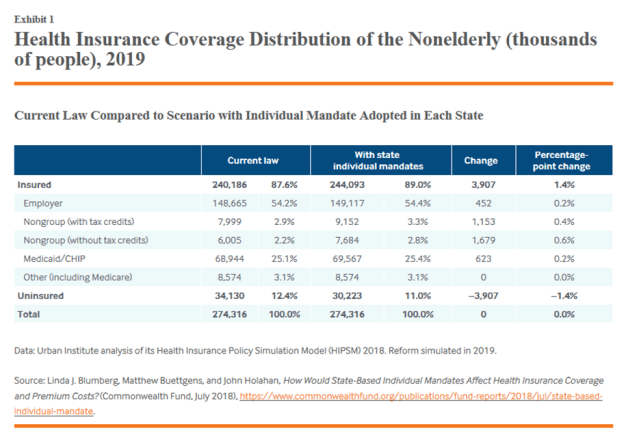
If all states adopted a mandate, the number of uninsured would fall by 3.9 million people, a decrease of 11.4 percent (Exhibit 1). The uninsured rate would decline from 12.4 percent of the nonelderly (i.e., under age 65) to 11.0 percent. About 452,000 additional people would enroll in employer-sponsored insurance (through their own employer or a family member’s) with the mandates in place. Another 1.2 million people would enroll in nongroup coverage with subsidies. Another 1.7 million people would enroll in marketplace or nonmarketplace nongroup coverage without federal subsidies. Finally, 623,000 additional people would enroll in Medicaid or the Children’s Health Insurance Program (CHIP). In most cases, these will be children; when parents apply for marketplace coverage, they find out their children are eligible for Medicaid or CHIP. (See box below for comparison with CBO estimates.)

CommonW2

Article link: https://www.commonwealthfund.org/publications/fund-reports/2018/jul/state-based-individual-mandate?utm_source=state-based-individual-mandate


VA creates new Office of Electronic Health Record Modernization – Healthcare IT News

Posted by timmreardon on 07/21/2018
Posted in: Uncategorized. Leave a comment

Deputy National Coordinator Genevieve Morris will work closely with the Veterans Health Administration and the VA CIO on the new $16 billion Cerner EHR.

Jessica Davis

July 13, 2018

HITNz1
The U.S. Department of Veterans Affairs established a new Office of Electronic Health Record Modernization, which will be led by Genevieve Morris, Department of Health and Human Services principal deputy national coordinator.

Morris and the OEHRM will work closely with the agency’s Under Secretary of Health and CIO to manage the massive transition from the legacy proprietary VistA EHR to Cerner.

OEHRM is focused exclusively focused on the EHR modernization project that officials estimate will be fully functional in the Pacific Northwest by 2020. The $16 billion project is designed to give the VA the same Cerner EHR platform currently being deployed at the Department of Defense.

“We are working hard to configure and design a system focused on quality, safety and patient outcomes, which will allow health IT innovations within one VA facility to be used across the entire VA healthcare system,” said Morris in a statement.

During a VA House Committee meeting in June, Acting VA Secretary Peter O’Rourke called Morris a “perfectly qualified” candidate for the project.

On Thursday, the VA House Committee on Veterans Affairs launched an oversight committee of its own, to ensure veterans and taxpayers are protected throughout the transition. Congress has been increasingly concerned about the cost and the ability to pull off such a large undertaking, given the struggles of the DoD Cerner project and past failures to work together.

The VA is still awaiting permanent leadership, after the departure of David Shulkin, MD in March. DoD’s Robert Wilkie’s full confirmation vote is set for the end of summer and is expected to be confirmed.

Twitter: @JessieFDavis
Email the writer: jessica.davis@himssmedia.com

Article link: https://www.healthcareitnews.com/news/va-creates-new-office-electronic-health-record-modernization

Security, Moore’s law, and the anomaly of cheap complexity – CYCON

Posted by timmreardon on 07/20/2018
Posted in: Uncategorized. Leave a comment


Cycon1

Article link: Read More

HHS Plans to Delete 20 Years of Critical Medical Guidelines Next Week – Daily Beast

Posted by timmreardon on 07/14/2018
Posted in: Uncategorized. Leave a comment


Daily Beast1
Experts say the database of carefully curated medical guidelines is one of a kind, used constantly by medical professionals, and on July 16 will ‘go dark’ due to budget cuts.

Jon Campbell

07.12.18 5:11 AM ET

The Trump Administration is planning to eliminate a vast trove of medical guidelines that for nearly 20 years has been a critical resource for doctors, researchers and others in the medical community.

Maintained by the Agency for Healthcare Research and Quality [AHRQ], part of the Department of Health and Human Services, the database is known as the National Guideline Clearinghouse [NGC], and it’s scheduled to “go dark,” in the words of an official there, on July 16.

Medical guidelines like those compiled by AHRQ aren’t something laypeople spend much time thinking about, but experts like Valerie King, a professor in the Department of Family Medicine and Director of Research at the Center for Evidence-based Policy at Oregon Health & Science University, said the NGC is perhaps the most important repository of evidence-based research available.

“Guideline.gov was our go-to source, and there is nothing else like it in the world,” King said, referring to the URL at which the database is hosted, which the agency says receives about 200,000 visitors per month. “It is a singular resource,” King added.

Medical guidelines are best thought of as cheatsheets for the medical field, compiling the latest research in an easy-to use format. When doctors want to know when they should start insulin treatments, or how best to manage an HIV patient in unstable housing — even something as mundane as when to start an older patient on a vitamin D supplement — they look for the relevant guidelines. The documents are published by a myriad of professional and other organizations, and NGC has long been considered among the most comprehensive and reliable repositories in the world.

AHRQ said it’s looking for a partner that can carry on the work of NGC, but that effort hasn’t panned out yet.

“AHRQ agrees that guidelines play an important role in clinical decision making, but hard decisions had to be made about how to use the resources at our disposal,” said AHRQ spokesperson Alison Hunt in an email. The operating budget for the NGC last year was $1.2 million, Hunt said, and reductions in funding forced the agency’s hand.

Not even an archived version of the site will remain, according to an official at AHRQ. A report from the Sunlight Foundation’s Web Integrity Project found the agency announced the site’s retirement, as well as that of a related but less trafficked “Quality Measures” site, this Spring. Some of the NGC’s pages are preserved in a third party archive, but no comprehensive backup of the site’s contents or search functions exists.

Part of what makes NGC unique is its breadth, King explained. Drawing on research from all over the country and the world, from professional organizations and research institutes, the site offers a free, and virtually comprehensive, body of guidelines in a centralized and easily searchable location. Rather than seeking out guidelines from dozens of individual publishers, King said, the NGC allows researchers to find the full range of resources in one stop.

The site plays another critical role, King said: that of gatekeeper. Because medical guidelines are produced by such a vast array of organizations, they vary widely in quality.

“In times past, there were an awful lot of, let me put air quotes around this — ‘guidelines’ — that weren’t of good methodologic quality,” King said. “They were typically just expert opinions, or what we jokingly refer to as BOGSAT guidelines: ‘bunch of guys sitting around a table’ guidelines.”

The NGC has a screening process designed to keep weakly supported research out. It also offers summaries of research and an interactive, searchable interface.

That gatekeeping role has sometimes made AHRQ a target. The agency was nearly eliminated shortly after its establishment, in the mid-90s, when it endorsed non-surgical interventions for back pain, a position that angered the North American Spine Society, a trade group representing spine surgeons. A subsequent campaign led to significant funding losses for AHRQ, and since then, the agency as a whole has been a perennial target for Republicans who have argued that its work is duplicated at other federal agencies.

The vetting role played by the NGC is a critical one, says Roy Poses, with the Patient-Centered Outcomes Research Institute.

“Many guidelines are actually written mainly for commercial purposes or public relations purposes,” said Poses, and can be subtly shaped to promote a given course of treatment. A guideline written for the treatment of depression, for example, may emphasize pharmaceuticals over talk therapy.

“The organizations writing the guidelines may be getting millions of dollars from big drug companies that want to promote a product. The people writing them may have similar conflicts of interest,” Poses said. NGC’s process provided a resource comparatively free of that kind of influence.

Underscoring how medical research like that maintained by the NGC can be politicized, AHRQ drew the ire of then-congressmember Tom Price in 2016 when it published a study critical of a drug manufactured by one of his campaign donors. According to ProPublica, one of Price’s aides emailed “at least half a dozen times” asking the agency to pull the critical research down. Price was the first director of HHS, AHRQ’s parent agency, under the Trump Administration, before resigning under pressure last year over his spending on chartered flights.

The current director of AHRQ, Gopal Khanna — a Price appointee — is the first non-scientist to head the agency. His résumé includes mostly positions in information technology management, in state government in Minnesota and Illinois, and a brief stint in the George W. Bush White House. Shortly after he was hired in 2017, he announced that data dissemination as one of his central priorities at the agency.

Mary Nix, Deputy Director of the Division of Practice Improvement at the Center for Evidence and Practice Improvement within AHRQ, cited budget cuts as the driving force behind NGC’s retirement. The site was most recently supported by a fee on some health insurance plans, which was instituted as part of the Affordable Care Act but is set to sunset in 2019. Nix estimates that the site would cost a “few hundred thousand” dollars per year to maintain even as a static archive.

Nix has been helping coordinate an effort to get some outside stakeholder to take over the site’s operations. She said she’s still hopeful, and even days before the site’s scheduled demise, AHRQ spokesperson Hunt told the Daily Beast that the search continued.

“Losing [the NGC] is really losing a valuable resource,” said Ana Maria Lopez, President of the American College of Physicians. She said the NGC is a primary source for her organization’s research, and noted that digital repositories like the NGC are only more critical today. “We’ll be thinking through what role we might be able to play here in helping to protect access to scientific information.”

Article link: https://www.thedailybeast.com/hhs-plans-to-delete-20-years-of-critical-medical-guidelines-next-week

In Focus: Physician-Led Efforts to Promote Value – Commonwealth Fund

Posted by timmreardon on 07/06/2018
Posted in: Uncategorized. Leave a comment

June 29, 2018

Martha Hostetter and Sarah Klein

Physicians are proposing new ways of delivering and paying for care that take aim at a key shortcoming of the nation’s fee-for-service system: lack of payment for some high-value services. Their condition-specific models encourage adherence to evidence-based guidelines and reductions in avoidable hospitalizations and testing that has little benefit.  Finding payer support for these models has proven challenging for some despite evidence of cost savings or improved health outcomes.

With the share of the nation’s gross domestic product devoted to health approaching 20 percent and a tsunami of aging baby boomers closing in, it’s clear the United States needs to find creative ways to curtail health care spending. Unfortunately, many such efforts led by payers and policymakers — including pay-for-performance, accountable care, and bundled payment programs — have produced only modest savings.

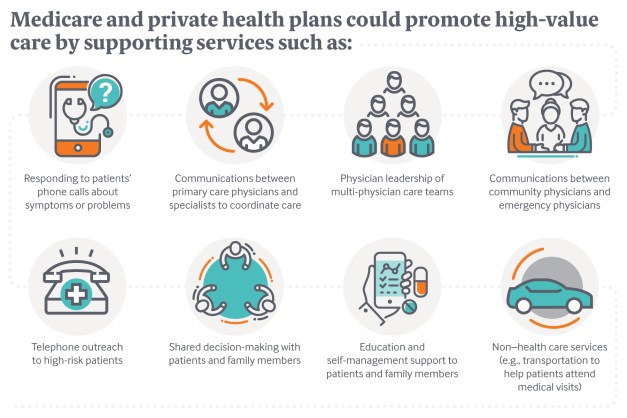
Some physicians have taken up the challenge and put forth their own ideas to achieve greater value for health care dollars. Many leverage grant funding from the Center for Medicare and Medicaid Innovation (CMMI) and elsewhere to test their ideas. Some proposals come in response to Medicare’s call for ideas on how to move away from fee-for-service payment and promote high-value care. Their new care models take aim at common and costly conditions such as cancer, cardiovascular disease, and musculoskeletal problems and seek to achieve savings by encouraging greater adherence to evidence-based guidelines, engaging patients in decision making, and avoiding complications that can lead to unnecessary care. Their condition-specific approaches could benefit patients who have frequent interactions with health care providers and may be vulnerable to complications from treatment.

Since December 2016, physicians — represented by physician groups, specialty medical societies, and others — have submitted 25 proposals to the Physician-Focused Payment Model Technical Advisory Committee (PTAC), which was created under the Medicare Access and CHIP Reauthorization Act of 2015 and tasked with evaluating physicians’ ideas for new payment models.

If eventually approved by the Secretary of Health and Human Services, the alternative payment models would offer physicians per member per month fees, shared savings, or other payment methods to manage care differently. These and other value-based payment approaches would overcome two main hurdles to reforming care delivery under the fee-for-service system: lack of payment for services, such as hiring nurses to triage problems, that can improve health outcomes; and the potential loss of revenue to providers who help patients avoid unnecessary care.

The physician-proposed alternative payment models also seek to redress what some see as a shortcoming of bundled payments, which cap payment for an episode such as total joint replacement but don’t offer guidelines on what providers might do to reduce spending. And unlike global payment approaches, they offer new financial support for particular services — often simple, proactive steps — that are likely to produce downstream savings. “The path to higher-value care should start by asking physicians where they see opportunities to improve care and reduce costs and then paying them in ways that enable those changes to be made,” says Harold D. Miller, president and CEO of Center for Healthcare Quality and Payment Reform and a member of the PTAC.

In this issue of Transforming Care, we look at new approaches to delivering and paying for care developed by physicians: some have been piloted through grants from the CMMI and/or submitted to the PTAC for consideration as new Medicare payment models, while others have gained support from private insurers or are being spread by physician entrepreneurs.

Commonwealth-z1

Source: A Guide to Physician-Focused Alternative Payment Models, American Medical Association and Center for Healthcare Quality and Payment Reform, http://www.chqpr.org/reports.html.

Engaging Patients in Shared Decision-Making and Avoiding Unnecessary Cardiac Procedures

Many people who go to their primary care doctor or cardiologist with complaints of periodic chest pain that might suggest cardiovascular disease end up receiving tests and interventions that are not in keeping with clinical guidelines, pose risks, and drive up costs.1

The Wisconsin and Florida chapters of the American College of Cardiology led a CMMI-funded pilot that brought together several decision support, patient engagement, and performance feedback tools in an effort to promote appropriate treatment for patients whose chest pain appears to be related to stable ischemic heart disease. The aim of the Smarter Management and Resource Use for Today’s Complex Care Delivery (SMARTCare) pilot was to reduce inappropriate stress tests and imaging (e.g., angiograms to view blood vessels in the heart) as well as reduce inappropriate percutaneous coronary interventions, an invasive procedure that carries risks of bleeding and other complications. It also sought to increase the number of patients who change their behavior to reduce their risks of developing severe heart disease.2

To achieve these goals, its developers embedded evidence-based guidelines into electronic health record systems at 10 cardiology practices in Wisconsin and Florida and leveraged them to guide decision-making at the point of care. The tools didn’t dictate treatment but instead helped physicians customize guidelines to make them relevant to their patients. “Some so-called decision support tools are really documentation support: if a doctor wants to order a stress test they have to supply a reason why,” says Thomas J. Lewandowski, M.D., a cardiologist in Appleton, Wis., and principal investigator of the SMARTCare pilot. “By contrast, the SMARTCare tools ask doctors to enter in a particular patient’s symptoms and then [the tools] map each to different indications, so it helps them verify whether what they’re doing fits with clinical guidelines.”

Physicians participating in the pilot also educated patients about their unique risk factors, engaged them in shared decision-making, and collected feedback on their care experiences. At the Medical College of Wisconsin, patients were shown an educational video explaining the risks and benefits of various cardiac procedures before meeting with a cardiologist. They also completed the Seattle Angina Questionnaire to assess their symptoms and severity (at other sites, patients completed the Heart Quality of Life questionnaire). Cardiologists drew on the survey data and videos to help patients understand their risks and options — putting some guide rails around what can be a highly charged conversation. Without information, “patients often push for more invasive procedures,” says Nicole Lohr, M.D., a cardiologist at Medical College of Wisconsin. “They say, ‘Doc, it’s my heart; you better do something about it because I don’t want to die.’”

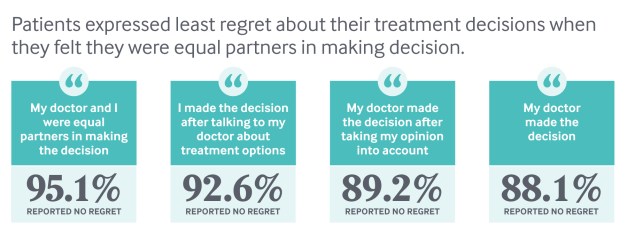
The SMARTCare Pilot Demonstrated Giving Patients a Greater Say in Treatment Decisions Led to Less Regret
Commonwealth - x2

Thomas J. Lewandowski et al., “Unlocking the Power of Data: Information Technology Implementation for Smarter Management and Resource Use for Today’s Complex Care Delivery,” poster published by the American College of Cardiology Foundation, 2017.

The reality is most primary care doctors and even some cardiologists who order cardiac diagnostic tests don’t always choose appropriate, evidence-based testing because of the time constraints within an office visit and a lack of exposure to changing guidelines.  Nicole Lohr, M.D. Assistant Professor of Medicine, Cardiovascular Division,Medical College of Wisconsin

Some SMARTCare participants also used the IndiGO tool, a simulation model that calculates a patient’s risk for having a heart attack or stroke based on their cardiovascular disease history, comorbidities, body mass index, and lifestyle behaviors. It then models the potential benefits of behavior changes (e.g., smoking cessation or weight loss) and medications. Cardiologists used the tool to encourage patients to make behavior changes and identify where they had opportunities to intervene. “Take a 75-year-old whose coronary disease, diabetes, and blood pressure are under control, and who exercises and does not smoke: there is nothing left to do with that patient to reduce their risk,” says Lewandowski. “But the role of IndiGO is to identify which patients have risk factors that we still have ability to affect. That is something that our current tools don’t do.”

Data on patients were collected throughout the course of treatment, enabling clinicians to benchmark their performance against peers and receive rapid feedback on health outcomes and costs.

The SMARTCare pilot was prompted, in part, by data from Wisconsin’s all-payer claims database showing wide variation in cardiology resource use, information that also caught the attention of the WEA Trust, a self-insured plan that covers 110,000 Wisconsin public employees. WEA Trust is now encouraging health systems to negotiate for payment to embed the system as a means of offsetting the revenue they may lose from avoiding stress testing, nuclear stress testing, and catheterizations. “Payment is a signal of what we value,” says Tim Bartholow, M.D., vice president and chief medical office at WEA Trust. “If we want better medical decision making, we need to increasingly focus payment on team-based decision making and more realistic, cost-based reimbursements for commodities such as imaging, laboratory tests, and drugs.”

Heading Off Complications for Oncology Patients

In 2014, cancer care accounted for $87.8 billion of health care spending for noninstitutionalized Americans; of that, roughly 28 percent went to emergency department and hospital care. Barbara McAneny, M.D., a New Mexico oncologist and president of the American Medical Association, says a large portion of the hospitalizations and emergency department visits are to treat fevers, dehydration, and other complications of chemotherapy that could be avoided with closer management in outpatient settings, where patients typically receive chemotherapy infusions. Avoiding unnecessary hospitalizations may also prevent further deterioration, she says. “In addition to the risks of infections and bed sores, if you take someone who isn’t healthy and can’t rebuild muscle mass, and you put them in a hospital bed for a few days, they end up with less muscle tone and a reduced quality of life.”

The problem is that oncology practices can’t bill Medicare or most private insurers for services like educating patients on how to recognize warning signs or hiring a nurse to answer calls and triage problems. At the same time, patients may be reluctant to trouble physicians when they first notice symptoms.

Through a grant from CMMI, McAneny led a trial of an alternate approach. From 2012 to 2015, the Community Oncology Medical Home (COME HOME) tested whether providing advanced access to patients and closer care coordination could lead to earlier detection of problems and avoid hospitalizations. Seven cancer centers offered on-demand visits, including on nights and weekends, for emergent issues such as pain, dehydration, nausea, or fevers; hired a nurse to respond to patients’ question and triage problems; and implemented 37 unique care pathways for diagnosis, treatment, and symptom management of different types of cancers. “We make our triage pathways available, so people can figure out which patient with left-sided pain is having a heart attack and needs to go to hospital and which has bony metastasis and doesn’t need their fourth cardiac workup,” McAneny says.

An evaluation of the pilot found this approach led to significant reductions in emergency department visits and hospitalizations for ambulatory care–sensitive conditions, as well as significantly lower average cost of care ($601 less per patient per quarter). McAneny says that practices that enabled nurses to execute standing orders to address patient complications achieved the most dramatic reductions in hospitalizations; at her own practice, hospitalizations were cut in half.

This February, McAneny submitted a proposal to the PTAC for consideration of an alternative payment model to support COME HOME, and 16 practices have agreed to participate, should it be funded. Notably, the practices have also agreed to share clinical and claims data to feed into a software platform that would be leveraged to create customized treatment plans for patients and offer real-time physician education and performance feedback. Eventually, the goal is to use this pooled data to cluster cancer patients according to their risks and disease severity, then compare variations in spending and outcomes in each of the clusters; such information could help Medicare and other payers develop appropriate alternative payment models.

“Right now, nobody has the ability to accurately predict costs for a cancer patient who has x, y, and z characteristics,” McAneny says. “Even if you have multiple patients with stage 4 colon cancer, some are going to cost a whole lot of money and some will cost much less. We hope to learn which factors make the difference and to identify things that are modifiable through better coordination or different types of care.”3

Improving Quality and Reducing Costs for Back Pain Treatment

Back problems are among the most common reasons people visit a doctor, leading to more than $47 billion a year in medical costs. A review of 10 years’ worth of medical visits for back pain found ample evidence of overtreatment: instead of starting with anti-inflammatory drugs and physical therapy, as recommended by clinical guidelines, physicians have increasingly prescribed narcotics, ordered imaging, and referred patients to specialists. Overuse of opioids, in particular, has fueled the epidemic of addiction.

Andrew Haig, M.D., a physiatrist (a physician specializing in rehabilitation) and active emeritus professor of physical medicine and rehabilitation at the University of Michigan, thinks clinicians in his field are well positioned to manage back pain by serving as “midfield players”: given their expertise, they are better able than primary care clinicians to explore the many potential causes of patients’ suffering and may be less wedded to high-cost interventions, like surgery and injections.

In 2008, Haig partnered with the Michigan insurer Priority Health to test this approach: all patients who were referred by their primary care physician to a surgeon for back pain were first required to see a physiatrist. The health plan waived members’ copayments for this visit, and physiatrists were given a $50 bonus, on top of the visit fee, to help patients talk through options. “I hold up five fingers and say, ‘When you leave here you are going to put something in your shopping cart: surgery, injection, pills, some kind of therapy, or doing nothing,’” Haig says. Without such guidance, patients may hold out hope there’s a magical solution to their problem. “It’s important for patients to leave with a finite sense of their options,” he says.

Over two years, Priority Health saw a 25 percent reduction in spine surgery among its members, as well as a 12 percent reduction in overall spine-related costs per member per month and continued member satisfaction, compared with the year before implementation of this approach.

Haig has since developed and tested other parts of a continuum of back pain management and has spun off a consulting firm to encourage providers and health plans to adopt the “Operation FastBack” model.

Under Operation FastBack, all patients with chronic back pain, for example, would be screened by a physiatrist. Those whose pain does not appear to be related to a serious medical condition (e.g., cancer) would then receive a multidisciplinary team assessment that can consider the wide range of factors and available treatments. Haig’s research found that psychological factors like depression, fear, and avoidance, as well as poor physical conditioning, are common among patients with back pain. The team includes a physical therapist to consider anatomical issues; an occupational therapist to explore how disability affects people’s lives; an exercise specialist to explore the role of physical conditioning; a psychologist to consider contributing psychiatric factors; and a representative for complementary/alternative medicine to consider such therapies. After their initial assessment, the team would work with a physiatrist and the patient to develop a holistic care plan. In a trial of 500 patients who underwent these team assessments, 17 people who received one type of complex intervention (functional restoration) had less work disability, fewer diagnostic tests, and fewer surgeries than those who were recommended this treatment but did not receive it.

Haig is now working with Blue Cross and Blue Shield of Vermont to develop the infrastructure to support this model, starting with creation of a hub at one hospital that has the full staff and other resources to assess back pain patients, treat the ones with the most complex needs, and refer others to treatment at local clinics. Hub clinicians also would support the local clinics in providing best practice care in three regional emergency departments and primary care settings. Haig and Blue Cross and Blue Shield are tracking expenses and outcomes under this approach, with the goal of modeling how a bundled payment might support it.

Evidence-Based Prescribing to Control Costs for Rheumatoid Arthritis Treatment

Rheumatoid arthritis plagues some 1.3 million Americans with chronic joint pain and other problems. While biologic drugs have helped many patients who don’t respond to other types of medication, their price is much higher (around $50,000 a year) than traditional antirheumatic therapies (e.g., methotrexate, which can cost around $100 to $200 a year).3 This has raised concerns among some payers as well as patients, who may have to shoulder high copayments for a lifelong condition. Articularis Healthcare, which has 12 specialty rheumatology practices in South Carolina and Georgia, collaborated with a local insurer to develop a rheumatoid arthritis treatment pathway to ensure lower-cost medications are effectively tested before doctors recommend more expensive treatments.

Under the pathway, rheumatologists are prompted by their electronic health record system to follow American College of Rheumatology guidelines, which generally suggest an initial period of treatment with a traditional antirheumatic drug prior to escalating therapy to a biologic agent. The pathway also reminds physicians to periodically measure the effects of drug treatment on disease activity using a validated tool — another clinical guideline but one that may not be followed in all cases.

The “traditional medication is slow acting, and patients may not feel relief initially,” says Colin Edgerton, M.D., who practices at Articularis’s Low Country Rheumatology clinic, in Charleston. “A doctor may react to patients’ lack of relief and suggest switching to the biologic without really having a good metric built into the system to realize, ‘Oh, it’s only been six weeks. We should wait a bit longer to see if it can work.’”

Edgerton says this approach led to a 10 percent to 20 percent decline in the use of high-cost biologics, mainly achieved by identifying more patients whose conditions responded to the lower-cost medication. The local insurer pays Articularis a per member per month case management fee (around $500 to $1,000 a year) to defray the cost of staff required to implement the pathway and educate providers in its use; the two parties share in the savings that result from reduced use of biologic drugs.

Challenges to Spreading Physician-Led Alternative Payment Models

As these examples make clear, changing how care is provided and paid for in health care must begin by integrating new tools into electronic health record systems. This can be expensive and cumbersome; McAneny, for example, has struggled to enlist her electronic health record vendor in making changes needed to aggregate data across practices.

Those who are able to overcome technological challenges may find it hard to gain the attention and support of payers. While Medicare has called for new proposals, it has not yet acted on any of PTAC’s recommendations. Private payers have also been slow to support new care models. Edgerton, for example, has found it hard to enlist support from large national insurers for the rheumatoid arthritis pathway, perhaps because it has only been tested among a small number of patients. Banding together across practices, as is being proposed under the COME HOME model for oncology, could create the critical mass of patients needed to demonstrate efficacy for new care models and garner support from payers to invest in them.

Lewandowski says that Medicare could encourage multipayer support for initiatives like SMARTCare, thus ensuring that payers share equally in developing and testing new care models. The Centers for Medicare and Medicaid Services could also require accountable care organizations to pursue new approaches to high-cost specialty care, including orthopedics and cardiovascular care, rather than just meeting benchmarks on a relatively small number of performance metrics to qualify for shared savings, he says.

Brian Klepper, Ph.D., founding principal of Orange Park, Florida–based Worksite Health Advisors, a consulting firm that advises self-insured employers on how to find high-value clinical partners, says physician innovators often succeed by going directly to employers and offering them a financial guarantee of savings. “Like Amazon, they make people an offer they can’t refuse,” he says.

Perhaps most important, it will be crucial to enlist support for new care models from physicians; some may feel new decision support tools or care pathways are too prescriptive, while others may perceive a threat to their revenue stream from efforts to avoid high-cost services. But some of the models could make some physicians’ jobs easier. “Doctors are burning out in droves, and we can’t keep adding to their plate,” says John Mafi, M.D., M.P.H., assistant professor of medicine and health services research at UCLA’s David Geffen School of Medicine. “Making the right thing to do the easy thing is really the promising way to get real change to happen. It’s easier said than done.”

Article link: https://www.commonwealthfund.org/publications/newsletter/2018/jun/focus-physician-led-efforts-promote-value

Cerner EHR project would be top priority, VA Secretary nominee Wilkie says – Healthcare IT News

Posted by timmreardon on 07/04/2018
Posted in: Uncategorized. Leave a comment

President Donald Trump’s choice to lead the veterans’ agency, Robert Wilkie, also says he would not privatize veterans’ healthcare if confirmed.

By Jessica Davis

June 28, 2018


HITNx-4

Credit: c-span

If the U.S. Senate confirms Robert Wilkie as Department of Veterans Affairs Secretary, implementation of the near-$16 billion Cerner electronic health record would be a top priority at the agency, Wilkie said on Wednesday during his confirmation hearing.

As acting VA Secretary, Wilkie signed the contract with Cerner last month to replace the agency’s legacy system. The EHR contract is just the first step to modernize the VA, said Wilkie.

“[The new EHR system] modernizes our appointment system, it is also the template to get us started on the road to automate disability claims and our payment claims, particularly to our providers in rural America and those who administer emergency care,” Wilkie said.

More importantly, the Cerner system will bolster interoperability, he added. The system will be able to connect with the Department of Defense and private sector actors, such as pharmacies, to “create a continuum of care” and help prevent suicide and opioid abuse.

The plan is to create a unified EHR with the DoD through the Cerner platform, while aligning the rollout with the DoD’s scheduled implementations to achieve efficiencies, said Wilkie.

But Sen. Patty Murray, D-Washington, who blasted the DoD in April for “putting patient lives at risk” with its initial rollout, told Wilkie she was concerned the VA was still pushing forward with the contract despite the DoD’s challenges.

“You signed the contract to move forward on procuring the same system” as the DoD, said Murray. “We can’t see the same problems that DoD has experienced. So, I want to know what you will do to oversee the rollout and what specific steps you’re going to take to make sure quality and access to care is not diminished.”

Wilkie responded that — despite the planned 2020 go-live date for three sites — he “will not commit to putting any program online until it’s properly tested.”

Healthcare remained a key discussion point throughout the hearing, with Wilkie pointing out four areas where the VA needs to improve: culture and communal aspects, care access, agency backlog and human resources business.

If confirmed, Wilkie will fill the role left vacant by David Shulkin, MD, who was fired by President Trump on Twitter in March. Shulkin made the initial push to transition the VA’s legacy system to Cerner in June 2017.

After his dismissal, Shulkin said he was forced out by those within the government who want to privatize VA healthcare, which was top of mind for Sen. Bernie Sanders, I-Vermont.

“There is overwhelming opposition to the privatization of the VA from all of the major veterans organizations,” said Sanders. “Do you believe in the privatization of the VA?”

“No, sir, I don’t,” said Wilkie.

“Will you vigorously oppose, whether it is the Koch brothers and their various organizations or the President of the U.S., any effort to privatize the VA?” Sanders asked.

“My commitment to you is that I will oppose efforts to privatize the VA,” Wilkie said.

If confirmed, Wilkie will be charged with leading the recently passed MISSION Act, which reformed the Veterans Choice program and lets veterans seek private sector care if there are long wait times in their area or if they live a certain distance from a VA medical facility.

Wilkie stressed that VA is central to veterans healthcare and that the Choice program is designed to support VA care, while removing barriers for veterans who seek private sector care.

“Many of the issues I encountered as acting secretary were not with the quality of care but were getting veterans through the door to get that care,” Wilkie said.

Twitter: @JessieFDavis
Email the writer: jessica.davis@himssmedia.com


Topics:  Electronic Health Records (EHR, EMR), Government & Policy

Article link: https://www.healthcareitnews.com/news/cerner-ehr-project-would-be-top-priority-va-secretary-nominee-wilkie-says

VA to Congress: First Cerner EHR install will go live by 2020 – Healthcare IT News

Posted by timmreardon on 07/04/2018
Posted in: Uncategorized. Leave a comment

But several representatives pressed the department on the “staggering” cost of the project during the VA House Committee meeting.

By Jessica Davis

June 26, 2018
HITN-x3

The U.S. Department of Veterans Affairs’ EHR project will go live in the Pacific Northwest and be fully functional by March 2020, VA officials told the House Committee on Veterans Affairs on Tuesday.

The VA will ensure the effectiveness of its pilot sites early in the process, assessing the planned sites in Spokane, Seattle and American Lake, Washington in July, September and August, said Acting VA Secretary Peter O’Rourke.

In October, the VA will begin the EHR deployment to those sites.

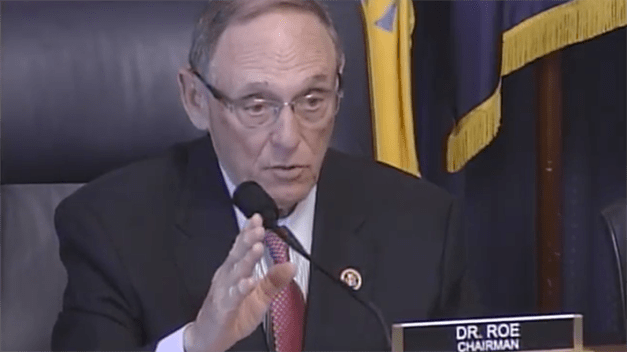
But Committee Chairman Rep. Phil Roe, MD, R-Tennessee, weighed in on the scope of the project, outlining concerns about the cost and significance of getting the project right.

“$15.8 billion over 10 years, including $10 billion to Cerner, is a staggering number for an enormous government agency,” said Roe. “The EHR modernization effort is not just a technology project. It will have a major impact on how the Veterans Health Administration operates.”

“That means clinical and administrative workflows,” he said. “It also changes the culture, as VistA has.”

The EHR modernization project has been a long road already. Former VA Secretary David Shulkin, MD made the decision to sign with Cerner in June 2017. But the contract wasn’t signed until May 2018 — after a year of staffing changes, interoperability issues and concerns about aligning the project to match the Department of Defense as that project has hit its own technical issues.

Rep. Tim Walz, D-Minnesota shared those concerns and added that oversight and leadership will be crucial throughout the entirety of the project.

“There are going to need to be eyes on this all the way,” said Walz. “The Government Accountability Office should be in attendance at every single governing board member…. GAO must have direct and frequent access to VA, Cerner, and program management support contractors.”

Walz also wants the VA to provide the GAO with quarterly progress reports.

VA and DoD have been working closer than in previous attempts to align the EHRs. The idea is to take the lessons DoD has discovered during its own Cerner implementation — MHS Genesis — so that the VA can have a more seamless transition from its legacy VistA EHR to Cerner.

DoD and VA have already found areas where the two agencies can work closely together and share resources, while aligning DoD and VA EHR deployments especially at joint agency sites, explained Defense Health Agency Director Vice Admiral Raquel Bono.

Roe also formally announced the development of an oversight subcommittee that will oversee the EHR implementation to help with this process. And O’Rourke said the agency has set up five programmatic, technical and functional teams to support the project.

Those groups include a legacy EHR Modernization pivot workgroup, steering committee, governance integration board, a functional governance board and a technical governance board.

Walz expressed support of these groups to manage the project, but railed on the VA officials over the continued lack of permanent leadership.

“We still don’t have a confirmed secretary, deputy secretary, undersecretary for health, or chief information officer: Pretty important those positions be filled with some stability,” said Walz.

Rep. Jim Banks, R-Indiana reiterated that point, referencing a Politico report that claimed Genevieve Morris, Department of Health and Human Services principal deputy coordinator of health IT would lead the EHR project: “If that’s true, when was the decision made, and why isn’t she testifying today?”

While O’Rourke called her a candidate, stating she’s “perfectly qualified,” he didn’t confirm those reports.

Indeed, VA leadership has seen an incredible amount of turnover in the last six months. Following negative reports on Shulkin, his Chief of Staff Vivieca Wright Simpson retired. President Donald Trump fired Shulkin shortly after, which began a long line of turnover.

A recent Congressional letter pointed to a loss of 40 senior staffers in the last five months, including its acting CIO Scott Blackburn — a crucial role for any major EHR project.

But O’Rourke said he was confident in the agency’s EHR plan, as they’re working closely with DOD.

“We’re listening to advice from respected leaders in healthcare,” he said. “We’re fully engaged with Cerner regarding all critical activities: establishing governance boards, conducting current state reviews, and optimizing the deployment strategy.”

Twitter: @JessieFDavis
Email the writer: jessica.davis@himssmedia.com

Topics:

Electronic Health Records (EHR, EMR), Government & Policy

Article link: https://www.healthcareitnews.com/news/va-congress-first-cerner-ehr-install-will-go-live-2020


VA spent $3 billion over 3 years to maintain VistA EHR, GAO says – Healthcare IT News

Posted by timmreardon on 07/04/2018
Posted in: Uncategorized. Leave a comment

The amount averages about $1 billion a year, less than the projected $16 billion for the Cerner platform — which Congressional members say doesn’t encompass the whole price tag.

By Jessica Davis

June 28, 2018

HITNx-2

The U.S. Department of Veterans Affairs spent about $3 billion from 2015 to 2017, an average of $1 billion a year, to support its legacy EHR VistA, according a new Government Accountability Office report.

According to officials, the costs covered the EHR platform, interoperability efforts and a Virtual Lifetime Electronic Record Health, supporting functions like networks and infrastructure, development, operation and maintenance.

VA analyzed its obligations for supporting VistA to assess these costs, which included data standardization and data sharing between the VA, the private sector and the Department of Defense, the report found.

DoD and VA have been working for years to interoperate. But VistA is more than 30 years old, costly to maintain and doesn’t support interoperability, officials said.

Some of these results were shared during Tuesday’s VA House Committee meeting, where VA officials announced the first Cerner install will go live in 2020. During that hearing, Chairman Rep. Phil Roe, MD, R-Tennessee expressed concern over the “staggering” cost of the project.

The implementation is projected at $16 billion over the next 10 years, with $5.8 billion of those funds set aside to manage and support the current VistA infrastructure. But GAO Director of IT Management Issues David Powner said the estimate is low, as the VA failed to include internal employee costs.

Roe added that the speed at which technology is changing will add additional new costs and the EHR platform that rolls out in 2020 will look “totally different in 2028.”

“I don’t see how there couldn’t be more costs,” said Roe.

Adding to these costs issues, according to the report, is “there is no single information source that fully defines the scope of VistA.” Instead, the existing system definitions and its components are identified by multiple sources, describing the system from varying perspectives.

This includes modules and associated business functions, systems and interfaces and documentation — among others, according the report. But there is no complete definition of the platform, due to variances in VistA between its health facilities.

In order to prepare for the Cerner project, the VA has taken steps to analyze, assess and plan for the new EHR. Officials are also attempting to standardize VistA across its sites, clarifying the VA’s approach to interoperability, establishing governance for the new IT project and preparing the initial project launch.

Twitter: @JessieFDavis
Email the writer: jessica.davis@himssmedia.com

Topics:

Electronic Health Records (EHR, EMR), Government & Policy

https://www.healthcareitnews.com/news/va-spent-3-billion-over-3-years-maintain-vista-ehr-gao-says
Article link: https://www.healthcareitnews.com/news/va-spent-3-billion-over-3-years-maintain-vista-ehr-gao-sayshttps://www.healthcareitnews.com/news/va-spent-3-billion-over-3-years-maintain-vista-ehr-gao-says

This Is Why Blockchains Will Transform Healthcare – Forbes

Posted by timmreardon on 07/02/2018
Posted in: Uncategorized. Leave a comment

The blockchain revolution has made its way to the healthcare industry, and it’s only the beginning of what’s possible. Healthcare Rallies for Blockchain, a study from IBM, found that 16% of surveyed healthcare executives had solid plans to implement a commercial blockchain solution this year, while 56% expected to by 2020. Healthcare companies, tech innovators and the rest of the healthcare industry are grappling with what’s possible now and what blockchain could solve in the future.

The overall vision for blockchain to disrupt healthcare in the future would be to solve many issues that plague the industry today to create a common database of health information that doctors and providers could access no matter what electronic medical system they used, higher security and privacy, less admin time for doctors so there’s more time to spend on patient care, and even better sharing of research results to facilitate new drug and treatment therapies for disease.

Forbes - 2

What is blockchain?

While blockchain principles were first applied in the financial world as the technology that allowed Bitcoin to operate, it has applications for many industries including healthcare. Blockchains are distributed systems that log transaction records on linked blocks and store them on an encrypted digital ledger. There is no one central administrator, but it has unprecedented security benefits because records are spread across a network of replicated databases that are always in sync. Users can only update the block they have access to, and those updates get replicated across the network. All entries are time and date stamped.

What are potential uses of blockchains in healthcare?

Although there are some incredibly exciting ways blockchains can enhance healthcare operations, it won’t be a cure-all for the industry today, but it would certainly be a step in the right direction. The healthcare industry is drowning in data—clinical trials, patient medical records, complex billing, medical research and more. Adoption and implementation of blockchains will be an evolution over time as blockchains applications are vetted and adopted as well as the industry coming together to determine collaboration and governance issues. As it always is with new technology, the full possibilities of what may transpire in the future is unknown at this time. However, as quoted in a Wired article, “Now is probably the right time in our history to take a fresh approach to data sharing in health care,” says John Halamka, chief information officer at Boston-based Beth Israel Deaconess Medical Center.

Here are the most likely applications:

Medical Data Management

MedRec, one prototype using blockchains, is intended to improve electronical medical records and allow patients’ records to be accessed securely by any provider who needs it solving the waste of time, money and duplication in procedures, confusion and sometimes even life-threatening issue of records being distributed across many different facilities and providers. The goal with MedRec is to give patients and their providers one-stop access to their entire medical history across all providers they have ever seen. Additionally, if patients wish to grant access to their personal medical records to researchers, their data would be provided anonymously to be used in research which could make medical breakthroughs possible faster than they are now. This pioneer in the field shows the potential for how dramatically things could change in healthcare by deploying blockchains.

Drug Development and Supply Chain Integrity

Not only could blockchains facilitate new drug development by making patient results more widely accessible (if the patients give their permission), it could help reduce the counterfeit drug implications that currently cost pharmaceutical companies an estimated $200 billion in losses annually.

Forbes-1

Claims and Billing Management

Medicare fraud caused more than $30 million in losses in the United States in 2016, and blockchain-based systems could help minimize it. In addition, it could reduce admin costs for billing by eliminating the need for intermediaries with automated activities and more efficient processing.

Centralizing the results of clinical trials and patient outcomes for new treatment protocols can improve care and patient outcomes. Currently, with all the diverse and disconnected systems in play, there is no way for a human to process all the data that is generated and recorded in disparate systems for future treatment possibilities. Blockchains could provide the access to make medical innovation quicker.

Data Security

Between 2015-2016, 140 million patient records were breached according to Protenus Breach Barometer report. With the growth of connected devices and the Internet of Medical Things (IoMT), existing health IT architecture is struggling to keep systems secure. Blockchain solutions have the potential to be the infrastructure that is needed to keep health data private and secure while reaping the benefits of connected medical devices.

Although blockchain technology is currently changing the healthcare industry, keep in mind this is a marathon, not a sprint. Healthcare organizations and entities are testing and vetting how blockchains can better support their operations while future applications will inevitably be discovered along the way. It will be an fascinating process to watch.

Article link: https://www.forbes.com/sites/bernardmarr/2017/11/29/this-is-why-blockchains-will-transform-healthcare/#6af76a621ebe


Bernard Marr is a best-selling author & keynote speaker on business, technology and big data. His new book is Data Strategy. To read his future posts simply join his network here.


Posts navigation

← Older Entries
Newer Entries →
  • Search site

  • Follow healthcarereimagined on WordPress.com
  • Recent Posts

    • When Not to Use AI – MIT Sloan 04/01/2026
    • There are more AI health tools than ever—but how well do they work? – MIT Technology Review 03/30/2026
    • Are AI Tools Ready to Answer Patients’ Questions About Their Medical Care? – JAMA 03/27/2026
    • How AI use in scholarly publishing threatens research integrity, lessens trust, and invites misinformation – Bulletin of the Atomic Scientists 03/25/2026
    • VA Prepares April Relaunch of EHR Program – GovCIO 03/19/2026
    • Strong call for universal healthcare from Pope Leo today – FAN 03/18/2026
    • EHR fragmentation offers an opportunity to enhance care coordination and experience 03/16/2026
    • When AI Governance Fails 03/15/2026
    • Introduction: Disinformation as a multiplier of existential threat – Bulletin of the Atomic Scientists 03/12/2026
    • AI is reinventing hiring — with the same old biases. Here’s how to avoid that trap – MIT Sloan 03/08/2026
  • Categories

    • Accountable Care Organizations
    • ACOs
    • AHRQ
    • American Board of Internal Medicine
    • Big Data
    • Blue Button
    • Board Certification
    • Cancer Treatment
    • Data Science
    • Digital Services Playbook
    • DoD
    • EHR Interoperability
    • EHR Usability
    • Emergency Medicine
    • FDA
    • FDASIA
    • GAO Reports
    • Genetic Data
    • Genetic Research
    • Genomic Data
    • Global Standards
    • Health Care Costs
    • Health Care Economics
    • Health IT adoption
    • Health Outcomes
    • Healthcare Delivery
    • Healthcare Informatics
    • Healthcare Outcomes
    • Healthcare Security
    • Helathcare Delivery
    • HHS
    • HIPAA
    • ICD-10
    • Innovation
    • Integrated Electronic Health Records
    • IT Acquisition
    • JASONS
    • Lab Report Access
    • Military Health System Reform
    • Mobile Health
    • Mobile Healthcare
    • National Health IT System
    • NSF
    • ONC Reports to Congress
    • Oncology
    • Open Data
    • Patient Centered Medical Home
    • Patient Portals
    • PCMH
    • Precision Medicine
    • Primary Care
    • Public Health
    • Quadruple Aim
    • Quality Measures
    • Rehab Medicine
    • TechFAR Handbook
    • Triple Aim
    • U.S. Air Force Medicine
    • U.S. Army
    • U.S. Army Medicine
    • U.S. Navy Medicine
    • U.S. Surgeon General
    • Uncategorized
    • Value-based Care
    • Veterans Affairs
    • Warrior Transistion Units
    • XPRIZE
  • Archives

    • April 2026 (1)
    • March 2026 (9)
    • February 2026 (6)
    • January 2026 (8)
    • December 2025 (11)
    • November 2025 (9)
    • October 2025 (10)
    • September 2025 (4)
    • August 2025 (7)
    • July 2025 (2)
    • June 2025 (9)
    • May 2025 (4)
    • April 2025 (11)
    • March 2025 (11)
    • February 2025 (10)
    • January 2025 (12)
    • December 2024 (12)
    • November 2024 (7)
    • October 2024 (5)
    • September 2024 (9)
    • August 2024 (10)
    • July 2024 (13)
    • June 2024 (18)
    • May 2024 (10)
    • April 2024 (19)
    • March 2024 (35)
    • February 2024 (23)
    • January 2024 (16)
    • December 2023 (22)
    • November 2023 (38)
    • October 2023 (24)
    • September 2023 (24)
    • August 2023 (34)
    • July 2023 (33)
    • June 2023 (30)
    • May 2023 (35)
    • April 2023 (30)
    • March 2023 (30)
    • February 2023 (15)
    • January 2023 (17)
    • December 2022 (10)
    • November 2022 (7)
    • October 2022 (22)
    • September 2022 (16)
    • August 2022 (33)
    • July 2022 (28)
    • June 2022 (42)
    • May 2022 (53)
    • April 2022 (35)
    • March 2022 (37)
    • February 2022 (21)
    • January 2022 (28)
    • December 2021 (23)
    • November 2021 (12)
    • October 2021 (10)
    • September 2021 (4)
    • August 2021 (4)
    • July 2021 (4)
    • May 2021 (3)
    • April 2021 (1)
    • March 2021 (2)
    • February 2021 (1)
    • January 2021 (4)
    • December 2020 (7)
    • November 2020 (2)
    • October 2020 (4)
    • September 2020 (7)
    • August 2020 (11)
    • July 2020 (3)
    • June 2020 (5)
    • April 2020 (3)
    • March 2020 (1)
    • February 2020 (1)
    • January 2020 (2)
    • December 2019 (2)
    • November 2019 (1)
    • September 2019 (4)
    • August 2019 (3)
    • July 2019 (5)
    • June 2019 (10)
    • May 2019 (8)
    • April 2019 (6)
    • March 2019 (7)
    • February 2019 (17)
    • January 2019 (14)
    • December 2018 (10)
    • November 2018 (20)
    • October 2018 (14)
    • September 2018 (27)
    • August 2018 (19)
    • July 2018 (16)
    • June 2018 (18)
    • May 2018 (28)
    • April 2018 (3)
    • March 2018 (11)
    • February 2018 (5)
    • January 2018 (10)
    • December 2017 (20)
    • November 2017 (30)
    • October 2017 (33)
    • September 2017 (11)
    • August 2017 (13)
    • July 2017 (9)
    • June 2017 (8)
    • May 2017 (9)
    • April 2017 (4)
    • March 2017 (12)
    • December 2016 (3)
    • September 2016 (4)
    • August 2016 (1)
    • July 2016 (7)
    • June 2016 (7)
    • April 2016 (4)
    • March 2016 (7)
    • February 2016 (1)
    • January 2016 (3)
    • November 2015 (3)
    • October 2015 (2)
    • September 2015 (9)
    • August 2015 (6)
    • June 2015 (5)
    • May 2015 (6)
    • April 2015 (3)
    • March 2015 (16)
    • February 2015 (10)
    • January 2015 (16)
    • December 2014 (9)
    • November 2014 (7)
    • October 2014 (21)
    • September 2014 (8)
    • August 2014 (9)
    • July 2014 (7)
    • June 2014 (5)
    • May 2014 (8)
    • April 2014 (19)
    • March 2014 (8)
    • February 2014 (9)
    • January 2014 (31)
    • December 2013 (23)
    • November 2013 (48)
    • October 2013 (25)
  • Tags

    Business Defense Department Department of Veterans Affairs EHealth EHR Electronic health record Food and Drug Administration Health Health informatics Health Information Exchange Health information technology Health system HIE Hospital IBM Mayo Clinic Medicare Medicine Military Health System Patient Patient portal Patient Protection and Affordable Care Act United States United States Department of Defense United States Department of Veterans Affairs
  • Upcoming Events

Blog at WordPress.com.
healthcarereimagined
Blog at WordPress.com.
  • Subscribe Subscribed
    • healthcarereimagined
    • Join 153 other subscribers
    • Already have a WordPress.com account? Log in now.
    • healthcarereimagined
    • Subscribe Subscribed
    • Sign up
    • Log in
    • Report this content
    • View site in Reader
    • Manage subscriptions
    • Collapse this bar
 

Loading Comments...