healthcarereimagined

Envisioning healthcare for the 21st century

  • About
  • Economics

Health data breaches on the rise – Reuters

Posted by timmreardon on 09/27/2018
Posted in: Uncategorized. Leave a comment

(Reuters Health) – Health data breaches are on the rise, a new study shows.

While the largest number of data breaches occurred at health care providers’ sites – such as hospitals and physicians’ offices – it’s health care plans that account for the greatest number of patient records stolen over the past seven years, according to the study published in JAMA.

“The climb in the total number of records breached is primarily attributable to very large breaches of electronic systems,” said study leader Dr. Thomas McCoy, an assistant professor of psychiatry and medicine at Harvard University and director of research for the Center for Quantitative Health at Massachusetts General Hospital in Boston.

And while large centralized databases offer health researchers a goldmine of records that can be used to improve healthcare, you have “to balance the risks (of being hacked) against the benefits to research,” McCoy said.

McCoy and his coauthor analyzed all data breaches that were reported to the Office of Civil Rights at the U.S. Department of Health and Human Services from January 2010 through December 2017. The researchers looked at trends in the numbers and types of breaches reported in three categories: those taking place at health care providers, at health plans and at businesses associated with healthcare.

The analysis turned up 2,149 breaches involving a total of 176.4 million patient records, with individual breaches ranging from 500 to nearly 79 million patient records. During the seven-year period, the total number of breaches increased every year except for 2015, starting at 199 in 2010 and rising to 344 in 2017.

While 70 percent of all breaches involved data stored by health care providers, the breaches involving data kept by health plans accounted for 63 percent of all stolen records.

The researchers found that 510 breaches involved paper and film records, which impacted about 3.4 million patients, as compared to 410 breaches of network servers that impacted nearly 140 million records. The three largest breaches together accounted for more than half of the stolen records.

Why would thieves want your health data?

“There’s financial data embedded in health data – your name, your address, your social security number,” said Chris Carmody, senior vice president of infrastructure and services and president of ClinicalConnect Health Information Exchange at the University of Pittsburgh Medical Center in Pennsylvania. “With that information someone could go out and get a credit card account. Or a criminal could go out and sell it on the dark web, the shady part of the internet where identities are sold and traded.”

Healthcare-related organizations have become a more interesting target as they have increasingly adopted digital records, said Carmody, who is not affiliated with the new research. “They’re going after the easiest target and unfortunately healthcare has that stigma,” he said. “The benefit of this research paper is that it highlights cyber security threats. It will probably happen to most organizations at one point or another and maybe even multiple times.”

While the risk of theft is real, Carmody doesn’t suggest doing away with electronic records. “They empower patients,” he explained. “So the message shouldn’t be to ask your doctors to stop using electronic records, but rather to ask what they are doing to protect your data.”

Theoretically, it’s also possible that thieves could try to sell health data to employers wanting yet another source of information on prospective hires, said Michael Pencina, vice dean for Data Science and Information Technology at the Duke University School of Medicine in Durham, North Carolina.

Still, the risks are small compared to the benefits that are already accruing from big health data, said Pencina, who is not affiliated with the new research. With a huge source of information on various diseases, researchers can devise new treatments and tests, he added.

Access to a large number of scans, for example, can help scientists “teach” computers to spot diseases “with accuracy that matches or exceeds what a human can achieve,” Pencina said.

With this kind of data, “the potential is huge,” Pencina said.

SOURCE: bit.ly/2EM1XZO Journal of the American Medical Association, online September 25, 2018.

Article link: https://mobile.reuters.com/article/amp/idUSKCN1M524J

America’s Health Care System Could Be So Much Better – Scientific American

Posted by timmreardon on 09/27/2018
Posted in: Uncategorized. Leave a comment

Donald Rebhun September 25, 2018

Observations

But it would take a change of culture and investment to make that happen

Sciam1

The ongoing conversation around health care in the United States presents a daunting question: How is it that this country—with all its wealth, education and innovation—has among the highest health care costs of any industrialized nation, yet its clinical outcomes still lag behind?

Illustrating the point, according to a Kaiser Family Foundation analysis, disease burden in the U.S. is greater than in other similar countries, with poorer management of preventable diseases resulting in increased use of emergency rooms, increased hospital admissions, worse outcomes, higher costs, and higher mortality rates.

There are numerous opinions coming from inside and outside of the medical community on how best to improve treatment quality and outcomes, boost patient experience and reduce the cost of care. We believe that medical organizations that embrace integrated coordinated care are uniquely positioned to help drive the changes needed.  There are groups throughout the country that have decades of experience practicing coordinated care and many more that are embracing this care delivery model each year. It is worth taking a closer look at how these groups are financially structured and the foundations of their clinical cultures.

The vast majority of American health care providers are still operating in a model that the industry refers to as “fee-for-service,” in which the provider is paid based on the services and treatment rendered, not on the patient’s health outcome (quantity rather than quality).  However, very different types of health care finance models have existed for decades. Most accept a variety of payments including shared savings, bundled payments, being part of an accountable care organization (ACO), shared risk and full risk.

In the full risk model, a provider organization is paid a flat per-patient, per-month rate. The group thus accepts the clinical and financial accountability of a defined population. In order for organizations to be successful under this and other risk-based contracting models, they must have: an engaged and committed clinical and business leadership; invested in building a unique infrastructure with focus on prevention and early detection; and an advanced care management department working closely with numerous healthcare professionals, applying innovative resources and programs and using data/analytics to improve the quality of care delivery. This model places financial incentives for providers to keep the patient in the best possible health in order to reduce downstream health problems and complications with their associated costs.

In the short term, a fee-for service financial model may offer steady, predictable income; however, it is not a sustainable strategy for the long term. Making the shift from a volume-based fee-for-service model to a value-based risk-bearing care model can prove to be beneficial for patients and the medical organizations themselves. But how and what changes are needed by organizations, most of which recognize that these and other changes are inevitable?

While many medical groups claim that they are “patient centered,” the key is implementing day-to-day action that proves it. For example, HealthCare Partners, a DaVita Medical Group, has spent the last three decades caring for hundreds of thousands of patients in Southern California. Over that time, we built an intentional culture where patients are at the center of the clinical model. In this model, coordinated teams align with physicians who have the independence to develop a care plan in collaboration with their patients. This basic but fundamentally unique approach laid a cultural foundation for all of our clinical programs and naturally fostered an environment where a full-risk model has been highly successful.

Our group and other medical groups that prioritize value-based care use key performance indicators to determine how successful this approach has been, such as monitoring how often patients are going to the emergency room for non-emergent care and how often they are being admitted to the hospital. Typically, a group’s assumed financial risk, coupled with a patient-centered culture, heightens the organization’s focus on, and investment in, helping to safely promote avoidable hospital stays and deliver the right care, in the right place, at the right time.

For example, at HealthCare Partners, this includes investing in and prioritizing innovative new programs such as in-home care for frail and elderly patients and often those who have chronic illness and are homebound, and a specific program to provide care for patients with chronic obstructive pulmonary disease (COPD).

Here are some notable results from the program providing home care for high-risk patients: 27 percent reduction in emergency room visits; 26 percent reduction in avoidable hospital admissions; and 25 percent reduction in hospital bed days.

As for the COPD program, its results include: 30 percent reduction in avoidable hospital admits; 23 percent reduction in emergency room visits; 39 percent reduction in hospital bed days. This has led to 34 percent reduction in total costs.

These programs, which support the value-based model of care, may seem challenging to implement for many health care providers still operating in the old fee-for-service model; however, they don’t have to be. Small changes, starting with an intentional culture and a willingness to shift toward prevention and focused care for high-risk populations, can go a long way in helping transform America’s health care system. The potential benefits and the effect could bring much-needed change.


Article link: https://blogs.scientificamerican.com/observations/americas-health-care-system-could-be-so-much-better/?sf198416108=1
The views expressed are those of the author(s) and are not necessarily those of Scientific American.

Rights & Permissions

ABOUT THE AUTHOR(S)

Donald Rebhun

Donald Rebhun, MD, MSPH, is the national medical director of HealthCare Partners, a DaVita Medical Group.

Poll: The ACA’s Pre-Existing Condition Protections Remain Popular with the Public, including Republicans, As Legal Challenge Looms This Week – Kaiser Family Foundation

Posted by timmreardon on 09/25/2018
Posted in: Uncategorized. Leave a comment

As Health Care Costs Remain on Top of Voters’ Minds, Americans Cite Unexpected Medical Bills as Their Top Problem, Ahead of Premiums, Deductibles and Drugs

Public Not Confident in President Trump’s Calls on Drug Companies to Lower Prices

As a federal court considers a challenge to the Affordable Care Act’s constitutionality, the public, including most Republicans, wants protections for people with pre-existing conditions preserved, the latest Kaiser Family Foundation tracking poll finds.
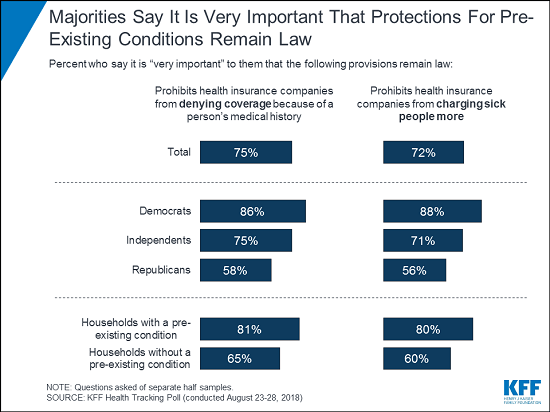
Large majorities of Americans say it is “very important” to retain the ACA provisions that prevent insurance companies from denying coverage based on a person’s medical history (75%) and from charging sick people more (72%). This includes majorities of Democrats, independents and Republicans, as well as majorities of those with and without people with pre-existing conditions in their households.

KFFchart1

The ACA’s pre-existing condition protections have emerged as a hot topic in some key Congressional races in part because of a pending legal challenge filed by 20 state attorneys general. The Trump Administration has opted not to defend the law’s pre-existing condition protections in the case, and a federal district court in Fort Worth, Texas is scheduled to hear arguments on the challenge today. Republican Senators also introduced a bill to address the issue if the ACA were overturned, though some analysts say its protections fall short.
Four in 10 Americans (41%) say they are “very worried” that they or a family member will lose coverage if the Supreme Court overturns the ACA’s pre-existing condition protections. In addition, half (52%) are “very worried” they or a family member will have to pay more for coverage.
Americans Cite Unexpected Medical Bills as Their Top Health Cost Concern
The public overall also sees health costs as a major problem – with six in 10 (58%) saying they are “very concerned” about increases in what people pay for health care.
When given a list of possible worries, unexpected medical bills tops the list that includes other health care costs such as premiums, deductibles and even drug costs. Two-thirds (67%) say they are at least “somewhat” worried about affording an unexpected medical bill – more than say the same about their deductibles (53%), drug costs (44%) or premiums (42%).
Unexpected medical bills also ranked higher than other pocketbook concerns such as gasoline or transportation costs (46%), monthly utility bills (43%) and rent or mortgage (41%).
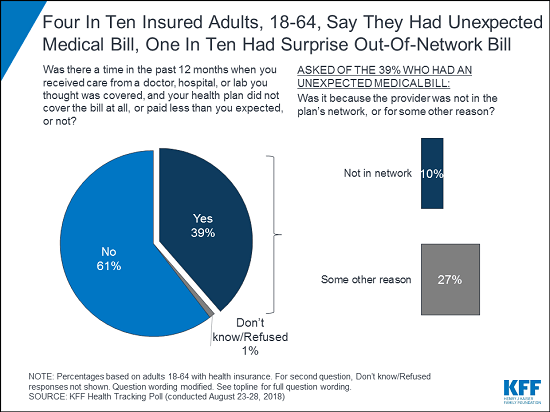
Overall, 39 percent of insured adults ages 18-64 say that in the past year they have received an unexpected medical bill – either from a doctor, hospital, or lab that they thought was covered and their health plan either didn’t cover the bill at all or covered less than they expected. For 10 percent of insured adults ages 18-64, the surprise bill was related to care received from an out-of-network provider.

KFFchart2new

Half (50%) of those who had an unexpected medical bill say the amount they were expected to pay was less than $500 overall. Smaller shares say the amount was between $500 and $999 (16%), between $1,000 and $1,999 (12%); or $2,000 or more (13%).

Partisans Split on Effectiveness of Trump Administration’s Efforts to Lower Drug Prices

President Trump recently has publicly criticized several drug companies and called on them to lower the cost of their prescription drugs. A majority (55%) of the public say that this strategy of publicly calling on drug companies to lower their costs will not be too effective or at all effective. Fewer (42%) say it will be very or somewhat effective.

There are large partisan differences. Three-fourths of Democrats (74%) say this strategy will not be effective, while two-thirds of Republicans (67%) say it will be effective. More independents say it will not be effective than will be effective (57% v. 41%).

In addition, 38 percent of Americans say they are either “very” or “somewhat” confident that President Trump and his administration will be able to deliver on his promise that Americans will pay less for prescription drugs than they pay now. This number remains virtually unchanged since March 2018, before the administration released its “American Patients First” plan aimed at lowering drug prices.

The public debate over drug prices appears to having an impact on the public’s views of drug companies. When asked about the reasons behind rising health care costs, an increasing share of the public blames prescription drug companies. Eight in ten (78%) say drug companies making too much money is a “major reason” why people’s health care costs have been rising, up from 62 percent in 2014.

Other top causes in the public’s mind include fraud and waste in the health care system (71%), hospitals charging too much (71%), and insurance companies making too much money (70%). About six in 10 (62%) say a major reason for rising costs is due to the expense of new drugs, treatments, and medical technologies.

Fewer, but still about half, say doctors charging too much (49%), an aging population (47%), and medical malpractice lawsuits (45%) are “major reasons” for rising costs. Less than half blame people getting more services than they really need (41%), the Affordable Care Act (39%), the Trump administration’s recent actions on health care (38%), or people not shopping for lower-priced services (28%).

Across Parties, Costs Top Voters’ Health Care Concerns Heading into the Midterm Elections

The poll finds corruption in Washington, health care and the economy and jobs are what voters want to hear candidates discuss on the campaign trail ahead of November’s midterm election. Fielded after of the indictment of Michael Cohen and initial trial of Paul Manafort, this is the first time the KFF poll included corruption in Washington, D.C. in the list of possible campaign topics, and the issue jumped to the top of the list.

Three in 10 of voters (30%) say Washington corruption is the “most important” topic for candidates to discuss, with health care (27%) and the economy and jobs (25%) close by. In June, when Washington corruption wasn’t offered as an option, health care and the economy topped the list of topics voters want to hear candidates discuss.

Battleground voters – those living in states and districts that the Cook Political Report rates as having the most competitive House, Senate and gubernatorial races – rank campaign topics similarly, with corruption (32%), the economy and jobs (27%) and health care (26%) topping their list of “most important” topics.

When voters are asked what health care issue they most want to hear the candidates discuss, a quarter (27%) mention health care costs – three times the share that mention any other health care issue, such as increasing access (9%), universal coverage (8%), Medicare or senior concerns (7%), or prescription drug costs (7%). Health care costs are the top health care issue mentioned by Democratic voters (29%), independent voters (29%), and Republican voters (25%).

Half of Public Views the ACA Favorably This Month

This month marks the 90th time that KFF has asked about the public’s perception of the Affordable Care Act on a poll since April 2010. This month, half (50%) of the public holds a favorable view of the law, while 40 percent hold an unfavorable view. Similar shares of Republicans hold unfavorable views (78%) as Democrats hold favorable views (77%). Half (50%) of independents holds favorable views toward the ACA, while 39 percent hold unfavorable views.

Methodology

Designed and analyzed by public opinion researchers at the Kaiser Family Foundation, the poll was conducted from August 23-28, 2018 among a nationally representative random digit dial telephone sample of 1,201 adults. Interviews were conducted in English and Spanish by landline (301) and cell phone (900). The margin of sampling error is plus or minus 3 percentage points for the full sample. For results based on subgroups, the margin of sampling error may be higher.

Article link: https://www.kff.org/health-reform/press-release/poll-acas-pre-existing-condition-protections-remain-popular-with-public/

President signs the largest VA budget ever – >$200 Billion – Military Times

Posted by timmreardon on 09/25/2018
Posted in: Uncategorized. Leave a comment
WASHINGTON — President Donald Trump signed the Department of Veterans Affairs fiscal 2019 budget into law on Friday, giving the department a funding boost of more than 6 percent and pushing the agency’s total spending over $200 billion for the first time.

The president finalized the bill at a ceremony held in the North Las Vegas VA Medical Center, surrounded by federal officials and local veterans. He praised the massive spending measure as another promise kept by his administration.


“With this funding bill we have increased the VA’s budget to the largest ever,” he said. “We are delivering the resources to implement crucial VA reforms.”

The bill includes $1.1 billion for the start of a VA electronic health records overhaul and $400 million for opioid abuse prevention within the department, both efforts touted by Trump in the past.

No shutdown at VA: Congress passes department’s budget on time

Thursday’s House vote marks on the second time in the last nine years that Congress has finished its VA budget work on time.

By: Leo Shane III

The final deal also includes a $1.75 billion increase in money tied to the VA Mission Act, passed at the start of the summer. The legislation will rewrite the department’s community care programs, expanding veterans ability to access private health care at taxpayer expense.

That money had stalled negotiations on the budget bill for months, and Democrats said they still are not satisfied with the short-term spending plug to cover what is expected to be an even bigger financial hole next year.


“The bill the president signed today leaves a funding gap in May of 2019, expected to grow to more than $8 billion in fiscal year 2020,” Sen. Patrick Leahy, D-Vt., the top Democrat on the Senate Appropriations Committee, said in a statement after the signing.

“We do our veterans no favors when we make promises we do not keep, and I will continue to fight in Congress to make sure they receive the care they deserve.”

The VA funding legislation also includes $10.3 billion in military construction funding for fiscal 2019 as well as the full-year budgets for the legislative branch and federal energy programs.


Trump’s signature came just a day after he blasted a similar sprawling budget package focused on the Department of Defense as a “ridiculous spending bill” because it omitted border wall funding he has demanded from Congress.

The House is expected to finalize that legislation next week. If the president chooses to veto it, most federal departments would face a partial government shutdown. VA would be exempted from those problems, however, since their fiscal 2019 funding is now in place.

Article link: https://www.militarytimes.com/news/2018/09/21/trump-oks-the-largest-va-budget-ever/

Improving Care: Priorities to Improve Electronic Health Record Usability – AMA

Posted by timmreardon on 09/24/2018
Posted in: Uncategorized. Leave a comment


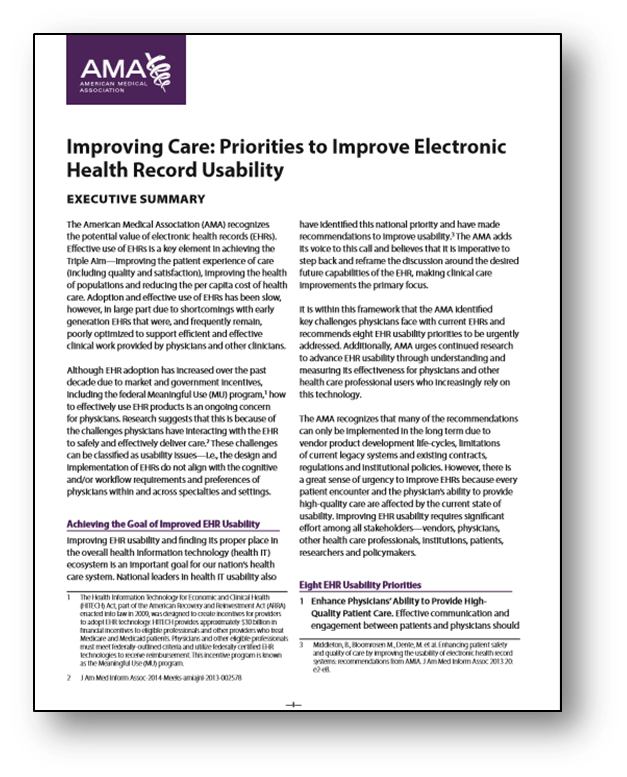
AMAx1


62 clicks to order Tylenol? What happens when EHR tweaks go bad – AMA

Posted by timmreardon on 09/24/2018
Posted in: Uncategorized. Leave a comment

Sep 14, 2018

Staff Writer
AMA Wire

Organizational decisions regarding configuration or customization of electronic health record (EHR) systems can create an outsized impact on the ease, efficiency and error rates of physician users, according to research that tracked clinician EHR experience at four hospitals.

Related Coverage
Simpler logins, voice recognition ease click fatigue at Yale

“The results of this study reveal wide variability in task duration, clicks, and accuracy when completing basic EHR functions across EHR products from the same vendor and between products from different vendors,” says the study, commissioned by the AMA. “The results highlight the variability that can be introduced from local site customization, given that products from the same vendor resulted in vastly different performance results.”

The research, “A usability and safety analysis of electronic health records: a multi-center study,” was published in the Journal of the American Medical Informatics Association.

The study results are striking, finding an average of a ninefold difference in time and eightfold difference in clicks for certain tasks.

The Tylenol order test came in second on an even more troubling measure—error rate. It ranged from an average of 30 percent to zero, across four test sites. The highest error rate was on an oral prednisone taper—an average of 50 percent at one hospital and 16.7 percent at lowest.

The researchers tracked keystrokes and mouse clicks—and even video recorded—12 to 15 emergency medicine physicians, of varying years of clinical experience, at each of four hospitals. Six typical tasks were selected—two diagnostic imaging orders, two lab orders and two electronic prescriptions.

The scenarios were real, but the patients were not. Two top hospital EHRs were used—systems from Cerner and Epic, vendors that together hold more than half the hospital EHR market—at two hospital sites apiece. MedStar Health’s National Center for Human Factors in Healthcare, the AMA and others conducted the study.

“The variability in time, clicks and errors highlight critical challenges with EHR usability and safety,” the researchers found.

Too many choices the culprit?

The research casts doubt on practices that have been a traditional point of pride in the EHR industry—customization and configuration choices for purchasers. Customization is work done by the vendor for a purchaser, while configuration entails built-in settings over which the purchaser has control.

The Office of the National Coordinator (ONC) of Health Information Technology requires that EHR vendors follow a user-centered approach during design, development and testing.

‘’All of the products examined in this study were usability tested by Cerner or Epic Corporations, and certified by the ONC’s accrediting bodies,’’ the study’s authors acknowledged.

The authors also note that EHR “products go through vastly different implementation processes with variations in customization and configuration, physician training, and software updates. The differences in vendor testing, ONC accrediting body certification review, and implementation processes, as well as other factors, all contribute to the variability demonstrated in this study.”

The AMA has long given voice to physician concerns about EHRs, and its advocacy includes compiling eight priorities to improve EHR usability. Among them is emphasizing the importance of user input in product design and post-implementation feedback.

“Our findings reaffirm the importance of considering patient care and physician input in the development and implementation of EHRs,” said study co-author Michael Hodgkins, MD, the AMA’s chief medical information officer. “There are multiple variables impacting the end-user experience that contribute to physician burnout, a diminished patient-physician relationship, and unrealized cost savings.

“While design can be an important factor,” he said, “so too can implementation choices made onsite. Increased collaboration between vendors, information technology purchasers and physicians is needed to optimize experiences and address current needs.”

Article link: https://wire.ama-assn.org/practice-management/62-clicks-order-tylenol-what-happens-when-ehr-tweaks-go-bad

Payment and Delivery-System Reform — The Next Phase – NEJM Perspective

Posted by timmreardon on 09/24/2018
Posted in: Uncategorized. Leave a comment

by Hoangmai Pham, M.D., M.P.H., and Paul B. Ginsburg, Ph.D.

After nearly a decade of experimentation with value-based payment (VBP), U.S. health care payers, providers, and purchasers are confronting uneven adoption of new care guidelines, modest early results, and still-unacceptable gaps in spending and quality. In determining what comes next, we believe it’s important to extrapolate from the lessons of these experiences to guiding principles for designing new approaches. It’s also essential to recognize that to truly redesign a system, one has to take a holistic approach and move multiple levers in concert, rather than fiddling with individual factors serially and hoping for a coordinated effect. Though we focus on tactics for private payers to consider, many of these principles and a holistic strategy could also be adapted to Medicare or Medicaid contexts.

We have observed, for example, that providers vary greatly in their commitment to VBP, appetite for financial accountability, and capability to improve care.1 Average results for a given VBP program therefore offer only limited information about the potential impact of initiatives involving partnering with selected providers. Payers and purchasers would do better to identify high-value providers with consistently strong performance and both favor them through mechanisms to increase their patient volume — such as narrow- or tiered-network products — and reward and ensure their continued participation by devising a sustainable business case within VBP arrangements. Unlike most current high-value networks that focus nearly exclusively on unit prices, value-based networks could favor providers on the basis of both quality and management of total health care spending. Smartly allocating resources and attention to high-performing providers, combined with exerting consistent pressure on fee-for-service prices and regulations, could induce greater competition and motivate lower-performing providers to focus and improve. Moreover, the risk in not differentiating among providers is that high-value providers who have taken political risks and made substantial management and infrastructure investments in value-based payment may question those investments if they don’t see proportionate returns. Relying solely on providers’ instincts for “doing the right thing” cannot be the long-term strategy for reform.

Most important, high-value narrow or tiered networks and complementary benefit designs would address the limits of what even committed and capable providers have been able to achieve in wide-open networks. For example, Medicare and the majority of patients in commercial accountable care organizations (ACOs) are insured through preferred-provider organizations, with few explicit tools to steer referrals or ensure that patients get care from ACO providers. Though true narrow networks would be preferable to tiered networks because they’re simpler to explain and differentiate, tiered networks could probably accommodate more cautious consumers and employers. Payers may therefore choose to design tiered networks as well, but with steep cost-sharing differentials.

Financial incentives alone, however, will probably be insufficient to motivate true patient engagement. There is a graveyard full of narrow-network products that never garnered the desired enrollment numbers. We believe that providers and payers need to offer patients more positive reasons to use high-value providers. Payers could build enticements — such as digital or other services that make care more convenient and responsive to patients’ daily realities, to address not just clinical needs but also expectations for customized care — into the capabilities that they expect providers to develop in order to participate in the network, and adjust them over time in collaboration with providers, purchasers, and patients as their collective vision of care delivery evolves. Payers could also directly invest in or otherwise promote the entry of new, disruptive providers who offer innovative patient-centered care to help jolt other providers into action. The promise of enhanced patient experiences could make product features such as required selection of a primary care provider (PCP) more appealing, as part of a pact to build a more constructive, rewarding care experience. The proof will then be in the actual experience that providers who are given such incentives can offer their patients.

Of course, even high-value providers need appropriate motivation to perform well. Most VBP arrangements still determine providers’ gains or losses on the basis of their ability to improve on their own baseline spending performance, with adjustments for quality. But those formulas, if applied in perpetuity, would push providers who are already efficient or successful in generating savings into an unwinnable situation. Although it may be possible to continuously improve on spending performance, the targets set to measure performance should be based on regional or other market-driven trends, not an individual organization’s trend, whose use will ultimately punish providers for good performance. Payers can offer a sustainable business case that includes financial rewards for both “most valuable player” and “most improved.”

In designing such a model, it’s important to acknowledge another shortcoming of many VBP arrangements to date: they’ve placed nearly all accountability for outcomes on the shoulders of PCPs. Though promoting and supporting primary care are critical policy goals, it’s not realistic to expect PCPs, given their limited financial and political leverage, to optimally drive efficient care on their own. PCPs wield influential prescribing, diagnostic, and referral pens, but theirs are often not the most powerful voices in decisions about resource allocation or investments in care infrastructure or process change. When PCPs and specialists belong to different organizations, PCPs may have even less influence over the use of specialty services, unless they’re affiliated with a practice or health system that is large enough to command attention through referral volume. We believe that this limited influence has contributed to the lack of a clear impact of primary care–focused VBP initiatives such as patient-centered medical home and ACO programs. Though specialists account for roughly similar percentages of ACO providers and of the general physician population, most ACOs seem not to engage their specialists nearly as deeply as they do their PCPs in population health management.2 If payers more assertively and directly engaged specialists in such VBP arrangements as bundled payments or new reimbursements for desirable services such as e-consults, they would have incentives to collaborate with PCPs. Payers can achieve that engagement either by directly contracting with specialists in VBP arrangements or by facilitating incorporation of such incentive structures into ACOs’ compensation approaches.

Payers with fortitude — and large market shares — could also begin to address the underlying price distortions in physician fee structures that lead to the lopsided provision of high-margin services and the incentives to grow volume in those services rather than focus on the total costs of care and outcomes for a population. Current pricing distortions are insidious: they underpin the way spending targets are set in all VBP arrangements, including Medicare Advantage plans and commercial ACO or capitation programs, which follow Medicare relative-pricing structures closely. Unless payers address these structural issues, they will always limit what VBP can achieve in reducing spending and hamper providers’ investments in creative care-delivery improvements, because plans will continue to pay unjustified sums for some services and not enough for other, higher-value services. The United States spends approximately 7% of each health care dollar on primary care services, for example, as compared with more than 20% in countries with better health outcomes and lower spending.3

There are, of course, lingering operational challenges to the success of VBP programs, including accurate, comprehensive, and timely data sharing; methods of attributing patients to providers that allow them to accrue sufficiently large populations to justify their investments and work; and technical assistance that is “right-sized” to an organization’s needs and goals.

Continuing with piecemeal solutions to these design issues is inadvisable: they are intimately interrelated, and it’s hard to solve one without considering the implications for the others. If payers align with one another and pursue a range of complementary solutions simultaneously, they may be able to avoid many more years of ambiguous results — and the disengagement of providers and purchasers that invested in VBP in good faith but cannot justify continued commitment if all key stakeholders don’t make critical trade-offs to build a holistic solution.

Disclosure forms provided by the authors are available at NEJM.org.

This article was published on September 19, 2018, at NEJM.org.

Article link: https://www.nejm.org/doi/full/10.1056/NEJMp1805593#.W6LFkNPrQOE.twitter

Author Affiliations

From Provider Alignment Solutions, Anthem (H.P.), and the Brookings Institution (P.B.G.) — both in Washington, DC; and the Schaeffer Center for Health Policy and Economics, University of Southern California, Los Angeles (P.B.G.).

Supplementary Material

Disclosure Forms PDF 97KB

References (3)

  1. 1. McWilliams JM, Hatfield LA, Chernew ME, Landon BE, Schwartz AL. Early performance of accountable care organizations in Medicare. N Engl J Med 2016;374:2357–2366.

  2. 2. Dupree JM, Patel K, Singer SJ, et al. Attention to surgeons and surgical care is largely missing from early Medicare accountable care organizations. Health Aff (Millwood) 2014;33:972–979.

  3. 3. Koller CF, Khullar D. Primary care spending rate — a lever for encouraging investment in primary care. N Engl J Med 2017;377:1709–1711.

Association of Medical Scribes in Primary Care With Physician Workflow and Patient Experience – JAMA

Posted by timmreardon on 09/23/2018
Posted in: Uncategorized. Leave a comment
Author Affiliations Article Information

  • 1Division of Research, Kaiser Permanente Northern California, Oakland
  • 2Oakland Medical Center, Kaiser Permanente Northern California, Oakland
JAMA Intern Med. Published online September 17, 2018. doi:10.1001/jamainternmed.2018.3956
Key Points:

Question  Can the use of medical scribes decrease electronic health record documentation burden, improve productivity and patient communication, and enhance job satisfaction among primary care physicians?

Findings  In this crossover study of 18 primary care physicians, use of scribes was associated with significant reductions in electronic health record documentation time and significant improvements in productivity and job satisfaction.

Meaning  Use of medical scribes to reduce the increasing electronic health record documentation burden faced by primary care physicians could potentially reduce physician burnout.

Abstract

Importance  Widespread adoption of electronic health records (EHRs) in medical care has resulted in increased physician documentation workload and decreased interaction with patients. Despite the increasing use of medical scribes for EHR documentation assistance, few methodologically rigorous studies have examined the use of medical scribes in primary care.

Objective  To evaluate the association of use of medical scribes with primary care physician (PCP) workflow and patient experience.

Design, Setting, and Participants  This 12-month crossover study with 2 sequences and 4 periods was conducted from July 1, 2016, to June 30, 2017, in 2 medical center facilities within an integrated health care system and included 18 of 24 eligible PCPs.

Interventions  The PCPs were randomly assigned to start the first 3-month period with or without scribes and then alternated exposure status every 3 months for 1 year, thereby serving as their own controls. The PCPs completed a 6-question survey at the end of each study period. Patients of participating PCPs were surveyed after scribed clinic visits.

Main Outcomes and Measures  PCP-reported perceptions of documentation burden and visit interactions, objective measures of time spent on EHR activity and required for closing encounters, and patient-reported perceptions of visit quality.

Results  Of the 18 participating PCPs, 10 were women, 12 were internal medicine physicians, and 6 were family practice physicians. The PCPs graduated from medical school a mean (SD) of 13.7 (6.5) years before the study start date. Compared with nonscribed periods, scribed periods were associated with less self-reported after-hours EHR documentation (<1 hour daily during week: adjusted odds ratio [aOR], 18.0 [95% CI, 4.7-69.0]; <1 hour daily during weekend: aOR, 8.7; 95% CI, 2.7-28.7). Scribed periods were also associated with higher likelihood of PCP-reported spending more than 75% of the visit interacting with the patient (aOR, 295.0; 95% CI, 19.7 to >900) and less than 25% of the visit on a computer (aOR, 31.5; 95% CI, 7.3-136.4). Encounter documentation was more likely to be completed by the end of the next business day during scribed periods (aOR, 2.8; 95% CI, 1.2-7.1). A total of 450 of 735 patients (61.2%) reported that scribes had a positive bearing on their visits; only 2.4% reported a negative bearing.

Conclusions and Relevance  Medical scribes were associated with decreased physician EHR documentation burden, improved work efficiency, and improved visit interactions. Our results support the use of medical scribes as one strategy for improving physician workflow and visit quality in primary care.

Introduction
The transition from paper-based to electronic health records (EHRs) ushered in a new era of health care delivery. Financial incentives for EHR adoption and meaningful use provided the impetus for EHR implementation in the United States,1 resulting in adoption rates of 99% in hospitals2 and 70% among office-based physicians as of 2016.3 Although EHRs modestly improve quality, enhance patient safety, and reduce costs,4–7 they also impose added demands on a physician’s time. Emerging evidence indicates that EHRs, as currently implemented, increase clerical workload and physician stress and interfere with direct physician-patient interaction, thereby diminishing professional satisfaction and contributing to professional burnout.8–10

Physician burnout induced by work-related stress leads to emotional exhaustion, depersonalization, and a diminished sense of personal accomplishment.11,12 One in every 2 physicians experience symptoms of burnout, with primary care physicians (PCPs) experiencing the highest rates.12 Between 2011 and 2014, burnout prevalence among physicians increased from 46% to 54%.13 A major contributor to physician burnout is the burden of EHR-created documentation.8,14 For every hour of direct patient care, physicians spend nearly 2 additional hours on unpaid EHR and desk work.15 Among PCPs, introduction of additional EHR features has been associated with even higher rates of burnout, stress, and desire to leave practice.14

Use of medical scribes, paraprofessionals who transcribe clinical visit information into the EHRs in real time under physician supervision, has been proposed as one strategy to alleviate documentation burden and improve physician efficiency. Recent estimates indicate that there are approximately 20 000 scribes currently working with physicians, with the number expected to reach 100 000 by 2020.16,17 However, despite the rapid increase in the number of scribes, evidence of their association with PCP job satisfaction and productivity is lacking, especially among PCPs at the frontline of care. Existing small-scale studies18–21 suggest that scribes may improve physician productivity, professional satisfaction, and patient-physician interaction. However, methodologic limitations of these initial studies underscore the need for a more rigorous approach to assess the use of scribes in primary care.18,21–23 Using a 12-month multiple crossover design, we tested the hypothesis that medical scribe use in primary care would reduce physician documentation burden and improve clinical workflow, physician work satisfaction, and patient-physician visit interactions.

Methods

Setting and Study Population

We conducted this study from July 1, 2016, to June 30, 2017, in 2 medical center facilities in Kaiser Permanente Northern California (KPNC). KPNC is an integrated health care delivery system that provides comprehensive care to 4.2 million patients in Northern California. The demographic and socioeconomic composition of patients in the KPNC system is representative of the area population except at the extremes of income distribution.24 This quality improvement study was reviewed and approved by the Kaiser Permanente Research Determination Board and deemed exempt from review by the Kaiser Permanente Institutional Review Board. Informed consent was not required; patient data were collected without identifiers other than the patient’s PCP name.

Of the 24 eligible PCPs at the 2 practices, 18 (75%) agreed to participate. The 6 PCPs who declined cited reluctance to train a scribe in the particulars of their workflow, concern about having to review scribed notes, and unwillingness to have a third person in the examination room with them. None of the eligible PCPs had any prior experience working with scribes. Before the study, the PCPs completed EHR documentation independently, simultaneously while evaluating patients, at the end of the day, or after clinic hours and on weekends. Scribes were trained by and contracted through an independent scribe company. Scribes logged into the EHR using their own log-in credentials and documented clinical visit notes in real time. The PCPs assessed the notes for accuracy before signing them.

Study Design

We used a dual-balanced crossover design with 4 periods, 2 sequences, and 2 treatments. We assume that the carryover effect from each period is negligible. Each period lasted 3 months. The PCPs were randomly assigned to begin the first period with a scribe (treatment A) or without a scribe (treatment B). The use of a scribe was then alternated in each subsequent period for 1 year, thus creating ABAB or BABA treatment sequences. By contrasting the same PCP in different treatment periods, this study design allowed PCPs to serve as their own matched controls, thereby reducing the potential influence of between-PCP variance.

Data Collection

The PCPs completed a 4-question survey at baseline and a 6-question survey (eTable 1 in the Supplement) near the end of each of the 4 study periods. Surveys assessed the association of scribe use with the aspects of physician work that have previously been reported as worsened by EHRs: clerical burden, quality of patient-physician interaction, and job satisfaction. Clerical work that extended into personal time (nonclinic hours on weekdays and on weekends) was assessed using a 4-level ordinal scale (<1, 1 to <2, 2 to <3, and >3 hours daily). Physician perception of time spent on EHRs and on direct patient interaction during a clinical visit was measured using a 4-level ordinal scale (<25%, 25 to <50%, 50 to <75%, and >75% of visit). Physician perception of the association of scribe use with the quality of patient interactions and work satisfaction was measured using a 5-point Likert-scale, with 1 indicating much worse and 5 indicating much better. The PCPs also completed a poststudy survey to assess their satisfaction with scribe-written notes and the additional number of patients that they would be willing to accept if they received scribe assistance.

Near the end of each scribed period, a week was allocated for collecting anonymous patient satisfaction surveys that asked patients (eTable 2 in the Supplement) to compare their usual clinical visits with their PCP with the just-completed scribed visit with their PCP. Patient perception of the time spent by PCPs on direct interaction and on the computer was assessed using a 3-point Likert scale, with 1 indicating less time than usual, 2 indicating no difference, and 3 indicating more time than usual. Patient’s comparative satisfaction with the quality of visit was measured using a 5-point Likert scale, with 1 indicating much worse and 5 indicating much better.

Physician survey collection periods were designed to overlap with KPNC’s quarterly quality reporting periods. These administrative quality reports, created using EHR data, were the source of the physician’s clinical workflow data and included user activity measured using time-stamped event logs. These event log data were used to calculate the proportion of a physician’s clinic unit (1 unit = 240 minutes) spent on EHR activity: the mean number of minutes each physician spent on in-person visits and on EHR documentation during and after clinic hours. Similarly, event logs generated from office, telephone, and virtual encounters were used to calculate the time that physicians required to close encounters. KPNC PCPs are prescribed a target of closing 95% of these encounters by the end of next business day. We used achievement of target (yes/no) as a measure of the PCP’s clinical workflow efficiency.

Statistical Analysis

We used χ2 and independent 2-tailed, paired t tests to assess the significance of frequency and continuous variable differences between the scribe and nonscribe groups. We applied multilevel logistic (PROC GLIMMIX, SAS, version 9.3) and multilevel linear (PROC MIXED, SAS, version 9.3) regression models (SAS Institute Inc) to assess each outcome by treating the period and treatment effects as fixed effects and the subject effect (PCP) as the random effect. The random-effects model was chosen to account for possible heterogeneity across PCPs. The PCP responses were dichotomized to account for skewness in distribution. Responses were dichotomized to less than 1 vs 1 hour or more for documentation, less than 25% vs 25% or more for time spent on the EHR during the office visit, and less than 75% vs 75% or more for interaction.

Results

Of the 18 participating PCPs, 10 were women. Twelve PCPs were internal medicine and 6 were family practice physicians. The PCPs graduated from medical school a mean (SD) of 13.7 (6.5) years before the study start date. At baseline, 11 PCPs (61%) reported spending 1 to 2 hours daily during the week and 1 to 3 hours daily on the weekends outside scheduled clinic time on EHR documentation. Only 5 (28%) reported spending more than 75% of a typical return visit on patient interaction and less than 25% of the visit on EHR documentation.

Association of Scribe Use With PCP-Reported Experience

The PCPs completed 65 of 72 surveys (90% response rate) during the study period. The PCPs reported significant improvements across all outcome measures during scribe intervention periods. Compared with nonscribed periods, scribed periods were associated with decreased off-hour EHR documentation work (69% vs 17% of PCPs reported <1 hour daily on weekdays; adjusted odds ratio [aOR], 18.0 [95% CI, 4.7-69.0], P < .001; 77% vs 40% reported <1 hour daily on weekends; aOR, 8.7 [95% CI, 2.7-28.7], P < .001). Scribed periods were also associated with greater patient interaction during visits (85% vs 13% spending >75% of visit interacting with patient; aOR, 295.0; 95% CI, 19.7 to >900; P < .001) and correspondingly less time during the visit documenting in the EHR (77% vs 20% spending <25% of time on EHR; aOR, 31.5; 95% CI, 7.3-136.4; P < .001). Seventeen PCPs (94%) reported greater job satisfaction, and 16 (89%) reported improved clinical interactions when assisted by scribes. The Figure presents the PCP survey results by scribe status.

Quantitative Measures of the Association of Scribe Use With Physician Experience

Physician scheduling templates with number of available appointments per clinical session appointment schedules were not changed during the study period. As expected, scribes produced no mean (SD) change in the length of clinic visit (20.6 [3.9] vs 21.4  [4.7] minutes, P = .42). Compared with nonscribed periods, the PCPs were significantly more likely to meet their prescribed target for timely completion of their visit documentation during the scribed periods (61.7% vs 50.9% without scribe; aOR, 2.9; 95% CI, 1.2-7.1; P = .02). Scribed periods were also associated with a 77-minute decrease in the time that the PCPs spent on clinical documentation per clinic unit (32% of a clinic unit); however, the decrease approximated but did not reach statistical significance (mean, −77.2 minutes; 95% CI, −172.7 to 18.3 minutes; P = .11). The PCPs also had modestly improved patient-reported satisfaction scores (69.4% above medical center mean with scribe vs 63.9% without scribe) that did not reach statistical significance (aOR, 1.6; 95% CI, 0.4-5.4; P = .48). Compared with the nonscribed periods, measured time spent logged into the EHR system during off hours decreased by 17 minutes per week on each EHR; however, this reduction was not statistically significant (mean, −17.1 minutes; 95% CI, −50.2 to 16.1 minutes; P = .62). The proportion of each PCP’s clinic unit spent on EHR activity decreased in the scribed periods by 8% but did not reach statistical significance (101.3% vs 110.4% in the scribed vs nonscribed periods; 95% CI, 25.5-9.5; P = .36).

Patient-Reported Visit Quality With Use of Scribes

Surveys were received from 735 patients of the participating PCPs (37 patients per PCP; range, 9-77 patients) during scribed periods. A total of 428 patients (57.0%) reported that their PCP spent less time than usual on the computer during scribed visits, 281 (37.2%) reported no difference, and only 47 (6.2%) reported more computer use than usual. A total of 375 patients (49.8%) reported that their PCP spent more time than usual speaking with them during the scribed periods. A total of 460 patients (61.2%) reported that scribes had a positive consequence and 274 (36.4%) reported they had no consequence on the office visit, with only 18 (2.4%) reporting a negative consequence.

Poststudy PCP Survey

After completion of the study, 17 PCPs completed a brief survey about their scribe experience. All PCPs worked with at least 3 different scribes during the study, with 7 PCPs (39%) working with 4 or more. Fifteen of the 17 PCPs (88%) indicated satisfaction with the quality of scribe EHR documentation. Eleven of the 17 PCPs (65%) indicated that they would be willing to accept additional patients into their panel (100-200 additional patients by 8 PCPs and >200 additional patients by 3 PCPs) in exchange for a full-time scribe. Of the PCPs who would not be willing to expand their patient panel sizes in exchange for a scribe, 4 of 6 had an existing panel size that exceeded the practice limit.

Discussion

Burnout is an increasing problem in US medicine and is particularly intense among PCPs. The burden of EHR documentation has been posited as one of the leading contributors to this problem. In this crossover study, we evaluated the association between use of scribes for EHR documentation assistance and PCP perception of documentation burden, visit quality, and job satisfaction. Our study also leveraged extensive quantitative EHR clinical workflow data to complement PCP- and patient-reported outcomes. We found that scribe assistance resulted in significant reduction in PCP-reported EHR documentation burden outside visits and significant increase in time spent on face-to-face patient interaction during visits. These self-reported results were corroborated by objective improvement in measured time to completion of encounter documentation. Other quantitative measures (eg, time spent logged into the EHR) favored scribe use but did not reach statistical significance. Overall, most PCPs and patients consistently indicated that scribes had a positive association with their clinical visit.

Physician-perceived meaningful communication with patients is central to physician job satisfaction25; however, there is increasing evidence that EHR documentation burden is interfering with physician-patient interaction time.15 A study8 of physicians in 4 US states found that physicians spend 27% of office time on direct patient interaction and more than 49% of office time on EHRs and deskwork. Despite conceptually recognizing the benefits of EHRs, many physicians struggle to use currently implemented EHR systems, which they report has worsened their professional satisfaction and quality of patient care.8 Physicians also report that administrative tasks required by EHRs could be performed more efficiently by clerks and transcriptionists.8 Our study found that perceived patient interaction time in office visits increased significantly in the scribed periods. This result provides evidence that delegating EHR documentation to scribes may reduce EHR distraction, securing PCPs more time for patient interaction.

During periods of scribe assistance, the PCPs reported significant reductions in their EHR documentation burden during off hours, suggesting that scribes may also improve a physician’s work-life balance. These results are consistent with a prior report18 of increased patient facetime, improved clinical visit quality, and enhanced physician work satisfaction with scribe assistance. Concordant with our finding, a study26 of 5 urologists found that scribes reduced EHR documentation burden and improved satisfaction with clinic hours. Similarly, a small (4 PCPs) study18 in an academic family medicine practice reported that scribes produced significant improvements in patient facetime and clinic satisfaction and significant reductions in perceived documentation time.

Our study found that use of scribes was associated with improved physician productivity, which was measured by the likelihood of closing at least 95% of office, telephone, and virtual encounters by the targeted time. This result suggests that by removing documentation burden from PCPs, scribes created more time for PCPs to complete their EHR work. Consistent with our results, the study of 4 PCPs mentioned above also reported improved odds of completing EHR work within 48 hours in association with scribe assistance.18 Our findings also confirm a prior report27 of high patient satisfaction in scribed visits. A study27 of scribes with 12 dermatologists in an academic dermatology practice reported positive patient-perceived association of scribe use with visit experience, for which patients expressed a high degree of scribe approval.

Of note, the self-reported results showing the benefit of scribes were of a greater relative magnitude compared with the objectively measured data. This finding may reflect PCP enthusiasm that exceeds the reality of scribe benefit. Alternatively, PCP self-report may be accurate but reflective of the best week rather than the full overall experience. All PCPs having 3 or more different scribes during their two 3-month scribe periods indicates that there was likely some variation in the experience from week to week as PCPs learned to work with new and different scribes.

Limitations

Our results must be considered in the context of the study design. First, although we have undertaken the largest crossover study, to our knowledge, assessing the association between scribe use and PCP job satisfaction to date, we recognize that our PCP sample size remains relatively small. However, crossover studies are uniquely able to reduce the subject-level variability that requires larger sample sizes in traditional, parallel randomized clinical studies.28 Second, revenue analysis was beyond the scope of our study, although the willingness of many of the participating PCPs to modestly increase their panel size in return for a scribe suggests the possibility of cost savings. Investigation of scribe use in fee-for-service or pay-for-performance health care delivery systems is warranted to measure the association between scribe use and revenue. Third, although most patients surveyed (>94%) had favorable views of scribes, qualitative analysis of patient perspectives is needed to evaluate the potential of drawbacks of using scribes. Prior research has established that primary care patients are reluctant to discuss sensitive topics, such as sexually transmitted diseases, mental health, and domestic violence, with physicians, which may be an impediment to delivering adequate care.29 Future research is needed to assess how scribes may affect such patient disclosures, particularly among vulnerable populations. Qualitative analysis is also needed to evaluate the quality of scribe documentation and coding accuracy. Fourth, surveyed patients were asked to recall their usual PCP visits with the scribed visits, which could have subjected patient response to a recall bias. However, we found that KPNC patients had a mean of 2 visits with a PCP in the study period, suggesting that a patient’s last visit likely occurred within the same year. Fifth, PCPs in the study might have been more amenable to scribe implementation than their counterparts who declined participation. However, analysis comparing physician characteristics, such as age, specialty, sex, years of employment, and years since graduation, revealed no significant differences between the 2 groups.

Conclusions

One of the drivers of increasing interest in medical scribes is the current crisis in primary care. The current PCP shortage is expected to increase to 20 400 by 2020 and up to 43 100 by 2030, with fewer graduates entering the field and more leaving because of physician burnout.30–33 Addressing physician burnout is critical to control the impending PCP shortage crisis. Although physician burnout is a multifaceted and complex issue, there is increasing evidence associating EHR adoption with increasing burnout rates.8,9,12,34 Our results suggest that the use of scribes may be one strategy to mitigate the increasing EHR documentation burden among PCPs, who are at the highest risk of burnout among physicians. Although scribes do not obviate the need for improving suboptimal EHR designs, they may help alleviate some of the inefficiencies of currently implemented EHRs.

Article link: https://jamanetwork.com/journals/jamainternalmedicine/fullarticle/2701617

Back to top

Article Information

Accepted for Publication: June 23, 2018.

Corresponding Author: Pranita Mishra, MPP, Division of Research, Kaiser Permanente Northern California, 2000 Broadway, Oakland, CA 94612 (pranita.mishra@kp.org).

Published Online: September 17, 2018. doi:10.1001/jamainternmed.2018.3956

Author Contributions: Ms Mishra and Dr Kiang had full access to all the data in the study and take responsibility for the integrity of the data and the accuracy of the data analysis.

Concept and design: Kiang, Grant.

Acquisition, analysis, or interpretation of data: All authors.

Drafting of the manuscript: Mishra, Grant.

Critical revision of the manuscript for important intellectual content: All authors.

Statistical analysis: Mishra, Kiang.

Obtained funding: Kiang.

Administrative, technical, or material support: Kiang, Grant.

Supervision: Grant.

Conflict of Interest Disclosures: None reported.

Additional Contributions: David Velek, MD, Pinole Medical Center, Kaiser Permanente, Pinole, California, inspired this project. Jay Yadegar, MD, Saralinda Jackson, Linda Carnes, RN, Christine Hartlove, Kara Durand, MD, and Aida Sadikovic, MD, Oakland Medical Center, Kaiser Permanente, Oakland, California, and Maya Shaw, MD, Pinole Medical Center, Kaiser Permanente, Pinole, California, provided leadership and support. We thank the physicians, medical assistants, and patients from our 2 primary care practices for their participation in this project. These individuals were not compensated for their work.

References
1.

Electronic Health Records (EHR) Incentive Programs. https://www.cms.gov/Regulations-and-Guidance/Legislation/EHRIncentivePrograms/index.html?redirect=/EHRIncentivePrograms. Accessed April 4, 2018.
2.

Office of the National Coordinator for Health Information Technology. Hospitals Participating in the CMS EHR Incentive Programs. https://dashboard.healthit.gov/quickstats/pages/FIG-Hospitals-EHR-Incentive-Programs.php. Accessed July 27, 2018.
3.

Office of the National Coordinator for Health Information Technology. Office-Based Health Care Professionals Participating in the CMS EHR Incentive Program. https://dashboard.healthit.gov/quickstats/pages/FIG-Health-Care-Professionals-EHR-Incentive-Programs.php. Accessed July 27, 2018.
4.

King  J, Patel  V, Jamoom  EW, Furukawa  MF.  Clinical benefits of electronic health record use: national findings.  Health Serv Res. 2014;49(1, pt 2):392-404. doi:10.1111/1475-6773.12135PubMedGoogle ScholarCrossref
5.

Holroyd-Leduc  JM, Lorenzetti  D, Straus  SE, Sykes  L, Quan  H.  The impact of the electronic medical record on structure, process, and outcomes within primary care: a systematic review of the evidence.  J Am Med Inform Assoc. 2011;18(6):732-737. doi:10.1136/amiajnl-2010-000019PubMedGoogle ScholarCrossref
6.

Wang  SJ, Middleton  B, Prosser  LA,  et al.  A cost-benefit analysis of electronic medical records in primary care.  Am J Med. 2003;114(5):397-403. doi:10.1016/S0002-9343(03)00057-3PubMedGoogle ScholarCrossref
7.

Menachemi  N, Collum  TH.  Benefits and drawbacks of electronic health record systems.  Risk Manag Healthc Policy. 2011;4:47-55. doi:10.2147/RMHP.S12985PubMedGoogle ScholarCrossref
8.

Friedberg  MW, Chen  PG, Van Busum  KR,  et al.  Factors Affecting Physician Professional Satisfaction and Their Implications for Patient Care, Health Systems, and Health Policy. Santa Monica, CA: Rand Corporation; 2013.
9.

Shanafelt  TD, Dyrbye  LN, Sinsky  C,  et al.  Relationship between clerical burden and characteristics of the electronic environment with physician burnout and professional satisfaction.  Mayo Clin Proc. 2016;91(7):836-848. doi:10.1016/j.mayocp.2016.05.007PubMedGoogle ScholarCrossref
10.

Young  RA, Burge  SK, Kumar  KA, Wilson  JM, Ortiz  DF. A time-motion study of primary care physicians’ work in the electronic health record era. Fam Med.2018;50(2):91-99. doi:10.22454/FamMed.2018.184803
11.

Maslach  C, Schaufeli  WB, Leiter  MP.  Job burnout.  Annu Rev Psychol. 2001;52:397-422. doi:10.1146/annurev.psych.52.1.397PubMedGoogle ScholarCrossref
12.

Shanafelt  TD, Boone  S, Tan  L,  et al.  Burnout and satisfaction with work-life balance among US physicians relative to the general US population.  Arch Intern Med. 2012;172(18):1377-1385. doi:10.1001/archinternmed.2012.3199PubMedGoogle ScholarCrossref
13.

Shanafelt  TD, Hasan  O, Dyrbye  LN,  et al.  Changes in burnout and satisfaction with work-life balance in physicians and the general US working population between 2011 and 2014.  Mayo Clin Proc. 2015;90(12):1600-1613. doi:10.1016/j.mayocp.2015.08.023PubMedGoogle ScholarCrossref
14.

Babbott  S, Manwell  LB, Brown  R,  et al.  Electronic medical records and physician stress in primary care: results from the MEMO Study.  J Am Med Inform Assoc. 2014;21(e1):e100-e106. doi:10.1136/amiajnl-2013-001875PubMedGoogle ScholarCrossref
15.

Sinsky  C, Colligan  L, Li  L,  et al.  Allocation of physician time in ambulatory practice: a time and motion study in 4 specialties.  Ann Intern Med. 2016;165(11):753-760. doi:10.7326/M16-0961PubMedGoogle ScholarCrossref
16.

Gellert  GA, Ramirez  R, Webster  SL.  The rise of the medical scribe industry: implications for the advancement of electronic health records.  JAMA. 2015;313(13):1315-1316. doi:10.1001/jama.2014.17128PubMedGoogle ScholarCrossref
17.

Miller  N, Howley  I, McGuire  M.  Five lessons for working with a scribe.  Fam Pract Manag. 2016;23(4):23-27.PubMedGoogle Scholar
18.

Gidwani  R, Nguyen  C, Kofoed  A,  et al.  Impact of scribes on physician satisfaction, patient satisfaction, and charting efficiency: a randomized controlled trial.  Ann Fam Med. 2017;15(5):427-433. doi:10.1370/afm.2122PubMedGoogle ScholarCrossref
19.

Sattler  A, Rydel  T, Nguyen  C, Lin  S.  One year of family physicians’ observations on working with medical scribes.  J Am Board Fam Med. 2018;31(1):49-56. doi:10.3122/jabfm.2018.01.170314PubMedGoogle ScholarCrossref
20.

Imdieke  BH, Martel  ML.  Integration of medical scribes in the primary care setting: improving satisfaction.  J Ambul Care Manage. 2017;40(1):17-25. doi:10.1097/JAC.0000000000000168PubMedGoogle ScholarCrossref
21.

Bank  AJ, Obetz  C, Konrardy  A,  et al.  Impact of scribes on patient interaction, productivity, and revenue in a cardiology clinic: a prospective study.  Clinicoecon Outcomes Res. 2013;5:399-406. doi:10.2147/CEOR.S49010PubMedGoogle ScholarCrossref
22.

Shultz  CG, Holmstrom  HL.  The use of medical scribes in health care settings: a systematic review and future directions.  J Am Board Fam Med. 2015;28(3):371-381. doi:10.3122/jabfm.2015.03.140224PubMedGoogle ScholarCrossref
23.

Heaton  HA, Castaneda-Guarderas  A, Trotter  ER, Erwin  PJ, Bellolio  MF.  Effect of scribes on patient throughput, revenue, and patient and provider satisfaction: a systematic review and meta-analysis.  Am J Emerg Med. 2016;34(10):2018-2028. doi:10.1016/j.ajem.2016.07.056PubMedGoogle ScholarCrossref
24.

Karter  AJ, Moffet  HH, Liu  J,  et al.  Achieving good glycemic control: initiation of new antihyperglycemic therapies in patients with type 2 diabetes from the Kaiser Permanente Northern California Diabetes Registry.  Am J Manag Care. 2005;11(4):262-270.PubMedGoogle Scholar
25.

Arndt  BG, Beasley  JW, Watkinson  MD,  et al.  Tethered to the EHR: primary care physician workload assessment using EHR event log data and time-motion observations.  Ann Fam Med. 2017;15(5):419-426. doi:10.1370/afm.2121PubMedGoogle ScholarCrossref
26.

Koshy  S, Feustel  PJ, Hong  M, Kogan  BA.  Scribes in an ambulatory urology practice: patient and physician satisfaction.  J Urol. 2010;184(1):258-262. doi:10.1016/j.juro.2010.03.040PubMedGoogle ScholarCrossref
27.

Danila  MI, Melnick  JA, Curtis  JR, Menachemi  N, Saag  KG.  Use of scribes for documentation assistance in rheumatology and endocrinology clinics: impact on clinic workflow and patient and physician satisfaction.  J Clin Rheumatol. 2018;24(3):116-121. doi:10.1097/RHU.0000000000000620PubMedGoogle Scholar
28.

Jones  J, Kenward  MG.  Design and Analysis of Cross-Over Trials. 2nd ed. Boca Raton, FL: Chapman & Hall; 2003.
29.

Sankar  P, Jones  NL.  To tell or not to tell: primary care patients’ disclosure deliberations.  Arch Intern Med. 2005;165(20):2378-2383. doi:10.1001/archinte.165.20.2378PubMedGoogle ScholarCrossref
30.

US Department of Health and Human Services, National Center for Health Workforce Analysis.  Projecting the Supply and Demand for Primary Care Practitioners Through 2020. Rockville, MD: US Dept of Health and Human Services; 2013.
31.

Research shows shortage of more than 100,000 doctors by 2030 [press release]. Washington, DC: Association of American Medical Colleges; March 14, 2017.
32.

Choi  PA, Xu  S, Ayanian  JZ.  Primary care careers among recent graduates of research-intensive private and public medical schools.  J Gen Intern Med. 2013;28(6):787-792. doi:10.1007/s11606-012-2286-zPubMedGoogle ScholarCrossref
33.

Rabatin  J, Williams  E, Baier Manwell  L, Schwartz  MD, Brown  RL, Linzer  M.  Predictors and outcomes of burnout in primary care physicians.  J Prim Care Community Health. 2016;7(1):41-43. doi:10.1177/2150131915607799PubMedGoogle ScholarCrossref
34.

Pekham  C. Medscape lifestyle report 2016: bias and burnout. Appl Clin Inform.2018;09(01):011-014. doi:10.1055/s-0037-1620263

White Paper: The Future of Electronic Health Records – Stanford Medicine

Posted by timmreardon on 09/23/2018
Posted in: Uncategorized. Leave a comment

Stanford1http://med.stanford.edu/content/dam/sm/ehr/documents/SM-EHR-White-Papers_v12.pdf

NATIONAL BIODEFENSE STRATEGY – 2018

Posted by timmreardon on 09/20/2018
Posted in: Uncategorized. Leave a comment

HHSx4

Posts navigation

← Older Entries
Newer Entries →
  • Search site

  • Follow healthcarereimagined on WordPress.com
  • Recent Posts

    • When Not to Use AI – MIT Sloan 04/01/2026
    • There are more AI health tools than ever—but how well do they work? – MIT Technology Review 03/30/2026
    • Are AI Tools Ready to Answer Patients’ Questions About Their Medical Care? – JAMA 03/27/2026
    • How AI use in scholarly publishing threatens research integrity, lessens trust, and invites misinformation – Bulletin of the Atomic Scientists 03/25/2026
    • VA Prepares April Relaunch of EHR Program – GovCIO 03/19/2026
    • Strong call for universal healthcare from Pope Leo today – FAN 03/18/2026
    • EHR fragmentation offers an opportunity to enhance care coordination and experience 03/16/2026
    • When AI Governance Fails 03/15/2026
    • Introduction: Disinformation as a multiplier of existential threat – Bulletin of the Atomic Scientists 03/12/2026
    • AI is reinventing hiring — with the same old biases. Here’s how to avoid that trap – MIT Sloan 03/08/2026
  • Categories

    • Accountable Care Organizations
    • ACOs
    • AHRQ
    • American Board of Internal Medicine
    • Big Data
    • Blue Button
    • Board Certification
    • Cancer Treatment
    • Data Science
    • Digital Services Playbook
    • DoD
    • EHR Interoperability
    • EHR Usability
    • Emergency Medicine
    • FDA
    • FDASIA
    • GAO Reports
    • Genetic Data
    • Genetic Research
    • Genomic Data
    • Global Standards
    • Health Care Costs
    • Health Care Economics
    • Health IT adoption
    • Health Outcomes
    • Healthcare Delivery
    • Healthcare Informatics
    • Healthcare Outcomes
    • Healthcare Security
    • Helathcare Delivery
    • HHS
    • HIPAA
    • ICD-10
    • Innovation
    • Integrated Electronic Health Records
    • IT Acquisition
    • JASONS
    • Lab Report Access
    • Military Health System Reform
    • Mobile Health
    • Mobile Healthcare
    • National Health IT System
    • NSF
    • ONC Reports to Congress
    • Oncology
    • Open Data
    • Patient Centered Medical Home
    • Patient Portals
    • PCMH
    • Precision Medicine
    • Primary Care
    • Public Health
    • Quadruple Aim
    • Quality Measures
    • Rehab Medicine
    • TechFAR Handbook
    • Triple Aim
    • U.S. Air Force Medicine
    • U.S. Army
    • U.S. Army Medicine
    • U.S. Navy Medicine
    • U.S. Surgeon General
    • Uncategorized
    • Value-based Care
    • Veterans Affairs
    • Warrior Transistion Units
    • XPRIZE
  • Archives

    • April 2026 (1)
    • March 2026 (9)
    • February 2026 (6)
    • January 2026 (8)
    • December 2025 (11)
    • November 2025 (9)
    • October 2025 (10)
    • September 2025 (4)
    • August 2025 (7)
    • July 2025 (2)
    • June 2025 (9)
    • May 2025 (4)
    • April 2025 (11)
    • March 2025 (11)
    • February 2025 (10)
    • January 2025 (12)
    • December 2024 (12)
    • November 2024 (7)
    • October 2024 (5)
    • September 2024 (9)
    • August 2024 (10)
    • July 2024 (13)
    • June 2024 (18)
    • May 2024 (10)
    • April 2024 (19)
    • March 2024 (35)
    • February 2024 (23)
    • January 2024 (16)
    • December 2023 (22)
    • November 2023 (38)
    • October 2023 (24)
    • September 2023 (24)
    • August 2023 (34)
    • July 2023 (33)
    • June 2023 (30)
    • May 2023 (35)
    • April 2023 (30)
    • March 2023 (30)
    • February 2023 (15)
    • January 2023 (17)
    • December 2022 (10)
    • November 2022 (7)
    • October 2022 (22)
    • September 2022 (16)
    • August 2022 (33)
    • July 2022 (28)
    • June 2022 (42)
    • May 2022 (53)
    • April 2022 (35)
    • March 2022 (37)
    • February 2022 (21)
    • January 2022 (28)
    • December 2021 (23)
    • November 2021 (12)
    • October 2021 (10)
    • September 2021 (4)
    • August 2021 (4)
    • July 2021 (4)
    • May 2021 (3)
    • April 2021 (1)
    • March 2021 (2)
    • February 2021 (1)
    • January 2021 (4)
    • December 2020 (7)
    • November 2020 (2)
    • October 2020 (4)
    • September 2020 (7)
    • August 2020 (11)
    • July 2020 (3)
    • June 2020 (5)
    • April 2020 (3)
    • March 2020 (1)
    • February 2020 (1)
    • January 2020 (2)
    • December 2019 (2)
    • November 2019 (1)
    • September 2019 (4)
    • August 2019 (3)
    • July 2019 (5)
    • June 2019 (10)
    • May 2019 (8)
    • April 2019 (6)
    • March 2019 (7)
    • February 2019 (17)
    • January 2019 (14)
    • December 2018 (10)
    • November 2018 (20)
    • October 2018 (14)
    • September 2018 (27)
    • August 2018 (19)
    • July 2018 (16)
    • June 2018 (18)
    • May 2018 (28)
    • April 2018 (3)
    • March 2018 (11)
    • February 2018 (5)
    • January 2018 (10)
    • December 2017 (20)
    • November 2017 (30)
    • October 2017 (33)
    • September 2017 (11)
    • August 2017 (13)
    • July 2017 (9)
    • June 2017 (8)
    • May 2017 (9)
    • April 2017 (4)
    • March 2017 (12)
    • December 2016 (3)
    • September 2016 (4)
    • August 2016 (1)
    • July 2016 (7)
    • June 2016 (7)
    • April 2016 (4)
    • March 2016 (7)
    • February 2016 (1)
    • January 2016 (3)
    • November 2015 (3)
    • October 2015 (2)
    • September 2015 (9)
    • August 2015 (6)
    • June 2015 (5)
    • May 2015 (6)
    • April 2015 (3)
    • March 2015 (16)
    • February 2015 (10)
    • January 2015 (16)
    • December 2014 (9)
    • November 2014 (7)
    • October 2014 (21)
    • September 2014 (8)
    • August 2014 (9)
    • July 2014 (7)
    • June 2014 (5)
    • May 2014 (8)
    • April 2014 (19)
    • March 2014 (8)
    • February 2014 (9)
    • January 2014 (31)
    • December 2013 (23)
    • November 2013 (48)
    • October 2013 (25)
  • Tags

    Business Defense Department Department of Veterans Affairs EHealth EHR Electronic health record Food and Drug Administration Health Health informatics Health Information Exchange Health information technology Health system HIE Hospital IBM Mayo Clinic Medicare Medicine Military Health System Patient Patient portal Patient Protection and Affordable Care Act United States United States Department of Defense United States Department of Veterans Affairs
  • Upcoming Events

Blog at WordPress.com.
healthcarereimagined
Blog at WordPress.com.
  • Subscribe Subscribed
    • healthcarereimagined
    • Join 153 other subscribers
    • Already have a WordPress.com account? Log in now.
    • healthcarereimagined
    • Subscribe Subscribed
    • Sign up
    • Log in
    • Report this content
    • View site in Reader
    • Manage subscriptions
    • Collapse this bar
 

Loading Comments...