NAIAC’s work supports the Biden-Harris administration’s ongoing efforts to advance a comprehensive approach to AI-related risks and opportunities.
June 22, 2023
WASHINGTON — The National Artificial Intelligence Advisory Committee (NAIAC) has delivered its first report to the president, established a Law Enforcement Subcommittee to address the use of AI technologies in the criminal justice system, and completed plans to realign its working groups to allow it to explore the impacts of AI on workforce, equity, society and more.
The report recommends steps the U.S. government can take to maximize the benefits of AI technology, while reducing its harms. This includes new steps to bolster U.S. leadership in trustworthy AI, new R&D initiatives, increased international cooperation, and efforts to support the U.S. workforce in the era of AI. The report also identifies areas of focus for NAIAC for the next two years, including in rapidly developing areas of AI, such as generative AI.
“We are at a pivotal moment in the development of AI technology and need to work fast to keep pace with the changes it is bringing to our lives,” said U.S. Deputy Secretary of Commerce Don Graves. “As AI opens up exciting opportunities to improve things like medical diagnosis and access to health care and education, we have an obligation to make sure we strike the right balance between innovation and risk. We can lead the world in establishing trustworthy, inclusive and beneficial AI, and I look forward to considering the committee’s recommendations as we do that.”
When it comes to AI, President Biden has been clear that in order to seize the opportunities AI presents, we must first mitigate its risks. NAIAC’s work supports the Biden-Harris administration’s ongoing efforts to promote responsible American innovation in AI and protect people’s rights and safety.
Given the fast pace of development and deployment of AI technology such as generative AI, which includes the large language models that power chatbots and other tools that create new content, the committee also plans to consider various mechanisms for carrying out its work on short time frames in the coming years.
The committee recently completed plans to realign its working groups to allow it to explore the impacts of AI on workforce, equity, society and more. The new NAIAC focus areas are:
AI Futures: Sustaining Innovation in Next Gen AI
AI in Work and the Workforce
AI Regulation and Executive Action
Engagement, Education and Inclusion
Generative and NextGen AI: Safety and Assurance
Rights-Respecting AI
International Arena: Collaboration on AI Policy and AI-Enabled Solutions
Procurement of AI Systems
AI and the Economy
The full report, including all of its recommendations, is available on the AI.gov website. Join our mailing list to receive updates on committee activities.
The NAIAC was created by the National AI Initiative Act of 2020 to advise the president and the National AI Initiative Office in the White House Office of Science and Technology Policy. The authorizing statute called for a Law Enforcement Subcommittee, the membership of which was finalized in April 2023. The NAIAC is administered by the U.S Department of Commerce’s National Institute of Standards and Technology (NIST).
June 24, 2023Digital and AI are fundamentally reshaping how we work and live. Businesses understand this, but most of them are struggling with the “how”—how to build these capabilities successfully and ensure that they work together across the enterprise. McKinsey senior partners Eric Lamarre, Kate Smaje, and Rodney W. Zemmel published a new playbook to give leaders that understanding. Rewired: The McKinsey Guide to Outcompeting in the Age of Digital and AI, which McKinsey has been developing and using with clients for the past six years, contains diagnostic assessments, operating model designs, best practices, and detailed implementation methods, all exemplified with real-life case studies. It’s designed to help leaders understand the “how” of AI and digital transformation so they can move with speed and confidence to unlock value. Check out these insights for interviews with the authors, understand the true meaning of “digital transformation,” and order the #RewiredBook before embarking on your digital transformation journey.
In his recent meeting with Chinese Foreign Minister Qin Gang, U.S. Ambassador Nicholas Burns reportedly emphasized the importance of stabilizing the bilateral relationship. After an alarming downturn in U.S.-China relations, an easing of tensions could indeed provide a welcome breather for two countries confronting intractable domestic problems. Washington continues to grapple with slowing growth, bitter partisan feuding, and surging gun violence, among other issues. China’s government faces its own formidable challenges, including weakening economic performance, grim demographic trends, and stubbornly high youth unemployment. Regarding China’s national-security threats, Xi Jinping said at the 20th Party Congress that authorities had at best contained the menaces of “ethnic separatism, religious extremists, and violent terrorists,” and merely made “important progress” against crime.
No One Has Seen a Rivalry Like This
With their weakened state capacity, disengaged publics, and imbalancedeconomies, the United States and China break the pattern seen in other rivalries between great powers. The recognition that U.S.-China competition differs dramatically from that of the Cold War is hardly novel. But less remarked-upon are the ways in which the current rivalry indeed differs from all great-power rivalries over the past two centuries.
With their weakened state capacity, disengaged publics, and imbalanced economies, the United States and China break the pattern seen in other rivalries between great powers.Share on Twitter
The Cold War featured its own distinctive dynamics, but it shared important features with the two World Wars, and even with the wars of the Napoleonic era. The state of technologies differed dramatically, of course, but the similarities in social, political, and economic features are striking. Those epic contests involved centralized, unitary states with a high degree of internal cohesion and robust patriotic popular support. Governments enjoyed strong legitimacy, in part due to the expansion of opportunities for political participation and economic self-betterment. Industrial Age warfaretypically centered on strategies of mass mobilization that permitted the fielding of vast armies consisting of citizen-soldiers equipped with standardized uniforms and equipment.
Noting the jarring contrast with such rivalries, baffled observers have struggled to make sense of the novel features of the current contest. Some have insisted that the two countries are headed for conflict. Others reject this view, arguing war is hardly inevitable and urging a more-responsible approach to managing competition. Still others question the wisdom of competition at all and urge greater cooperation instead.
The Rise of Neomedievalism
A starting point for making sense of the U.S.-China rivalry’s unusual features is to recognize that our world is experiencing a moment of epochal transformation. In a recent RAND report, we present evidence that suggests the world entered a new epoch, which we call “neomedievalism,” beginning around 2000. This epoch is characterized by weakening states, fragmenting societies, imbalanced economies, pervasive threats, and the informalization of warfare. Such trends evoke patterns commonly seen in pre-industrial societies. They stem from the waning strength of the developed countries that created the Industrial Age in the first place. The net result is likely to be a severe weakening of all states, with profound implications for U.S. national security.
These trends will also impact our nation’s competition with China in at least three ways. First, weakening states will likely become a central feature of the contemporary contest. Nation-states are declining in political legitimacy and governance capacity. This weakness opens vulnerabilities and opportunities for competition, and it delivers contingencies that defense planners need to account for.
Coping with domestic and transnational threats may be just as important as deterring a conventional military attack.
Second, coping with domestic and transnational threats may be just as important as deterring a conventional military attack. The principal threat to states increasingly stems from internal rather than external sources—sources such as pandemics, crime, and political violence. Because failure to ensure domestic security directly implicates the legitimacy of the state, controlling such dangers will become an urgent priority. Resources may need to be allocated accordingly.
Third, the transition from an industrial to a neomedieval era may carry more dangers than a potential power transition between China and the United States. The proliferation of hazards it will bring about will confront perpetually weak states and a scarcity of resources to address the issues. U.S.-China peacetime competition seems like it will unfold under conditions featuring a high degree of international disorder; diminishing state legitimacy and capacity; pervasive and acute domestic challenges; and severe constraints imposed by economic and social factors that are vastly different from what industrial nation-states experienced in the 19th and 20th centuries.
These trends will decrease the relevance of many of the strategies employed by great powers against one another over the past two centuries. New theories and ideas will be required to cope with problems largely unknown to the great-power rivals of the recent past. The United States has adapted in the past to overcome immense international challenges. It will need to do so again to succeed in an era of neomedievalism.
Timothy R. Heath is a senior international defense researcher at the RAND Corporation.
This commentary originally appeared on 1945 on June 6, 2023. Commentary gives RAND researchers a platform to convey insights based on their professional expertise and often on their peer-reviewed research and analysis.
In March, at the end of Chinese President Xi Jinping’s visit to Moscow, Russian President Vladimir Putin stood at the door of the Kremlin to bid his friend farewell. Xi told his Russian counterpart, “Right now, there are changes—the likes of which we haven’t seen for 100 years—and we are the ones driving these changes together.” Putin, smiling, responded, “I agree.”
The tone was informal, but this was hardly an impromptu exchange: “Changes unseen in a century” has become one of Xi’s favorite slogans since he coined it in December 2017. Although it might seem generic, it neatly encapsulates the contemporary Chinese way of thinking about the emerging global order—or, rather, disorder. As China’s power has grown, Western policymakers and analysts have tried to determine what kind of world China wants and what kind of global order Beijing aims to build with its power. But it is becoming clear that rather than trying to comprehensively revise the existing order or replace it with something else, Chinese strategists have set about making the best of the world as it is—or as it soon will be.
While most Western leaders and policymakers try to preserve the existing rules-based international order, perhaps updating key features and incorporating additional actors, Chinese strategists increasingly define their goal as survival in a world without order. The Chinese leadership, from Xi on down, believes that the global architecture that was erected in the aftermath of World War II is becoming irrelevant and that attempts to preserve it are futile. Instead of seeking to save the system, Beijing is preparing for its failure.
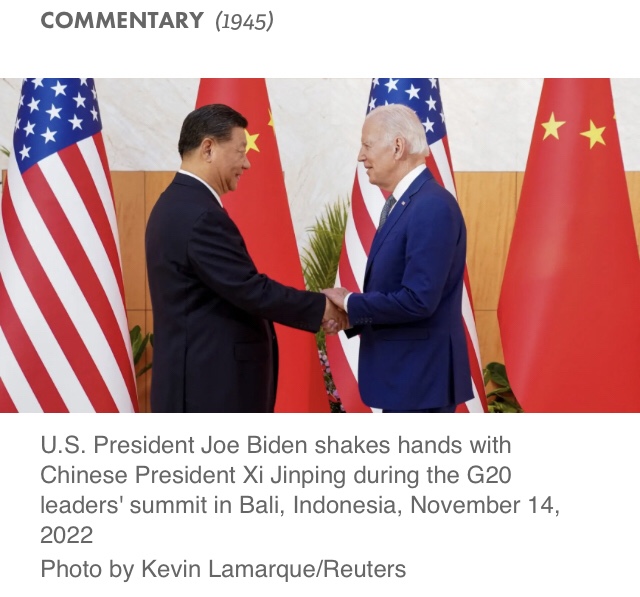
Although China and the United States agree that the post–Cold War order is over, they are betting on very different successors. In Washington, the return of great-power competition is thought to require revamping the alliances and institutions at the heart of the post–World War II order that helped the United States win the Cold War against the Soviet Union. This updated global order is meant to incorporate much of the world, leaving China and several of its most important partners—including Iran, North Korea, and Russia—isolated on the outside.
But Beijing is confident that Washington’s efforts will prove futile. In the eyes of Chinese strategists, other countries’ search for sovereignty and identity is incompatible with the formation of Cold War–style blocs and will instead result in a more fragmented, multipolar world in which China can take its place as a great power.
Ultimately, Beijing’s understanding may well be more accurate than Washington’s and more closely attuned to the aspirations of the world’s most populous countries. The U.S. strategy won’t work if it amounts to little more than a futile quest to update a vanishing order, driven by a nostalgic desire for the symmetry and stability of a bygone era. China, by contrast, is readying itself for a world defined by disorder, asymmetry, and fragmentation—a world that, in many ways, has already arrived.
SURVIVOR: BEIJING
The very different responses of China and the United States to Russia’s invasion of Ukraine revealed the divergence in Beijing’s and Washington’s thinking. In Washington, the dominant view is that Russia’s actions are a challenge to the rules-based order, which must be strengthened in response. In Beijing, the dominant opinion is that the conflict shows the world is entering a period of disorder, which countries will need to take steps to withstand.
The Chinese perspective is shared by many countries, especially in the global South, where Western claims to be upholding a rules-based order lack credibility. It is not simply that many governments had no say in creating these rules and therefore see them as illegitimate. The problem is deeper: these countries also believe that the West has applied its norms selectively and revised them frequently to suit its own interests or, as the United States did when it invaded Iraq in 2003, simply ignored them. For many outside the West, the talk of a rules-based order has long been a fig leaf for Western power. It is only natural, these critics maintain, that now that Western power is declining, this order should be revised to empower other countries.
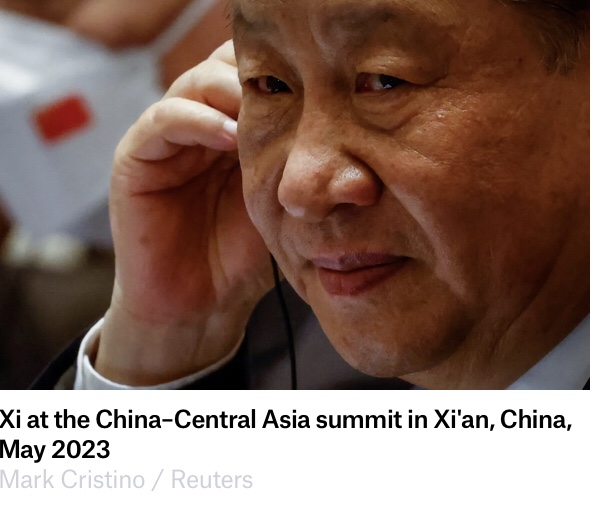
Hence Xi’s claim that “changes unseen in a century” are coming to pass. This observation is one of the guiding principles of “Xi Jinping Thought,” which has become China’s official ideology. Xi sees these changes as part of an irreversible trend toward multipolarity as the East rises and the West declines, accelerated by technology and demographic shifts. Xi’s core insight is that the world is increasingly defined by disorder rather than order, a situation that in his view harks back to the nineteenth century, another era characterized by global instability and existential threats to China. In the decades after China’s defeat by Western powers in the First Opium War in 1839, Chinese thinkers, including the diplomat Li Hongzhang—sometimes referred to as “China’s Bismarck”—wrote of “great changes unseen in over 3,000 years.” These thinkers observed with concern the technological and geopolitical superiority of their foreign adversaries, which inaugurated what China now considers to be a century of humiliation. Today, Xi sees the roles as reversed. It is the West that now finds itself on the wrong side of fateful changes and China that has the chance to emerge as a strong and stable power.
Other ideas with roots in the nineteenth century have also experienced a renaissance in contemporary China, among them social Darwinism, which applied Charles Darwin’s concept of “the survival of the fittest” to human societies and international relations. In 2021, for instance, the Research Center for a Holistic View of National Security, a government-backed body linked to the Chinese security ministry, published National Security in the Rise and Fall of Great Powers, edited by the economist Yuncheng Zhang. The book, part of a series explaining the new national security law, claims that the state is like a biological organism that must evolve or die—and that China’s challenge is to survive. And this line of thinking has taken hold. One Chinese academic told me that geopolitics today is a “struggle for survival” between fragile and inward-looking superpowers—a far cry from the expansive and transformative visions of the Cold War superpowers. Xi has adopted this framework, and Chinese government statements are full of references to “struggle,” an idea that is found in communist rhetoric but also in social Darwinist writings.
This notion of survival in a dangerous world necessitates the development of what Xi describes as “a holistic approach to national security.” In contrast to the traditional concept of “military security,” which was limited to countering threats from land, air, sea, and space, the holistic approach to security aims to counter all challenges, whether technical, cultural, or biological. In an age of sanctions, economic decoupling, and cyberthreats, Xi believes that everything can be weaponized. As a result, security cannot be guaranteed by alliances or multilateral institutions. Countries must therefore do all that they can to safeguard their own people. To that end, in 2021, the Chinese government backed the creation of a new research center dedicated to this holistic approach, tasking it with considering all aspects of China’s security strategy. Under Xi, the Chinese Communist Party (CCP) is increasingly conceived of as a shield against chaos.
CLASHING VISIONS
Chinese leaders see the United Statesas the principal threat to their survival and have developed a hypothesis to explain their adversary’s actions. Beijing believes that Washington is responding to domestic polarization and its loss of global power by ramping up its competition with China. U.S. leaders, according to this thinking, have decided that it is only a matter of time before China becomes more powerful than the United States, which is why Washington is trying to pit Beijing against the entire democratic world. Chinese intellectuals, therefore, speak of a U.S. shift from engagement and partial containment to “total competition,” spanning politics, economics, security, ideology, and global influence.
Chinese strategists have watched the United States try to use the war in Ukraine to cement the divide between democracies and autocracies. Washington has rallied its partners in the G-7 and NATO, invited East Asian allies to join the NATO meeting in Madrid, and forged new security partnerships, including AUKUS, a trilateral pact among Australia, the United Kingdom, and the United States, and the Quad (Quadrilateral Security Dialogue), which aligns Australia, India, and Japan with the United States. Beijing is particularly concerned that Washington’s engagement in Ukraine will lead it to be more assertive on Taiwan. One scholar said he feared that Washington is gradually trading its “one China” policy—under which the United States agrees to regard the People’s Republic of China as the only legal government of Taiwan and the mainland—for a new approach that one Chinese interlocutor called “one China and one Taiwan.” This new kind of institutionalization of ties between the United States and its partners, implicitly or explicitly aimed at containing Beijing, is seen in China as a new U.S. attempt at alliance building that brings Atlantic and European partners into the Indo-Pacific. It is, Chinese analysts believe, yet another instance of the United States’ mistaken belief that the world is once more dividing itself into blocs.
With only North Korea as a formal ally, China cannot win a battle of alliances. Instead, it has sought to make a virtue of its relative isolation and tap into a growing global trend toward nonalignment among middle powers and emerging economies. Although Western governments take pride in the fact that 141 countries have supported UN resolutions condemning the war in Ukraine, Chinese foreign policy thinkers, including the international relations professor and media commentator Chu Shulong, argue that the number of countries enforcing sanctions against Russia is a better indication of the power of the West. By that metric, he calculates that the Western bloc contains only 33 countries, with 167 countries refusing to join in the attempt to isolate Russia. Many of these states have bad memories of the Cold War, a period when their sovereignty was squeezed by competing superpowers. As one prominent Chinese foreign policy strategist explained to me, “The United States isn’t declining, but it is only good at talking to Western countries. The big difference between now and the Cold War is that [then] the West was very effective at mobilizing developing countries against [the Soviet Union] in the Middle East, North Africa, Southeast Asia, and Africa.”
To capitalize on waning U.S. influence in these regions, China has sought to demonstrate its support for countries in the global South. In contrast to Washington, which Beijing sees as bullying countries into picking sides, China’s outreach to the developing world has prioritized investments in infrastructure. It has done so through international initiatives, some of which are already partially developed. These include the Belt and Road Initiative and the Global Development Initiative, which invest billions of dollars of state and private-sector money in other countries’ infrastructure and development. Others are new, including the Global Security Initiative, which Xi launched in 2022 to challenge U.S. dominance. Beijing is also working to expand the Shanghai Cooperation Organization, a security, defense, and economic group that brings together major players in Eurasia, including India, Pakistan, and Russia and is in the process of admitting Iran.
STUCK IN THE PAST?
China is confident that the United States is mistaken in its assumption that a new cold war has broken out. Accordingly, it is seeking to move beyond Cold War–style divides. As Wang Honggang, a senior official at a think tank affiliated with China’s Ministry of State Security, put it, the world is moving away from “a center-periphery structure for the global economy and security and towards a period of polycentric competition and co-operation.” Wang and like-minded scholars do not deny that China is also trying to become a center of its own, but they argue that because the world is emerging from a period of Western hegemony, the establishment of a new Chinese center will actually lead to a greater pluralism of ideas rather than a Chinese world order. Many Chinese thinkers link this belief with the promise of a future of “multiple modernity.” This attempt to create an alternative theory of modernity, in contrast to the post–Cold War formulation of liberal democracy and free markets as the epitome of modern development, is at the core of Xi’s Global Civilization Initiative. This high-profile project is intended to signal that unlike the United States and European countries, which lecture others on subjects such as climate change and LGBTQ rights, China respects the sovereignty and civilization of other powers.
For many decades, China’s engagement with the world was largely economic. Today, China’s diplomacy goes well beyond matters of trade and development. One of the most dramatic and instructive examples of this shift is China’s growing role in the Middle East and North Africa. This region was formerly dominated by the United States, but as Washington has stepped back, Beijing has moved in. In March, China pulled off a major diplomatic coup by brokering a truce between Iran and Saudi Arabia. Whereas Chinese involvement in the region was once limited to its status as a consumer of hydrocarbons and an economic partner, Beijing is now a peacemaker busily engaged in building diplomatic and even military relationships with key players. Some Chinese scholars regard the Middle East today as “a laboratory for a post-American world.” In other words, they believe that the region is what the entire world will look like in the next few decades: a place where, as the United States declines, other global powers, such as China, India, and Russia, compete for influence, and middle powers, such as Iran, Saudi Arabia, and Turkey, flex their muscles.
Many in the West doubt China’s ability to achieve this goal, mostly because Beijing has struggled to win over potential collaborators. In East Asia, South Korea is moving closer to the United States; in Southeast Asia, the Philippines is developing closer relations with Washington to protect itself from Beijing; and there has been an anti-Chinese backlash in many African countries, where complaints about Beijing’s colonial behavior are rife. Although some countries, including Saudi Arabia, want to strengthen their ties with China, they are motivated at least in part by a desire for the United States to reengage with them. But these examples should not mask the broader trend: Beijing is becoming more active and steadily more ambitious.
SPARE WHEELS AND BODY LOCKS
Economic competition between China and the United States is also increasing. Many Chinese thinkers predicted that the election of U.S. President Joe Biden in 2020 would lead to improved relations with Beijing, but they have been disappointed: the Biden administration has been much more aggressive toward China than they expected. One senior Chinese economist likened Biden’s pressure campaign against the Chinese technology sector, which includes sanctions on Chinese technology companies and chip-making firms, to U.S. President Donald Trump’s actions against Iran. Many Chinese commentators have argued that Biden’s desire to freeze Beijing’s technological development to preserve the United States’ edge is no different than Trump’s efforts to stop Tehran’s development of nuclear weapons. A consensus has formed in Beijing that Washington’s goal is not to make China play by the rules; it is to stop China from growing.
This is incorrect: both Washington and the European Union have made it clear that they do not intend to shut China out of the global economy. Nor do they want to fully decouple their economies from China’s. Instead, they seek to ensure that their businesses do not share sensitive technologies with Beijing and to reduce their reliance on Chinese imports in critical sectors, including telecommunications, infrastructure, and raw materials. Thus, Western governments increasingly talk of “reshoring” and “friend shoring” production in such sectors or at least diversifying supply chains by encouraging companies to base production in countries such as Bangladesh, India, Malaysia, and Thailand.
Xi’s response has been what he calls “dual circulation.” Instead of thinking about China as having a single economy linked to the world through trade and investment, Beijing has pioneered the idea of a bifurcated economy. One-half of the economy—driven by domestic demand, capital, and ideas—is about “internal circulation,” making China more self-reliant in terms of consumption, technology, and regulations. The other half—“external circulation”—is about China’s selective contacts with the rest of the world. Simultaneously, even as it decreases its dependence on others, Beijing wants to boost the dependence of other players on China so that it can use these links to increase its power and exert pressure. These ideas have the potential to reshape the global economy.
The influential Chinese economist Yu Yongding has explained the notion of dual circulation with two new concepts: “the spare wheel” and “the body lock.” Following the “spare wheel” concept, China should have ready alternatives if it loses access to natural resources, components, and critical technologies. This idea has come in response to the increasing use of Western sanctions, which Beijing has watched with concern. The Chinese government is now working to shield itself from any attempts to cut it off in case of a conflict by making enormous investments in critical technologies, including artificial intelligence and semiconductors. But Beijing is also attempting to exploit the new reality to reduce the global economy’s reliance on Western economic demand and the U.S.-led financial system. At home, the CCP is promoting a shift from export-led growth to growth driven by domestic demand; elsewhere, it is promoting the yuan as an alternative to the dollar. Accordingly, the Russians are increasing their yuan reserve holdings, and Moscow no longer uses the dollar when trading with China. The Shanghai Cooperation Organization has recently agreed to use national currencies, rather than just the dollar, for trade among its member states. Although these developments are limited, Chinese leaders are hopeful that the weaponization of the U.S. financial system and the massive sanctions against Russia will lead to further disorder and increase other countries’ willingness to hedge against the dollar’s dominance.
The “body lock” is a wrestling metaphor. It means that Beijing should make Western companies reliant on China, thereby making decoupling more difficult. That is why it is working to bind as many countries as possible to Chinese systems, norms, and standards. In the past, the West struggled to make China accept its rules. Now, China is determined to make others bow to its norms, and it has invested heavily in boosting its voice in various international standard-setting bodies. Beijing is also using its Global Development and Belt and Road Initiatives to export its model of subsidized state capitalism and Chinese standards to as many countries as possible. Whereas China’s objective was once integration into the global market, the collapse of the post–Cold War international order and the return of nineteenth-century-style disorder have altered the CCP’s approach.
Xi has therefore invested heavily in self-reliance. But as many Chinese intellectuals point out, the changes in Chinese attitudes toward globalization have been driven as much by domestic economic challenges as by tensions with the United States. In the past, China’s large, young, and cheap labor force was the principal driver of the country’s growth. Now, its population is aging rapidly, and it needs a new economic model, one built on boosting consumption. As the economist George Magnus points out, however, doing so requires raising wages and pursuing structural reforms that would upset China’s delicate societal power balance. Rekindling population growth, for instance, would require substantial upgrades to the country’s underdeveloped social security system, which in turn would need to be paid for with unpopular tax increases. Promoting innovation would require a reduction of the role of the state in the economy, which runs counter to Xi’s instincts. Such changes are hard to imagine in the current circumstances.
A WORLD DIVIDED?
Between 1945 and 1989, decolonization and the division between the Western powers and the Soviet bloc defined the world. Empires dissolved into dozens of states, often as the result of small wars. But although decolonization transformed the map, the more powerful force was the ideological competition of the Cold War. After winning their independence, most countries quickly aligned themselves with either the democratic bloc or the communist bloc. Even those countries that did not want to choose sides nevertheless defined their identity in reference to the Cold War, forming a “nonaligned movement.”
Both trends are in evidence today, and the United States believes that this history is repeating itself as policymakers try to revive the strategy that succeeded against the Soviet Union. It is, therefore, dividing the world and mobilizing its allies. Beijing disagrees, and it is pursuing policies suited to its bet that the world is entering an era in which self-determination and multialignment will trump ideological conflict.
Beijing’s judgment is more likely to be accurate because the current era differs from the Cold War era in three fundamental ways. First, today’s ideologies are much weaker. After 1945, both the United States and the Soviet Union offered optimistic and compelling visions of the future that appealed to elites and workers worldwide. Contemporary China has no such message, and the traditional U.S. vision of liberal democracy has been greatly diminished by the Iraq war, the global financial crisis of 2008, and the presidency of Donald Trump, all of which made the United States seem less successful, less generous, and less reliable. Moreover, rather than offering starkly different and opposing ideologies, China and the United States increasingly resemble each other on matters from industrial policy and trade to technology and foreign policy. Without ideological messages capable of creating international coalitions, Cold War–style blocs cannot form.
Second, Beijing and Washington do not enjoy the same global dominance that the Soviet Union and the United States did after 1945. In 1950, the United States and its major allies (NATO countries, Australia, and Japan) and the communist world (the Soviet Union, China, and the Eastern bloc) together accounted for 88 percent of global GDP. But today, these groups of countries combined account for only 57 percent of global GDP. Whereas nonaligned countries’ defense expenditures were negligible as late as the 1960s (about one percent of the global total), they are now at 15 percent and growing fast.
Third, today’s world is extremely interdependent. At the beginning of the Cold War, there were very few economic links between the West and the countries behind the Iron Curtain. The situation today could not be more different. Whereas trade between the United States and the Soviet Union remained at around one percent of both countries’ total trade in the 1970s and 1980s, trade with China today makes up almost 16 percent of both the United States’ and the EU’s total trade balance. This interdependence prohibits the formation of the stable alignment of blocs that characterized the Cold War. What is more likely is a permanent state of tension and shifting allegiances.
China’s leaders have made an audacious strategic bet by preparing for a fragmented world. The CCP believes the world is moving toward a post-Western order not because the West has disintegrated but because the consolidation of the West has alienated many other countries. In this moment of change, it may be that China’s stated willingness to allow other countries to flex their muscles may make Beijing a more attractive partner than Washington, with its demands for ever-closer alignment. If the world truly is entering a phase of disorder, China could be best placed to prosper.
As the Federal government is working to manage the potential risks that AI-driven systems can present, the head of the State Department’s Bureau of Cyberspace and Digital Policy said on June 21 that one positive AI application he’s excited about is using the technology to write more secure software.
At an event hosted by the Hudson Institute, Nathaniel Fick – the State Department’s inaugural ambassador at large for cyberspace and digital policy – explained how this application of AI tech can help to address “this sort of happy-go-lucky, laissez-faire software developer world” that introduces untrusted code and vulnerabilities.
“One of the good applications of AI that I’m most excited about is using AI to write better software. That’s pretty exciting to see the bug rate go way down,” Fick said.
“It is a road to really realize one of the pillars of the National Cybersecurity Strategy, which is really focused on building better software, and incentivizing that, and creating kind of incentive structures and liability punitive structures to require the developers of software that we all rely upon to build good stuff,” he said.
The White House released its National Cybersecurity Strategy (NCS) in March and is working fast to develop an implementation plan for the strategy, as well as a workforce strategy to build a more resilient future.
One key pillar of the NCS, as Fick mentioned, is to “rebalance” the responsibility to defend cyberspace by shifting the cybersecurity burden away from individuals, small businesses, and local governments, and onto the organizations that are best-positioned to reduce risks for all of us – such as software developers.
However, Fick acknowledged that AI also has a dangerous flip side, and he stressed the importance of developing AI regulations. He explained that there are four U.S. companies right now that have leadership positions in AI technologies: Google, Microsoft, OpenAI, and a smaller company called Anthropic.
“As we think about timelines, how much time do we have, how long is it going to take to develop a fifth model that has that capability – a fifth model that’s either built by a company that’s less trustworthy, or a model that’s open sourced? The best answer I can get is it’s less than a year,” Fick said. “We don’t have a lot of time. If this is 1945, we don’t have until 1957 to put together some sort of a regulatory or governance infrastructure.”
So, what is the Federal government going to do about it? Fick said the first step is to start with those four big companies, who will sign up for “voluntary commitments” around AI guardrails.
“Voluntary commitments by definition will not stifle innovation. They, I think also, are likely to be a starting point but not an ending point. But they have the great benefit of speed,” Fick said. “We’ve got to get something out in the world now. And then we’re going to iterate on it and build on it over time.”
The State Department is looking at artificial intelligence and automation tools to process Freedom of Information Act (FOIA) requests more quickly and improve its level of service to requesters.
Eric Stein, the department’s deputy assistant secretary for Office of Global Information Services and co-chairman of the Chief FOIA Officers Council’s Technology Committee, said he’s also looking at ways to use these emerging tools to improve FOIA processing governmentwide.
“I think people are afraid of AI, and maybe they should be. Maybe they shouldn’t be, but my take is, we’d like to get people comfortable with the concepts of AI and machine learning,” Stein said.
The Technology Committee a few months ago went through each the most recently published Chief FOIA Officer reports governmentwide, to better understand what tools agencies are using, and what the committee can do to address their problems.
Agencies generally are seeing an increase in FOIA requests, and are looking for ways to stay on top of this workload. The federal government in fiscal 2022 received a record high of more than 900,000 new FOIA requests.
“What we found is that there are tools in place being pushed to their limits and a lot of assumptions about how records are captured, stored and searched. It’s still very manual,” Stein said.
Federal employees can process most FOIA requests involving unclassified records while working remotely, but Stein said FOIA professionals still need to work in the office to handle classified records.
“Because of that, there’s a balance in how do we recruit and retain people that maybe don’t want to go into the office,” Stein said.
State Department pilots AI for FOIA workloads
The State Department received nearly 14,000 new FOIA requests in fiscal 2022. Nearly another 21,000 FOIA requests are pending, according to the department’s annual FOIA report for FY 2022.
To stay ahead of this workload, the State Department developed its e-Records Archive, which holds more than 3 billion department records.
Stein said the archive reflects the work of chief FOIA officers over the past decade identifying standards for metadata and capturing records, so that records are optimized for search.
“We developed it in such a way that the data standards are in place, so that we could use that data down the road,” Stein said. “I think a lot of agencies probably have Outlook and different emails tools … but they may not have a central archive they can search across, the way we can here at State.”
The State Department is also experimenting with automation to improve the process of filing a FOIA request.
Stein said the department, in a pilot to improve the process of declassifying records, trained a machine learning model on years of humans reviewing and declassifying records.
The model is now as accurate as human FOIA professionals about 97-99% of the time. Stein said the pilot so far saved the department about half a year’s worth of work.
State Department, he added, is also looking at ways AI could help it use information already released under FOIA to support additional incoming requests.
“Right now, it’s more like you do a search and it looks for the key term or this or that. But making more sophisticated connections among information, it might give you what you need, or at least help you to scope your request, in a way, because we do want to get information to people as quickly as possible, [and] a lot of requests are very broad,” he said.
The department is also considering ways to use AI to help it refine records searches.
“If you look for a very specific term, you get a result. But if that term has the same letters in it as other words, you can end up getting like a million potentially responsive records, when really, you wanted a very narrow, specific thing,” Stein said. “Maybe people colloquially use a different term for something. The machine learning tool could help narrow those results to get more timely responses.”
While automation is showing promise in some FOIA pilots, Stein said the federal government still has a lot more work left to do to understand how best to use this emerging technology.
“I think some people are going to fail at some of this work, and that’s OK, in my opinion, as long as we learn from it, and we can save time by sharing here’s what works, what didn’t work,” Stein said. “Which is also why we’re so proud of the machine-learning pilot that did work, because we’re sharing this work with other agencies.”
The State Department also recently soft-launched its new online request platform, which allows users to track the status of their FOIA requests. Stein said the new platform is meant to reduce the number of calls the department’s FOIA office receives, asking for this information.
“We’re rethinking our online experience to help people find information they want,” he said.
The new platform also supports the department’s “release to one, release to all” policy of posting documents released under FOIA to its virtual reading room. In fiscal 202, the department posted over 6,200 records online after it released them to requests.
Stein said FOIA professionals under this policy are trying to post as many documents online as possible each month, but are looking at ways to streamline this workload through automation.
“A lot of it just comes down to that’s still a manual process. How do we automate it? How do we do a better job of getting information out? It seems to be working pretty well, but there’s still a long way to go.”
Demystifying AI for agencies
One of the barriers to adoption is getting more of the FOIA community to understand the opportunities and limits of what AI can do.
Stein said the Technology Committee held an “AI 101 course” a few years ago, in order for more FOIA professionals to develop a common understanding of this technology.
“People just assume everyone knows what artificial intelligence is. It is, on one hand, complicated, and on the other kind of easy to understand if you break it down,” Stein said. “If you’re coming from a place where you think we just do a Google-like search across all records at every federal agency, that’s just not where we’re at. And that changed the whole discussion.”
The Chief FOIA Officers Council also held a “NextGen FOIA Tech Showcase” in February 2022 to identify technologies that could help agencies process their FOIA requests more easily.
The showcase gave agencies an opportunity to learn more about AI, machine learning and tools to improve the customer experience of filing FOIA requests.
Stein said the showcase helped break down some barriers and understand to tools the private sector can offer. But some agencies have unique considerations when it comes to FOIA processing, and AI tools may not be the best way to address those challenges.
“If you’re an agency that gets thousands of requests annually for a specific form, you may not even need AI and machine learning. You many just need a simple tool or an application that could redact certain boxes,” Stein said.
The Technology Committee is looking at collaborative interagency platforms, in an effort to help agencies trying to optimize FOIA processing at agencies with limited IT budgets.
“Maybe a couple of agencies could some together, thinking in a different way, in new ways. [It’s] not just one agency working on it, but several agencies working together, especially those that have high volumes of requests. We could really see some efficiencies through a shared platform and ways to manage information well and securely too,” Stein said.
JAMA. Published online June 15, 2023. doi:10.1001/jama.2023.8288
Recent advances in artificial intelligence (AI) have led to generative models capable of accurate and detailed text-based responses to written prompts (“chats”). These models score highly on standardized medical examinations.1 Less is known about their performance in clinical applications like complex diagnostic reasoning. We assessed the accuracy of one such model (Generative Pre-trained Transformer 4 [GPT-4]) in a series of diagnostically difficult cases.
Methods
We used New England Journal of Medicine clinicopathologic conferences. These conferences are challenging medical cases with a final pathological diagnosis that are used for educational purposes; they have been used to evaluate differential diagnosis generators since the 1950s.2–4
We used the first 7 case conferences from 2023 to iteratively develop a standard chat prompt (eAppendix in Supplement 1) that explained the general conference structure and instructed the model to provide a differential diagnosis ranked by probability. We copied each case published from January 2021 to December 2022, up to but not including the discussant’s initial response and differential diagnosis discussion, and pasted it along with our prompt into the model. We excluded cases that were not diagnostic dilemmas (such as cases on management reasoning), as determined by consensus of Z.K. and A.R., or that were too long to run as a single chat. We chose recent cases because most of the model’s training data ends in September 2021. Each case, including the cases used to develop the prompt, was run in independent chats to prevent the model applying any “learning” to subsequent cases.
Our prespecified primary outcome was whether the model’s top diagnosis matched the final case diagnosis. Prespecified secondary outcomes were the presence of the final diagnosis in the model’s differential, differential length, and differential quality score using a previously published ordinal 5-point rating system based on accuracy and usefulness (in which a score of 5 is given for a differential including the exact diagnosis and a score of 0 is given when no diagnoses are close).2 All cases were independently scored by Z.K. and B.C., with disagreements adjudicated by A.R. Crosstabs and descriptive statistics were generated with Excel (Microsoft); a Cohen κ was calculated to determine interrater reliability using SPSS version 25 (IBM).
Results
Of 80 cases, 10 were excluded (4 were not diagnostic dilemmas; 6 were deleted for length). The 2 primary scorers agreed on 66% of scores (46/70; κ = 0.57 [moderate agreement]). The AI model’s top diagnosis agreed with the final diagnosis in 39% (27/70) of cases. In 64% of cases (45/70), the model included the final diagnosis in its differential (Table). Mean differential length was 9.0 (SD, 1.4) diagnoses. When the AI model provided the correct diagnosis in its differential, the mean rank of the diagnosis was 2.5 (SD, 2.5). The median differential quality score was 5 (IQR, 3-5); the mean was 4.2 (SD, 1.3) (Figure).
Discussion
A generative AI model provided the correct diagnosis in its differential in 64% of challenging cases and as its top diagnosis in 39%. The finding compares favorably with existing differential diagnosis generators. A 2022 study evaluating the performance of 2 such models also using New England Journal of Medicineclinicopathological case conferences found that they identified the correct diagnosis in 58% to 68% of cases3; the measure of quality was a simple dichotomy of useful vs not useful. GPT-4 provided a numerically superior mean differential quality score compared with an earlier version of one of these differential diagnosis generators (4.2 vs 3.8).2
Study limitations include some subjectivity in the outcome measure, which was mitigated with a standardized approach used in similar diagnostics literature. In some cases, important diagnostic information was not included in the AI prompt due to protocol limitations, likely leading to an underestimation of the model’s capabilities. Also, the agreement on the quality score between scorers was moderate.
Generative AI is a promising adjunct to human cognition in diagnosis. The model evaluated in this study, similar to some other modern differential diagnosis generators, is a diagnostic “black box”; future research should investigate potential biases and diagnostic blind spots of generative AI models. Clinicopathologic conferences are best understood as diagnostic puzzles; once privacy and confidentiality concerns are addressed, studies should assess performance with data from real-world patient encounters.5
Corresponding Author: Adam Rodman, MD, MPH, Department of Medicine, Beth Israel Deaconess Medical Center, 330 Brookline Ave, W/SPAN-2, Boston, MA 02215 (arodman@bidmc.harvard.edu).
Author Contributions: Drs Kanjee and Rodman had full access to all of the data in the study and take responsibility for the integrity of the data and the accuracy of the data analysis.
This article is from The Technocrat, MIT Technology Review’s weekly tech policy newsletter about power, politics, and Silicon Valley. To receive it in your inbox every Friday, sign up here.
The AI Act vote passed with an overwhelming majority, and has been heralded as one of the world’s most important developments in AI regulation. The European Parliament’s president, Roberta Metsola, described it as “legislation that will no doubt be setting the global standard for years to come.”
Don’t hold your breath for any immediate clarity, though. The European system is a bit complicated. Next, members of the European Parliament will have to thrash out details with the Council of the European Union and the EU’s executive arm, the European Commission, before the draft rules become legislation. The final legislation will be a compromise between three different drafts from the three institutions, which vary a lot. It will likely take around two years before the laws are actually implemented.
What Wednesday’s vote accomplished was to approve the European Parliament’s position in the upcoming final negotiations. Structured similarly to the EU’s Digital Services Act, a legal framework for online platforms, the AI Act takes a “risk-based approach” by introducing restrictions based on how dangerous lawmakers predict an AI application could be. Businesses will also have to submit their own risk assessments about their use of AI.
Some applications of AI will be banned entirely if lawmakers consider the risk “unacceptable,” while technologies deemed “high risk” will have new limitations on their use and requirements around transparency.
Here are some of the major implications:
Ban on emotion-recognition AI. The European Parliament’s draft text bans the use of AI that attempts to recognize people’s emotions in policing, schools, and workplaces. Makers of emotion-recognition software claim that AI is able to determine when a student is not understanding certain material, or when a driver of a car might be falling asleep. The use of AI to conduct facial detection and analysis has been criticized for inaccuracy and bias, but it has not been banned in the draft text from the other two institutions, suggesting there’s a political fight to come.
Ban on real-time biometrics and predictive policing in public spaces. This will be a major legislative battle, because the various EU bodies will have to sort out whether, and how, the ban is enforced in law. Policing groups are not in favor of a ban on real-time biometric technologies, which they say are necessary for modern policing. Some countries, like France, are actually planning to increase their use of facial recognition.
Ban on social scoring. Social scoring by public agencies, or the practice of using data about people’s social behavior to make generalizations and profiles, would be outlawed. That said, the outlook on social scoring, commonly associated with China and other authoritarian governments, isn’t really as simple as it may seem. The practice of using social behavior data to evaluate people is common in doling out mortgages and setting insurance rates, as well as in hiring and advertising.
New restrictions for gen AI. This draft is the first to propose ways to regulate generative AI, and ban the use of any copyrighted material in the training set of large language models like OpenAI’s GPT-4. OpenAI has already come under the scrutiny of European lawmakers for concerns about data privacy and copyright. The draft bill also requires that AI generated content be labeled as such. That said, the European Parliament now has to sell its policy to the European Commission and individual countries, which are likely to face lobbying pressure from the tech industry.
New restrictions on recommendation algorithms on social media. The new draft assigns recommender systems to a “high risk” category, which is an escalation from the other proposed bills. This means that if it passes, recommender systems on social media platforms will be subject to much more scrutiny about how they work, and tech companies could be more liable for the impact of user-generated content.
The risks of AI as described by Margrethe Vestager, executive vice president of the EU Commission, are widespread. She has emphasized concerns about the future of trust in information, vulnerability to social manipulation by bad actors, and mass surveillance.
“If we end up in a situation where we believe nothing, then we have undermined our society completely,” Vestager told reporters on Wednesday.
What I am reading this week
A Russian soldier surrendered to a Ukrainian assault drone, according to video footage published by the Wall Street Journal. The surrender took place back in May in the eastern city of Bakhmut, Ukraine. The drone operator decided to spare the life of the soldier, according to international law, upon seeing his plea via video. Drones have been critical in the war, and the surrender is a fascinating look at the future of warfare.
Many Redditors are protesting changes to the site’s API that would eliminate or reduce the function of third-party apps and tools many communities use. In protest, those communities have “gone private,” which means that the pages are no longer publicly accessible. Reddit is known for the power it gives to its user base, but the company may now be regretting that, according to Casey Newton’s sharp assessment.
Contract workers who trained Google’s large language model, Bard, say they were fired after raising concerns about their working conditions and safety issues with the AI itself. The contractors say they were forced to meet unreasonable deadlines, which led to concerns about accuracy. Google says the responsibility lies with Appen, the contract agency employing the workers. If history tells us anything, there will be a human cost in the race to dominate generative AI.
What I learned this week
This week, Human Rights Watch released an in-depth report about an algorithm used to dole out welfare benefits in Jordan. The agency found some major issues with the algorithm, which was funded by the World Bank, and says the system was based on incorrect and oversimplified assumptions about poverty. The report’s authors also called out the lack of transparency and cautioned against similar projects run by the World Bank. I wrote a short story about the findings.
Meanwhile, the trend toward using algorithms in government services is growing. Elizabeth Renieris, author of Beyond Data: Reclaiming Human Rights at the Dawn of the Metaverse, wrote to me about the report, and emphasized the impact these sort of systems will have going forward: “As the process to access benefits becomes digital by default, these benefits become even less likely to reach those who need them the most and only deepen the digital divide. This is a prime example of how expansive automation can directly and negatively impact people, and is the AI risk conversation that we should be focused on now.”
The Department of Veterans Affairs (VA) is looking to implement a new risk assessment framework that will bring standardization and consistency to authorization decisions.
The move comes in response to a repeat recommendation from the VA Office of Inspector General (OIG). In the VA OIG’s Federal Information Security Modernization Act Audit for Fiscal Year 2022, the OIG made 26 recommendations for the VA to improve its information security program – the same number of recommendations from fiscal year (FY) 2021.
Despite the VA’s efforts to close the recommendations, the OIG said some have been repeated for multiple years.
Nevertheless, Kurt DelBene, VA’s chief information officer (CIO) and assistant secretary for information and technology, pledged his commitment to addressing these recommendations.
Specifically, the OIG recommended that DelBene consistently implement an improved continuous monitoring program in accordance with the National Institute of Standards and Technology (NIST) Risk Management Framework. The OIG called on the CIO to implement an independent security control assessment process to “evaluate the effectiveness of security controls prior to granting authorization decisions.”
“The assistant secretary reported that the Office of Information Security will implement a new assessment framework, which brings standardization and consistency to the Authorizing Official (AO) reviews and aligns with the NIST framework,” the report says. “To improve the tracking process further, the development of enterprise dashboards to bring visibility to executive leadership of those critical systems that are not meeting cyber security standards will continue.”
DelBene explained that the scale of VA systems is quite large – nearly 1,000 VA systems require an Authority to Operate (ATO), which he said would benefit from an independent control assessment.
However, the CIO noted that “the resources and costs to do so for all our systems are a barrier.”
“The varying risks for the more than 1,000 systems also suggests that we take a more balanced approach, leveraging internal resources for lower risk systems,” DelBene said. “VA OIT will implement specific policy changes that incorporate a prioritization model, based on risk, to assess information security controls in a prudent and rational way. Improving our capacity to conduct independent assessments for our highest risk systems will remain a high priority for OIT.”
The VA’s target completion date to complete this recommendation is Sept. 30.
This article is from The Technocrat, MIT Technology Review’s weekly tech policy newsletter about power, politics, and Silicon Valley. To receive it in your inbox every Friday, sign up here.
This week, I tuned into a bunch of sessions at RightsCon while recovering. The event is the world’s biggest digital rights conference, and after several years of only virtual sessions, the top internet ethicists, activists, and policymakers were back in person in Costa Rica.
Unsurprisingly, everyone was talking about AI and the recent rush to deploy large language models. Ahead of the conference, the United Nations put out a statement, encouraging RightsCon attendees to focus on AI oversight and transparency.
I was surprised, however, by how different the conversations about the risks of generative AI were at RightsCon from all the warnings from big Silicon Valley voices that I’ve been reading in the news.
Throughout the last few weeks, tech luminaries like OpenAI CEO Sam Altman, ex-Googler Geoff Hinton, top AI researcher Yoshua Bengio, Elon Musk, and many others have been calling for regulation and urgent action to address the “existential risks”—even including extinction—that AI poses to humanity.
Certainly, the rapid deployment of large language models without risk assessments, disclosures about training data and processes, or seemingly much attention paid to how the tech could be misused is concerning. But speakers in several sessions at RightsCon reiterated that this AI gold rush is a product of company profit-seeking, not necessarily regulatory ineptitude or technological inevitability.
In the very first session, Gideon Lichfield, the top editor at Wired (and the ex–editor in chief of Tech Review), and Urvashi Aneja, founder of the Digital Futures Lab, went toe to toe with Google’s Kent Walker.
“Satya Nadella of Microsoft said he wanted to make Google dance. And Google danced,” said Lichfield. “We are now, all of us, jumping into the void holding our noses because these two companies are out there trying to beat each other.” Walker, in response, emphasized the social benefits that advances in artificial intelligence could bring in areas like drug discovery, and restated Google’s commitment to human rights.
The following day, AI researcher Timnit Gebru directly addressed the talk of existential risks posed by AI: “Ascribing agency to a tool is a mistake, and that is a diversion tactic. And if you see who talks like that, it’s literally the same people who have poured billions of dollars into these companies.”
She said, “Just a few months ago, Geoff Hinton was talking about GPT-4 and how it’s the world’s butterfly. Oh, it’s like a caterpillar that takes data and then flies into a beautiful butterfly, and now all of a sudden it’s an existential risk. I mean, why are people taking these people seriously?”
Frustrated with the narratives around AI, experts like Human Right Watch’s tech and human rights director, Frederike Kaltheuner, suggest grounding ourselves in the risks we already know plague AI rather than speculating about what might come.
And there are some clear, well-documented harms posed by the use of AI. They include:
Increased and amplified misinformation. Recommendation algorithms on social media platforms like Instagram, Twitter, and YouTube have been shown to prioritize extreme and emotionally compelling content, regardless of accuracy. LLMs contribute to this problem by producing convincing misinformation known as “hallucinations.” (More on that below)
Erosion of user privacy. Training AI models require massive amounts of data, which is often scraped from the web or purchased, raising questions about consent and privacy. Companies that developed large language models like ChatGPT and Bard have not yet released much information about the data sets used to train them, though they certainly contain a lot of data from the internet.
Kaltheuner says she’s especially concerned generative AI chatbots will be deployed in risky contexts such as mental health therapy: “I’m worried about absolutely reckless use cases of generative AI for things that the technology is simply not designed for or fit for purpose.”
Gebru reiterated concerns about the environmental impacts resulting from the large amounts of computing power required to run sophisticated large language models. (She says she was fired from Google for raising these and other concerns in internal research.) Moderators of ChatGPT, who work for low wages, have also experienced PTSD in their efforts to make model outputs less toxic, she noted.
Regarding concerns about humanity’s future, Kaltheuner asks “Whose extinction? Extinction of the entire human race? We are already seeing people who are historically marginalized being harmed at the moment. That’s why I find it a bit cynical.”
What else I’m reading
US government agencies are deploying GPT-4, according to an announcement from Microsoft reported by Bloomberg. OpenAI might want regulation for its chatbot, but in the meantime, it also wants to sell it to the US government.
ChatGPT’s hallucination problem might not be fixable. According to researchers at MIT, large language models get more accurate when they debate each other, but factual accuracy is not built into their capacity, as broken down in this really handy story from the Washington Post. If hallucinations are unfixable, we may only be able to reliably use tools like ChatGPT in limited situations.
According to an investigation by the Wall Street Journal, Stanford University, and the University of Massachusetts, Amherst, Instagram has been hosting large networks of accounts posting child sexual abuse content. The platform responded by forming a task force to investigate the problem. It’s pretty shocking that such a significant problem could go unnoticed by the platform’s content moderators and automated moderation algorithms.
What I learned this week
A new report by the South Korea–based human rights group PSCORE details the days-long application process required to access the internet in North Korea. Just a few dozen families connected to Kim Jong-Un have unrestricted access to the internet, and only a “few thousand” government employees, researchers, and students can access a version that is subject to heavy surveillance. As Matt Burgess reports in Wired,Russia and China likely supply North Korea with its highly controlled web infrastructure.





 healthcarereimagined