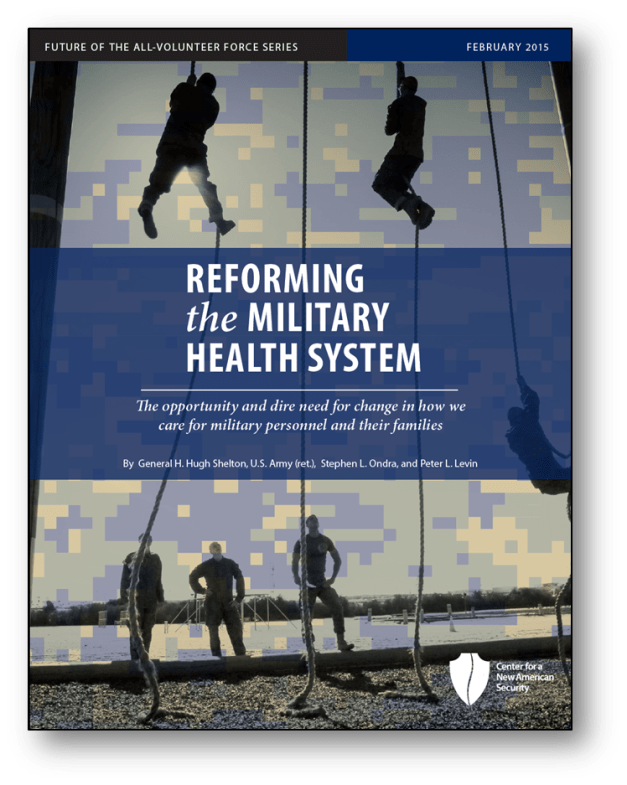
Article link: http://www.cnas.org/reforming-the-military-health-system#.VOs6o8k5C03
Report link: https://healthcarereimagined.net/wp-content/uploads/2015/02/reforming-dod-healthcare_021015.pdf
By Heather Caspi | February 19, 2015
What’s in an EHR? As the Department of Defense prepares to select a new electronic health record system, some are advocating that it go with an open-source solution—not just to benefit of the DOD but to use the $11-billion program to benefit the healthcare industry at large.
In a new report released by the Center for New American Security titled “Reforming the Military Health System,” the authors argue that the selection of a closed, proprietary system would trap the DOD into vendor lock, health data isolation and a long-term contract with technology that will age rather than evolve.
Co-author Stephen L. Ondra, a former senior advisor for health information in the White House Office of Science and Technology Policy, tells Healthcare Dive that an open-source solution could more easily adapt to meet future modernization and interoperability needs, and could more creatively be tailored to the DOD’s requirements.
Ondra says most commercial EHR systems are developed around the fee-for-service revenue cycle, a model that is not particularly relevant to the DOD and its healthcare system. He says an EHR for the DOD should be focused on the clinical care management aspect of these programs, which would require lengthy and expensive modification.
He argues that a proprietary system would be inadequate as it would leave the DOD with a single vendor’s solutions. “You don’t have some of the creativity and innovation that an open source system would have because you’re limited to a single vendor’s view and skills,” Ondra says.
In addition, he notes, proprietary systems have less incentive to provide interoperability solutions because their business model aims to lock people into using that particular system.
“I think the commercial systems are very good at what they do,” Ondra said. However, “they are not ideally designed for efficiency and enhancement of care delivery, and I think the DOD can do better with an open source system both in the near-term, and more importantly in the long-term, because of the type of innovation and creativity that can more quickly come into these systems.”
Whoever gets that $11-billion award is going to have a lot of money to develop EHR technology—and whether they are serving an open or closed solution will determine whether the innovations remain stovepiped from the rest of the industry, notes report author Peter L. Levin, a former chief technology officer at the Department of Veterans Affairs.
“If the DOD were to choose to go with a closed, proprietary system, it has the potential of stifling innovation in the rest of the industry,” Levin says. “If they go with an openly-architected, standard space and modular system, then really in a very simple way, they are spreading the innovation resources around.”
“Instead of concentrating it all in one place and letting that vendor own all of the innovation, they’ll be able to nourish and support the various components that comprise these complicated enterprise resource platforms in a way that will not only be beneficial to the DOD and the country in the long run, but will tremendously benefit the country and other kinds of innovations now,” Levin said.
Levin adds that the same arguments for the DOD to select an open-source EHR system apply to private healthcare systems as well. He asks consumers to imagine if they could only talk to people with same phone carrier, or only go to gas stations for their particular make of car.
He argues that private hospitals and private payers have been unwittingly supporting the continued isolation and segmentation of the commercial solutions.
“Healthcare suffers tremendously in terms of cost and outcome because of these isolated systems,” he says, “and that’s just as true for the private sector as it is for the public sector.”
Ondra adds that the DOD’s choice will set an example from which both open and closed source providers could learn.
“I think that a major government contract would send the message that the current systems, as good as they are, are not fully meeting the needs of clinical care in a way that is efficient for the provider,” he says.
“Going to an open source for the DOD gives the opportunity to have rapid development of things that are more helpful to care delivery, more efficient for the provider, because the customer then is the deliverer of care, and not the finance department of a care delivery system,” Ondra said.
Article link: http://www.healthcaredive.com/news/how-the-dods-choice-of-ehr-will-impact-providers/366180/
by Derek A. Haas
, Yudit C. Krosner
, Nirvan Mukerji
, and Robert S. Kaplan
December 26, 2014

“I would have written a shorter letter but did not have the time,” Blaise Pascal, the 17th century French mathematician and philosopher, once apologized. Unfortunately, the same problem often arises when physicians manage the care of patients with chronic conditions such as diabetes, heart failure, and kidney disease. If they had more time (and in some cases, motivational skills), they could better persuade patients to make the sacrifices and hard choices to change their lifestyles and to follow the recommended treatment plan.
Pressuring physicians to maximize the number of patients they see and minimizing the time they spend with each is one of five counterproductive mistakes that health care providers often make in trying to reduce costs — the subject of a recent article in the Harvard Business Review.
Overworked physicians rarely have the time for these difficult conversations, especially when they are restricted to 20- to 30-minute appointments, with much of the front end spent updating a patient’s medical record. When physicians spend an inadequate amount of time with their patients, the patients may not fully understand the importance of complying with all aspects of their recommended treatments, which eventually leads to deteriorating health and higher treatment costs. Approximately 50% of patients with chronic conditions do not take their medications as prescribed.
To illustrate the problem, consider our research on the cost of treating patients when their kidneys begin to lose their ability to filter blood. Should the kidneys of a patient with such a chronic disease completely fail when a transplant is not immediately available, the person needs dialysis several times a week to filter and clean the blood. How the patient starts on dialysis has enormous health and cost implications.
The vast majority of patients should do peritoneal dialysis at home or start with hemodialysis at a dialysis center. Both approaches require a vascular surgeon to create a fistula or a graft to connect an artery and a vein in the forearm. The surgery must be performed well before dialysis starts since a fistula can take about three months and a graft several weeks to “mature,” or be ready to be used for dialysis. (The alternatives are having either a preemptive kidney transplant or a peritoneal dialysis catheter placed, which also require advance planning.) If dialysis is required and a matured graft or fistula is not available, the patient must start with a catheter inserted into a vein in the neck or chest, a process that leads to a much higher risk of infection, blood clotting, and death.
Despite the large health benefits from an optimal dialysis start, more than 50% of patients nationwide begin dialysis via a catheter. Some of these occur because primary care physicians wait too long to refer their patients to nephrologists. Once referred, many patients are in denial that they will need dialysis or that they will need it as soon as actually occurs. Such patients may not adequately prepare for this eventuality despite a timely recommendation by their nephrologist.
To understand these issues better, we formed a project team to study patients that started on dialysis in 2011 and 2012. It analyzed historical data of 167 patients insured by Kaiser Permanente in the Georgia Region, and used time-driven activity-based costing to assess the costs of care received one year prior to the start of dialysis and also the charges incurred for one year after starting dialysis. We learned that health complications in the year following a sub-optimal start of dialysis led to nearly $20,000 in extra treatment costs per patient.
Interestingly, the patients in our study who started on dialysis with a fistula or graft largely had the same breadth of nephrology care — number of nurse visits, nephrologist phone calls, care manager coordination, classes, and initial consults — during the one year prior to the commencement of dialysis as those who started sub-optimally with a catheter. Even including the extra cost of the vascular surgery, the costs of treating the two sets of patients before dialysis began were about the same.
A few differences did exist between the two sets of patients, likely reflecting the better compliance of patients that started dialysis optimally. Patients with an optimal start received, on average, one more follow-up visit (5 vs. 4) with the nephrologist. Patients who started optimally were also somewhat more likely to have attended a class to learn about the options for starting on dialysis and were more likely to have attended the class farther ahead of the start of dialysis.
Dr. Nirvan Mukerji, a nephrologist and a coauthor of this article, believes that he could significantly increase the percentage starting optimally if he could spend an additional 30 minutes with each patient, counseling them on how to best prepare for dialysis as their kidney disease progresses. While his full schedule had previously prevented him from spending that additional time, he is now testing the use of extended office visits for patients with advanced chronic kidney disease as well as alternative options, such as having patients already on dialysis make presentations with him at the education class. We estimated that the incremental cost for the extended meeting or the educational class presentation would be under $200, a small price to pay to avoid the health risks and $20,000 in higher treatment costs that typically occur in the first year after a patient starts dialysis sub-optimally.
There are many other examples of how primary care doctors treating chronic diseases, such as diabetes and congestive heart failure, could offer better advice and achieve better treatment compliance if they had more time to spend with their patients. The costs of such extra time would be repaid many times over, often by orders of magnitude, through fewer future complications. Attempting to improve a physician’s productivity by placing arbitrary limits on length of appointments or setting high targets for the numbers of patients that he or she should see each day lowers costs at the front end of a care cycle. But they incur much higher costs later in the cycle when preventable complications are treated in emergency rooms and intensive care units.
Derek A. Haas is a project director and fellow at HBS and a founder of Avant-garde Health.
Yudit C. Krosner is director of specialty-care strategy and practice management at the Southeast Permanente Medical Group in metropolitan Atlanta.
Nirvan Mukerji, MD, is a practicing nephrologist and the chief of nephrology in the Southeast Permanente Medical Group in metropolitan Atlanta.

Doctors and patients in the United States must work together to minimize waste in health care. The millions of health care decisions made each day — to see a provider, complete a medical test, fill a prescription, or undergo a procedure — come with benefits, risks, and costs. Many of the choices are well informed by clinical evidence and expertise. But all too often they are driven by habit, hunches, or misaligned economic incentives, leading to substantial overuse of unnecessary, even harmful, services. The Institute of Medicine estimates that unnecessary services represent about 10% of all U.S. health care spending — nearly $300 billion a year.
In 2012, the American Board of Internal Medicine Foundation launched the Choosing Wisely campaign to encourage doctors and patients to discuss the issue of unnecessary tests and treatments, also known as “overuse.” Building on initial efforts by primary care organizations, more than 60 medical specialty societies have identified more than 300 recommendations that should be addressed. The Choosing Wisely campaign focuses almost exclusively on professional education (through participating medical societies) and on public education in the form of videos and brochures for patients produced by Consumer Reports. As more and more health care organizations, medical groups, and individual doctors implement its recommendations, Choosing Wisely is helping to transform the culture of health care. That cultural shift helps to ensure that new approaches to quality management, price transparency, and economic incentives for providers ultimately bear fruit in reducing overuse.
Choosing Wisely has renewed the focus on overuse, but the campaign had its precursors. In the 1980s, researchers at RAND developed an approach for classifying health care into four categories of appropriateness, ranging from necessary services, whose benefits clearly outweigh the risks (not performing these services constitutes underuse), to inappropriate services, whose risks for harm exceed the potential benefits (performing these services constitutes overuse). Subsequent studies have documented substantial overuse of common procedures such as hysterectomy, common medications such as antibiotics, and even chemotherapy. Overuse of surgery or chemotherapy clearly has potential harms.
Other examples of overuse, however, are subtler. For example, an estimated 25% of Medicare beneficiaries undergo an imaging test for uncomplicated low-back pain. That may seem harmless on its face, but almost all patients with this symptom recover without an invasive procedure — and, in response to the imaging results, some patients undergo additional procedures they don’t actually need. Similarly, more than half of antibiotics prescribed for common colds and coughs may be unnecessary.
During the past 15 years, our health care system has made substantial strides in reducing underuse of high-value services. However, progress on overuse of low-value services (to which one quarter of Medicare beneficiaries may be exposed) has lagged, especially in regions that have higher levels of spending and that have more specialists relative to primary care physicians.
Overuse in health care has been tough to address for several reasons:
Choosing Wisely and other ongoing reforms in health care aim to address each of those impediments to progress, as we discuss below.
As early as 1986, RAND researchers wrote, “Physicians today face mounting pressures to use procedures only when clinically valid criteria indicate that they are appropriate.” Nearly 30 years later, those pressures persist. The Choosing Wisely campaign and the broader medical community are beginning to make a dent in overuse by focusing on these dimensions:
Putting quantity in the context of quality. Choosing Wisely helps patients and doctors see that more care is not always better care. Doctors have long known about some of the opportunities for reducing the quantity of care without compromising quality, such as not getting an imaging test for uncomplicated low back pain or not ordering an annual cardiac stress test in patients without symptoms. In these instances, Choosing Wisely can help educate patients about why an unnecessary test could wind up being bad for them so that doctors and patients can have more constructive conversations about the tests. For other, newer recommendations, Choosing Wisely may need to gain traction with doctors first. For example, the American Geriatrics Society advises limiting aggressive treatment of older patients with diabetes to prevent harmful episodes of low blood sugar — this recommendation has the potential to change the way many doctors practice.
Changing how quality is managed. We need to move from a quality assessment system that merely tracks use of services to a quality management system that helps providers and patients make better decisions about when care is necessary or inappropriate. That means using personalized assessments of potential benefits and harms, as well as taking into account the preferences of patients who are well informed about their options. For example, new guidelines for preventing heart disease use a personalized assessment that helps doctors identify an individual patient’s risk for a heart attack — and whether that patient should take a cholesterol-lowering statin drug and at what dose. Although Choosing Wisely does not specifically develop such tools, they are consistent with the culture of more-efficient, patient-centered quality management that the campaign promotes.
Helping doctors reconceive the value of their services. Most physicians are enthusiastic about limiting access to expensive tests that have little or no benefit as a way to curb excessive health care costs. Nevertheless, nearly three-quarters of doctors believe that the average physician orders unnecessary tests at least once per week, most often stemming from fear of lawsuits and general clinical uncertainty. In its campaign to educate doctors through their professional societies and the public through Consumer Reports, Choosing Wisely is promoting the view that not ordering unnecessary services can have as much value for patients as ordering appropriate tests and treatments.
Re-envisioning payments and pricing. With reforms in how insurers pay for medical services, doctors will need to think more carefully about which services they provide and for whom. For example, a “bundled payment” for an episode of care, such as all services related to knee-replacement surgery, could result in fewer unnecessary services within that episode (though some episodes of care may be unnecessary to begin with). Global capitation — a fixed, per-person, per-month fee regardless of the services provided — may encourage doctors to focus on limiting overuse and less on reducing underuse. Greater transparency of health care prices may also prompt patients and doctors to discuss when medical services are unnecessary. Choosing Wisely does not directly address such cost-related initiatives, but its focus on limiting overuse (in the interest of optimal care for patients) complements those aims.
All of these reforms will require careful consideration of unintended consequences, so that our efforts to limit overuse do not foster underuse of high-value services. We must continue to test approaches to limit overuse while ensuring that necessary services are provided. The principles of the Choosing Wisely campaign are consistent with this type of judicious approach. In a 2014 survey, 21% of doctors indicated that they were aware of the Choosing Wisely campaign, and 62% of that subgroup reported taking steps to reduce unnecessary services (compared with 45% of doctors who were not aware of Choosing Wisely). Clearly, many doctors have taken note of the campaign in its first two years, but many others remain to be engaged, and we will need new data to determine whether overuse of health care is actually declining.
Thirty years after the concepts of health care appropriateness were first developed, professionalism, payment policies, and science are aligning to create incentives and tools to help limit overuse. Together doctors and patients can choose a less wasteful approach as they aim to improve both the quality and efficiency of health care.

Eve A. Kerr, MD, is the director of the Center for Clinical Management Research at the Ann Arbor Veterans Affairs Healthcare System and a professor of internal medicine at the University of Michigan.

January 26, 2015DOI: 10.1056/NEJMp1500445
Now that the Affordable Care Act (ACA) has expanded health care coverage and made it affordable to many more Americans, we have the opportunity to shape the way care is delivered and improve the quality of care systemwide, while helping to reduce the growth of health care costs. Many efforts have already been initiated on these fronts, leveraging the ACA’s new tools. The Department of Health and Human Services (HHS) now intends to focus its energies on augmenting reform in three important and interdependent ways: using incentives to motivate higher-value care, by increasingly tying payment to value through alternative payment models; changing the way care is delivered through greater teamwork and integration, more effective coordination of providers across settings, and greater attention by providers to population health; and harnessing the power of information to improve care for patients.
As we work to build a health care system that delivers better care, that is smarter about how dollars are spent, and that makes people healthier, we are identifying metrics for managing and tracking our progress. A majority of Medicare fee-for-service payments already have a link to quality or value. Our goal is to have 85% of all Medicare fee-for-service payments tied to quality or value by 2016, and 90% by 2018. Perhaps even more important, our target is to have 30% of Medicare payments tied to quality or value through alternative payment models by the end of 2016, and 50% of payments by the end of 2018. Alternative payment models include accountable care organizations (ACOs) and bundled-payment arrangements under which health care providers are accountable for the quality and cost of the care they deliver to patients. This is the first time in the history of the program that explicit goals for alternative payment models and value-based payments have been set for Medicare. Changes assessed by these metrics will mark our progress in the near term, and we are engaging state Medicaid programs and private payers in efforts to make further progress toward value-based payment throughout the health care system. Through Healthy People 2020 and other initiatives, we will also track outcome measures that reflect changes in Americans’ health and health care.
To drive progress, we are focusing on three strategies. The first is incentives: a major thrust of our efforts is to create an environment in which hospitals, physicians, and other providers are rewarded for delivering high-quality health care and have the resources and flexibility they need to do so. The ACA creates a number of new institutions and payment arrangements intended to drive the health care system in this direction. These include alternative payment models such as ACOs, advanced primary care medical-home models, new models of bundling payments for episodes of care, and demonstration projects in integrated care for beneficiaries dually eligible for Medicare and Medicaid.
Looking ahead, we plan to develop and test new payment models for specialty care, starting with oncology care, and institute payments to providers for care coordination for patients with chronic conditions. Three years ago, Medicare made almost no payments through these alternative payment models,1 but today such payments represent approximately 20% of Medicare payments to providers, and as noted above, we aim to increase this percentage. As part of this work, we also recognize the need to continue to reach consensus on the quality measures used and address issues related to risk adjustment in these new models.
Second, improving the way care is delivered is central to our reform efforts. We have put in place policies to encourage greater integration within practice sites, greater coordination among providers, and greater attention to population health. Through the Partnership for Patients, we have engaged U.S. hospitals in learning networks to focus on high-priority risks to patient safety and have already seen significant improvement. There is now a national program to reduce hospital readmissions within 30 days after discharge, which encourages hospitals to improve transitional care and coordinate more effectively with ambulatory care providers. Readmission rates are decreasing nationwide.2 Through the Transforming Clinical Practice Initiative, we will invest up to $800 million in providing hands-on support to 150,000 physicians and other clinicians for developing the skills and tools needed to improve care delivery and transition to alternative payment models. New Medicaid health homes, patient-centered medical homes, and efforts to reorganize care for people eligible for both Medicare and Medicaid are all designed to foster greater integration and coordination.
Third, we aim to accelerate the availability of information to guide decision making. The Obama administration has led a major initiative in health information technology (IT), focusing on the adoption of electronic health records (EHRs) and their meaningful use as a central avenue for transforming care. The proportion of U.S. physicians using EHRs increased from 18% to 78% between 2001 and 2013, and 94% of hospitals now report use of certified EHRs.3 Ongoing efforts will advance interoperability through the alignment of health IT standards and practices with payment policy so that patients’ records are available when needed at the point of care to permit informed clinical decisions to be made in a timely fashion.
HHS has made a commitment to enhancing transparency in the health care market. For example, the Medicare website enables consumers to compare data on the costs and charges for hundreds of inpatient, outpatient, and physician services. Information is available on the quality of hospitals, physicians, nursing homes, and other providers, enabling consumers to make better-informed choices when selecting providers and health plans.
The ACA established the Patient-Centered Outcomes Research Institute (PCORI), dedicated to generating information that can guide doctors, other caregivers, and patients as they address important clinical decisions; PCORI is working with the Agency for Healthcare Research and Quality to disseminate this information. In the years ahead, the research findings from PCORI, disseminated in part through EHRs, can bring critical clinical information to providers and patients when they need it most, at the point of care.
Although we have much to celebrate regarding increased access and quality and reduced cost growth, much of the hard work of improving our health care system lies ahead of us. Care delivered in hospitals was much safer in 2013 than it was in 2010: there were 1.3 million fewer adverse events between 2011 and 2013 than there would have been if the rate of such events had remained unchanged, and an estimated 50,000 deaths were averted. Still, far too many hospitalized patients — nearly 1 in 10 — have adverse events while hospitalized, and many people do not receive care that they should receive, while others receive care that does not benefit them. Growth of health care spending is at historic lows: Medicare spending per beneficiary increased by approximately 2% per year from 2010 to 2014 — a rate far below both historical averages and the growth rate of the gross domestic product.4 Survey data show that more than 7 in 10 people who signed up for insurance in the new health insurance marketplace last year say the quality of their coverage is excellent or good.5 However, it will take additional effort to sustain and augment the positive changes we have seen so far.
We are dedicated to using incentives for higher-value care, fostering greater integration and coordination of care and attention to population health, and providing access to information that can enable clinicians and patients to make better-informed choices. We believe that, by working in partnership across the public and private sectors, we can accelerate these improvements and integrate them into the fabric of the U.S. health system.
Article link: http://www.nejm.org/doi/full/10.1056/NEJMp1500445
JAN. 30, 2015
A secretive group met behind closed doors in New York this week. What they decided may lead to higher drug prices for you and hundreds of millions around the world.
Representatives from the United States and 11 other Pacific Rim countries convened to decide the future of their trade relations in the so-called Trans-Pacific Partnership (T.P.P.). Powerful companies appear to have been given influence over the proceedings, even as full access is withheld from many government officials from the partnership countries.
Among the topics negotiators have considered are some of the most contentious T.P.P. provisions — those relating to intellectual property rights. And we’re not talking just about music downloads and pirated DVDs. These rules could help big pharmaceutical companies maintain or increase their monopoly profits on brand-name drugs.
The secrecy of the T.P.P. negotiations makes them maddeningly opaque and hard to discuss. But we can get a pretty good idea of what’s happening, based on documents obtained by WikiLeaks from past meetings (they began in 2010), what we know of American influence in other trade agreements, and what others and myself have gleaned from talking to negotiators.
Trade agreements are negotiated by the office of the United States Trade Representative, supposedly on behalf of the American people. Historically, though, the trade representative’s office has aligned itself with corporate interests. If big pharmaceutical companies hold sway — as the leaked documents indicate they do — the T.P.P. could block cheaper generic drugs from the market. Big Pharma’s profits would rise, at the expense of the health of patients and the budgets of consumers and governments.
There are two ways the office of the trade representative can use the T.P.P. to maintain or raise drug prices and profits.
The first is to restrict competition from generics. It’s axiomatic that more competition means lower prices. When companies have to fight for customers, they end up cutting their prices. When a patent expires, any company can enter the market with a generic version of a drug. The differences in prices between brand-name and generic drugs are mind- and budget-blowing. Just the availability of generics drives prices down: In generics-friendly India, for example, Gilead Sciences, which makes an effective hepatitis-C drug, recently announced that it would sell the drug for a little more than 1 percent of the $84,000 it charges here.
That’s why, since the United States opened up its domestic market to generics in 1984, they have grown from 19 percent of prescriptions to 86 percent, by some accounts saving the United States government, consumers and employers more than $100 billion a year. Drug companies stand to gain handsomely if the T.P.P. limits the sale of generics.
The second strategy is to undermine government regulation of drug prices. More competition is not the only way to keep down the prices of essential goods and services. Governments can also directly restrain prices through law, or effectively restrain them by denying reimbursement to patients for “overpriced” drugs — thus encouraging companies to bring down their prices to approved levels. These regulatory approaches are especially important in markets where competition is limited, as it is in the drug market. If the United States Trade Representative gets its way, the T.P.P. will limit the ability of partner countries to restrict prices. And the pharmaceutical companies surely hope the “standard” they help set in this agreement will become global — for example, by becoming the starting point for United States negotiations with the European Union over the same issues.
Of course, pharmaceutical companies claim they need to charge high prices to fund their research and development. This just isn’t so. For one thing, drug companies spend more on marketing and advertising than on new ideas. Overly restrictive intellectual property rights actually slow new discoveries, by making it more difficult for scientists to build on the research of others and by choking off the exchange of ideas that is critical to innovation. As it is, most of the important innovations come out of our universities and research centers, like the National Institutes of Health, funded by government and foundations.
The efforts to raise drug prices in the T.P.P. take us in the wrong direction. The whole world may come to pay a price in the form of worse health and unnecessary deaths.
Joseph E. Stiglitz, a Nobel laureate in economics, a professor at Columbia and a former chairman of the Council of Economic Advisers, is the author of “The Price of Inequality.”
Article link: http://www.nytimes.com/2015/01/31/opinion/dont-trade-away-our-health.html?_r=1

The uptake of healthcare information technology, especially EHRs, has been rapid, but how to measure the value? So far, in spite of several studies, none has been able to assess health IT’s true effect on the healthcare system, according to an ONC-funded study published online by the American Journal of Care Management on Jan. 26.
The Value of Health Information Technology: Filling the Knowledge Gap concludes that most evaluation articles are limited in that they use incomplete measures of value and fail to report the important contextual and implementation characteristics that would allow for an adequate understanding of how the study results were achieved.
[See also: How to measure the value of health IT.]
The study’s authors over a three-part framework for measuring the value of healthcare IT:
“Unfortunately, we have found that few studies include both costs and benefits in their definitions of value,” the authors wrote. “Most studies look at only short-term time horizons, which ignore many of the downstream benefits of the HIT, and many studies don’t even explicitly state to whom the value is accruing.”
“Without more attention to the necessary measuring and reporting of the data needed to assess value,” they add, “we risk the possibility of three more years’ worth of published studies, which we estimate would be more than 300 hypothesis-testing articles that do not give us appreciably better knowledge about this crucial aspect of HIT: how best to realize value.”
[See also: Providers skeptical of value-based care.]
“Through examples, we show how these principles can be used to guide and improve HIT evaluation studies,” they wrote. The study presents a checklist enumerating contextual and implementation characteristics that are important for interpretation of results. “These improvements will make future studies more useful for policymakers and more relevant to the current needs of the healthcare system,” the authors added.
Access the full study here.
Article link: http://www.healthcareitnews.com/news/value-healthcare-it-hard-pin-down
The Office of the National Coordinator for Health IT has released for public comment its shared nationwide roadmap for interoperability.
The roadmap’s goal is to provide steps to be taken in both the private and public sectors to create an interoperable health IT ecosystem over the next 10 years, according to ONC.
One of the main focuses on the roadmap is to enable “a majority of individuals and providers across the care continuum to send, receive, find and use a common set of electronic clinical information at the nationwide level by the end of 2017.”
In addition, the roadmap is also linked with President Barack Obama’s recently announcement Precision Medicine Initiative, which aims to increase the use of personalized information in healthcare, ONC announced.
“HHS is working to achieve a better healthcare system with healthier patients, but to do that, we need to ensure that information is available both to consumers and their doctors,” HHS Secretary Sylvia M. Burwell said in the announcement. “Great progress has been made to digitize the care experience, and now it’s time to free up this data so patients and providers can securely access their health information when and where they need it.”
Along with the roadmap, ONC also released a draft of 2015 Interoperability Advisory Standards, which “represents ONC’s assessment of the best available standards and implementation specifications for clinical health information interoperability as of December 2014.”
The roadmap is garnering praise from industry leaders, including from the College of Healthcare Information Management Executives. CHIME said in an annocement that is “welcomes” the Interoperability Standards Advisory today as part of the roadmap.
“This is a much-needed playbook for each and every health IT professional,” CHIME President and CEO Russell P. Branzell said in the announcement. “Now, healthcare providers and health IT developers have a single source of truth, with an extensible process to align clinical standards towards improved interoperability, efficiency and patient safety. While we have made great strides as a nation to improve EHR adoption, we must pivot towards true interoperability based on clear, defined and enforceable standards.”
The draft road map stems from, and is a more robust version of, a vision paper published in June by ONC. The ultimate goal of ONC in developing the road map is to build a continuous learning health system. The interoperability roadmap is also part of the ONC’s overarching Federal Health IT Strategic Plan, which spans from 2015 to 2020.
“As a draft, this roadmap needs the input from knowledgeable, engaged stakeholders and, in particular, areas where important actions or milestones may be missing,” according to ONC.
To learn more:
– here’s the roadmap (.pdf)
– check out the Interoperability Advisory Standards (.pdf)
– read the announcement
Author Jennifer Bresnick | Date January 19, 2015
Trying to improve patient care coordination and clinical communication through current EHR systems is frustrating and difficult, according to the majority of physicians in a new Spyglass Consulting Group survey, and healthcare organizations are making it worse by not investing adequately in health IT infrastructure. As patient-centered and team-based care begin to demand more from staff members and technology alike, organizational leaders must focus on EHR interoperability, health information exchange, and improved data governance structures that foster an environment of simple and secure communication.
“Efficient communications and collaboration between physicians, specialists, nurses and care team members is critical to enhance patient safety, and support the coordination and delivery of patient care across health settings,” said Gregg Malkary, Managing Director of Spyglass Consulting Group. Despite the ubiquity of smartphone adoption among physicians, many EHRs do not fully support mobile communications, and 70 percent of physicians believe that their executive leaders are not investing enough time and money in communications infrastructure.
The average hospital loses $1.7 million per year due to inefficient care coordination, a Ponemon Institute and Imprivata study found earlier this year. More than half of the time involved in patient admissions, transfers, and discharges – revolves around waiting for responses from other members of the care team, averaging more than half an hour of idleness per patient. An increase in the adoption of secure text messaging and mobile access to EHR data may help to reduce these lengthy wait times, but many organizations still rely on somewhat more old fashioned methods of sharing information.
“Smartphones are preferred because they are easier to use and provide more enhanced functionality than outdated communication options provided by hospital IT including pagers, overhead paging systems, landline phones and fax machines,” Malkary says.
The Spyglass survey found that 83 percent of physicians were frustrated and disappointed by poor EHR usability, a lack of interoperability, and insufficient integration between the EHR and messaging infrastructure. Finding the right clinical data to flag or send was equally difficult, which contributed to the overwhelming sense that physicians are simply unprepared and unmotivated to adopt the principles and processes of collaborative care.
“As we were developing our plans for improving communication among clinicians, we discovered that few hospitals were investing in communication‐driven workflow support, perhaps because meaningful use and HIPAA are consuming all the resources,” explained Steven Davidson, MD, MBA, the former CMIO at Maimonides Medical Center in New York. “Still, it seems many IT leaders hope the EHR – a tool poorly suited to the task –will suffice. In reality, overwhelmed nurses and doctors struggle accomplishing necessary communication through the EHR; instead implementing workarounds on their own devices.”
If physicians and other members of staff have such difficulty communicating between themselves, it is perhaps unsurprising that they have equal trouble ensuring that a patient’s information reaches his or her primary care provider after discharge to ensure that care coordination continues beyond the hospital’s walls. A recent study from the American Heart Association found that 7.3% of discharge summaries were not sent to primary care providers until more than thirty days after the patient left the hospital, and were often lacking significant chunks of clinical information when they did arrive.
While patient navigators and automated care coordination programs may help patients understand and meet their responsibilities, hospitals and healthcare organizations will need to move beyond the EHR by adopting mobile communication technologies that meets the expectations of their physicians and drive organizational transformation as the healthcare industry increasingly relies on solid communications to achieve the benefits of accountable care.
Article link: http://healthitanalytics.com/2015/01/19/ehrs-dont-do-enough-for-care-coordination-docs-say/

Innovative new products can and do transform industries every day, and the pace of change has accelerated due to massive technological breakthroughs such as the internet, smartphones and wireless technology. But when it comes to innovation, not all industries are created equal.
The healthcare sector is highly complex, and the medical care delivery ecosystem is under increasing pressures due to rising costs and patient expectations. These pressures and the inherent nature of the industry itself make innovation in healthcare more complicated than in the consumer products sector.
To break through the complexity and move innovation in medicine forward, inventors and product research and manufacturing companies must first overcome the many barriers to healthcare product development. Here are 10 of the top barriers healthcare innovators regularly face.
To be successful, a new healthcare innovation must improve upon the current standard of medical care without causing harm to the patient and ideally lower costs simultaneously. But gaining access to medical professionals with the appropriate specialised expertise to determine medical efficacy can pose a major obstacle to even the largest, most established companies, not to mention the individual inventor. The diverse sets of clinical expertise necessary to review projects are rarely found in-house and can be expensive to purchase from outsiders.
Unlike consumer products, healthcare products are distributed through a more complex supply chain that involves multiple parties, including medical device manufacturers and distributors, the NHS purchasing and supply agency, physicians and nurses who provide the product to the end user, and the patient, who generally has no input on product or pricing considerations. Determining how best to break into this elaborate network can be daunting, if not truly insurmountable for inventors.
Gaining access to quality manufacturers is a major hurdle for many healthcare inventors because of concerns that manufacturers have about “intellectual property contamination” issues. In this scenario, manufacturers avoid learning about an individual inventor’s idea since it may be too similar to an innovation their internal research and development team is already working on; manufacturers do not want to run the risk of having to later prove to the inventor (or to a judge) that the idea was not stolen.
Even large, well-connected medical manufacturing companies may find it difficult to access purchasing and product needs data and input from NHS. And operating in the absence of this information makes accurately estimating product adoption rates and potential market size virtually impossible.
While it’s necessary to enforce strict guidelines on healthcare product manufacture and distribution to prevent incompetent or unscrupulous suppliers from harming patients, the EU regulatory environment slows the innovation process considerably.
Intellectual property rights have always been a confusing aspect of the inventing process for the majority of individual inventors. It can be virtually impossible to navigate without professional help.
By nature and for good reason, the healthcare industry is incredibly risk averse. As one doctor said: “The moment we step into medical school, we are trained to identify the most statistically proven method for treating a particular disease, and we are taught to not deviate from that path until a better method has been found and proven.” Compounding this issue is the fact that the majority of healthcare workers are increasingly time-pressed today, and so learning and adopting new systems, new methods of care or new devices often take a backseat to day-to-day patient care.
Healthcare workers have high-stress jobs and often work long hours. They are dedicated to delivering great patient care, but the nature of the job can make it difficult for innovative thinking to flourish, since creativity naturally diminishes when an individual is in steady “fight or flight mode”.
In the healthcare sector, it is difficult for a product developer or individual inventor to generate data on how the product affects not only direct treatment but also the downstream healthcare supply chain, which means that determining the true value of a new innovation idea is difficult.
As this list demonstrates, there are numerous and significant barriers to healthcare innovation, but there are also common themes throughout: an industry that is evolving rapidly and a lack of centralised expertise that skews perspectives and limits resources. Consumer product inventors face many daunting challenges, but the institutional, industrial and knowledge barriers that confront innovators in the healthcare field are unique.
To truly optimise healthcare innovation, individual inventors and companies must find a way to overcome these barriers. A successful collaboration among all parties – manufacturers, providers, the NHS and patients – is critical.
Everyone who has a role in the healthcare delivery process and the influence necessary to bring about change must be invited to play a part, since only by combining each party’s respective strengths through collaboration can we overcome these hurdles and begin to deliver truly exceptional healthcare.
Article link: http://www.theguardian.com/healthcare-network/2015/jan/23/barriers-healthcare-innovation?CMP=share_btn_tw
 healthcarereimagined