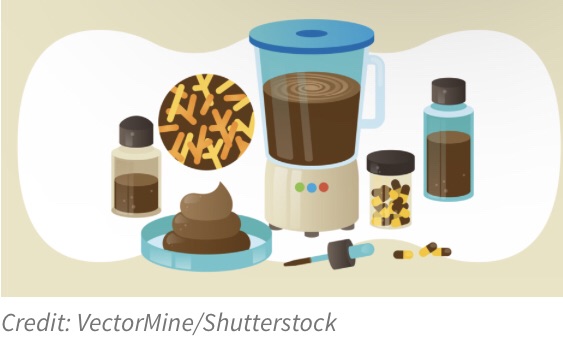
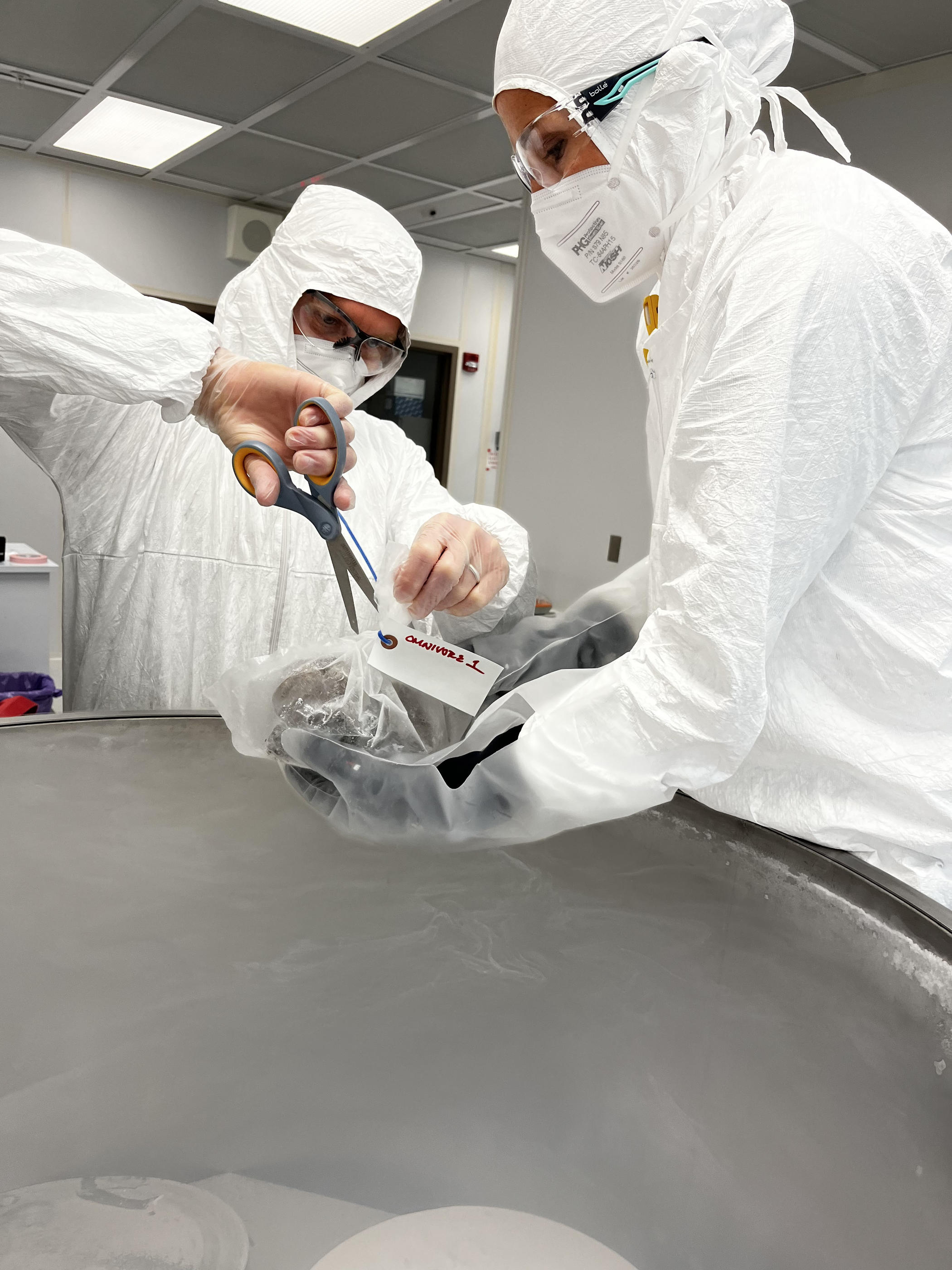
In the fall of 2023, NIST’s scientists in Charleston, South Carolina, received a special shipment of containers packed with baggies full of frozen human feces.
Teams of scientists there and at an outside lab worked together to grind the material into fine dust and blend it with water until it had the consistency of a smoothie. It was then poured into 10,000 tubes and distributed among NIST’s staff in Charleston and Gaithersburg, Maryland.
Scientists in both cities have been rigorously analyzing and studying the waste-matter mixture ever since.
All this excretory experimentation is helping to lay the groundwork for a new generation of treatments and medicines derived from human feces.
The power of poop comes from the microbes it contains. They are a rich sampling of the trillions of microbes living inside our gut, all part of the gut microbiome. In the last decade, scientists have linked the gut microbiome to a raft of human diseases, including inflammatory bowel disease, bacterial infections, autoimmune disorders, obesity and even cancer and mental illness.
Isolating fecal microbes and then turning them into therapies may be a way to treat many of these diseases. In fact, the FDA has recently approved two drugs for treating recurring bacterial infections, both of which are derived from highly processed human stool samples.
“This isn’t just wishful thinking. It’s already happening,” said NIST molecular geneticist Scott Jackson. “We are at the beginning of a new era of medicine.”
Why Poop?
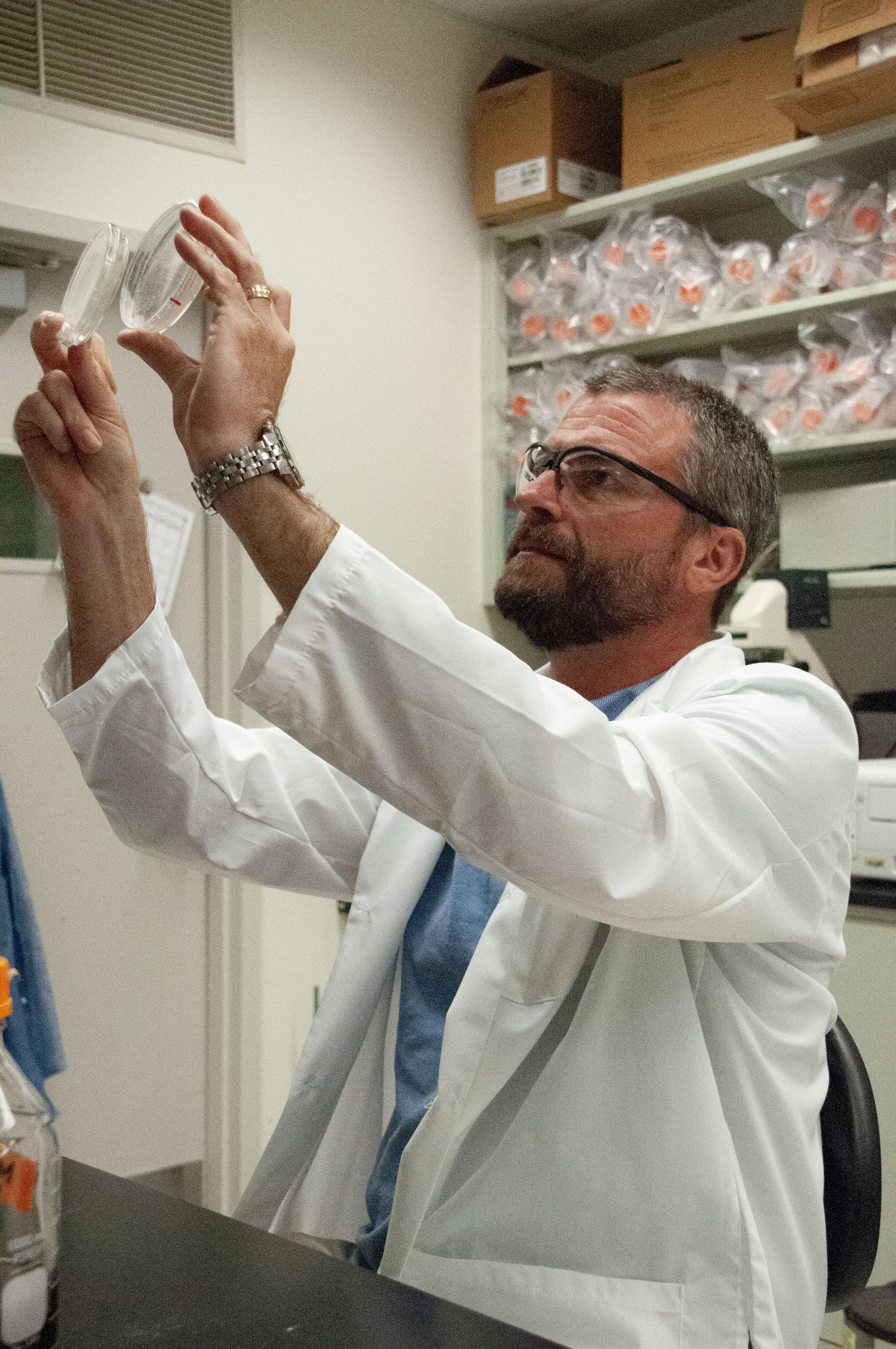
While human feces also contain water, undigested food and assorted inorganic matter, anywhere from 30% to 50% is made up of bacteria, viruses, fungi and other organisms that once lived in our guts.
We could not survive without these fellow travelers. They play a critical role in metabolism, vitamin production and digestion. By regulating the immune system, they help ward off harmful bacteria and toxins.
Their activity also impacts the nervous system via the gut-brain connection, affecting mood and mental health and influencing many neurological conditions, including Alzheimer’s and autism.
We are only beginning to understand the relationship between microbes and diseases. We have significant gaps in our knowledge about how microbes affect other systems and processes in the body. And certainly, just because changes in the gut microbiome correlate with a particular disease doesn’t mean they cause it.
Still, it’s clear that the signals gut microbes send to each other and cells elsewhere in the body significantly impact our health.
Doctors could get a sample of your microbiome directly from your gut, but that means undergoing an invasive procedure like a colonoscopy or biopsy.
Getting a specimen of stool is (ironically) less messy.
“Fecal material is convenient,” Jackson said. “Everybody poops.”
But Really, Poop Medicine?
Everyone’s stool is different. The amount and types of microorganisms vary based on your genes, environment, health and diet. But scientists have discerned similarities in the poop of individuals with certain diseases. People with Parkinson’s disease, for example, show both higher and lower concentrations of certain bacterial species. For people with asthma, poop has reduced levels of microbial diversity.
These correlations, some quite clear and others still unclear, may make it possible to use stool samples to diagnose a wide range of illnesses and conditions. You’d send a fecal sample to a lab, which would then identify the microorganisms in it by decoding, or “sequencing,” their DNA.
Jackson said the results could be used to not only diagnose certain illnesses but also evaluate the risk of getting the illnesses in the future.
“We would analyze microbial DNA in stool for the same reason we test human DNA — to tell us about your risk of disease,” he said.
Beyond their use in diagnosing diseases, could feces-derived microbes be used to treat them?
This is actually already happening.
Fecal microbiota transplants (FMTs) are now used to treat recurrent Clostridioides difficile infection (CDI), a sometimes-deadly bacterial infection commonly picked up in hospitals. FMT is like any other kind of transplant, though in this case, it’s someone else’s fecal matter that’s transferred into the sick patient.
The microorganisms from the transplant help regenerate the healthy ecosystem in the gut microbiome, assisting the immune system to fight off the infection. On recurrent CDI, the procedure has a success rate of 95%, a remarkable result for just about any therapy.
Research into other uses for FMT is exploding. According to clinicaltrials.gov, there are dozens of studies in the United States right now involving FMT, with clinicians and researchers testing it out on everything from cancer to colitis to alcoholic hepatitis.
Researchers are also exploring alternative approaches that involve genetically modifying fecal bacteria, creating disease-fighting microbes that would take root in your gut and help restore the microbiome to full health. There’s even the possibility of altering your own fecal microbes, a personalized medicine approach that customizes the therapy to the individual patient.
In addition to the gut microbiome, there are multitudes of microorganisms in the nose, skin, throat and vagina, all part of what’s known as the human microbiome.
Jackson said that the next generation of microbial medicines will be derived from all over the human microbiome. They will be much more scientifically proven and effective for treating diseases than today’s probiotics, which are bacteria derived from fermented foods and categorized as dietary supplements.
“If things keep going the way they are now, I think in 30 years, medical doctors will have an arsenal of new microbial therapies to treat a broad spectrum of diseases,” Jackson said.
What’s NIST’s Role in All This?
NIST produces reference materials (RMs) that help laboratories and manufacturers calibrate their instruments.
For example, the agency sells peanut butter that comes with a detailed analysis and measurements of its compounds and chemicals. Food companies need to know how much fat is in their products. To ensure they are measuring the amount correctly, they can perform tests on NIST’s peanut butter. If they get the same result as NIST, they know their equipment is accurate.
Having widely trusted and accepted reference materials, especially for complex materials, ensures quality control and accuracy across entire industries and research fields.
NIST is now developing an RM for human feces, officially called the Human Gut Microbiome (Whole Stool) Reference Material. NIST’s peanut butter lists its amount of calcium, copper, tetradecanoic acid and many other components. Similarly, the new RM, expected to be released this year, will itemize and describe the ingredients in feces.
It will identify hundreds of species of microorganisms and detail the concentration of thousands of different metabolites in the gut, many of which are produced by microorganisms and help to convert nutrients into energy or synthesize molecules for cellular functions.
Other ingredients listed include many compounds you might not even have known were in feces: cholesterol (a type of metabolite), for example, and serotonin, most of which is found in the cells lining the gastrointestinal tract.
The RM aims to become the gold standard in human gut microbiome research and drug development. A single unit of the RM will consist of a milliliter tube filled with slurry fecal matter accompanied by a lengthy report that labs can use to check their measurements and fine-tune their instruments.
Many scientists believe a reference material for feces is desperately needed. Right now, “If you give two different laboratories the same stool sample for analysis, you’ll likely get strikingly different results,” Jackson said. Many discrepancies arise from the different protocols and tools the labs use. Others are the result of differing standards and definitions.
“NIST’s RM will help researchers develop, benchmark and harmonize their measurements,” Jackson said. “It’s the most detailed and comprehensive microbiological and biochemical breakdowns ever produced for human feces.”
Article link: https://www.nist.gov/health/future-medicine-your-poop
 healthcarereimagined