by The Dalai Lama with Rasmus Hougaard
February 20, 2019
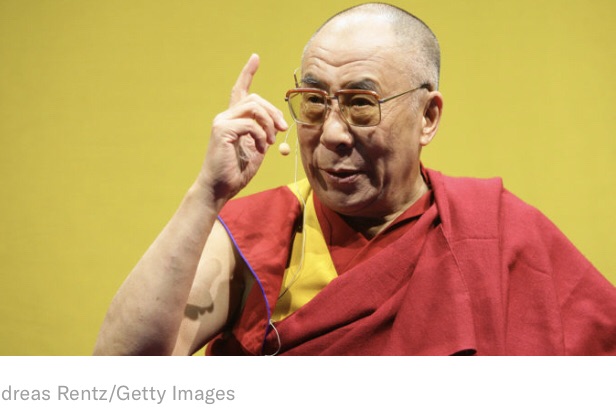
Summary.
The Dalai Lama shares his observations on leadership and describes how our “strong focus on material development and accumulating wealth has led us to neglect our basic human need for kindness and care.” He offers leaders three recommendations. First, to be mindful: “When we’re under the sway of anger or attachment, we’re limited in our ability to take a full and realistic view of the situation.” Also, to be selfless: “Once you have a genuine sense of concern for others, there’s no room for cheating, bullying, or exploitation; instead you can be honest, truthful, and transparent in your conduct.” And finally, to be compassionate: “When the mind is compassionate, it is calm and we’re able to use our sense of reason practically, realistically, and with determination.”
Over the past nearly 60 years, I have engaged with many leaders of governments, companies, and other organizations, and I have observed how our societies have developed and changed. I am happy to share some of my observations in case others may benefit from what I have learned.
Leaders, whatever field they work in, have a strong impact on people’s lives and on how the world develops. We should remember that we are visitors on this planet. We are here for 90 or 100 years at the most. During this time, we should work to leave the world a better place.
What might a better world look like? I believe the answer is straightforward: A better world is one where people are happier. Why? Because all human beings want to be happy, and no one wants to suffer. Our desire for happiness is something we all have in common.
But today, the world seems to be facing an emotional crisis. Rates of stress, anxiety, and depression are higher than ever. The gap between rich and poor and between CEOs and employees is at a historic high. And the focus on turning a profit often overrules a commitment to people, the environment, or society.
I consider our tendency to see each other in terms of “us” and “them” as stemming from ignorance of our interdependence. As participants in the same global economy, we depend on each other, while changes in the climate and the global environment affect us all. What’s more, as human beings, we are physically, mentally, and emotionally the same.
Look at bees. They have no constitution, police, or moral training, but they work together in order to survive. Though they may occasionally squabble, the colony survives on the basis of cooperation. Human beings, on the other hand, have constitutions, complex legal systems, and police forces; we have remarkable intelligence and a great capacity for love and affection. Yet, despite our many extraordinary qualities, we seem less able to cooperate.
In organizations, people work closely together every day. But despite working together, many feel lonely and stressed. Even though we are social animals, there is a lack of responsibility toward each other. We need to ask ourselves what’s going wrong.
I believe that our strong focus on material development and accumulating wealth has led us to neglect our basic human need for kindness and care. Reinstating a commitment to the oneness of humanity and altruism toward our brothers and sisters is fundamental for societies and organizations and their individuals to thrive in the long run. Every one of us has a responsibility to make this happen.
What can leaders do?
Be mindful
Cultivate peace of mind. As human beings, we have a remarkable intelligence that allows us to analyze and plan for the future. We have language that enables us to communicate what we have understood to others. Since destructive emotions like anger and attachment cloud our ability to use our intelligence clearly, we need to tackle them.
Fear and anxiety easily give way to anger and violence. The opposite of fear is trust, which, related to warmheartedness, boosts our self-confidence. Compassion also reduces fear, reflecting as it does a concern for others’ well-being. This, not money and power, is what really attracts friends. When we’re under the sway of anger or attachment, we’re limited in our ability to take a full and realistic view of the situation. When the mind is compassionate, it is calm and we’re able to use our sense of reason practically, realistically, and with determination.
Be selfless
We are naturally driven by self-interest; it’s necessary to survive. But we need wise self-interest that is generous and cooperative, taking others’ interests into account. Cooperation comes from friendship, friendship comes from trust, and trust comes from kindheartedness. Once you have a genuine sense of concern for others, there’s no room for cheating, bullying, or exploitation; instead, you can be honest, truthful, and transparent in your conduct.
Be compassionate
The ultimate source of a happy life is warmheartedness. Even animals display some sense of compassion. When it comes to human beings, compassion can be combined with intelligence. Through the application of reason, compassion can be extended to all 7 billion human beings. Destructive emotions are related to ignorance, while compassion is a constructive emotion related to intelligence. Consequently, it can be taught and learned.
The source of a happy life is within us. Troublemakers in many parts of the world are often quite well-educated, so it is not just education that we need. What we need is to pay attention to inner values.
The distinction between violence and nonviolence lies less in the nature of a particular action and more in the motivation behind the action. Actions motivated by anger and greed tend to be violent, whereas those motivated by compassion and concern for others are generally peaceful. We won’t bring about peace in the world merely by praying for it; we have to take steps to tackle the violence and corruption that disrupt peace. We can’t expect change if we don’t take action.
Peace also means being undisturbed, free from danger. It relates to our mental attitude and whether we have a calm mind. What is crucial to realize is that, ultimately, peace of mind is within us; it requires that we develop a warm heart and use our intelligence. People often don’t realize that warmheartedness, compassion, and love are actually factors for our survival.
Buddhist tradition describes three styles of compassionate leadership: the trailblazer, who leads from the front, takes risks, and sets an example; the ferryman, who accompanies those in his care and shapes the ups and downs of the crossing; and the shepherd, who sees every one of his flock into safety before himself. Three styles, three approaches, but what they have in common is an all-encompassing concern for the welfare of those they lead.
The Dalai Lama is the spiritual leader of the Tibetan People. He was awarded the Nobel Peace Prize in 1989 and the U.S. Congressional Gold Medal in 2007. Rasmus Hougaard is the founder and managing director of Potential Project, a global leadership and organizational development firm, and the coauthor of the new book, The Mind of the Leader: How to Lead Yourself, Your People, and Your Organization for Extraordinary Results. He has created an app that will help you develop mindfulness, selflessness, and compassion in your leadership.
Article link: https://hbr.org/2019/02/the-dalai-lama-on-why-leaders-should-be-mindful-selfless-and-compassionate?
 healthcarereimagined