|
By Terri Moon Cronk WASHINGTON, April 7, 2014 – U.S. national security and defense strategies must be supported by a strong, forward-leaning Military Health System, the Defense Department’s top physician told Congress last week. At an April 2 hearing of the House Appropriations Committee’s defense subcommittee, Dr. Jonathan Woodson, assistant secretary of defense for health affairs, said DOD’s request for fiscal year 2015 health program funding supports the department’s health care goals and the Military Health System’s “quadruple aim” of increased readiness, better health and better care at lower cost. “We are committed to sustaining the medical readiness of our forces, the clinical skills of our medical forces and the world-class treatment and rehabilitation for those who fight battles today, yesterday and tomorrow,” Woodson said. The Military Health System performed well in 13 years of war, achieving historic outcomes in reducing the rate of disease and nonbattle injury in combat, and increasing the rate of war-wound survival, he noted. And while he’s proud of those outcomes, he added, he and the service surgeons general have developed six lines of effort for the Military Health System to support Defense Secretary Chuck Hagel’s priorities and meet the health care mission amid changing threats and limited resources. Those lines of effort, Woodson said, would: — Modernize the Military Health System’s management with an enterprise focus; — Define and resource the medical capabilities and manpower needed in the 21st century; — Invest in and expand strategic partnerships; — Assess the balance of the medical force structure; — Modernize the TRICARE health program; and — Define the Military Health System’s global health engagement requirements. Focusing on two efforts that directly relate to the fiscal 2015 health program budget request, Woodson addressed the newly stood-up Defense Health Agency and modernization of the TRICARE program. “The Defense Health Agency, a combat support agency, is an important first step in modernizing our common business and clinical practices with accountability for performances both to the assistant secretary of defense for health affairs and the chairman of the Joint Chiefs of Staff,” he said. “We have made substantial progress in achieving savings earlier than projected as we consolidated functions and we reduced redundancy.” By modernizing and simplifying TRICARE, incentives would exist to increase beneficiaries’ wellness, decrease overuse and allow them to choose providers, he said. While the TRICARE proposal includes “modest increases” in beneficiaries’ out-of-pocket costs, he said, the high quality of care would not be affected. “The TRICARE benefit will remain one of the most comprehensive benefits in this country, and it will modernize the program for the first time in many years,” Woodson said. “I believe this proposed budget meets the test.” The service surgeons general also testified at the hearing. “The health and the readiness of our Army are inseparable, because health is a critical enablement to readiness,” Lt. Gen. Patricia D. Horoho, Army surgeon general, told the House panel. “Today, we’re beginning to see results in readiness, in health and cost savings. Through our service lines and standardization of processes across the medical command, we have synchronized our policy, program and resources, and we’re starting to see some very strong results.” But this is a time of “hard conversations and very tough choices,” she noted. “For the first time, we are decreasing the size of our Army before the longest war in our nation’s history has ended,” Horoho said. “We are poised to transition to the interwar years, and we must work aggressively to sustain our combat-care skills, nurture an environment of dignity and respect, and maintain trust with the American people.” Adding that today is a time of challenge and opportunity, she said the nature of war always will create medical threats. “Our job is to be ready whenever and wherever,” the Army surgeon general said. “Anything less will cost lives, and this is not going to happen on my watch. We live in uncertain times. One thing is certain: a healthy, resilient and ready Army will be — as it always has been — the strength of our nation.” Similarly, Navy Vice Adm. (Dr.) Matthew L. Nathan, Navy surgeon general, said Navy medicine “is mission-ready in delivering world-class care anywhere, any time.” By supporting the operational missions of the Navy and Marine Corps, Navy medicine must be an agile, expeditionary medical force that is “capable of meeting the demands of crisis response in global maritime security, he told committee members,” Nathan said. “These are transformational times in military medicine,” he noted. “There is much work ahead as we navigate the important challenges … to keep our sailors and Marines healthy, maximize the value for all our patients, and leverage our joint opportunities. I am encouraged with the progress we have made. I am not yet satisfied.” The Navy continues to look for ways to improve and remain on the forefront of delivering world-class health care anywhere and at any time, Nathan said. Lt. Gen. (Dr.) Thomas W. Travis, Air Force surgeon general, told the panel that an eye on the future is essential. “With this war winding down, even with our fiscal challenges, we now have a clear responsibility to make sure our military medics are well-trained and well-prepared for whatever contingency the future brings, to include combat operations, stability operations, humanitarian assistance or disaster relief,” he said. To enhance Air Force core competency in air evacuation missions, medical providers must continue to have “robust opportunities to practice their skills,” he added, “and [we must] continue to pursue critical research and modernization initiatives for the future.” As the way the nation fights wars evolves, the way medical support for operators is provided must also evolve, Travis said. “Airmen who are manning systems such as distributed common ground stations, space and cyber operations or remotely piloted aircraft, and those who operate outside the wire, such as security forces, special ops and explosive ordnance disposal specialists, all face distinct challenges,” he said. “The types of injuries or stressors, both visible and invisible, to members and their families are also changing.” Medical support must be provided in different ways than in the past to address “an expanding definition of operator,” and military medicine must step up to its role as human performance practitioners, he added. “Not only will access in care be more customized for the mission, but so will prevention,” he said. Travis said he’s never seen a time when it’s been more evident how important military medicine is to the nation’s operational capability. “We’ve learned much, and our medics have performed magnificently,” he told the panel. “Even in the face of budget challenges, we have to be as ready at the beginning of the next war as we are now with the end of the current war. I think our nation expects that.” (Follow Terri Moon Cronk on Twitter: @MoonCronkAFPS) |
| Contact Author
Biographies: Related Sites: |
Quadruple Aim
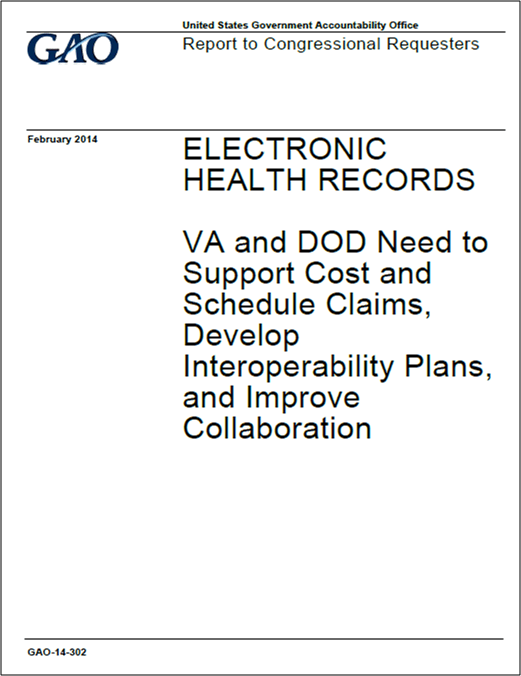
VA and DOD Need to Support Cost and Schedule Claims, Develop Interoperability Plans, and Improve Collaboration
By Former Sens. Tom Daschle (D-S.D.), Trent Lott (R-Miss.) and John Breaux (D-La.) – 02/12/14 06:07 PM EST
As Washington continues to debate ObamaCare, technological innovations have advanced to new levels, presenting a bipartisan opportunity to give Americans access to new ways to connect with their doctors.
Whether it involves patient portals, mobile apps, electronic health records or remote patient monitoring, technology has the power to bring high-quality care to more people with increased transparency and patient engagement. Telehealth, or as we like to call it, connected care, is harnessing technology through greater broadband deployment and adoption of new modalities to address gaps in the current system.
Patients who need primary care, chronic disease management, mental health consultations or even specialty care such as dermatology, can communicate with their physicians remotely through a laptop, iPad, smartphone or kiosk. Patient care is available after-hours and on weekends, often in a patient’s home or in another convenient location. This is not merely a big step for patient convenience; it also represents an opportunity to improve the quality of care and promote care coordination.
The Department of Veterans Affairs has been a pioneer in connected care. In fiscal 2012, nearly half a million veterans received 1.429 million remote care contacts. In the Defense Department spending bill recently signed by President Obama, one of the few amendments added to the bill extended healthcare services to transitioning veterans through telemedicine.
It is time to make connected care a bipartisan priority in Washington. Imagine an elderly woman with diabetes who can consult a doctor about managing her disease without having to leave her home, or a working parent who can video chat with his child’s pediatrician, or a patient in need of mental health services but too afraid to go to an office able to access care through a laptop, or a doctor who can monitor a patient already discharged from the hospital.
To achieve the true promise of connected care, we must ensure that our legal and regulatory structures allow Americans access to these innovations. We currently have rules that never anticipated what is possible today. We have an opportunity to embrace new platforms for the delivery of healthcare and prevention of chronic disease and to do so in a way that protects patients’ sensitive information.
Given the benefits of this technology, policymakers across government should be, and we believe are, asking themselves what they can do to expand its use while ensuring that appropriate safeguards are in place.
For example, we have created a major emphasis on keeping people out of the hospital with prevention, chronic disease management, care coordination and readmission penalties. But, we still don’t reimburse home health agencies for remote patient monitoring, nor do we pay for patients to check in with care providers from their homes via real-time video.
We must create a consistent definition of connected care that will promote participation and broaden acceptance of remote care among providers, payers and patients. We must also address the lack of broad and consistent reimbursement, insufficient broadband infrastructure, inconsistent state medical licensing and varying degrees of clinical permissibility.
The time is right to address these issues, and the following facts are indisputable: • Technology is more widely recognized as a job creator and an engine for economic growth. • The evidence base for connected care has grown. Studies are published regularly that demonstrate improvements in quality, access and cost – including one recently that highlighted how Partners Healthcare System in Boston reduced readmissions of 1,200 heart failure patients by 50 percent through a home health telemonitoring program. • Connected care aligns with broader efforts to strengthen the nation’s healthcare system. Notably, an emphasis on accountable care is putting pressure on providers to be in better contact outside of the office or hospital setting, and connected care offers a low-cost way for providers to follow up with their patients. • States and commercial insurers are increasingly reimbursing for connected care. In 2013 alone, legislation was introduced in 25 states to advance some type of telehealth policy, and 20 states now require commercial insurers to cover telehealth services. • As the expansion of coverage continues, more people will be enrolled in private health insurance plans or Medicaid than ever before but might not be able to access a physician. Connected care can help consumers find a doctor that suits their health needs.
Technology can be a powerful tool in meeting our healthcare challenges. To maximize its potential, we must pave the way by ensuring our laws and regulations keep pace with innovations in connected care.
Daschle, Lott and Breaux are co-chairmen of the Connected Care Alliance, a diverse coalition of companies dedicated to patient access to care through advanced technology.
Follow us: @thehill on Twitter | TheHill on Facebook
Read more: http://thehill.com/opinion/op-ed/198269-connected-healthcare-is-our-future-if-washington-acts#.Uv4lQZIpyfs.twitter#ixzz2tPKgVSNo Follow us: @thehill on Twitter | TheHill on Facebook
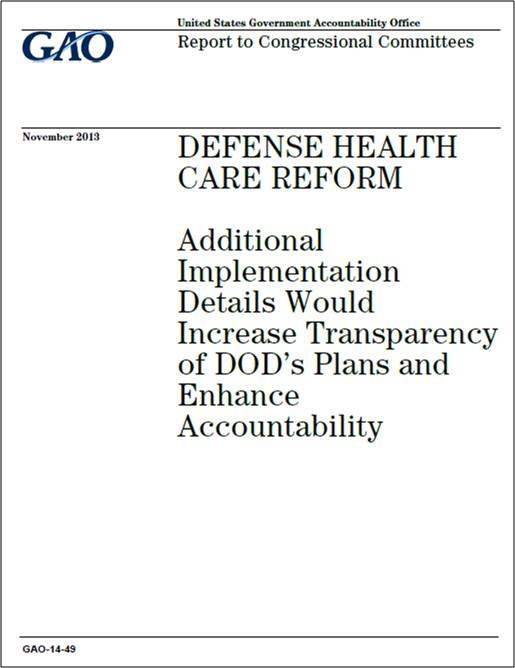
Additional Implementation Details Would Increase Transparency of DOD’s Plans and Enhance Accountability

 healthcarereimagined