Harmonizing electronic health record platforms and their legacy data tames complexity and enables easier patient access to information and greater patient trust in the healthcare system, says NewYork-Presbyterian’s EHR manager.
By Bill Siwicki , Managing Editor | March 16, 2026 | 12:35 PM
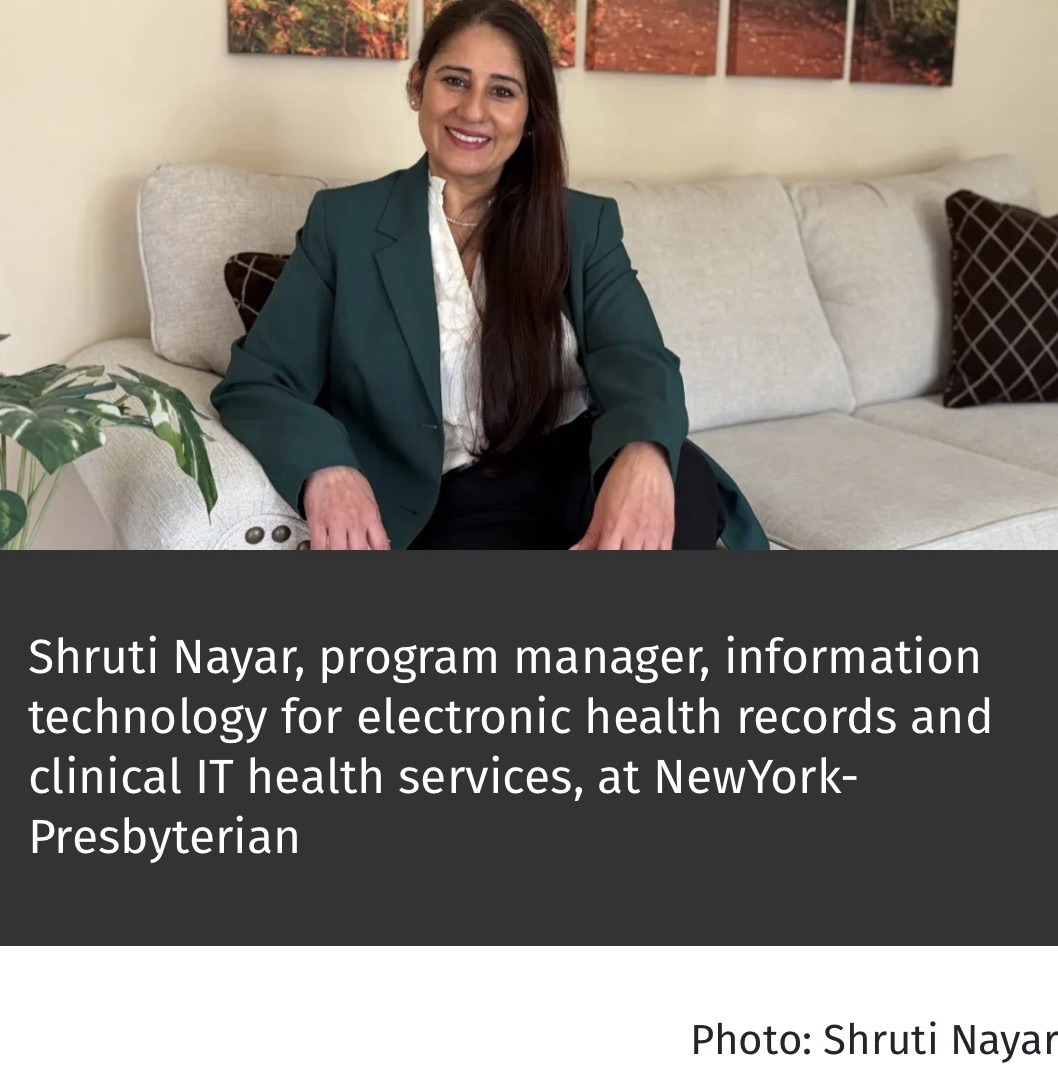
Electronic health record fragmentation across hospitals and providers highlights a powerful opportunity to improve coordination and patient experience – healthcare organizations use different EHR vendors and this diversity underscores the need for seamless data exchange across the care continuum, said Shruti Nayar, program manager, information technology for electronic health records and clinical IT health services, at NewYork-Presbyterian.
“Interoperability standards like HL7 and FHIR are accelerating progress; however, there still are challenges to support real-time data exchange, causing potential inconsistency in patient data,” she explained. “By working to defragment the patient records, clinicians gain a fuller view of a patient’s health.
“EHR consolidation also enhances security by streamlining access points and standardizing vendor oversight,” she added. “Ultimately, harmonizing EHR platforms transforms this complexity into a driver of better coordination, easier patient access to information and greater patient trust in the healthcare system.”
Consolidating EHRs
NewYork-Presbyterian recognized the opportunity it had to consolidate multiple EHR systems across its health system.
“We worked to consolidate to one system, while archiving legacy data to another and providing seamless integration from our EHR to legacy system data,” Nayar recalled. “This was possible by creating an enterprise master patient index for each patient across fragmented systems.
“A user is able to click on a link in the patient electronic chart to access the patient in context records from multiple legacy systems through single-sign-on to the legacy system records from within the EHR,” she continued. “This decision was a strategic enabler of compliance readiness and operational efficiency across the organization.”
This enables teams to have a longitudinal view of patient records and support them throughout their continuum of care. Staff ensured that along with saving their data in an archiving system, they also stored a copy in a data lake for easy access for reporting and research.
NewYork-Presbyterian is affiliated with two medical schools, and this health IT process also allowed staff to provide years’ worth of data across the health system for research purposes. In the past six years, staff have archived more than 120 applications into one system. That amounts to more than 175 terabytes of data and millions of patient records. This has helped the organization achieve “one patient, one record,” as staff say.
Path for improvement
EHR fragmentation can create challenges for quality, efficiency and security – but it also offers a clear path for improvement, Nayar observed. Streamlining systems can reduce unnecessary testing, lighten clinician workload and strengthen care coordination, she said.
“An enterprise-wide governance group – bringing together operations, analytics, security and clinical leaders – can help guide standards and integration strategy,” she explained. “This team can assess where consolidating redundant EHRs or standardizing ancillary systems makes sense.
“A unified patient record – supported by an enterprise master patient index and a longitudinal data repository – forms the backbone of any defragmentation effort,” she continued. “Centralizing data in a shared environment ensures patient information can be reliably matched and accessed across systems.”
Leaders can treat fragmentation as a strategic priority and track progress with clear metrics, such as the completeness of cross-system patient data, the number of clinical systems per site and cybersecurity exposure tied to system sprawl, she concluded.
Follow Bill’s health IT coverage on LinkedIn: Bill Siwicki
Email him: bsiwicki@himss.org
Healthcare IT News is a HIMSS Media publication.
Article link: https://www.healthcareitnews.com/news/ehr-fragmentation-offers-opportunity-enhance-care-coordination-and-experience
 healthcarereimagined