A recent study from MIT researchers (12 June), which explored what happens when people rely on AI tools like ChatGPT for tasks like essay writing.
One of the key findings (probably not very surprising):
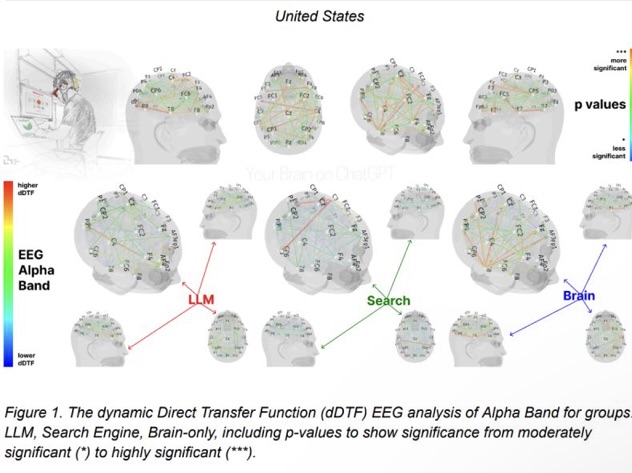
—— 𝐔𝐬𝐢𝐧𝐠 𝐂𝐡𝐚𝐭𝐆𝐏𝐓 𝐫𝐞𝐝𝐮𝐜𝐞𝐝 𝐧𝐞𝐮𝐫𝐚𝐥 𝐜𝐨𝐧𝐧𝐞𝐜𝐭𝐢𝐯𝐢𝐭𝐲 𝐚𝐧𝐝 𝐜𝐨𝐠𝐧𝐢𝐭𝐢𝐯𝐞 𝐞𝐧𝐠𝐚𝐠𝐞𝐦𝐞𝐧𝐭 (compared to other groups)
So what they did is,
54 participants were split into three groups:
- One group used ChatGPT
- One used a search engine
- One worked without any digital assistance
They wrote essays while their brain activity was tracked (using EEG), their writing was analyzed, and they were interviewed about the experience.
Other interesting findings:
—— People relying on ChatGPT felt less ownership of their work and struggled more to recall or quote it.
—— When switching tools, those moving from ChatGPT to Brain-only found it harder to work unaided, while those moving the other way adapted quickly, some said it felt like gaining a superpower.
The study warns of cognitive debt: offloading too much thinking to AI could quietly erode critical thinking and deeper engagement over time.
The paper is quite long, full of rich details (I haven’t gone through it all yet!).
I’ll drop the link in the comments if you’re curious to explore it. Also, check page 5 first – it’s the “How to read this paper” guide from the authors, which is super helpful especially if you don’t have time for 200+ pages!
📍Btw, if you want to keep the brain active and build something great with AI, join our 𝐋𝐞𝐚𝐝𝐖𝐢𝐭𝐡𝐀𝐈𝐀𝐠𝐞𝐧𝐭𝐬 Hackathon (July 11–14)
 healthcarereimagined