DECEMBER 25, 2024
Introduction
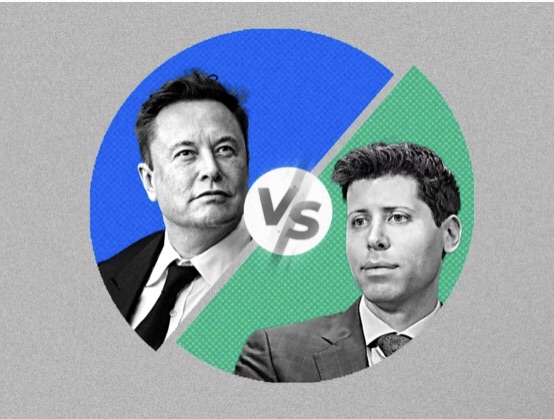
In the high-stakes and rapidly evolving world of artificial intelligence, a dramatic legal confrontation has emerged between Elon Musk and OpenAI. This case offers a fascinating lens into the intersection of technological ambition, corporate transformation, and personal rivalries, revealing a complex narrative with far-reaching implications.
The Roots of the Conflict
Elon Musk, once a co-founder and major supporter of OpenAI, has filed a lawsuit to challenge the organization’s transformation from a non-profit research lab to a profit-driven enterprise. Musk’s original vision for OpenAI was a safeguard against unchecked AI development—a mission to ensure that artificial intelligence would benefit humanity as a whole. However, OpenAI’s pivot to a “capped-profit” model, and its subsequent collaborations with industry giants like Microsoft, has sparked accusations of betrayal and overreach.
At the heart of Musk’s complaint lies a series of allegations: OpenAI’s deviation from its founding principles, its potential monopolistic behavior, and its partnerships that allegedly block competition, particularly for Musk’s own AI venture, xAI. This battle isn’t just about legal technicalities; it’s a clash of ideologies and business strategies in an industry shaping the future of human civilization.
How Conflict Began
OpenAI was created in 2015 as a non-profit group with a good goal: to create artificial general intelligence (AGI) that will help people. Musk helped to start the company and put $44 million into it early on. But things have gone very badly between them, and now there is a public case that shows how tense things are inside the AI business.
OpenAI’s Explosive Growth
The business has had a lot of amazing financial success:
– Valuation: $157 billion as of January 2024
– Annual Recurring Revenue: $4 billion in September 2024
– Year-over-Year Growth: 248%
– ChatGPT Revenue: $2.9 billion ARR
Musk’s Defence in Court
Elon Musk has filed a legal motion asking the federal court to intervene in OpenAI’s shift from its original non-profit status to a fully for-profit model. Musk’s arguments center on four key allegations:
- Antitrust Violations: Musk claims that OpenAI’s transformation into a profit-driven entity has created unfair market conditions, potentially breaching antitrust laws. He argues that OpenAI’s monopolistic behavior could stifle innovation and competition in the AI industry.
- Deviation from Charitable Goals: Musk asserts that OpenAI has strayed from its founding mission as a non-profit organization dedicated to the ethical development of artificial intelligence for the benefit of humanity. He argues that this shift undermines the trust and goodwill upon which the organization was initially built.
- Improper Data Sharing with Microsoft: OpenAI’s partnership with Microsoft, including the integration of its models into Microsoft’s products, has raised concerns. Musk alleges that OpenAI improperly shared proprietary data and research with Microsoft, giving the tech giant an unfair advantage in the AI race.
- Blocking Funds for Competing AI Ventures: Musk contends that OpenAI’s current structure and funding mechanisms effectively block resources for competing AI startups, including his own venture, xAI. He claims this is a deliberate attempt to consolidate power and suppress competition.
OpenAI’s Counterattack
In response to Musk’s claims, OpenAI has presented evidence suggesting that Musk himself played a pivotal role in advocating for the organization’s shift toward a for-profit model. The counterarguments are supported by the following revelations:
- 2017 Text Messages Supporting For-Profit Conversion: OpenAI has released internal communications, including text messages from 2017, where Musk is shown discussing the advantages of converting OpenAI into a for-profit entity. These messages allegedly include Musk’s rationale that such a move would attract greater investment and accelerate AI development.
- Formation of a For-Profit Entity: OpenAI disclosed that Musk was instrumental in creating a new entity named “Open Artificial Intelligence Technologies, Inc.” during his tenure. This for-profit entity was proposed as a potential structure to secure funding and partnerships, aligning with Musk’s vision at the time.
- Musk’s Equity Demands: OpenAI claims that Musk sought significant control over the new organization, allegedly requesting 50-60% equity in the for-profit venture. This demand reportedly led to internal conflicts and contributed to Musk’s eventual departure from OpenAI.
The legal battle highlights a clash between two narratives: Musk’s portrayal of OpenAI as having abandoned its altruistic roots versus OpenAI’s depiction of Musk as a key proponent of the very changes he now criticizes. The outcome may hinge on the court’s interpretation of the evidence, including Musk’s historical involvement and the current implications of OpenAI’s operational model.
xAI vs. OpenAI
The rivalry between xAI and OpenAI represents a broader ideological and competitive battle within the artificial intelligence industry. Both organizations aim to advance AI technology, but their approaches, missions, and strategies differ significantly, reflecting the contrasting visions of their leaders and the market forces shaping the industry.
Mission and Vision
OpenAI
- Founding Philosophy: OpenAI was established in 2015 as a non-profit organization with the mission to ensure that artificial general intelligence (AGI) benefits all of humanity. Its early focus was on transparency, collaboration, and ethical AI development.
- Shift to Profit: Over time, OpenAI transitioned to a “capped-profit” model, allowing it to attract billions in funding from investors like Microsoft. This pivot enabled rapid technological advancements but drew criticism for deviating from its altruistic roots.
- Current Focus: OpenAI is focused on scaling large language models like GPT, developing AI tools for widespread adoption, and partnering with corporations to integrate AI into existing ecosystems.
xAI
- Founding Philosophy: Founded by Elon Musk in 2023, xAI positions itself as a challenger to existing AI giants, particularly OpenAI. Musk emphasizes the need for AI to be aligned with human values and safe from monopolistic control.
- Vision: xAI aims to create “truth-seeking” AI, prioritizing transparency and addressing biases in current AI models. Musk envisions xAI as a counterbalance to what he perceives as the commercialization and ethical compromises of organizations like OpenAI.
- Current Focus: xAI’s primary goal is to build AGI while integrating AI systems with real-world applications, including Tesla’s autonomous driving technology and SpaceX’s operations.
Technological Approaches
OpenAI
- Large-Scale Models: OpenAI has pioneered the development of large language models (LLMs) like GPT, which are trained on vast datasets and optimized for general-purpose tasks.
- Corporate Partnerships: Through its partnership with Microsoft, OpenAI has integrated its models into products like Azure AI and Microsoft Office, focusing on scalability and usability.
- Infrastructure: OpenAI leverages massive computational resources and advanced infrastructure to maintain its lead in AI research.
xAI
- Interdisciplinary Integration: xAI emphasizes the integration of AI with other domains, such as robotics and space exploration. This approach leverages Musk’s broader ecosystem of companies, including Tesla and SpaceX.
- Transparency and Explainability: xAI focuses on creating interpretable AI systems to address concerns about bias and opacity in existing models.
- Lean Development: Unlike OpenAI’s reliance on external partnerships, xAI seeks to operate with a leaner, more independent structure, leveraging Musk’s resources and influence.
Business Models
OpenAI
- Capped-Profit Model: OpenAI LP operates under a capped-profit structure, allowing investors to earn returns while funneling excess profits back into research.
- Revenue Streams: OpenAI generates revenue through API access, licensing agreements, and partnerships with tech giants like Microsoft.
- Criticism: The shift to a profit-driven model has raised concerns about ethical compromises and the monopolization of AI.
xAI
- Private Funding: xAI is privately funded, with Musk leveraging his wealth and resources from Tesla, SpaceX, and other ventures.
- Strategic Synergies: xAI integrates AI into Musk’s existing businesses, creating a symbiotic relationship that reduces dependency on external funding.
- Focus on Disruption: xAI aims to disrupt the AI industry by challenging incumbents like OpenAI and offering alternatives aligned with Musk’s vision of ethical AI.
Ethical Stances
OpenAI
- Advocates for the safe and ethical development of AGI but has faced criticism for its perceived lack of transparency and partnerships with large corporations.
- Balances innovation with corporate interests, which some argue compromises its ability to act in the public good.
xAI
- Emphasizes transparency, truth-seeking, and alignment with human values, presenting itself as a more ethical alternative to OpenAI.
- Musk’s history of controversial decisions and statements has led to skepticism about xAI’s ability to deliver on these promises.
Market Position
- OpenAI: A dominant player with established partnerships, significant market penetration, and a head start in deploying AI technologies at scale.
- xAI: A newcomer with the advantage of Musk’s influence, vision, and resources, positioning itself as a disruptive force in the AI landscape.
Conclusion
The Musk-OpenAI courtroom drama is a microcosm of the larger AI industry—a field marked by breathtaking innovation, high-stakes rivalries, and ethical dilemmas. Both parties are vying not only for legal vindication but also for control over the narrative of AI’s future. Whether the court sides with Musk’s critique of OpenAI’s alleged betrayal or OpenAI’s portrayal of Musk as a contradictory figure, the outcome will likely have profound consequences for the governance and development of artificial intelligence.
Article link: https://techovedas.com/the-ai-divide-musk-vs-openai-in-the-battle-for-humanitys-future/
 healthcarereimagined