
July 13, 2023 | Podcast
By Eric Lamarre, Kate Smaje, and Rodney Zemmel
McKinsey’s Rewireddistills the lessons from successful digital and AI transformations so companies can build competitive advantage.
DOWNLOADS
By now, most leaders understand the importance—or, increasingly, the inevitability—of digital and AI transformation. But fewer executives are clear about how to knit systems, people, and processes together in the most productive way. McKinsey senior partners Eric Lamarre, Kate Smaje, and Rodney Zemmel have written Rewired: The McKinsey Guide to Outcompeting in the Age of Digital and AI (Wiley, June 2023) with that disconnect in mind. Rewired offers clear, customizable paths that organizations can take to succeed with their digital transformations—and stay nimble in the face of constant change.
The authors discuss the book on this episode of The McKinsey Podcast, which is hosted by McKinsey editorial director Roberta Fusaro.
This transcript has been edited for clarity.
Difficult but doable
Roberta Fusaro: A massive number of companies are going through some sort of digital transformation—just about 90 percent of them, according to McKinsey research. All with varying levels of success.
Rodney Zemmel: It is “show me the money” time for digital transformations. To succeed in a digital transformation, it needs to be a CEO agenda item. It needs to mobilize cross-functional teams across the company in a unique way. It’s going to need some investment to sustain it.
Roberta Fusaro: That’s McKinsey senior partner Rodney Zemmel. It’s pretty easy to define what needs to happen in digital and AI transformations. But not so easy to get it done, says McKinsey senior partner Kate Smaje.
Kate Smaje: It’s very easy in some ways to sort of put an additional lick of paint over everything you do and come up with the “what.” The how of it is incredibly hard.
Roberta Fusaro: Especially when you’re trying to keep up with the latest technology.
Eric Lamarre: Data architecture and all the technology around that has evolved furiously over the past 18 to 24 months.
Roberta Fusaro: That’s McKinsey senior partner Eric Lamarre. He, Kate, and Rodney have worked with hundreds of clients going through digital and AI transformations. Their new book, Rewired, was inspired by both the frustrations and bottom-line pressures that companies are facing as they try to digitize. The authors describe Rewired as a how-to manual that lets companies take matters into their own hands and compete successfully in the age of digital and AI.
Rodney Zemmel: Frankly, we’ve all read the business books where you read the intro chapter, and then there’s pages of the same thing, just more examples than there were in the intro chapter. This is not designed to be that.
Kate Smaje: It is not the theory. It’s the practicality of, what does it really take to move the needle? What does it really take to be a leader and not a laggard in this space? And how do you make sure you’re not one of the vast majority that stalls in their transformation in some way, shape, or form? Or, if you have, what’s the unlock? What’s the pivot that’s going to get you out of that?
Forget the short-term fixes
Roberta Fusaro: For companies feeling stuck, some pixie dust probably sounds pretty good. But companies can’t just wave a magic wand . . .
Kate Smaje: . . . and end up with architecture overnight. Many of our clients are suffering with huge swaths of technology debt. And often what is slowing them down today is not actually their ability to create the latest application, but all of the integration complication that’s sitting underneath that.
Roberta Fusaro: Technology debt is part of the issue, but what really hobbles companies is the lack of focus on longer-term measures and the focus on value. A company has to measure its digital and AI transformation . . .
Rodney Zemmel: . . . with the same degree of rigor that you would measure any cost or revenue transformation. And that’s the first step in taking it from something hard and mysterious into something practical.
Roberta Fusaro: It also means recognizing that digital transformations are ongoing.
Kate Smaje: One of the things that actually annoys me about the term “digital transformation” is it has this connotation that at some point I am done, right? I don’t think you’re ever done with digital transformation. It’s a muscle that you’re constantly building and you’re constantly honing to get better at.
I don’t think you’re ever done with digital transformation. It’s a muscle that you’re constantly building and you’re constantly honing to get better at.Kate Smaje
Learn to speak ‘technology’
Roberta Fusaro: Eric Lamarre agrees and says his golden rule for leaders beginning a digital transformation is to get educated.
Eric Lamarre: You don’t start anything other than take your top team and go and learn for three, four, five months. What does that mean, go and learn? Go visit other companies that have done this, that are further along their journey. Now, start to create a common language: What is a data engineer?
What’s a technology stack? What do you mean by data architecture? What does it mean when you say “track the value”? How do we do that for a digital solution? You have to start to create a common language so that all the team players play the same sport.
Roberta Fusaro: The leader of that team is the CEO. And that’s where some rewiring kicks in.
Rodney Zemmel: The world is going from, you have a CIO on your team and this is the task of the CIO who is maybe joined with a business leader, to technology being fully embedded in the business. Business leaders need to be technology leaders.
Roberta Fusaro: And so we see a shift from chief information officer, or CIO, to CEO. A McKinsey survey from last year revealed that success with digitization is more likely when you’ve got C-suite leaders who understand tech—even a little bit. A company’s chance of . . .
Rodney Zemmel: . . . ending up in the top quartile of economic performers are much higher than if you’ve got one or two tech-savvy members of your team.
Eric Lamarre: I see the CEO as the chief orchestrator. There’s a dance. Everybody’s got to do their part, otherwise the value is not going to be there. And so that’s the primary job of the CEO: raise expectations, set a drumbeat, and get the dance to unfold.
Rodney Zemmel: So your orchestra analogy is right in that the CEO needs to get the team to actually align on the business-led technology road map. And that, then, needs to be a contract for how they all work together to really drive it, rather than they just start the music and then wave from the side.
Roberta Fusaro: Kate says that when CEOs model a learning mindset, their organizations can transform more quickly.
Kate Smaje: And one of the differences I see between CEOs that are getting it right and getting it wrong is when something does go wrong, rather than saying, “Why did that happen? What was the problem here?” they say, “What can we learn from it?” And just that slight nuance in the question that they ask can have a massive impact on the cultural adherence to the transformation.
Talent at the center
Roberta Fusaro: And the authors make no bones about it—every digital transformation is a people transformation at its core.
Kate Smaje: This doesn’t have to be an entirely new team. There’s a large component of this, of, who can I upskill? Who could really get to a different level on this? How do I take some of the capabilities I have and maybe make them more technology enabled without having to throw the baby out with the bathwater?
And for those trying to hire from outside the organization, I think one of the most common mistakes that I see is that the effort goes on the recruiting pipeline. And don’t get me wrong; that’s hard. But people over focus, right? They’re 99 percent focused on, how do I get them in the door? And where I see the best players work is when they’re about 50–50 of, how do I get them in the door, and then how do I make them wildly successful once they’re here?
Roberta Fusaro: Rethinking some elements of talent management can help, such as . . .
Kate Smaje: . . . how you remap career pathways, for example. How you think about compensation models, and really rewarding skills versus tenure, or time-in-role and so on.
Roberta Fusaro: Eric adds that when it comes to compensation, it’s important to understand the nuances of the job. For instance, if you look at data engineers . . .
Eric Lamarre: Not all data engineers are the same. There are data engineers who are at the very top of their field. They have a breadth of tools that they have mastered. They are really thought leaders in the space. They are problem-solvers extraordinaire. They have a track record of developing real, working products, based on data. And then you have people who are more novices. They are just starting out. Your ability as a company to tell the difference between this one and that one is fundamental to be able to pay them differently, because otherwise, you’re unfair.
Roberta Fusaro: This differentiation can help leaders manage expectations.
Eric Lamarre: You can tell people, “I’m paying you at this level because these are the things that I know you’re able to do. But if you want to be paid at this level, that’s what I would want to be able to do.” And you’re able to have a variety of profiles live under the same roof.
Roberta Fusaro: To ensure productivity under that roof, the CEO can pick from one of three core operating-model designs. They’re all good; it just depends on what works best for the company. Choice one is to run a bunch of teams in a kind of digital factory model.
Eric Lamarre: What is that exactly? Essentially it’s a construct where you’re still running small cross-functional teams. People from the business come from their position to be inside those teams. People from technology come inside those teams. And then you share some commonality around data and infrastructure services and things like that. But it tends to be more of a stand-alone unit where people go to do the job of developing solutions.
Roberta Fusaro: Choice two is called the product and platform model. It’s similar to the digital factory option and it’s the model favored by more and more tech-intensive companies, such as banks, retailers, and, of course, software companies.
Eric Lamarre: This time it’s everybody in the business and operations side, and everybody in the technology side who gets regrouped into these small teams and they start to develop technology-based solutions.
Roberta Fusaro: The third model is called enterprise-wide agility. The benefits of agile—or the use of small, customer-focused teams that continually test and learn—shouldn’t be confined to tech-intensive parts of the company. Other business functions can use it to their advantage, too. This model requires a serious multiyear commitment by the CEO. But no matter which model the CEO chooses, each relies on a critical role: the product manager.
Eric Lamarre: The product manager becomes quite important in figuring out, “Where’s the need? What are we going to develop, in what sequence? And how are we going to make sure it’s going to get adopted?” And you’re going to say, “OK, that’s obvious. We need those. I’d like three dozen.” But it’s hard to get for an established company because this is not a role that you can hire so easily from the outside. Why? Because having knowledge of the enterprise, knowledge of the business, the customers, the process, the operations, is quite valuable in playing that role of “mini-CEO.”
Rodney Zemmel: This is a well-rounded skill set of people who can lead technical work, people who can understand and derive customer insights and bring those two things together to set the right direction for a product.
Roberta Fusaro: And product managers don’t just execute orders. They synthesize.
Kate Smaje: Often, getting that product lead role right can involve tension, partly because maybe the organization’s used to, when they’re developing technology, throwing it over the fence and saying, “Here’s my set of requirements. Go build me X.” And that’s not the role that the product owner is there to do. They are there to really understand, what are the outcomes that we’re trying to achieve? And they will find the best solution to get to those outcomes, not just be given a menu of requirements for how to do it.
Roberta Fusaro: Those outcomes should meet the needs of the entire organization—not just the technology team.
Kate Smaje: Whether that’s data, software products, applications, whatever it may be, perhaps even ways of working in terms of code. Ultimately, what you want is the business, the user, the end user—wherever they happen to sit—to be able to draw on that as fast as possible, right? Because you’re also trying to think about how to make sure that you have upskilled the people who will need to draw on it, and that you’re thinking about a modernized, reusable technology stack. So every component that you have, or as many as possible, should be reusable. They should be modular in how that works. And that’s a very different architecture from what most companies have.
Roberta Fusaro: At the end of the day, any model the CEO chooses must be resilient and positioned for growth.
Democratizing data
Rodney Zemmel: It’s very easy to hire some data scientists and to come up with some clever algorithms for doing something in your business well. But, again, you run into the scaling problem. It becomes incredibly costly and organizationally complex to scale. But from a technology standpoint, instead you could really push on reuse at the code base you’re developing. At McKinsey, we find that the solutions we develop for our insurance clients have a more than 50 percent overlap with the code base that we use with our mining clients. There are big components that are fully reusable. How do you make sure that when you’ve developed your model, it’s stable? That, as the world changes or the data changes, it’s not doing crazy things. How do you make sure that it continues to be valid?
Roberta Fusaro: One way is to think about how you’re managing your data.
Eric Lamarre: Why? Because this data sometimes will be labeled differently. And so now we don’t have very good data. This is where data products come in. Data product is that small, cross-functional team, optimized for data. But their job is to curate customer data product, if that’s what we focus on, or operations data product or supply chain data product.
It’s a refined product that can be consumed with just the call of an API by any of the teams for which we have given access to this data. So it helps really accelerate the deployment of business intelligence, or even AI models, because now I have made it possible for everybody in the organization to consume something where the data is well-structured.
Rodney Zemmel: Two other thoughts on that. We’ve seen, way too many times, this approach: first, we’ll build a giant data lake, we’ll get all the data in the company, and we’ll find clever ways to mix it with all the data from the outside world. That’s a project that will take five years to build before you actually get any value from it. And then point two is that data is a marketplace, with a supply side and a demand side, and you have to measure both sides. You’d be amazed how many companies have put giant investments into data lakes that aren’t used or are barely used.
Dollars and sense required
Roberta Fusaro: So, what’s the key to adoption and scaling? It’s money, sure, but you also need to think about the users.
Rodney Zemmel: Investing should be behind it, not in a fluffy change-management way but in really thinking through the incentives, what it means for the business model, how it changes, how people spend their time.
A simple test question for whether companies are on the right side of how to do this is to ask, “Who’s responsible for adoption?” If the answer to that is the digital team or the chief digital officer, that’s the wrong answer. Adoption needs to be owned by the business owner of that area.
So the first thing to spend money on is actually, is adoption incentivized in the right way? A few dollars on incentive will often go a lot further than lots of dollars on the change story, and conducting workshops on why we need to change, and all that kind of stuff. The other thing, then, is having the teams work with frontline people right from the beginning, before a line of code is written.
Kate Smaje: There should be a clear link between how that adoption is then going to be used to scale toward the value that’s going to be created. So it’s very important not to just stop at adoption. I’ll give you a very simple example of this. This was a number of years ago, involving a company with a big warehouse operation. They said, “Kate, while you’re here, we have to show you this new app that we’ve created. It’s brilliant.”
They had a sort of prototype version of this app on an iPad. And the data that they had was exactly the sort of thing that would make this warehouse operator make better decisions. No question. It was a beautiful front end and they were so proud of it. A member of my team very quietly, slightly timidly said, “Don’t the warehouse people wear gloves?”
And there was this sort of audible, “Oh, what on earth are we going to do now?” moment, where they just hadn’t thought it through because they weren’t obsessed enough with the user to think about not just the technology to make this brilliant set of decisions but also how are they going to use it? And these warehouse operators wear gloves because it’s really cold in there. You have to wear gloves as part of the safety procedure.
So you’ve got to put yourself in the mindset of, “How is this technology going to be used?” Because, ultimately, if it can’t be used differently and you can’t change a business model around it, then it’s just technology.
Rodney Zemmel: So, how you’re developing things in a way that there is more value accruing to the user of the thing than there is to the collector of the data is an incredibly important part of the art here.
Roberta Fusaro: Part art, but mostly talent and grit. And to go back to what Rodney said at the beginning . . .
Rodney Zemmel: To succeed in a digital transformation, it needs to be a CEO agenda item. It needs to mobilize cross-functional teams across the company in a unique way. It’s going to need some investment to sustain it.
Roberta Fusaro: And Rewired lays out the method for all those things.
Rodney Zemmel: We know that there is a real learning curve to applying the method. So we’re also hoping that, by publishing the book, we’re not making ourselves obsolete. But I guess we’ll see.
Roberta Fusaro: For more information about Rewired and the challenges and opportunities of digital transformation, visit McKinsey.com.
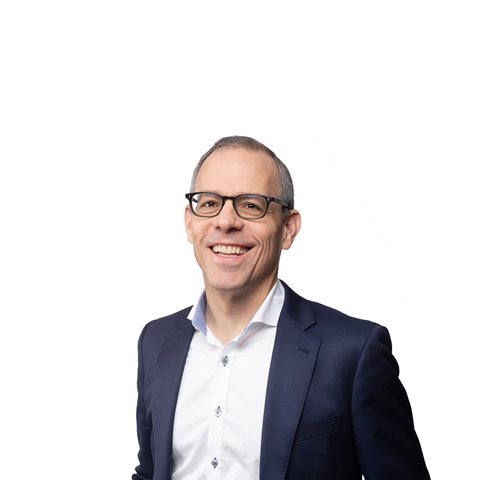
Eric LamarreSenior Partner, Boston

Kate SmajeSenior Partner, London

Rodney ZemmelSenior Partner, New York
Roberta Fusaro is an editorial director in the Waltham, Massachusetts, office.
 healthcarereimagined